TALENT MANAGEMENT
    Functional time
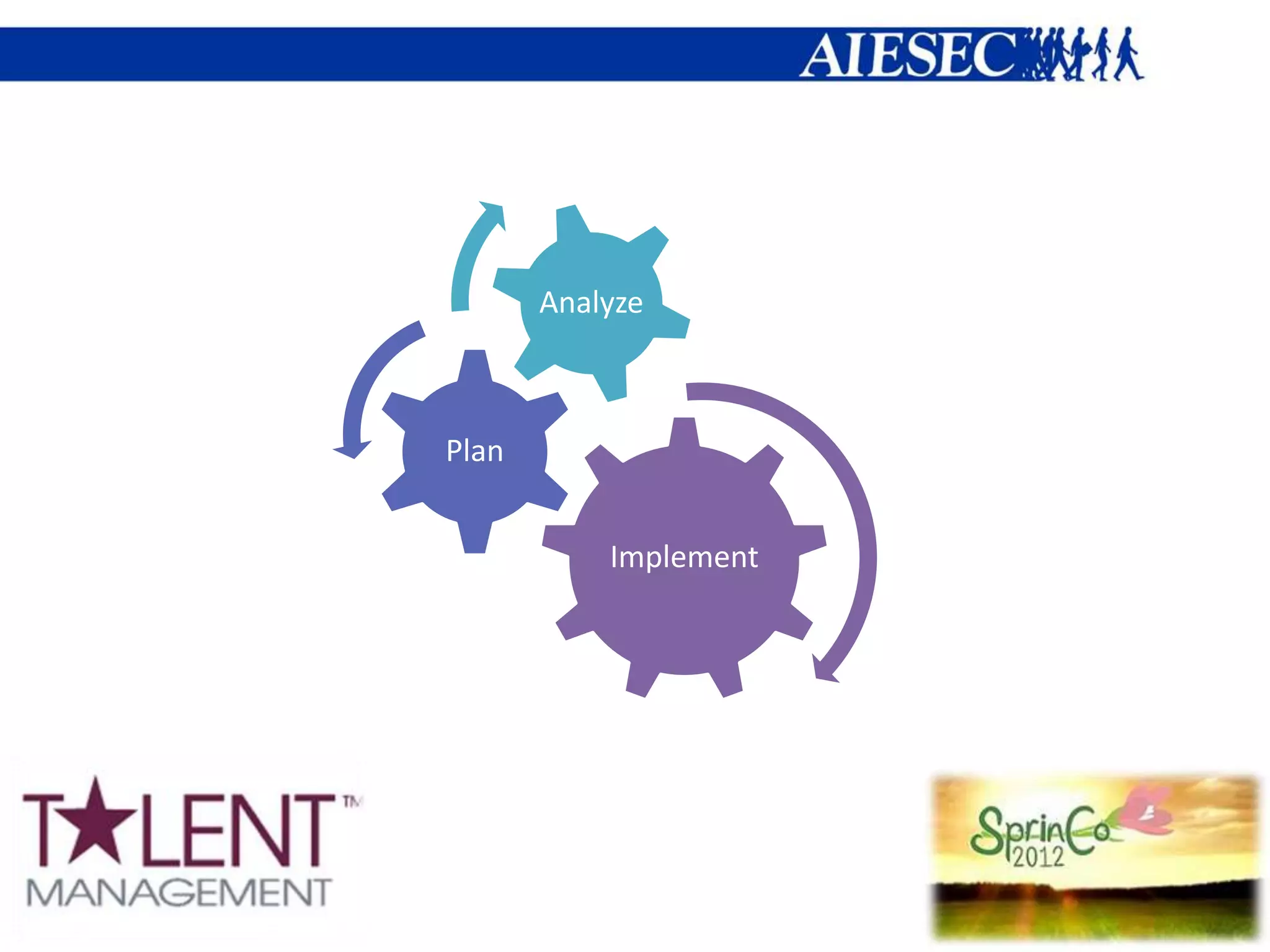
Analyze


Plan


           Implement
Friday           Saturday            Saturday         Saturday
     [13.04]            [14.04]             [14.04]          [14.04]
Analyze TM area     Plan Initiatives                      Bringing home
 Plan strategies

•SWOT              •Sub MoSes
•Vision            •Sub Strategies                           Update
                                       Cross-Functional
•Main MoS          •Timelines                               Time-Line
•TM Global         •Resources needs                        Task Forces
Direction
•Main Strategies
Welcome to Planning!
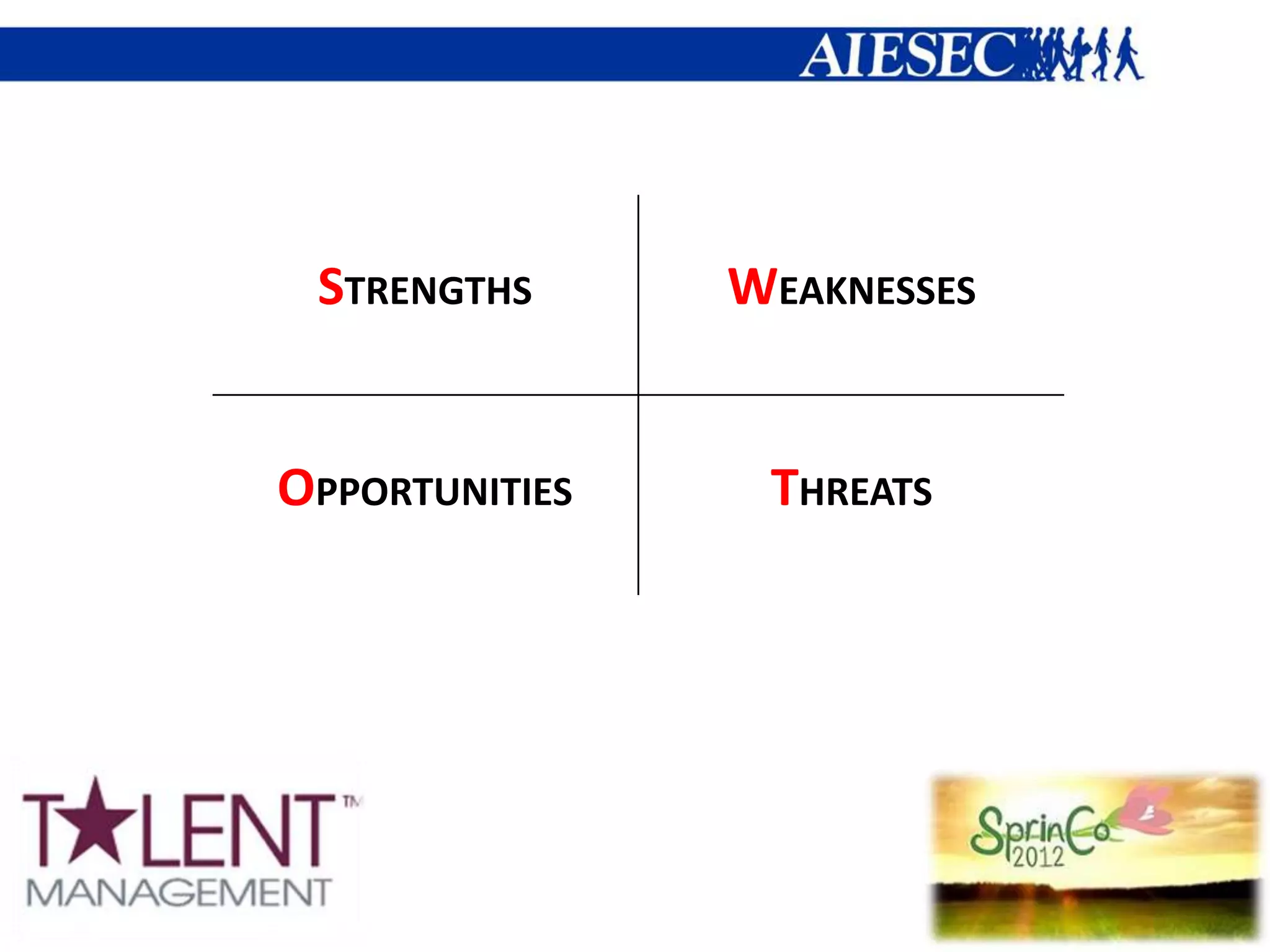
STRENGTHS      WEAKNESSES


OPPORTUNITIES    THREATS
STEP 1.


Be realistic but avoid modesty!
STEP 2
Opportunities are potential future strengths.
 Threats are potential future weaknesses.
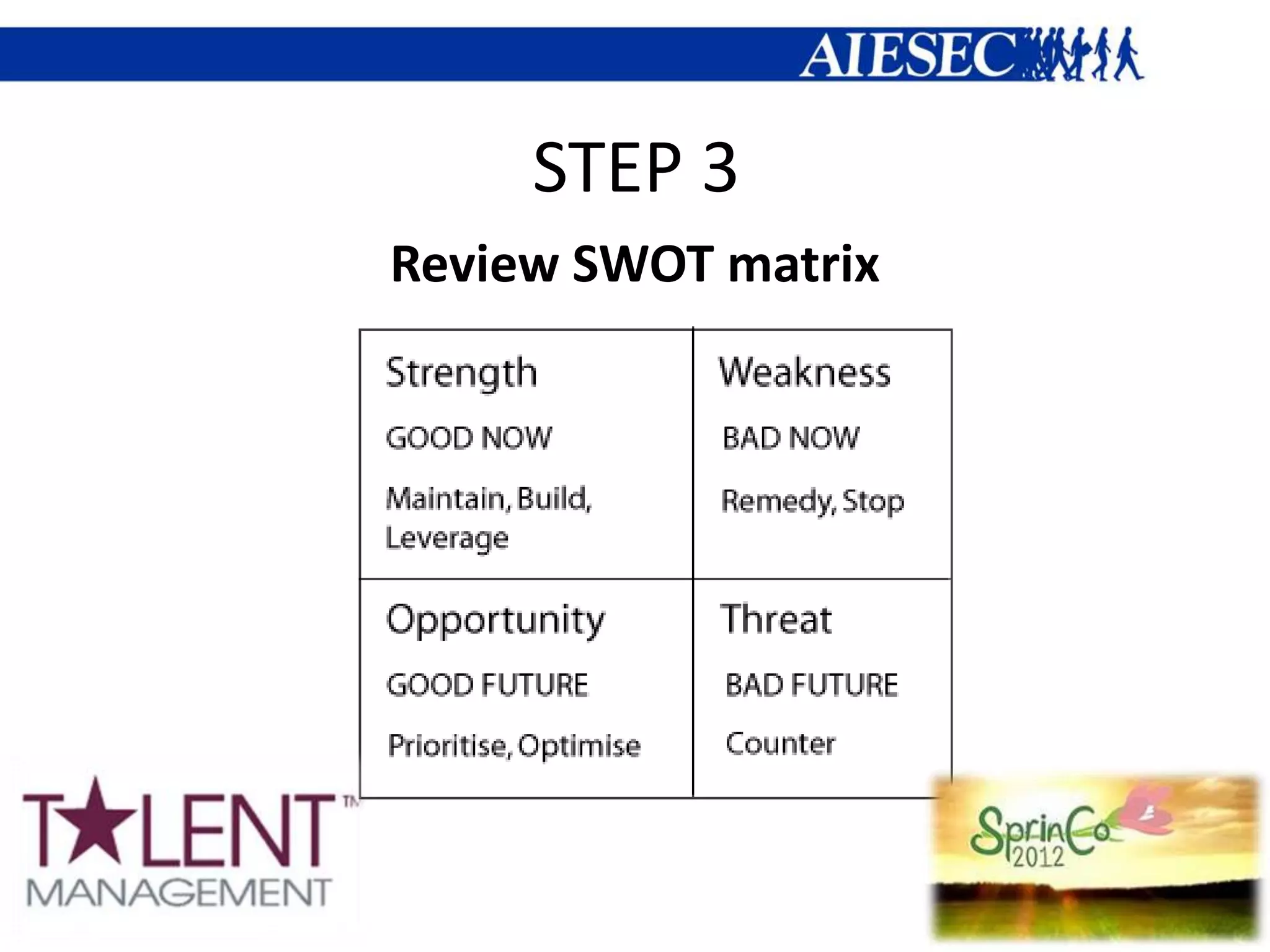
STEP 3
Review SWOT matrix
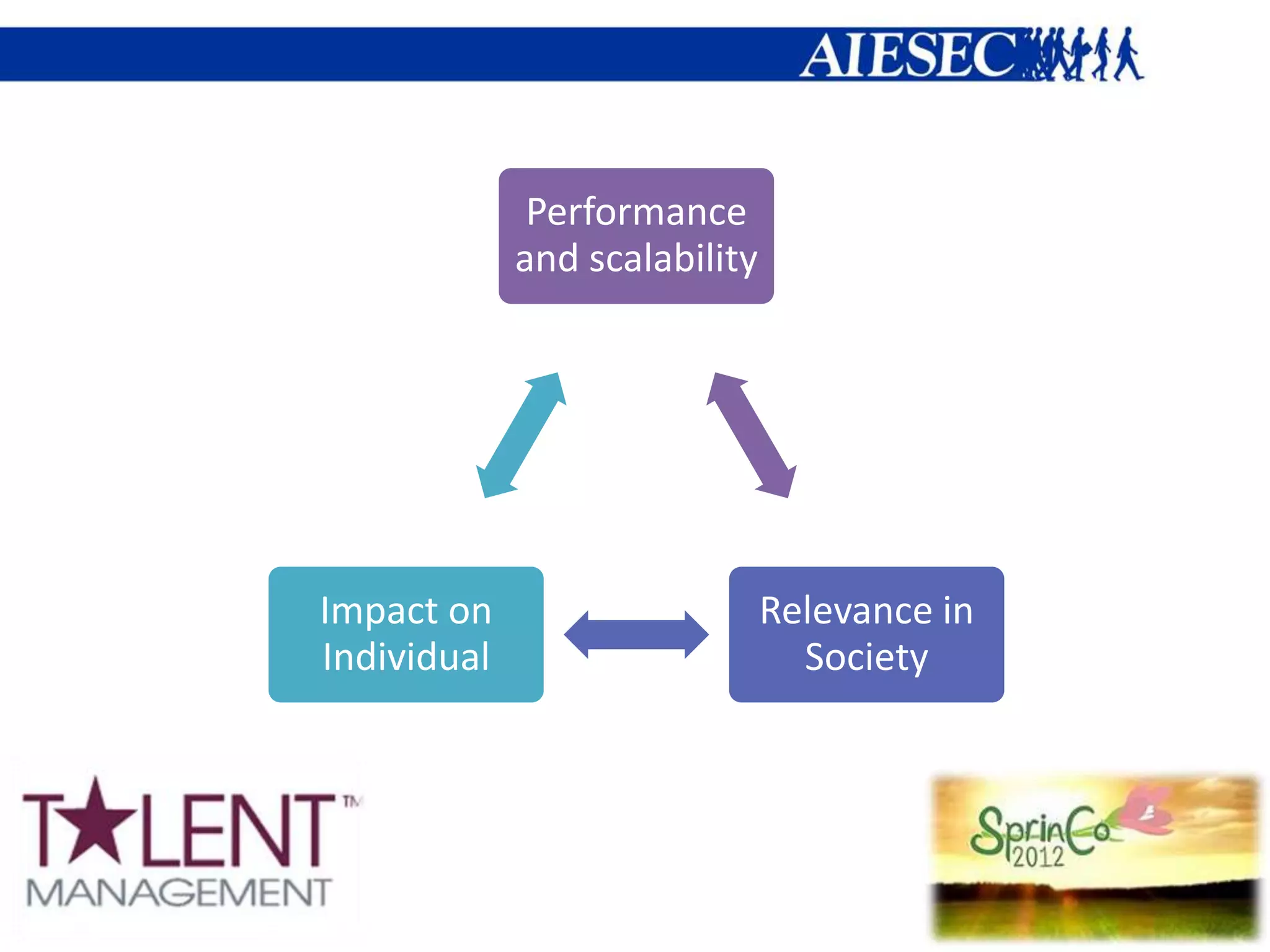
Performance
             and scalability


Impact on                      Relevance in
Individual                       Society
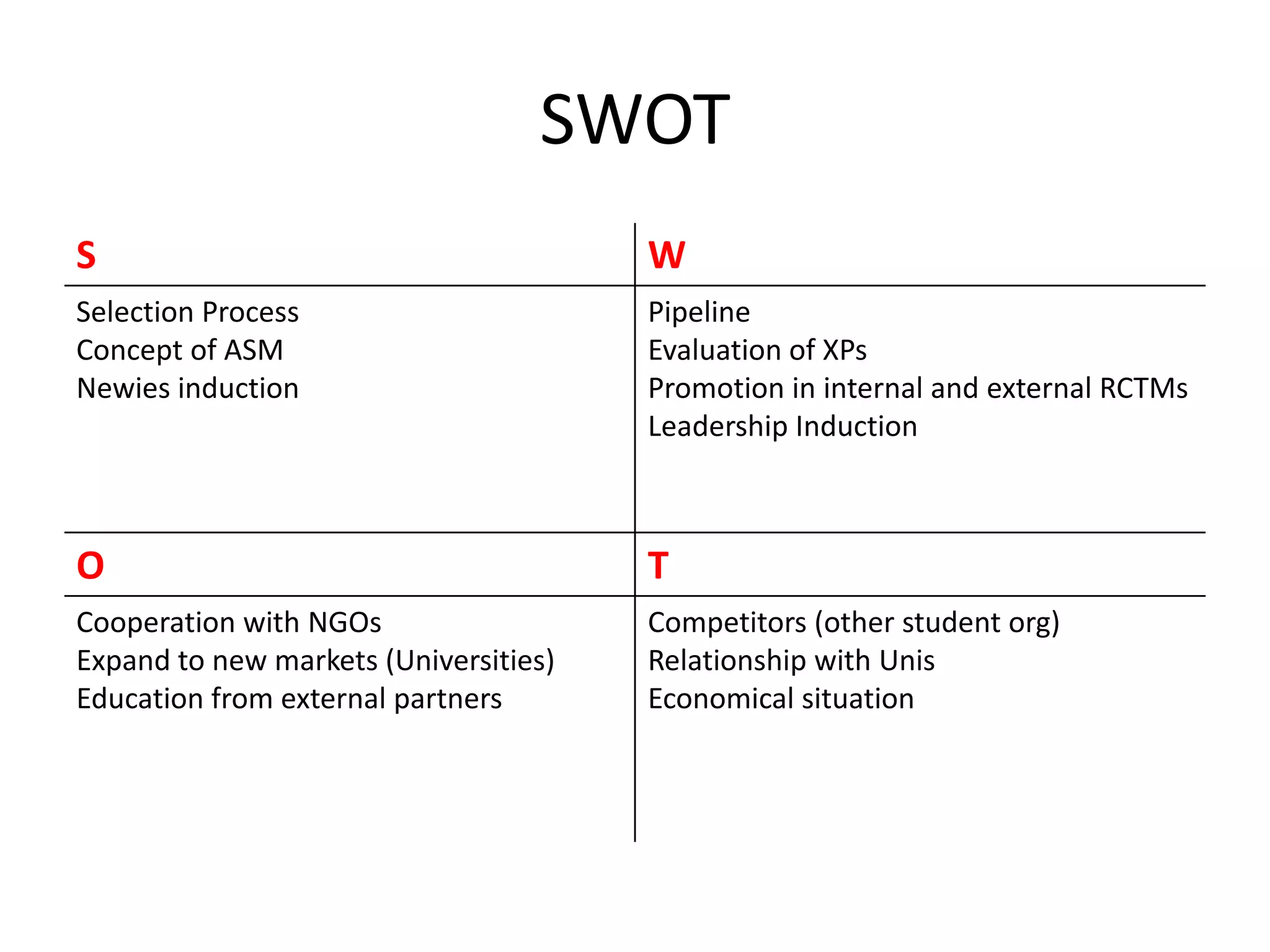
SWOT
S                                      W
Selection Process                      Pipeline
Concept of ASM                         Evaluation of XPs
Newies induction                       Promotion in internal and external RCTMs
                                       Leadership Induction


O                                      T
Cooperation with NGOs                  Competitors (other student org)
Expand to new markets (Universities)   Relationship with Unis
Education from external partners       Economical situation
Global Direction in
Talent Management
Society Trends 2015+
Relevance of TMP/TLP in the 2015 society
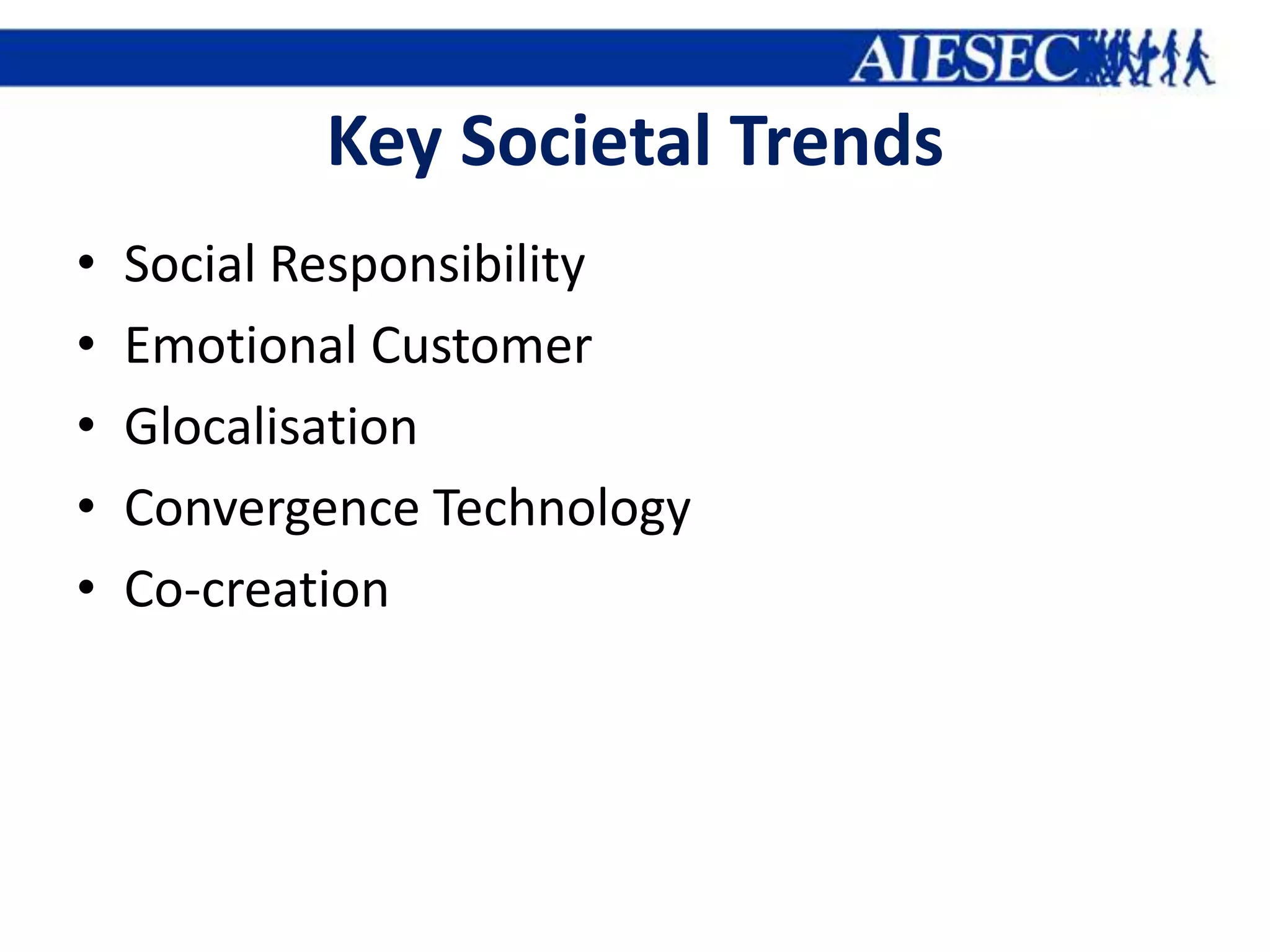
Key Societal Trends
•   Social Responsibility
•   Emotional Customer
•   Glocalisation
•   Convergence Technology
•   Co-creation
Social Responsibility
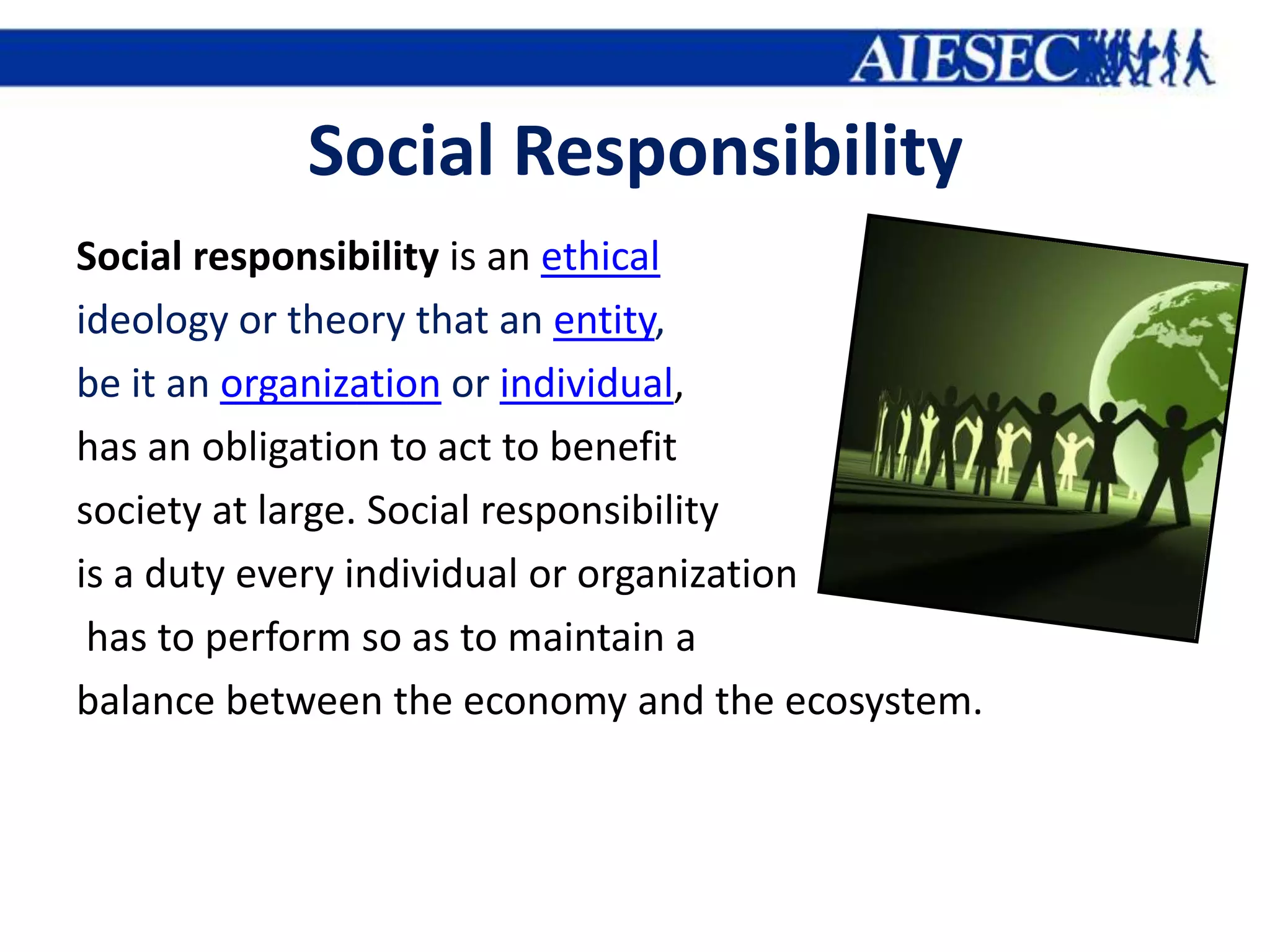
Social responsibility is an ethical
ideology or theory that an entity,
be it an organization or individual,
has an obligation to act to benefit
society at large. Social responsibility
is a duty every individual or organization
 has to perform so as to maintain a
balance between the economy and the ecosystem.
TMP/TLP catering to Social Responsibility
• Platform to facilitate connection with the
  external environment
• Give young people a chance to work with and
  experience values
• Connect the roles of TMP/TLP participants to
  the bigger picture of AIESEC (vision)
Emotional Customer
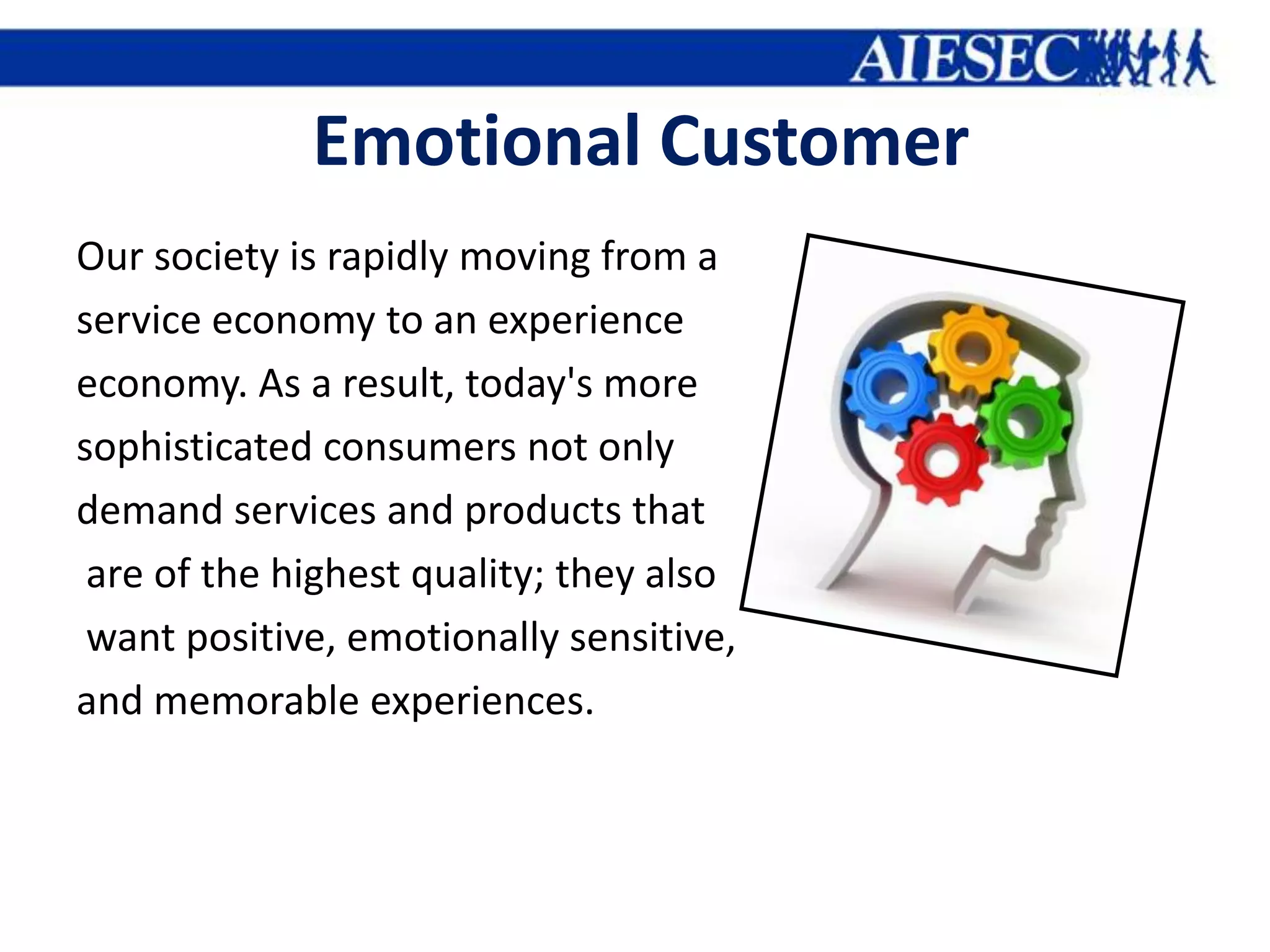
Our society is rapidly moving from a
service economy to an experience
economy. As a result, today's more
sophisticated consumers not only
demand services and products that
 are of the highest quality; they also
 want positive, emotionally sensitive,
and memorable experiences.
TMP/TLP catering to the Emotional Customer

• Empower the social network  allow people
  to work together
• Offer a space/platform for people to discover
  themselves (self-reflection)
Glocalisation
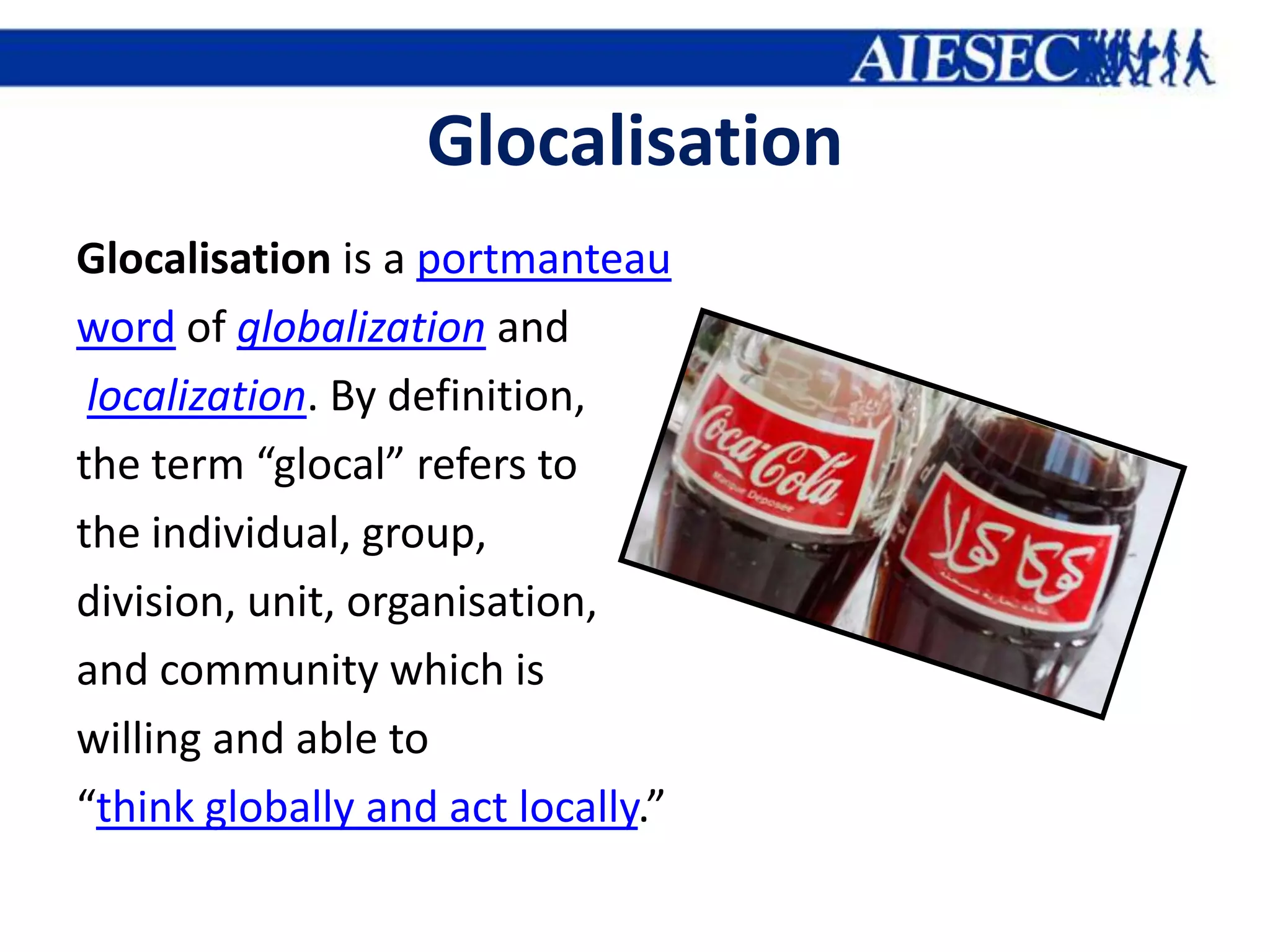
Glocalisation is a portmanteau
word of globalization and
 localization. By definition,
the term “glocal” refers to
the individual, group,
division, unit, organisation,
and community which is
willing and able to
“think globally and act locally.”
TMP/TLP catering to Glocalisation
• Sharing stories that have universal appeal, yet
  are relevant for diverse target audiences
• Programmes should offer opportunities to
  work/engage at both the local and global level
• Programmes should have global standards, yet
  open to local customization
Convergence Technology
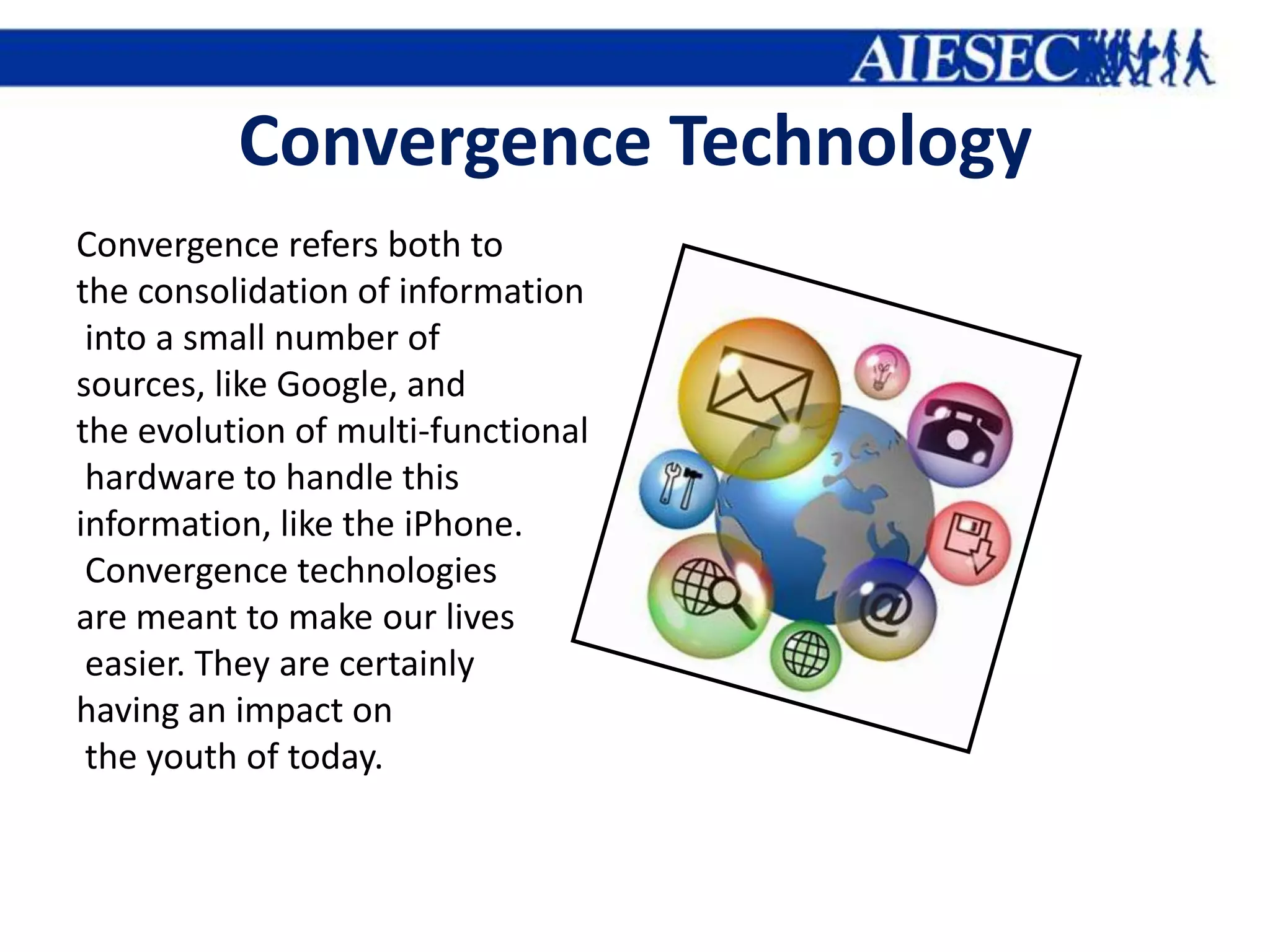
Convergence refers both to
the consolidation of information
 into a small number of
sources, like Google, and
the evolution of multi-functional
 hardware to handle this
information, like the iPhone.
 Convergence technologies
are meant to make our lives
 easier. They are certainly
having an impact on
 the youth of today.
TMP/TLP catering to Convergence Technology

• Promote the power of the social network in
  AIESEC
• Promote collaborative learning in the network
• Improve our knowledge management 
  access to resources to facilitate collaborative
  learning
• Package the impact of Virtual AIESEC XPs
Co-creation
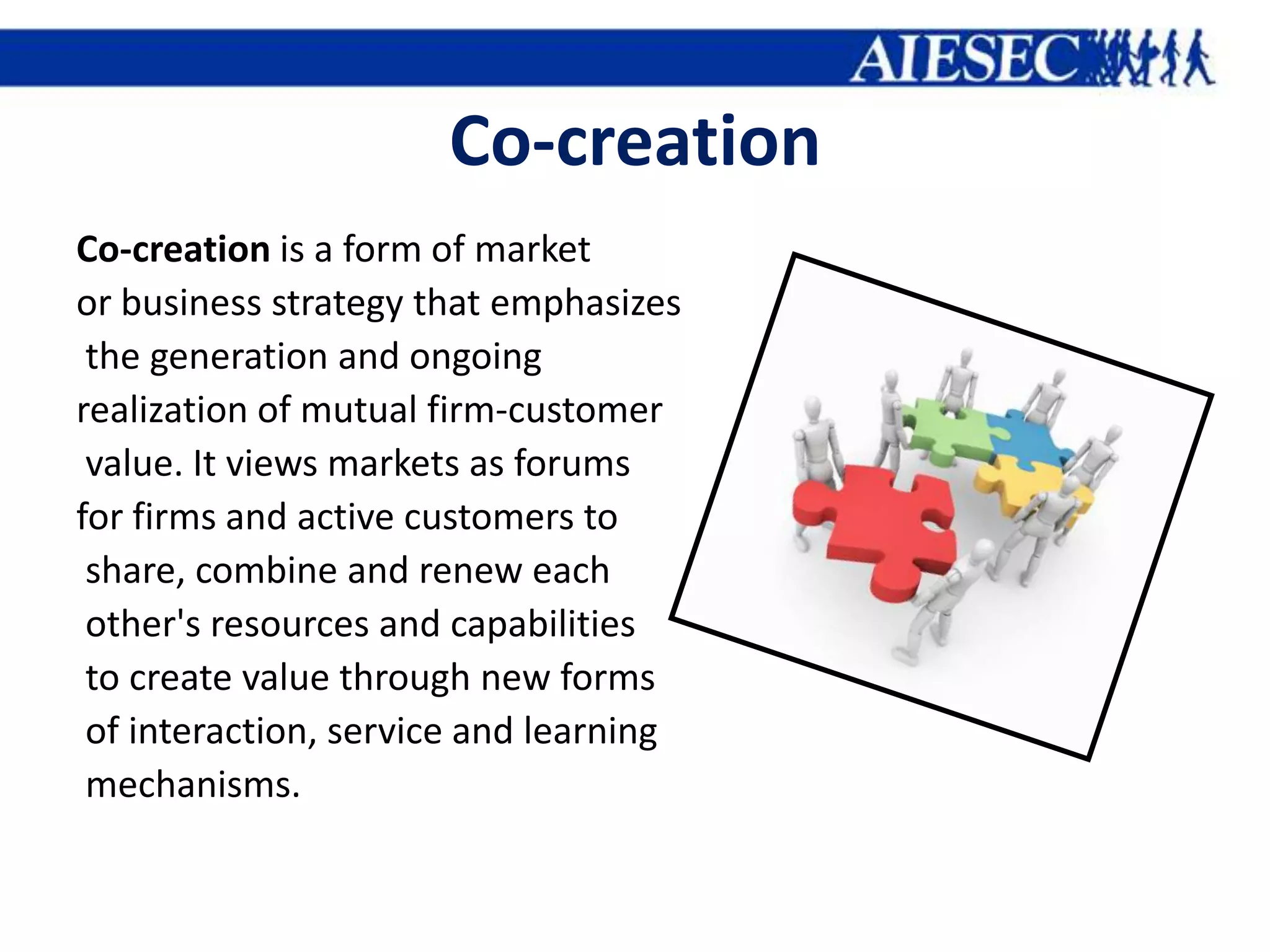
Co-creation is a form of market
or business strategy that emphasizes
 the generation and ongoing
realization of mutual firm-customer
 value. It views markets as forums
for firms and active customers to
 share, combine and renew each
 other's resources and capabilities
 to create value through new forms
 of interaction, service and learning
 mechanisms.
TMP/TLP catering to Co-creation
• Moving the organization away from the
  centralized structure, and towards the
  Distribution Network
 (TedX Sao Paolo  http://www.youtube.com/user/TEDxSP#p/u/37/-3bnzmykCiM)

• Involving the network in the decision making
  and innovation process
• Empowering the individual
• Knowledge management (to facilitate co-
  creation)
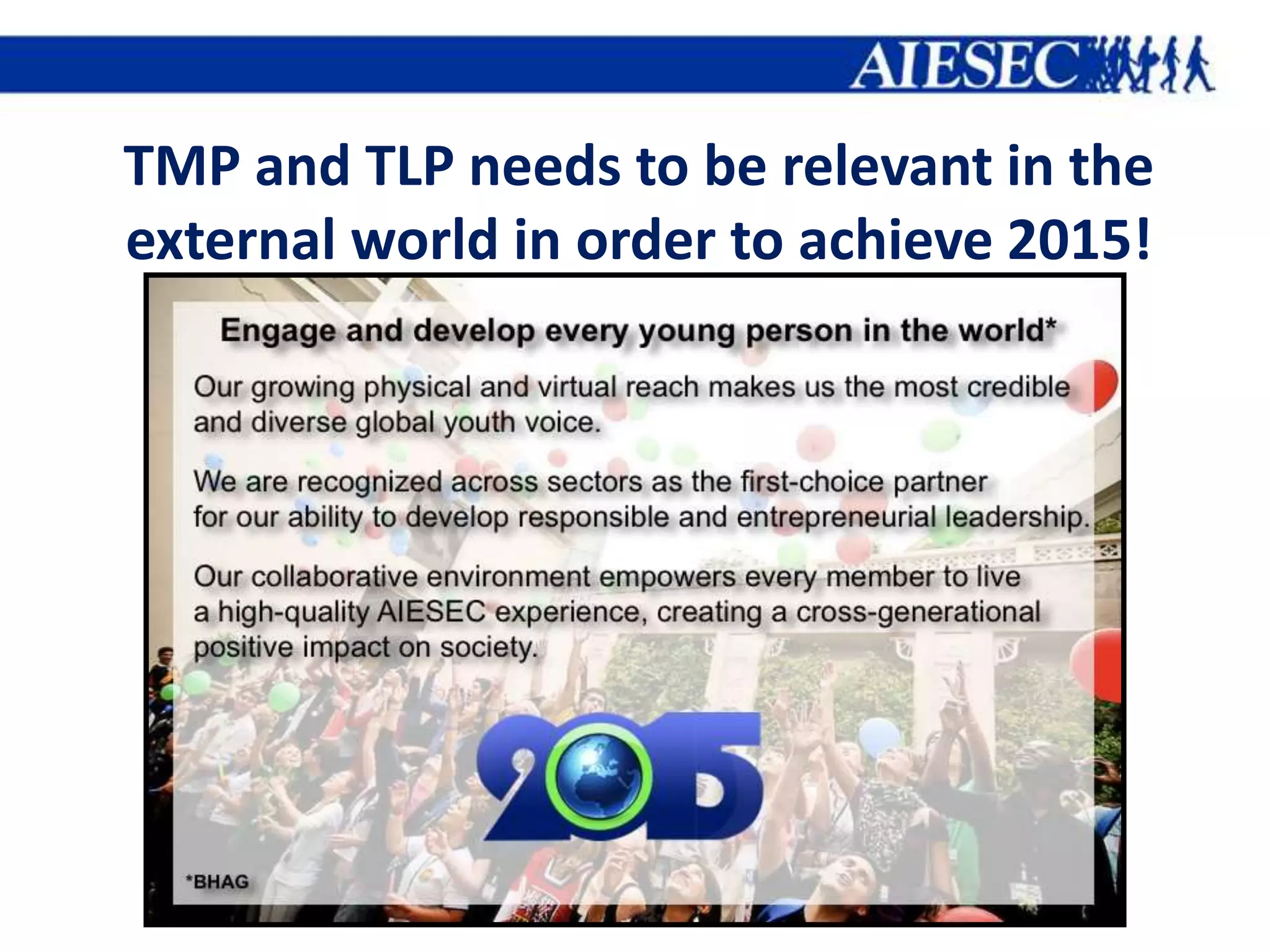
TMP and TLP needs to be relevant in the
external world in order to achieve 2015!
Good Case Practices in
 Talent Management
1. TMP/TLP Principles
1. Clear Purpose
2. Driven by individual
3. Co creative, collaborative learning
   environment
4. Physical/Virtual reach
5. Responsible for 2015
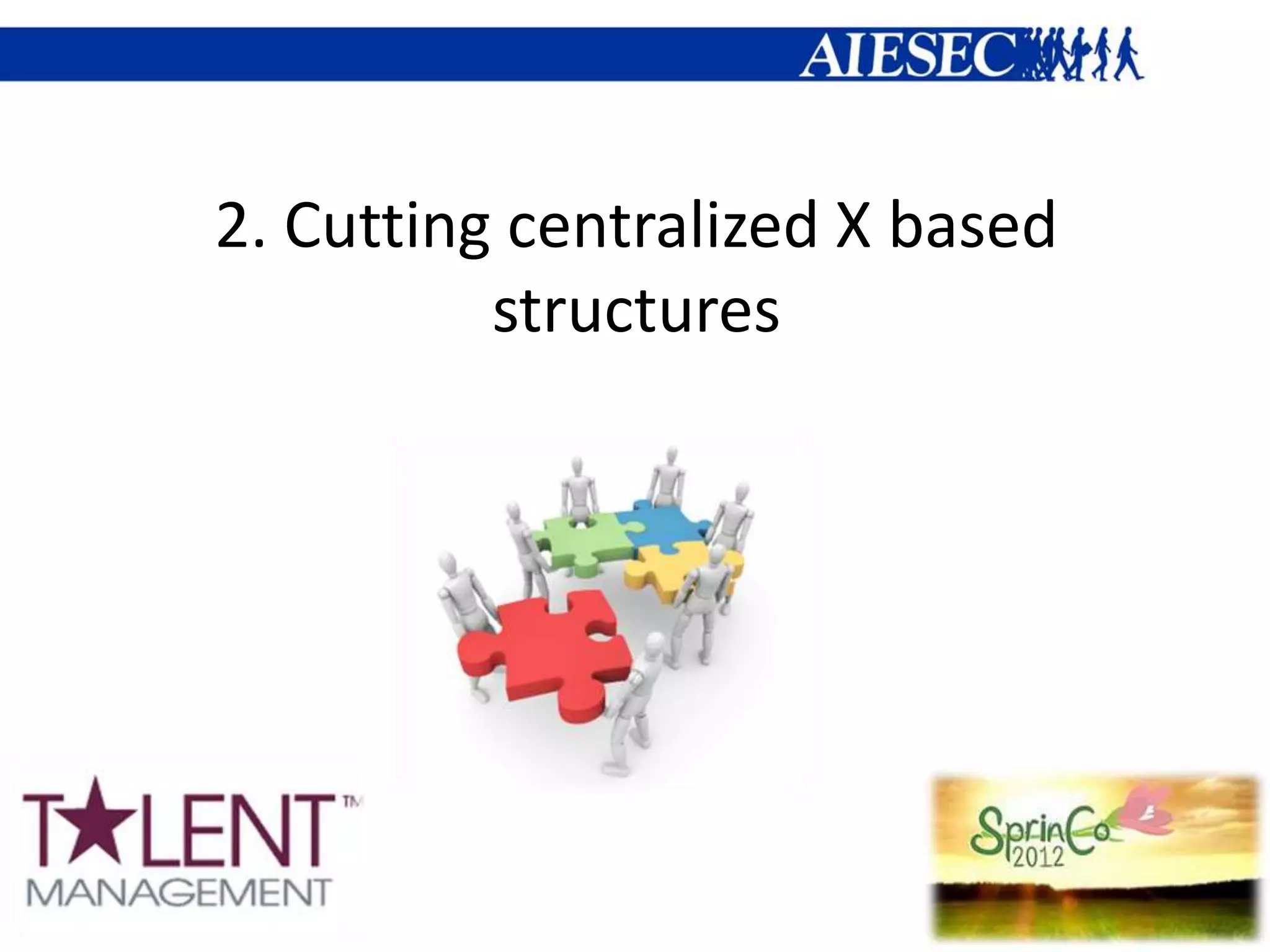
2. Cutting centralized X based
          structures
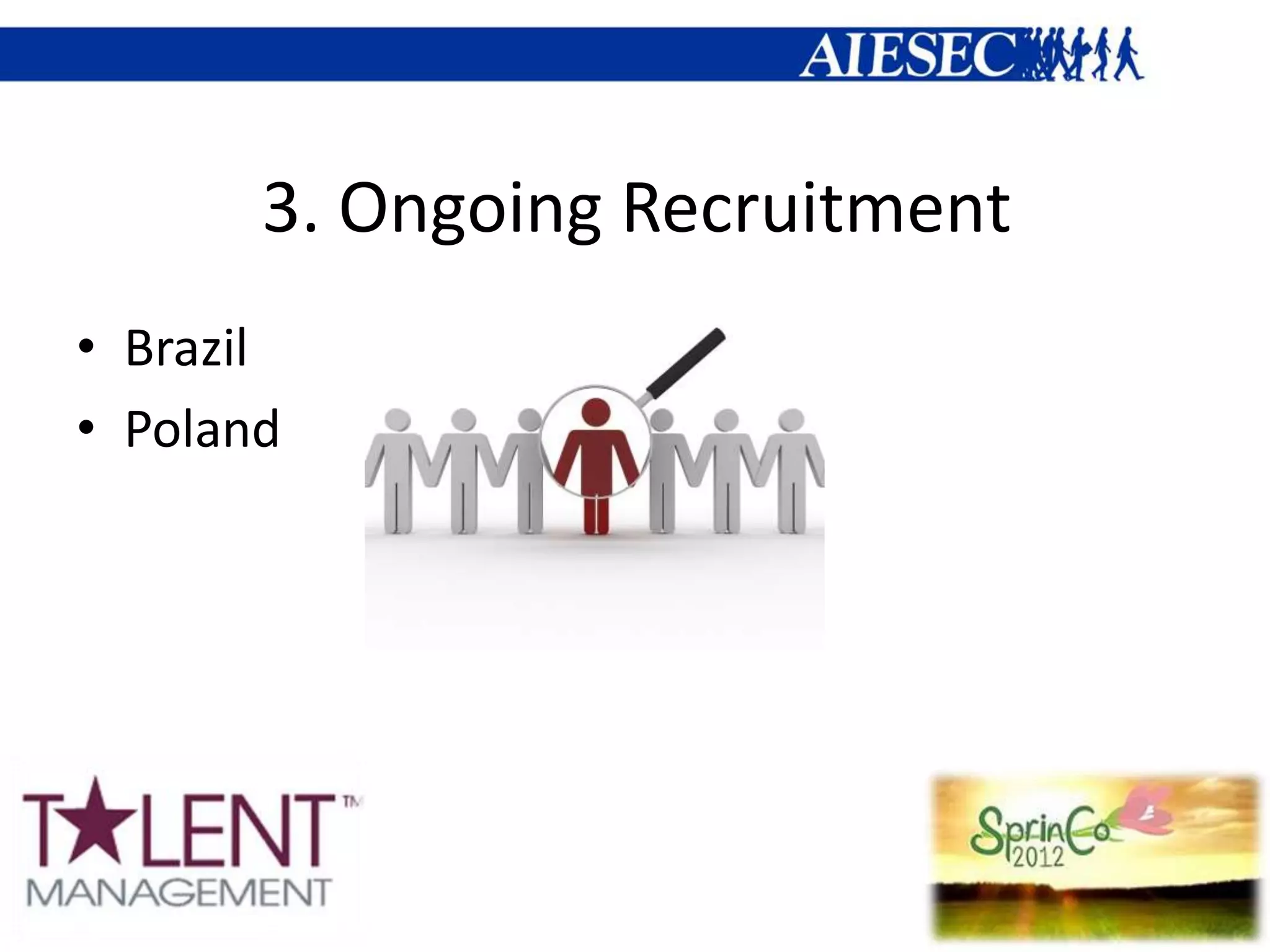
3. Ongoing Recruitment
• Brazil
• Poland
LET’s GO!

[Sprin co] tm swot & global direction

  • 1.
    TALENT MANAGEMENT Functional time
  • 2.
    Analyze Plan Implement
  • 3.
    Friday Saturday Saturday Saturday [13.04] [14.04] [14.04] [14.04] Analyze TM area Plan Initiatives Bringing home Plan strategies •SWOT •Sub MoSes •Vision •Sub Strategies Update Cross-Functional •Main MoS •Timelines Time-Line •TM Global •Resources needs Task Forces Direction •Main Strategies
  • 4.
  • 5.
    STRENGTHS WEAKNESSES OPPORTUNITIES THREATS
  • 6.
    STEP 1. Be realisticbut avoid modesty!
  • 7.
    STEP 2 Opportunities arepotential future strengths. Threats are potential future weaknesses.
  • 8.
  • 9.
    Performance and scalability Impact on Relevance in Individual Society
  • 10.
    SWOT S W Selection Process Pipeline Concept of ASM Evaluation of XPs Newies induction Promotion in internal and external RCTMs Leadership Induction O T Cooperation with NGOs Competitors (other student org) Expand to new markets (Universities) Relationship with Unis Education from external partners Economical situation
  • 11.
  • 13.
    Society Trends 2015+ Relevanceof TMP/TLP in the 2015 society
  • 14.
    Key Societal Trends • Social Responsibility • Emotional Customer • Glocalisation • Convergence Technology • Co-creation
  • 15.
    Social Responsibility Social responsibilityis an ethical ideology or theory that an entity, be it an organization or individual, has an obligation to act to benefit society at large. Social responsibility is a duty every individual or organization has to perform so as to maintain a balance between the economy and the ecosystem.
  • 16.
    TMP/TLP catering toSocial Responsibility • Platform to facilitate connection with the external environment • Give young people a chance to work with and experience values • Connect the roles of TMP/TLP participants to the bigger picture of AIESEC (vision)
  • 17.
    Emotional Customer Our societyis rapidly moving from a service economy to an experience economy. As a result, today's more sophisticated consumers not only demand services and products that are of the highest quality; they also want positive, emotionally sensitive, and memorable experiences.
  • 18.
    TMP/TLP catering tothe Emotional Customer • Empower the social network  allow people to work together • Offer a space/platform for people to discover themselves (self-reflection)
  • 19.
    Glocalisation Glocalisation is aportmanteau word of globalization and localization. By definition, the term “glocal” refers to the individual, group, division, unit, organisation, and community which is willing and able to “think globally and act locally.”
  • 20.
    TMP/TLP catering toGlocalisation • Sharing stories that have universal appeal, yet are relevant for diverse target audiences • Programmes should offer opportunities to work/engage at both the local and global level • Programmes should have global standards, yet open to local customization
  • 21.
    Convergence Technology Convergence refersboth to the consolidation of information into a small number of sources, like Google, and the evolution of multi-functional hardware to handle this information, like the iPhone. Convergence technologies are meant to make our lives easier. They are certainly having an impact on the youth of today.
  • 22.
    TMP/TLP catering toConvergence Technology • Promote the power of the social network in AIESEC • Promote collaborative learning in the network • Improve our knowledge management  access to resources to facilitate collaborative learning • Package the impact of Virtual AIESEC XPs
  • 23.
    Co-creation Co-creation is aform of market or business strategy that emphasizes the generation and ongoing realization of mutual firm-customer value. It views markets as forums for firms and active customers to share, combine and renew each other's resources and capabilities to create value through new forms of interaction, service and learning mechanisms.
  • 24.
    TMP/TLP catering toCo-creation • Moving the organization away from the centralized structure, and towards the Distribution Network (TedX Sao Paolo  http://www.youtube.com/user/TEDxSP#p/u/37/-3bnzmykCiM) • Involving the network in the decision making and innovation process • Empowering the individual • Knowledge management (to facilitate co- creation)
  • 25.
    TMP and TLPneeds to be relevant in the external world in order to achieve 2015!
  • 26.
    Good Case Practicesin Talent Management
  • 27.
    1. TMP/TLP Principles 1.Clear Purpose 2. Driven by individual 3. Co creative, collaborative learning environment 4. Physical/Virtual reach 5. Responsible for 2015
  • 28.
    2. Cutting centralizedX based structures
  • 29.
    3. Ongoing Recruitment •Brazil • Poland
  • 30.