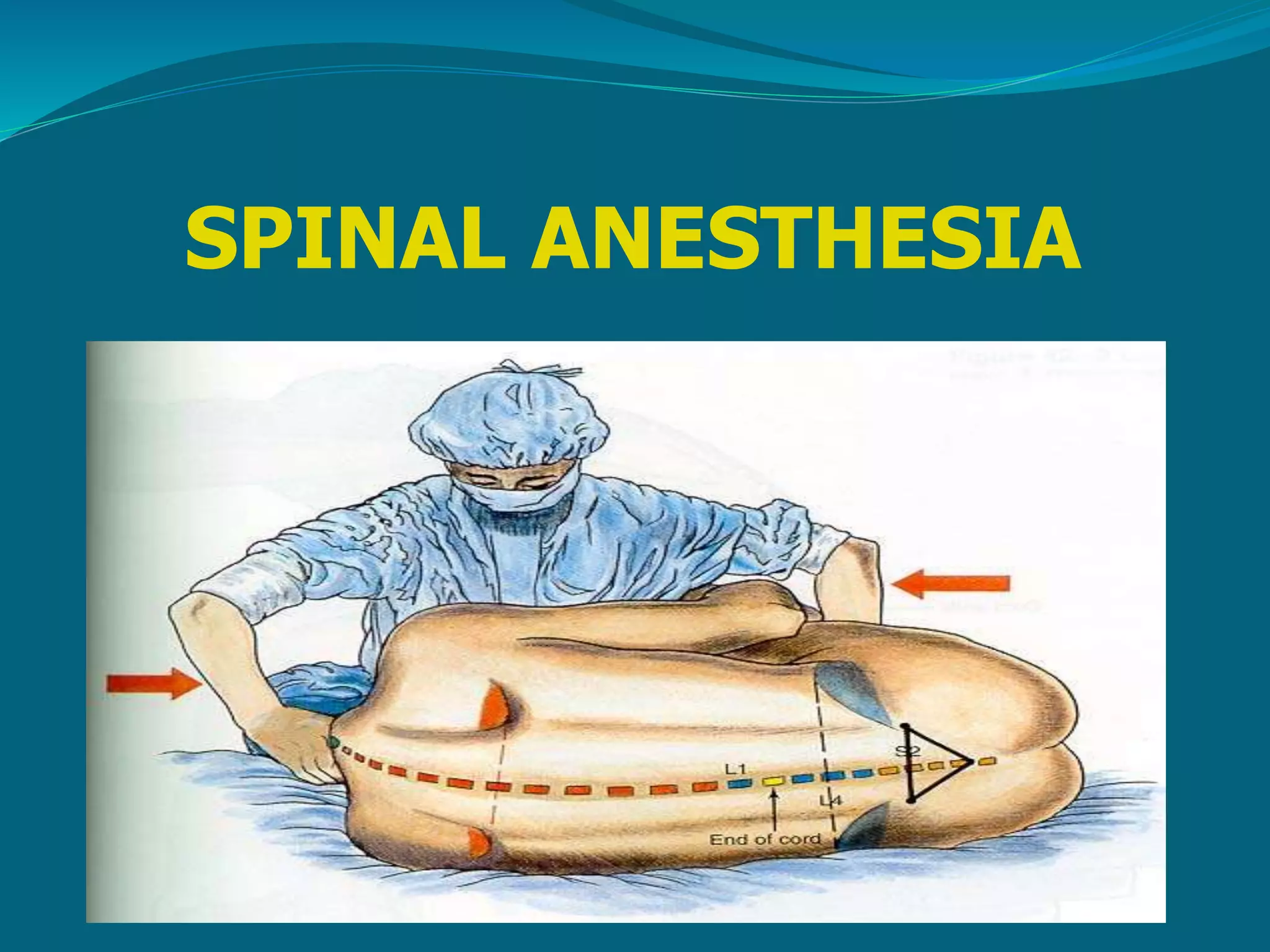
SPINAL ANESTHESIA
1. Sub Arachnoid Block,
2. Intrathecal Block
 Local anesthestic deposited at subarachnoid
space
 Acts on spinal nerve roots, dorsal ganglia, not
on substance of spinal cord
 Redistributed via vascular absorption
 Produces sympathetic block, sensory analgesia
and motor block
SPINAL ANESTHESIA
Indications
 Surgery involving lower half of body
 Upper abdomen
 Lower abdomen
 Perineum
 Lower Extremity
 Obstetrics – vaginal delivery
Caesarian section
 Painful diagnostic and therapeutic procedures
below diaphragm
Contraindications
 Absolute
 Bleeding disorders
 Septicemia
 Inc. intracranial pressure
 Chronic dermatitis or infection near puncture site
 Pre-existing spinal cord disease
 Hypotension
 Patient refusal
 Systemic disease with neurologic sequelae
 Relative
 Hemorrhage
 Back problem due to muscle strain, arthritis
 Extremely tense / psychotics
 Respiratory disease
Drugs Used
 Tetracaine
 Lidocaine
 Bupivacaine
Factors Determining Level of Anesthesia
 volume of solution
 concentration
 barbotage
 speed of injection
 patient position
 specific gravity of solution
 site of injection
 height of patient
 increased intra-abdominal pressure
Technique
A. Position
 Lateral decubitus – knees flexed to chest
hin put down on chest (nose-to-knee)
 Sitting – when lateral approach is difficult (e.g.
obese patients)
B. Puncture Sites
 Interspaces between L2-L3, L3-:4, L4-L5
 Line joining highest points of iliac crests
crosses either body of L4 or interspace
between L3-L4
Structures Traversed By Spinal Needle
a. Skin
b. Subcutaneous Tissue
c. Supraspinous ligament
d. Interspinuous ligament
e. ligamentum flavum
f. Dura
PHYSIOLOGIC EFFECTS (Immediate Complications)
A. Cardiovascular
Sympathectomy  vasodilation   BP,  CR
B. Respiratory
Difficulty of breathing
Apnea (high level)
C. Gastrointestinal
Nausea / vomiting in 20%
DELAYED COMPLICATIONS
 Headache – leak of CSF
 Backache
 Urinary retention
 Paraplegia – hematoma
Levels of Spinal Anesthesia – Dermatomes Involved
1. Saddle Block – sensory loss involves lowers lumbar
and sacral segments.
Area that “sits on the saddle”.
2. Low Spinal – level of umbilicus (T10) lower
thoracic lumbars and sacrals.
3. Mid-Spinal – costal margin (T6) lower thoracic
lumbars and sacrals
4. High Spinal – nipple line (T4) thoracic segments
(T4 – T12) lumbars and sacrals
Epidural anathesia Spinal anathesia
Site of injection In the epidural space Subarachnoid space
Onset and duration Slow onset and continous duration
(use catheter)
Rapid onset and limited
duration
advantages Can be used in analgesia Not used
Needle
dose
Curved,longand blunt (touhy)
10_30ml
Small and sharp
1_4ml
space Any space usually lumber lumber
Quality of sensory
and motor nerve
block
less More liable
toxicity Hypotention gradual
total spinal +++
systemic toxicity +++
Sudden
+
+
THANK YOU

Spinal anesthesia

  • 1.
  • 2.
    1. Sub ArachnoidBlock, 2. Intrathecal Block  Local anesthestic deposited at subarachnoid space  Acts on spinal nerve roots, dorsal ganglia, not on substance of spinal cord  Redistributed via vascular absorption  Produces sympathetic block, sensory analgesia and motor block SPINAL ANESTHESIA
  • 3.
    Indications  Surgery involvinglower half of body  Upper abdomen  Lower abdomen  Perineum  Lower Extremity  Obstetrics – vaginal delivery Caesarian section  Painful diagnostic and therapeutic procedures below diaphragm
  • 4.
    Contraindications  Absolute  Bleedingdisorders  Septicemia  Inc. intracranial pressure  Chronic dermatitis or infection near puncture site  Pre-existing spinal cord disease  Hypotension  Patient refusal  Systemic disease with neurologic sequelae  Relative  Hemorrhage  Back problem due to muscle strain, arthritis  Extremely tense / psychotics  Respiratory disease
  • 5.
    Drugs Used  Tetracaine Lidocaine  Bupivacaine Factors Determining Level of Anesthesia  volume of solution  concentration  barbotage  speed of injection  patient position  specific gravity of solution  site of injection  height of patient  increased intra-abdominal pressure
  • 6.
    Technique A. Position  Lateraldecubitus – knees flexed to chest hin put down on chest (nose-to-knee)  Sitting – when lateral approach is difficult (e.g. obese patients) B. Puncture Sites  Interspaces between L2-L3, L3-:4, L4-L5  Line joining highest points of iliac crests crosses either body of L4 or interspace between L3-L4
  • 8.
    Structures Traversed BySpinal Needle a. Skin b. Subcutaneous Tissue c. Supraspinous ligament d. Interspinuous ligament e. ligamentum flavum f. Dura
  • 9.
    PHYSIOLOGIC EFFECTS (ImmediateComplications) A. Cardiovascular Sympathectomy  vasodilation   BP,  CR B. Respiratory Difficulty of breathing Apnea (high level) C. Gastrointestinal Nausea / vomiting in 20% DELAYED COMPLICATIONS  Headache – leak of CSF  Backache  Urinary retention  Paraplegia – hematoma
  • 10.
    Levels of SpinalAnesthesia – Dermatomes Involved 1. Saddle Block – sensory loss involves lowers lumbar and sacral segments. Area that “sits on the saddle”. 2. Low Spinal – level of umbilicus (T10) lower thoracic lumbars and sacrals. 3. Mid-Spinal – costal margin (T6) lower thoracic lumbars and sacrals 4. High Spinal – nipple line (T4) thoracic segments (T4 – T12) lumbars and sacrals
  • 12.
    Epidural anathesia Spinalanathesia Site of injection In the epidural space Subarachnoid space Onset and duration Slow onset and continous duration (use catheter) Rapid onset and limited duration advantages Can be used in analgesia Not used Needle dose Curved,longand blunt (touhy) 10_30ml Small and sharp 1_4ml space Any space usually lumber lumber Quality of sensory and motor nerve block less More liable toxicity Hypotention gradual total spinal +++ systemic toxicity +++ Sudden + +
  • 13.