SPINAL ANAESTHESIA-
BASICS
Dr. Ananya nanda
• DEFINITION
• ANATOMY
• PHYSIOLOGY
• INDICATIONS
• CONTRAINDICATIONS
• PREPARATION AND POSITION
• COMPLICATIONS
Definition …
It is the regional anaesthesia obtained by temporary interruption of
nerve transmission of spinal nerves by injecting anaesthetic agents in
to the subarachnoid space.
HISTORY
• Corning accidentally administered cocaine intrathecally in 1885
• The first spinal anaesthesia in humans was given by Beir from
Germany in 1898 using 0.5% cocaine.
ANATOMY- spinal cord
# Continuation of Medulla Oblangata and extends to
L2
# The spinal cord consists of 31 pairs of spinal nerves
# In the newborn the spinal cord terminates in the
lower border of 3rd lumbar vertebrae.
# In adults spinal cord terminates at the disc between
1st and 2nd lumbar vertebrae
# After L1 the nerve roots course for some distance
before exiting the intervertebral formina forming cauda
equina (horse tail)
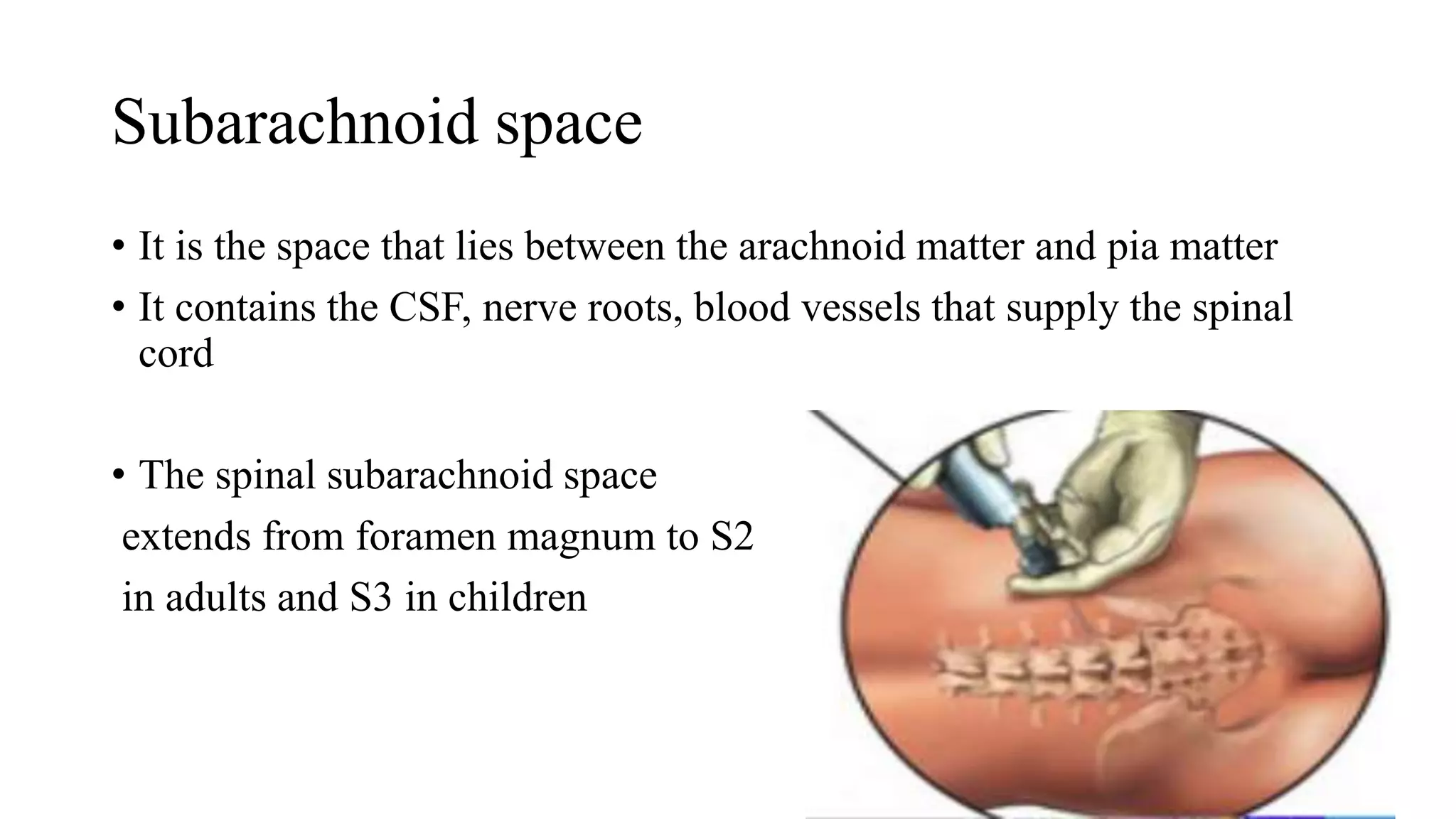
Subarachnoid space
• It is the space that lies between the arachnoid matter and pia matter
• It contains the CSF, nerve roots, blood vessels that supply the spinal
cord
• The spinal subarachnoid space
extends from foramen magnum to S2
in adults and S3 in children
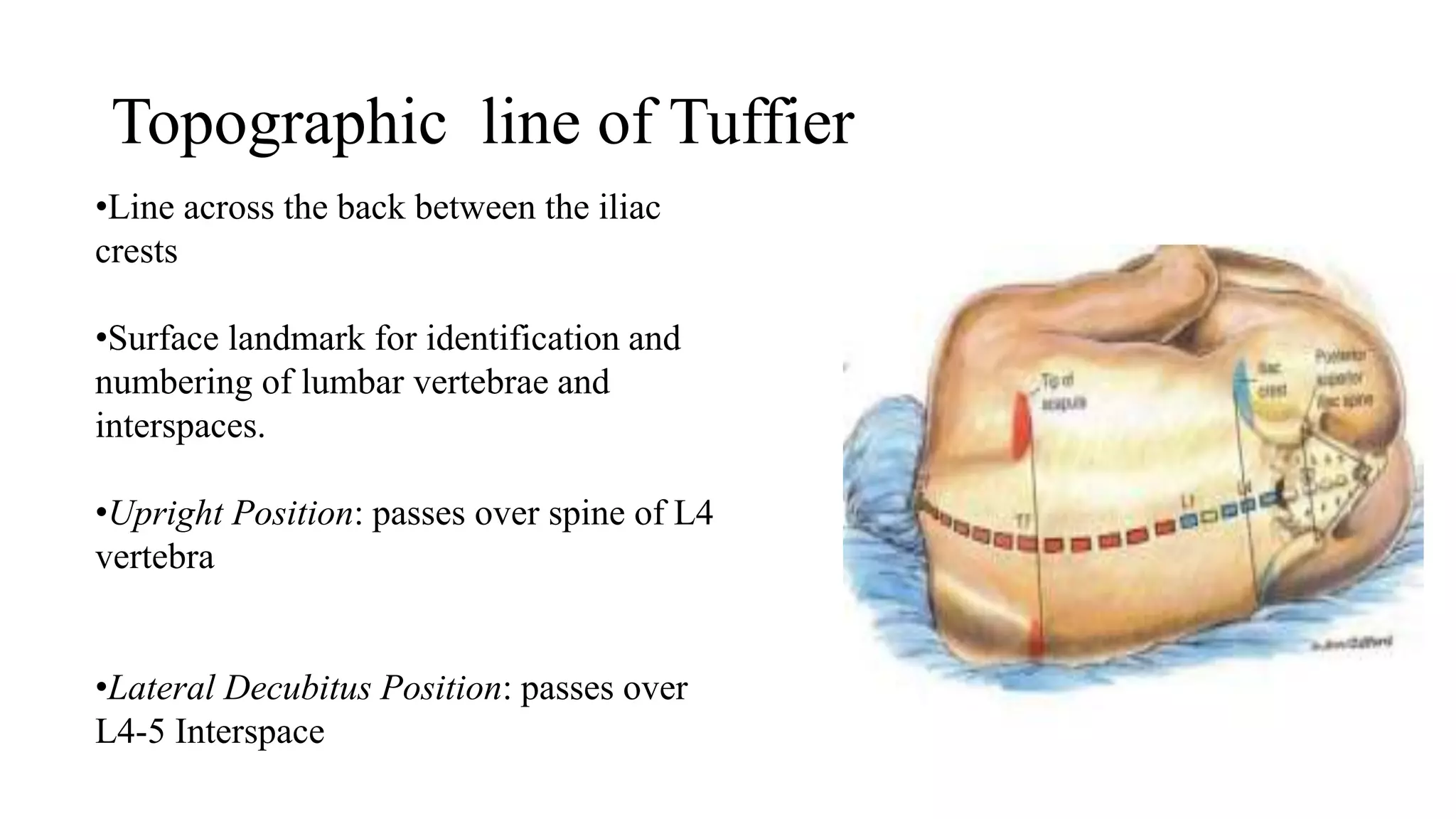
Topographic line of Tuffier
•Line across the back between the iliac
crests
•Surface landmark for identification and
numbering of lumbar vertebrae and
interspaces.
•Upright Position: passes over spine of L4
vertebra
•Lateral Decubitus Position: passes over
L4-5 Interspace
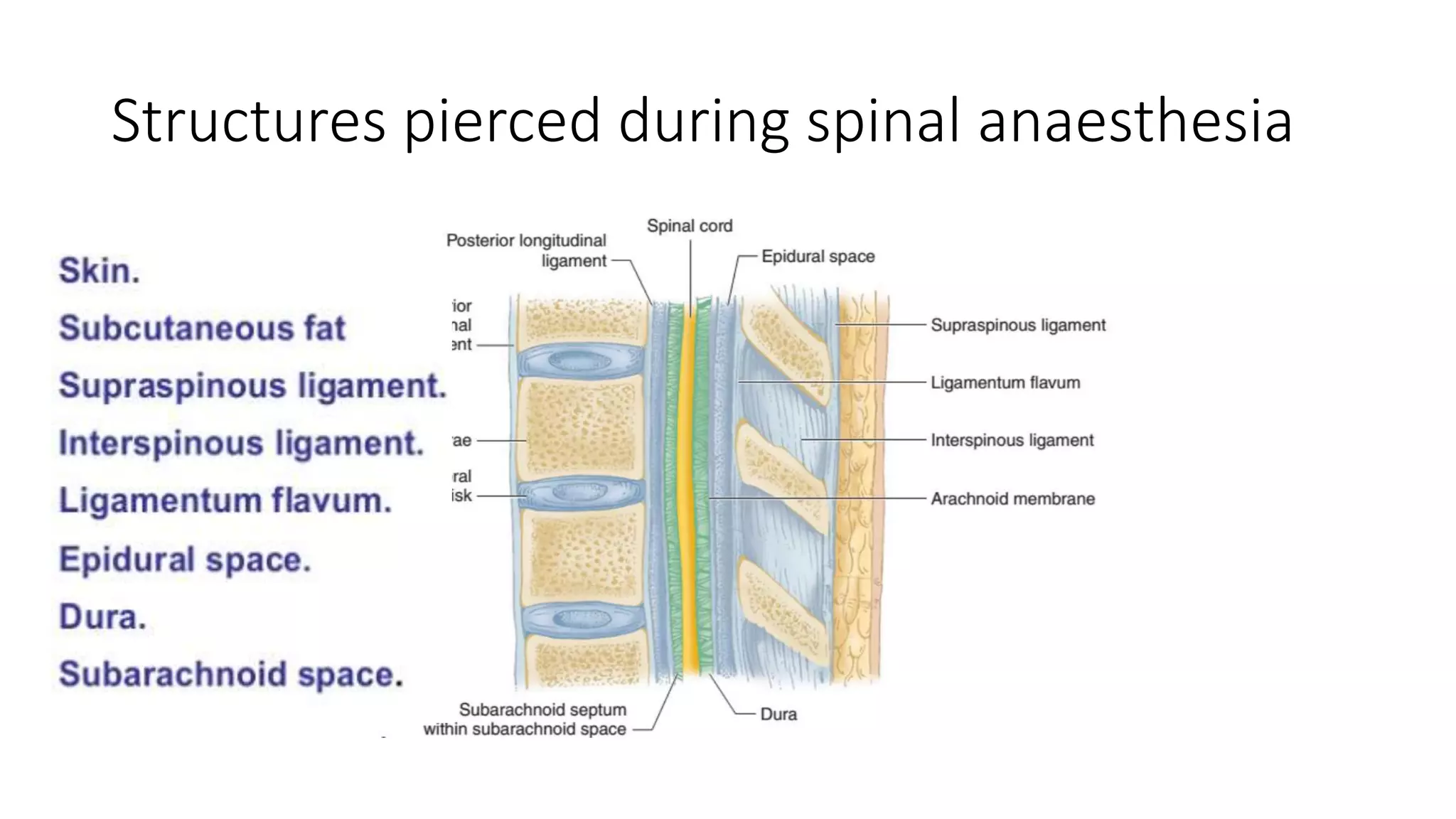
Structures pierced during spinal anaesthesia
Mechanism Of Action
• There are three classes of nerve: motor, sensory and autonomic.
• Primary Site of action: The Nerve Root in subarachnoid space
• motor nerves causes muscles to contract and when they are blocked,
muscle paralysis results.
• Sensory nerves transmit sensations such as touch and pain to the spinal
cord and from there to the brain, whilst
• autonomic nerves control the calibre of blood vessels, heart rate, gut
contraction.
• Generally, autonomic and sensory fibres are blocked before motor fibres.
How Does SAB work ????
• Local anaesthetic solution injected into the subarachnoid space blocks
conduction of impulses along all nerves with which it comes in
contact, although some nerves are more easily blocked than others.
• LA Interacts with the receptor situated within the voltage sensitive
sodium channel and raises the threshold of channel opening
• Decreases the entry of sodium ions during upstroke of action potential
• Local depolarization fails to reach the threshold potential and
conduction block ensues
Physiological Responses….
CVS
• Symphathetic denervation
• Loss of vasomotor tone
• Arterial and venous dilation
• Decreased periperal vascular resistance
and peripheral pooling of blood
• Decreased venous return to heart and
hence hypotension
• blockage of the cardio accelerator
fibres located in T1 to T4 causing
bradycardia and hypotension
• Reasonable to allow a modest decrease
but treat more than a 20% decline.
Respiratory system
• There is a little effect on
pulmonary function in patient
without pre-existing lung disease.
• in Patient with severe chronic
lung disease relaxation of
intercostals and abdominal
muscles causes decrease in
expiration and decreased
clearance of secretions
Pharmacology- Local Anesthetics for Spinal Anesthesia
Short acting
(<90minutes)
• Procaine
• chloprocaine
• Lidocaine
• Mepivacaine
Long acting
(>90 minutes)
• Tetracaine
• Bupivacaine
• Ropivacaine
• S - Levobupivacaine
• Bupivacaine
•All medications used for spinal anesthesia should be preservative free.
•Use medications specifically prepared for spinal anesthesia.
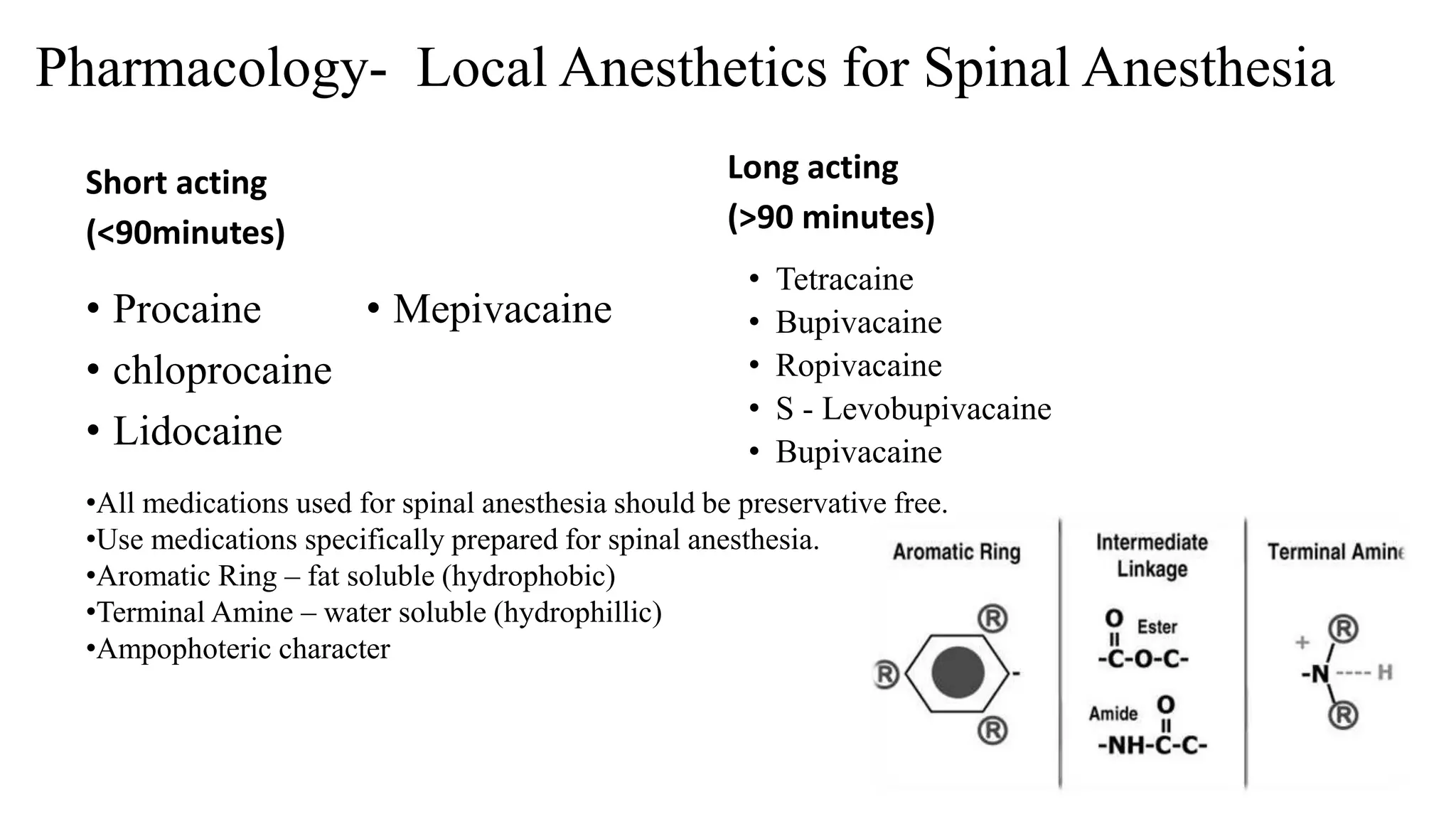
•Aromatic Ring – fat soluble (hydrophobic)
•Terminal Amine – water soluble (hydrophillic)
•Ampophoteric character
Additives
• Dextrose – increasing baricity
• Epinephrine - Prolonging duration of action
• Phenylephrine - Prolonging duration of action
• Ephedrine - Prolonging duration of action
• Neostigmine - Prolongs and intensifies the analgesia
• Clonidine - Prolonging motor block
• Opiods - Prolongs and intensifies the analgesia and decreases Mean
arterial pressure
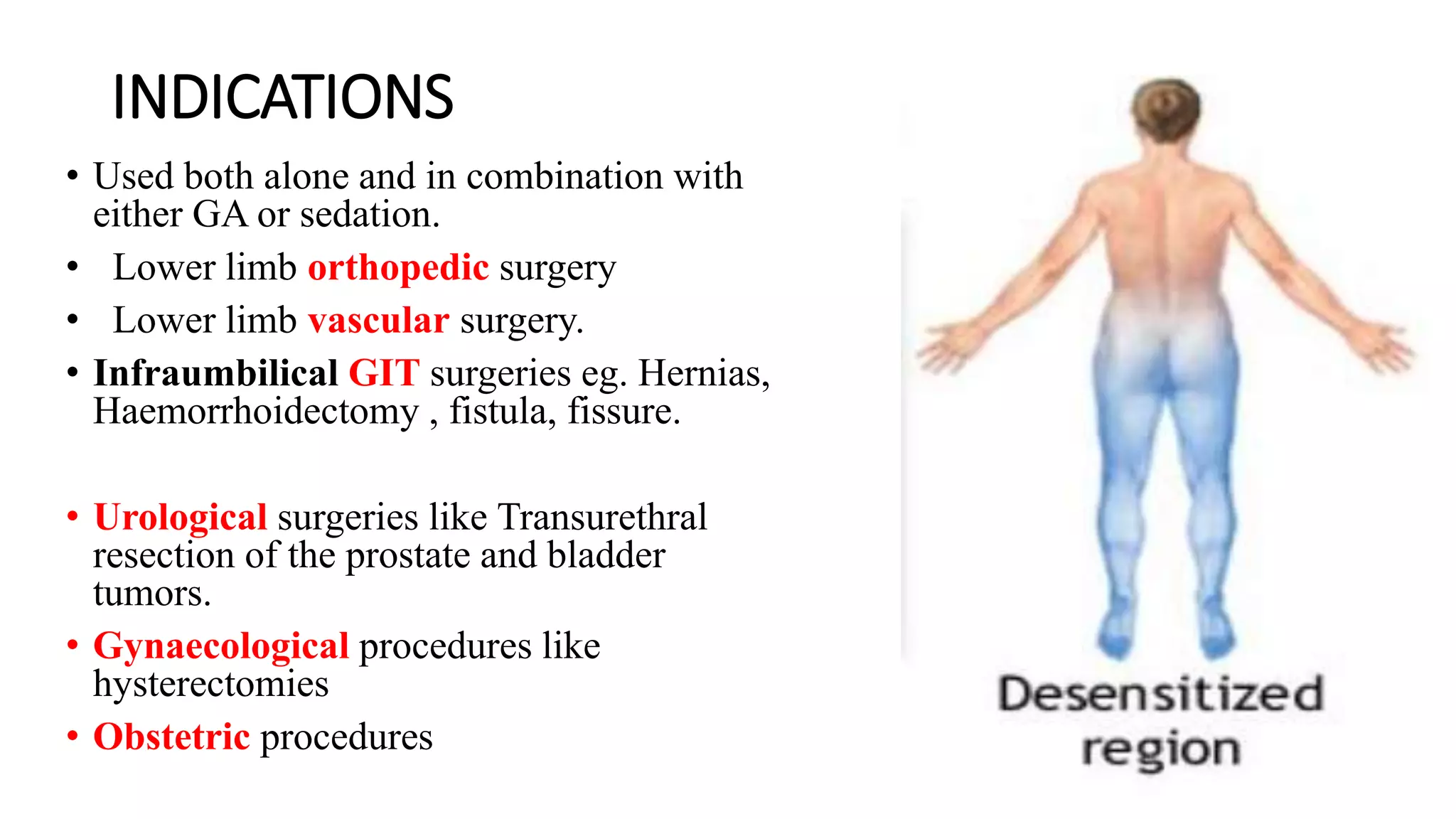
INDICATIONS
• Used both alone and in combination with
either GA or sedation.
• Lower limb orthopedic surgery
• Lower limb vascular surgery.
• Infraumbilical GIT surgeries eg. Hernias,
Haemorrhoidectomy , fistula, fissure.
• Urological surgeries like Transurethral
resection of the prostate and bladder
tumors.
• Gynaecological procedures like
hysterectomies
• Obstetric procedures
• Choice of Anaesthesia in Elderly- - maintainence of mental function
• Obstetric Anaesthesia - cesarean section
• Difficult Airway
 In pts with Medical derangement- :
-Metabolic disease. Diabetes mellitus.
-Respiratory disease. Low SAB has no effect on ventilation and obviates the
requirement for anaesthetic drugs with depressant
properties..
-Cardiovascular disease. Low SAB may be valuable in patient with IHD or CCF, in
whom a small reduction in preload and afterload may be beneficial.
CONTRAINDICATIONS:
ABSOLUTE
1. skin infection at injection site
2. severe hypovolemia
3. coagulopathy
4. increase intracranial pressure
5. lack of consent / patient refusal
6. allergy to drugs
7. Shock /sepsis
8. severe AS or MS
RELATIVE
1. uncooperative patient
2. preexisting neurological deficits
3. demyelinating lesions
4. severe spinal deformity
5. infection at site remote from
insertion
Recommendations For A Safe SAB
4P’s
• Preparation
• Position
• Projection
• Puncture
Preparation of the patient
Psychological Preparation:
• Preoperative Visit
• Written informed consent
Pharamacological Premedication:
• Benzodiazephines
• H2 blockers
IV Access and Preloading:
• Crystalloids at rate of about 10-
15ml/kg
Anesthesia Apparatus Checkout
Selection of appropriate drug and
dosage:
• according to the surgical procedure
and patient variables
Baseline Vitals
PREPARATION OF THE PATIENT- CLEANING
AND DRAPING
• Scrub hands according to aseptic surgical
technique
• Use sterile gloves
• Avoid contamination
• Use aseptic technique when opening tray.
• Clean the skin prior to needle puncture.
• Touch only sterile articles once gloved.
• Avoid repeated traumatic punctures.
• Use approved local anaesthetic agents in standard
concentration
∗ Clean the skin surface twice with betadine
and twice with spirit using window technique
with sterile gauze
INTRAVENOUS PRELOADING
• Large IV cannula
• IV fluids immediately before the spinal
• The volume of fluid given will vary with age and extent of block
• Ideally – 10ml/kg
• Crystalloids like Ringer lactate , 0.9% normal saline are used
• Now co-loading.
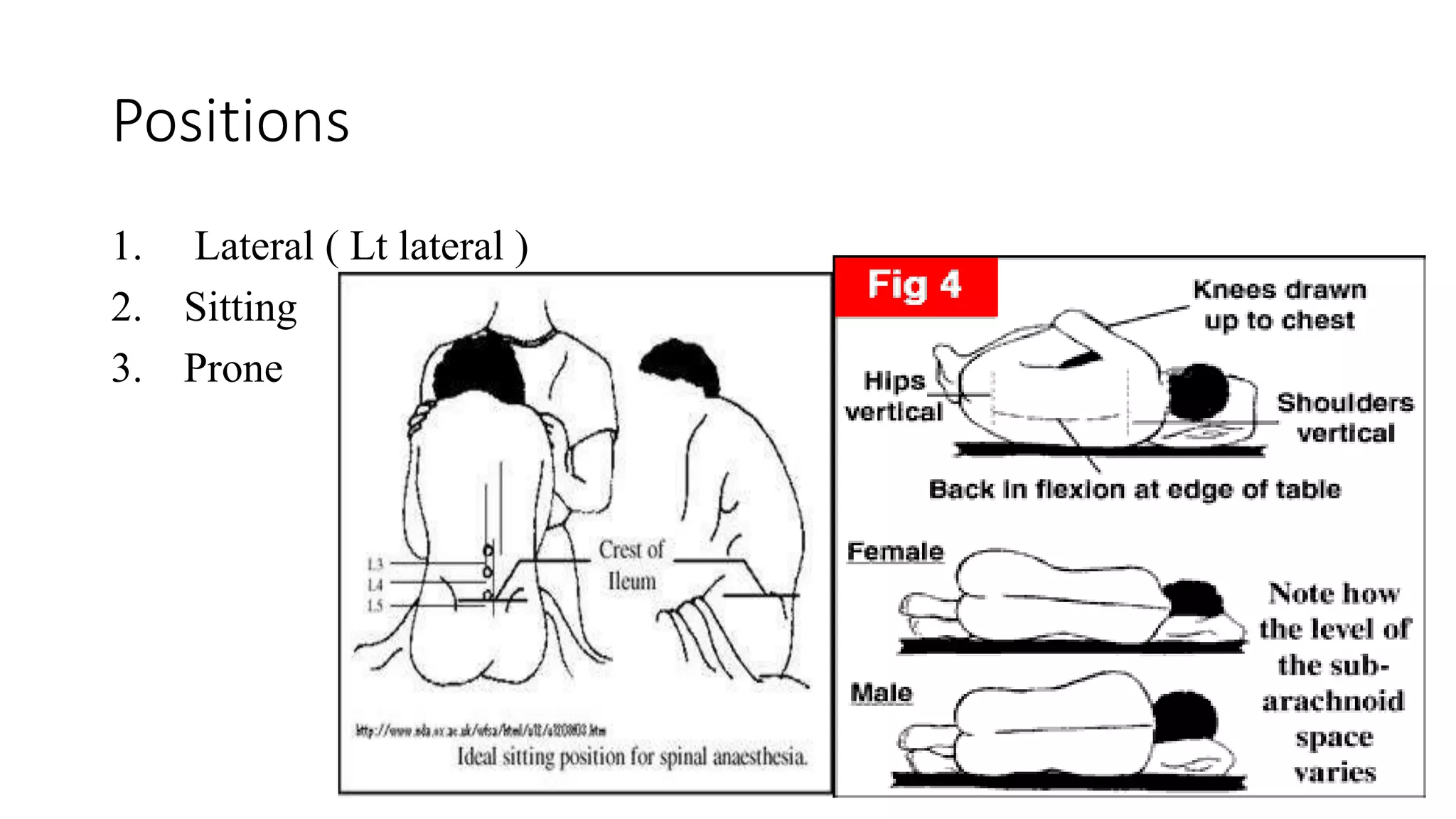
Positions
1. Lateral ( Lt lateral )
2. Sitting
3. Prone
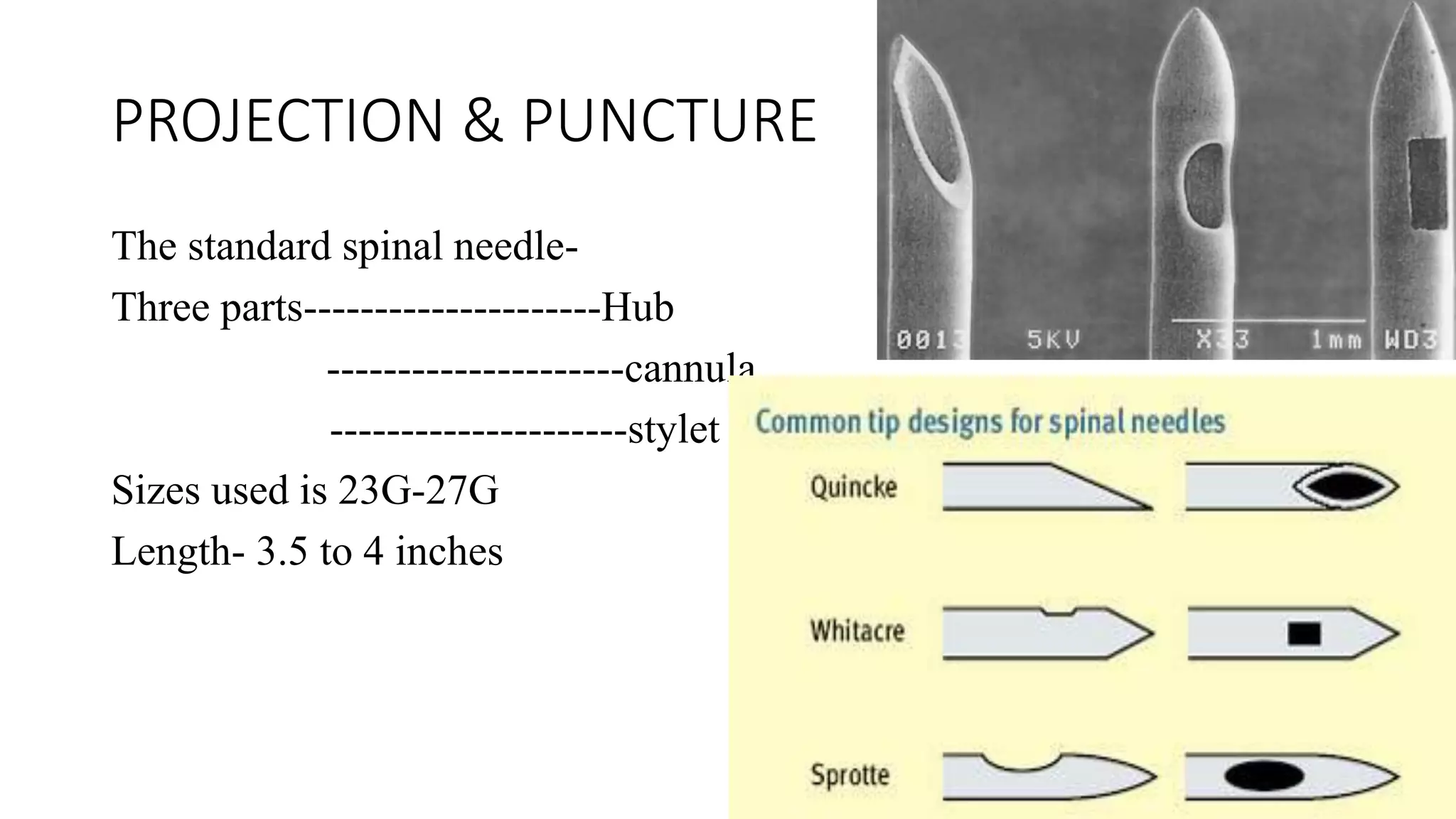
PROJECTION & PUNCTURE
The standard spinal needle-
Three parts---------------------Hub
---------------------cannula
---------------------stylet
Sizes used is 23G-27G
Length- 3.5 to 4 inches
PROJECTION & PUNCTURE
Three approaches:
• Midline Approach
• Paramedian (Lateral) Approach
• Lumbosacral Approach (Taylor Technique)
Free flow of CSF:
• Stylet removal
• Bevel rotated in 90-degree increments until CSF appears
• Non-appearance of CSF – not in midline; increased cephalad
angulation
Testing of Effect
• Sensation of temperature- Ice, Alcohol swab
• Sensation of Pin-prick – Blunt tipped / Forceps
• Motor power – Bromage scale
Monitoring During The Procedure
• ECG
• SpO2
• RR
• NIBP
• Temp.
• consciousness
IMMEDIATE complications…
• Hypotension
• Bradycardia and asystole
• High spinal anesthesia
• shivering
• Nausea and vomiting
• Respiratory impairment
• Affective dyspnea
• Vasovagal syncope
• CNS irritation
• Inadequate anesthesia or analgesia
• Intravascular injection
• Difficult spinal puncture
• Traumatic spinal puncture
• Broken needle
• Unexpected cardiac arrest
• Urinary retention
• Allergic reactions
26
DELAYED complications…
• Post spinal puncture headache
• Cranial nerve disturbances
• Infections
• Ischemic damage to the cord
• Backache
• Neurotoxic effects : meningismus
: adhesive arachnoiditis
: Transient neurological symptoms
: Cauda equina syndrome
27
Transient Neurological Symptoms
 Transient radicular irritation refers to pain, dysesthesia or both in the
legs or buttocks after spinal anesthesia,
Resolves spontaneously within several days.
Most common with hyperbaric lidocaine and after surgery in
lithotomy position
ADVANTAGES OF SPINAL ANESTHESIA
1. Cost- minimal.
2. Patient satisfaction- majority of patients are very happy with this
technique.
3. Respiratory disease- SAB produces few adverse effects on the
respiratory system as long as unduly high blocks are avoided.
4. Patent airway- As control of the airway is not compromised,
there is a reduced risk of airway obstruction or the aspiration of
gastric contents.
5. Diabetic patients- There is little risk of unrecognised
hypoglycaemia in an awake patient.
ADVANTAGES OF SPINAL ANESTHESIA
6. Muscle relaxation- SAB provides excellent muscle relaxation for lower
abdominal and lower limb surgery.
7. Bleeding- Blood loss during operation is less than when the same
operation is done under general anaesthesia
8. Splanchnic blood flow- Because of its effect on increasing blood flow to
the gut, spinal anaesthesia reduces the incidence of anastomotic dehiscence
9. Visceral tone- The bowel is contracted and sphincters relaxed although
peristalsis continues. Normal gut function rapidly returns following surgery.
10. Coagulation- Post-operative deep vein thrombosis and pulmonary
emboli are less common following spinal anaesthesia.
The end 31
Factors affecting spread of local anaesthetics
• Baricity
• Position
• Volume injected
• Level of Injection
• Concentration Of local anesth
• Speed Of injection
• Abdominal pressure (ascites/ pregnancy/tumors) .
Spinal anaesthesia  basics

Spinal anaesthesia basics

  • 1.
  • 2.
    • DEFINITION • ANATOMY •PHYSIOLOGY • INDICATIONS • CONTRAINDICATIONS • PREPARATION AND POSITION • COMPLICATIONS
  • 3.
    Definition … It isthe regional anaesthesia obtained by temporary interruption of nerve transmission of spinal nerves by injecting anaesthetic agents in to the subarachnoid space. HISTORY • Corning accidentally administered cocaine intrathecally in 1885 • The first spinal anaesthesia in humans was given by Beir from Germany in 1898 using 0.5% cocaine.
  • 4.
    ANATOMY- spinal cord #Continuation of Medulla Oblangata and extends to L2 # The spinal cord consists of 31 pairs of spinal nerves # In the newborn the spinal cord terminates in the lower border of 3rd lumbar vertebrae. # In adults spinal cord terminates at the disc between 1st and 2nd lumbar vertebrae # After L1 the nerve roots course for some distance before exiting the intervertebral formina forming cauda equina (horse tail)
  • 5.
    Subarachnoid space • Itis the space that lies between the arachnoid matter and pia matter • It contains the CSF, nerve roots, blood vessels that supply the spinal cord • The spinal subarachnoid space extends from foramen magnum to S2 in adults and S3 in children
  • 6.
    Topographic line ofTuffier •Line across the back between the iliac crests •Surface landmark for identification and numbering of lumbar vertebrae and interspaces. •Upright Position: passes over spine of L4 vertebra •Lateral Decubitus Position: passes over L4-5 Interspace
  • 8.
    Structures pierced duringspinal anaesthesia
  • 9.
    Mechanism Of Action •There are three classes of nerve: motor, sensory and autonomic. • Primary Site of action: The Nerve Root in subarachnoid space • motor nerves causes muscles to contract and when they are blocked, muscle paralysis results. • Sensory nerves transmit sensations such as touch and pain to the spinal cord and from there to the brain, whilst • autonomic nerves control the calibre of blood vessels, heart rate, gut contraction. • Generally, autonomic and sensory fibres are blocked before motor fibres.
  • 10.
    How Does SABwork ???? • Local anaesthetic solution injected into the subarachnoid space blocks conduction of impulses along all nerves with which it comes in contact, although some nerves are more easily blocked than others. • LA Interacts with the receptor situated within the voltage sensitive sodium channel and raises the threshold of channel opening • Decreases the entry of sodium ions during upstroke of action potential • Local depolarization fails to reach the threshold potential and conduction block ensues
  • 11.
    Physiological Responses…. CVS • Symphatheticdenervation • Loss of vasomotor tone • Arterial and venous dilation • Decreased periperal vascular resistance and peripheral pooling of blood • Decreased venous return to heart and hence hypotension • blockage of the cardio accelerator fibres located in T1 to T4 causing bradycardia and hypotension • Reasonable to allow a modest decrease but treat more than a 20% decline. Respiratory system • There is a little effect on pulmonary function in patient without pre-existing lung disease. • in Patient with severe chronic lung disease relaxation of intercostals and abdominal muscles causes decrease in expiration and decreased clearance of secretions
  • 12.
    Pharmacology- Local Anestheticsfor Spinal Anesthesia Short acting (<90minutes) • Procaine • chloprocaine • Lidocaine • Mepivacaine Long acting (>90 minutes) • Tetracaine • Bupivacaine • Ropivacaine • S - Levobupivacaine • Bupivacaine •All medications used for spinal anesthesia should be preservative free. •Use medications specifically prepared for spinal anesthesia. •Aromatic Ring – fat soluble (hydrophobic) •Terminal Amine – water soluble (hydrophillic) •Ampophoteric character
  • 13.
    Additives • Dextrose –increasing baricity • Epinephrine - Prolonging duration of action • Phenylephrine - Prolonging duration of action • Ephedrine - Prolonging duration of action • Neostigmine - Prolongs and intensifies the analgesia • Clonidine - Prolonging motor block • Opiods - Prolongs and intensifies the analgesia and decreases Mean arterial pressure
  • 14.
    INDICATIONS • Used bothalone and in combination with either GA or sedation. • Lower limb orthopedic surgery • Lower limb vascular surgery. • Infraumbilical GIT surgeries eg. Hernias, Haemorrhoidectomy , fistula, fissure. • Urological surgeries like Transurethral resection of the prostate and bladder tumors. • Gynaecological procedures like hysterectomies • Obstetric procedures
  • 15.
    • Choice ofAnaesthesia in Elderly- - maintainence of mental function • Obstetric Anaesthesia - cesarean section • Difficult Airway  In pts with Medical derangement- : -Metabolic disease. Diabetes mellitus. -Respiratory disease. Low SAB has no effect on ventilation and obviates the requirement for anaesthetic drugs with depressant properties.. -Cardiovascular disease. Low SAB may be valuable in patient with IHD or CCF, in whom a small reduction in preload and afterload may be beneficial.
  • 16.
    CONTRAINDICATIONS: ABSOLUTE 1. skin infectionat injection site 2. severe hypovolemia 3. coagulopathy 4. increase intracranial pressure 5. lack of consent / patient refusal 6. allergy to drugs 7. Shock /sepsis 8. severe AS or MS RELATIVE 1. uncooperative patient 2. preexisting neurological deficits 3. demyelinating lesions 4. severe spinal deformity 5. infection at site remote from insertion
  • 17.
    Recommendations For ASafe SAB 4P’s • Preparation • Position • Projection • Puncture
  • 18.
    Preparation of thepatient Psychological Preparation: • Preoperative Visit • Written informed consent Pharamacological Premedication: • Benzodiazephines • H2 blockers IV Access and Preloading: • Crystalloids at rate of about 10- 15ml/kg Anesthesia Apparatus Checkout Selection of appropriate drug and dosage: • according to the surgical procedure and patient variables Baseline Vitals
  • 19.
    PREPARATION OF THEPATIENT- CLEANING AND DRAPING • Scrub hands according to aseptic surgical technique • Use sterile gloves • Avoid contamination • Use aseptic technique when opening tray. • Clean the skin prior to needle puncture. • Touch only sterile articles once gloved. • Avoid repeated traumatic punctures. • Use approved local anaesthetic agents in standard concentration ∗ Clean the skin surface twice with betadine and twice with spirit using window technique with sterile gauze
  • 20.
    INTRAVENOUS PRELOADING • LargeIV cannula • IV fluids immediately before the spinal • The volume of fluid given will vary with age and extent of block • Ideally – 10ml/kg • Crystalloids like Ringer lactate , 0.9% normal saline are used • Now co-loading.
  • 21.
    Positions 1. Lateral (Lt lateral ) 2. Sitting 3. Prone
  • 22.
    PROJECTION & PUNCTURE Thestandard spinal needle- Three parts---------------------Hub ---------------------cannula ---------------------stylet Sizes used is 23G-27G Length- 3.5 to 4 inches
  • 23.
    PROJECTION & PUNCTURE Threeapproaches: • Midline Approach • Paramedian (Lateral) Approach • Lumbosacral Approach (Taylor Technique) Free flow of CSF: • Stylet removal • Bevel rotated in 90-degree increments until CSF appears • Non-appearance of CSF – not in midline; increased cephalad angulation
  • 24.
    Testing of Effect •Sensation of temperature- Ice, Alcohol swab • Sensation of Pin-prick – Blunt tipped / Forceps • Motor power – Bromage scale
  • 25.
    Monitoring During TheProcedure • ECG • SpO2 • RR • NIBP • Temp. • consciousness
  • 26.
    IMMEDIATE complications… • Hypotension •Bradycardia and asystole • High spinal anesthesia • shivering • Nausea and vomiting • Respiratory impairment • Affective dyspnea • Vasovagal syncope • CNS irritation • Inadequate anesthesia or analgesia • Intravascular injection • Difficult spinal puncture • Traumatic spinal puncture • Broken needle • Unexpected cardiac arrest • Urinary retention • Allergic reactions 26
  • 27.
    DELAYED complications… • Postspinal puncture headache • Cranial nerve disturbances • Infections • Ischemic damage to the cord • Backache • Neurotoxic effects : meningismus : adhesive arachnoiditis : Transient neurological symptoms : Cauda equina syndrome 27
  • 28.
    Transient Neurological Symptoms Transient radicular irritation refers to pain, dysesthesia or both in the legs or buttocks after spinal anesthesia, Resolves spontaneously within several days. Most common with hyperbaric lidocaine and after surgery in lithotomy position
  • 29.
    ADVANTAGES OF SPINALANESTHESIA 1. Cost- minimal. 2. Patient satisfaction- majority of patients are very happy with this technique. 3. Respiratory disease- SAB produces few adverse effects on the respiratory system as long as unduly high blocks are avoided. 4. Patent airway- As control of the airway is not compromised, there is a reduced risk of airway obstruction or the aspiration of gastric contents. 5. Diabetic patients- There is little risk of unrecognised hypoglycaemia in an awake patient.
  • 30.
    ADVANTAGES OF SPINALANESTHESIA 6. Muscle relaxation- SAB provides excellent muscle relaxation for lower abdominal and lower limb surgery. 7. Bleeding- Blood loss during operation is less than when the same operation is done under general anaesthesia 8. Splanchnic blood flow- Because of its effect on increasing blood flow to the gut, spinal anaesthesia reduces the incidence of anastomotic dehiscence 9. Visceral tone- The bowel is contracted and sphincters relaxed although peristalsis continues. Normal gut function rapidly returns following surgery. 10. Coagulation- Post-operative deep vein thrombosis and pulmonary emboli are less common following spinal anaesthesia.
  • 31.
  • 37.
    Factors affecting spreadof local anaesthetics • Baricity • Position • Volume injected • Level of Injection • Concentration Of local anesth • Speed Of injection • Abdominal pressure (ascites/ pregnancy/tumors) .

Editor's Notes

  • #27 Management Responsive to atropine and ephedrine Ephedrine - 5 to 50mg i.v Atropine - 0.4 to 1mgi.v Profound bradycardia - Epinephrine(1.0 mg i.v) immediate treatment with full resuscitation doses Prevention - maintainance of preload and reversal of bradycardia. This is particularly likely to occur in an anxious patient with a rapidly ascending spinal block. Pallor, nausea and bradycardia are associated with the hypotension. The supine position is no guarantee against this complication. Rapid resolution results from placing the patient head-down and the administration of i.v.ephedrine 5-6 mg. Cautious i.v. sedation (e.g. midazolam 1-2mg) may be helpful.