This document discusses sperm capacitation, which prepares sperm to fertilize an egg. It involves physiological changes to the sperm, including changes to its motility and ability to undergo the acrosome reaction. Capacitation involves removal of decapacitation factors from the sperm surface and changes in the sperm membrane and intracellular signaling. Specifically, it involves cholesterol removal from the membrane, increased calcium, pH and cAMP levels, and protein tyrosine phosphorylation within the sperm. These changes prime the sperm for fertilization by allowing the acrosome reaction and fusion with the egg.
In this document
Powered by AI
Capacitation enables sperm to fertilize; involves physiological changes during female tract residency.
Capacitation consists of membrane alterations and acrosome reactions, requiring decapacitation factor removal.
Medium constituents including calcium, bicarbonate, proteins regulate capacitation alongside intracellular messengers.
Medium constituents including calcium, bicarbonate, proteins regulate capacitation alongside intracellular messengers.
Free radicals play roles in sperm viability and lipid peroxidation; heparin promotes capacitation.Medium constituents including calcium, bicarbonate, proteins regulate capacitation alongside intracellular messengers.
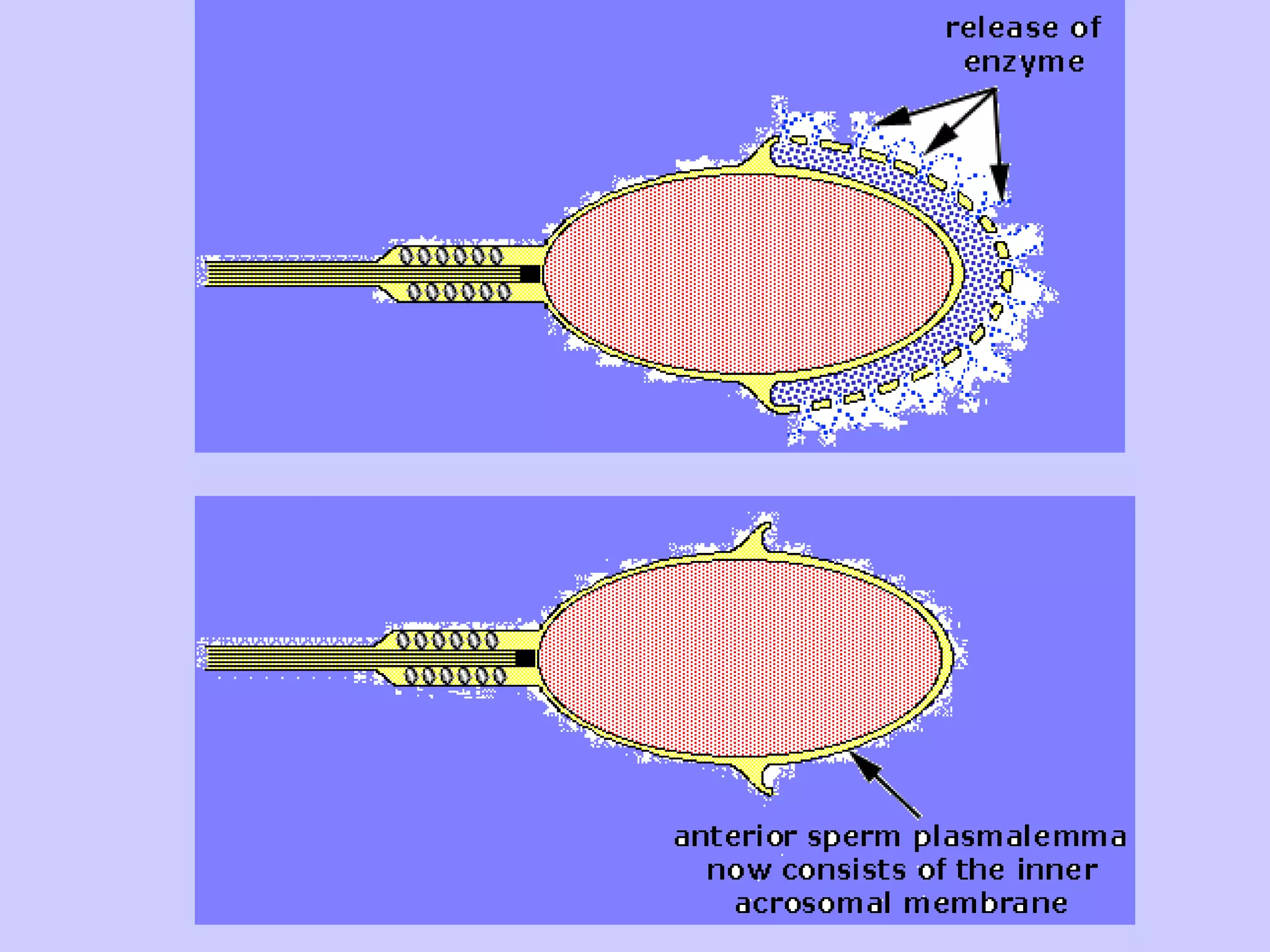
Final step in sperm preparation for fertilization where plasma and acrosomal membranes fuse.
What is capacitation?
•It is a process that allows the acrosome
reaction to occur, So the sperm can
penetrate the zona pellucida of the
oocyte.
• The physiological changes that confer on
the sperm the ability to fertilize are
called Capacitation.
3.
Introduction
• After leavingthe testis, mammalian
spermatozoa are morphologically
differentiated but have acquired neither
progressive motility nor the ability to
fertilize a metaphase II arrested egg.
• During epididymal transit, sperm
acquire the ability to move progressively;
but they are still fertilization
incompetent.
4.
Int.Cont.
• Fertilization capacityis gained after
residence in the female tract for a finite
time.
• Capacitation is also correlated with
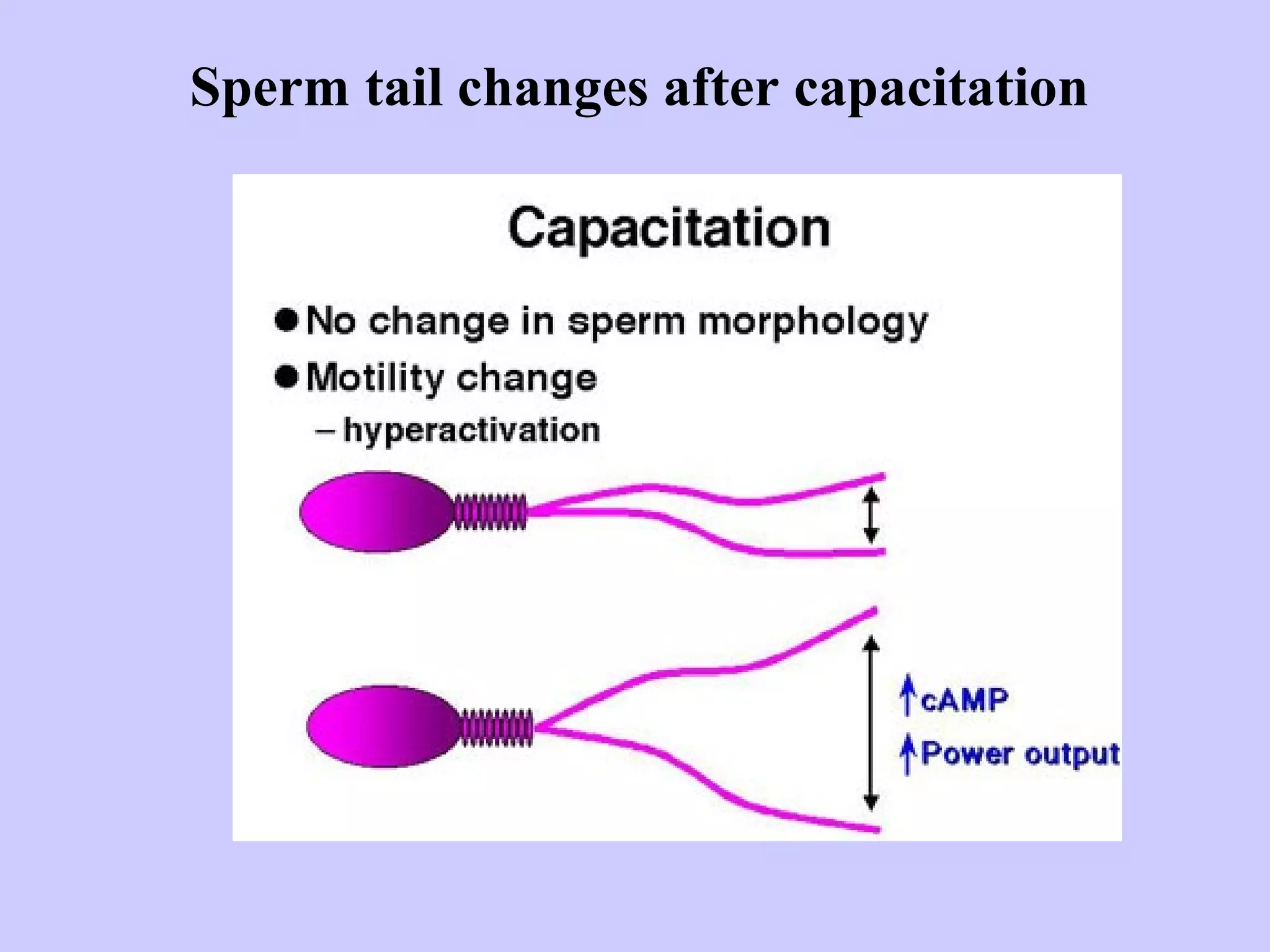
changes in sperm motility patterns,
designated as sperm hyperactivation.
• Capacitation causes head changes
(acrosome reaction) and tail changes
(motility changes).
5.
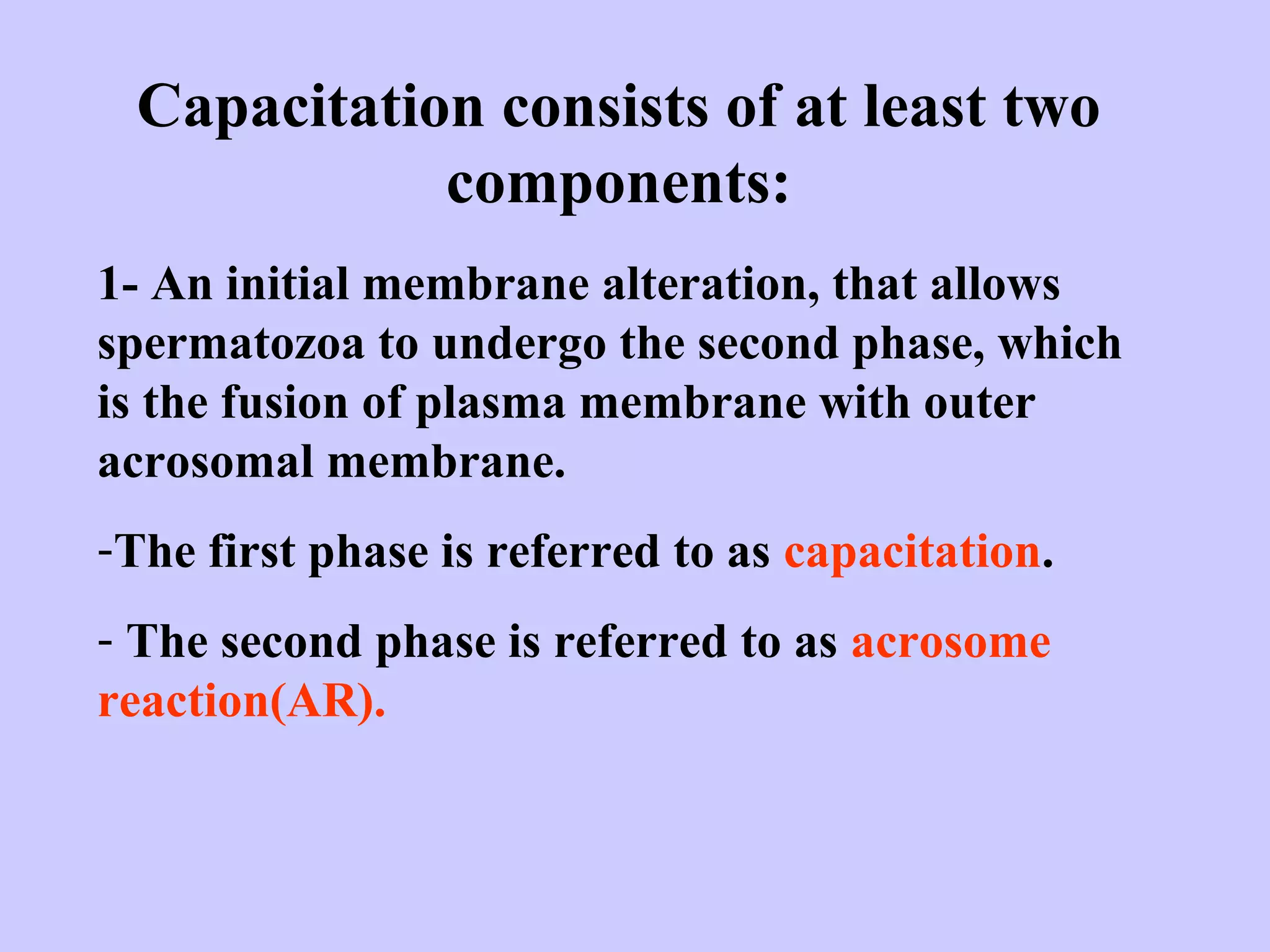
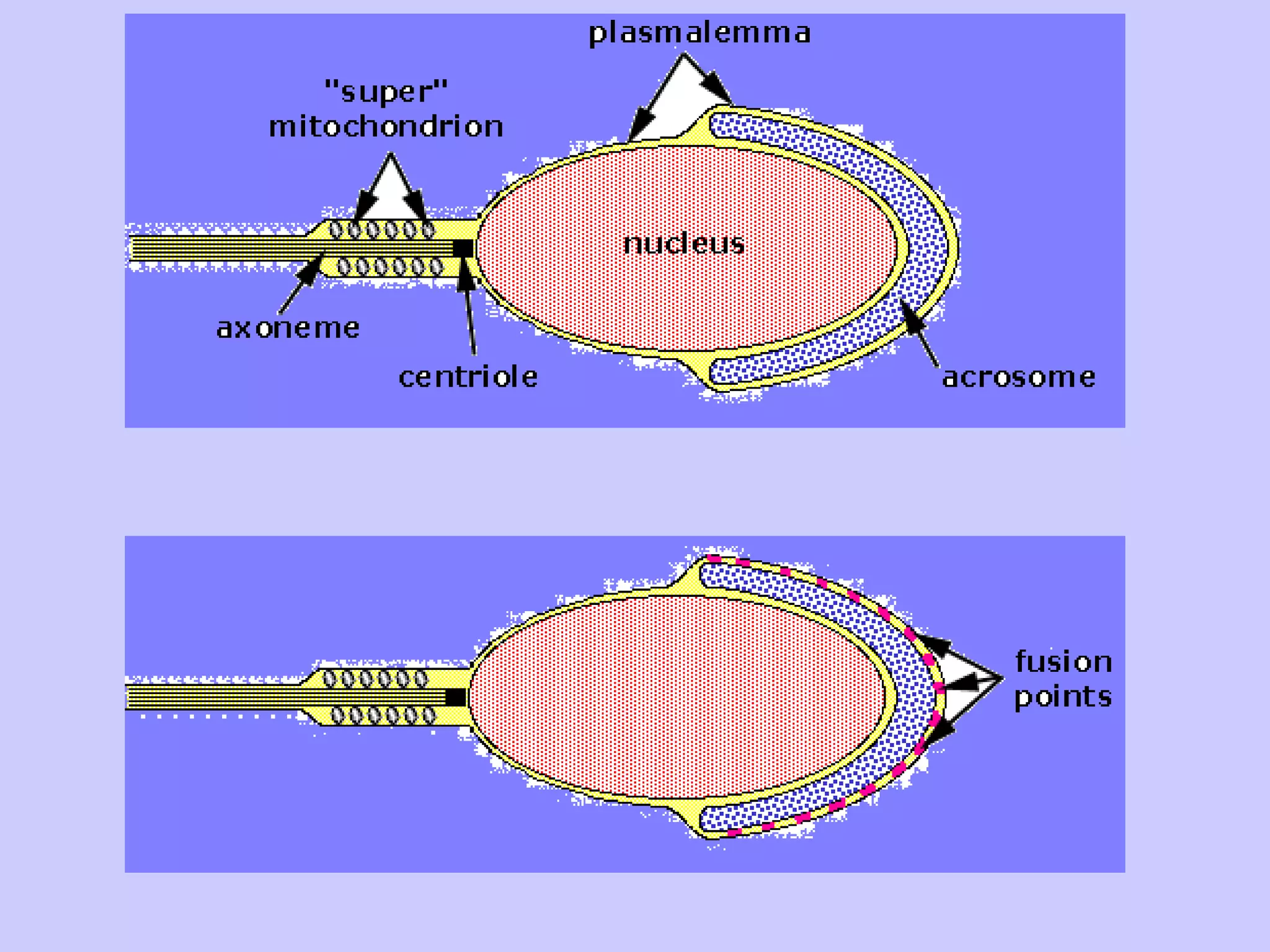
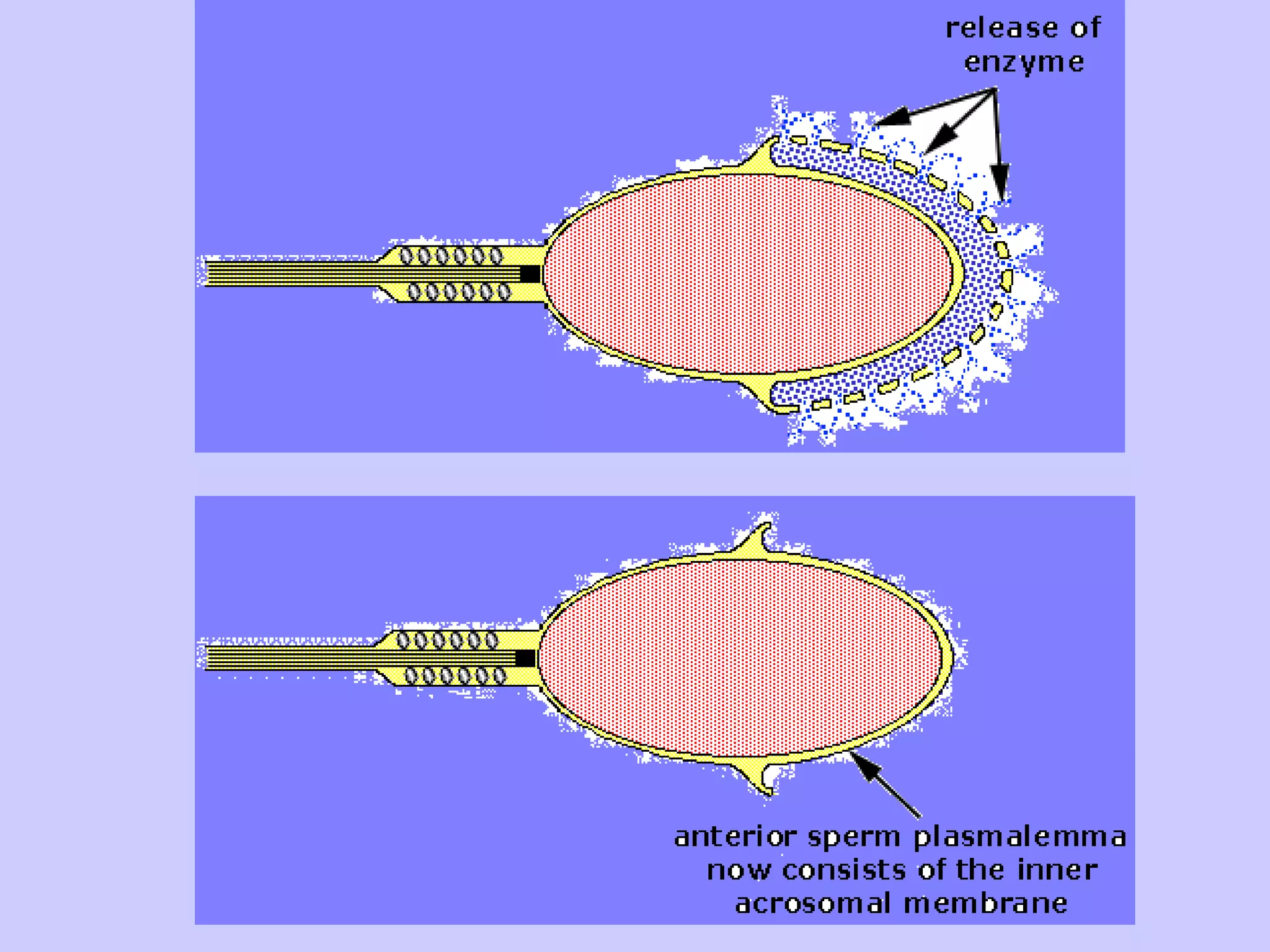
Capacitation consists ofat least two
components:
1- An initial membrane alteration, that allows
spermatozoa to undergo the second phase, which
is the fusion of plasma membrane with outer
acrosomal membrane.
-The first phase is referred to as capacitation.
- The second phase is referred to as acrosome
reaction(AR).
What cause spermcapacitation?
• In vivo the oviduct and uterus fluids
capacitate the spermatozoa in different
animals.
• In vitro, both caudal or ejaculated sperm
capacitate when incubate under a variety
of conditions in defined madia.
11.
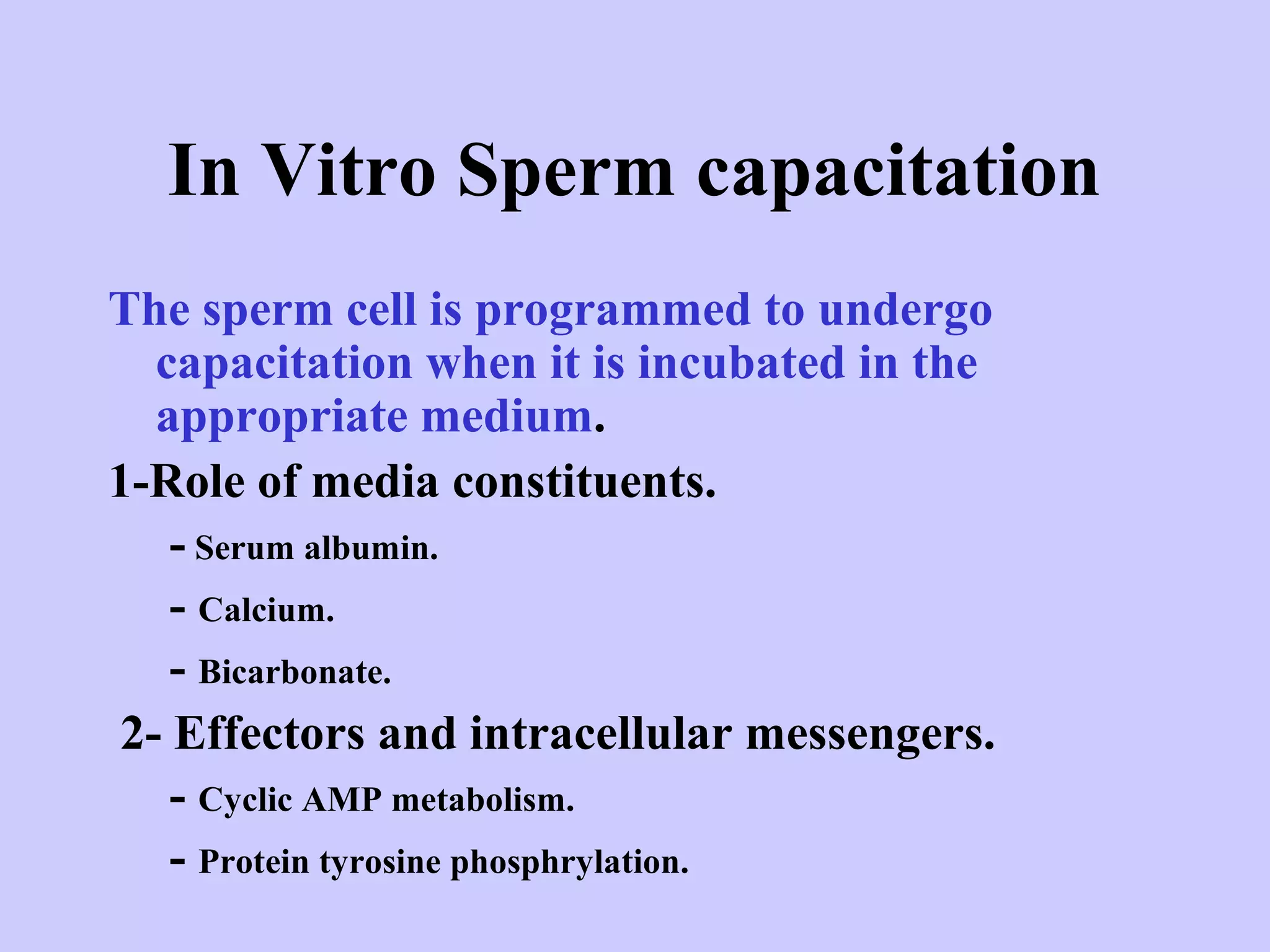
In Vitro Spermcapacitation
The sperm cell is programmed to undergo
capacitation when it is incubated in the
appropriate medium.
1-Role of media constituents.
- Serum albumin.
- Calcium.
- Bicarbonate.
2- Effectors and intracellular messengers.
- Cyclic AMP metabolism.
- Protein tyrosine phosphrylation.
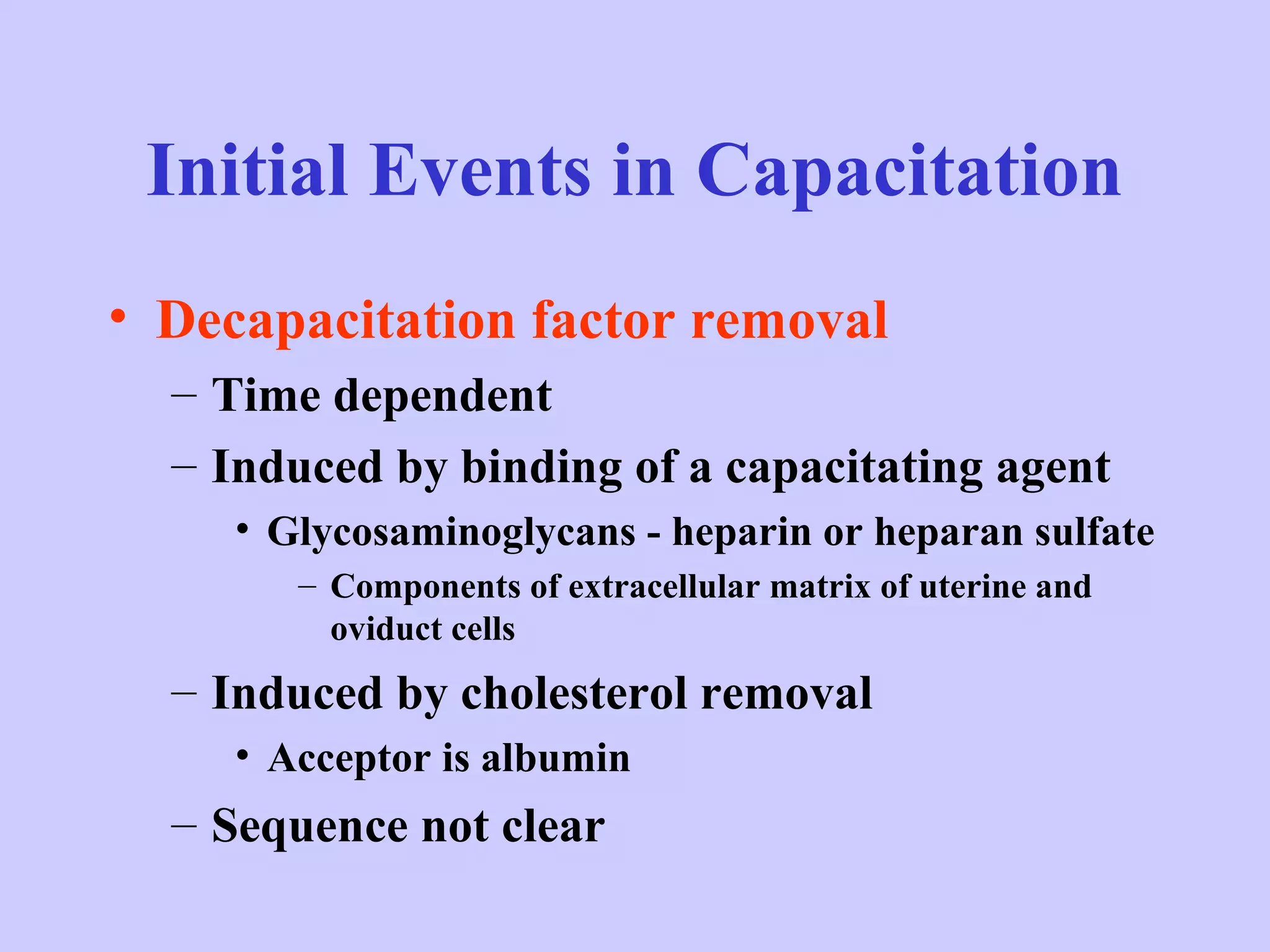
Initial Events inCapacitation
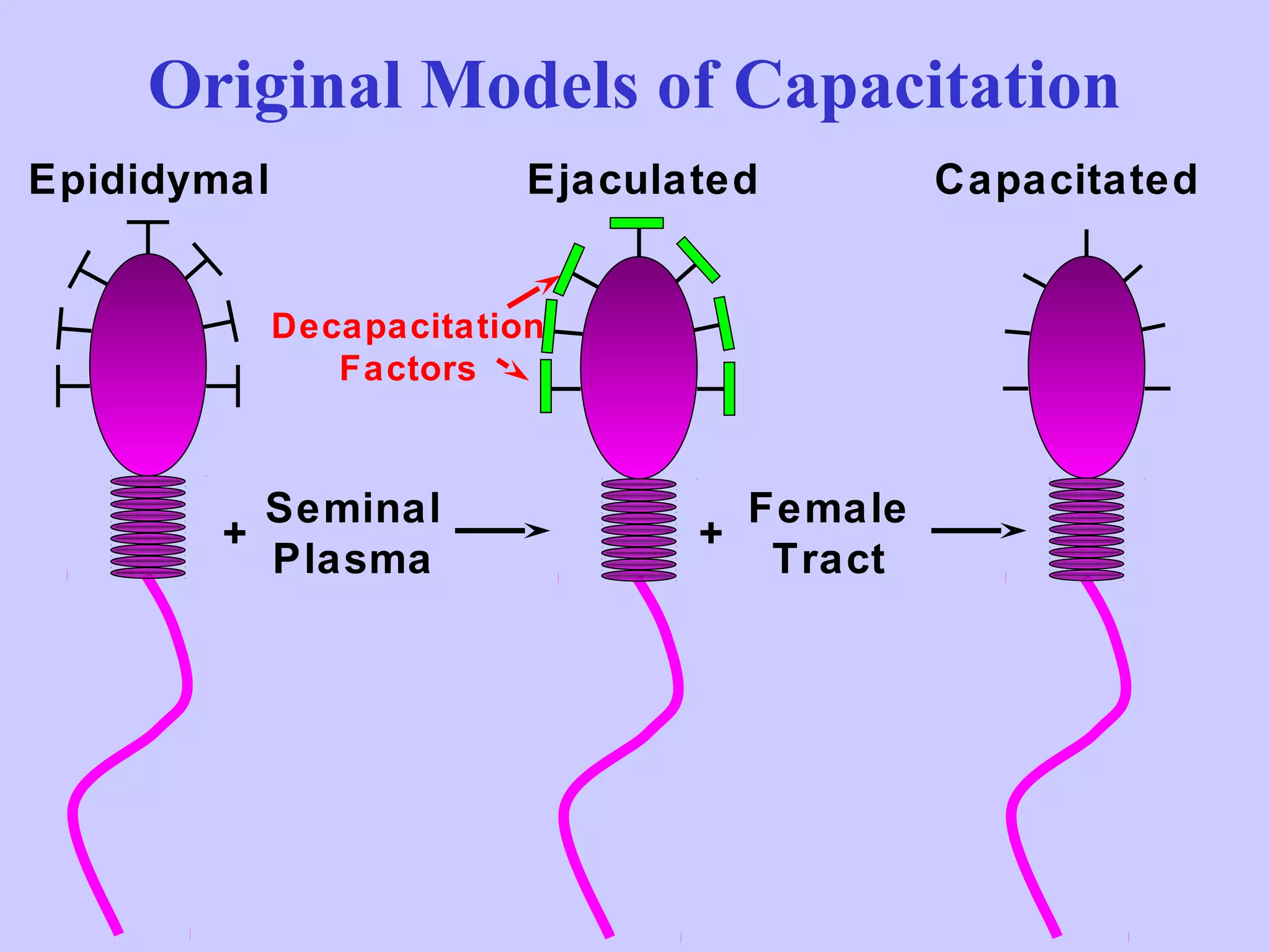
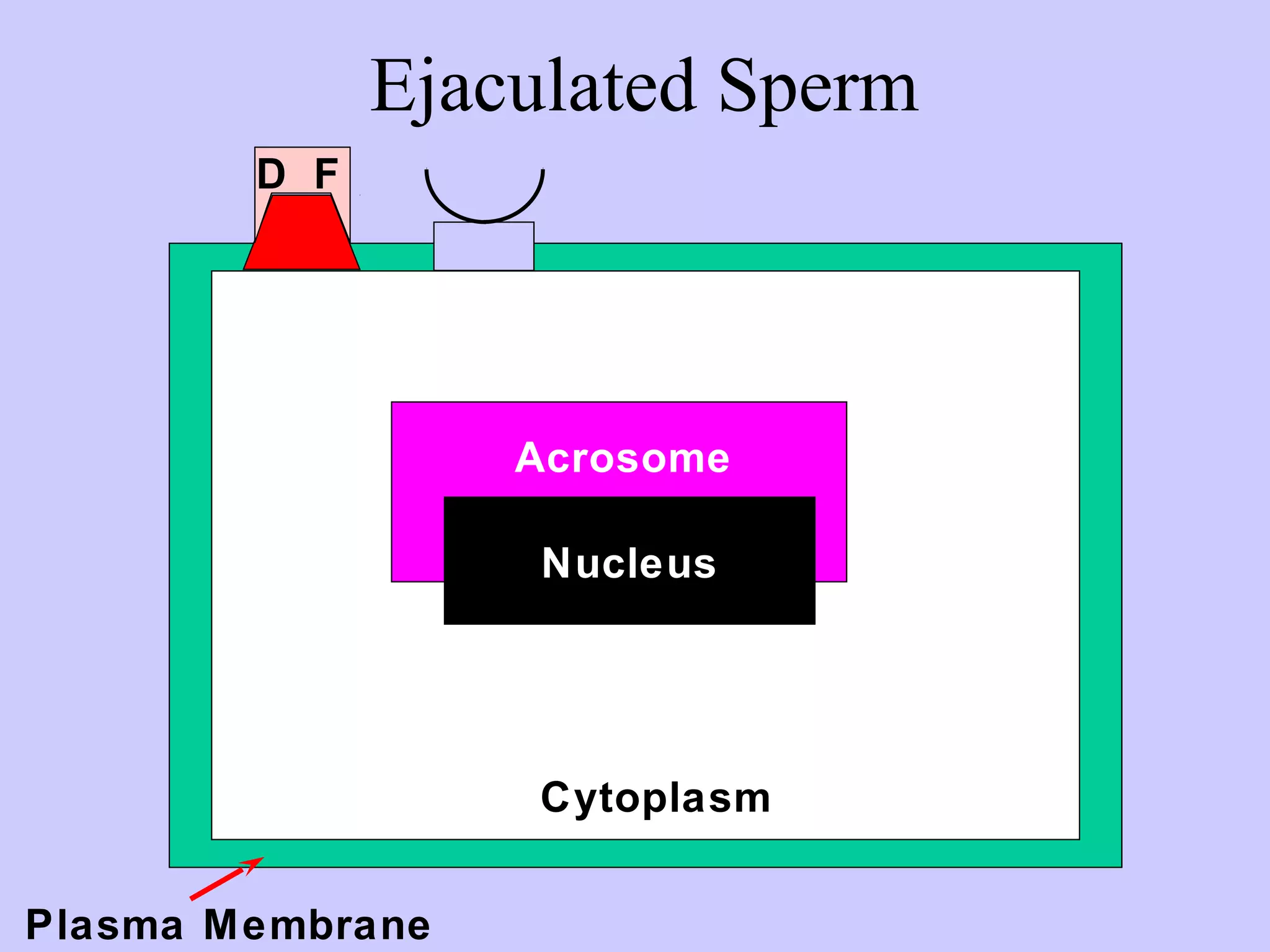
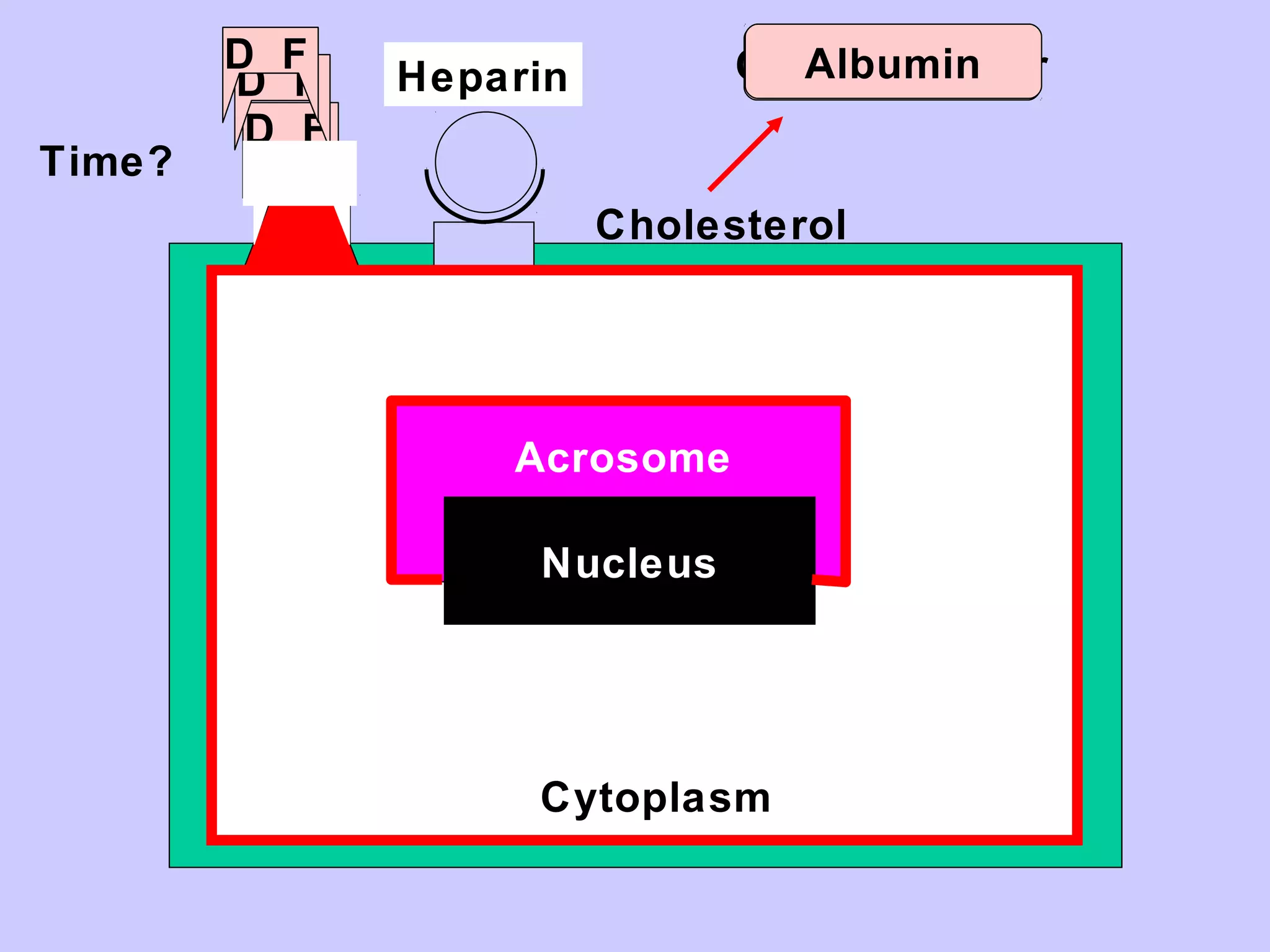
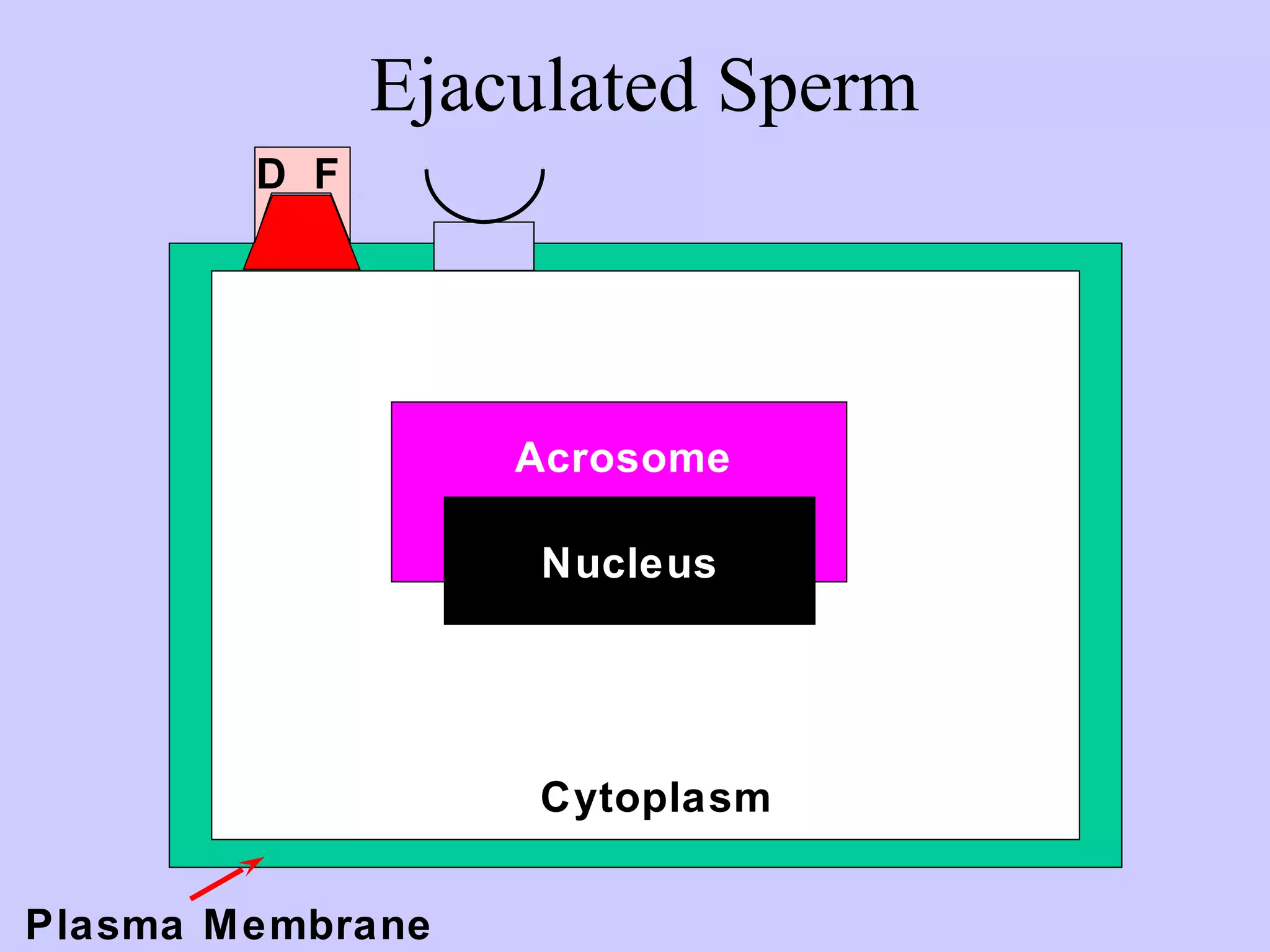
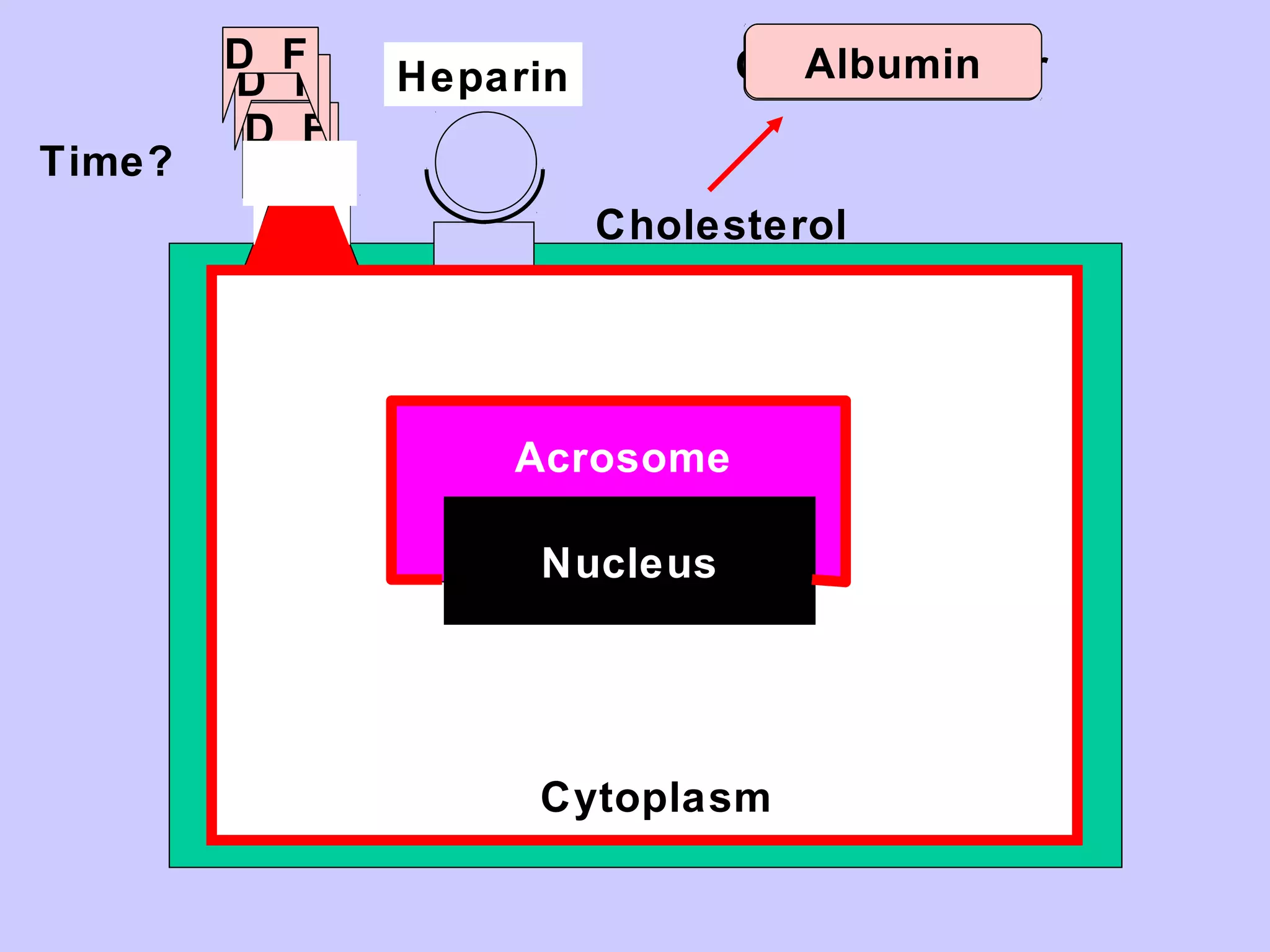
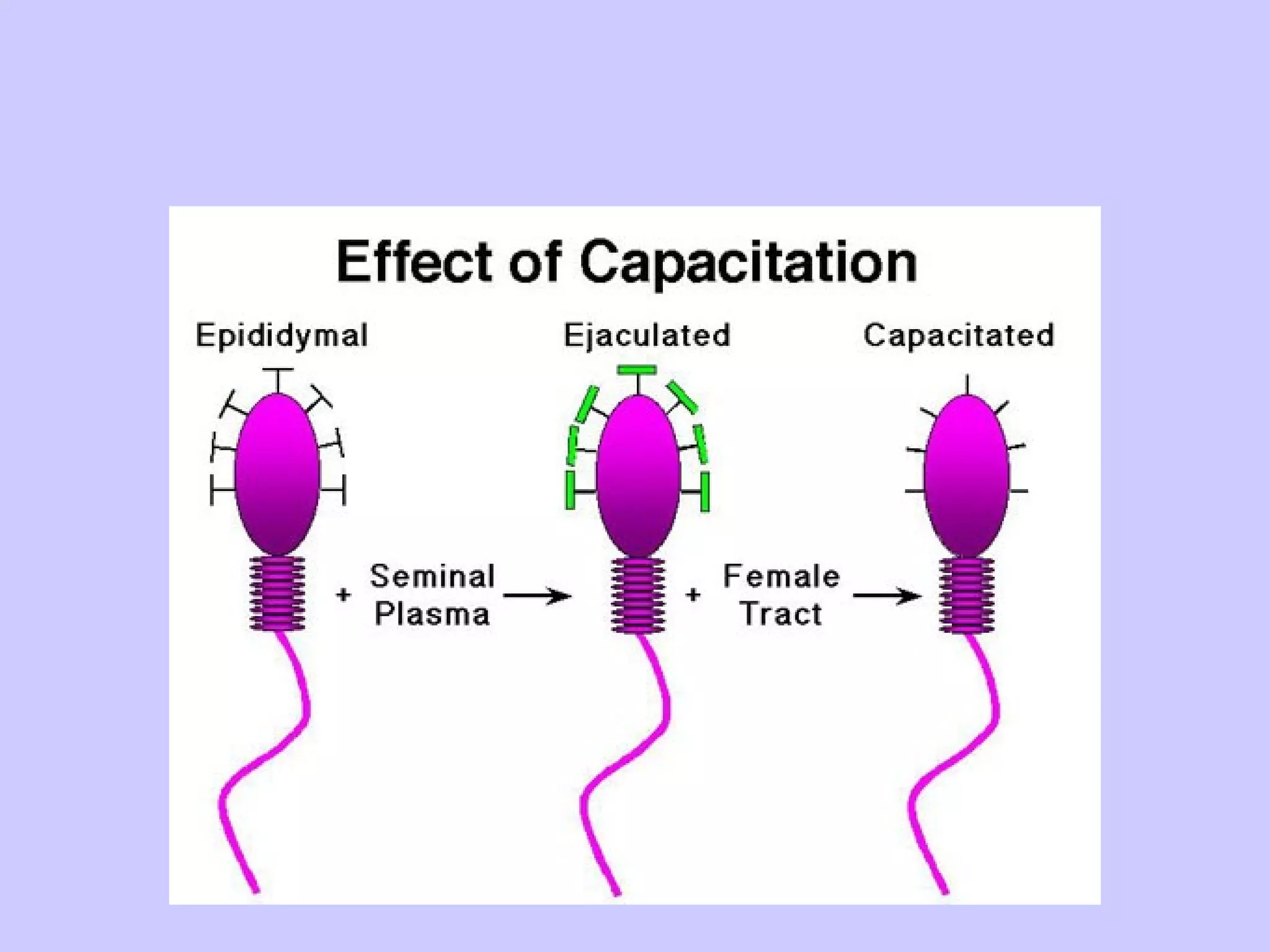
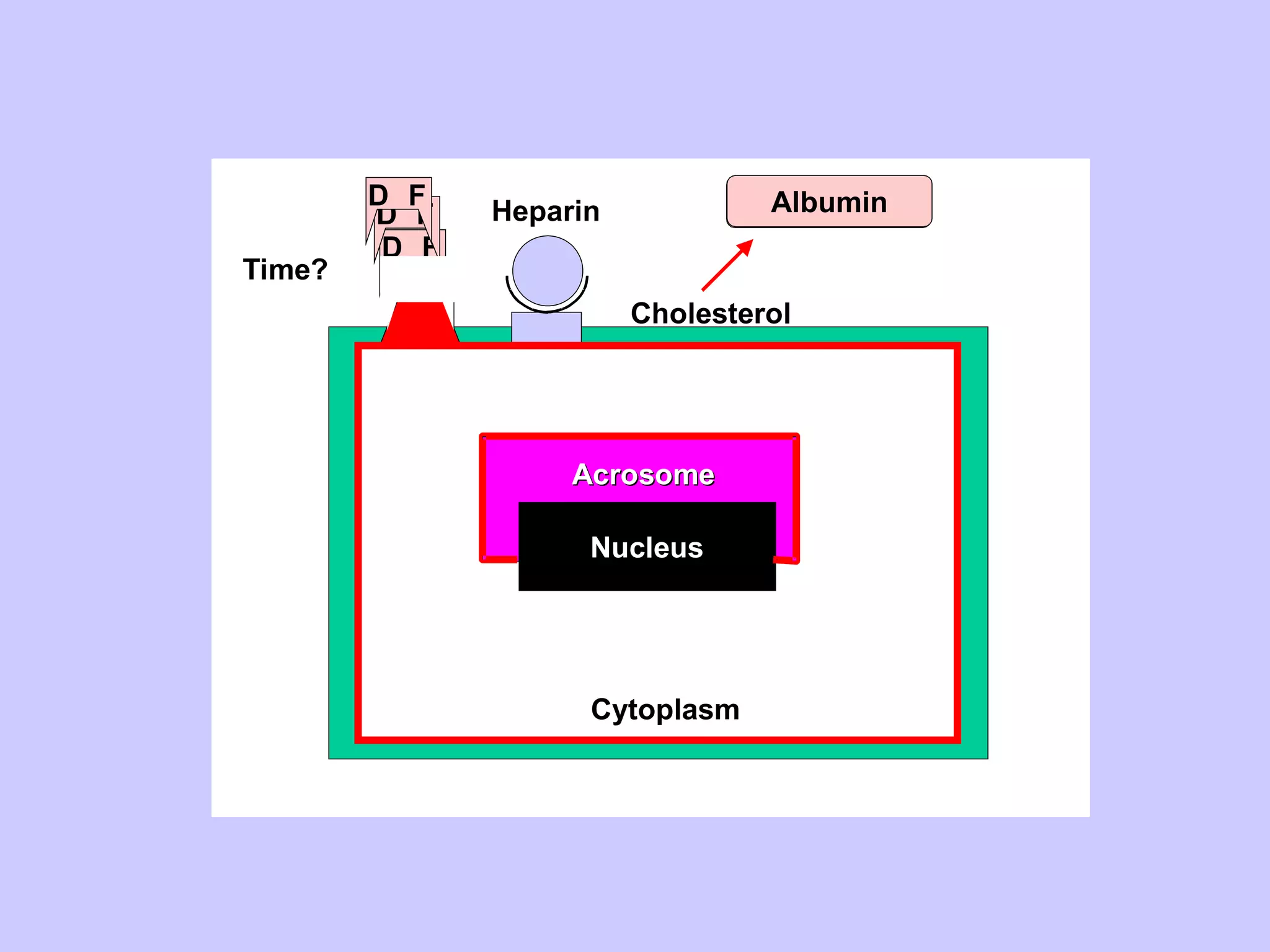
• Decapacitation factor removal
– Time dependent
– Induced by binding of a capacitating agent
• Glycosaminoglycans - heparin or heparan sulfate
– Components of extracellular matrix of uterine and
oviduct cells
– Induced by cholesterol removal
• Acceptor is albumin
– Sequence not clear
Role of mediaconstituents
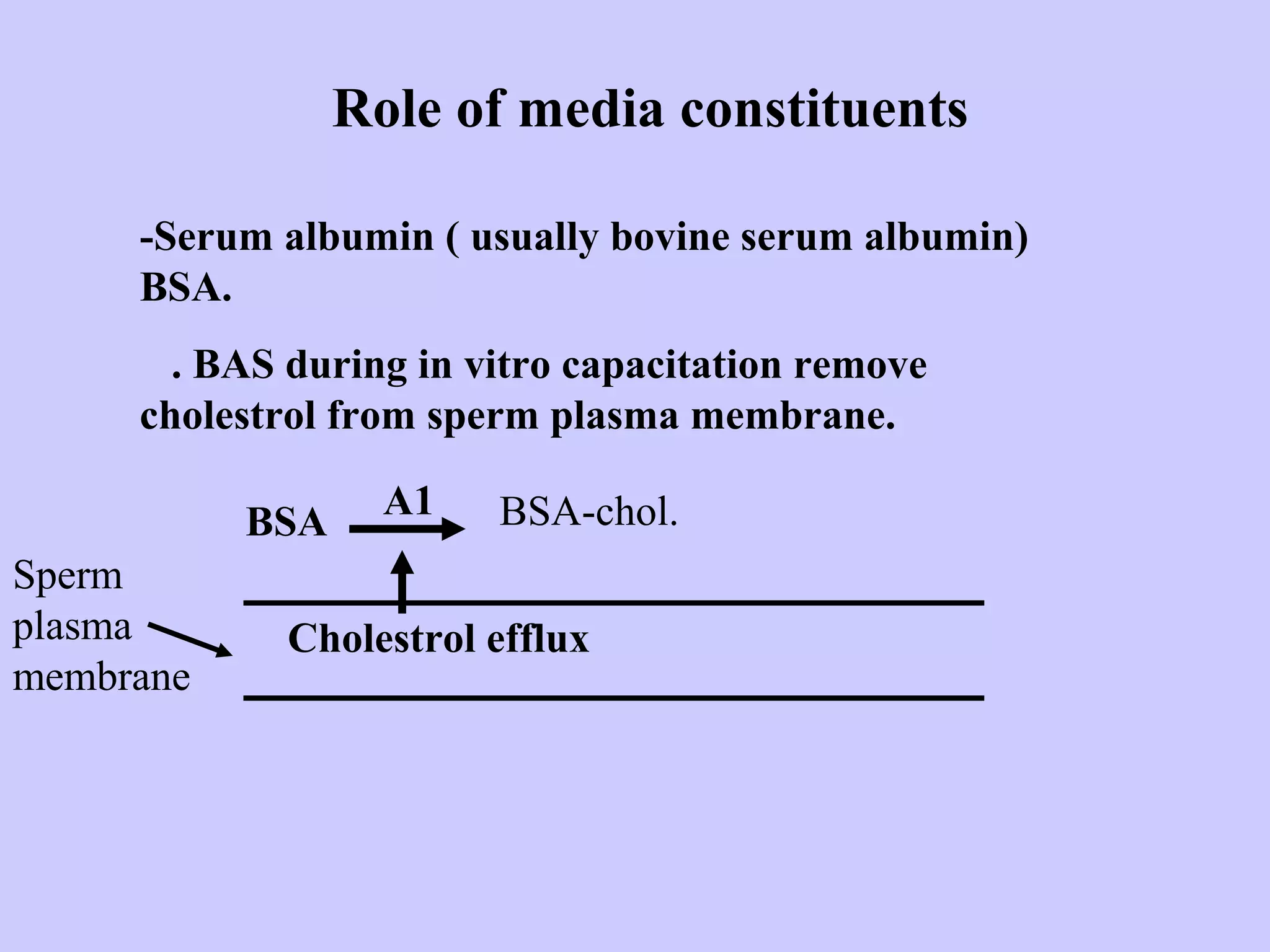
-Serum albumin ( usually bovine serum albumin)
BSA.
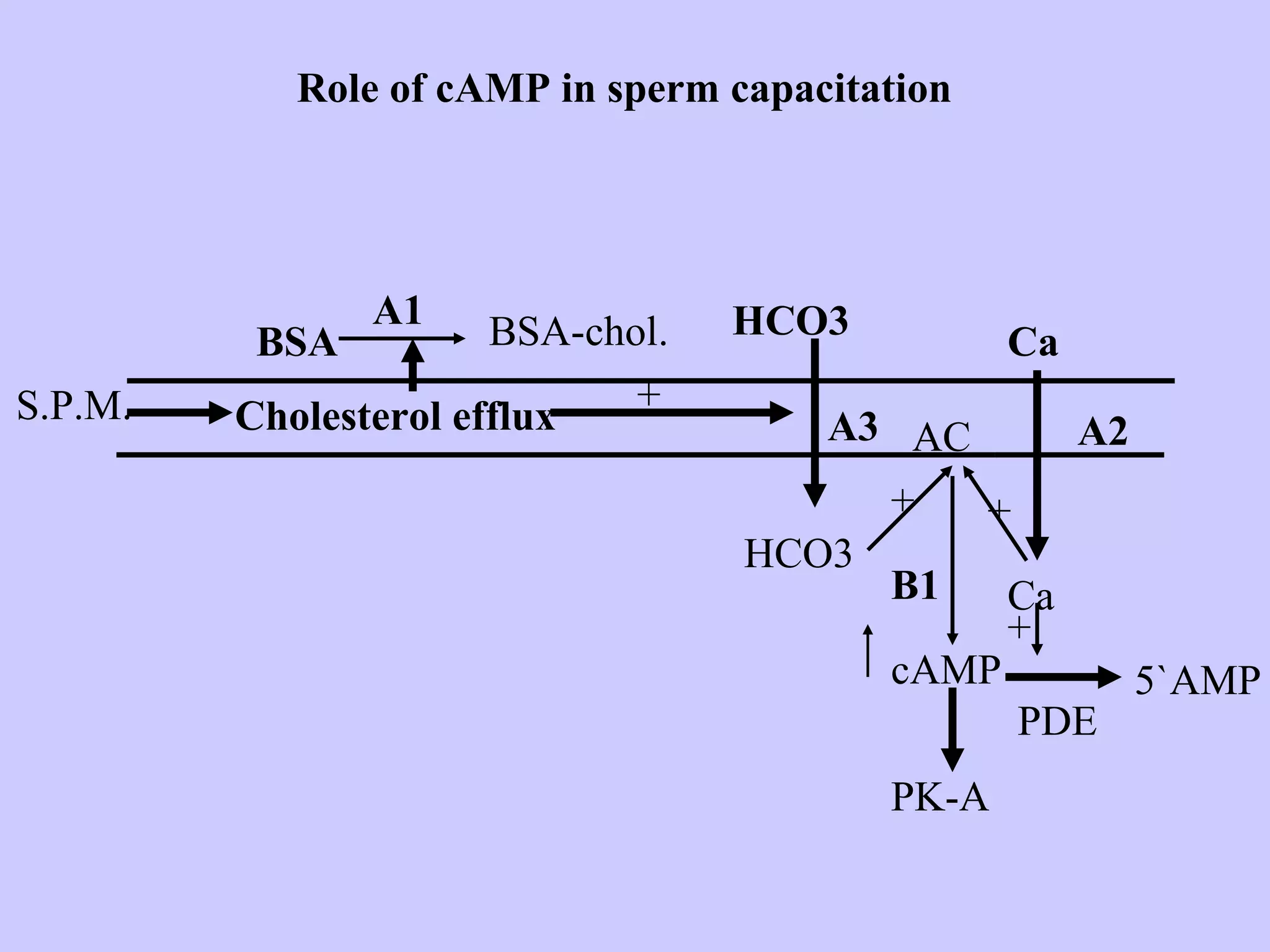
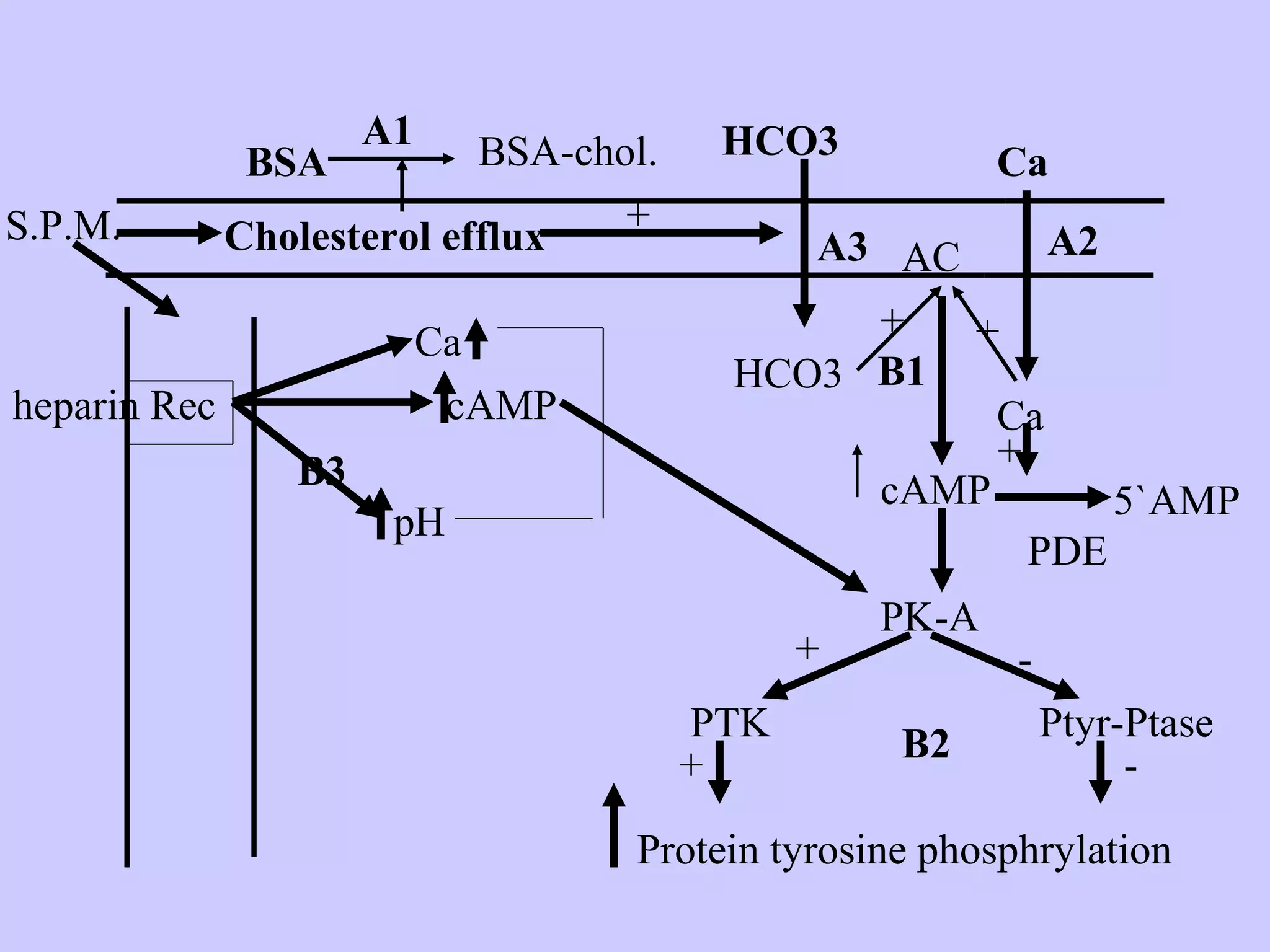
. BAS during in vitro capacitation remove
cholestrol from sperm plasma membrane.
BSA
A1 BSA-chol.
Sperm
plasma
membrane
Cholestrol efflux
20.
Role of mediaconstituents
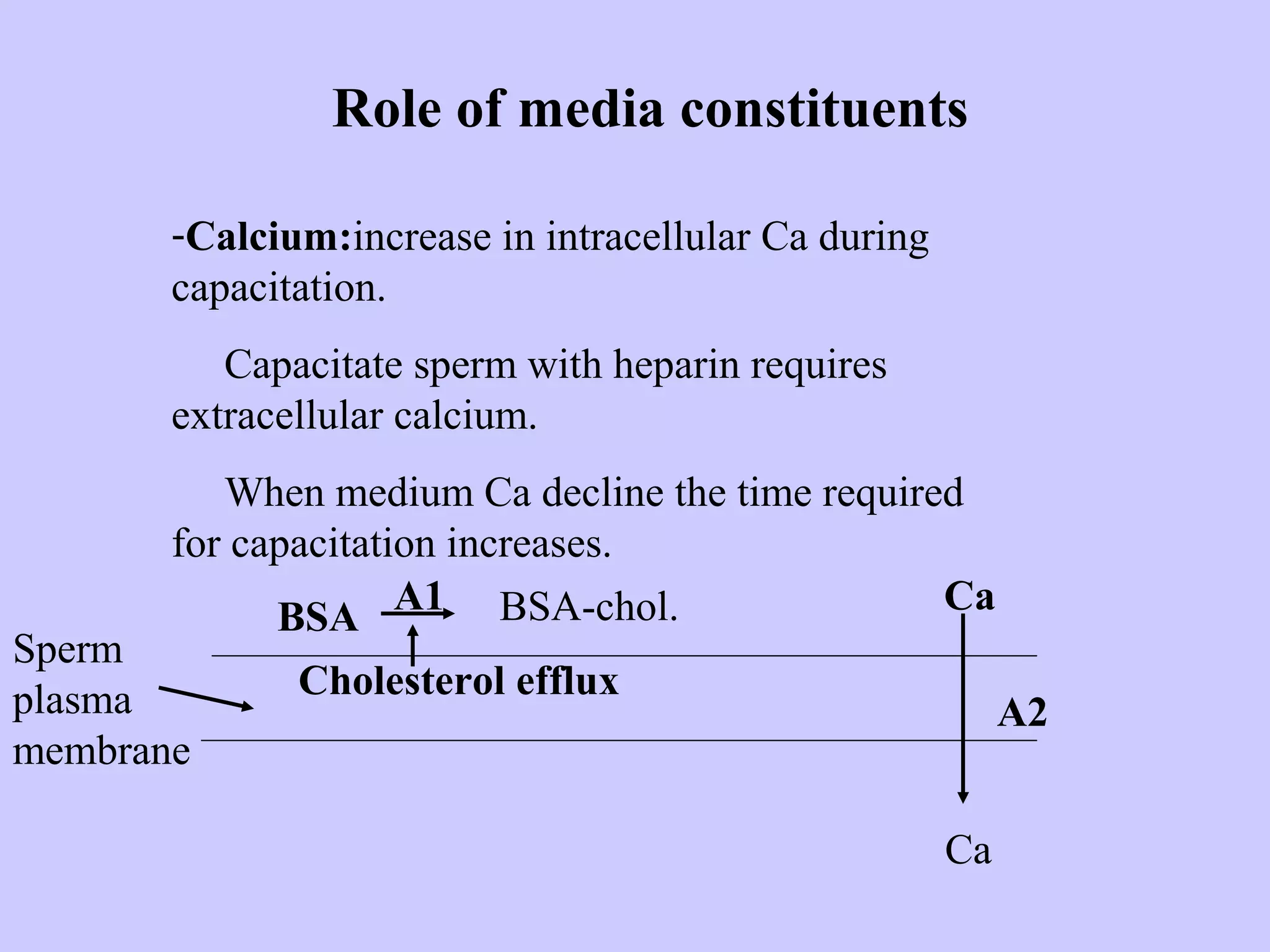
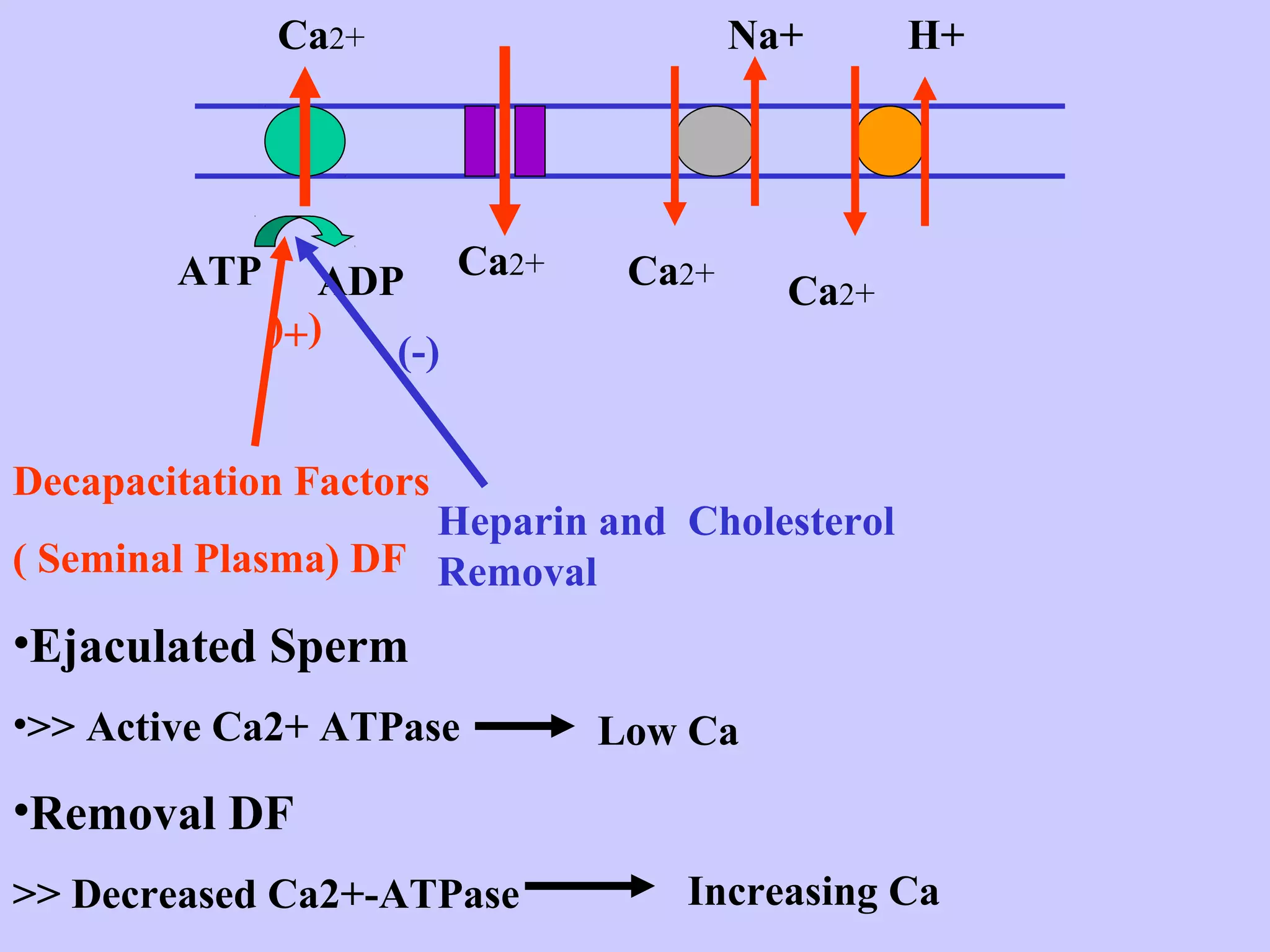
-Calcium:increase in intracellular Ca during
capacitation.
Capacitate sperm with heparin requires
extracellular calcium.
When medium Ca decline the time required
for capacitation increases.
Sperm
plasma
membrane
Cholesterol efflux
BSA BSA-chol. Ca
Ca
A2
A1
ATP ADP
(+(
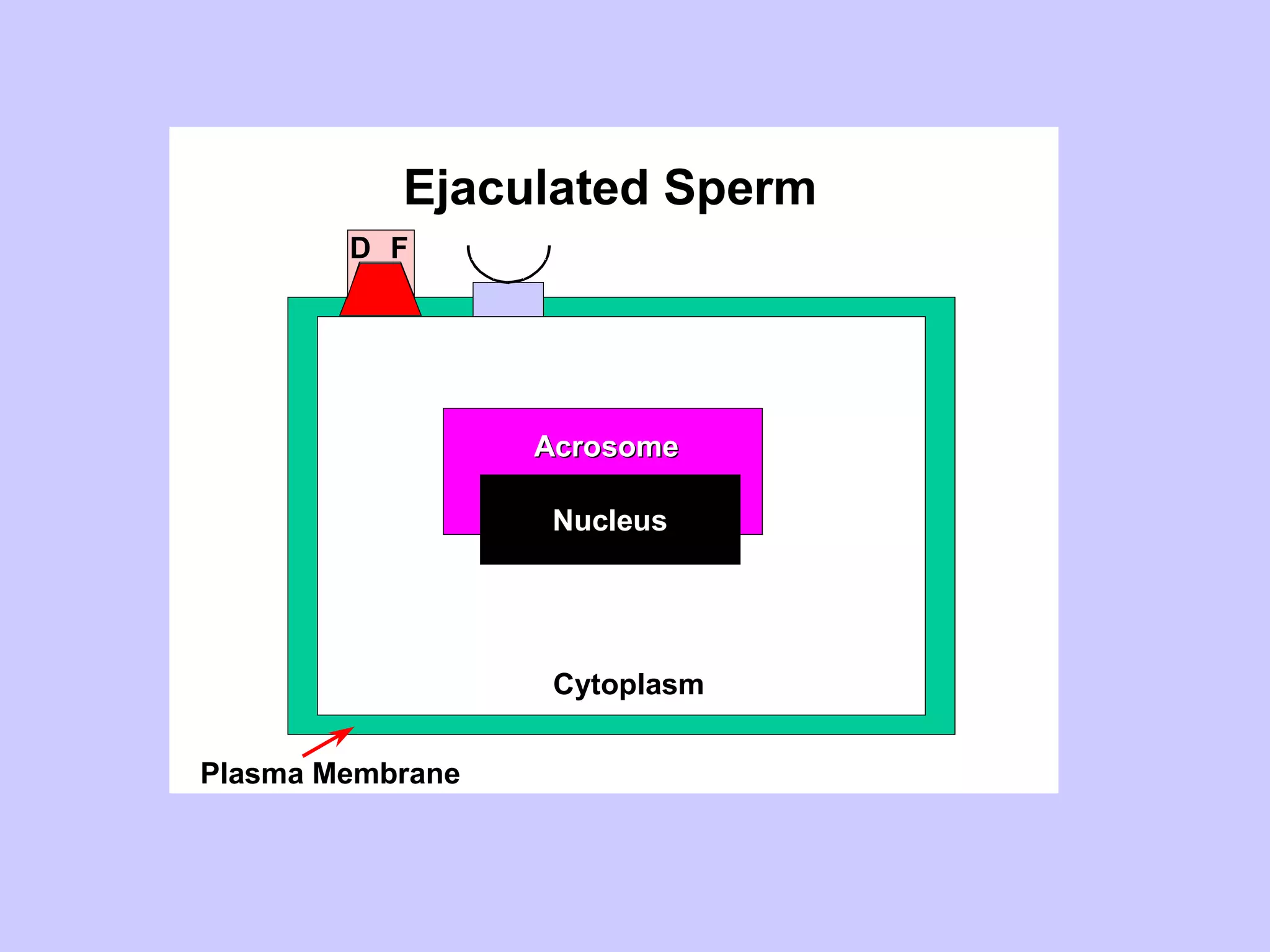
Decapacitation Factors
(Seminal Plasma) DF
Ca2+
•Ejaculated Sperm
•>> Active Ca2+ ATPase
•Removal DF
>> Decreased Ca2+-ATPase
Low Ca
(-)
Heparin and Cholesterol
Removal
Ca2+ Ca2+
Na+
Ca2+
H+
Increasing Ca
27.
Role of mediaconstituents
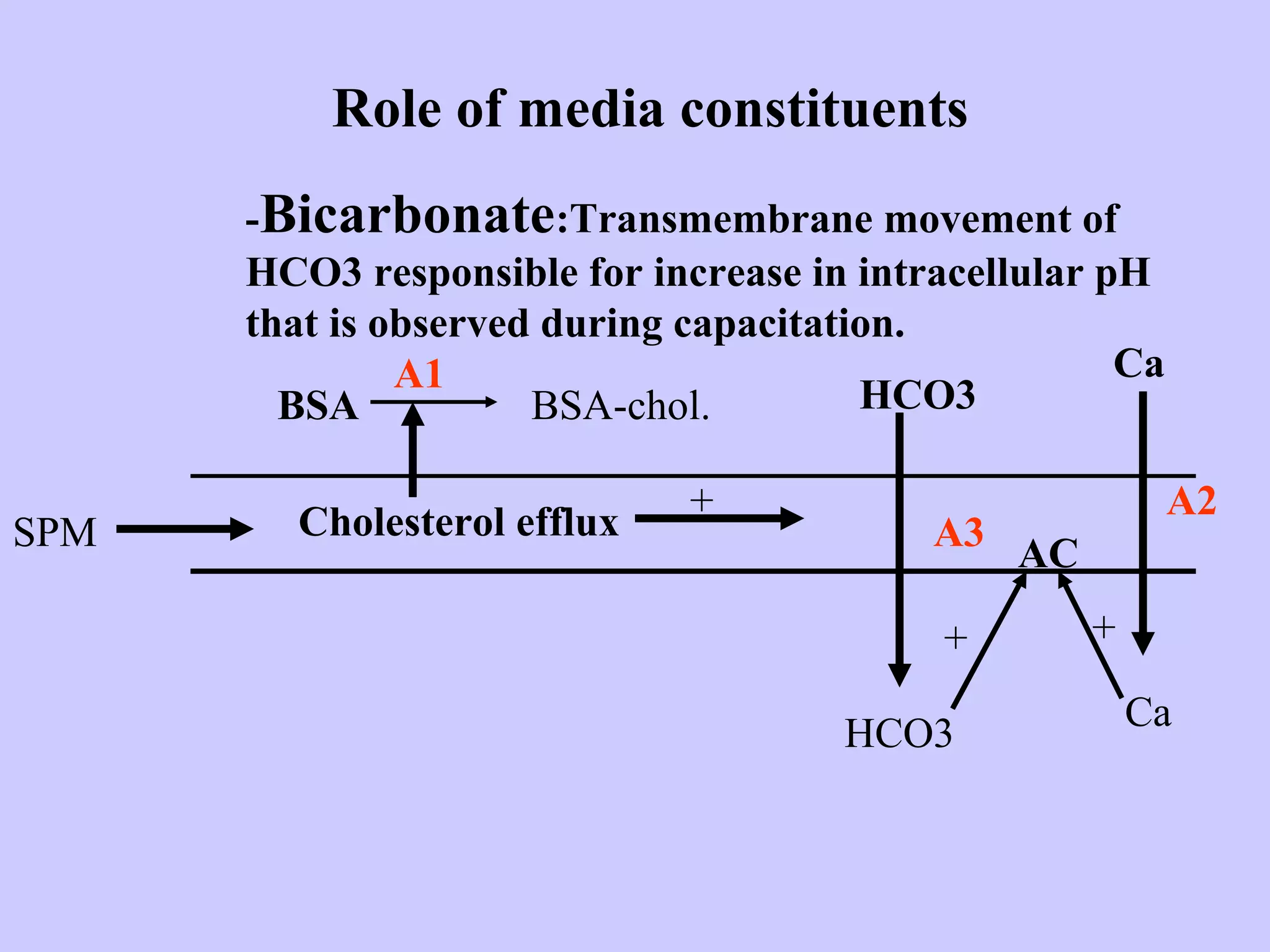
-Bicarbonate:Transmembrane movement of
HCO3 responsible for increase in intracellular pH
that is observed during capacitation.
SPM Cholesterol efflux
BSA BSA-chol.
A1 Ca
Ca
A2+
HCO3
HCO3
A3
AC
+ +
28.
Intracellular second messengers
•Intracellular messenger mediating
capacitation will be considered from two
respective.
- The regulatory system that appear to
be common among different species.
- The regulatory process that may be
unique to one or more species.
29.
Intracellular second messenger
cont.
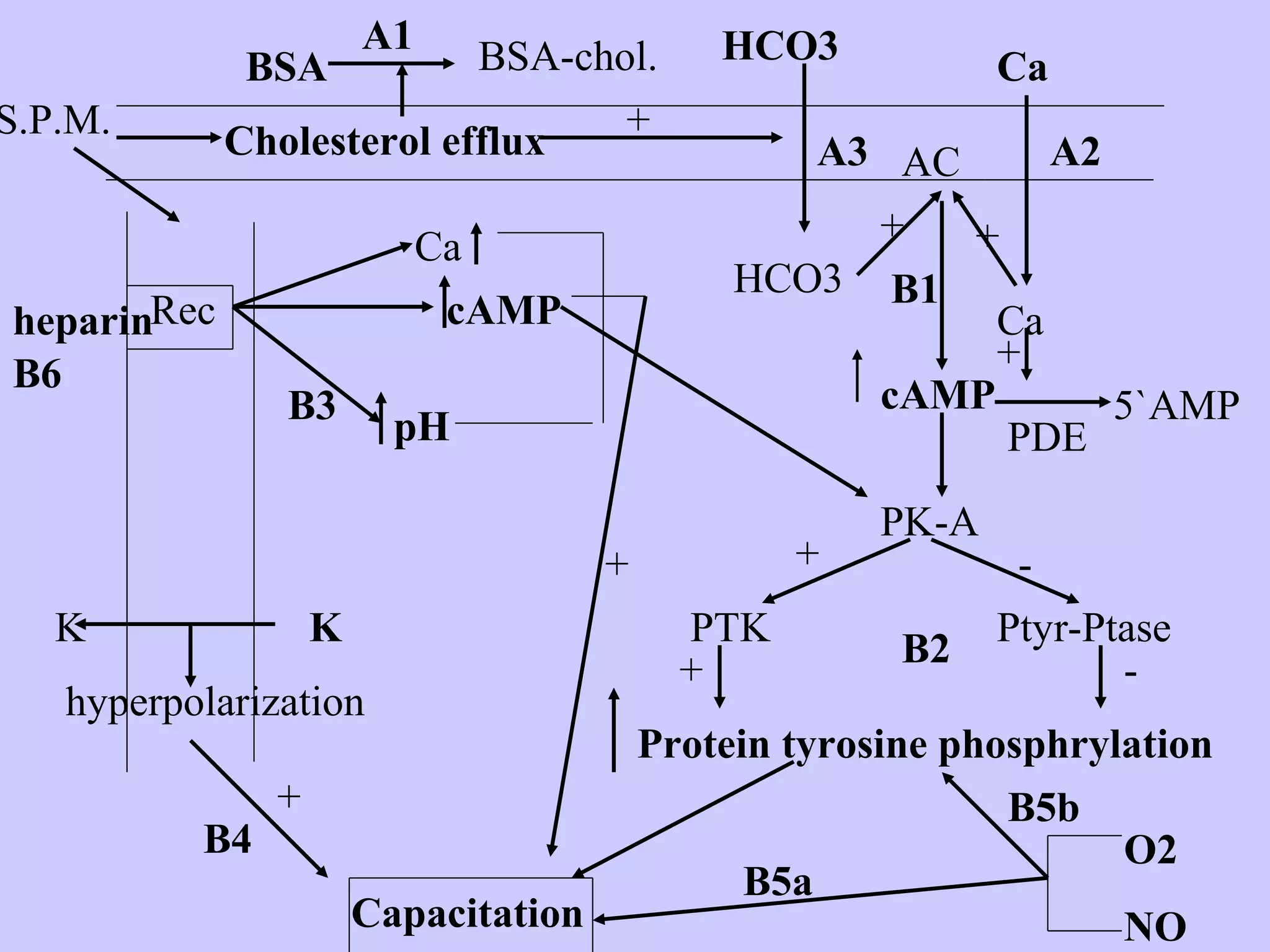
-CyclicAMP metabolism:The protein kinase A
(PK-A) activity increases during sperm capacitation as a
result of elevation intracellular cAMP.
- The mode of regulation of cAMP metabolism during
sperm capacitation may be integrated with changes in Ca
and HCO3 movement.
- Protein tyrosinephosphorylation
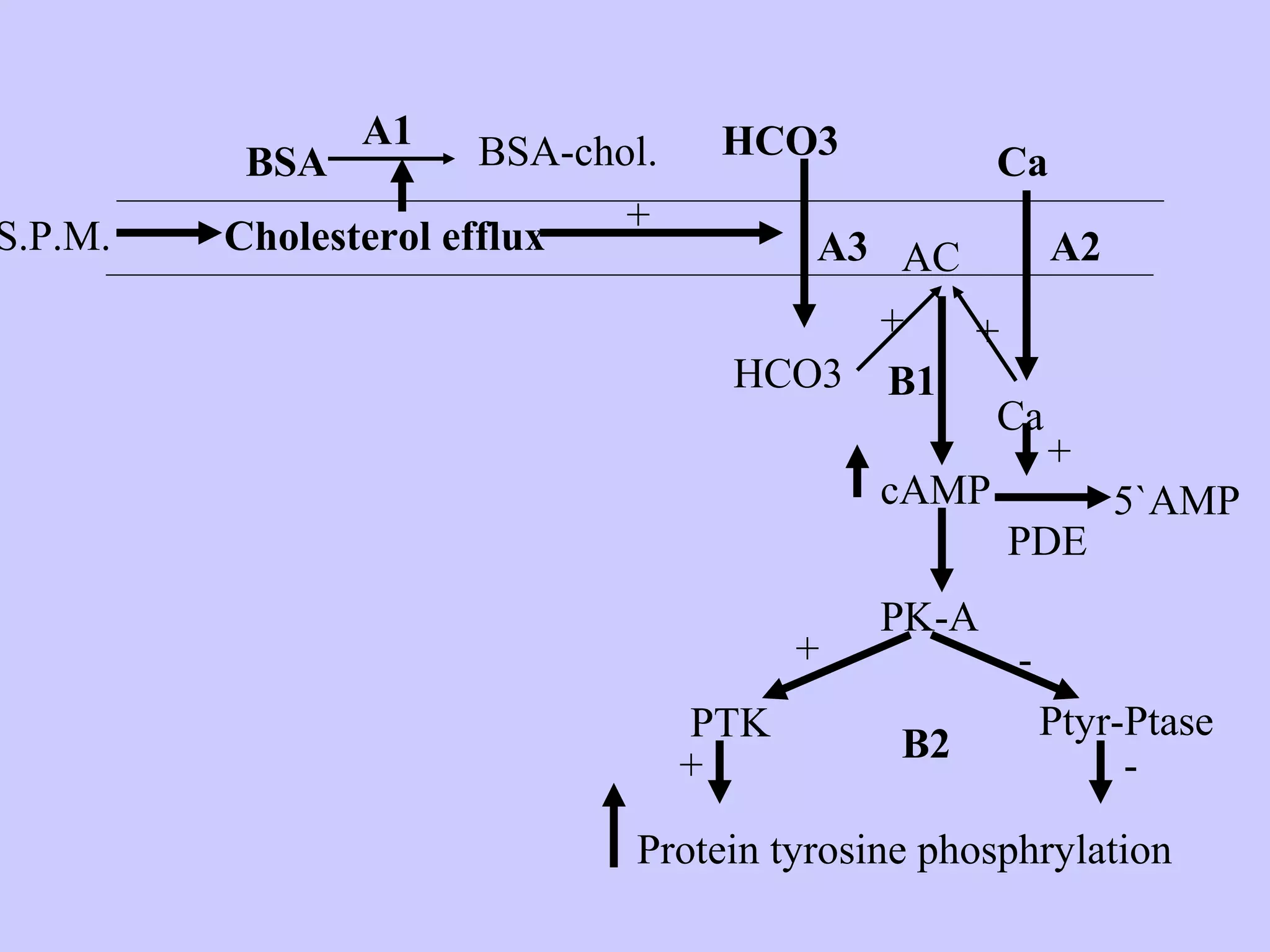
• Protein tyrosine phosphorylation mediates a
variety of cellular function .
• The increase in protein tyrosine
phosphorylation is dependent on the presence
of BSA, Ca and NaHCO3 in the medium.
• The role of protein tyrosine phosphorylation in
sperm capacitation is regulated through a PK-
A.
- Membrane potential
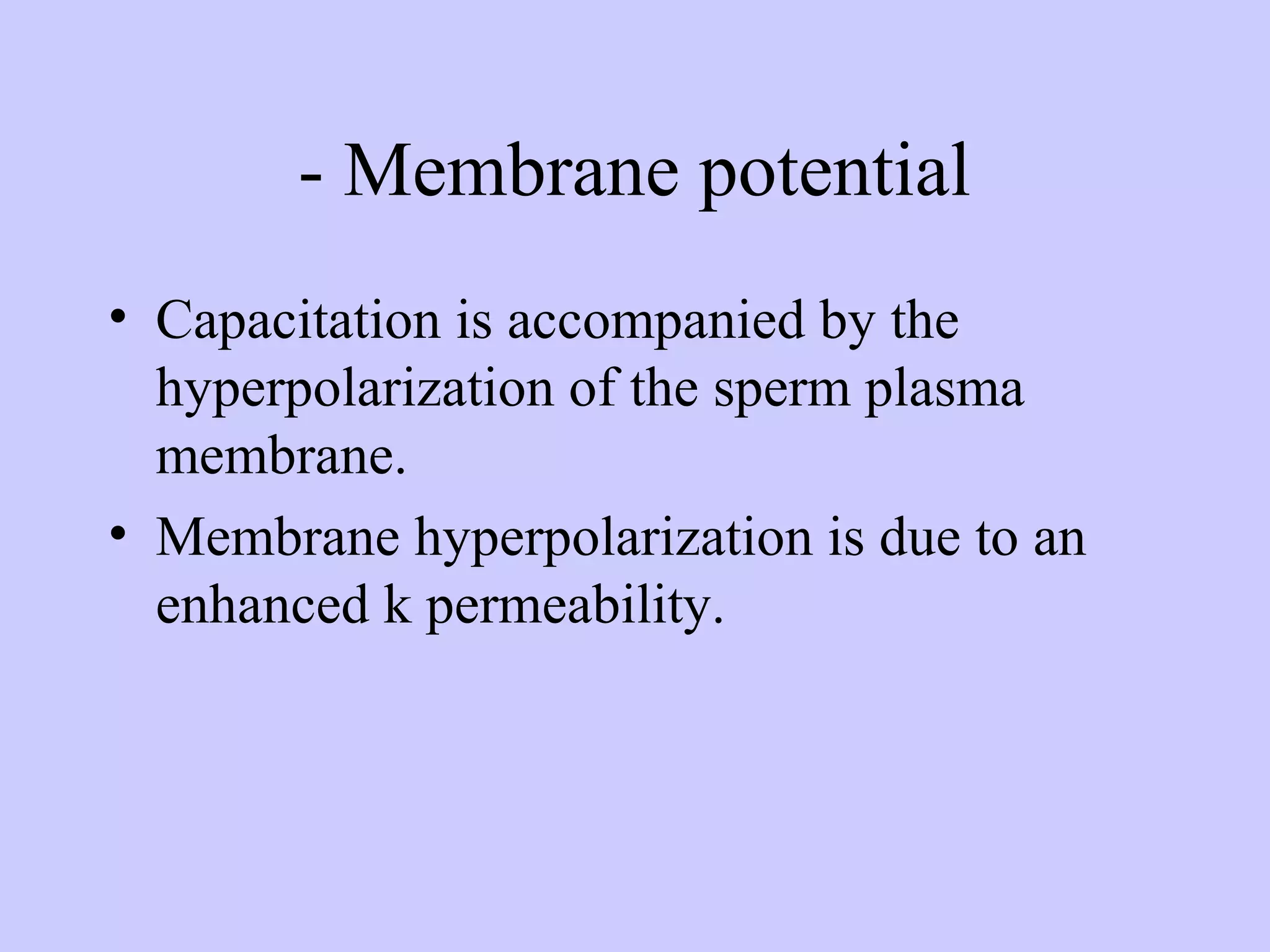
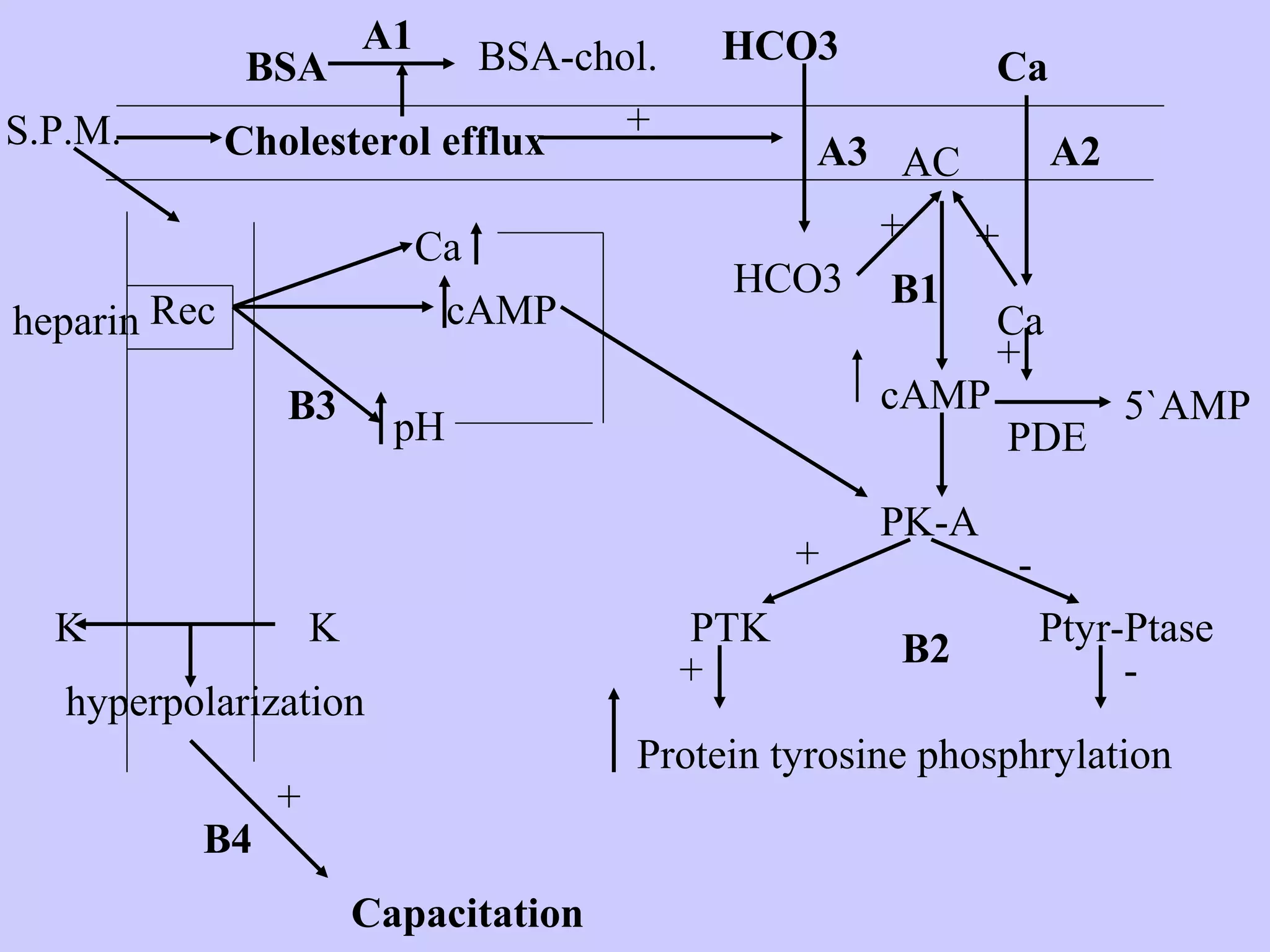
•Capacitation is accompanied by the
hyperpolarization of the sperm plasma
membrane.
• Membrane hyperpolarization is due to an
enhanced k permeability.
-Free radicals
• Thefree radicals has a role in sperm lipid
peroxidation and sperm viability.
• Superoxide anion cause capacitation and
hyperactivationof the spermatozoa.
• Reactive oxygen regulate protein tyrosine
phosphorelation of several protein.
-Heparin
• Bovine invitro sperm capacitation can be
accomplished in media containing heparin.
• The active capacitating agent in the oviduct fluid
is though to be a heparin-like glycosaminoglycan.
• The glycosaminoglycan may promote capacitation
by binding to and removing seminal plasma
protein.
• Heparin increases cAMP synthesis,elevate pH and
regulate the capacitation-associated changes.
-Glucose
• Glucose hasinhibitory or stimulatory
actions on capacitation is controversial and
is species dependent.
• In bovine glucose inhibits heparin-induced
capacitation in vitro.
• Capacitation medium for mouse sperm,
which contains glucose has no inhibatory
effects .
45.
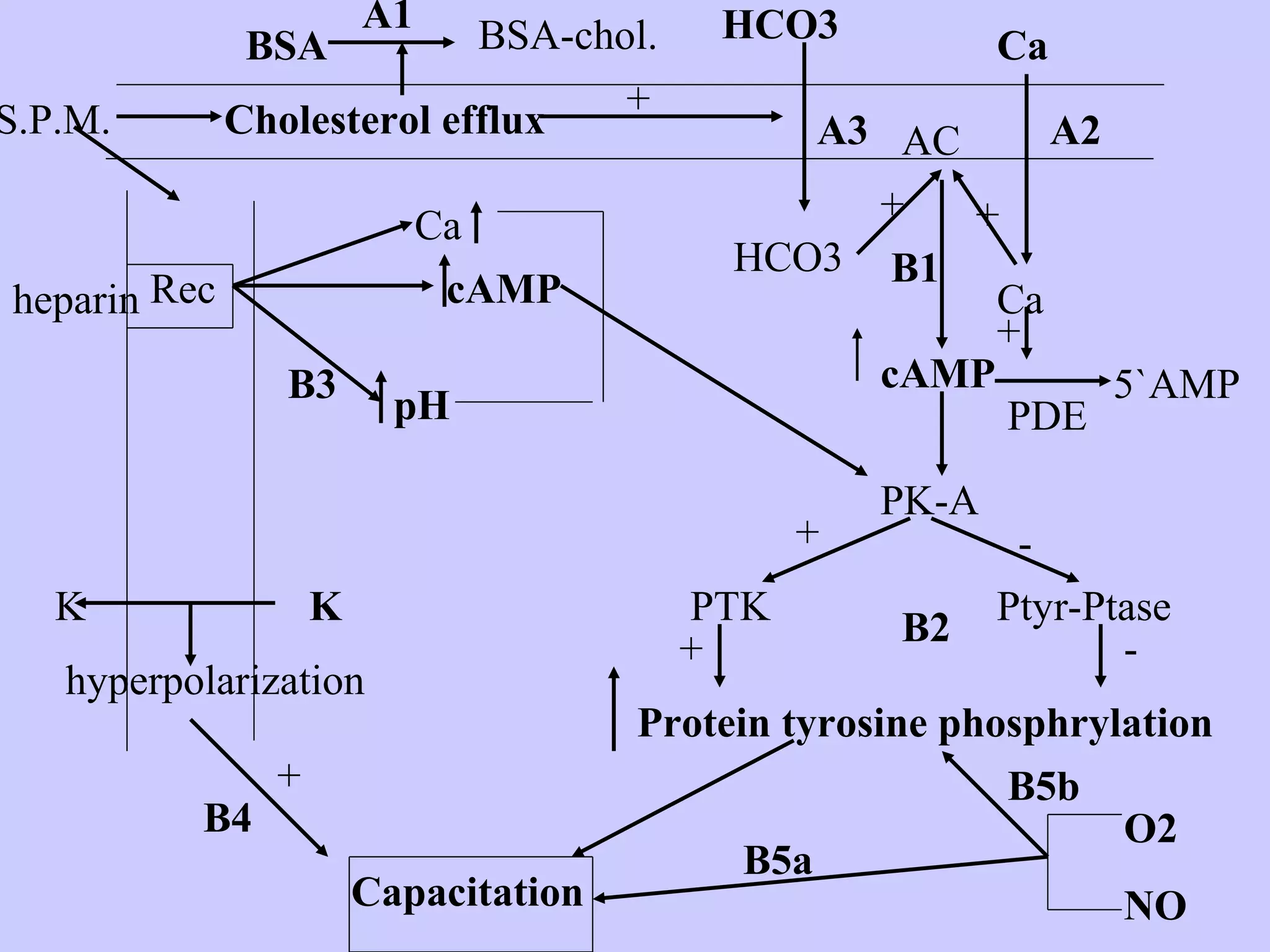
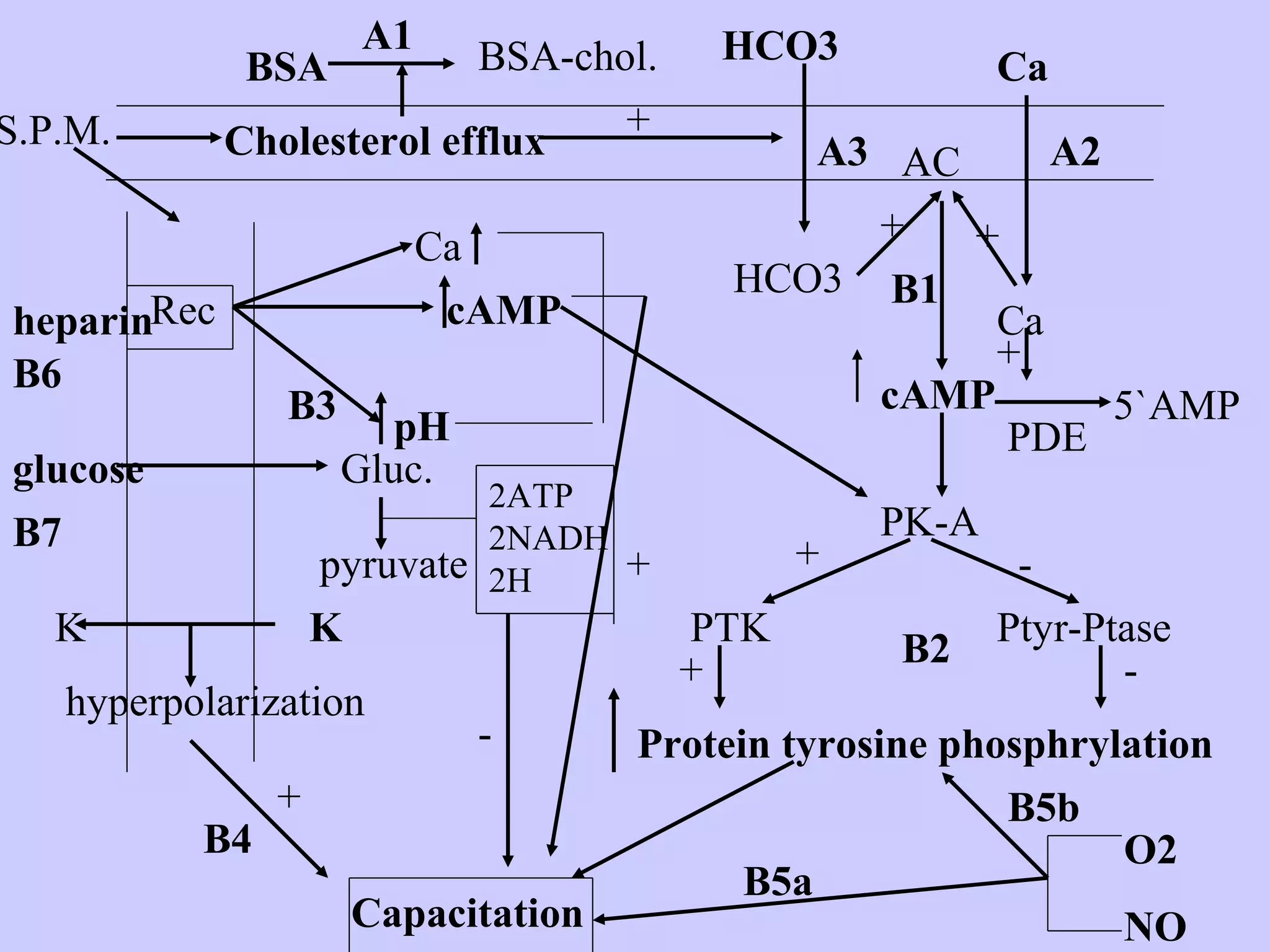
Cholesterol efflux
BSA
A1 BSA-chol.
+
HCO3
HCO3
A3
Ca
A2
Ca
++
AC
cAMP
PDE
+
PK-A
PTK
+
+
-
-
B1
B2
Rec
Ca
cAMP
pH
B3
heparin
KK
hyperpolarization
+
B4
Capacitation
5`AMP
Protein tyrosine phosphrylation
Ptyr-Ptase
O2
NO
B5a
B5b
+
B6
S.P.M.
glucose Gluc.
pyruvate
2ATP
2NADH
2H
-
B7
46.
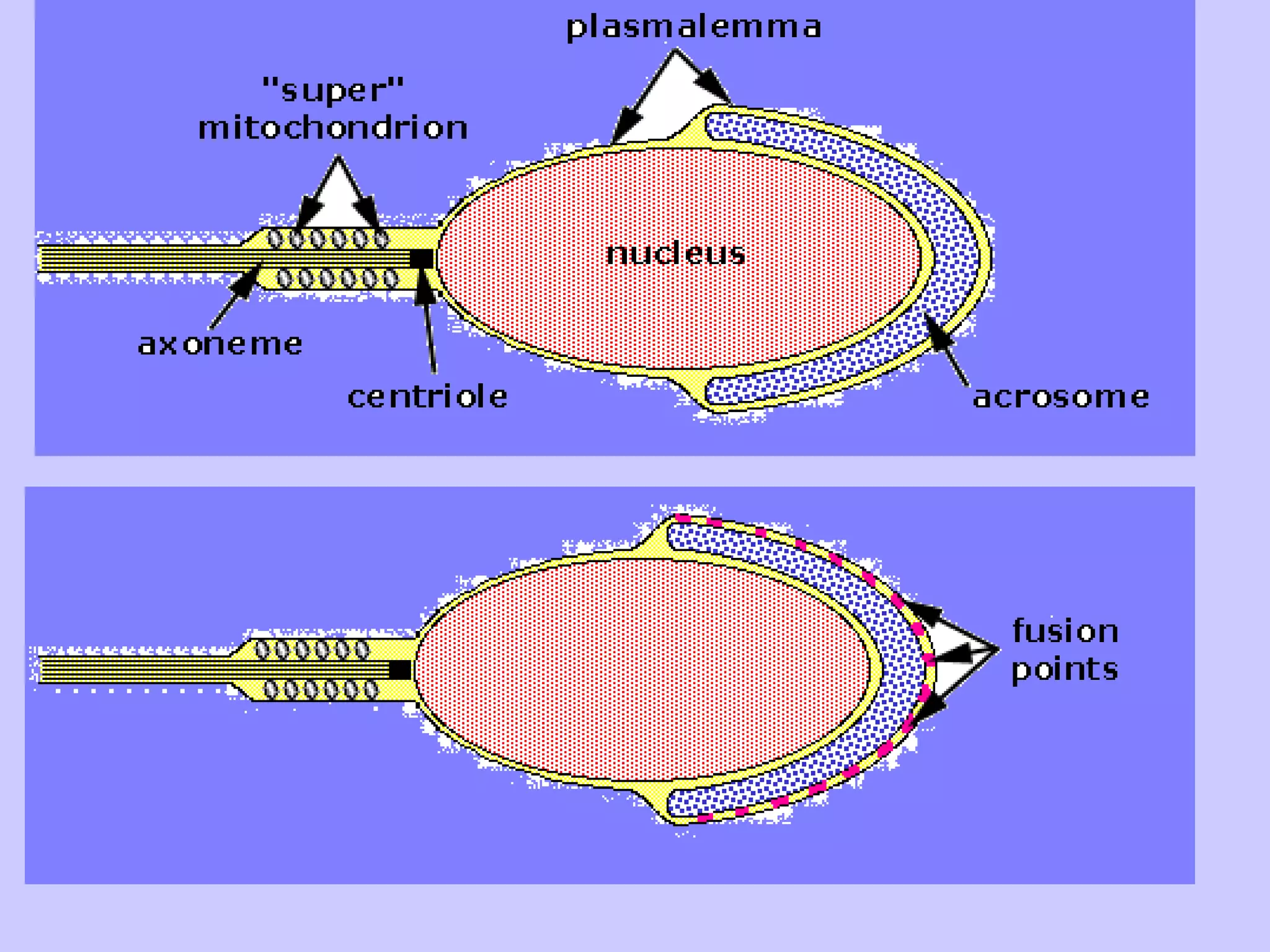
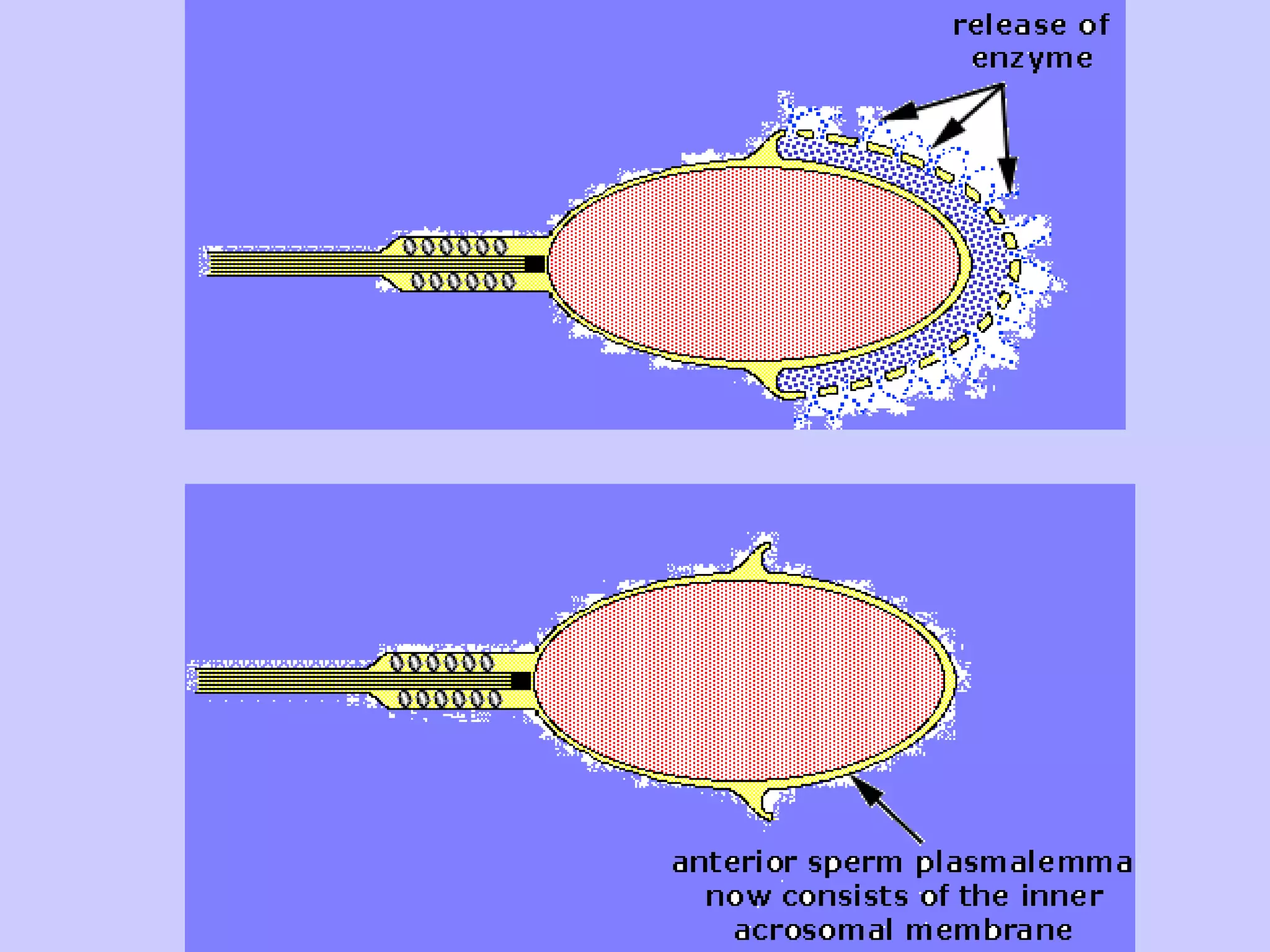
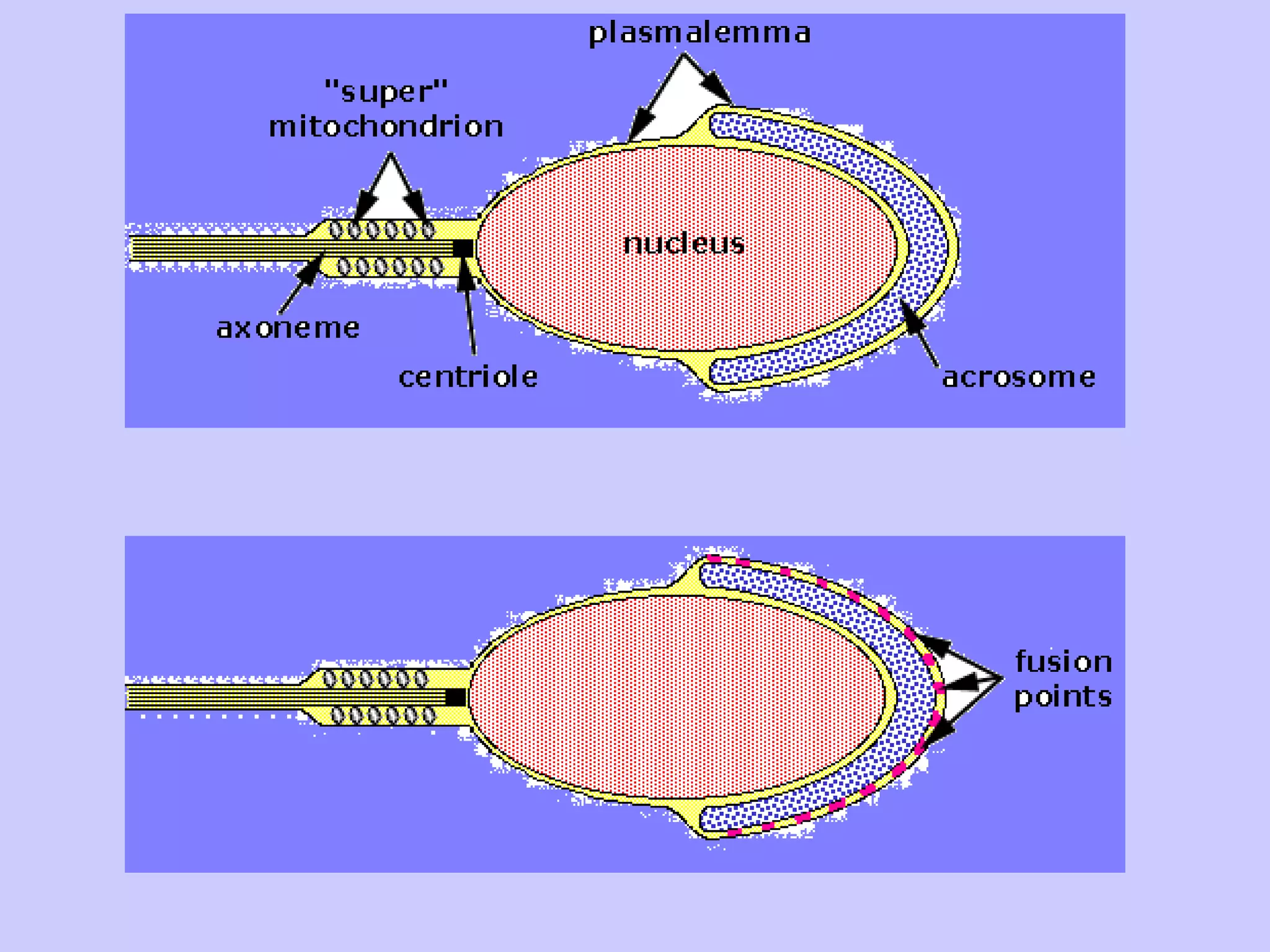
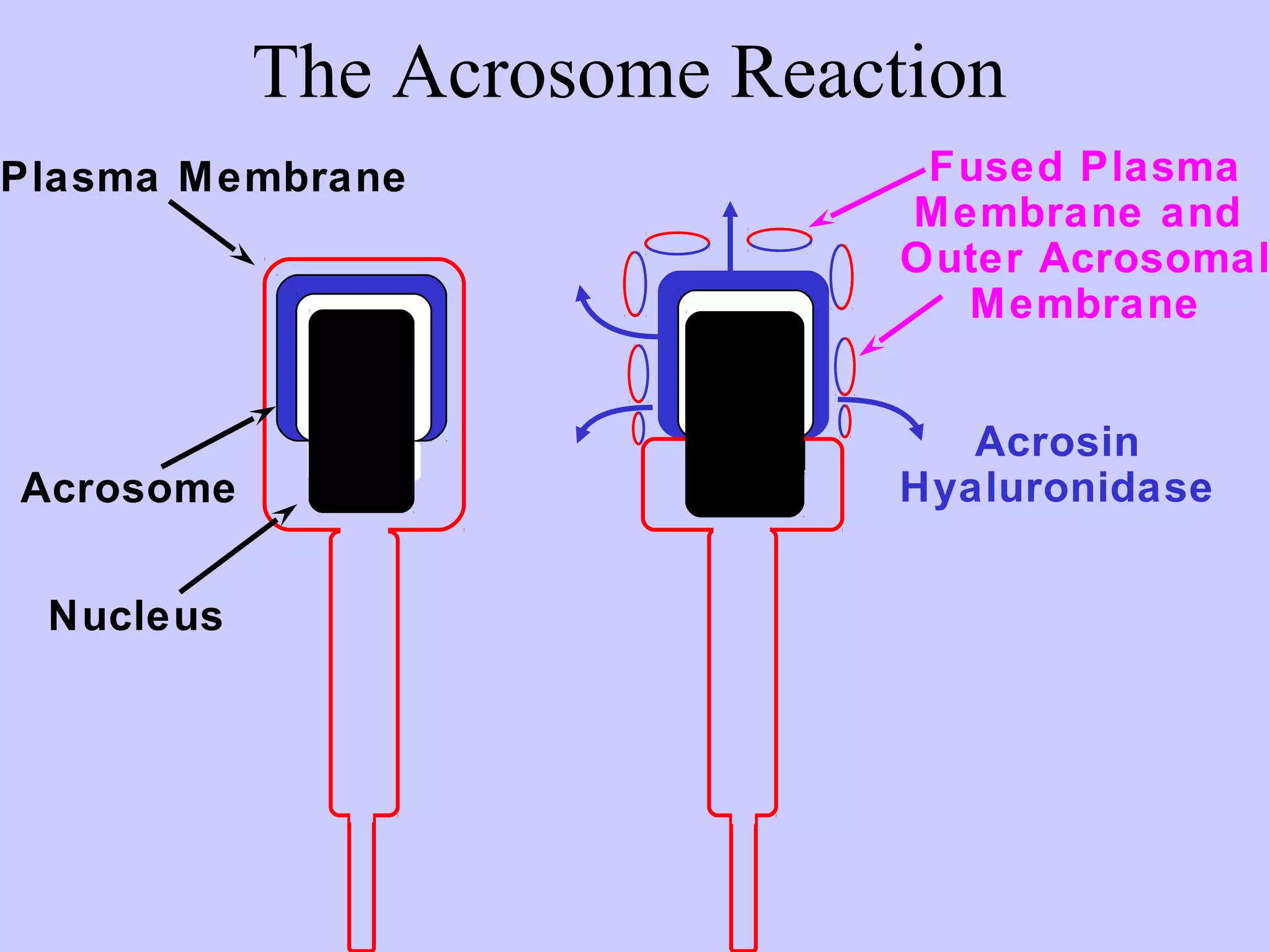
The Acrosome Reaction
PlasmaMembrane
Acrosome
Fused Plasma
Membrane and
Outer Acrosomal
Membrane
Nucleus
Acrosin
Hyaluronidase