Presented by
Aswathy A
Akshaya Anil
S 3 M.Sc Biochemistry
Dept.of Biochemistry
Kerala University
 Embryonic development is when the embryo is formed and
develops.
 It starts with the fertilization of a egg , which after is
called a zygote.
 The zygote goes through rapid divisions
 Process is known as embryogenesis
1) Cleavage
2) Gastrulation
3) Organogenesis
• The single celled zygote undergoes a period of rapid cell division
without growth to produce a ball of cells.
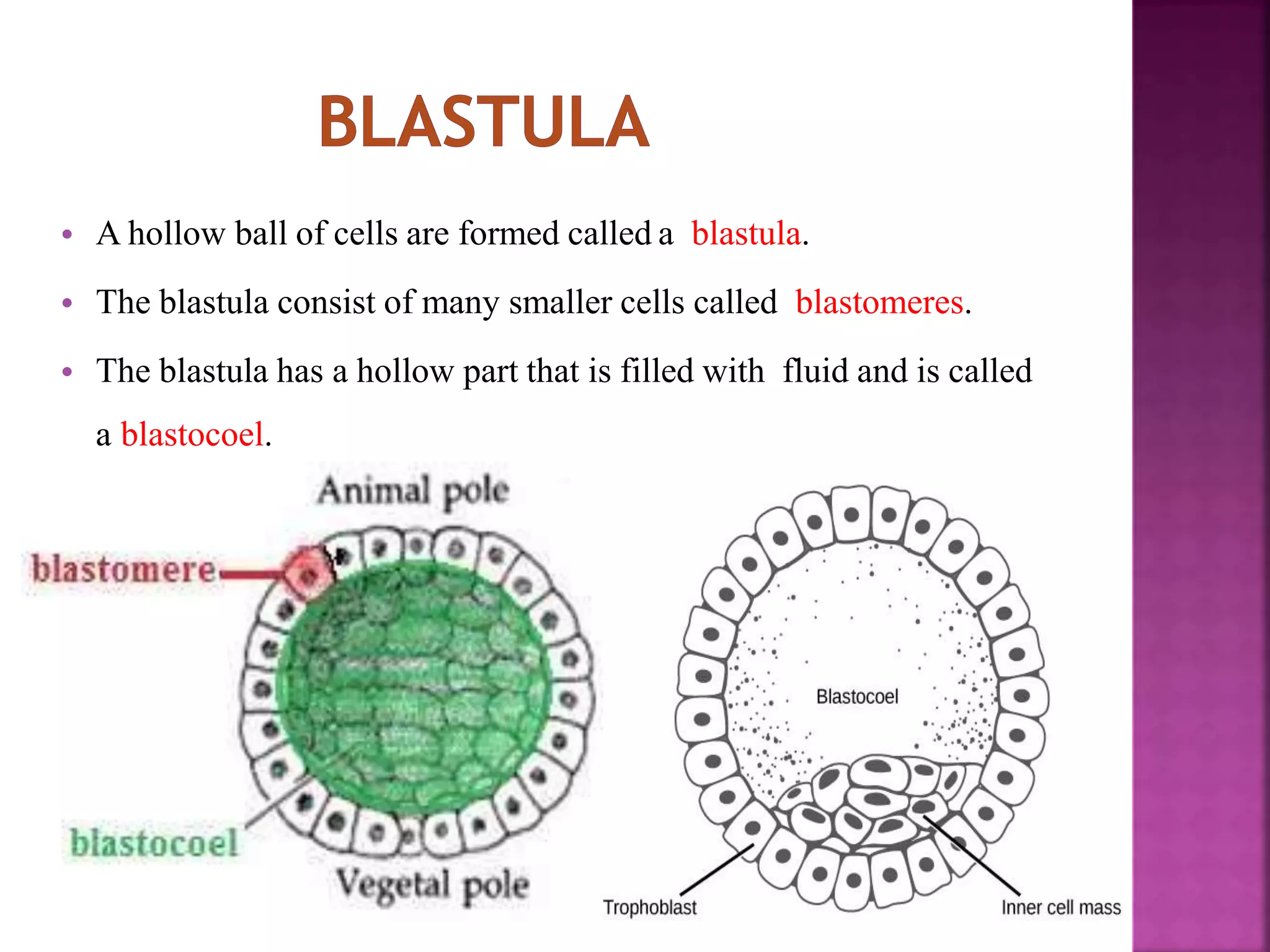
• A hollow ball of cells are formed called a blastula.
• The blastula consist of many smaller cells called blastomeres.
• The blastula has a hollow part that is filled with fluid and is called
a blastocoel.
1) Meroblastic cleavage
 incomplete division of the egg.
 occurs in species with yolk-rich eggs
 only part of the zygote undergoes cleavage
 happens in eggs due to the large volume of yolk
2) Holoblastic cleavage
 complete division of the egg.
 occurs in species eggs have small amount of yolk
 entire zygote undergoes cleavage
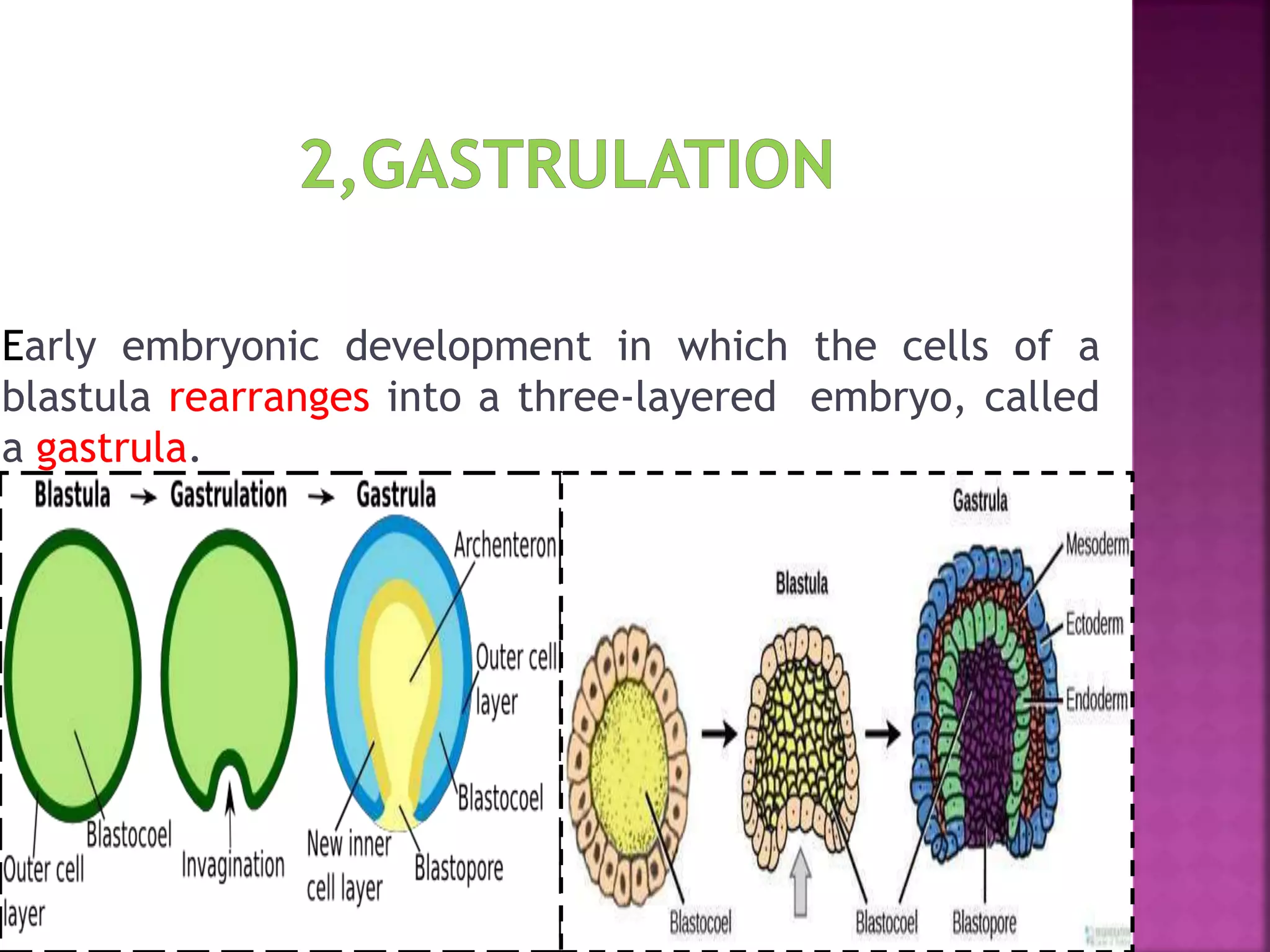
Early embryonic development in which the cells of a
blastula rearranges into a three-layered embryo, called
a gastrula.
 Pander(1817): Trilaminar condition of chick
balstoderm.
 Primary germ layers:
only ectoderm & endoderm ( Radiata).
only germ layers in primitive metazoan
stage.
 Secondary germ layers:
third layer( mesoderm) is also present.
( Bilateria , Triploblastica ).
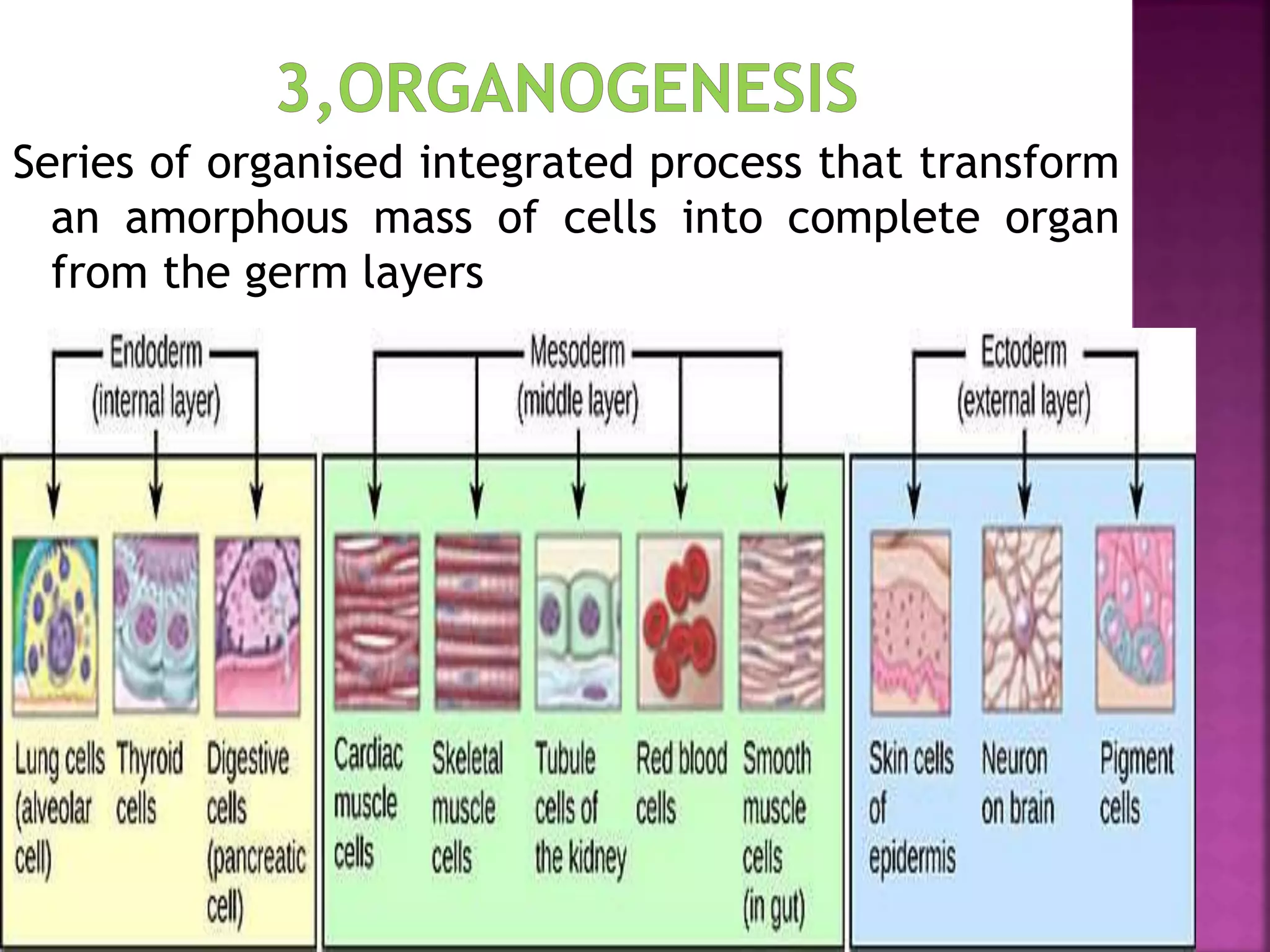
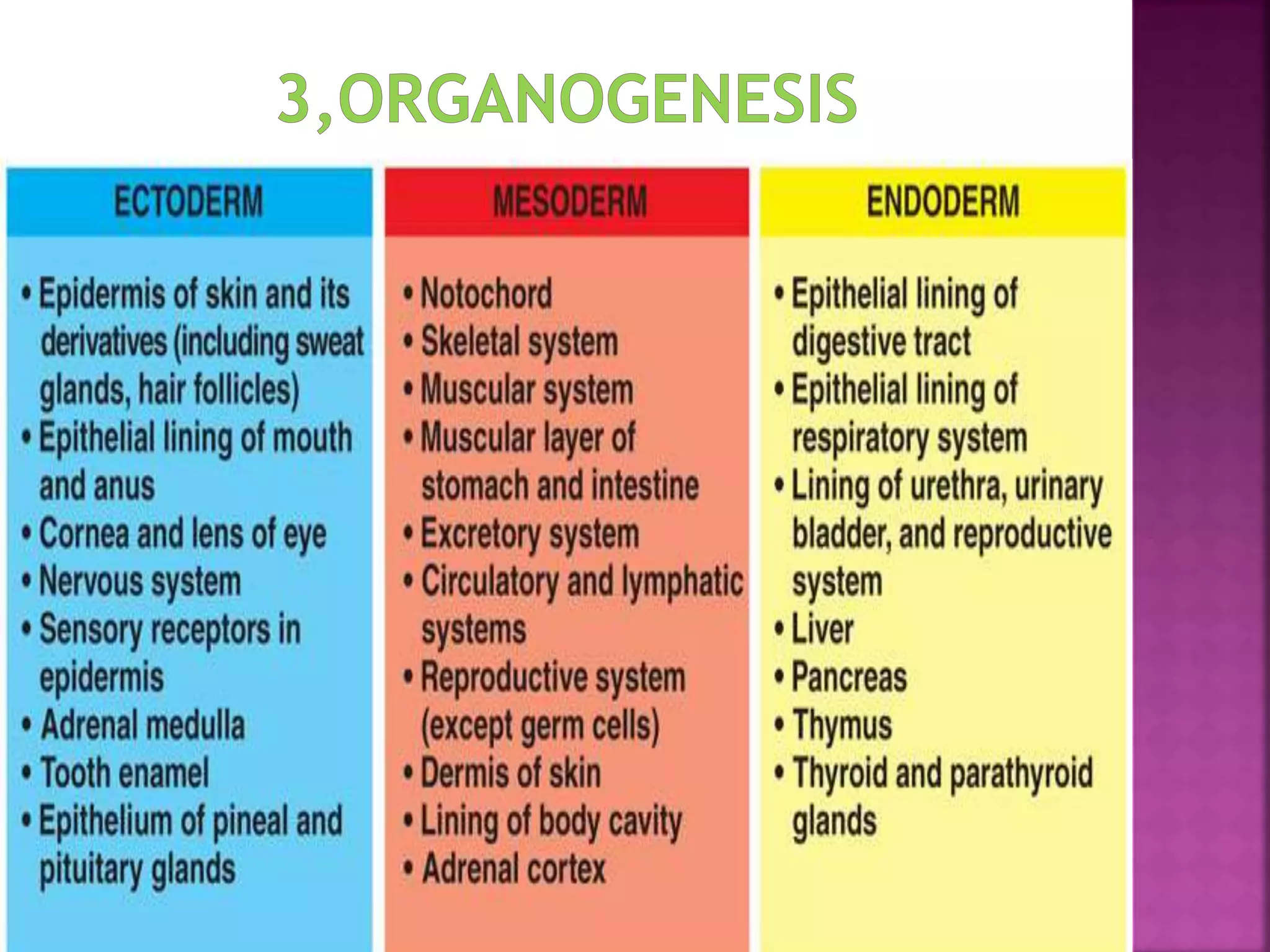
Series of organised integrated process that transform
an amorphous mass of cells into complete organ
from the germ layers
 Developmental biology-7th edition-Scott F.
Gilbert
 A manual of Developmental biology-
Vijayakumaran Nair.
Early embryonic devlpmnt

Early embryonic devlpmnt

  • 1.
    Presented by Aswathy A AkshayaAnil S 3 M.Sc Biochemistry Dept.of Biochemistry Kerala University
  • 2.
     Embryonic developmentis when the embryo is formed and develops.  It starts with the fertilization of a egg , which after is called a zygote.  The zygote goes through rapid divisions  Process is known as embryogenesis
  • 3.
  • 4.
    • The singlecelled zygote undergoes a period of rapid cell division without growth to produce a ball of cells.
  • 6.
    • A hollowball of cells are formed called a blastula. • The blastula consist of many smaller cells called blastomeres. • The blastula has a hollow part that is filled with fluid and is called a blastocoel.
  • 7.
    1) Meroblastic cleavage incomplete division of the egg.  occurs in species with yolk-rich eggs  only part of the zygote undergoes cleavage  happens in eggs due to the large volume of yolk 2) Holoblastic cleavage  complete division of the egg.  occurs in species eggs have small amount of yolk  entire zygote undergoes cleavage
  • 8.
    Early embryonic developmentin which the cells of a blastula rearranges into a three-layered embryo, called a gastrula.
  • 10.
     Pander(1817): Trilaminarcondition of chick balstoderm.  Primary germ layers: only ectoderm & endoderm ( Radiata). only germ layers in primitive metazoan stage.  Secondary germ layers: third layer( mesoderm) is also present. ( Bilateria , Triploblastica ).
  • 11.
    Series of organisedintegrated process that transform an amorphous mass of cells into complete organ from the germ layers
  • 14.
     Developmental biology-7thedition-Scott F. Gilbert  A manual of Developmental biology- Vijayakumaran Nair.