Blocks to polyspermy
By Miss Iram
Polyspermy
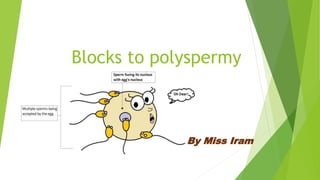
 Polyspermy describes an egg that has been fertilized by more
than one sperm. Diploid organisms normally contain two copies
of each chromosome, one from each parent. The cell resulting
from polyspermy
Block to polyspermy
 The first issue that an egg and a sperm of any organism type face in
successfully producing an embryo is the possibility of polyspermy. Polyspermy
is the fertilization of an egg by multiple sperm, and the results of such unions
are lethal.
 If multiple sperm fertilize an egg, the embryo inherits multiple paternal
centrioles. This causes competition for extra chromosomes and results in the
disruption of the creation of the cleavage furrow, thus causing the zygote to
die. As an important model organism in the study of fertilization and
embryonic development, polyspermy in sea urchins has been studied in
detail. The sea urchin’s methods of polyspermy prevention have been broken
down into two main pathways. These two primary pathways are known as
the fast block and the slow block to polyspermy
Fast block
 After the sperm’s receptors come into contact with the egg’s jelly layer and the
acrosomal enzymes are released and break down the jelly layer, the sperm head
comes into contact with the vitelline and plasma membranes of the egg. When
the two plasma membranes contact one another, signals in the egg are initiated.
 First, Na+ channels in the egg open, allowing Na+ to flood into the egg. This
causes a depolarization of the egg from it’s normal resting potential of -70 mV.
 While depolarization is occurring, the remainder of the jelly layer is
dissolving. With the dissolution of the jelly layer and the depolarization of the
plasma membrane, the first block to preventing fertilization by multiple sperm
is put into place.
 These two simple changes are part of the first block to polyspermy, known as
the fast block. Within 1/10th of a second of contact, the fast block to
polyspermy is initiated.
Slow block
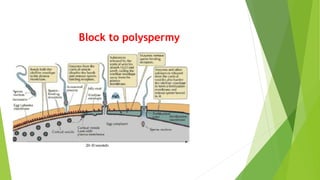
 While the first fast block is relatively simple and happens quickly, the second
block to polyspermy, the slow block, takes place 10-60 seconds after the initial
penetration of the egg’s plasma membrane by the sperm. In this pathway, the
physical layout of the membranes change.
 Once the sperm has made its way through the jelly layer, receptors in the
vitelline layer confirm that it is indeed a sea urchin sperm. As fertilization
happens entirely externally in sea urchin species, this step is to confirm that
another organism’s sperm is not fertilizing the sea urchin egg. Once the sperm
is confirmed to be compatible, the plasma membranes of the sperm and egg
fuse.
 Fusion of the two membranes causes a release of inosital triphosphate. The
release of inosital triphosphate, or IP3, causes Ca2+ to be released into the egg’s
cytoplasm.
 Waiting in the cytoplasm are cortical vescicles, which are allowed to fuse with
the egg’s plasma membrane and release their contents when the appropriate
signal is sent. Ca2+ released is that necessary signal, and the vesicles fuse with
the membrane. The cortical vescicles contain enzymes which cause a number of
changes to occur in the egg.
 1. The egg’s sperm receptors are removed
 2. H2O is absorbed, causing the membrane to swell and push the vitelline
membrane away from the plasma membrane.
 3. The vitelline membrane hardens.
 These changes ensure that fertilization of the egg by additional sperm is
prevented. They are part of the slow block to polyspermy.
Block to polyspermy

block to polyspermy.pptx

  • 1.
  • 2.
    Polyspermy  Polyspermy describesan egg that has been fertilized by more than one sperm. Diploid organisms normally contain two copies of each chromosome, one from each parent. The cell resulting from polyspermy
  • 3.
    Block to polyspermy The first issue that an egg and a sperm of any organism type face in successfully producing an embryo is the possibility of polyspermy. Polyspermy is the fertilization of an egg by multiple sperm, and the results of such unions are lethal.  If multiple sperm fertilize an egg, the embryo inherits multiple paternal centrioles. This causes competition for extra chromosomes and results in the disruption of the creation of the cleavage furrow, thus causing the zygote to die. As an important model organism in the study of fertilization and embryonic development, polyspermy in sea urchins has been studied in detail. The sea urchin’s methods of polyspermy prevention have been broken down into two main pathways. These two primary pathways are known as the fast block and the slow block to polyspermy
  • 4.
    Fast block  Afterthe sperm’s receptors come into contact with the egg’s jelly layer and the acrosomal enzymes are released and break down the jelly layer, the sperm head comes into contact with the vitelline and plasma membranes of the egg. When the two plasma membranes contact one another, signals in the egg are initiated.  First, Na+ channels in the egg open, allowing Na+ to flood into the egg. This causes a depolarization of the egg from it’s normal resting potential of -70 mV.  While depolarization is occurring, the remainder of the jelly layer is dissolving. With the dissolution of the jelly layer and the depolarization of the plasma membrane, the first block to preventing fertilization by multiple sperm is put into place.  These two simple changes are part of the first block to polyspermy, known as the fast block. Within 1/10th of a second of contact, the fast block to polyspermy is initiated.
  • 5.
    Slow block  Whilethe first fast block is relatively simple and happens quickly, the second block to polyspermy, the slow block, takes place 10-60 seconds after the initial penetration of the egg’s plasma membrane by the sperm. In this pathway, the physical layout of the membranes change.  Once the sperm has made its way through the jelly layer, receptors in the vitelline layer confirm that it is indeed a sea urchin sperm. As fertilization happens entirely externally in sea urchin species, this step is to confirm that another organism’s sperm is not fertilizing the sea urchin egg. Once the sperm is confirmed to be compatible, the plasma membranes of the sperm and egg fuse.  Fusion of the two membranes causes a release of inosital triphosphate. The release of inosital triphosphate, or IP3, causes Ca2+ to be released into the egg’s cytoplasm.
  • 6.
     Waiting inthe cytoplasm are cortical vescicles, which are allowed to fuse with the egg’s plasma membrane and release their contents when the appropriate signal is sent. Ca2+ released is that necessary signal, and the vesicles fuse with the membrane. The cortical vescicles contain enzymes which cause a number of changes to occur in the egg.  1. The egg’s sperm receptors are removed  2. H2O is absorbed, causing the membrane to swell and push the vitelline membrane away from the plasma membrane.  3. The vitelline membrane hardens.  These changes ensure that fertilization of the egg by additional sperm is prevented. They are part of the slow block to polyspermy.
  • 7.