Blastulation
Asst Prof: Chetana Kanekar
Ashoka College Of Education
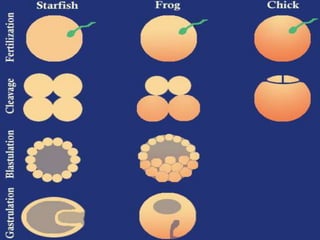
• The cleavage is the fractionating process which
splits zygote or fertilized egg into smaller cells
called blastomeres.
• These cells formed in typical doubling sequence
2,4,8,16,32,64 etc.
• The Geometrical regularity exist s only in early
developmental stages.
• Later on the process of cleavage becomes
entirely irregular.
• During early cleavage stages the blastomeres
form the structure of embryonic stage called
Morula.
• Later on Morula develops into the next
embryonic stage called Blastula.
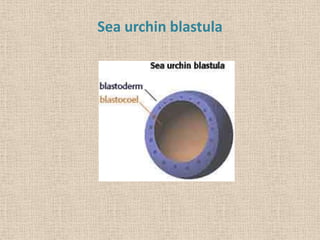
Blastula
• As the cleavage proceeds ,the number of
blastomeres of the morula increases and
blastomeres undergo rearrangement.
• The cells adhere to each other and they arrange
themselves into true epithelium.
• This may be single cell thick (e.g.echinoderms)
or many cells thick (e.g.vertebrates)
• This epithelium is called blastoderm.
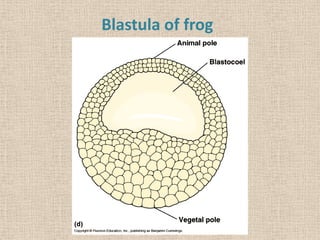
• The fluid filled space or cavity called blastocoel
appears in the centre of blastoderm.
• This hollow ,spherical, and unepithelial thick
embryonic stage is called blastula and the process
of its formation is called blastulation
Sea urchin blastula
Blastula of frog
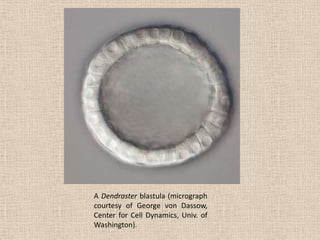
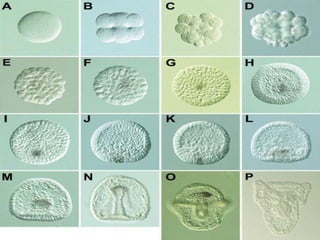
A Dendraster blastula (micrograph
courtesy of George von Dassow,
Center for Cell Dynamics, Univ. of
Washington).
Types of Blastulae
• Coeloblastula
• Stereoblastula
• Periblastula or Superficial Blastula
• Discoblastula
• Blastocyst
Coeloblastula
• It is hollow sphere and blastocoel is filled with
mucopolysaccrides and blastoderm is of single
layer of cells.
• E.g. Echinoderms
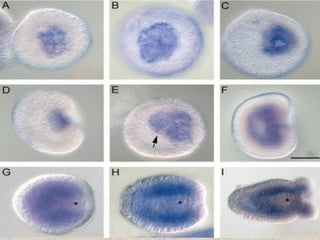
Stereoblastula
• It is a Solid blastula because there is no
blastocoel cavity.
• This type is formed due to spiral cleavage.
• E.g. Molluscs.
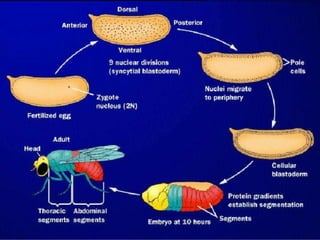
Superficial Blastula
• It is also called periblastula.
• Periblastula is formed in insect eggs due to
superficial cleavge and there is no blastocoel in it.
• The nucei collect in the peripheral layer.
• Actually cavity is present but filled with yolk from
beginning of cleavage
Discoblastula
• This type of blastula is found in yolky eggs of
fishes,reptiles and birds.
• It is called discoblastula because it appears at
the animal in the form of small multilayered
flat disc separated from yolk by narrow
subgerminal cavity.
Blastocyst
• This type of blastula is formed in mammals by
regular cleavage
• The small cavity called blastcoel .
• The cluster of cells differentiates into two
distinct groups called trophoblast cells or
nutritive and formative cells
Human blastula
Thank you

Blastulation

  • 1.
    Blastulation Asst Prof: ChetanaKanekar Ashoka College Of Education
  • 2.
    • The cleavageis the fractionating process which splits zygote or fertilized egg into smaller cells called blastomeres. • These cells formed in typical doubling sequence 2,4,8,16,32,64 etc. • The Geometrical regularity exist s only in early developmental stages.
  • 3.
    • Later onthe process of cleavage becomes entirely irregular. • During early cleavage stages the blastomeres form the structure of embryonic stage called Morula. • Later on Morula develops into the next embryonic stage called Blastula.
  • 4.
    Blastula • As thecleavage proceeds ,the number of blastomeres of the morula increases and blastomeres undergo rearrangement. • The cells adhere to each other and they arrange themselves into true epithelium. • This may be single cell thick (e.g.echinoderms) or many cells thick (e.g.vertebrates)
  • 5.
    • This epitheliumis called blastoderm. • The fluid filled space or cavity called blastocoel appears in the centre of blastoderm. • This hollow ,spherical, and unepithelial thick embryonic stage is called blastula and the process of its formation is called blastulation
  • 6.
  • 7.
  • 8.
    A Dendraster blastula(micrograph courtesy of George von Dassow, Center for Cell Dynamics, Univ. of Washington).
  • 11.
    Types of Blastulae •Coeloblastula • Stereoblastula • Periblastula or Superficial Blastula • Discoblastula • Blastocyst
  • 12.
    Coeloblastula • It ishollow sphere and blastocoel is filled with mucopolysaccrides and blastoderm is of single layer of cells. • E.g. Echinoderms
  • 14.
    Stereoblastula • It isa Solid blastula because there is no blastocoel cavity. • This type is formed due to spiral cleavage. • E.g. Molluscs.
  • 16.
    Superficial Blastula • Itis also called periblastula. • Periblastula is formed in insect eggs due to superficial cleavge and there is no blastocoel in it. • The nucei collect in the peripheral layer. • Actually cavity is present but filled with yolk from beginning of cleavage
  • 18.
    Discoblastula • This typeof blastula is found in yolky eggs of fishes,reptiles and birds. • It is called discoblastula because it appears at the animal in the form of small multilayered flat disc separated from yolk by narrow subgerminal cavity.
  • 20.
    Blastocyst • This typeof blastula is formed in mammals by regular cleavage • The small cavity called blastcoel . • The cluster of cells differentiates into two distinct groups called trophoblast cells or nutritive and formative cells
  • 21.
  • 22.

Editor's Notes

  • #14 Hemicentrotuspulcherrimus
  • #16 Nematostellavectensis developmental stages
  • #20 Blastula in Chick