Downloaded 254 times

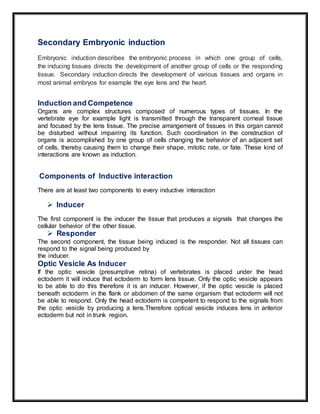
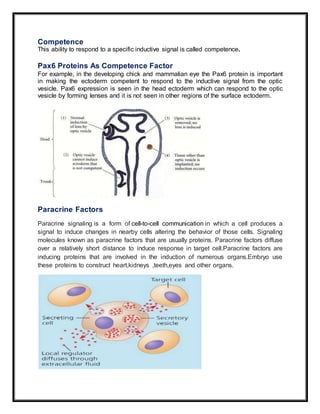
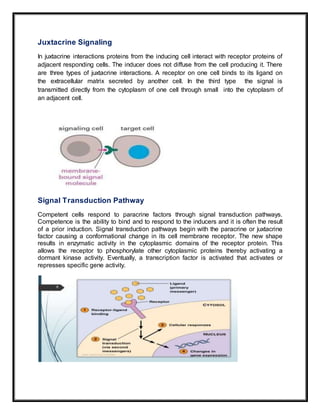
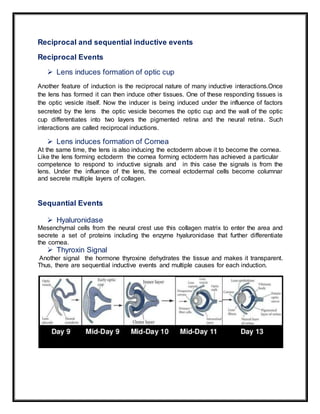
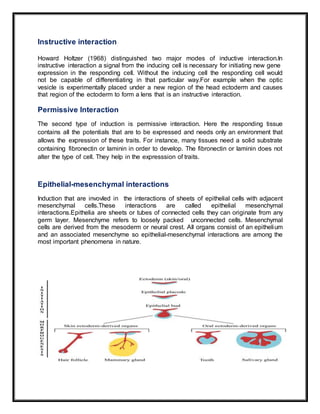
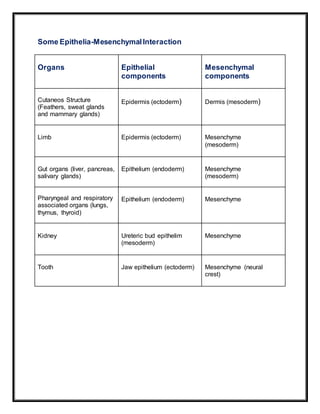
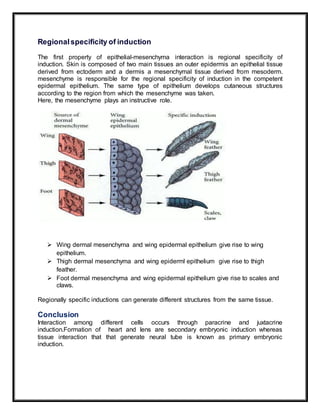

1. Secondary embryonic induction involves one group of cells, known as the inducer, directing the development of another group of cells or responder tissue. For example, the optic vesicle induces the formation of the lens. 2. Induction requires two components - the inducer, which produces signals to change the responder tissue, and the responder tissue which must be competent to receive the signals from the inducer. Competence is conferred by proteins like Pax6. 3. Signaling between tissues can occur through paracrine factors which diffuse short distances, or juxtacrine interactions which involve direct cell contact. This signaling activates gene expression through signal transduction pathways in competent responder tissues.


