Downloaded 61 times
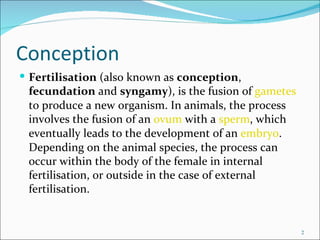
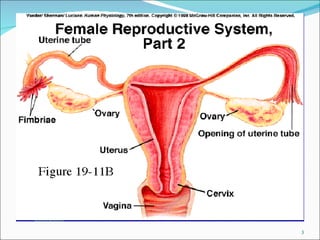
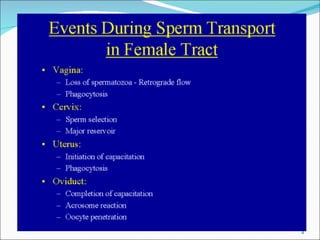

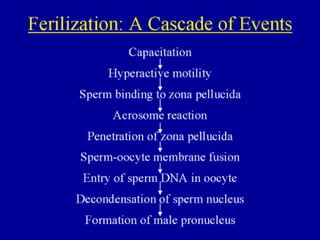
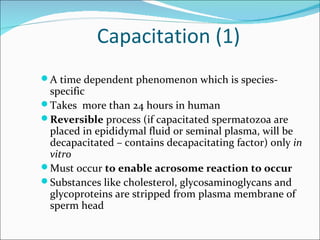
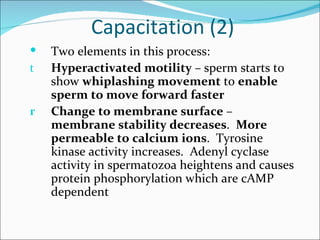
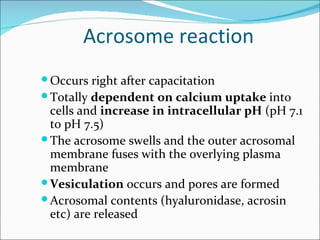
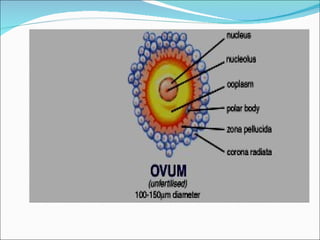
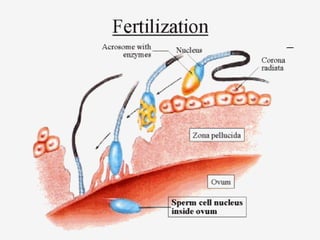
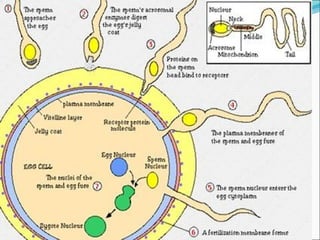
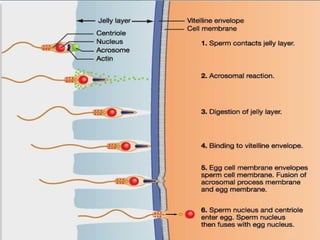
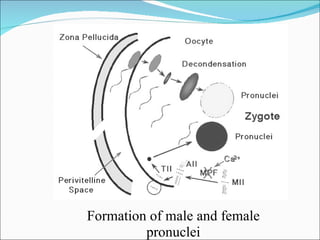
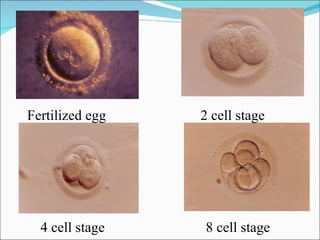
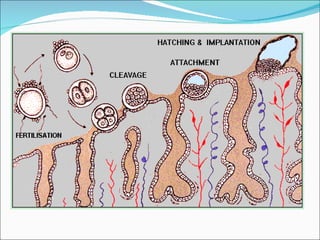


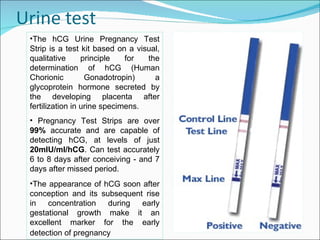
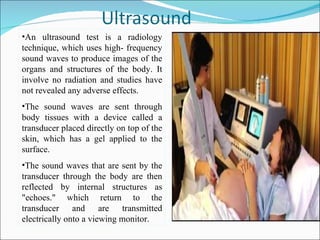
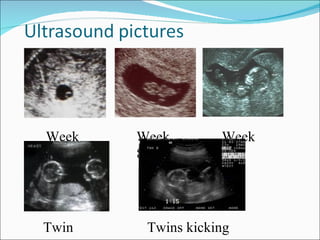
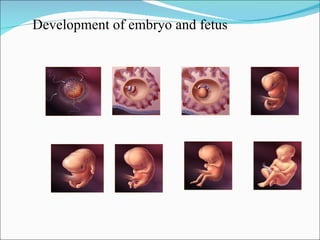
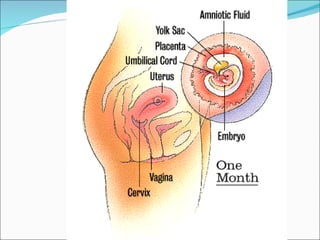
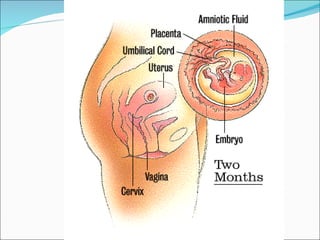
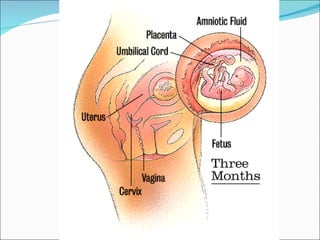
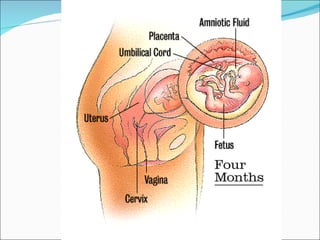
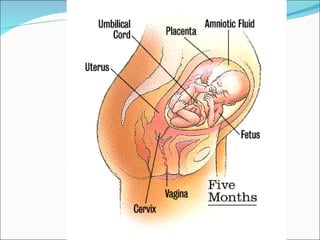
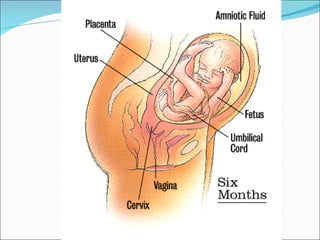
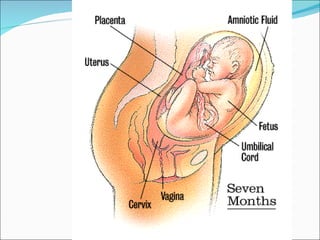
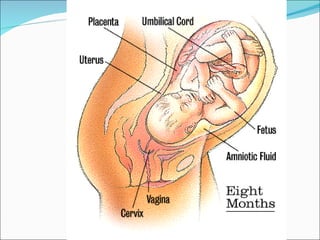

Fertilization occurs when an ovum fuses with a sperm, leading to the development of an embryo. Sperm must travel through the female reproductive tract, confronting barriers like cervical mucus, before reaching the ampulla where fertilization occurs. Capacitation and the acrosome reaction prepare the sperm for fertilization. Gamete fusion results in the formation of a zygote containing male and female pronuclei. The zygote undergoes cleavage and develops into a blastocyst that implants in the uterus, initiating pregnancy. Pregnancy can be detected through urine or blood tests that detect human chorionic gonadotropin, a hormone produced by the developing placenta.


