TYPES OF SPEECH STYLES
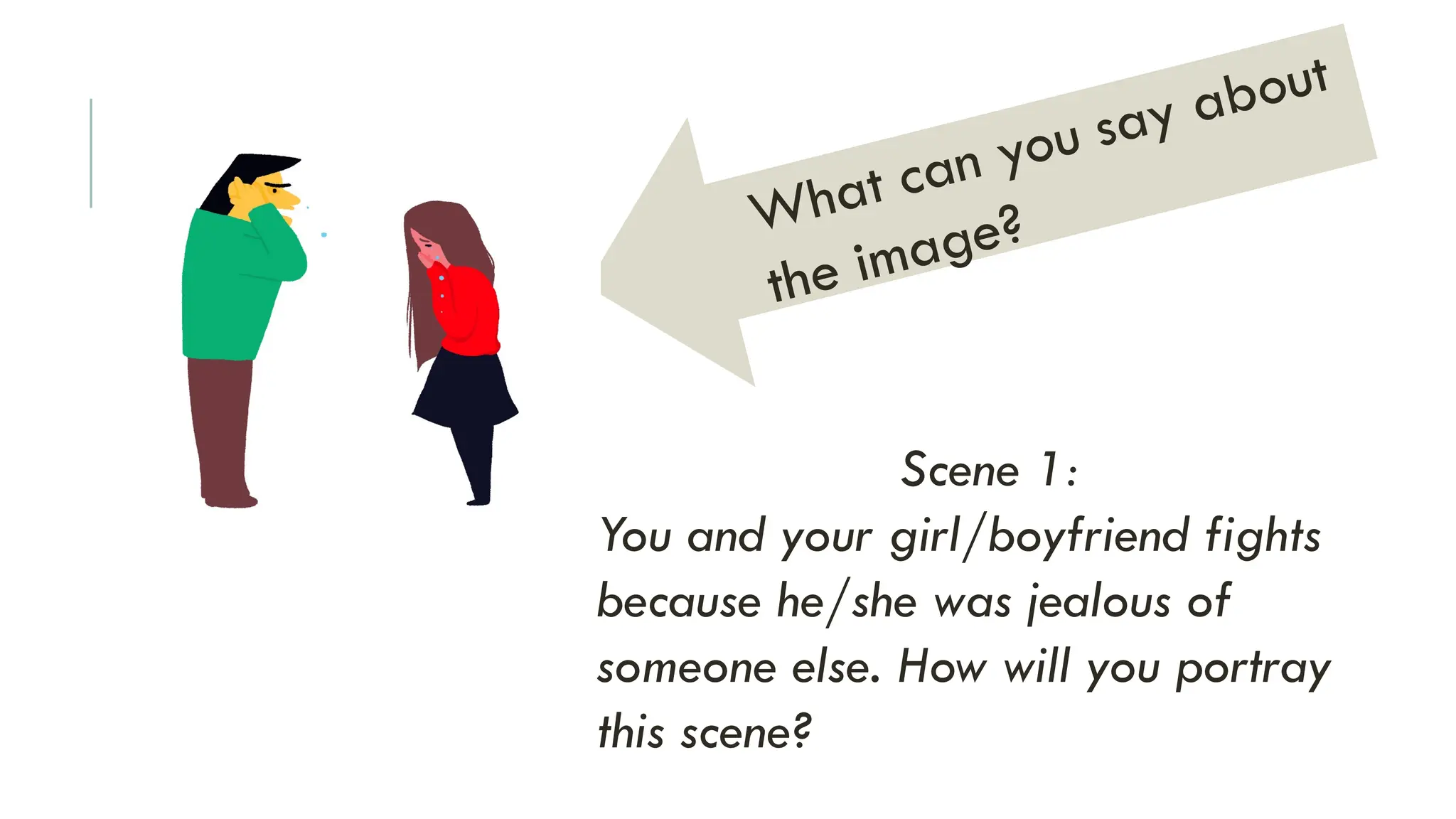
Scene 1:
You and your girl/boyfriend fights
because he/she was jealous of
someone else. How will you portray
this scene?
What can you say about
the image?
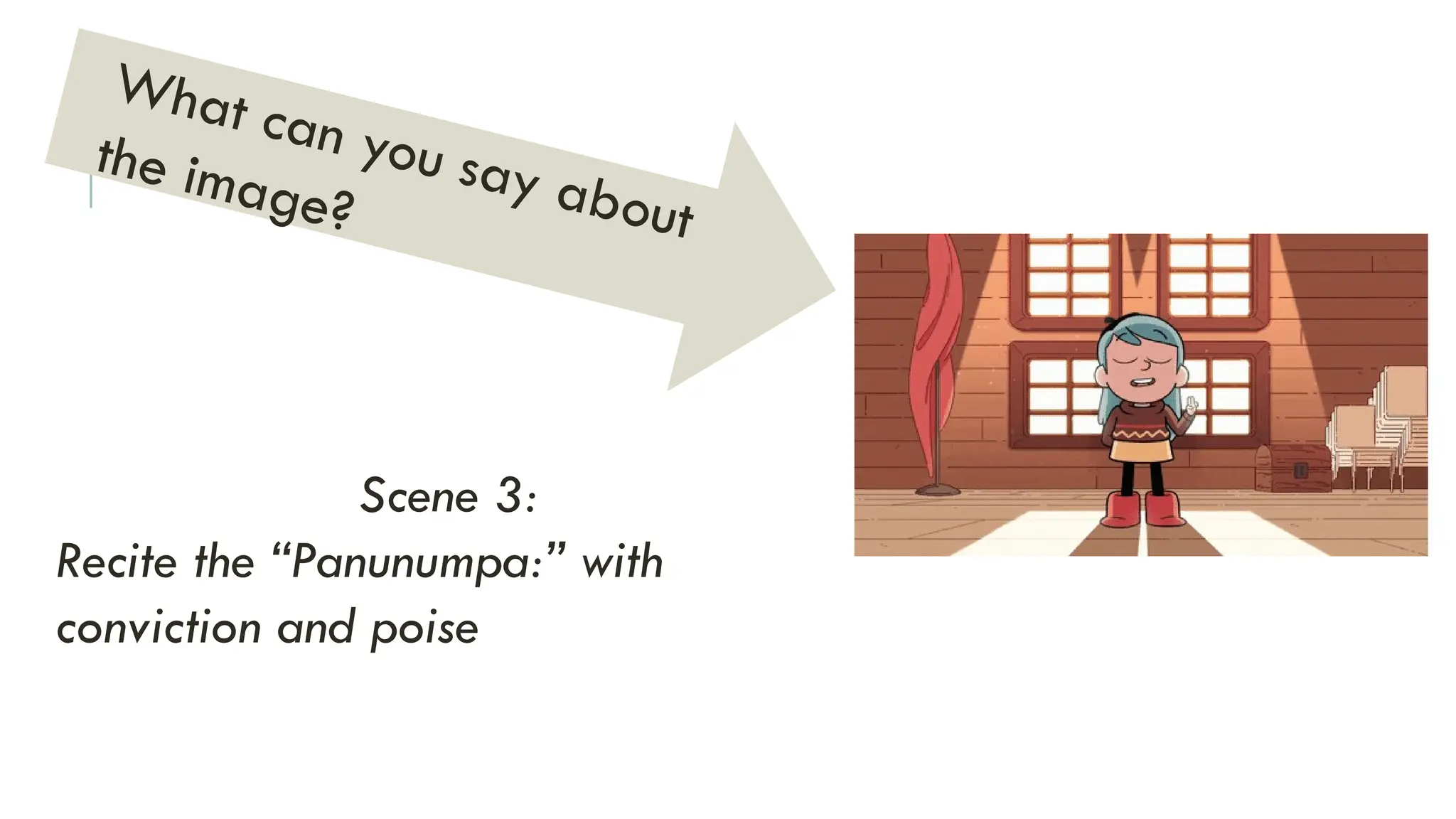
Scene 3:
Recite the “Panunumpa:” with
conviction and poise
What can you say about
the image?
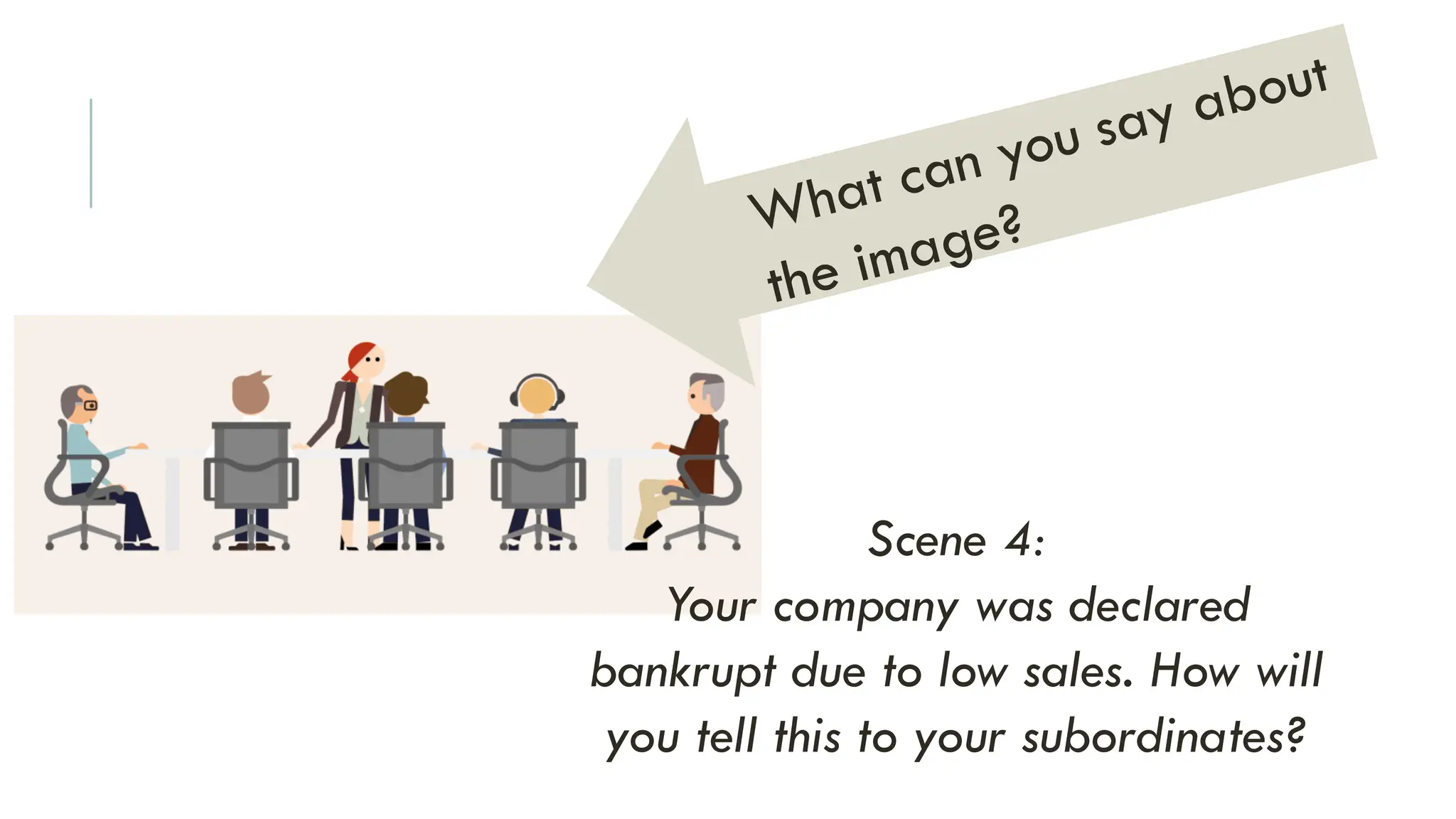
What can you say about
the image?
Scene 4:
Your company was declared
bankrupt due to low sales. How will
you tell this to your subordinates?
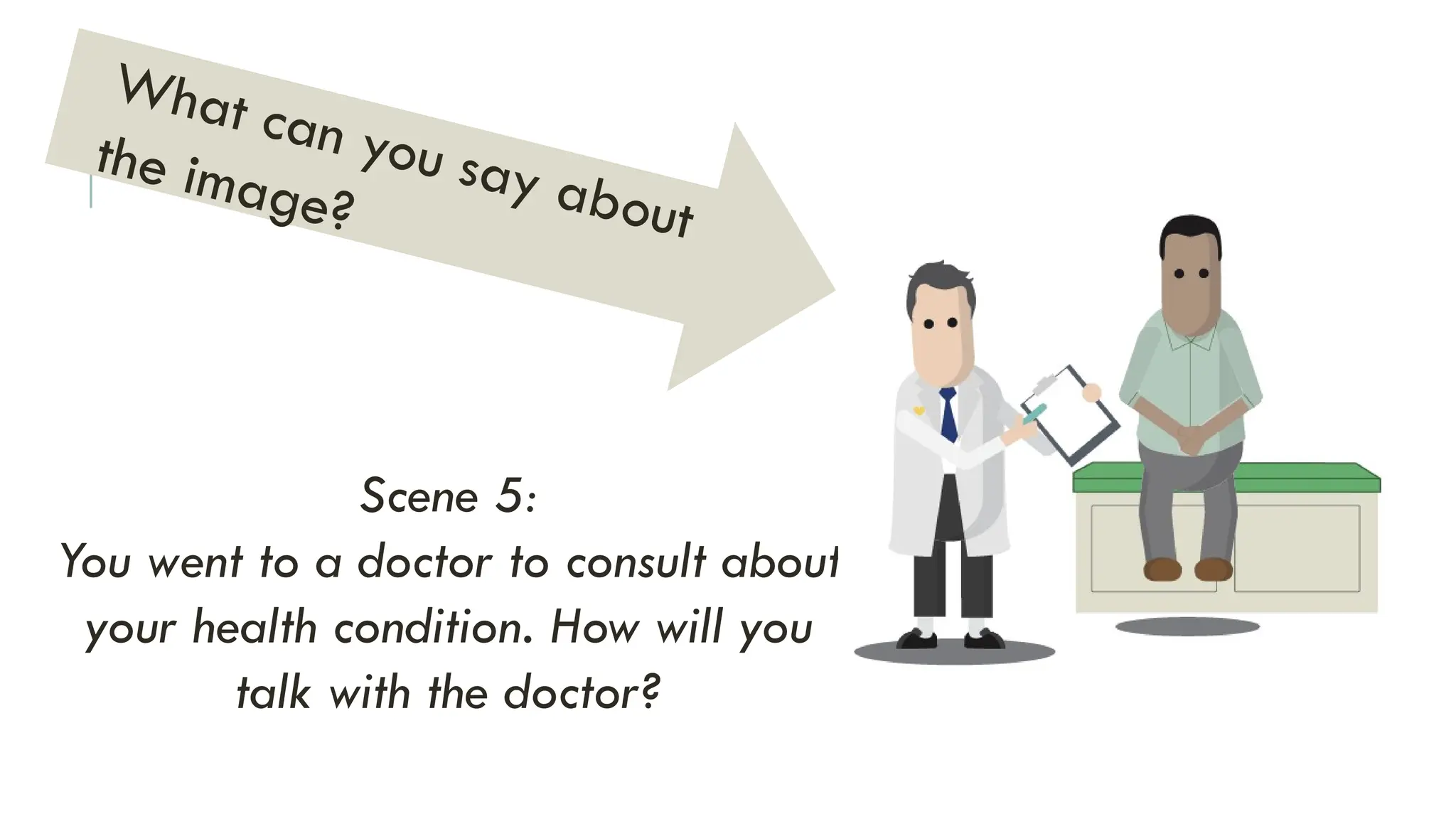
Scene 5:
You went to a doctor to consult about
your health condition. How will you
talk with the doctor?
What can you say about
the image?
FROZEN
FROZEN
Style
A very formal style not really intended
to give message but to allow a reader
to find many meaning for oneself
Does not require any feedback from
the audience
a very formal style whose quality is
static, ritualistic, and even be archaic
Usually uses long sentences with good
grammar and vocabulary
Prayers
Pledges
Oath
The Preamble
1) FROZEN STYLE
 Also known as fixed speech
 It is the most formal communicative style that is often used in
respectful situation or formal ceremony
 As most highly formal style, it uses the complex grammatical
sentence structure and vocabulary known only to experts in a
particular field
 It invites the reader to enter into a personal experience of creative
discovery such as literary texts like poetry
 The writing reflects the efforts of revision
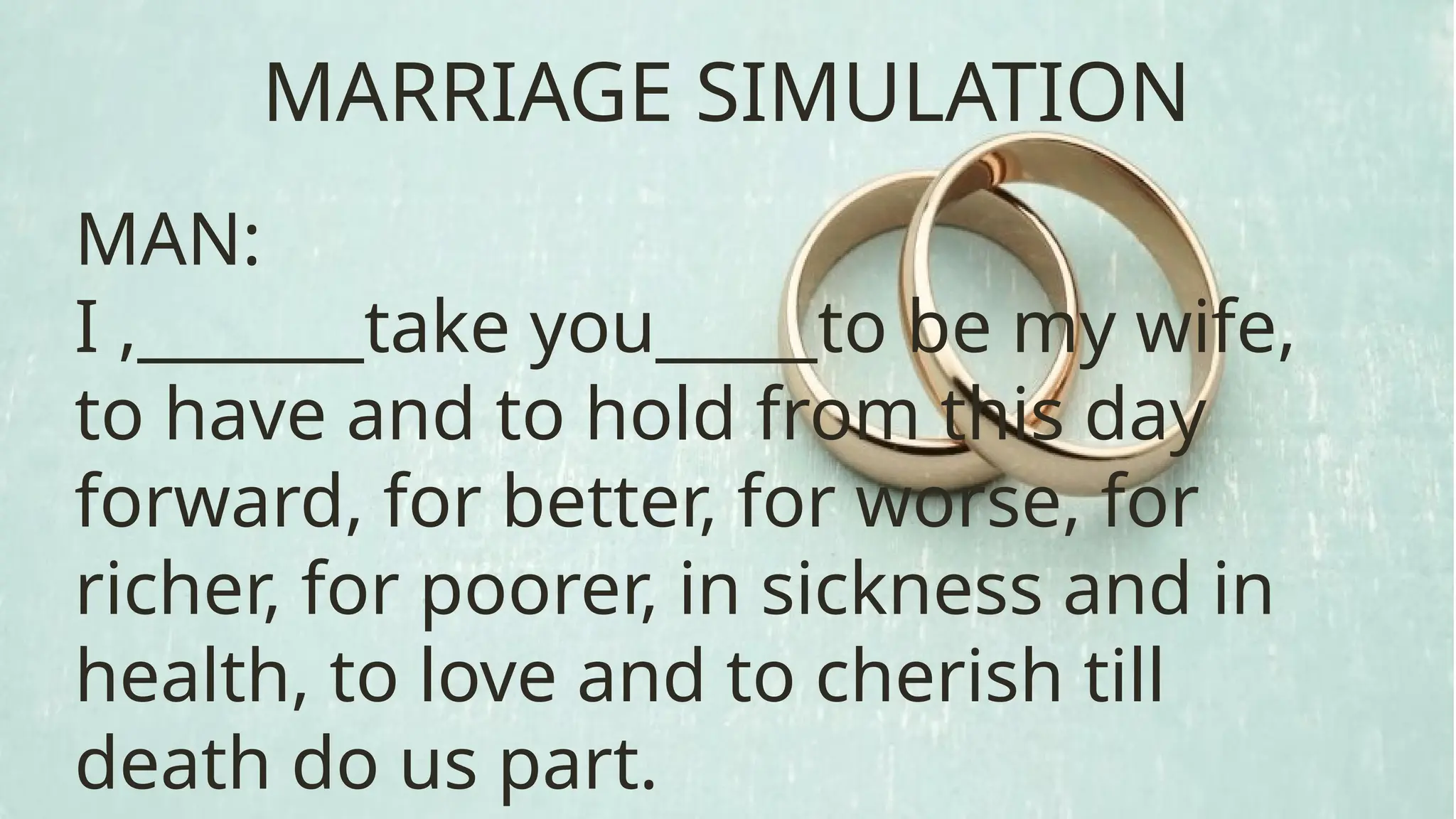
MAN:
I ,_______take you_____to be my wife,
to have and to hold from this day
forward, for better, for worse, for
richer, for poorer, in sickness and in
health, to love and to cherish till
death do us part.
MARRIAGE SIMULATION
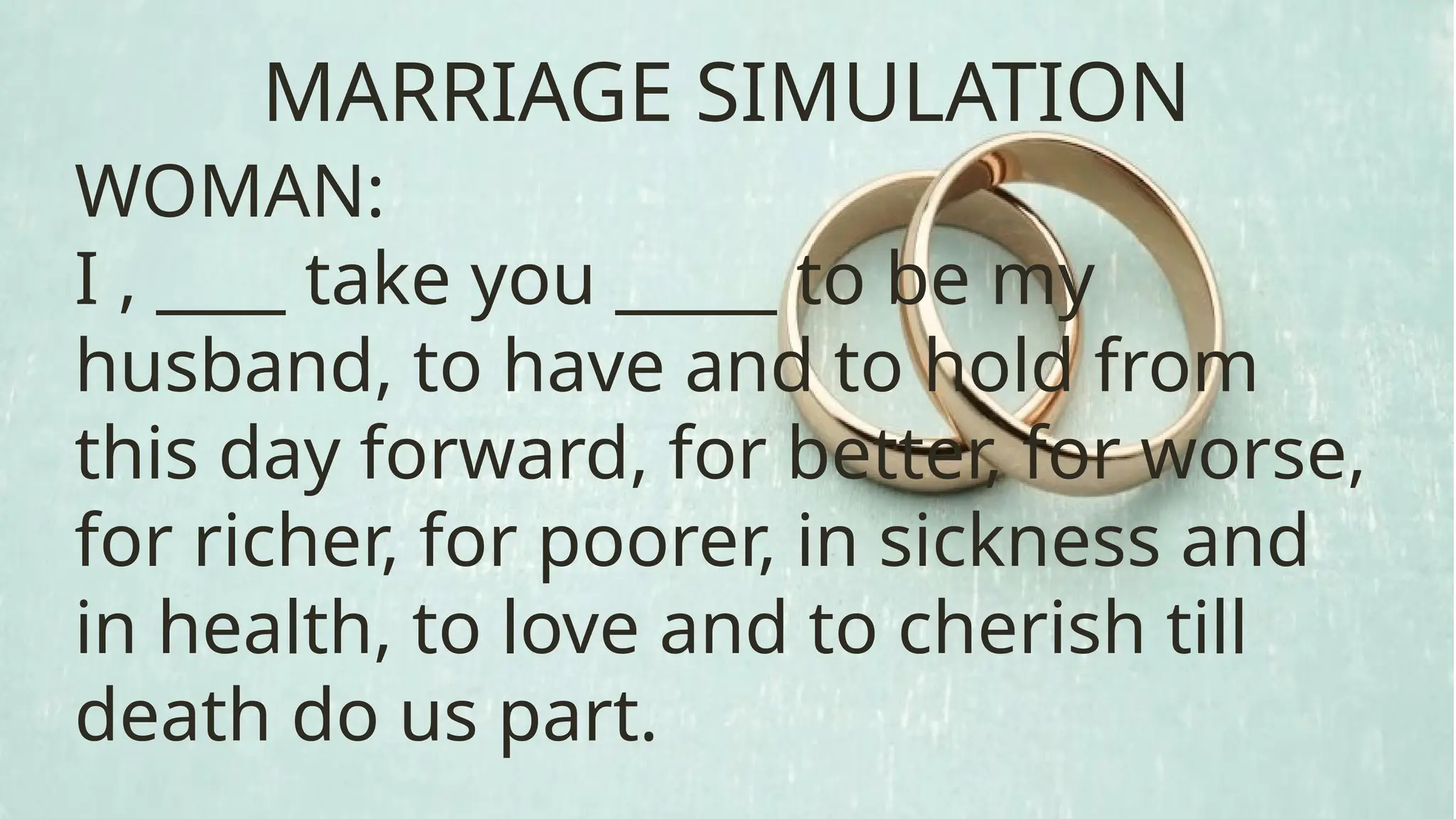
WOMAN:
I , ____ take you _____ to be my
husband, to have and to hold from
this day forward, for better, for worse,
for richer, for poorer, in sickness and
in health, to love and to cherish till
death do us part.
MARRIAGE SIMULATION
FORMAL
FORMAL
Style
Used for imparting information
Well-organized and correct
grammar and diction
Speech or utterance are planned
in advance
Avoids using slang terminologies
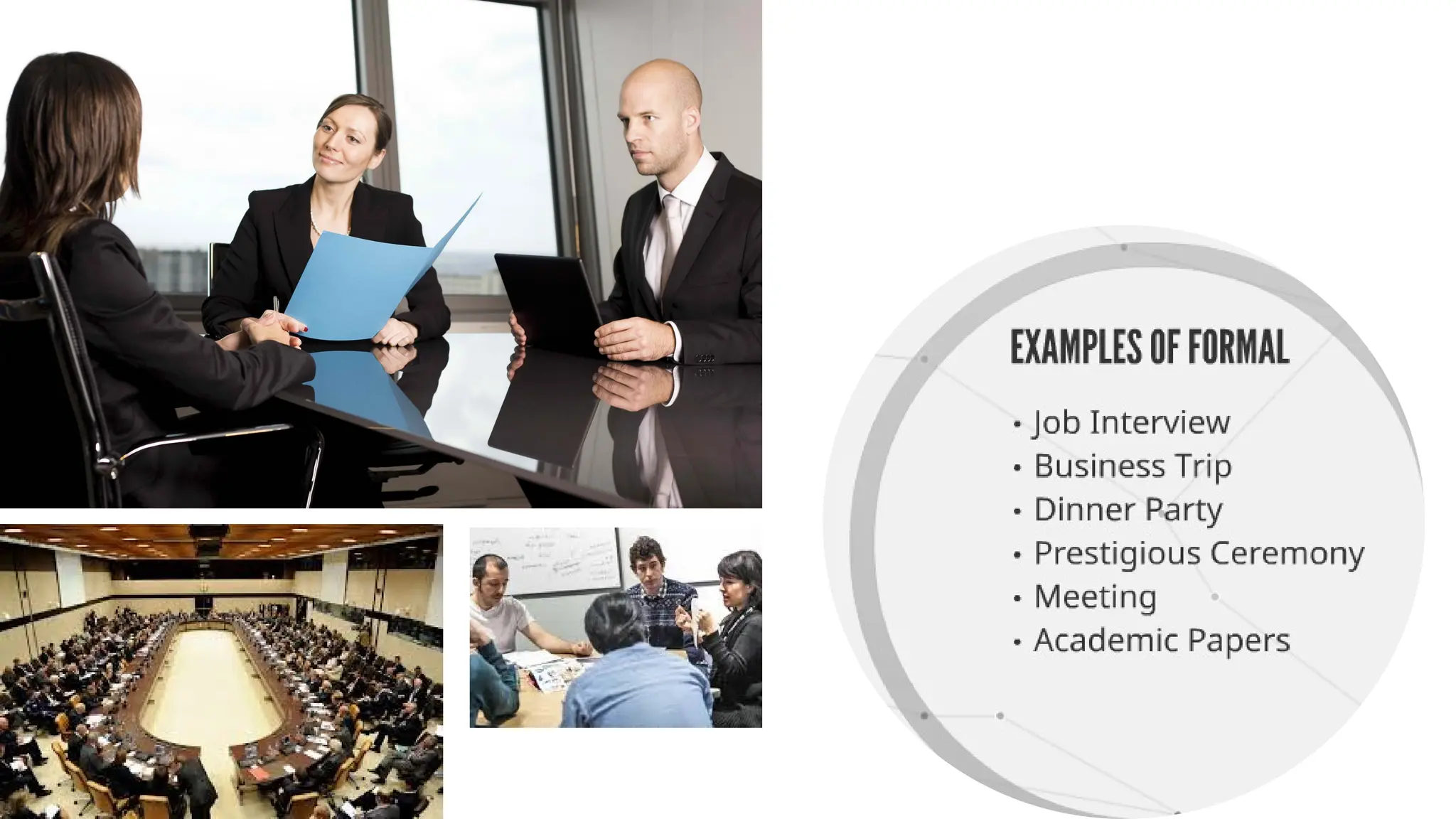
Meeting
Interview
court
2) FORMAL STYLE
– It uses formal words and expressions
Example:
Formal
“Toyota’s sales bounced back in March as substantial discounts helped
to win back customers who had been shaken by the firm’s mass safety recalls.”
Casual/ Informal expressed counterpart:
“Did you see Toyota’s sales figures? Looks like the discounts have
actually worked.”
2) FORMAL STYLE
– Most often seen in writing than in speaking
– Unlike the consultative style, this is one way.
– This speech style is expected to be presented in complete sentences with
specific word usage
– Its usually elaborate complex sentences and noun phrases are well
structured, logically sequenced, and strongly coherent
– It does not allow ellipsis (like omissions), contractions, qualifying modal
adverbials (like probably, possibly, evidently, surely, certainly and
subjectively markers )
“This whole blogging thing is getting kind of old”
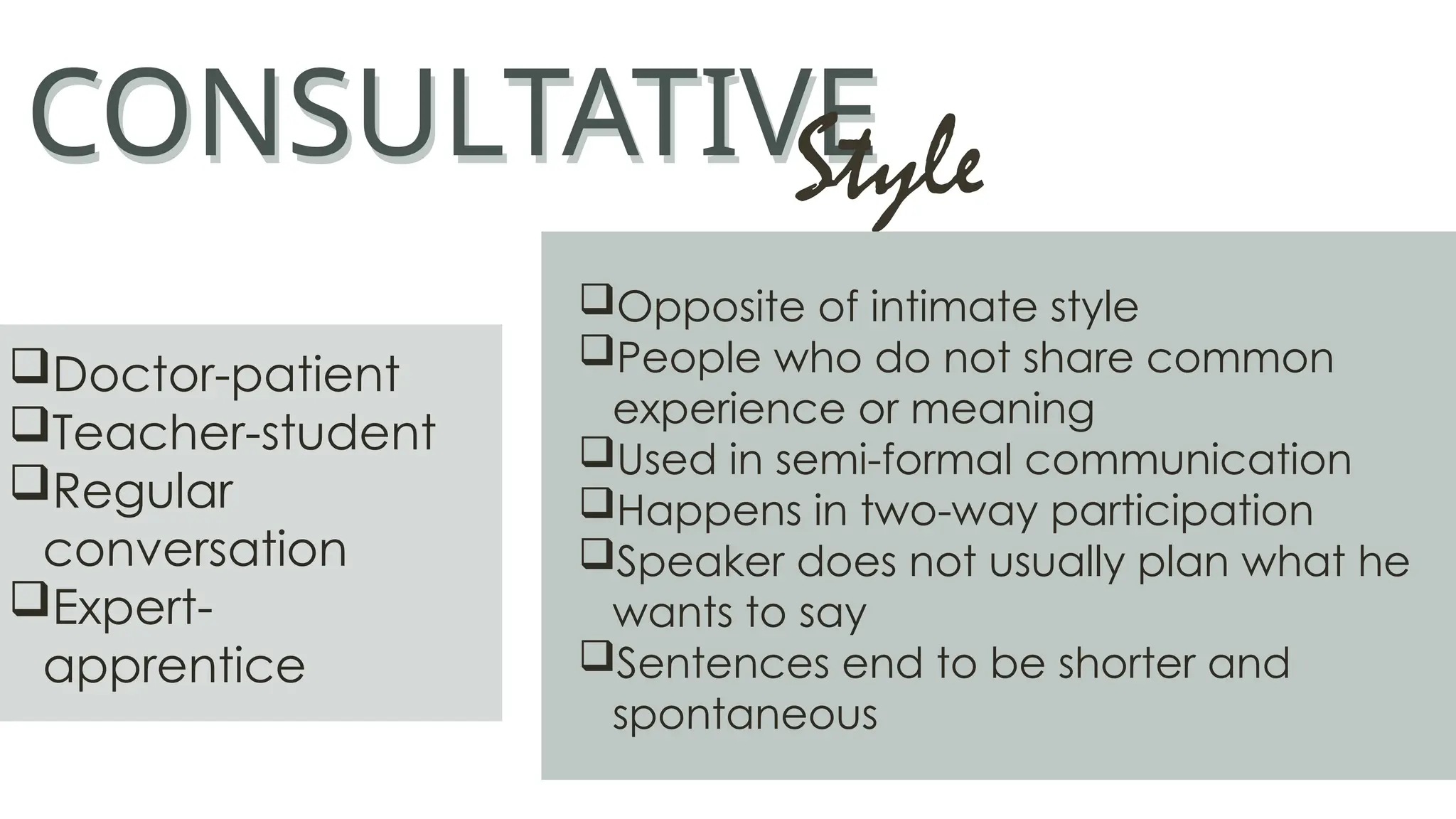
CONSULTATIVE
CONSULTATIVE
Style
Opposite of intimate style
People who do not share common
experience or meaning
Used in semi-formal communication
Happens in two-way participation
Speaker does not usually plan what he
wants to say
Sentences end to be shorter and
spontaneous
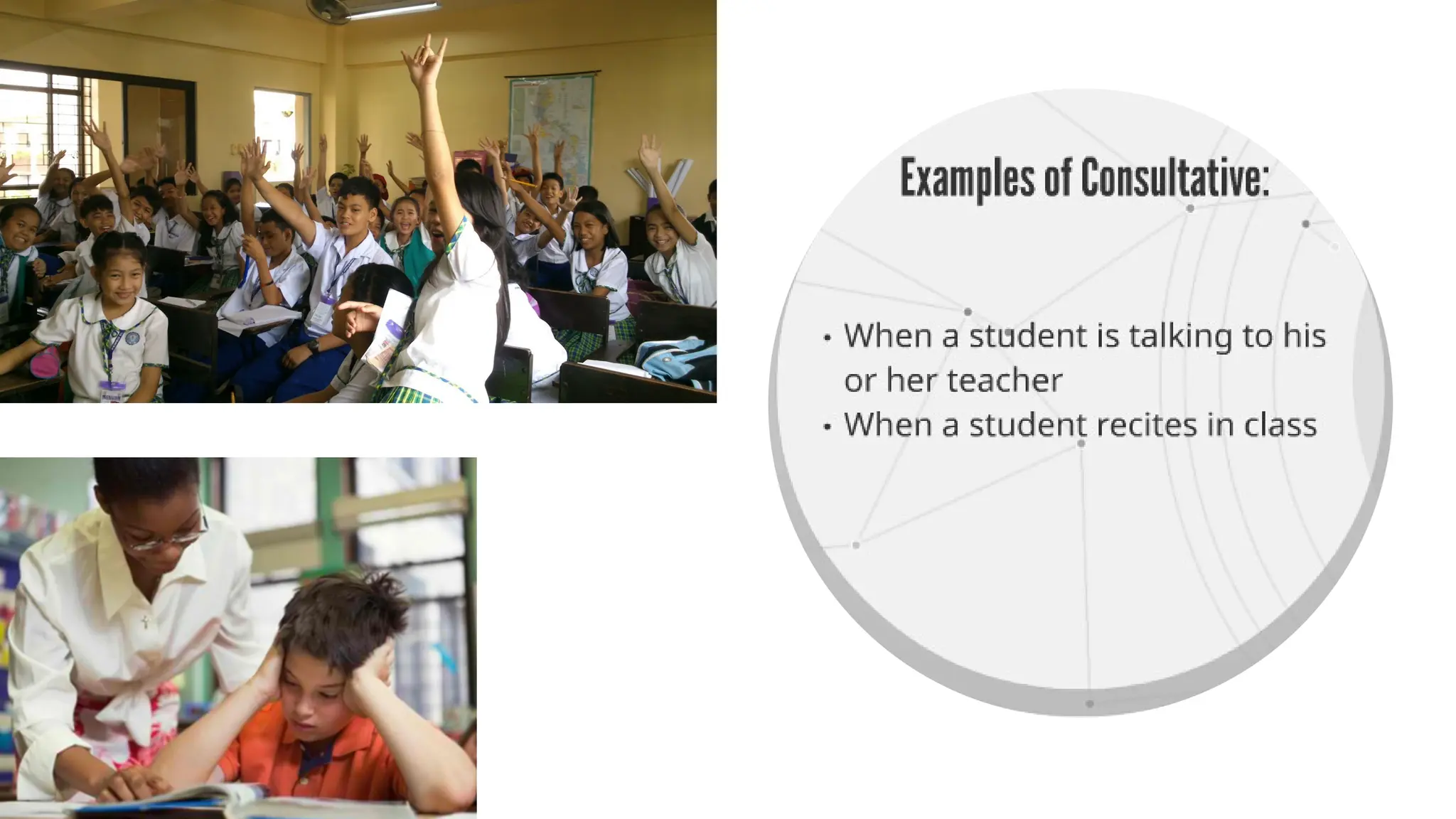
Doctor-patient
Teacher-student
Regular
conversation
Expert-
apprentice
3) CONSULTATIVE STYLE
– Known as the Third Level of language
– It is unplanned speech
– This speech style uses listener participation and feedback
– The two defining features of this style are:
(a) the speaker supplies background information
(b) the listener participates continuously
– Less appropriate for writing
CASUAL
CASUAL
Style
Language used between friends
Often very relaxed and focused on just
getting the information out
Slangs are quite often used in these
instances
This style is used in informal situations
and language
Relationship between speaker and
hearer is closed
casual
conversations with
friends and family
members
Chats
phone calls and
messages
4) CASUAL OR INFORMAL STYLE
– This style is used in conversations between friends and
insiders who have something to share and have shared
background information
– There is free and easy participation of both speaker and
listener
– It is marked by various degrees of implicitness because of
intimacy between speaker and listener
– The use of language is general
4) CASUAL OR INFORMAL STYLE
– It is appropriate to use casual language in situations
where speech is improvised and not prepared ahead
of time, or when the writer is writing quickly without
editing
– You also use casual language when you want to get to
know someone on a more personal level, or you want
the person to feel at ease.
4) CASUAL OR INFORMAL STYLE
– A simple greeting with those you know well might
probably be the causal:
– “Hi”
– “Hey”
– “What’s up?”
– “How is it going?”
– “How do you do?”
– “Nice to meet you, Mr./Mrs./Ms., Dr., Rev.”
– “ Will you please excuse me for a moment?”
– “Excuse me”
4) CASUAL OR INFORMAL STYLE
– Casual or informal style have ellipsis, allows the use of slang,
profanity, and unconventional English words
– The diction or vocabulary is informal (colloquial)
– Some of the vocabulary used only in casual situations are:
– “dude” (a person)
– “freaking out” (getting scared)
– “nope” (no)
– “puke” (throw up)
– “stuff” (things)
4) CASUAL OR INFORMAL STYLE
– Its casual language uses words or phrases that are
shortened like:
– “I’m doin’ it my way” (doing)
– “Lemme go!” (let me go)
– “Watcha gonna do?” (What are you going to do?)
– “Whassup?” (What’s up?)
INTIMATE
INTIMATE
Style
Completely private language used
within family of very close friends or
group
Uses personal language codes
Grammar is unnecessary
Does not need complete language
Certain terms of endearment, slangs or
expressions whose meaning is shared
with a small subset of persons to person
Lovers
Married couples
5) INTIMATE STYLE
– This style is used in conversations between people who
are very close and know each other quite well because
having a maximum of shared background information
– It is characterized by an economy of words, with a high
incidence of significant nonverbal communication, such as
gesture, facial expression, eye contact and so on.
– There is free and easy participation of both the speaker
and listener, and is far more elliptical than the casual,
informal style
TYPES OF SPEECH STYLES
Presented by:
Mrs. Clare T. Siplon
thank you
1) It is also known as fixed speech.
a) Frozen Speech
b) Formal Speech
c) Consultative Speech
d) Intimate Speech
e) Casual/ Informal Speech
2) It is the type of speech style that uses
formal words and expressions.
a) Frozen Speech
b) Formal Speech
c) Consultative Speech
d) Intimate Speech
e) Casual/ Informal Speech
3) This speech style uses listener participation
and feedback.
a) Frozen Speech
b) Formal Speech
c) Consultative Speech
d) Intimate Speech
e) Casual/ Informal Speech
4) This style is used in conversations between people who are very
close and know each other quite well.
a) Frozen Speech
b) Formal Speech
c) Consultative Speech
d) Intimate Speech
e) Casual/ Informal Speech
5) This style is used in conversations between friends and
insiders who have something to share and have shared
background information.
a) Frozen Speech
b) Formal Speech
c) Consultative Speech
d) Intimate Speech
e) Casual/ Informal Speech
6) Frozen speech is the most______ __________style
that is often used in respectful situation or formal ceremony.
a) formal communicative
b) fixed speech
c) complex grammar
d) creative discovery
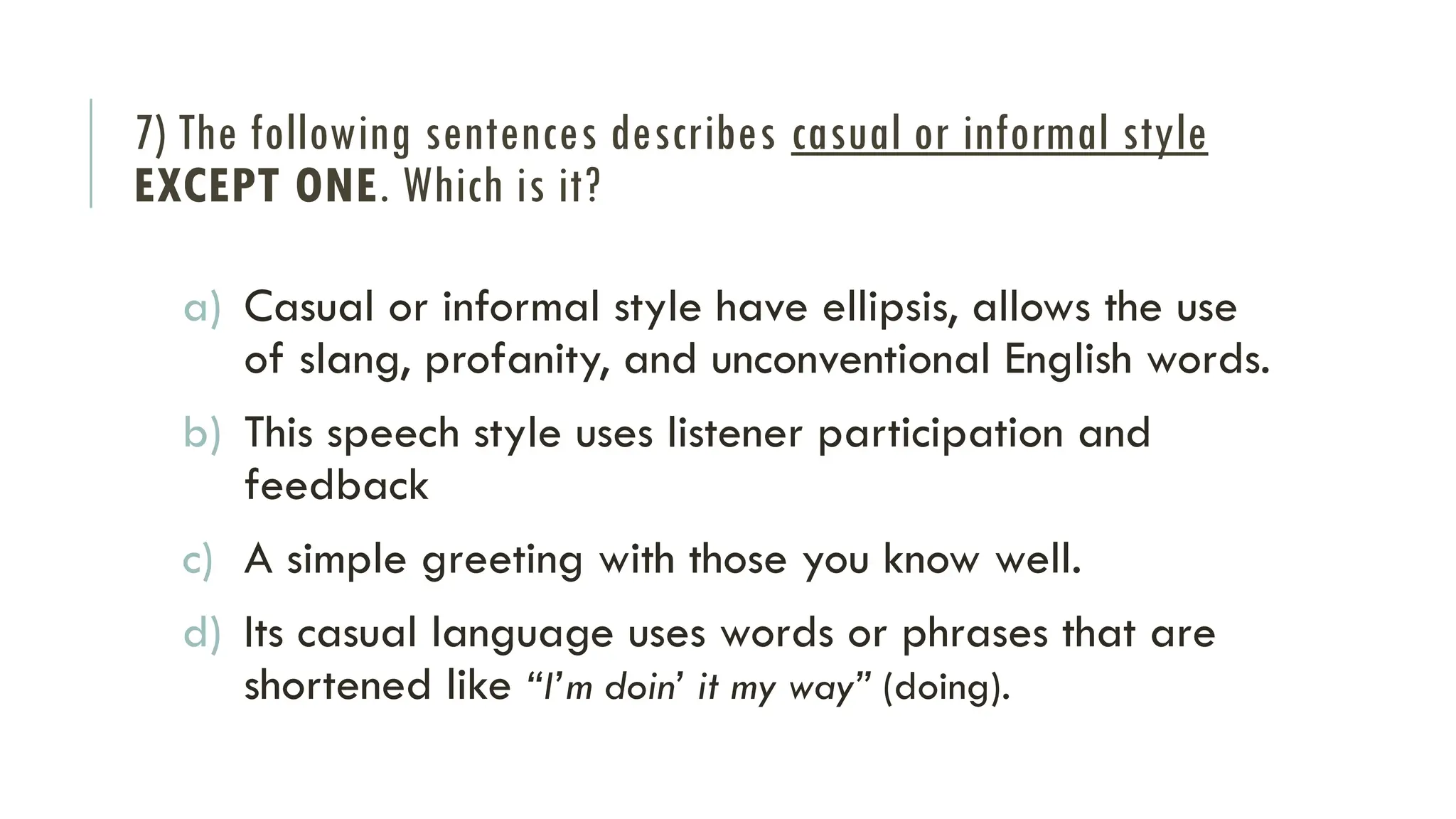
7) The following sentences describes casual or informal style
EXCEPT ONE. Which is it?
a) Casual or informal style have ellipsis, allows the use
of slang, profanity, and unconventional English words.
b) This speech style uses listener participation and
feedback
c) A simple greeting with those you know well.
d) Its casual language uses words or phrases that are
shortened like “I’m doin’ it my way” (doing).
8) In consultative speech style, the speaker______
background information while the listener ______
continuously.
a) sends; receives
b) gives; receives
c) supplies; participates
d) produces; share
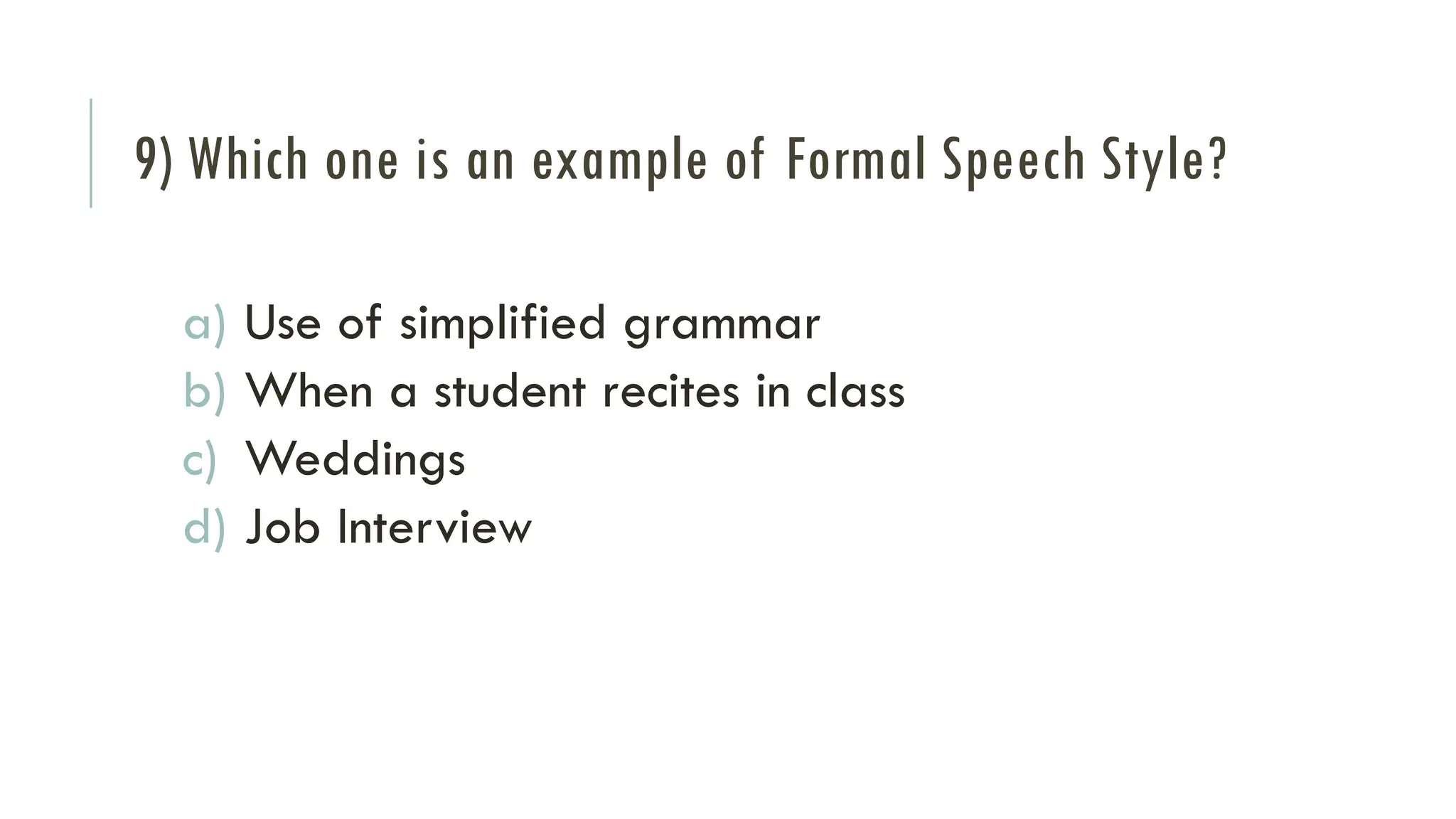
9) Which one is an example of Formal Speech Style?
a) Use of simplified grammar
b) When a student recites in class
c) Weddings
d) Job Interview
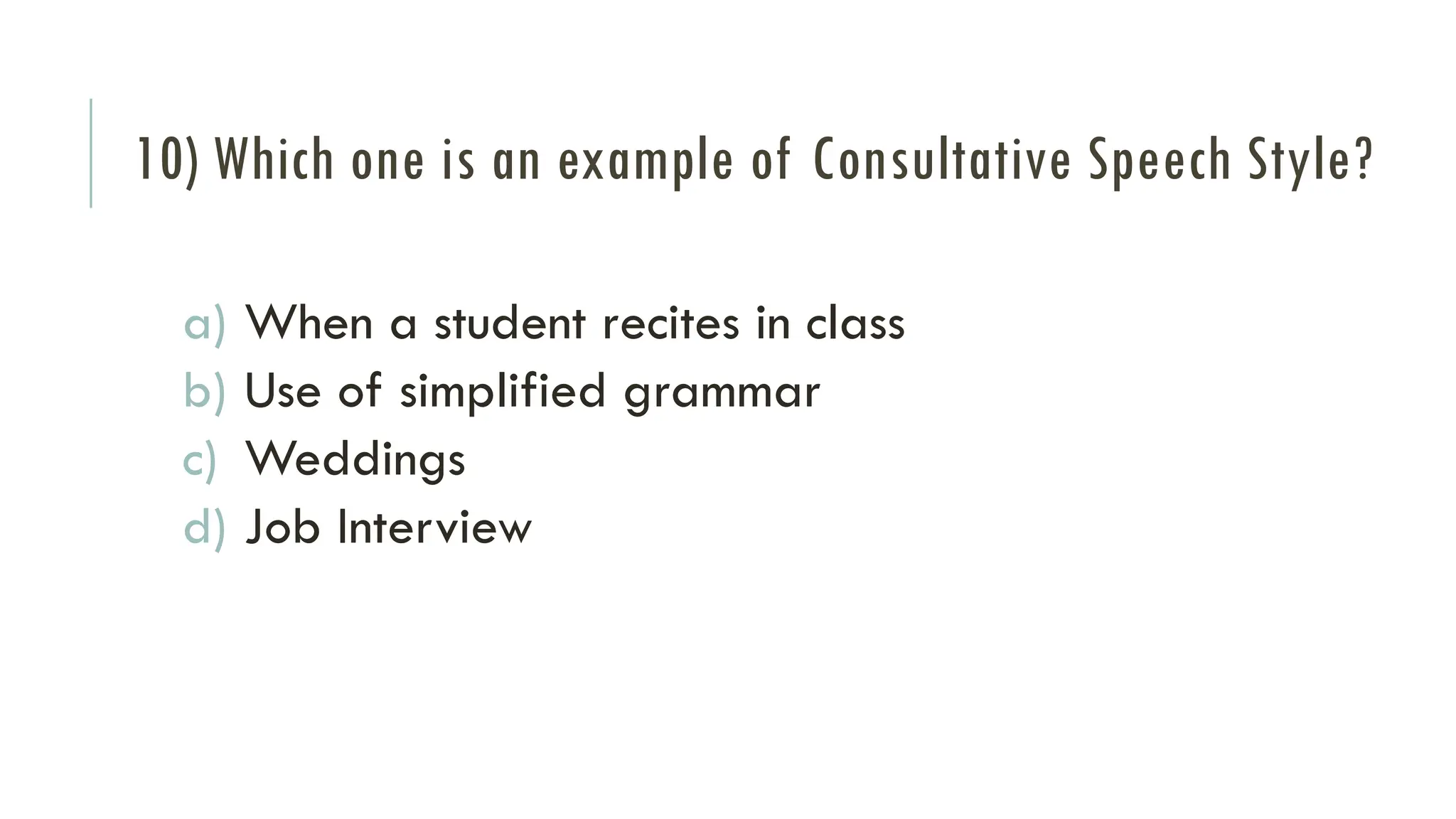
10) Which one is an example of Consultative Speech Style?
a) When a student recites in class
b) Use of simplified grammar
c) Weddings
d) Job Interview
(10-15)
WHAT ARE THE TYPES OF SPEECH STYLES?
(16-20)
GIVE ONE EXAMPLE FOR EACH TYPES OF SPEECH STYLE.
(excluding those given in the choices before)

Types of Speech Style Module 6 (After the types of speeches).pptx

  • 1.
  • 2.
    Scene 1: You andyour girl/boyfriend fights because he/she was jealous of someone else. How will you portray this scene? What can you say about the image?
  • 3.
    Scene 3: Recite the“Panunumpa:” with conviction and poise What can you say about the image?
  • 4.
    What can yousay about the image? Scene 4: Your company was declared bankrupt due to low sales. How will you tell this to your subordinates?
  • 5.
    Scene 5: You wentto a doctor to consult about your health condition. How will you talk with the doctor? What can you say about the image?
  • 6.
    FROZEN FROZEN Style A very formalstyle not really intended to give message but to allow a reader to find many meaning for oneself Does not require any feedback from the audience a very formal style whose quality is static, ritualistic, and even be archaic Usually uses long sentences with good grammar and vocabulary Prayers Pledges Oath The Preamble
  • 7.
    1) FROZEN STYLE Also known as fixed speech  It is the most formal communicative style that is often used in respectful situation or formal ceremony  As most highly formal style, it uses the complex grammatical sentence structure and vocabulary known only to experts in a particular field  It invites the reader to enter into a personal experience of creative discovery such as literary texts like poetry  The writing reflects the efforts of revision
  • 9.
    MAN: I ,_______take you_____tobe my wife, to have and to hold from this day forward, for better, for worse, for richer, for poorer, in sickness and in health, to love and to cherish till death do us part. MARRIAGE SIMULATION
  • 10.
    WOMAN: I , ____take you _____ to be my husband, to have and to hold from this day forward, for better, for worse, for richer, for poorer, in sickness and in health, to love and to cherish till death do us part. MARRIAGE SIMULATION
  • 11.
    FORMAL FORMAL Style Used for impartinginformation Well-organized and correct grammar and diction Speech or utterance are planned in advance Avoids using slang terminologies Meeting Interview court
  • 12.
    2) FORMAL STYLE –It uses formal words and expressions Example: Formal “Toyota’s sales bounced back in March as substantial discounts helped to win back customers who had been shaken by the firm’s mass safety recalls.” Casual/ Informal expressed counterpart: “Did you see Toyota’s sales figures? Looks like the discounts have actually worked.”
  • 13.
    2) FORMAL STYLE –Most often seen in writing than in speaking – Unlike the consultative style, this is one way. – This speech style is expected to be presented in complete sentences with specific word usage – Its usually elaborate complex sentences and noun phrases are well structured, logically sequenced, and strongly coherent – It does not allow ellipsis (like omissions), contractions, qualifying modal adverbials (like probably, possibly, evidently, surely, certainly and subjectively markers ) “This whole blogging thing is getting kind of old”
  • 15.
    CONSULTATIVE CONSULTATIVE Style Opposite of intimatestyle People who do not share common experience or meaning Used in semi-formal communication Happens in two-way participation Speaker does not usually plan what he wants to say Sentences end to be shorter and spontaneous Doctor-patient Teacher-student Regular conversation Expert- apprentice
  • 16.
    3) CONSULTATIVE STYLE –Known as the Third Level of language – It is unplanned speech – This speech style uses listener participation and feedback – The two defining features of this style are: (a) the speaker supplies background information (b) the listener participates continuously – Less appropriate for writing
  • 18.
    CASUAL CASUAL Style Language used betweenfriends Often very relaxed and focused on just getting the information out Slangs are quite often used in these instances This style is used in informal situations and language Relationship between speaker and hearer is closed casual conversations with friends and family members Chats phone calls and messages
  • 19.
    4) CASUAL ORINFORMAL STYLE – This style is used in conversations between friends and insiders who have something to share and have shared background information – There is free and easy participation of both speaker and listener – It is marked by various degrees of implicitness because of intimacy between speaker and listener – The use of language is general
  • 20.
    4) CASUAL ORINFORMAL STYLE – It is appropriate to use casual language in situations where speech is improvised and not prepared ahead of time, or when the writer is writing quickly without editing – You also use casual language when you want to get to know someone on a more personal level, or you want the person to feel at ease.
  • 21.
    4) CASUAL ORINFORMAL STYLE – A simple greeting with those you know well might probably be the causal: – “Hi” – “Hey” – “What’s up?” – “How is it going?” – “How do you do?” – “Nice to meet you, Mr./Mrs./Ms., Dr., Rev.” – “ Will you please excuse me for a moment?” – “Excuse me”
  • 22.
    4) CASUAL ORINFORMAL STYLE – Casual or informal style have ellipsis, allows the use of slang, profanity, and unconventional English words – The diction or vocabulary is informal (colloquial) – Some of the vocabulary used only in casual situations are: – “dude” (a person) – “freaking out” (getting scared) – “nope” (no) – “puke” (throw up) – “stuff” (things)
  • 23.
    4) CASUAL ORINFORMAL STYLE – Its casual language uses words or phrases that are shortened like: – “I’m doin’ it my way” (doing) – “Lemme go!” (let me go) – “Watcha gonna do?” (What are you going to do?) – “Whassup?” (What’s up?)
  • 25.
    INTIMATE INTIMATE Style Completely private languageused within family of very close friends or group Uses personal language codes Grammar is unnecessary Does not need complete language Certain terms of endearment, slangs or expressions whose meaning is shared with a small subset of persons to person Lovers Married couples
  • 26.
    5) INTIMATE STYLE –This style is used in conversations between people who are very close and know each other quite well because having a maximum of shared background information – It is characterized by an economy of words, with a high incidence of significant nonverbal communication, such as gesture, facial expression, eye contact and so on. – There is free and easy participation of both the speaker and listener, and is far more elliptical than the casual, informal style
  • 28.
    TYPES OF SPEECHSTYLES Presented by: Mrs. Clare T. Siplon thank you
  • 30.
    1) It isalso known as fixed speech. a) Frozen Speech b) Formal Speech c) Consultative Speech d) Intimate Speech e) Casual/ Informal Speech
  • 31.
    2) It isthe type of speech style that uses formal words and expressions. a) Frozen Speech b) Formal Speech c) Consultative Speech d) Intimate Speech e) Casual/ Informal Speech
  • 32.
    3) This speechstyle uses listener participation and feedback. a) Frozen Speech b) Formal Speech c) Consultative Speech d) Intimate Speech e) Casual/ Informal Speech
  • 33.
    4) This styleis used in conversations between people who are very close and know each other quite well. a) Frozen Speech b) Formal Speech c) Consultative Speech d) Intimate Speech e) Casual/ Informal Speech
  • 34.
    5) This styleis used in conversations between friends and insiders who have something to share and have shared background information. a) Frozen Speech b) Formal Speech c) Consultative Speech d) Intimate Speech e) Casual/ Informal Speech
  • 35.
    6) Frozen speechis the most______ __________style that is often used in respectful situation or formal ceremony. a) formal communicative b) fixed speech c) complex grammar d) creative discovery
  • 36.
    7) The followingsentences describes casual or informal style EXCEPT ONE. Which is it? a) Casual or informal style have ellipsis, allows the use of slang, profanity, and unconventional English words. b) This speech style uses listener participation and feedback c) A simple greeting with those you know well. d) Its casual language uses words or phrases that are shortened like “I’m doin’ it my way” (doing).
  • 37.
    8) In consultativespeech style, the speaker______ background information while the listener ______ continuously. a) sends; receives b) gives; receives c) supplies; participates d) produces; share
  • 38.
    9) Which oneis an example of Formal Speech Style? a) Use of simplified grammar b) When a student recites in class c) Weddings d) Job Interview
  • 39.
    10) Which oneis an example of Consultative Speech Style? a) When a student recites in class b) Use of simplified grammar c) Weddings d) Job Interview
  • 40.
    (10-15) WHAT ARE THETYPES OF SPEECH STYLES? (16-20) GIVE ONE EXAMPLE FOR EACH TYPES OF SPEECH STYLE. (excluding those given in the choices before)