Oral
Communication
Grade 11
Mrs. Anjelica Monique B. Caguioa
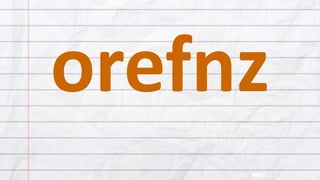
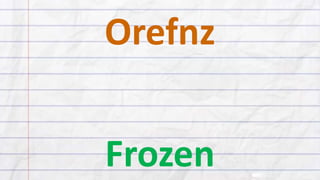
Orefnz
Frozen
olmarf
olmarf - Formal
ieavscnoltut
ieavscnoltut -
Consultative
aslcau
aslcau -
Casual
etmniati
etmniati –
Intimate
1. orefnz - Frozen
2. olmarf - Formal
3. ieavscnoltut - Consultative
4. aslcau - Casual
5. etmniati – Intimate
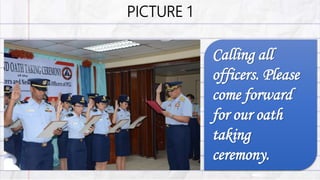
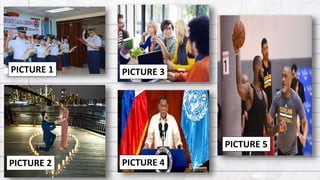
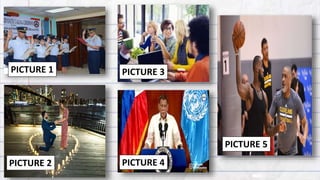
PICTURE 1
Calling all
officers. Please
come forward
for our oath
taking
ceremony.
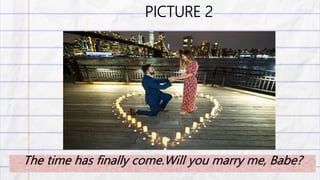
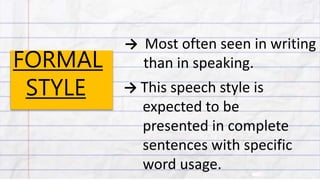
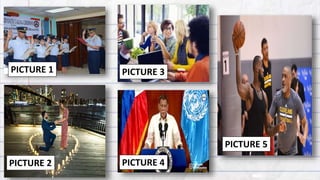
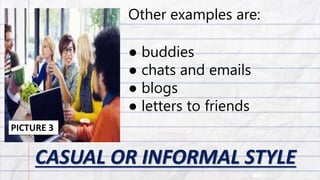
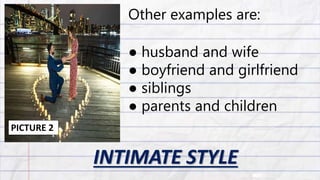
PICTURE 2
The time has finally come.Will you marry me, Babe?
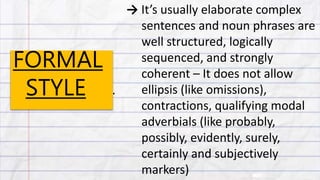
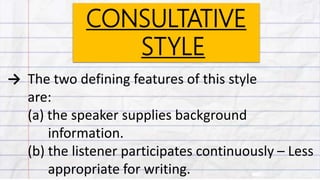
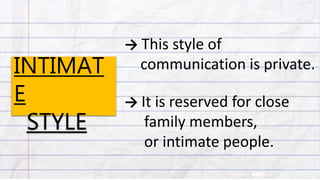
PICTURE 3
Oh guys! I could still
remember our high
school crushes.
How’s Marvin?
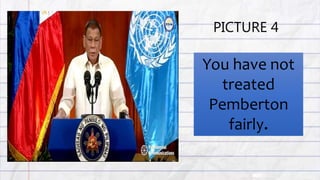
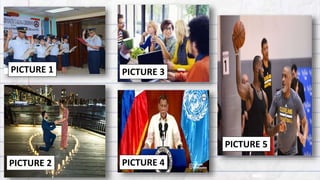
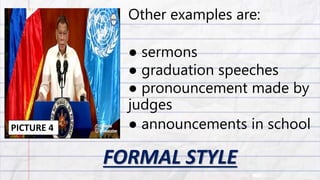
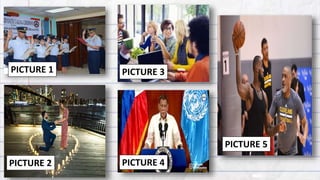
PICTURE 4
You have not
treated
Pemberton
fairly.
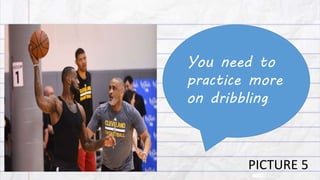
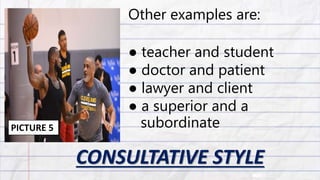
PICTURE 5
You need to
practice more
on dribbling.
OBJECTIVES:
At the end of 60-minute period, 80% of the students
should be able to do the following with at least 80%
level of success:
-define speech style;
-identify and expound the speech styles used in
social situations;
-apply language forms in different types of speech
styles; and
-present a situation showing the significance of
speech styles
What is a speech style?
According to Martin Joo’s (1976) definition:
The form of language that the
speaker uses which characterized by
the degree of formality from the
most formal to the least formal style.
FIVE (5) TYPES
OF SPEECH
STYLES
FROZEN
STYLE
→ Also known as fixed speech.
→ It is the most formal
communicative style that
is often used in respectful
situation or formal
ceremony.
FROZEN
STYLE
→ As most highly formal style, it
uses the complex grammatical
sentence structure and
vocabulary known only to experts
in a particular field.
→ It invites the reader to enter
into a personal experience of
creative discovery such as
literary texts like poetry.
→ The writing reflects the efforts of
revision.
PICTURE 1
PICTURE 2
PICTURE 3
PICTURE 4
PICTURE 5
FORMAL
STYLE
→ Most often seen in writing
than in speaking.
→ This speech style is
expected to be
presented in complete
sentences with specific
word usage.
FORMAL
STYLE
→ It’s usually elaborate complex
sentences and noun phrases are
well structured, logically
sequenced, and strongly
coherent – It does not allow
ellipsis (like omissions),
contractions, qualifying modal
adverbials (like probably,
possibly, evidently, surely,
certainly and subjectively
markers)
.
PICTURE 1
PICTURE 2
PICTURE 3
PICTURE 4
PICTURE 5
FORMAL STYLE
Other examples are:
● sermons
● graduation speeches
● pronouncement made by
judges
● announcements in school
PICTURE 4
CONSULTATIVE
STYLE
→ Known as the Third Level of language.
→ It is unplanned speech – This speech
style uses listener participation and
feedback.
CONSULTATIVE
STYLE
→ The two defining features of this style
are:
(a) the speaker supplies background
information.
(b) the listener participates continuously – Less
appropriate for writing.
PICTURE 1
PICTURE 2
PICTURE 3
PICTURE 4
PICTURE 5
CONSULTATIVE STYLE
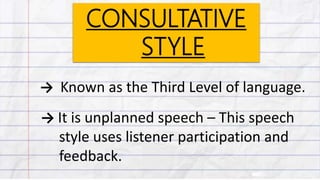
Other examples are:
● teacher and student
● doctor and patient
● lawyer and client
● a superior and a
subordinate
PICTURE 5
CASUAL OR INFORMAL
STYLE
→ This style is used in conversations between friends
and insiders who have something to share and have
shared background information – There is free and
easy participation of both speaker and listener – It is
marked by various degrees of implicitness because of
intimacy between speaker and listener – The use of
language is general.
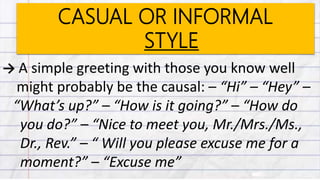
CASUAL OR INFORMAL
STYLE
→ A simple greeting with those you know well
might probably be the causal: – “Hi” – “Hey” –
“What’s up?” – “How is it going?” – “How do
you do?” – “Nice to meet you, Mr./Mrs./Ms.,
Dr., Rev.” – “ Will you please excuse me for a
moment?” – “Excuse me”
CASUAL OR INFORMAL
STYLE
→ Casual or informal style have ellipsis, allows
the use of slang, profanity, and unconventional
English words – The diction or vocabulary is
informal (colloquial) – Some of the vocabulary
used only in casual situations are: – “dude” (a
person) – “freaking out” (getting scared) –
“nope” (no)
CASUAL OR INFORMAL
STYLE
→ Its casual language uses words or phrases that
are shortened like: – “I’m doin’ it my way”
(doing) – “Lemme go!” (let me go) – “Watcha
gonna do?” (What are you going to do?) –
“Whassup?” (What’s up?)
PICTURE 1
PICTURE 2
PICTURE 3
PICTURE 4
PICTURE 5
CASUAL OR INFORMAL STYLE
Other examples are:
● buddies
● chats and emails
● blogs
● letters to friends
PICTURE 3
INTIMAT
E
STYLE
→ This style of
communication is private.
→ It is reserved for close
family members,
or intimate people.
PICTURE 1
PICTURE 2
PICTURE 3
PICTURE 4
PICTURE 5
INTIMATE STYLE
Other examples are:
● husband and wife
● boyfriend and girlfriend
● siblings
● parents and children
PICTURE 2
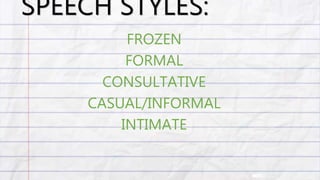
FROZEN
FORMAL
CONSULTATIVE
CASUAL/INFORMAL
INTIMATE
SPEECH STYLES:
Directions: Present a one-minute
scenario reflecting or showing the
significance of speech style and its
various types. Be creative.
Reflect a Scene Activity:
:
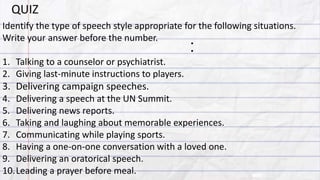
Identify the type of speech style appropriate for the following situations.
Write your answer before the number.
1. Talking to a counselor or psychiatrist.
2. Giving last-minute instructions to players.
3. Delivering campaign speeches.
4. Delivering a speech at the UN Summit.
5. Delivering news reports.
6. Taking and laughing about memorable experiences.
7. Communicating while playing sports.
8. Having a one-on-one conversation with a loved one.
9. Delivering an oratorical speech.
10.Leading a prayer before meal.
QUIZ
On a one whole sheet of paper, write a
short original play which employs the
various types of speech styles. Present
it in class.
Assignment:
End. 

speech-style for demo.pptx

  • 1.
  • 5.
  • 6.
  • 7.
  • 8.
  • 9.
  • 10.
  • 11.
  • 12.
  • 13.
  • 15.
    1. orefnz -Frozen 2. olmarf - Formal 3. ieavscnoltut - Consultative 4. aslcau - Casual 5. etmniati – Intimate
  • 17.
    PICTURE 1 Calling all officers.Please come forward for our oath taking ceremony.
  • 18.
    PICTURE 2 The timehas finally come.Will you marry me, Babe?
  • 19.
    PICTURE 3 Oh guys!I could still remember our high school crushes. How’s Marvin?
  • 20.
    PICTURE 4 You havenot treated Pemberton fairly.
  • 21.
    PICTURE 5 You needto practice more on dribbling.
  • 22.
    OBJECTIVES: At the endof 60-minute period, 80% of the students should be able to do the following with at least 80% level of success: -define speech style; -identify and expound the speech styles used in social situations; -apply language forms in different types of speech styles; and -present a situation showing the significance of speech styles
  • 24.
    What is aspeech style? According to Martin Joo’s (1976) definition: The form of language that the speaker uses which characterized by the degree of formality from the most formal to the least formal style.
  • 25.
    FIVE (5) TYPES OFSPEECH STYLES
  • 26.
    FROZEN STYLE → Also knownas fixed speech. → It is the most formal communicative style that is often used in respectful situation or formal ceremony.
  • 27.
    FROZEN STYLE → As mosthighly formal style, it uses the complex grammatical sentence structure and vocabulary known only to experts in a particular field. → It invites the reader to enter into a personal experience of creative discovery such as literary texts like poetry. → The writing reflects the efforts of revision.
  • 28.
    PICTURE 1 PICTURE 2 PICTURE3 PICTURE 4 PICTURE 5
  • 29.
    FORMAL STYLE → Most oftenseen in writing than in speaking. → This speech style is expected to be presented in complete sentences with specific word usage.
  • 30.
    FORMAL STYLE → It’s usuallyelaborate complex sentences and noun phrases are well structured, logically sequenced, and strongly coherent – It does not allow ellipsis (like omissions), contractions, qualifying modal adverbials (like probably, possibly, evidently, surely, certainly and subjectively markers) .
  • 31.
    PICTURE 1 PICTURE 2 PICTURE3 PICTURE 4 PICTURE 5
  • 32.
    FORMAL STYLE Other examplesare: ● sermons ● graduation speeches ● pronouncement made by judges ● announcements in school PICTURE 4
  • 33.
    CONSULTATIVE STYLE → Known asthe Third Level of language. → It is unplanned speech – This speech style uses listener participation and feedback.
  • 34.
    CONSULTATIVE STYLE → The twodefining features of this style are: (a) the speaker supplies background information. (b) the listener participates continuously – Less appropriate for writing.
  • 35.
    PICTURE 1 PICTURE 2 PICTURE3 PICTURE 4 PICTURE 5
  • 36.
    CONSULTATIVE STYLE Other examplesare: ● teacher and student ● doctor and patient ● lawyer and client ● a superior and a subordinate PICTURE 5
  • 37.
    CASUAL OR INFORMAL STYLE →This style is used in conversations between friends and insiders who have something to share and have shared background information – There is free and easy participation of both speaker and listener – It is marked by various degrees of implicitness because of intimacy between speaker and listener – The use of language is general.
  • 38.
    CASUAL OR INFORMAL STYLE →A simple greeting with those you know well might probably be the causal: – “Hi” – “Hey” – “What’s up?” – “How is it going?” – “How do you do?” – “Nice to meet you, Mr./Mrs./Ms., Dr., Rev.” – “ Will you please excuse me for a moment?” – “Excuse me”
  • 39.
    CASUAL OR INFORMAL STYLE →Casual or informal style have ellipsis, allows the use of slang, profanity, and unconventional English words – The diction or vocabulary is informal (colloquial) – Some of the vocabulary used only in casual situations are: – “dude” (a person) – “freaking out” (getting scared) – “nope” (no)
  • 40.
    CASUAL OR INFORMAL STYLE →Its casual language uses words or phrases that are shortened like: – “I’m doin’ it my way” (doing) – “Lemme go!” (let me go) – “Watcha gonna do?” (What are you going to do?) – “Whassup?” (What’s up?)
  • 41.
    PICTURE 1 PICTURE 2 PICTURE3 PICTURE 4 PICTURE 5
  • 42.
    CASUAL OR INFORMALSTYLE Other examples are: ● buddies ● chats and emails ● blogs ● letters to friends PICTURE 3
  • 43.
    INTIMAT E STYLE → This styleof communication is private. → It is reserved for close family members, or intimate people.
  • 44.
    PICTURE 1 PICTURE 2 PICTURE3 PICTURE 4 PICTURE 5
  • 45.
    INTIMATE STYLE Other examplesare: ● husband and wife ● boyfriend and girlfriend ● siblings ● parents and children PICTURE 2
  • 46.
  • 47.
    Directions: Present aone-minute scenario reflecting or showing the significance of speech style and its various types. Be creative. Reflect a Scene Activity:
  • 48.
    : Identify the typeof speech style appropriate for the following situations. Write your answer before the number. 1. Talking to a counselor or psychiatrist. 2. Giving last-minute instructions to players. 3. Delivering campaign speeches. 4. Delivering a speech at the UN Summit. 5. Delivering news reports. 6. Taking and laughing about memorable experiences. 7. Communicating while playing sports. 8. Having a one-on-one conversation with a loved one. 9. Delivering an oratorical speech. 10.Leading a prayer before meal. QUIZ
  • 49.
    On a onewhole sheet of paper, write a short original play which employs the various types of speech styles. Present it in class. Assignment:
  • 50.