Types of Speech
Style
PREPARED BY: MS. MARY JOY B. CABILING
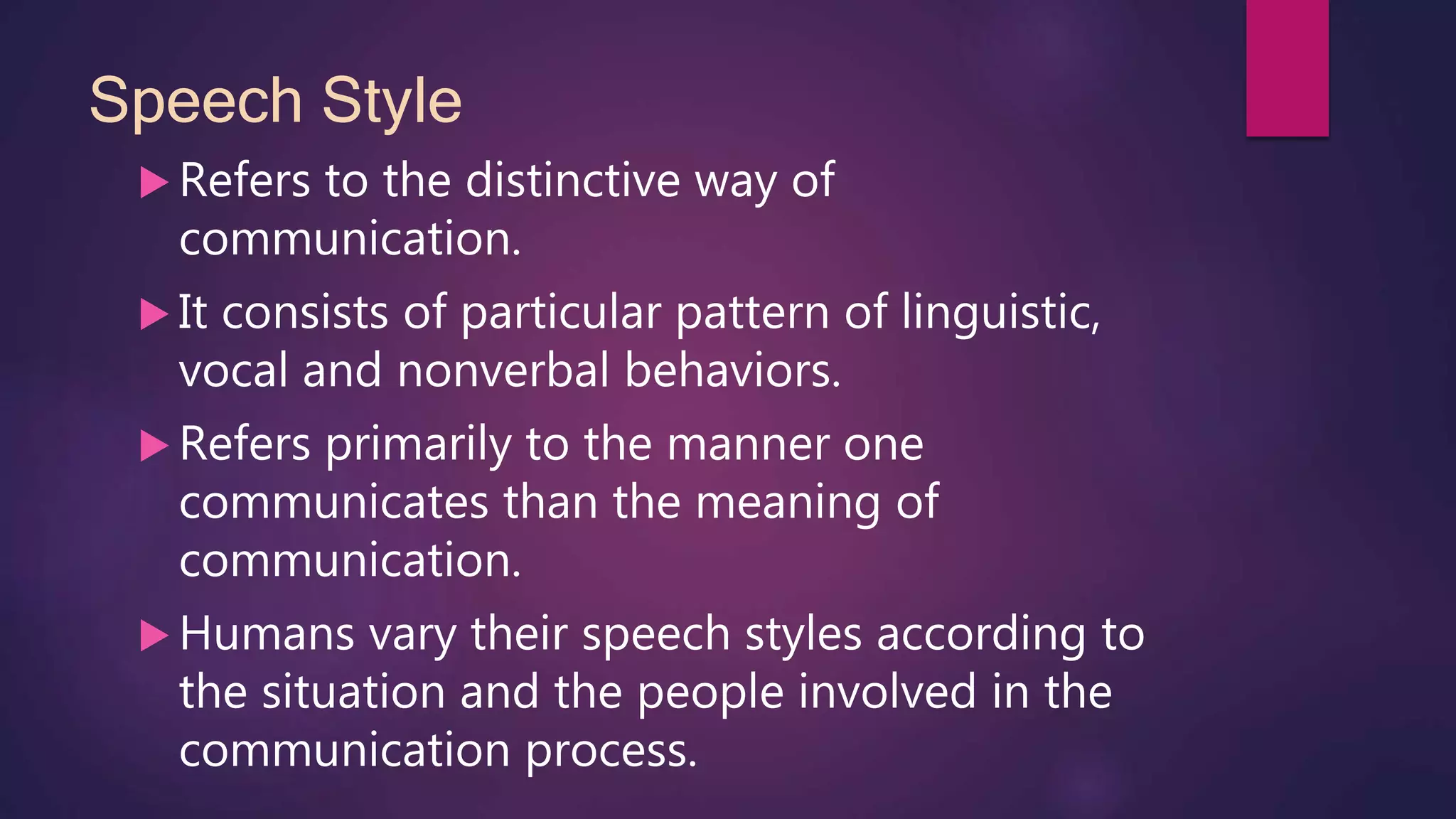
Speech Style
 Refers to the distinctive way of
communication.
 It consists of particular pattern of linguistic,
vocal and nonverbal behaviors.
 Refers primarily to the manner one
communicates than the meaning of
communication.
 Humans vary their speech styles according to
the situation and the people involved in the
communication process.
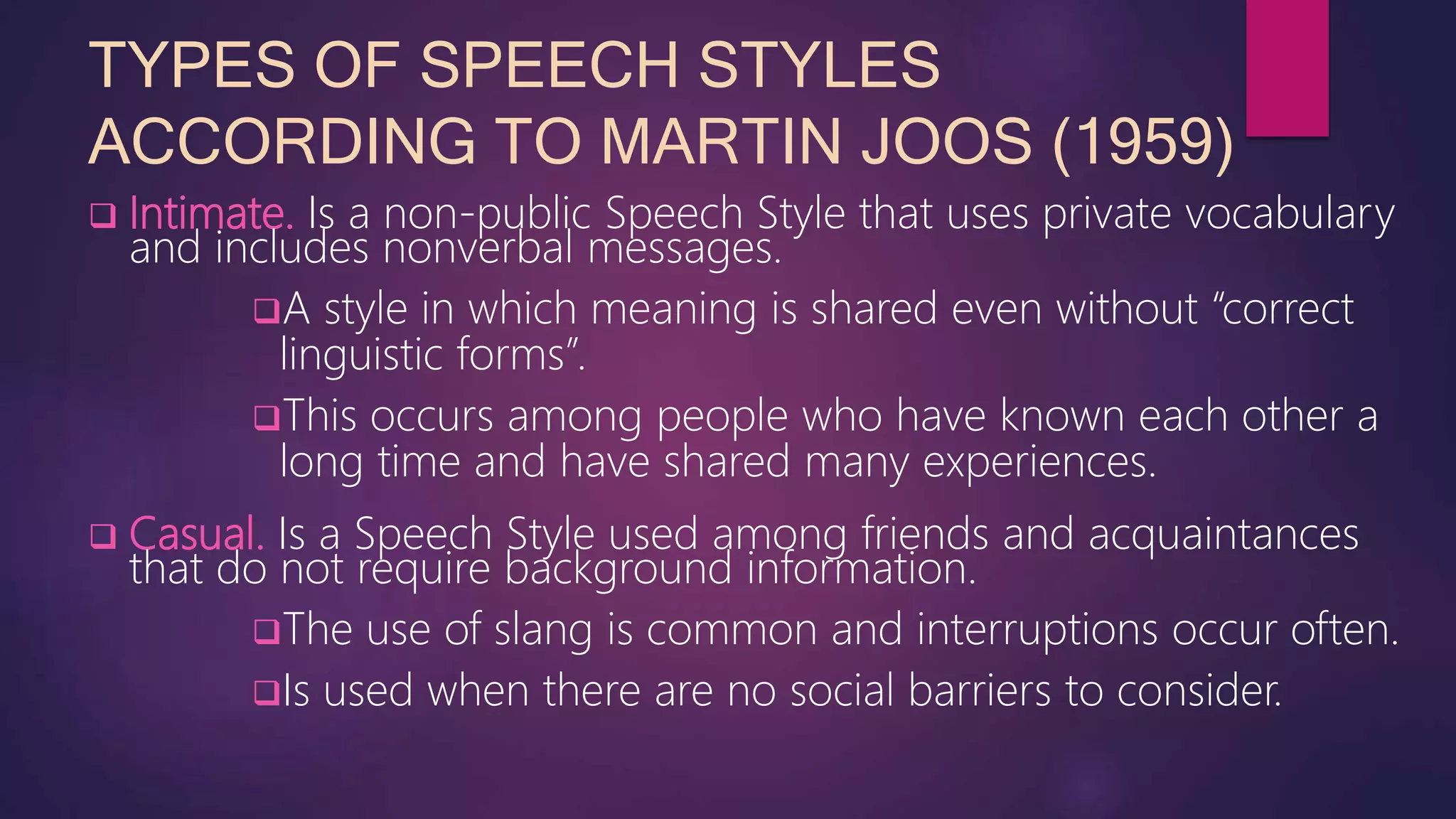
TYPES OF SPEECH STYLES
ACCORDING TO MARTIN JOOS (1959)
 Intimate. Is a non-public Speech Style that uses private vocabulary
and includes nonverbal messages.
A style in which meaning is shared even without “correct
linguistic forms”.
This occurs among people who have known each other a
long time and have shared many experiences.
 Casual. Is a Speech Style used among friends and acquaintances
that do not require background information.
The use of slang is common and interruptions occur often.
Is used when there are no social barriers to consider.
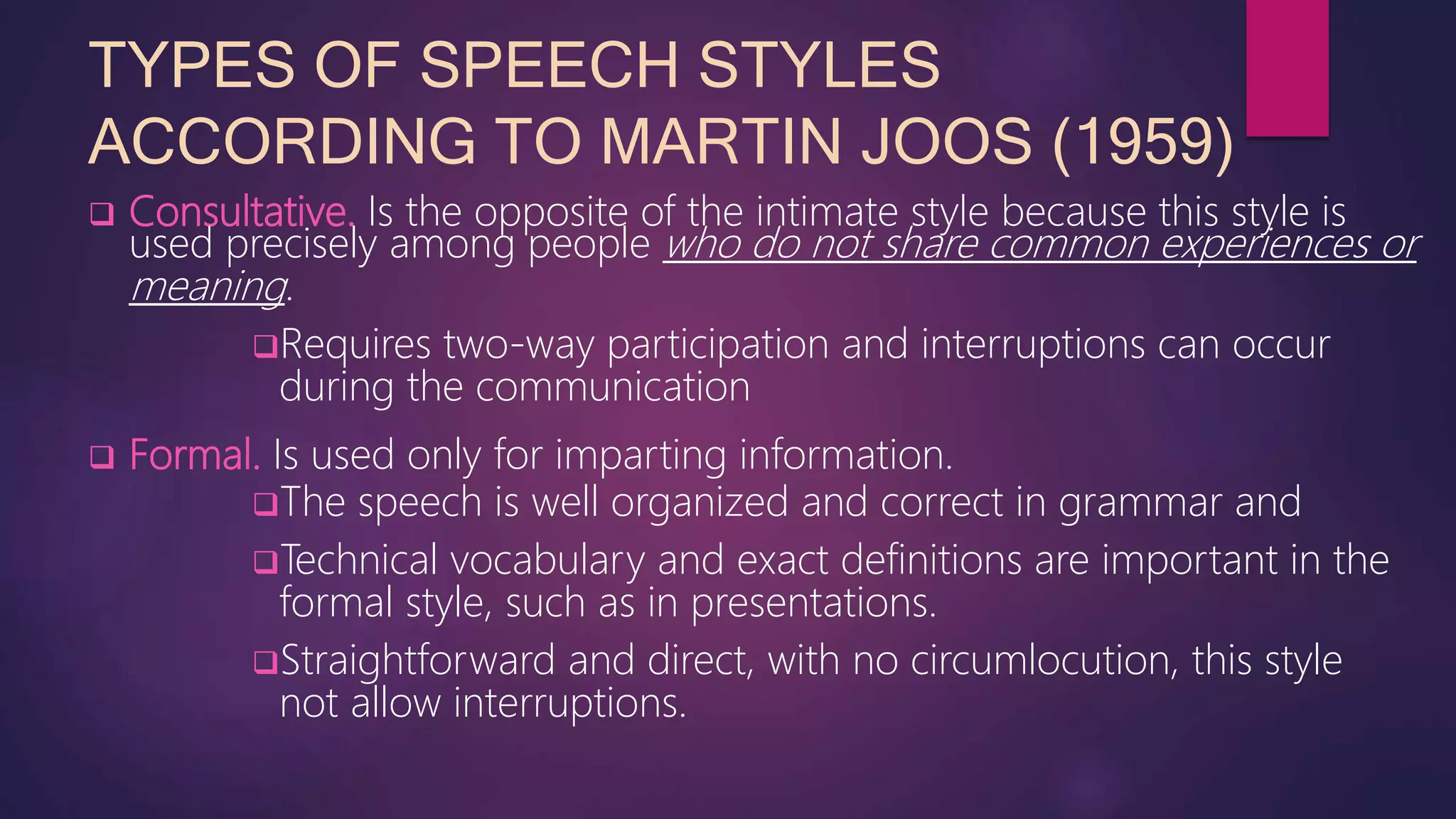
TYPES OF SPEECH STYLES
ACCORDING TO MARTIN JOOS (1959)
 Consultative. Is the opposite of the intimate style because this style is
used precisely among people who do not share common experiences or
meaning.
Requires two-way participation and interruptions can occur
during the communication
 Formal. Is used only for imparting information.
The speech is well organized and correct in grammar and
Technical vocabulary and exact definitions are important in the
formal style, such as in presentations.
Straightforward and direct, with no circumlocution, this style
not allow interruptions.
TYPES OF SPEECH STYLES
ACCORDING TO MARTIN JOOS (1959)
 Frozen. Is q formal style whose quality is static, ritualistic, and may
even be archaic.
Requires two-way participation and interruptions can occur
during the communication

Types of speech style

  • 1.
    Types of Speech Style PREPAREDBY: MS. MARY JOY B. CABILING
  • 2.
    Speech Style  Refersto the distinctive way of communication.  It consists of particular pattern of linguistic, vocal and nonverbal behaviors.  Refers primarily to the manner one communicates than the meaning of communication.  Humans vary their speech styles according to the situation and the people involved in the communication process.
  • 3.
    TYPES OF SPEECHSTYLES ACCORDING TO MARTIN JOOS (1959)  Intimate. Is a non-public Speech Style that uses private vocabulary and includes nonverbal messages. A style in which meaning is shared even without “correct linguistic forms”. This occurs among people who have known each other a long time and have shared many experiences.  Casual. Is a Speech Style used among friends and acquaintances that do not require background information. The use of slang is common and interruptions occur often. Is used when there are no social barriers to consider.
  • 4.
    TYPES OF SPEECHSTYLES ACCORDING TO MARTIN JOOS (1959)  Consultative. Is the opposite of the intimate style because this style is used precisely among people who do not share common experiences or meaning. Requires two-way participation and interruptions can occur during the communication  Formal. Is used only for imparting information. The speech is well organized and correct in grammar and Technical vocabulary and exact definitions are important in the formal style, such as in presentations. Straightforward and direct, with no circumlocution, this style not allow interruptions.
  • 5.
    TYPES OF SPEECHSTYLES ACCORDING TO MARTIN JOOS (1959)  Frozen. Is q formal style whose quality is static, ritualistic, and may even be archaic. Requires two-way participation and interruptions can occur during the communication