SPEECH CONTEXTS
AND STYLES
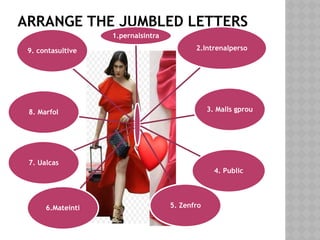
ARRANGE THE JUMBLED LETTERS
1.pernalsintra
2.Intrenalperso
3. Malls gprou
4. Public
5. Zenfro
6.Mateinti
7. Ualcas
8. Marfol
9. contasultive
Work in groups of eight and read the
following scenes.
• Scene 1: Someone making an announcement to the
public
• Scene 2: Two small groups of people discussing
something separately
• Scene 3: One person talking to himself
• Scene 4: Two people speaking with each other on
the phone
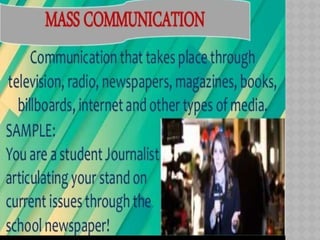
• Scene 5: A reporter appearing live on screen
2. Weave the scenes together into a story. You are
free to interchange the order of the scenes.
3. Act out your story and present it to the class
within five minutes.
Identify the type of speech style appropriate
for the following situations. Write your
answer before the number.

_____________1. talking to a counselor or psychiatrist
_____________2. giving last-minute instructions to players
 _____________3. delivering campaign speeches
_____________4. delivering a speech at the UN Summit
_____________5. delivering news reports
_____________6. talking and laughing about memorable experiences
_____________7. communicating while playing sports
_____________8. having a one-on-one conversation with a loved one
_____________9. delivering an oratorical speech
_____________10. leading a prayer before meal
_____________11. reading school policies
_____________12. talking to a superior
_____________13. reading pledge of allegiance to the flag
_____________14. talking to a stranger
_____________15. inquiring at a hotel

DIRECTIONS: Construct five sets of sentences. For each type of speech style in a
set, make one sentence. The sentences in a set should have the same meaning.
See the example below. Write your answer on the space provided.

Example:

FROZEN: All visitors are invited to proceed upstairs immediately.

FORMAL: Would everyone please proceed upstairs at once?

CONSULTATIVE: Would you all please go upstairs right away?

CASUAL: Come upstairs now.
1. FROZEN: ______________________________________________________
2. FORMAL: ______________________________________________________
3. CONSULTATIVE:
______________________________________________________
4. CASUAL: ______________________________________________________
5. INTIMATE: ______________________________________________________

 WATCH IT OUT!
 The teacher will ask the learners who among
them watched PROBINSYANO. Learners will
cite some scenarios that they have watched
in that particular teleseries.
 WHEN PROBINSYANO FEELS
 The teacher will present different situations
and the learners will Identify the appropriate
type of speech style.
 SUPPLY THE CONTENT
 Group them into six and identify the
situation that shows on the video and let
them write on manila paper the different
speech styles that they have observed.
 Let them thrash it out in front of their
classmates
 Giving insights and more examples
 REFLECT to UNDERSTAND
 Learners will give the relevance of the
different types of speech style in their daily
life conversation.
 Learners will provide the significance of the
choosing the appropriate types of speech
style in delivering a particular conversation
to someone.
 VOICE IT OUT!
 (5 minutes to prepare)
 The teacher will ask the learners to perform
radio broadcasting/ tele newscasting in
context. The performance will be an
application of the interpersonal
communication and a speech style
 Rubrics given
IN ONE (1) WHOLE SHEET OF PAPER
 1. Based on what you have learned from the previous
activities, define speech context in your own words.
 2. As a senior high school student, what do you think
is the advantage of having good communication skills
in a variety of contexts? Do you think it will help you
improve your personality? Why or Why not?
 3. Do you agree with this statement: Speech context
can influence one’s behavior? Why/Why not?
 4. Which of the types of speech contexts do you find
easy to practice? Which ones do you find difficult?
 5. What should you do to improve your skills?
 Congratulations performers

Oral communication Speech Contexts and styles.pptx

  • 1.
  • 2.
    ARRANGE THE JUMBLEDLETTERS 1.pernalsintra 2.Intrenalperso 3. Malls gprou 4. Public 5. Zenfro 6.Mateinti 7. Ualcas 8. Marfol 9. contasultive
  • 23.
    Work in groupsof eight and read the following scenes. • Scene 1: Someone making an announcement to the public • Scene 2: Two small groups of people discussing something separately • Scene 3: One person talking to himself • Scene 4: Two people speaking with each other on the phone • Scene 5: A reporter appearing live on screen 2. Weave the scenes together into a story. You are free to interchange the order of the scenes. 3. Act out your story and present it to the class within five minutes.
  • 24.
    Identify the typeof speech style appropriate for the following situations. Write your answer before the number.  _____________1. talking to a counselor or psychiatrist _____________2. giving last-minute instructions to players  _____________3. delivering campaign speeches _____________4. delivering a speech at the UN Summit _____________5. delivering news reports _____________6. talking and laughing about memorable experiences _____________7. communicating while playing sports _____________8. having a one-on-one conversation with a loved one _____________9. delivering an oratorical speech _____________10. leading a prayer before meal _____________11. reading school policies _____________12. talking to a superior _____________13. reading pledge of allegiance to the flag _____________14. talking to a stranger _____________15. inquiring at a hotel
  • 25.
     DIRECTIONS: Construct fivesets of sentences. For each type of speech style in a set, make one sentence. The sentences in a set should have the same meaning. See the example below. Write your answer on the space provided.  Example:  FROZEN: All visitors are invited to proceed upstairs immediately.  FORMAL: Would everyone please proceed upstairs at once?  CONSULTATIVE: Would you all please go upstairs right away?  CASUAL: Come upstairs now. 1. FROZEN: ______________________________________________________ 2. FORMAL: ______________________________________________________ 3. CONSULTATIVE: ______________________________________________________ 4. CASUAL: ______________________________________________________ 5. INTIMATE: ______________________________________________________ 
  • 26.
     WATCH ITOUT!  The teacher will ask the learners who among them watched PROBINSYANO. Learners will cite some scenarios that they have watched in that particular teleseries.
  • 27.
     WHEN PROBINSYANOFEELS  The teacher will present different situations and the learners will Identify the appropriate type of speech style.
  • 28.
     SUPPLY THECONTENT  Group them into six and identify the situation that shows on the video and let them write on manila paper the different speech styles that they have observed.  Let them thrash it out in front of their classmates  Giving insights and more examples
  • 29.
     REFLECT toUNDERSTAND  Learners will give the relevance of the different types of speech style in their daily life conversation.  Learners will provide the significance of the choosing the appropriate types of speech style in delivering a particular conversation to someone.
  • 30.
     VOICE ITOUT!  (5 minutes to prepare)  The teacher will ask the learners to perform radio broadcasting/ tele newscasting in context. The performance will be an application of the interpersonal communication and a speech style
  • 31.
  • 32.
    IN ONE (1)WHOLE SHEET OF PAPER  1. Based on what you have learned from the previous activities, define speech context in your own words.  2. As a senior high school student, what do you think is the advantage of having good communication skills in a variety of contexts? Do you think it will help you improve your personality? Why or Why not?  3. Do you agree with this statement: Speech context can influence one’s behavior? Why/Why not?  4. Which of the types of speech contexts do you find easy to practice? Which ones do you find difficult?  5. What should you do to improve your skills?
  • 33.