Aloha|Faye|Jai|Lenard
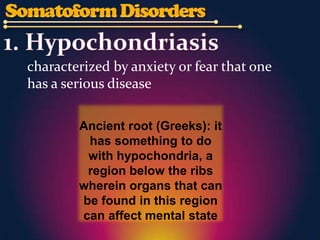
characterized by anxiety or fear that one
has a serious disease

        Ancient root (Greeks): it
         has something to do
         with hypochondria, a
         region below the ribs
        wherein organs that can
        be found in this region
        can affect mental state
- Severe anxiety over physical problems that are
  medically undetectable
- Affects men and women equally
- May emerge at any age
- Comorbid w/ Anxiety & Mood disorders
- Course: Chronic
- Evident in diverse cultures
CULTURE-SPECIFIC SYNDROMES THAT FIT WITH
HYPOCHONDRIASIS

• Koro: belief, accompanied by severe anxiety and sometimes
  panic, that the genitals are retracting into the abdomen
  [mostly Chinese males]
• Dhat: associated w/ vague mix of physical
  symptoms, including dizziness, weakness and fatigue that are
  not so specific
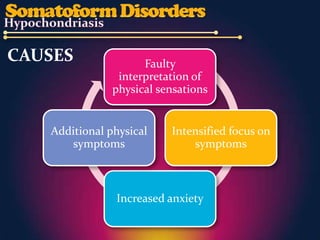
CAUSES               Faulty
                interpretation of
               physical sensations


   Additional physical    Intensified focus on
      symptoms                symptoms


               Increased anxiety
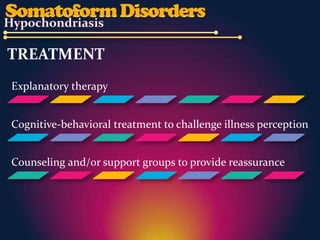
TREATMENT
Explanatory therapy


Cognitive-behavioral treatment to challenge illness perception


Counseling and/or support groups to provide reassurance
Formerly known as Briquet’s syndrome [for
   more than 100 yrs] and was changed in
   1980 to somatization disorder
- Reports of multiple physical symptoms without
  medical basis
- Runs in families (probable heritable basis)
- Rare (most prevalent among unmarried women
  low in socioeconomic groups)
- Onset usually in adolescence; often persists into
  old age
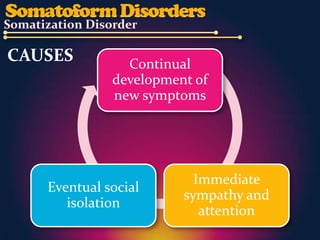
CAUSES         Continual
             development of
             new symptoms


                         Immediate
   Eventual social
                       sympathy and
      isolation
                          attention
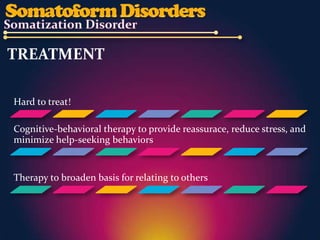
TREATMENT

Hard to treat!

Cognitive-behavioral therapy to provide reassurace, reduce stress, and
minimize help-seeking behaviors


Therapy to broaden basis for relating to others
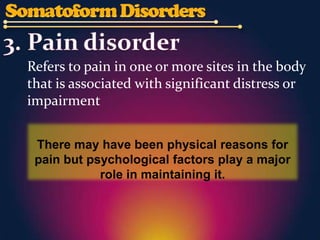
Refers to pain in one or more sites in the body
that is associated with significant distress or
impairment


 There may have been physical reasons for
 pain but psychological factors play a major
            role in maintaining it.
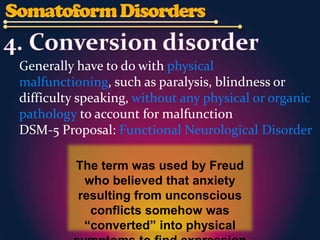
Generally have to do with physical
malfunctioning, such as paralysis, blindness or
difficulty speaking, without any physical or organic
pathology to account for malfunction
DSM-5 Proposal: Functional Neurological Disorder

          The term was used by Freud
           who believed that anxiety
          resulting from unconscious
            conflicts somehow was
           “converted” into physical
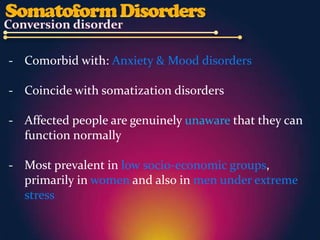
- Comorbid with: Anxiety & Mood disorders

- Coincide with somatization disorders

- Affected people are genuinely unaware that they can
  function normally

- Most prevalent in low socio-economic groups,
  primarily in women and also in men under extreme
  stress
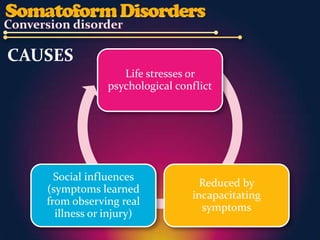
CAUSES
                   Life stresses or
                psychological conflict


     Social influences
                                   Reduced by
   (symptoms learned
                                 incapacitating
   from observing real
                                   symptoms
     illness or injury)
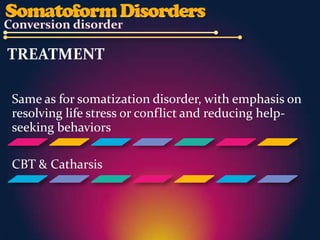
TREATMENT

Same as for somatization disorder, with emphasis on
resolving life stress or conflict and reducing help-
seeking behaviors

CBT & Catharsis
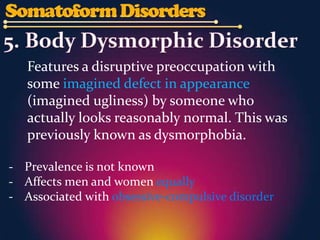
Features a disruptive preoccupation with
   some imagined defect in appearance
   (imagined ugliness) by someone who
   actually looks reasonably normal. This was
   previously known as dysmorphobia.

- Prevalence is not known
- Affects men and women equally
- Associated with obsessive-compulsive disorder
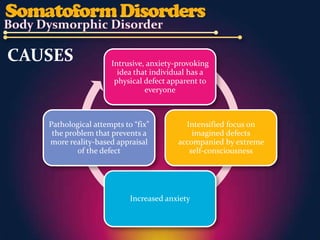
CAUSES               Intrusive, anxiety-provoking
                       idea that individual has a
                      physical defect apparent to
                               everyone


   Pathological attempts to “fix”         Intensified focus on
    the problem that prevents a             imagined defects
   more reality-based appraisal         accompanied by extreme
           of the defect                   self-consciousness


                           Increased anxiety
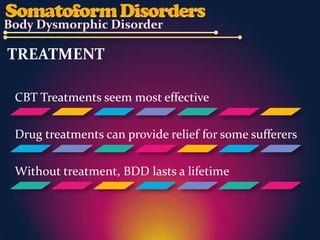
TREATMENT

CBT Treatments seem most effective

Drug treatments can provide relief for some sufferers

Without treatment, BDD lasts a lifetime
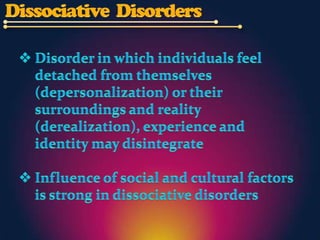
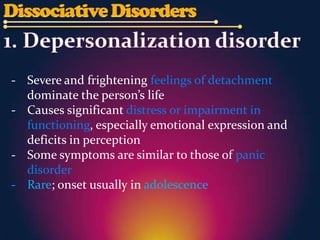
- Severe and frightening feelings of detachment
  dominate the person’s life
- Causes significant distress or impairment in
  functioning, especially emotional expression and
  deficits in perception
- Some symptoms are similar to those of panic
  disorder
- Rare; onset usually in adolescence
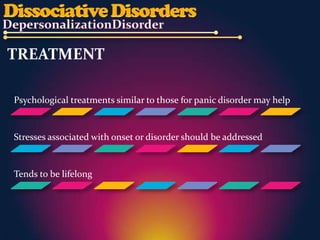
TREATMENT

Psychological treatments similar to those for panic disorder may help


Stresses associated with onset or disorder should be addressed


Tends to be lifelong
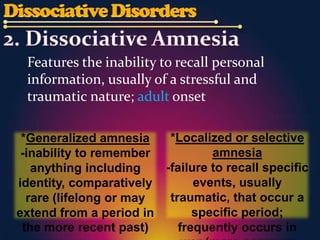
Features the inability to recall personal
 information, usually of a stressful and
 traumatic nature; adult onset

 *Generalized amnesia    *Localized or selective
 -inability to remember          amnesia
   anything including   -failure to recall specific
identity, comparatively       events, usually
  rare (lifelong or may  traumatic, that occur a
extend from a period in       specific period;
 the more recent past)     frequently occurs in
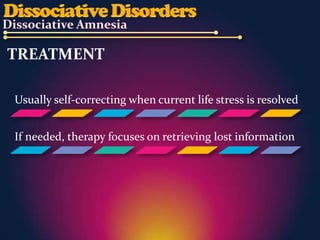
TREATMENT

Usually self-correcting when current life stress is resolved


If needed, therapy focuses on retrieving lost information
Features sudden, unexpected travel away
from home, along with an inability to
recall the past

-sometimes with assumption of a new
identity or confusion about an old identity
-fugue states usually end abruptly
-typically adult onset and may continue in
old age
TREATMENT

Usually self-correcting when current life stress is resolved


If needed, therapy focuses on retrieving lost information
Features altered state of
  consciousness in which people
 firmly believe they are possessed
    by spirits; considered only a
   disorder when there is distress
          and dysfunction
DSM-5 Proposal:
Diagnose DTD as a subtype of DID
- Sudden changes in personality accompany a
  trance or possession
- Causes significant distress and/or
  impairment in functioning
- Often associated with stress or trauma
- Prevalent worldwide, usually in a religious
  context; rare in western cultures
- More common in women than in men
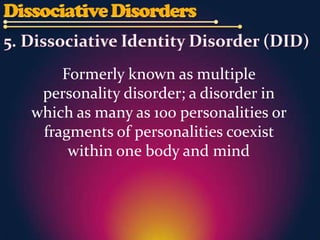
Formerly known as multiple
 personality disorder; a disorder in
which as many as 100 personalities or
 fragments of personalities coexist
     within one body and mind
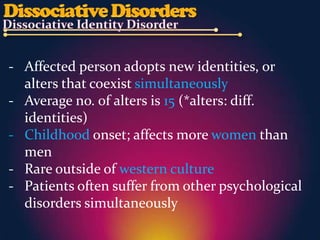
- Affected person adopts new identities, or
  alters that coexist simultaneously
- Average no. of alters is 15 (*alters: diff.
  identities)
- Childhood onset; affects more women than
  men
- Rare outside of western culture
- Patients often suffer from other psychological
  disorders simultaneously
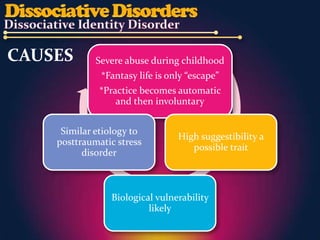
CAUSES       Severe abuse during childhood
              *Fantasy life is only “escape”
              *Practice becomes automatic
                  and then involuntary


     Similar etiology to
                                 High suggestibility a
    posttraumatic stress
                                    possible trait
          disorder


                Biological vulnerability
                         likely
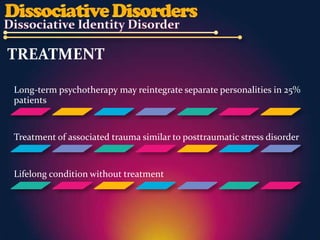
TREATMENT

Long-term psychotherapy may reintegrate separate personalities in 25%
patients


Treatment of associated trauma similar to posttraumatic stress disorder


Lifelong condition without treatment

Somatoform & dissociative disorders

  • 1.
  • 3.
    characterized by anxietyor fear that one has a serious disease Ancient root (Greeks): it has something to do with hypochondria, a region below the ribs wherein organs that can be found in this region can affect mental state
  • 4.
    - Severe anxietyover physical problems that are medically undetectable - Affects men and women equally - May emerge at any age - Comorbid w/ Anxiety & Mood disorders - Course: Chronic - Evident in diverse cultures
  • 5.
    CULTURE-SPECIFIC SYNDROMES THATFIT WITH HYPOCHONDRIASIS • Koro: belief, accompanied by severe anxiety and sometimes panic, that the genitals are retracting into the abdomen [mostly Chinese males] • Dhat: associated w/ vague mix of physical symptoms, including dizziness, weakness and fatigue that are not so specific
  • 6.
    CAUSES Faulty interpretation of physical sensations Additional physical Intensified focus on symptoms symptoms Increased anxiety
  • 7.
    TREATMENT Explanatory therapy Cognitive-behavioral treatmentto challenge illness perception Counseling and/or support groups to provide reassurance
  • 8.
    Formerly known asBriquet’s syndrome [for more than 100 yrs] and was changed in 1980 to somatization disorder - Reports of multiple physical symptoms without medical basis - Runs in families (probable heritable basis) - Rare (most prevalent among unmarried women low in socioeconomic groups) - Onset usually in adolescence; often persists into old age
  • 9.
    CAUSES Continual development of new symptoms Immediate Eventual social sympathy and isolation attention
  • 10.
    TREATMENT Hard to treat! Cognitive-behavioraltherapy to provide reassurace, reduce stress, and minimize help-seeking behaviors Therapy to broaden basis for relating to others
  • 11.
    Refers to painin one or more sites in the body that is associated with significant distress or impairment There may have been physical reasons for pain but psychological factors play a major role in maintaining it.
  • 12.
    Generally have todo with physical malfunctioning, such as paralysis, blindness or difficulty speaking, without any physical or organic pathology to account for malfunction DSM-5 Proposal: Functional Neurological Disorder The term was used by Freud who believed that anxiety resulting from unconscious conflicts somehow was “converted” into physical
  • 13.
    - Comorbid with:Anxiety & Mood disorders - Coincide with somatization disorders - Affected people are genuinely unaware that they can function normally - Most prevalent in low socio-economic groups, primarily in women and also in men under extreme stress
  • 14.
    CAUSES Life stresses or psychological conflict Social influences Reduced by (symptoms learned incapacitating from observing real symptoms illness or injury)
  • 15.
    TREATMENT Same as forsomatization disorder, with emphasis on resolving life stress or conflict and reducing help- seeking behaviors CBT & Catharsis
  • 17.
    Features a disruptivepreoccupation with some imagined defect in appearance (imagined ugliness) by someone who actually looks reasonably normal. This was previously known as dysmorphobia. - Prevalence is not known - Affects men and women equally - Associated with obsessive-compulsive disorder
  • 18.
    CAUSES Intrusive, anxiety-provoking idea that individual has a physical defect apparent to everyone Pathological attempts to “fix” Intensified focus on the problem that prevents a imagined defects more reality-based appraisal accompanied by extreme of the defect self-consciousness Increased anxiety
  • 19.
    TREATMENT CBT Treatments seemmost effective Drug treatments can provide relief for some sufferers Without treatment, BDD lasts a lifetime
  • 22.
    - Severe andfrightening feelings of detachment dominate the person’s life - Causes significant distress or impairment in functioning, especially emotional expression and deficits in perception - Some symptoms are similar to those of panic disorder - Rare; onset usually in adolescence
  • 23.
    TREATMENT Psychological treatments similarto those for panic disorder may help Stresses associated with onset or disorder should be addressed Tends to be lifelong
  • 24.
    Features the inabilityto recall personal information, usually of a stressful and traumatic nature; adult onset *Generalized amnesia *Localized or selective -inability to remember amnesia anything including -failure to recall specific identity, comparatively events, usually rare (lifelong or may traumatic, that occur a extend from a period in specific period; the more recent past) frequently occurs in
  • 25.
    TREATMENT Usually self-correcting whencurrent life stress is resolved If needed, therapy focuses on retrieving lost information
  • 27.
    Features sudden, unexpectedtravel away from home, along with an inability to recall the past -sometimes with assumption of a new identity or confusion about an old identity -fugue states usually end abruptly -typically adult onset and may continue in old age
  • 28.
    TREATMENT Usually self-correcting whencurrent life stress is resolved If needed, therapy focuses on retrieving lost information
  • 29.
    Features altered stateof consciousness in which people firmly believe they are possessed by spirits; considered only a disorder when there is distress and dysfunction DSM-5 Proposal: Diagnose DTD as a subtype of DID
  • 30.
    - Sudden changesin personality accompany a trance or possession - Causes significant distress and/or impairment in functioning - Often associated with stress or trauma - Prevalent worldwide, usually in a religious context; rare in western cultures - More common in women than in men
  • 31.
    Formerly known asmultiple personality disorder; a disorder in which as many as 100 personalities or fragments of personalities coexist within one body and mind
  • 32.
    - Affected personadopts new identities, or alters that coexist simultaneously - Average no. of alters is 15 (*alters: diff. identities) - Childhood onset; affects more women than men - Rare outside of western culture - Patients often suffer from other psychological disorders simultaneously
  • 33.
    CAUSES Severe abuse during childhood *Fantasy life is only “escape” *Practice becomes automatic and then involuntary Similar etiology to High suggestibility a posttraumatic stress possible trait disorder Biological vulnerability likely
  • 34.
    TREATMENT Long-term psychotherapy mayreintegrate separate personalities in 25% patients Treatment of associated trauma similar to posttraumatic stress disorder Lifelong condition without treatment