Downloaded 67 times

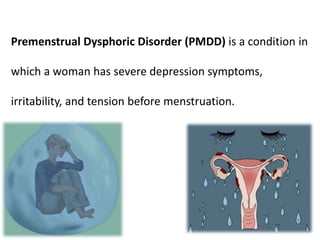
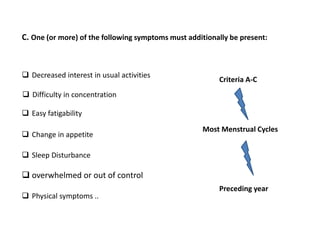
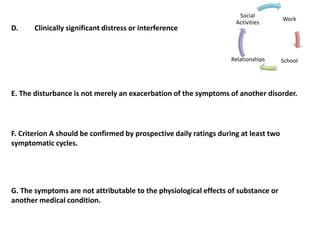
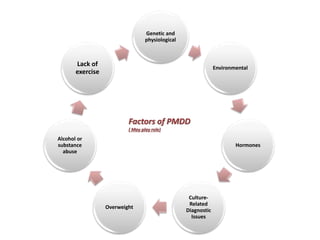
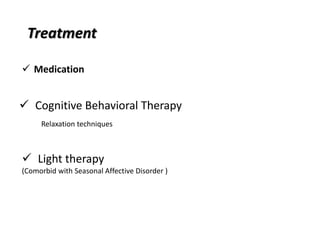


Premenstrual Dysphoric Disorder (PMDD) is characterized by severe depression symptoms, irritability, and tension before menstruation. To be diagnosed, at least five symptoms must be present in the week before a woman's period starts, improve within a few days after her period begins, and be minimal or absent the week after. These symptoms include mood swings, irritability, depressed mood, anxiety, decreased interest in activities, difficulty concentrating, easy fatigability, appetite changes, and sleep disturbances. Effective treatments include cognitive behavioral therapy, light therapy for women also experiencing seasonal affective disorder, and medication.


![Somatic Symptom and Related Disorders [2020]](https://cdn.slidesharecdn.com/ss_thumbnails/ssrdv1-200526002841-thumbnail.jpg?width=640&height=640&fit=bounds)


![Hypothalamus short notes on location, function and disorders by Dr. Neha [PT]...](https://cdn.slidesharecdn.com/ss_thumbnails/hypothalamusbydr-260124142231-2b48143d-thumbnail.jpg?width=640&height=640&fit=bounds)


