
Soaps &
Detergents
LAUNDERING
• Laundering is based on the use of water as a solvent.
• Water is effective in dissolving or suspending particulate soils
such as salts, clay, dust and water based spots and stains.
• The agitation in washing machine or rubbing often employed
in hand washing provide mechanical action to loosen soil and
stains.
• Higher water temperature usually enhance cleaning but may
have detrimental effects on other properties like colour
retention.
DRY CLEANING
• Dry cleaning is any cleaning process
for clothing and textiles using a
chemical solvent other than water.
• It is used to clean fabrics that degrade in water, and
delicate fabrics that cannot withstand the rough and
tumble of a washing machine and clothes dryer.
• It can eliminate labor-intensive hand washing.
Dry Cleaning
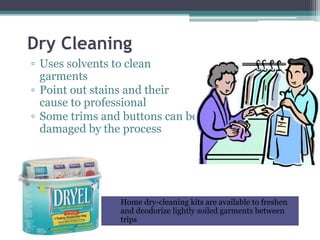
▫ Uses solvents to clean
garments
▫ Point out stains and their
cause to professional
▫ Some trims and buttons can be
damaged by the process
Home dry-cleaning kits are available to freshen
and deodorize lightly soiled garments between
trips
There are three dry cleaning solutions namely
• Stoddard – petroleum based solvent
• Per chloro ethylene (PCE)– Chlorinated hydro carbon,
typically used in commercial cleaners
• Valclene A – Fluorinated hydro carbon from Dupont
which can be applied without heating.
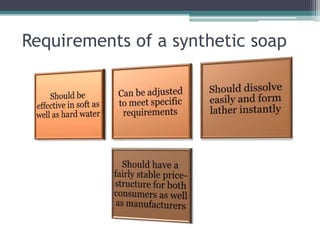
Requirements of a synthetic soap
Definition
Substances or products which are capable
of dislodging, removing and dispersing
solid and liquid soils from a surface being
cleansed are known as detergents.
In the broadest sense, all materials such as
water and other solvents, alkalis and
alkaline salts, acids & acid salts, abrasives,
oxidizing and reducing agents may be
detergents.
DETERGENTS
• Detergents contain Surfactants, Anti-redepositing agents, Bleaches,
Fluorescent Whiteners, Perfumes, and Processing aids to improve
detergent power.
• Detergents and Soaps surround the soil particles that are removed
and suspend them in wash water preventing their re-deposition on
the textile substrate.
• They have a hydrophobic end that attracts oily substances, and an
ionic end that attracts charged or hydrophilic substances. These
substances form bonds, which are carried away when water is
remove.
DETERGENTS
• Much soil is acidic in nature and will tend to
neutralize some of alkalinity of the soap, therefore,
heavily soiled garments require more detergents.
• To ensure the presence of adequate alkalinity
throughout washing, alkali boosters are added to
increase the effectiveness.
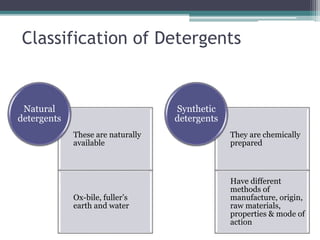
Classification of Detergents
These are naturally
available
Ox-bile, fuller’s
earth and water
Natural
detergents
They are chemically
prepared
Have different
methods of
manufacture, origin,
raw materials,
properties & mode of
action
Synthetic
detergents
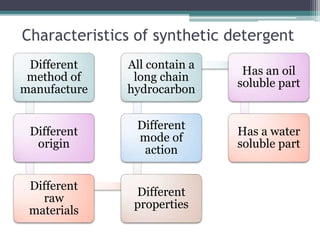
Characteristics of synthetic detergent
Different
method of
manufacture
Different
origin
Different
raw
materials
Different
properties
Different
mode of
action
All contain a
long chain
hydrocarbon
Has an oil
soluble part
Has a water
soluble part
DETERGENTS CONSISTS OF
• Carbonates
• Phosphates: Constitutes 30 – 50% of all
detergent powders
• Silicates
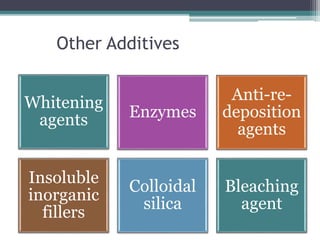
Other Additives
Whitening
agents Enzymes
Anti-re-
deposition
agents
Insoluble
inorganic
fillers
Colloidal
silica
Bleaching
agent
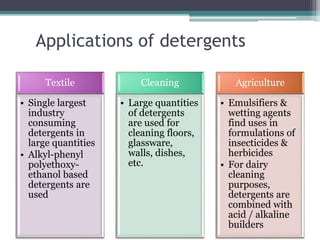
Applications of detergents
Textile
• Single largest
industry
consuming
detergents in
large quantities
• Alkyl-phenyl
polyethoxy-
ethanol based
detergents are
used
Cleaning
• Large quantities
of detergents
are used for
cleaning floors,
glassware,
walls, dishes,
etc.
Agriculture
• Emulsifiers &
wetting agents
find uses in
formulations of
insecticides &
herbicides
• For dairy
cleaning
purposes,
detergents are
combined with
acid / alkaline
builders
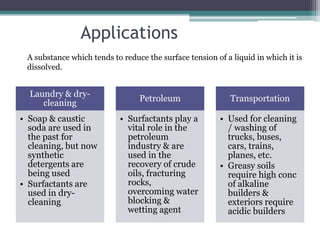
Applications
Laundry & dry-
cleaning
• Soap & caustic
soda are used in
the past for
cleaning, but now
synthetic
detergents are
being used
• Surfactants are
used in dry-
cleaning
Petroleum
• Surfactants play a
vital role in the
petroleum
industry & are
used in the
recovery of crude
oils, fracturing
rocks,
overcoming water
blocking &
wetting agent
Transportation
• Used for cleaning
/ washing of
trucks, buses,
cars, trains,
planes, etc.
• Greasy soils
require high conc
of alkaline
builders &
exteriors require
acidic builders
A substance which tends to reduce the surface tension of a liquid in which it is
dissolved.
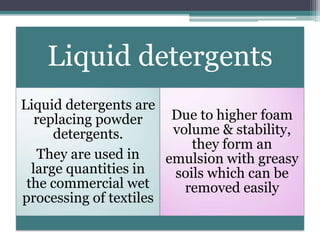
Liquid detergents
Liquid detergents are
replacing powder
detergents.
They are used in
large quantities in
the commercial wet
processing of textiles
Due to higher foam
volume & stability,
they form an
emulsion with greasy
soils which can be
removed easily
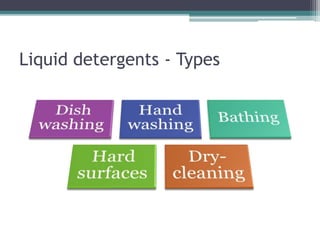
Liquid detergents - Types
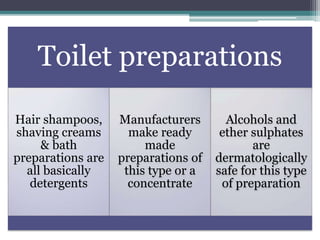
Toilet preparations
Hair shampoos,
shaving creams
& bath
preparations are
all basically
detergents
Manufacturers
make ready
made
preparations of
this type or a
concentrate
Alcohols and
ether sulphates
are
dermatologically
safe for this type
of preparation
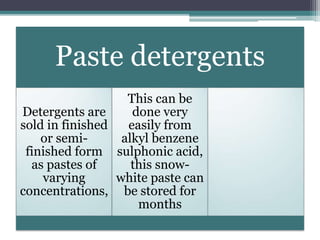
Paste detergents
Detergents are
sold in finished
or semi-
finished form
as pastes of
varying
concentrations,
This can be
done very
easily from
alkyl benzene
sulphonic acid,
this snow-
white paste can
be stored for
months
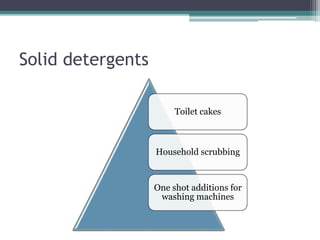
Solid detergents
Toilet cakes
Household scrubbing
One shot additions for
washing machines
THANK
YOU

Soaps and detergents

  • 1.
  • 2.
    LAUNDERING • Laundering isbased on the use of water as a solvent. • Water is effective in dissolving or suspending particulate soils such as salts, clay, dust and water based spots and stains. • The agitation in washing machine or rubbing often employed in hand washing provide mechanical action to loosen soil and stains. • Higher water temperature usually enhance cleaning but may have detrimental effects on other properties like colour retention.
  • 3.
    DRY CLEANING • Drycleaning is any cleaning process for clothing and textiles using a chemical solvent other than water. • It is used to clean fabrics that degrade in water, and delicate fabrics that cannot withstand the rough and tumble of a washing machine and clothes dryer. • It can eliminate labor-intensive hand washing.
  • 4.
    Dry Cleaning ▫ Usessolvents to clean garments ▫ Point out stains and their cause to professional ▫ Some trims and buttons can be damaged by the process Home dry-cleaning kits are available to freshen and deodorize lightly soiled garments between trips
  • 5.
    There are threedry cleaning solutions namely • Stoddard – petroleum based solvent • Per chloro ethylene (PCE)– Chlorinated hydro carbon, typically used in commercial cleaners • Valclene A – Fluorinated hydro carbon from Dupont which can be applied without heating.
  • 6.
    Requirements of asynthetic soap
  • 7.
    Definition Substances or productswhich are capable of dislodging, removing and dispersing solid and liquid soils from a surface being cleansed are known as detergents. In the broadest sense, all materials such as water and other solvents, alkalis and alkaline salts, acids & acid salts, abrasives, oxidizing and reducing agents may be detergents.
  • 8.
    DETERGENTS • Detergents containSurfactants, Anti-redepositing agents, Bleaches, Fluorescent Whiteners, Perfumes, and Processing aids to improve detergent power. • Detergents and Soaps surround the soil particles that are removed and suspend them in wash water preventing their re-deposition on the textile substrate. • They have a hydrophobic end that attracts oily substances, and an ionic end that attracts charged or hydrophilic substances. These substances form bonds, which are carried away when water is remove.
  • 9.
    DETERGENTS • Much soilis acidic in nature and will tend to neutralize some of alkalinity of the soap, therefore, heavily soiled garments require more detergents. • To ensure the presence of adequate alkalinity throughout washing, alkali boosters are added to increase the effectiveness.
  • 10.
    Classification of Detergents Theseare naturally available Ox-bile, fuller’s earth and water Natural detergents They are chemically prepared Have different methods of manufacture, origin, raw materials, properties & mode of action Synthetic detergents
  • 11.
    Characteristics of syntheticdetergent Different method of manufacture Different origin Different raw materials Different properties Different mode of action All contain a long chain hydrocarbon Has an oil soluble part Has a water soluble part
  • 12.
    DETERGENTS CONSISTS OF •Carbonates • Phosphates: Constitutes 30 – 50% of all detergent powders • Silicates
  • 13.
  • 14.
    Applications of detergents Textile •Single largest industry consuming detergents in large quantities • Alkyl-phenyl polyethoxy- ethanol based detergents are used Cleaning • Large quantities of detergents are used for cleaning floors, glassware, walls, dishes, etc. Agriculture • Emulsifiers & wetting agents find uses in formulations of insecticides & herbicides • For dairy cleaning purposes, detergents are combined with acid / alkaline builders
  • 15.
    Applications Laundry & dry- cleaning •Soap & caustic soda are used in the past for cleaning, but now synthetic detergents are being used • Surfactants are used in dry- cleaning Petroleum • Surfactants play a vital role in the petroleum industry & are used in the recovery of crude oils, fracturing rocks, overcoming water blocking & wetting agent Transportation • Used for cleaning / washing of trucks, buses, cars, trains, planes, etc. • Greasy soils require high conc of alkaline builders & exteriors require acidic builders A substance which tends to reduce the surface tension of a liquid in which it is dissolved.
  • 16.
    Liquid detergents Liquid detergentsare replacing powder detergents. They are used in large quantities in the commercial wet processing of textiles Due to higher foam volume & stability, they form an emulsion with greasy soils which can be removed easily
  • 17.
  • 18.
    Toilet preparations Hair shampoos, shavingcreams & bath preparations are all basically detergents Manufacturers make ready made preparations of this type or a concentrate Alcohols and ether sulphates are dermatologically safe for this type of preparation
  • 19.
    Paste detergents Detergents are soldin finished or semi- finished form as pastes of varying concentrations, This can be done very easily from alkyl benzene sulphonic acid, this snow- white paste can be stored for months
  • 20.
    Solid detergents Toilet cakes Householdscrubbing One shot additions for washing machines
  • 21.