Detergent & Soap Industry
http://detergent-chemicals.net
Contents
1. Introduction / Overview of the Industry
- 3 Manufacturing process
- Types of detergent
2. Trends and Market shifts
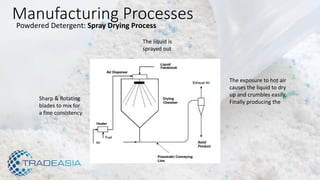
Powdered Detergent: Spray Drying Process
Manufacturing Processes
Sharp & Rotating
blades to mix for
a fine consistency
The liquid is
sprayed out
The exposure to hot air
causes the liquid to dry
up and crumbles easily,
Finally producing the
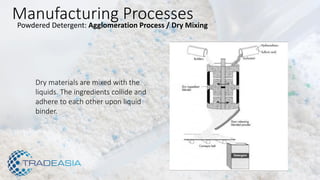
Powdered Detergent: Agglomeration Process / Dry Mixing
Manufacturing Processes
Dry materials are mixed with the
liquids. The ingredients collide and
adhere to each other upon liquid
binder.
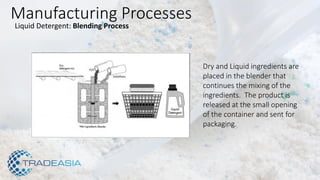
Liquid Detergent: Blending Process
Manufacturing Processes
Dry and Liquid ingredients are
placed in the blender that
continues the mixing of the
ingredients. The product is
released at the small opening
of the container and sent for
packaging.
Surfactants
Surface active agents that removes dirt/
grease.
Builders & Other Additives
Builders: Softens hard-water
Additives: Bleaching / Brightening agents
/ Anti-redeposition agent
Fillers & Stabilisers
Fillers:
Binding agent & add bulk to the product
Stabilisers:
Foam Stabilisers or Anti-foaming Agent
Preparation Chemical
Not directly used in manufacturing of
detergent, but required to prepare the
essential chemicals in detergent
4 Categories
Market Trends
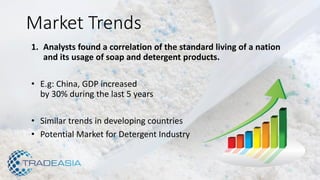
1. Analysts found a correlation of the standard living of a nation
and its usage of soap and detergent products.
• E.g: China, GDP increased
by 30% during the last 5 years
• Similar trends in developing countries
• Potential Market for Detergent Industry
Market Trends
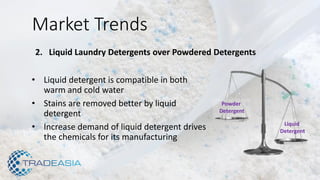
• Liquid detergent is compatible in both
warm and cold water
• Stains are removed better by liquid
detergent
• Increase demand of liquid detergent drives
the chemicals for its manufacturing
Liquid
Detergent
Powder
Detergent
2. Liquid Laundry Detergents over Powdered Detergents
Market Trends
3.Trend of Environmental Friendly Products
• Especially prominent in developed markets, such as
European & American Market
• EU banned phosphates in detergents, further drives the market for green
products.
• Phosphates has been linked to eutrophication (excess algae growth in
water bodies)
• Non-biodegradable chemicals pose problems to aquatic lives

Detergent industry

  • 1.
    Detergent & SoapIndustry http://detergent-chemicals.net
  • 2.
    Contents 1. Introduction /Overview of the Industry - 3 Manufacturing process - Types of detergent 2. Trends and Market shifts
  • 3.
    Powdered Detergent: SprayDrying Process Manufacturing Processes Sharp & Rotating blades to mix for a fine consistency The liquid is sprayed out The exposure to hot air causes the liquid to dry up and crumbles easily, Finally producing the
  • 4.
    Powdered Detergent: AgglomerationProcess / Dry Mixing Manufacturing Processes Dry materials are mixed with the liquids. The ingredients collide and adhere to each other upon liquid binder.
  • 5.
    Liquid Detergent: BlendingProcess Manufacturing Processes Dry and Liquid ingredients are placed in the blender that continues the mixing of the ingredients. The product is released at the small opening of the container and sent for packaging.
  • 6.
    Surfactants Surface active agentsthat removes dirt/ grease. Builders & Other Additives Builders: Softens hard-water Additives: Bleaching / Brightening agents / Anti-redeposition agent Fillers & Stabilisers Fillers: Binding agent & add bulk to the product Stabilisers: Foam Stabilisers or Anti-foaming Agent Preparation Chemical Not directly used in manufacturing of detergent, but required to prepare the essential chemicals in detergent 4 Categories
  • 7.
    Market Trends 1. Analystsfound a correlation of the standard living of a nation and its usage of soap and detergent products. • E.g: China, GDP increased by 30% during the last 5 years • Similar trends in developing countries • Potential Market for Detergent Industry
  • 8.
    Market Trends • Liquiddetergent is compatible in both warm and cold water • Stains are removed better by liquid detergent • Increase demand of liquid detergent drives the chemicals for its manufacturing Liquid Detergent Powder Detergent 2. Liquid Laundry Detergents over Powdered Detergents
  • 9.
    Market Trends 3.Trend ofEnvironmental Friendly Products • Especially prominent in developed markets, such as European & American Market • EU banned phosphates in detergents, further drives the market for green products. • Phosphates has been linked to eutrophication (excess algae growth in water bodies) • Non-biodegradable chemicals pose problems to aquatic lives