Surface Active Agents
Prepared By : Mazadul Hasan sheshir
ID: 2010000400008
13th Batch (session 2009-2013)
Department : Wet Processing Technology
Email: mazadulhasan@yahoo.com
Blog : www. Textilelab.blogspot.com (visit)
Southeast University
Department Of Textile Engineering
I/A 251,252 Tejgaon Dhaka Bangladesh
Prepared By :
©right
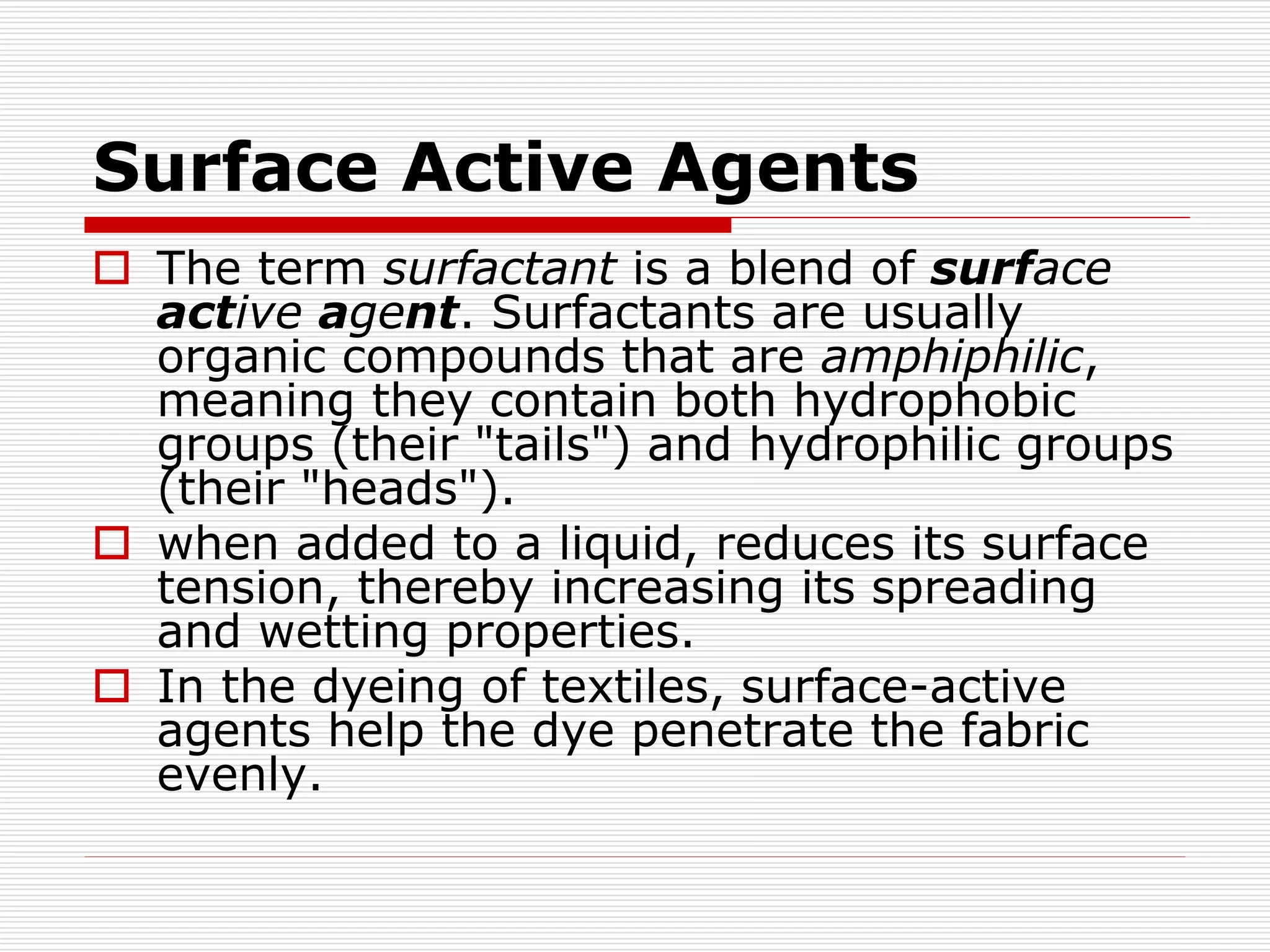
Surface Active Agents
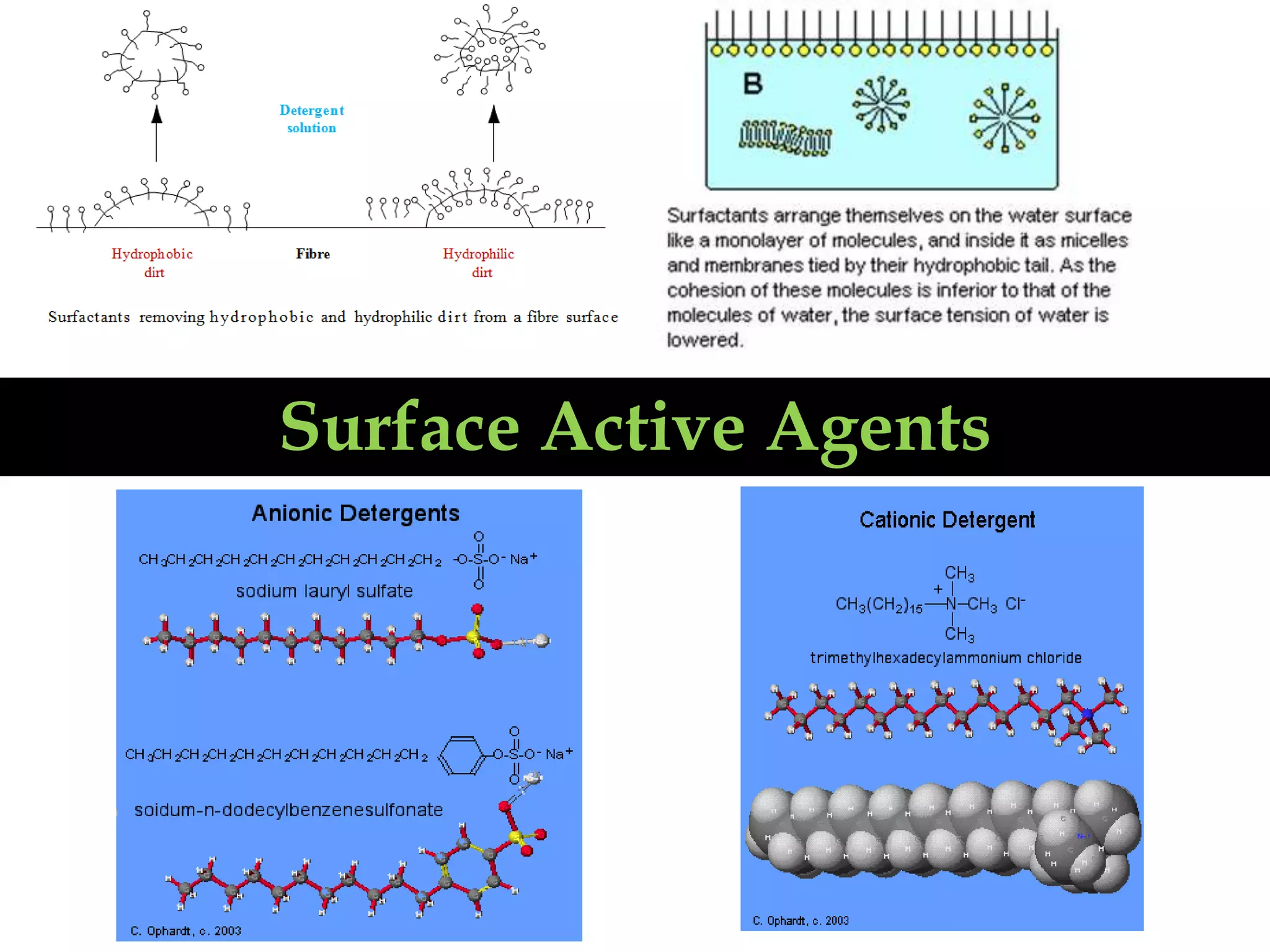
 The term surfactant is a blend of surface
active agent. Surfactants are usually
organic compounds that are amphiphilic,
meaning they contain both hydrophobic
groups (their "tails") and hydrophilic groups
(their "heads").
 when added to a liquid, reduces its surface
tension, thereby increasing its spreading
and wetting properties.
 In the dyeing of textiles, surface-active
agents help the dye penetrate the fabric
evenly.
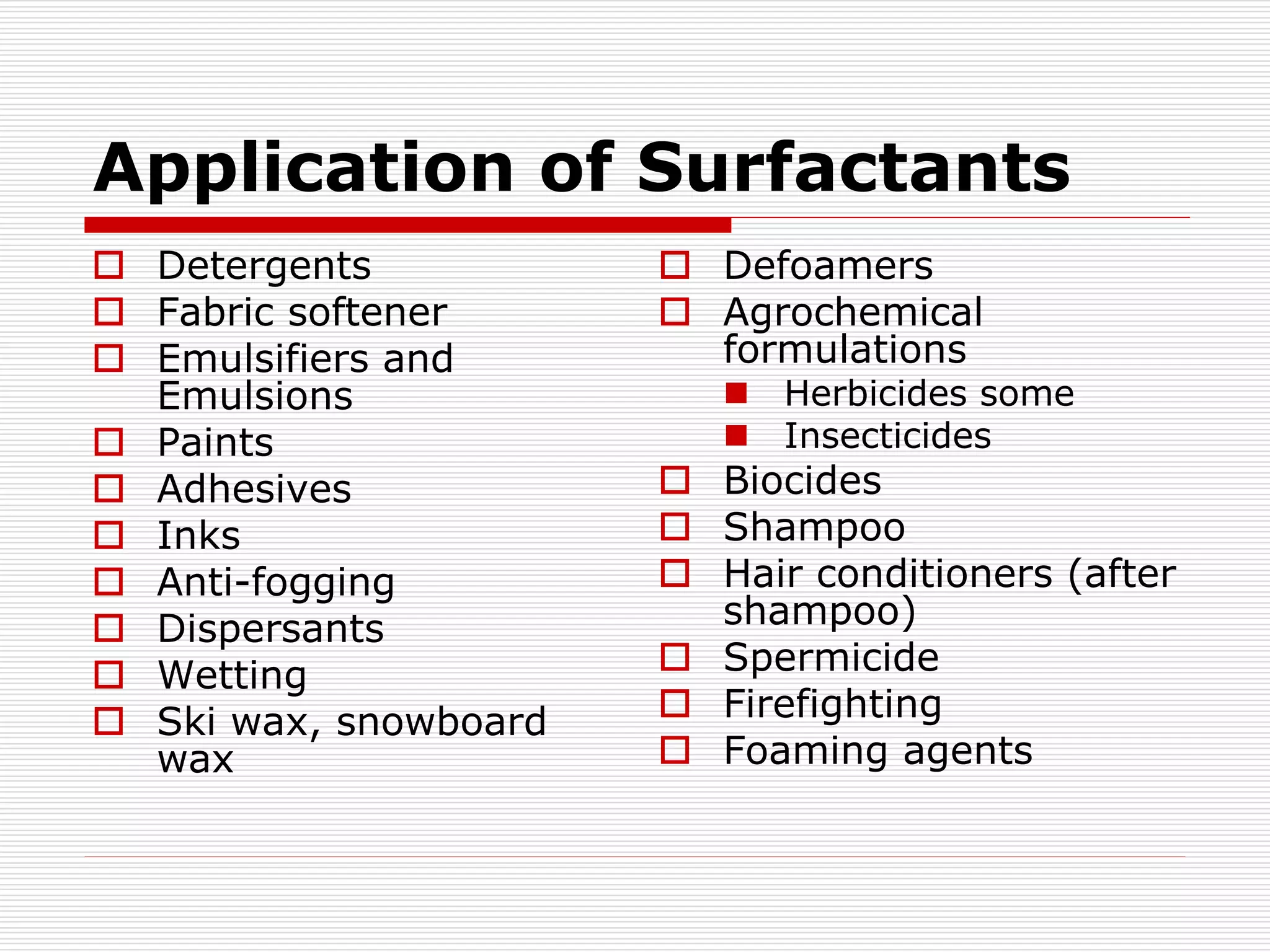
Application of Surfactants
 Detergents
 Fabric softener
 Emulsifiers and
Emulsions
 Paints
 Adhesives
 Inks
 Anti-fogging
 Dispersants
 Wetting
 Ski wax, snowboard
wax
 Defoamers
 Agrochemical
formulations
 Herbicides some
 Insecticides
 Biocides
 Shampoo
 Hair conditioners (after
shampoo)
 Spermicide
 Firefighting
 Foaming agents
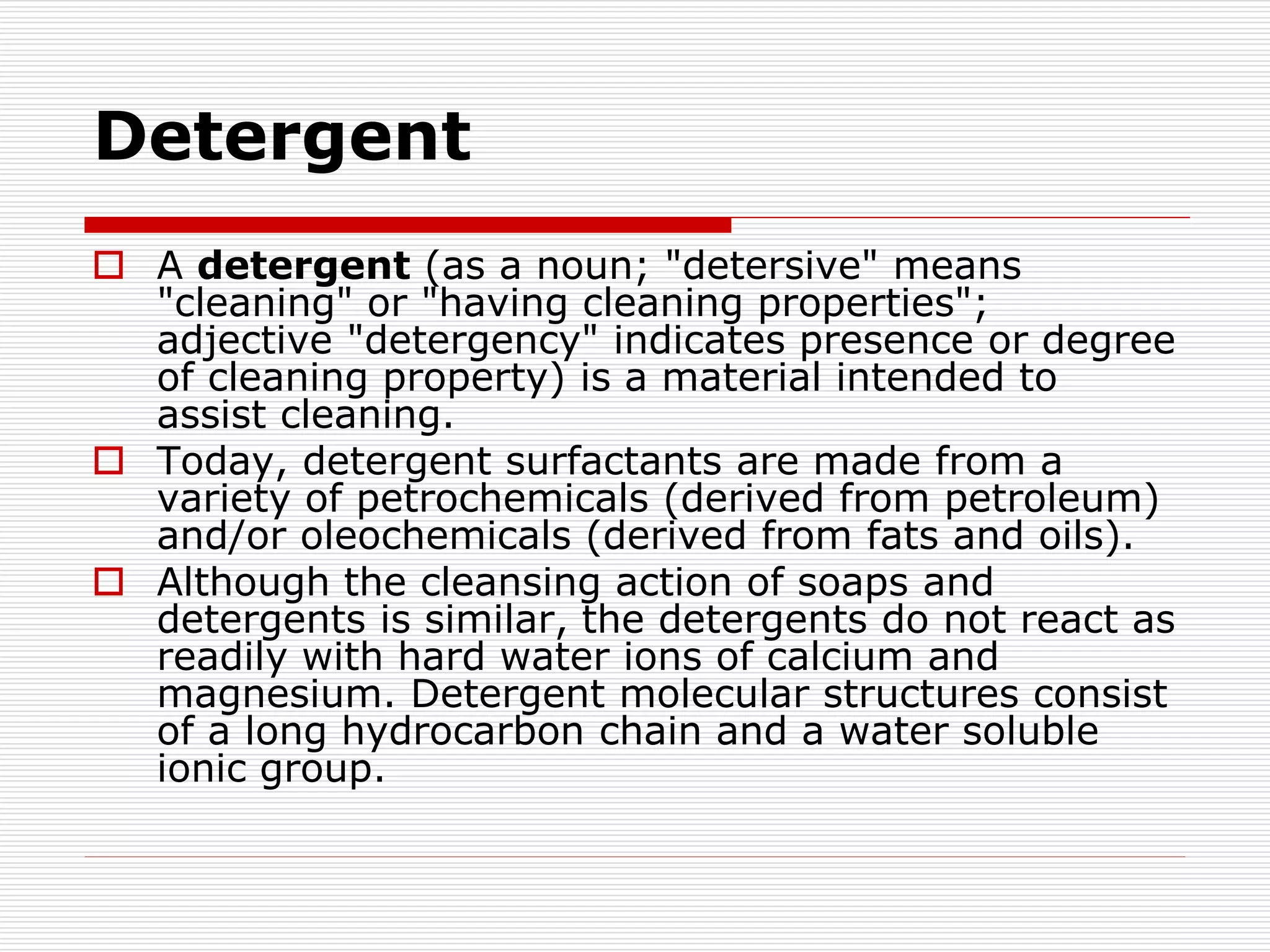
Detergent
 A detergent (as a noun; "detersive" means
"cleaning" or "having cleaning properties";
adjective "detergency" indicates presence or degree
of cleaning property) is a material intended to
assist cleaning.
 Today, detergent surfactants are made from a
variety of petrochemicals (derived from petroleum)
and/or oleochemicals (derived from fats and oils).
 Although the cleansing action of soaps and
detergents is similar, the detergents do not react as
readily with hard water ions of calcium and
magnesium. Detergent molecular structures consist
of a long hydrocarbon chain and a water soluble
ionic group.
Classification of detergents
1. Ionic detergent
- Anionic detergent
- Cationic detergent
- Amphoteric detergent
2. Nonionic detergent
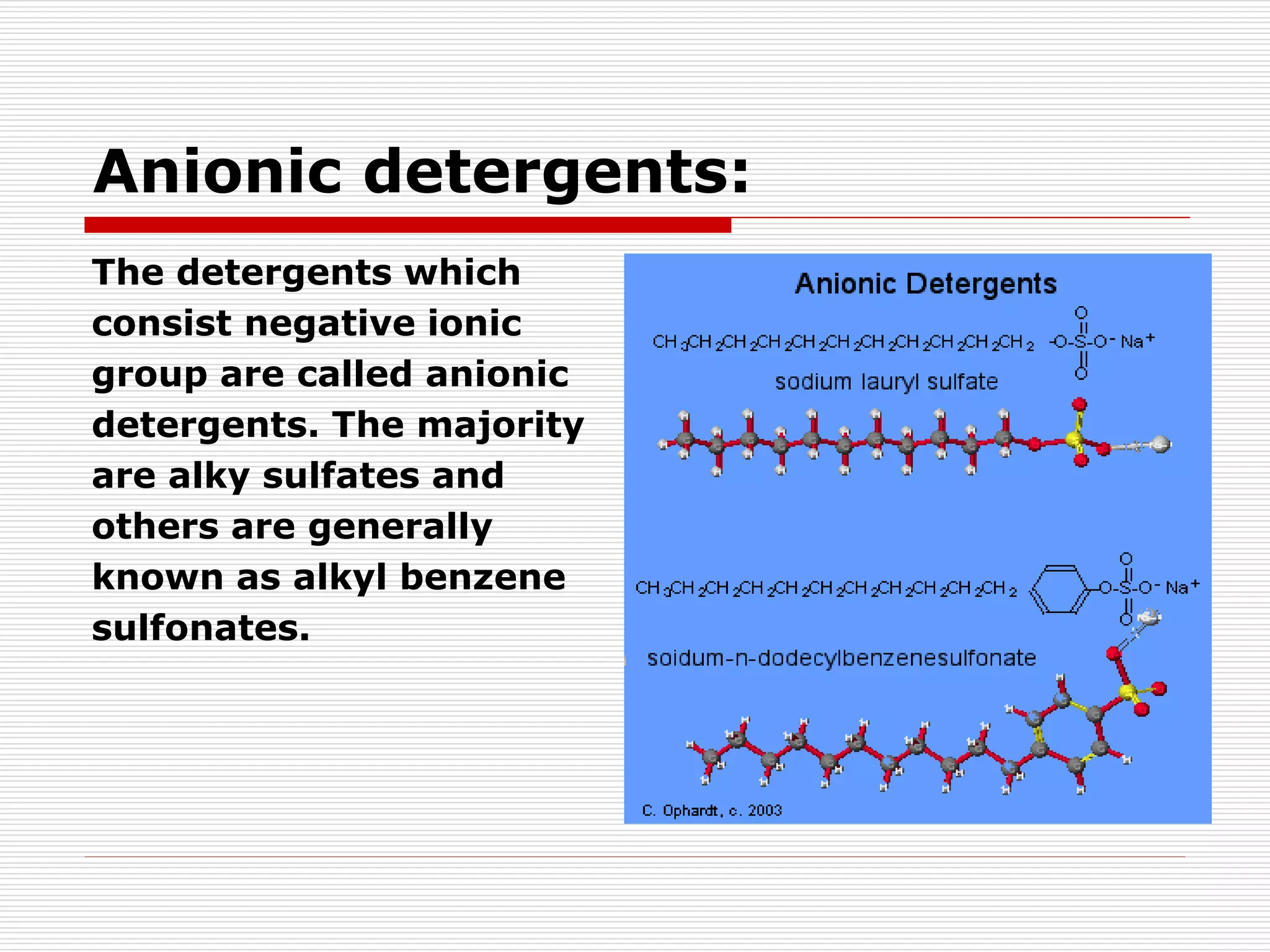
Anionic detergents:
The detergents which
consist negative ionic
group are called anionic
detergents. The majority
are alky sulfates and
others are generally
known as alkyl benzene
sulfonates.
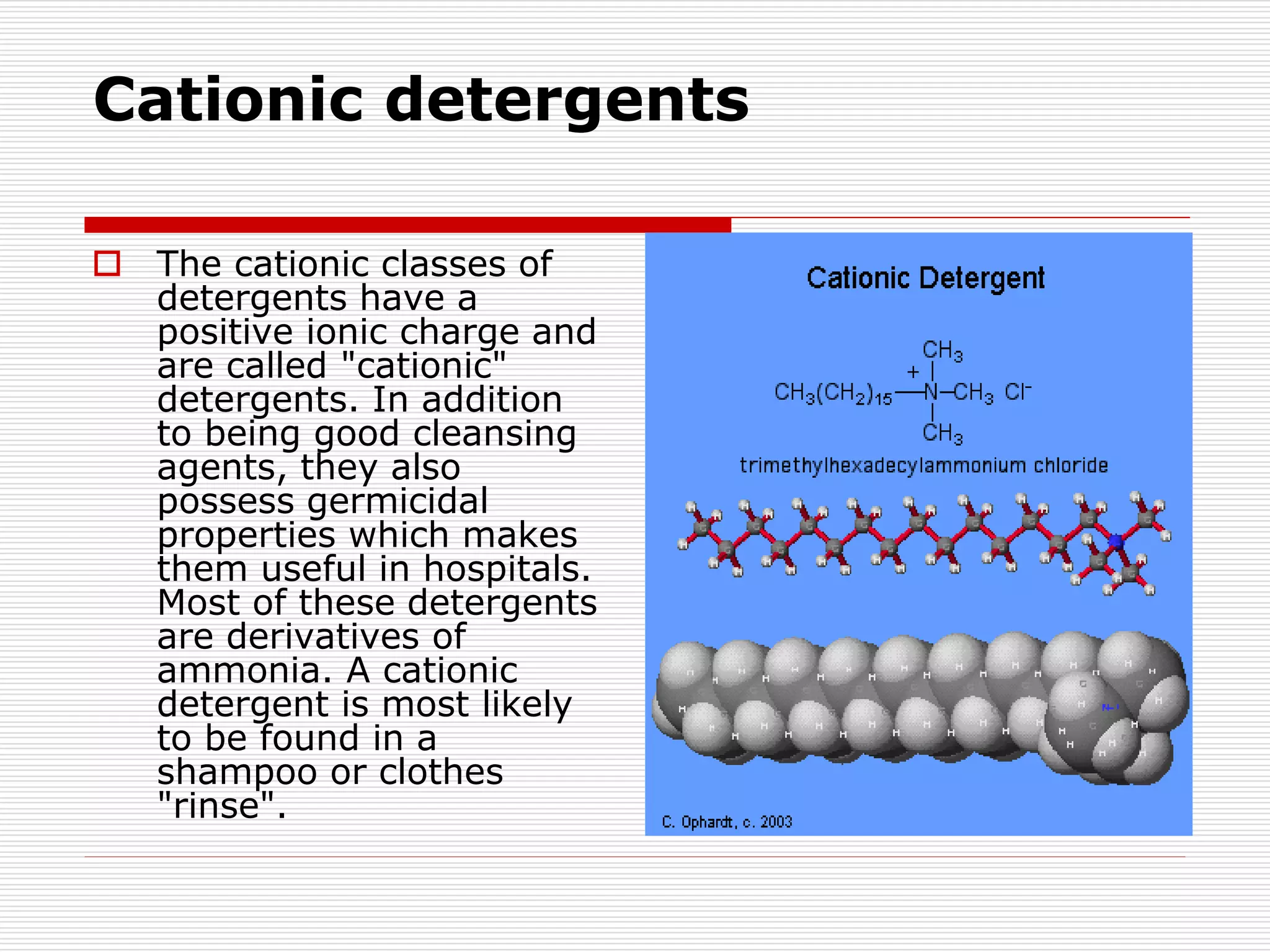
Cationic detergents
 The cationic classes of
detergents have a
positive ionic charge and
are called "cationic"
detergents. In addition
to being good cleansing
agents, they also
possess germicidal
properties which makes
them useful in hospitals.
Most of these detergents
are derivatives of
ammonia. A cationic
detergent is most likely
to be found in a
shampoo or clothes
"rinse".
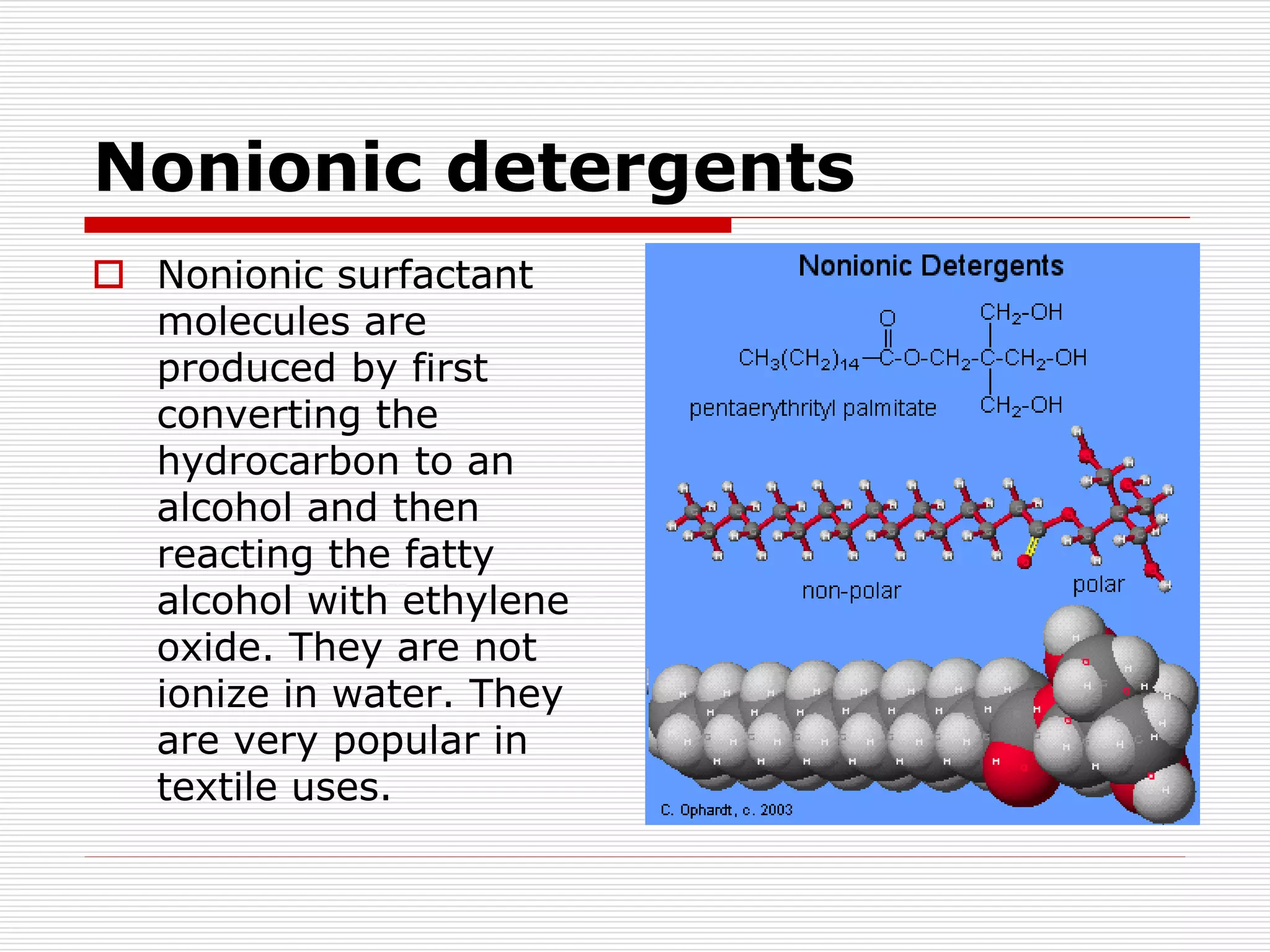
Nonionic detergents
 Nonionic surfactant
molecules are
produced by first
converting the
hydrocarbon to an
alcohol and then
reacting the fatty
alcohol with ethylene
oxide. They are not
ionize in water. They
are very popular in
textile uses.
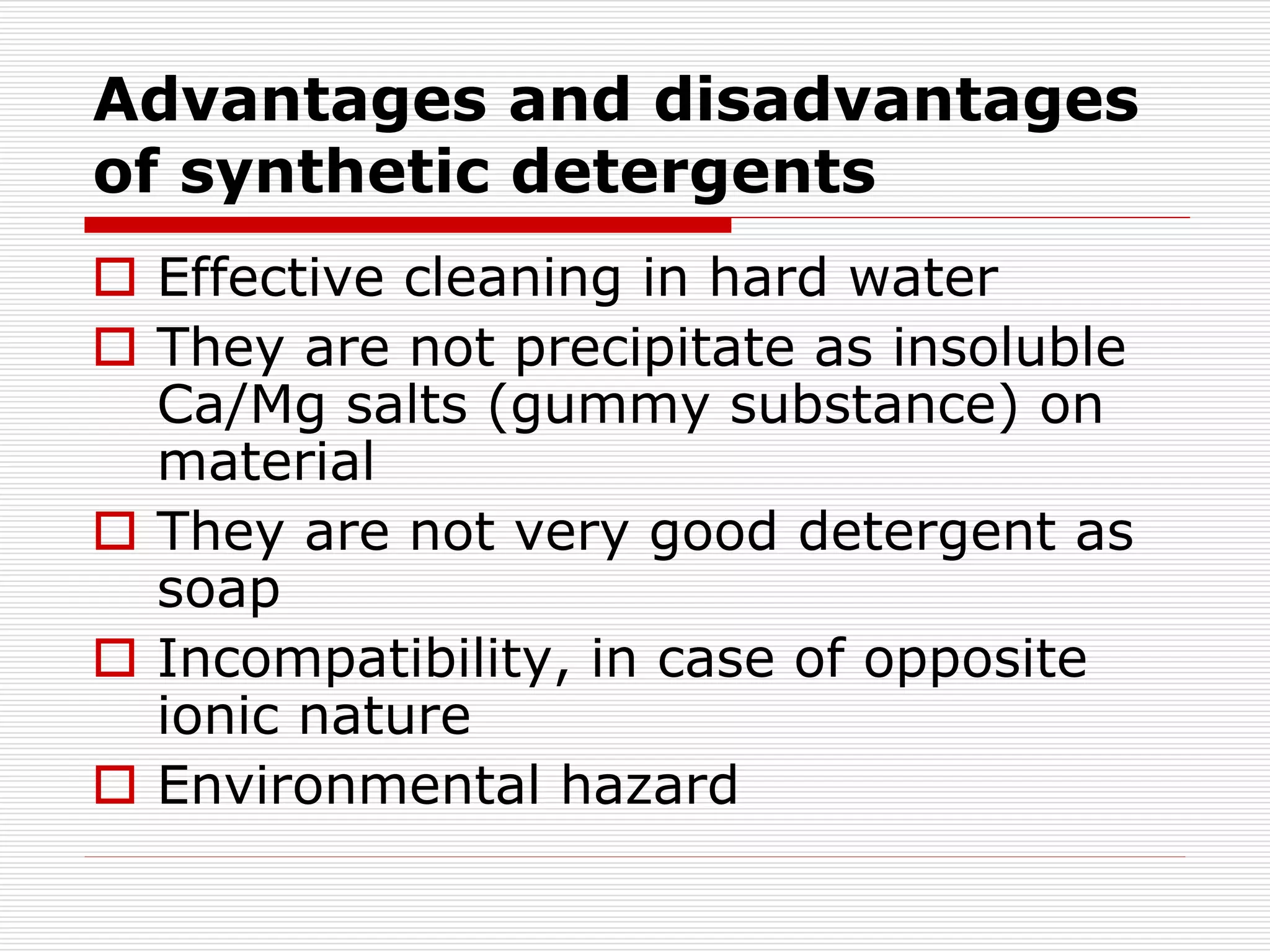
Advantages and disadvantages
of synthetic detergents
 Effective cleaning in hard water
 They are not precipitate as insoluble
Ca/Mg salts (gummy substance) on
material
 They are not very good detergent as
soap
 Incompatibility, in case of opposite
ionic nature
 Environmental hazard
Surface active agents

Surface active agents

  • 1.
  • 2.
    Prepared By :Mazadul Hasan sheshir ID: 2010000400008 13th Batch (session 2009-2013) Department : Wet Processing Technology Email: mazadulhasan@yahoo.com Blog : www. Textilelab.blogspot.com (visit) Southeast University Department Of Textile Engineering I/A 251,252 Tejgaon Dhaka Bangladesh Prepared By : ©right
  • 3.
    Surface Active Agents The term surfactant is a blend of surface active agent. Surfactants are usually organic compounds that are amphiphilic, meaning they contain both hydrophobic groups (their "tails") and hydrophilic groups (their "heads").  when added to a liquid, reduces its surface tension, thereby increasing its spreading and wetting properties.  In the dyeing of textiles, surface-active agents help the dye penetrate the fabric evenly.
  • 4.
    Application of Surfactants Detergents  Fabric softener  Emulsifiers and Emulsions  Paints  Adhesives  Inks  Anti-fogging  Dispersants  Wetting  Ski wax, snowboard wax  Defoamers  Agrochemical formulations  Herbicides some  Insecticides  Biocides  Shampoo  Hair conditioners (after shampoo)  Spermicide  Firefighting  Foaming agents
  • 5.
    Detergent  A detergent(as a noun; "detersive" means "cleaning" or "having cleaning properties"; adjective "detergency" indicates presence or degree of cleaning property) is a material intended to assist cleaning.  Today, detergent surfactants are made from a variety of petrochemicals (derived from petroleum) and/or oleochemicals (derived from fats and oils).  Although the cleansing action of soaps and detergents is similar, the detergents do not react as readily with hard water ions of calcium and magnesium. Detergent molecular structures consist of a long hydrocarbon chain and a water soluble ionic group.
  • 6.
    Classification of detergents 1.Ionic detergent - Anionic detergent - Cationic detergent - Amphoteric detergent 2. Nonionic detergent
  • 7.
    Anionic detergents: The detergentswhich consist negative ionic group are called anionic detergents. The majority are alky sulfates and others are generally known as alkyl benzene sulfonates.
  • 8.
    Cationic detergents  Thecationic classes of detergents have a positive ionic charge and are called "cationic" detergents. In addition to being good cleansing agents, they also possess germicidal properties which makes them useful in hospitals. Most of these detergents are derivatives of ammonia. A cationic detergent is most likely to be found in a shampoo or clothes "rinse".
  • 9.
    Nonionic detergents  Nonionicsurfactant molecules are produced by first converting the hydrocarbon to an alcohol and then reacting the fatty alcohol with ethylene oxide. They are not ionize in water. They are very popular in textile uses.
  • 10.
    Advantages and disadvantages ofsynthetic detergents  Effective cleaning in hard water  They are not precipitate as insoluble Ca/Mg salts (gummy substance) on material  They are not very good detergent as soap  Incompatibility, in case of opposite ionic nature  Environmental hazard