© Pankaj Bhootra
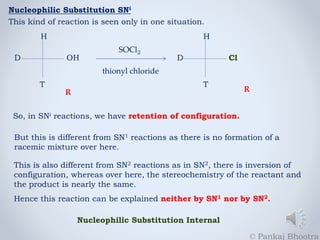
Nucleophilic Substitution SNi 
This kind of reaction is seen only in one situation. 
H 
D 
T 
OH 
SOCl2 
thionyl chloride 
H 
D 
T 
Cl 
R R 
So, in SNi reactions, we have retention of configuration. 
But this is different from SN1 reactions as there is no formation of a 
racemic mixture over here. 
This is also different from SN2 reactions as in SN2, there is inversion of 
configuration, whereas over here, the stereochemistry of the reactant and 
the product is nearly the same. 
Hence this reaction can be explained neither by SN1 nor by SN2. 
Nucleophilic Substitution Internal 
© Pankaj Bhootra
H 
D 
T 
O 
O H + Cl S Cl 
—HCl 
H 
D 
T 
O 
S 
O 
Cl 
•• 
H 
D 
T 
(+) (–) 
O 
S 
O 
Cl 
SO2 
H 
D 
T 
Cl 
Alkyl chloride: 
© Pankaj Bhootra
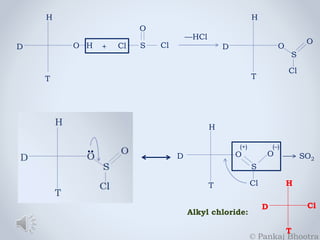
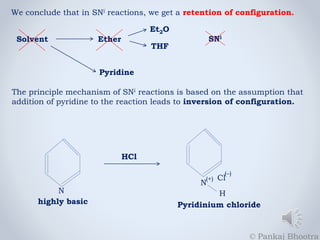
We conclude that in SNi reactions, we get a retention of configuration. 
Solvent Ether 
Et2O 
THF 
SNi 
Pyridine 
The principle mechanism of SNi reactions is based on the assumption that 
addition of pyridine to the reaction leads to inversion of configuration. 
N 
highly basic 
HCl 
(–) 
(+) Cl 
N 
H 
Pyridinium chloride 
© Pankaj Bhootra
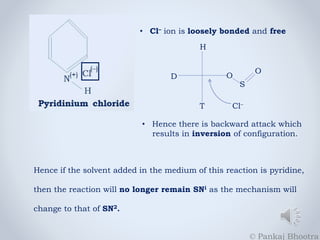
• Cl– ion is loosely bonded and free 
H 
D 
T 
O 
S 
O 
Cl– 
• Hence there is backward attack which 
results in inversion of configuration. 
Hence if the solvent added in the medium of this reaction is pyridine, 
then the reaction will no longer remain SNi as the mechanism will 
change to that of SN2. 
© Pankaj Bhootra
1. In ether medium, the reaction follows the rules of SNi mechanism. 
2. If pyridine is added as the medium solvent to this reaction, it will 
form a strong nucleophile in Pyridinium chloride, which will cause a 
backward attack on the system, eliminating Sulphur dioxide from it. 
3. This type of reaction will be termed as SN2 because there is inversion 
of configuration. In case of pyridine, the nature of the reaction changes 
from SNi to SN2. 
© Pankaj Bhootra 
Hence we can draw four important inferences: 
4. In case of SNi reactions, the rate of the reaction is dependent on the 
concentration of both the alcohol and the thionyl chloride, i.e., 
Rate r [R – OH] [SOCl2], 
as opposed to the case of SN1 and SN2 reactions.

SNi Substitution Reactions

  • 1.
  • 2.
    Nucleophilic Substitution SNi This kind of reaction is seen only in one situation. H D T OH SOCl2 thionyl chloride H D T Cl R R So, in SNi reactions, we have retention of configuration. But this is different from SN1 reactions as there is no formation of a racemic mixture over here. This is also different from SN2 reactions as in SN2, there is inversion of configuration, whereas over here, the stereochemistry of the reactant and the product is nearly the same. Hence this reaction can be explained neither by SN1 nor by SN2. Nucleophilic Substitution Internal © Pankaj Bhootra
  • 3.
    H D T O O H + Cl S Cl —HCl H D T O S O Cl •• H D T (+) (–) O S O Cl SO2 H D T Cl Alkyl chloride: © Pankaj Bhootra
  • 4.
    We conclude thatin SNi reactions, we get a retention of configuration. Solvent Ether Et2O THF SNi Pyridine The principle mechanism of SNi reactions is based on the assumption that addition of pyridine to the reaction leads to inversion of configuration. N highly basic HCl (–) (+) Cl N H Pyridinium chloride © Pankaj Bhootra
  • 5.
    • Cl– ionis loosely bonded and free H D T O S O Cl– • Hence there is backward attack which results in inversion of configuration. Hence if the solvent added in the medium of this reaction is pyridine, then the reaction will no longer remain SNi as the mechanism will change to that of SN2. © Pankaj Bhootra
  • 6.
    1. In ethermedium, the reaction follows the rules of SNi mechanism. 2. If pyridine is added as the medium solvent to this reaction, it will form a strong nucleophile in Pyridinium chloride, which will cause a backward attack on the system, eliminating Sulphur dioxide from it. 3. This type of reaction will be termed as SN2 because there is inversion of configuration. In case of pyridine, the nature of the reaction changes from SNi to SN2. © Pankaj Bhootra Hence we can draw four important inferences: 4. In case of SNi reactions, the rate of the reaction is dependent on the concentration of both the alcohol and the thionyl chloride, i.e., Rate r [R – OH] [SOCl2], as opposed to the case of SN1 and SN2 reactions.