Aromatic Nucleophilic
Substitution Reaction
Index


• SNAr Mechanism

• Benzyne mechanism
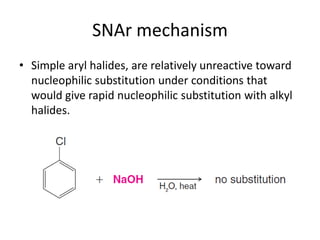
SNAr mechanism
• Simple aryl halides, are relatively unreactive toward
  nucleophilic substitution under conditions that
  would give rapid nucleophilic substitution with alkyl
  halides.
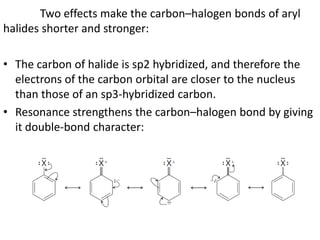
Two effects make the carbon–halogen bonds of aryl
halides shorter and stronger:

• The carbon of halide is sp2 hybridized, and therefore the
  electrons of the carbon orbital are closer to the nucleus
  than those of an sp3-hybridized carbon.
• Resonance strengthens the carbon–halogen bond by giving
  it double-bond character:
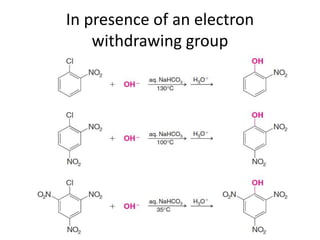
In presence of an electron
    withdrawing group
Mechanism
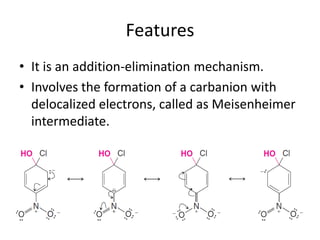
Features
• It is an addition-elimination mechanism.
• Involves the formation of a carbanion with
  delocalized electrons, called as Meisenheimer
  intermediate.
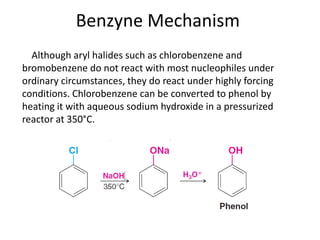
Benzyne Mechanism
  Although aryl halides such as chlorobenzene and
bromobenzene do not react with most nucleophiles under
ordinary circumstances, they do react under highly forcing
conditions. Chlorobenzene can be converted to phenol by
heating it with aqueous sodium hydroxide in a pressurized
reactor at 350°C.
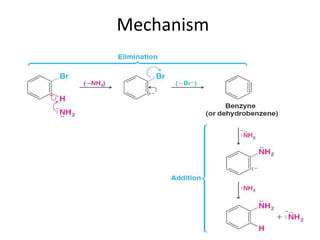
Mechanism
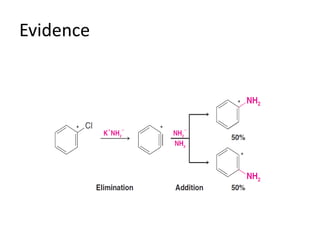
Evidence
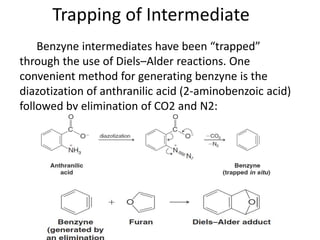
Trapping of Intermediate
    Benzyne intermediates have been “trapped”
through the use of Diels–Alder reactions. One
convenient method for generating benzyne is the
diazotization of anthranilic acid (2-aminobenzoic acid)
followed by elimination of CO2 and N2:
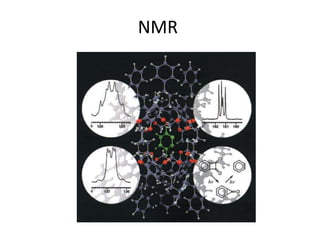
NMR
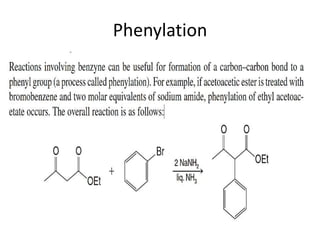
Phenylation
Bibliography
• Organic Chemistry by Solomon & Fryhle 10th
  edition (981-987).
Aromatic nucleophilic substitution reaction

Aromatic nucleophilic substitution reaction

  • 1.
  • 2.
  • 3.
    SNAr mechanism • Simplearyl halides, are relatively unreactive toward nucleophilic substitution under conditions that would give rapid nucleophilic substitution with alkyl halides.
  • 4.
    Two effects makethe carbon–halogen bonds of aryl halides shorter and stronger: • The carbon of halide is sp2 hybridized, and therefore the electrons of the carbon orbital are closer to the nucleus than those of an sp3-hybridized carbon. • Resonance strengthens the carbon–halogen bond by giving it double-bond character:
  • 5.
    In presence ofan electron withdrawing group
  • 6.
  • 7.
    Features • It isan addition-elimination mechanism. • Involves the formation of a carbanion with delocalized electrons, called as Meisenheimer intermediate.
  • 8.
    Benzyne Mechanism Although aryl halides such as chlorobenzene and bromobenzene do not react with most nucleophiles under ordinary circumstances, they do react under highly forcing conditions. Chlorobenzene can be converted to phenol by heating it with aqueous sodium hydroxide in a pressurized reactor at 350°C.
  • 9.
  • 10.
  • 11.
    Trapping of Intermediate Benzyne intermediates have been “trapped” through the use of Diels–Alder reactions. One convenient method for generating benzyne is the diazotization of anthranilic acid (2-aminobenzoic acid) followed by elimination of CO2 and N2:
  • 12.
  • 13.
  • 14.
    Bibliography • Organic Chemistryby Solomon & Fryhle 10th edition (981-987).