NUCLEOPHILIC AROMATICNUCLEOPHILIC AROMATIC
REACTIONSREACTIONS
Presented by:-
NAVEEN KADIAN
M Pharma 1st
year
Dept of Pharmachemistry,
K.L.E.S’ College of Pharmacy, Belgaum- 10.
CONTENTSCONTENTS
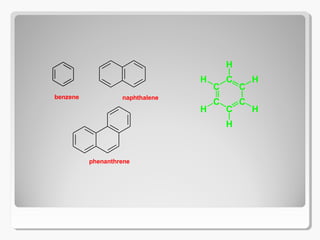
benzene naphthalene
phenanthrene
C
C
C
C
C
C
H
H
H
H
HH
 NUCLEOPHILES
 A reagent which can donate an electron pair in a reaction is called as
nucleophiles.
 Nucleophiles are electron rich. {Ex:- Cl-
, Br-
, I-
, CN-
, OH-
}
 The displacement of halide ion by a nucleophile is known as nucleophilic
substitution reaction.
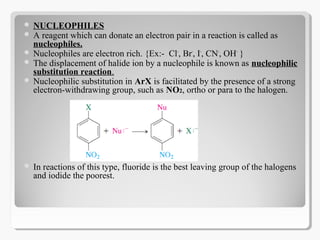
 Nucleophilic substitution in ArX is facilitated by the presence of a strong
electron-withdrawing group, such as NO2, ortho or para to the halogen.
 In reactions of this type, fluoride is the best leaving group of the halogens
and iodide the poorest.

Electrophilic substitution is by far the most common mode of
substitution in aromatic systems, the nucleophilic substitution
is indeed and useful tool in certain cases.
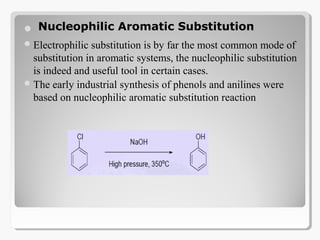
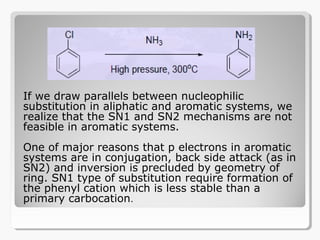
The early industrial synthesis of phenols and anilines were
based on nucleophilic aromatic substitution reaction
Nucleophilic Aromatic Substitution
If we draw parallels between nucleophilic
substitution in aliphatic and aromatic systems, we
realize that the SN1 and SN2 mechanisms are not
feasible in aromatic systems.
One of major reasons that p electrons in aromatic
systems are in conjugation, back side attack (as in
SN2) and inversion is precluded by geometry of
ring. SN1 type of substitution require formation of
the phenyl cation which is less stable than a
primary carbocation.
MechanismsMechanisms
SNAr Mechanism - addition / elimination
SN1 Mechanism
benzyne Mechanism - elimination / addition
Srn 1 Mechanism
SSNNAr Mechanism - addition / eliminationAr Mechanism - addition / elimination
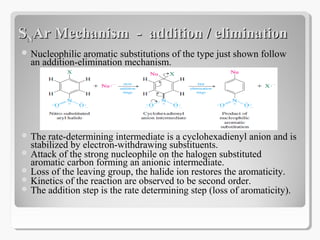
 Nucleophilic aromatic substitutions of the type just shown follow
an addition-elimination mechanism.
 The rate-determining intermediate is a cyclohexadienyl anion and is
stabilized by electron-withdrawing substituents.
 Attack of the strong nucleophile on the halogen substituted
aromatic carbon forming an anionic intermediate.
 Loss of the leaving group, the halide ion restores the aromaticity.
 Kinetics of the reaction are observed to be second order.
 The addition step is the rate determining step (loss of aromaticity).
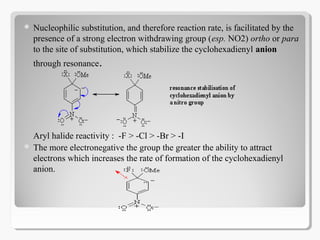
 Nucleophilic substitution, and therefore reaction rate, is facilitated by the
presence of a strong electron withdrawing group (esp. NO2) ortho or para
to the site of substitution, which stabilize the cyclohexadienyl anion
through resonance.
Aryl halide reactivity : -F > -Cl > -Br > -I
 The more electronegative the group the greater the ability to attract
electrons which increases the rate of formation of the cyclohexadienyl
anion.
Neucleophilic aromatic substitution

Neucleophilic aromatic substitution

  • 1.
    NUCLEOPHILIC AROMATICNUCLEOPHILIC AROMATIC REACTIONSREACTIONS Presentedby:- NAVEEN KADIAN M Pharma 1st year Dept of Pharmachemistry, K.L.E.S’ College of Pharmacy, Belgaum- 10.
  • 2.
  • 3.
  • 4.
     NUCLEOPHILES  Areagent which can donate an electron pair in a reaction is called as nucleophiles.  Nucleophiles are electron rich. {Ex:- Cl- , Br- , I- , CN- , OH- }  The displacement of halide ion by a nucleophile is known as nucleophilic substitution reaction.  Nucleophilic substitution in ArX is facilitated by the presence of a strong electron-withdrawing group, such as NO2, ortho or para to the halogen.  In reactions of this type, fluoride is the best leaving group of the halogens and iodide the poorest.
  • 5.
     Electrophilic substitution isby far the most common mode of substitution in aromatic systems, the nucleophilic substitution is indeed and useful tool in certain cases. The early industrial synthesis of phenols and anilines were based on nucleophilic aromatic substitution reaction Nucleophilic Aromatic Substitution
  • 6.
    If we drawparallels between nucleophilic substitution in aliphatic and aromatic systems, we realize that the SN1 and SN2 mechanisms are not feasible in aromatic systems. One of major reasons that p electrons in aromatic systems are in conjugation, back side attack (as in SN2) and inversion is precluded by geometry of ring. SN1 type of substitution require formation of the phenyl cation which is less stable than a primary carbocation.
  • 7.
    MechanismsMechanisms SNAr Mechanism -addition / elimination SN1 Mechanism benzyne Mechanism - elimination / addition Srn 1 Mechanism
  • 8.
    SSNNAr Mechanism -addition / eliminationAr Mechanism - addition / elimination  Nucleophilic aromatic substitutions of the type just shown follow an addition-elimination mechanism.  The rate-determining intermediate is a cyclohexadienyl anion and is stabilized by electron-withdrawing substituents.  Attack of the strong nucleophile on the halogen substituted aromatic carbon forming an anionic intermediate.  Loss of the leaving group, the halide ion restores the aromaticity.  Kinetics of the reaction are observed to be second order.  The addition step is the rate determining step (loss of aromaticity).
  • 9.
     Nucleophilic substitution,and therefore reaction rate, is facilitated by the presence of a strong electron withdrawing group (esp. NO2) ortho or para to the site of substitution, which stabilize the cyclohexadienyl anion through resonance. Aryl halide reactivity : -F > -Cl > -Br > -I  The more electronegative the group the greater the ability to attract electrons which increases the rate of formation of the cyclohexadienyl anion.