Presented by
Dr. SK. Mastan Vali
SMART QUILL
ABSTRACT
 The present trend has started preferring small computers to do computation.
 This has made computer manufacturers to go for almost gadget like computers.
 This problem overcome by reducing the size of handheld computers.
 The introduction of smart quill has solved some of these problems.
 The inventor of smart quill is Lyndsay Williams of Microsoft, UK.
 Smart quill is a pen that can remember the words that is used to write and then transform them
into computer text.
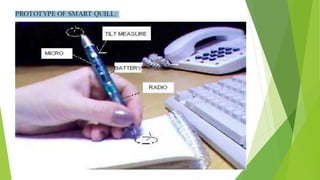
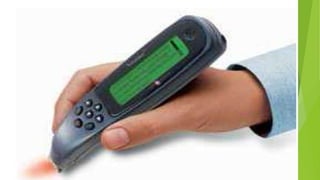
 The pen is slightly larger than ordinary fountain pen , with a screen on the barrel.
 User can use any platform for writing like paper ,screen ,tablet or even air.
 There is also a small three line screen to read the information stored in the pen .
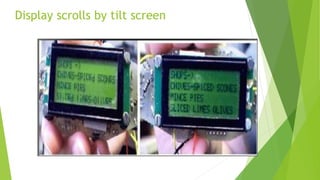
 Users can scroll down the screen by tilting the pen.
INTRODUCTION
 Smart quill is a pen that can remember the words that is used to write and then transform them
into computer text.
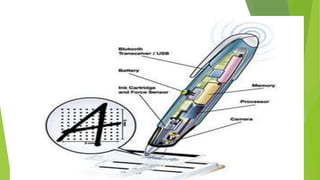
 Smart quill contains sensors that record movement by using the earth’s gravity system
,irrespective of the platform used.
 Smart quill recognizes only predefined handwriting.
 The smart quill was a working prototype pen computer.
 A quill pen is a made from a flight feather of a large bird.
TECHNICAL SPECIFICATION
 Display technology.
 Handwriting recognition and signature verification.
 Display scrolls by tilt screen.
 Communication with other devices.
 Memory.
 Power.
DISPLAY TECHNOLOGY
 Technology used in smart quill is cyber display technology.
 Cyber display is a ¼ inch diagonal LCD that uses circuitry built on a silicon wafer ,then removed and
mounted to glass.
 The displays are integrated to miniature using its own backlighting optics , Ics and packaging
HANDWRITING RECOGNITION AND SIGNATURE
VERIFICATION
 Accelerometers measure hand movement in 2 or 3 planes.
 On board DSP converts to ASCII characters for pen applications.
 Write on paper ,flat surface ,vertical wall or in air.
 Single character recognition on pen.
 Record cursive letters and download to PC for decoding.
 Password by signature recognition.
CNTD
 Smart quill works by measuring the pen’s movements and matching them to the movements that
produce letters and words programmed into its memory.
 There are 2 techniques used for purpose:-
1.Accelerometer technology
2.Handwriting recognition software
Accelerometer technology
 This technology uses a device called Accelerometer which is used for measuring motion.
 A tiny Accelerometer in a pen could be used to detect the stops and starts ,arcs and loops of
handwriting.
 Accelerometer that monitors hand movements and can also be used as a ‘virtual hinge’
 This information is transmitted on to a small microprocessor that would make sense of it as a text
displayed on the screen.
CNTD
 There are 2 types of Accelerometer:
1.two axes Accelerometer
this Accelerometer measures acceleration in two axes
2.three axes Accelerometer
this Accelerometer measures acceleration in three axes
Handwriting recognition software
 This software in the microprocessor of the pen is used to recognize handwriting of the user.
 The handwriting recognize software translates movements in to text on screen.
 handwriting recognize software constitutes two major phases:
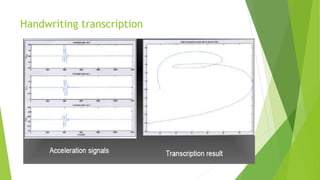
1. handwriting transcription
2. handwriting recognition
Handwriting transcription
Display scrolls by tilt screen
Memory
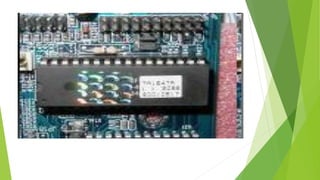
 Smart Quill has 4MB EEPROM memory. At a time, up to 10 pages of notes can be stored locally on
the pen.
 The data is stored in the memory on the pen until it is uploaded to the personal computer.
 Smart Quill works by measuring the pen's movements and matching
 them to the movements that produce letters and words programmed into its memory.
 It's similar to the way a microphone detects sound.
power
 Smart Quill is powered by AAA battery. It will run for about 25hrs on a single AAA battery.
 The pen exhibits automatic power on/off system.
 The pen will power down after a period of no movement.
 So it supports automatic on/off system.
CNTD
Applications
 Smart Quill provides intuitive user interface.
 The Smart Quill is also a 3D-mouse, when twisted in air in a certain
it enables scrolling of the screen. It also automatically detects
left or right handed use.
 Power saving
a. Small screen size requires less battery power .
b. No movement of the pen causes auto power down.
 Smart Quill is all mobile, smaller in size and enables one-handed use.
Dis advantages
 It has accelerometer errors.
 It is inconvenient for persons with hand tremulous.
 Bigger size than a normal pen.
 Errors are introduced in the system due to thermal variations in the springs.
conclusion
 Smart Quill supports two factors : small size and convenient use.
 The future of Smart Quill ensures all computation power the user needs right inside the pen.
 Reducing the size of handheld computers can only be taken so far before they become
unusable.
 Keyboards become so tiny you require needle-like fingers to operate them and screens that
need constant cursor controls to read simple text.
 The introduction of Smart Quill is the best solution for this problem.
handwriting transcription
Smart quill

Smart quill

  • 1.
    Presented by Dr. SK.Mastan Vali SMART QUILL
  • 2.
    ABSTRACT  The presenttrend has started preferring small computers to do computation.  This has made computer manufacturers to go for almost gadget like computers.  This problem overcome by reducing the size of handheld computers.  The introduction of smart quill has solved some of these problems.  The inventor of smart quill is Lyndsay Williams of Microsoft, UK.
  • 3.
     Smart quillis a pen that can remember the words that is used to write and then transform them into computer text.  The pen is slightly larger than ordinary fountain pen , with a screen on the barrel.  User can use any platform for writing like paper ,screen ,tablet or even air.  There is also a small three line screen to read the information stored in the pen .  Users can scroll down the screen by tilting the pen.
  • 4.
    INTRODUCTION  Smart quillis a pen that can remember the words that is used to write and then transform them into computer text.  Smart quill contains sensors that record movement by using the earth’s gravity system ,irrespective of the platform used.  Smart quill recognizes only predefined handwriting.  The smart quill was a working prototype pen computer.  A quill pen is a made from a flight feather of a large bird.
  • 8.
    TECHNICAL SPECIFICATION  Displaytechnology.  Handwriting recognition and signature verification.  Display scrolls by tilt screen.  Communication with other devices.  Memory.  Power.
  • 9.
    DISPLAY TECHNOLOGY  Technologyused in smart quill is cyber display technology.  Cyber display is a ¼ inch diagonal LCD that uses circuitry built on a silicon wafer ,then removed and mounted to glass.  The displays are integrated to miniature using its own backlighting optics , Ics and packaging
  • 10.
    HANDWRITING RECOGNITION ANDSIGNATURE VERIFICATION  Accelerometers measure hand movement in 2 or 3 planes.  On board DSP converts to ASCII characters for pen applications.  Write on paper ,flat surface ,vertical wall or in air.  Single character recognition on pen.  Record cursive letters and download to PC for decoding.  Password by signature recognition.
  • 11.
    CNTD  Smart quillworks by measuring the pen’s movements and matching them to the movements that produce letters and words programmed into its memory.  There are 2 techniques used for purpose:- 1.Accelerometer technology 2.Handwriting recognition software
  • 12.
    Accelerometer technology  Thistechnology uses a device called Accelerometer which is used for measuring motion.  A tiny Accelerometer in a pen could be used to detect the stops and starts ,arcs and loops of handwriting.  Accelerometer that monitors hand movements and can also be used as a ‘virtual hinge’  This information is transmitted on to a small microprocessor that would make sense of it as a text displayed on the screen.
  • 13.
    CNTD  There are2 types of Accelerometer: 1.two axes Accelerometer this Accelerometer measures acceleration in two axes 2.three axes Accelerometer this Accelerometer measures acceleration in three axes
  • 14.
    Handwriting recognition software This software in the microprocessor of the pen is used to recognize handwriting of the user.  The handwriting recognize software translates movements in to text on screen.  handwriting recognize software constitutes two major phases: 1. handwriting transcription 2. handwriting recognition
  • 15.
  • 16.
    Display scrolls bytilt screen
  • 17.
    Memory  Smart Quillhas 4MB EEPROM memory. At a time, up to 10 pages of notes can be stored locally on the pen.  The data is stored in the memory on the pen until it is uploaded to the personal computer.  Smart Quill works by measuring the pen's movements and matching  them to the movements that produce letters and words programmed into its memory.  It's similar to the way a microphone detects sound.
  • 19.
    power  Smart Quillis powered by AAA battery. It will run for about 25hrs on a single AAA battery.  The pen exhibits automatic power on/off system.  The pen will power down after a period of no movement.  So it supports automatic on/off system.
  • 20.
  • 21.
    Applications  Smart Quillprovides intuitive user interface.  The Smart Quill is also a 3D-mouse, when twisted in air in a certain it enables scrolling of the screen. It also automatically detects left or right handed use.  Power saving a. Small screen size requires less battery power . b. No movement of the pen causes auto power down.  Smart Quill is all mobile, smaller in size and enables one-handed use.
  • 22.
    Dis advantages  Ithas accelerometer errors.  It is inconvenient for persons with hand tremulous.  Bigger size than a normal pen.  Errors are introduced in the system due to thermal variations in the springs.
  • 23.
    conclusion  Smart Quillsupports two factors : small size and convenient use.  The future of Smart Quill ensures all computation power the user needs right inside the pen.  Reducing the size of handheld computers can only be taken so far before they become unusable.  Keyboards become so tiny you require needle-like fingers to operate them and screens that need constant cursor controls to read simple text.  The introduction of Smart Quill is the best solution for this problem.
  • 24.