
ISSUES OF ROUTING IN VANET
Presented by:
Dr. SK.Mastan Vali
ABSTRACT
This seminar deals with the different
routing concept that measures the performance of the
VANET. Vehicular Ad Hoc Network (VANET) is a sub class of
mobile ad hoc networks.
INTRODUCTION
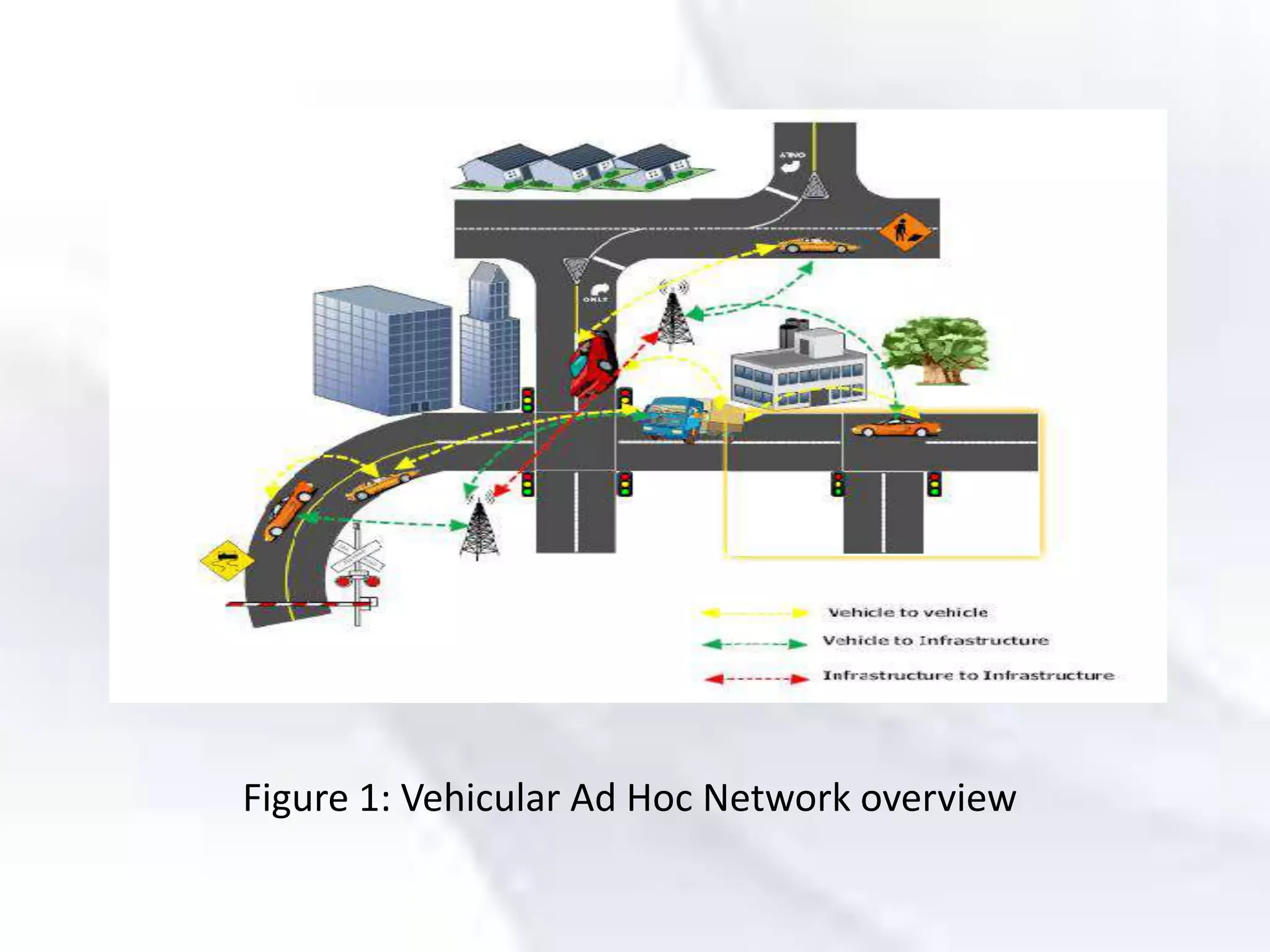
VANET :- “provides wireless communication among vehicles and
vehicle to road side equipments.” The networks with the absence
of any centralized or pre-established infrastructure are called Ad
hoc networks
 It is a sub-class of mobile ad hoc networks (MANET).
 Used for safety , comfort and entertainment as well.
Figure 1: Vehicular Ad Hoc Network overview
AIMS AND OBJECTIVES
Aim is to identify which ad hoc routing method has
better performance in VANET.
To achieve this aim we have set the following objectives:
1. Finding problems with traditional MANET routing protocols
used in VANET.
2. Finding problems with various proposed routing techniques
for VANET.
3. Comparing performance results of both routing protocols.
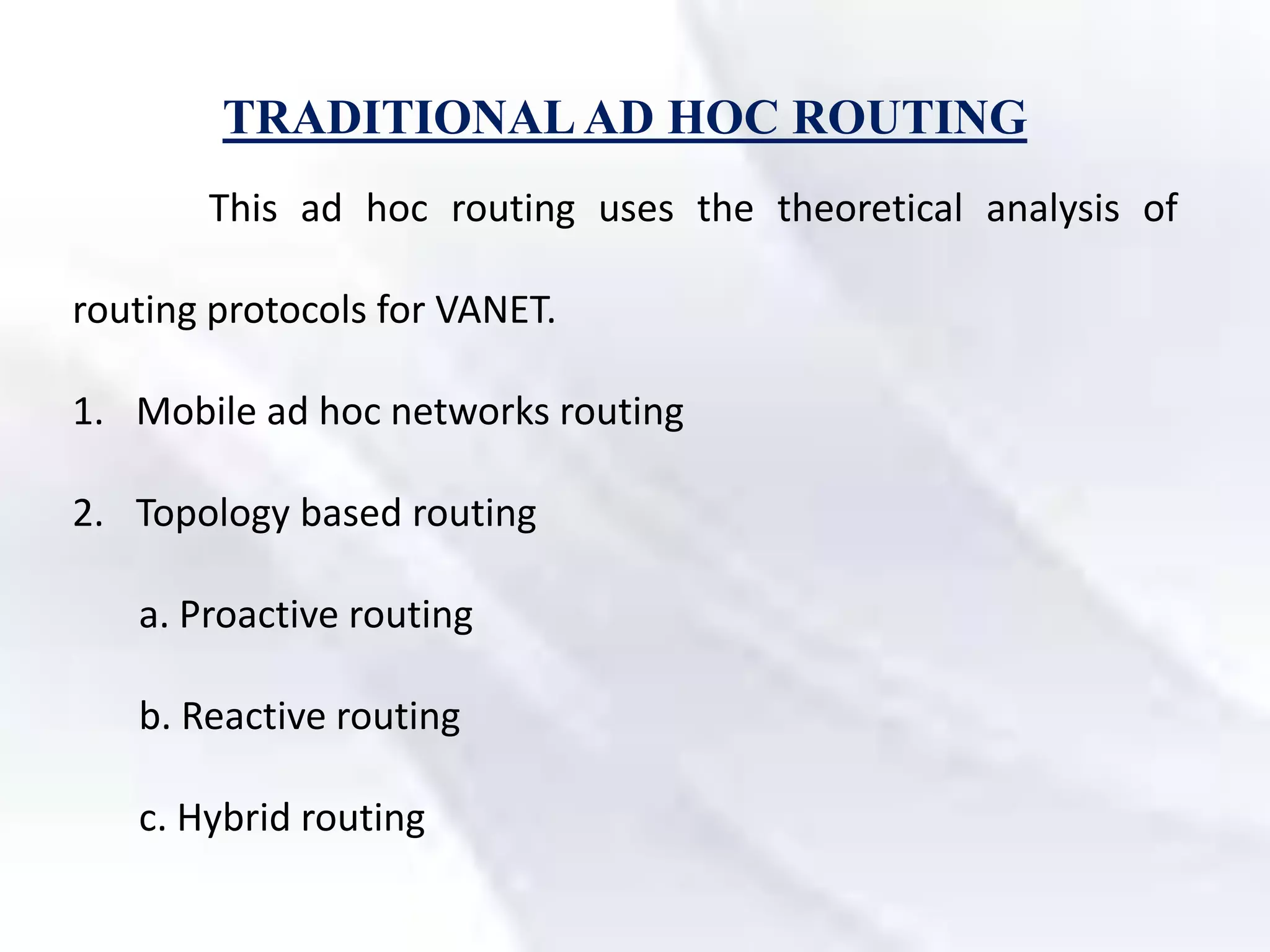
TRADITIONALAD HOC ROUTING
This ad hoc routing uses the theoretical analysis of
routing protocols for VANET.
1. Mobile ad hoc networks routing
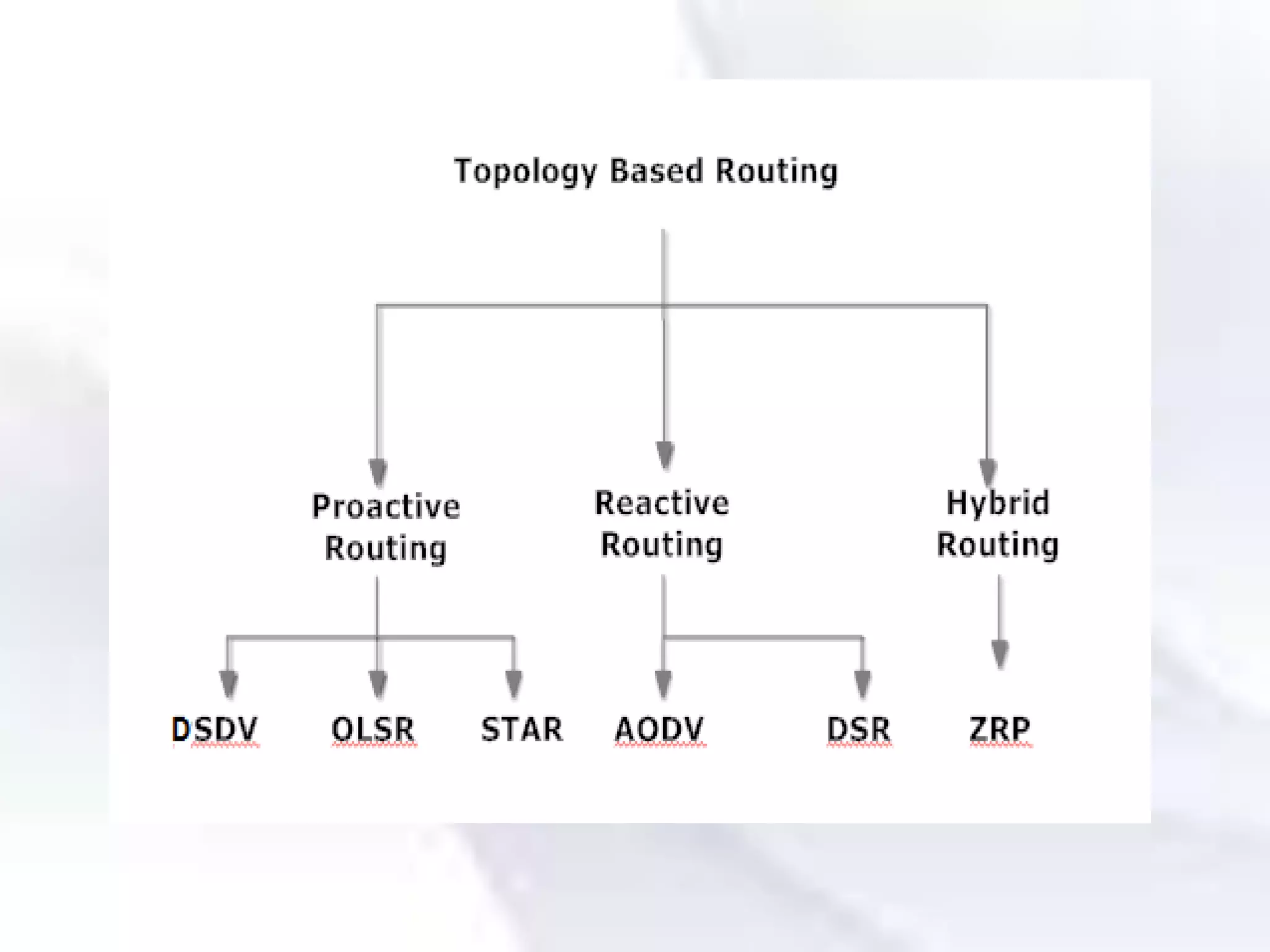
2. Topology based routing
a. Proactive routing
b. Reactive routing
c. Hybrid routing
1. Mobile ad hoc networks Routing:
 There is no fixed network topology
 Adopt any runtime topology due to dynamic behaviour
 Route discovery, Route maintenance, and sudden change in
the topology are major barriers in MANET.
2. Topology Based Routing:
 It was developed to meet the dynamic nature of the ad hoc
networks
 It uses link’s information within the network to send the data
packets
Proactive routing:
 These are based on shortest path algorithms.
 The information in this routing is in the form of tables.
 Proactive algorithms: a. Link-state routing (e.g. OLSR)
b. Distance-vector routing (e.g. DSDV)
Reactive Routing:
 It is developed to overcome the overhead that was created by
the proactive routing protocols.
 Route discovery can be done by sending RREQ (Route Request) .
 Reactive routing can be classified either as source routing or
hop-by-hop routing.
 Ad Hoc On Demand Distance Vector Routing (AODV) and
Dynamic Source Routing (DSR) are different types of Reactive
Routing protocols.
VANET ROUTING PROTOCOLS
Vehicular Ad hoc Network Routing:
 High mobility, frequent changes in topology and limited life
time
 Other factors such as road layout and different
environments
 VANET uses position information of the participating nodes
within the network to take routing decisions.
Position Based Routing:
 Uses positions of nodes to provide successful communication.
 It assumes that each node have knowledge about its physical/
geographic position by using determining services.
 As compared to topology based routing, it uses the additional
information.
 It provides hop-by-hop communication to vehicular networks.
 It’s protocol consists of many major components. Those are:
a. Beaconing
b. Location Service and Servers
c. Recovery and Forwarding Strategies
i. restricted directional flooding
ii. hierarchal forwarding
iii. greedy forwarding
Greedy Perimeter Stateless Routing-GPSR:
- It is the best example of position based routing.
- Uses the nearest router ‘s information of destination to forward
packets.
- Helps the path with less interference of topology information.
- GPSR protocols divided into two groups:
1. Greedy Forwarding
2. Perimeter Forwarding
Geographic Source Routing (GSR):
- It fails in the presence of radio obstacles.
- It deals with high mobility of nodes and uses road layout to
discover routes.
- Uses Reactive Location Services(RLS) which combines both
geographic routing and road topology knowledge .
- Multiple hops, Routing Loops and Incorrect Route Selection.
Anchor-based Street and Traffic Aware Routing(A-STAR):
- It is also a Position based routing protocol.
- The drawback like effect of high mobility is overcome by A-
STAR.
- In this the address of the header is given to the all other nodes
that packet travels.
- This is called Anchor based Routing.
- It also deals with “Spatial Aware Routing”.
- It computes number of junctions using traffic information and
street awareness to find the path.
- A-STAR has two features that make it different from all other
protocols.
- A-STAR uses Statistically and Dynamically rated maps to find
number of junctions.
- Statistically Rated maps uses schedule of buses for high
connectivity.
- Dynamically Rated maps collect the latest information of traffic
in finding path.
CONCLUSION
The main goal is to identify different routing protocols
and to evaluate these routing protocols against each other in
VANET. Here, we suggest that Position based protocols are
more promising than Traditional ad hoc routing protocols for
VANET.
FUTURE WORK
In Wireless network community VANET received
attention of many researchers due to its unique nature. Here, we
only focused on the traditional and position based routing
protocols. But there some areas that need more attention. New
algorithms should be proposed to provide reliable QoS for safety
and comfort applications in VANET.
Routing in vanet

Routing in vanet

  • 1.
    ISSUES OF ROUTINGIN VANET Presented by: Dr. SK.Mastan Vali
  • 2.
    ABSTRACT This seminar dealswith the different routing concept that measures the performance of the VANET. Vehicular Ad Hoc Network (VANET) is a sub class of mobile ad hoc networks.
  • 3.
    INTRODUCTION VANET :- “provideswireless communication among vehicles and vehicle to road side equipments.” The networks with the absence of any centralized or pre-established infrastructure are called Ad hoc networks  It is a sub-class of mobile ad hoc networks (MANET).  Used for safety , comfort and entertainment as well.
  • 4.
    Figure 1: VehicularAd Hoc Network overview
  • 5.
    AIMS AND OBJECTIVES Aimis to identify which ad hoc routing method has better performance in VANET. To achieve this aim we have set the following objectives: 1. Finding problems with traditional MANET routing protocols used in VANET. 2. Finding problems with various proposed routing techniques for VANET. 3. Comparing performance results of both routing protocols.
  • 6.
    TRADITIONALAD HOC ROUTING Thisad hoc routing uses the theoretical analysis of routing protocols for VANET. 1. Mobile ad hoc networks routing 2. Topology based routing a. Proactive routing b. Reactive routing c. Hybrid routing
  • 7.
    1. Mobile adhoc networks Routing:  There is no fixed network topology  Adopt any runtime topology due to dynamic behaviour  Route discovery, Route maintenance, and sudden change in the topology are major barriers in MANET. 2. Topology Based Routing:  It was developed to meet the dynamic nature of the ad hoc networks  It uses link’s information within the network to send the data packets
  • 9.
    Proactive routing:  Theseare based on shortest path algorithms.  The information in this routing is in the form of tables.  Proactive algorithms: a. Link-state routing (e.g. OLSR) b. Distance-vector routing (e.g. DSDV)
  • 10.
    Reactive Routing:  Itis developed to overcome the overhead that was created by the proactive routing protocols.  Route discovery can be done by sending RREQ (Route Request) .  Reactive routing can be classified either as source routing or hop-by-hop routing.  Ad Hoc On Demand Distance Vector Routing (AODV) and Dynamic Source Routing (DSR) are different types of Reactive Routing protocols.
  • 11.
    VANET ROUTING PROTOCOLS VehicularAd hoc Network Routing:  High mobility, frequent changes in topology and limited life time  Other factors such as road layout and different environments  VANET uses position information of the participating nodes within the network to take routing decisions.
  • 12.
    Position Based Routing: Uses positions of nodes to provide successful communication.  It assumes that each node have knowledge about its physical/ geographic position by using determining services.  As compared to topology based routing, it uses the additional information.  It provides hop-by-hop communication to vehicular networks.
  • 13.
     It’s protocolconsists of many major components. Those are: a. Beaconing b. Location Service and Servers c. Recovery and Forwarding Strategies i. restricted directional flooding ii. hierarchal forwarding iii. greedy forwarding
  • 14.
    Greedy Perimeter StatelessRouting-GPSR: - It is the best example of position based routing. - Uses the nearest router ‘s information of destination to forward packets. - Helps the path with less interference of topology information. - GPSR protocols divided into two groups: 1. Greedy Forwarding 2. Perimeter Forwarding
  • 15.
    Geographic Source Routing(GSR): - It fails in the presence of radio obstacles. - It deals with high mobility of nodes and uses road layout to discover routes. - Uses Reactive Location Services(RLS) which combines both geographic routing and road topology knowledge . - Multiple hops, Routing Loops and Incorrect Route Selection.
  • 16.
    Anchor-based Street andTraffic Aware Routing(A-STAR): - It is also a Position based routing protocol. - The drawback like effect of high mobility is overcome by A- STAR. - In this the address of the header is given to the all other nodes that packet travels. - This is called Anchor based Routing. - It also deals with “Spatial Aware Routing”. - It computes number of junctions using traffic information and street awareness to find the path.
  • 17.
    - A-STAR hastwo features that make it different from all other protocols. - A-STAR uses Statistically and Dynamically rated maps to find number of junctions. - Statistically Rated maps uses schedule of buses for high connectivity. - Dynamically Rated maps collect the latest information of traffic in finding path.
  • 18.
    CONCLUSION The main goalis to identify different routing protocols and to evaluate these routing protocols against each other in VANET. Here, we suggest that Position based protocols are more promising than Traditional ad hoc routing protocols for VANET.
  • 19.
    FUTURE WORK In Wirelessnetwork community VANET received attention of many researchers due to its unique nature. Here, we only focused on the traditional and position based routing protocols. But there some areas that need more attention. New algorithms should be proposed to provide reliable QoS for safety and comfort applications in VANET.