PRESENTED BY
T. SRIKANTH(13BH1A04C4)
FLEXIBLE ELECTRONIC SKIN
UNDER THE GUIDANCE OF
MISSSANGEETHA
(PROFESSOR)
OVERVIEW:
• Introduction
• Development of E-SKIN
• E-SKIN Features
• Structure of E-SKIN
• How display is converted into E-SKIN
• Advantages
• Applications
• Future scope
• Conclusion
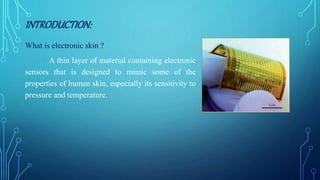
What is electronic skin ?
A thin layer of material containing electronic
sensors that is designed to mimic some of the
properties of human skin, especially its sensitivity to
pressure and temperature.
INTRODUCTION:
DEVELOPMENTOF E-SKIN:
• 2010:
Attaching nanowire transistors to sticky substrate, embedded in thin pressure
sensitive rubber-capable of sensing wide range of pressures(California University)
First prototype for e-skin
• 2011:
Stretchable solar cell used to power the electronic skin(Stanford)
• 2012:
Self healing capacity
Made by plastic and nickel
• 2013
Created an electronic skin that lights up when touched (UC Berkeley)
E-SKINFEATURES:
• Optimization of pressure sensors &
Electronic read out-but no Human
Readable output.
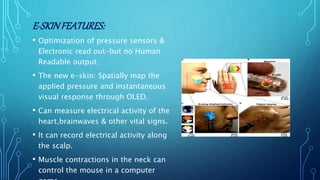
• The new e-skin: Spatially map the
applied pressure and instantaneous
visual response through OLED.
• Can measure electrical activity of the
heart,brainwaves & other vital signs.
• It can record electrical activity along
the scalp.
• Muscle contractions in the neck can
control the mouse in a computer
STRUCTUREOF PIXELOF E-SKIN:
• Nanotube TFT drain connected to
anode of OLED.
• OLED: Bi-layer structure whose
color controlled by emissive layer
material.
• PSR: Electrical contact with cathode
of OLED.
• Conductivity of PSR α applied
pressure.
HOWTOCONVERTDISPLAYINTOE-SKIN:
• PSR lamination on the top of the leads to make Pressure
sensitive.
• The cathode of each OLED is connected to the ground through
PSR. Application of pressure: shortening of tunneling path
between conductive carbon nano particles-reduced resistance
of PSR modulates the current flowing through the OLEDs and
changes the brightness of the output.
VIDEODEMONSTRATIONOF E-SKIN
ADVANTAGES:
• Reduces wires.
• Compact in size, less in weight.
• The device is so floppy, and flexible.
APPLICATIONS:
• Automatic control panel
• Interactive input devices
• Robotics
• Medical & Health monitoring device
FUTURESCOPE:
o IN FUTURE EVEN VIRTUAL SCREENS MAY BE PLACED ON DEVICE FOR KNOWING
OUR BODY FUNCTIONS.
o USED IN CAR DASHBOARD, INTERACTIVE WALLPAPERS, SMART WATCHES. WE CAN
PREDICT A PATIENT OF AN ONCOMING HEART ATTACK HOURS IN ADVANCE.
CONCLUSION:
THE ELECTRONICS DEVICES GAIN MORE DEMAND WHEN THEY ARE
COMPACT IN SIZE AND BEST AT FUNCTIONING. THE ARTIFICIAL SKIN IS ONE
SUCH DEVICE WHICH DEPICTS THE BEAUTY OF ELECTRONICS AND ITS USE IN
DAILY LIFE. SCIENTISTS CREATE ARTIFICIAL SKIN THAT EMULATES HUMAN
TOUCH. ACCORDING TO EXPERTS, THE ARTIFICIAL SKIN IS "SMARTER AND
SIMILAR TO HUMAN SKIN."
Thank You
ANY QUERIES ¿

Flexible electronic skin

  • 1.
    PRESENTED BY T. SRIKANTH(13BH1A04C4) FLEXIBLEELECTRONIC SKIN UNDER THE GUIDANCE OF MISSSANGEETHA (PROFESSOR)
  • 2.
    OVERVIEW: • Introduction • Developmentof E-SKIN • E-SKIN Features • Structure of E-SKIN • How display is converted into E-SKIN • Advantages • Applications • Future scope • Conclusion
  • 3.
    What is electronicskin ? A thin layer of material containing electronic sensors that is designed to mimic some of the properties of human skin, especially its sensitivity to pressure and temperature. INTRODUCTION:
  • 4.
    DEVELOPMENTOF E-SKIN: • 2010: Attachingnanowire transistors to sticky substrate, embedded in thin pressure sensitive rubber-capable of sensing wide range of pressures(California University) First prototype for e-skin • 2011: Stretchable solar cell used to power the electronic skin(Stanford) • 2012: Self healing capacity Made by plastic and nickel • 2013 Created an electronic skin that lights up when touched (UC Berkeley)
  • 5.
    E-SKINFEATURES: • Optimization ofpressure sensors & Electronic read out-but no Human Readable output. • The new e-skin: Spatially map the applied pressure and instantaneous visual response through OLED. • Can measure electrical activity of the heart,brainwaves & other vital signs. • It can record electrical activity along the scalp. • Muscle contractions in the neck can control the mouse in a computer
  • 6.
    STRUCTUREOF PIXELOF E-SKIN: •Nanotube TFT drain connected to anode of OLED. • OLED: Bi-layer structure whose color controlled by emissive layer material. • PSR: Electrical contact with cathode of OLED. • Conductivity of PSR α applied pressure.
  • 7.
    HOWTOCONVERTDISPLAYINTOE-SKIN: • PSR laminationon the top of the leads to make Pressure sensitive. • The cathode of each OLED is connected to the ground through PSR. Application of pressure: shortening of tunneling path between conductive carbon nano particles-reduced resistance of PSR modulates the current flowing through the OLEDs and changes the brightness of the output.
  • 8.
  • 9.
    ADVANTAGES: • Reduces wires. •Compact in size, less in weight. • The device is so floppy, and flexible.
  • 10.
    APPLICATIONS: • Automatic controlpanel • Interactive input devices • Robotics • Medical & Health monitoring device
  • 11.
    FUTURESCOPE: o IN FUTUREEVEN VIRTUAL SCREENS MAY BE PLACED ON DEVICE FOR KNOWING OUR BODY FUNCTIONS. o USED IN CAR DASHBOARD, INTERACTIVE WALLPAPERS, SMART WATCHES. WE CAN PREDICT A PATIENT OF AN ONCOMING HEART ATTACK HOURS IN ADVANCE.
  • 12.
    CONCLUSION: THE ELECTRONICS DEVICESGAIN MORE DEMAND WHEN THEY ARE COMPACT IN SIZE AND BEST AT FUNCTIONING. THE ARTIFICIAL SKIN IS ONE SUCH DEVICE WHICH DEPICTS THE BEAUTY OF ELECTRONICS AND ITS USE IN DAILY LIFE. SCIENTISTS CREATE ARTIFICIAL SKIN THAT EMULATES HUMAN TOUCH. ACCORDING TO EXPERTS, THE ARTIFICIAL SKIN IS "SMARTER AND SIMILAR TO HUMAN SKIN."
  • 13.
  • 14.