Downloaded 38 times



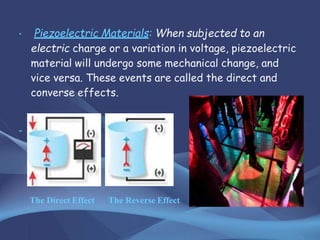


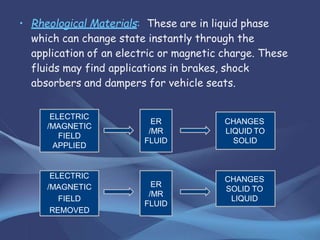






This document provides an introduction to smart materials, which are materials that can respond and adapt to environmental stimuli such as temperature, pressure, or electric/magnetic fields. It discusses the properties and classification of smart materials, including piezoelectric, electrostrictive, magnetostrictive, rheological, thermoresponsive, and electrochromic materials. Examples applications described include aircraft, orthopedic surgery, robotics, sporting goods, and smart glass. The document concludes that understanding and controlling the composition and microstructure of smart materials is crucial to producing materials that can enhance quality of life.


