Downloaded 98 times
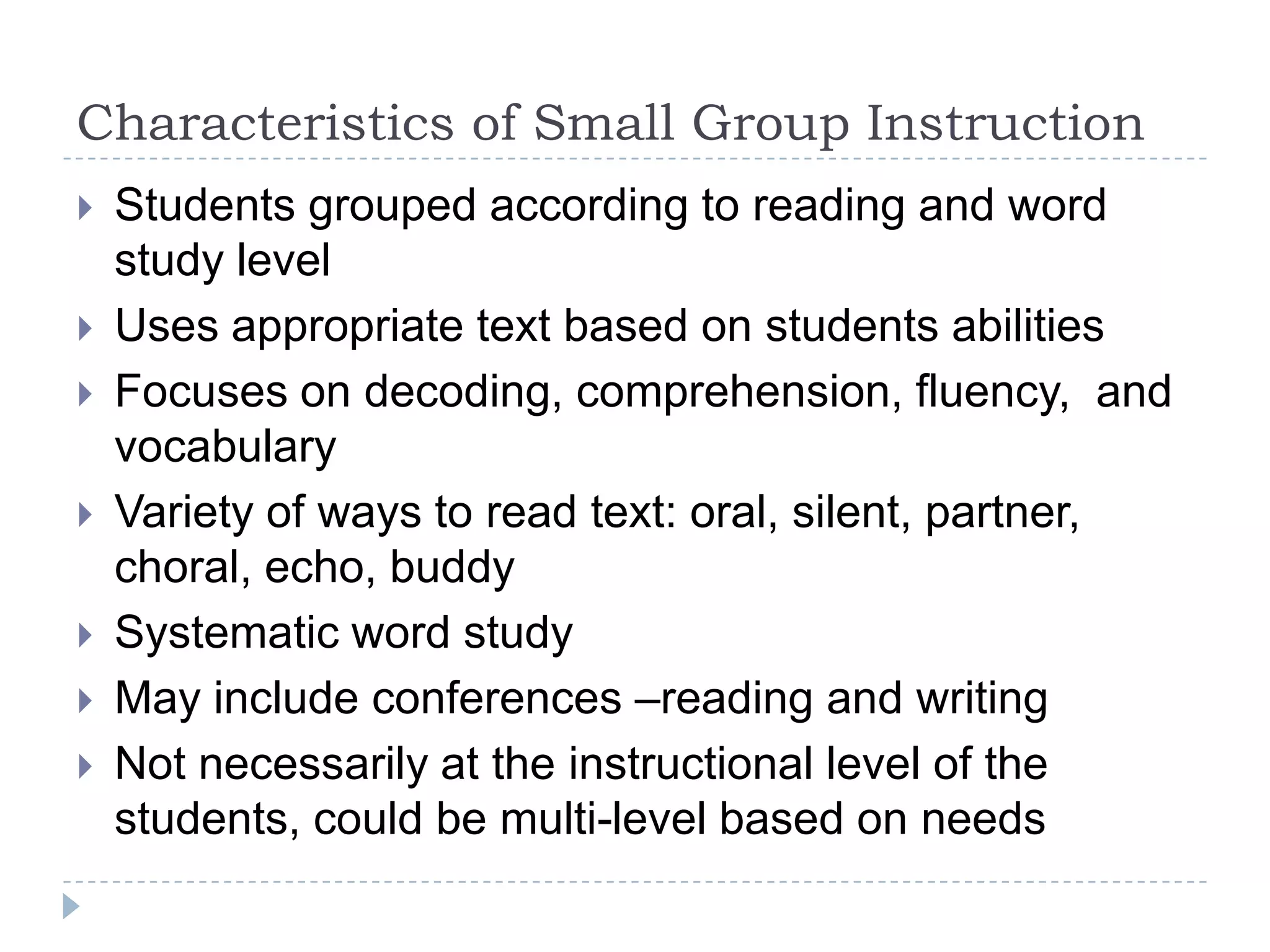
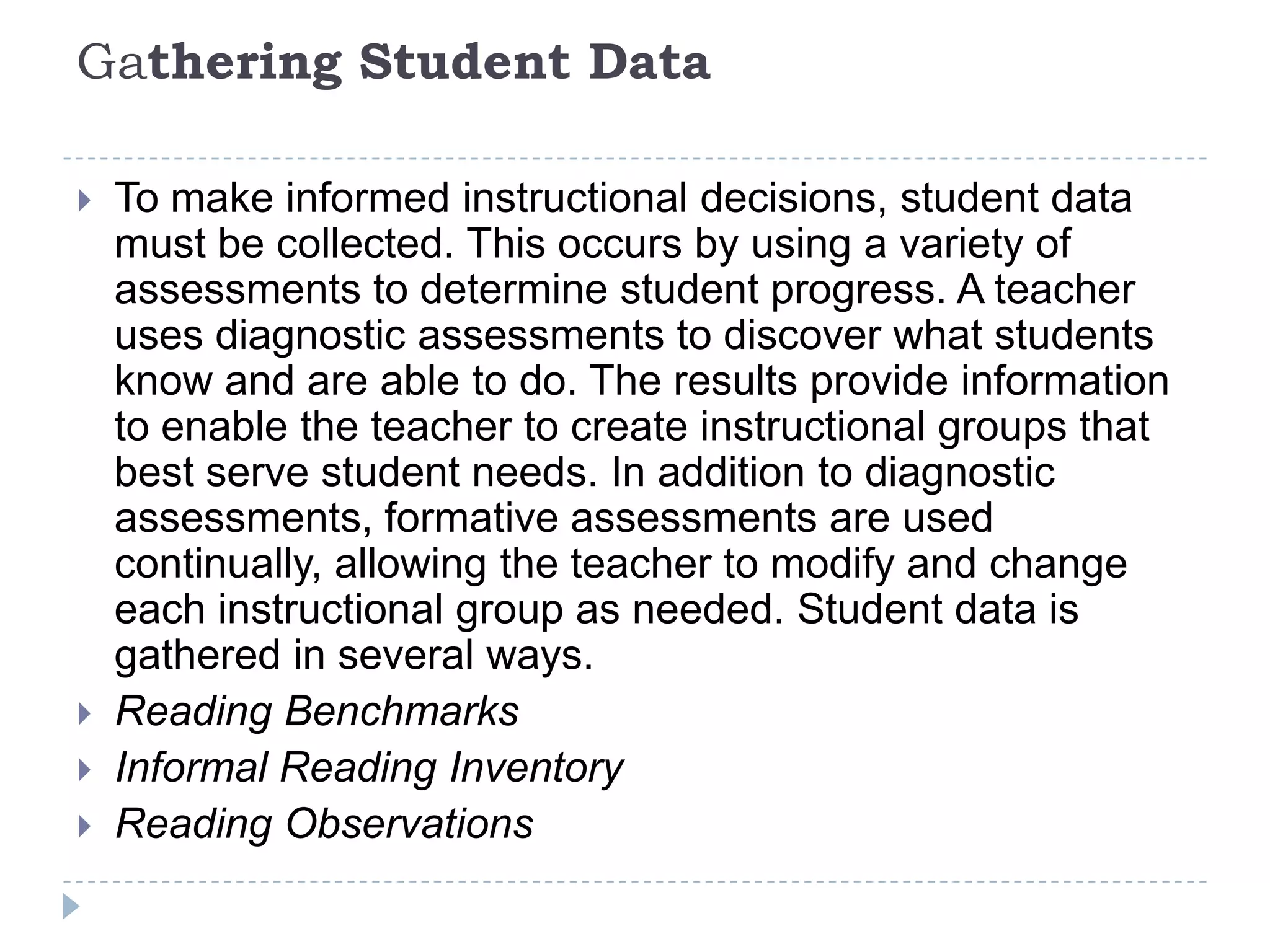
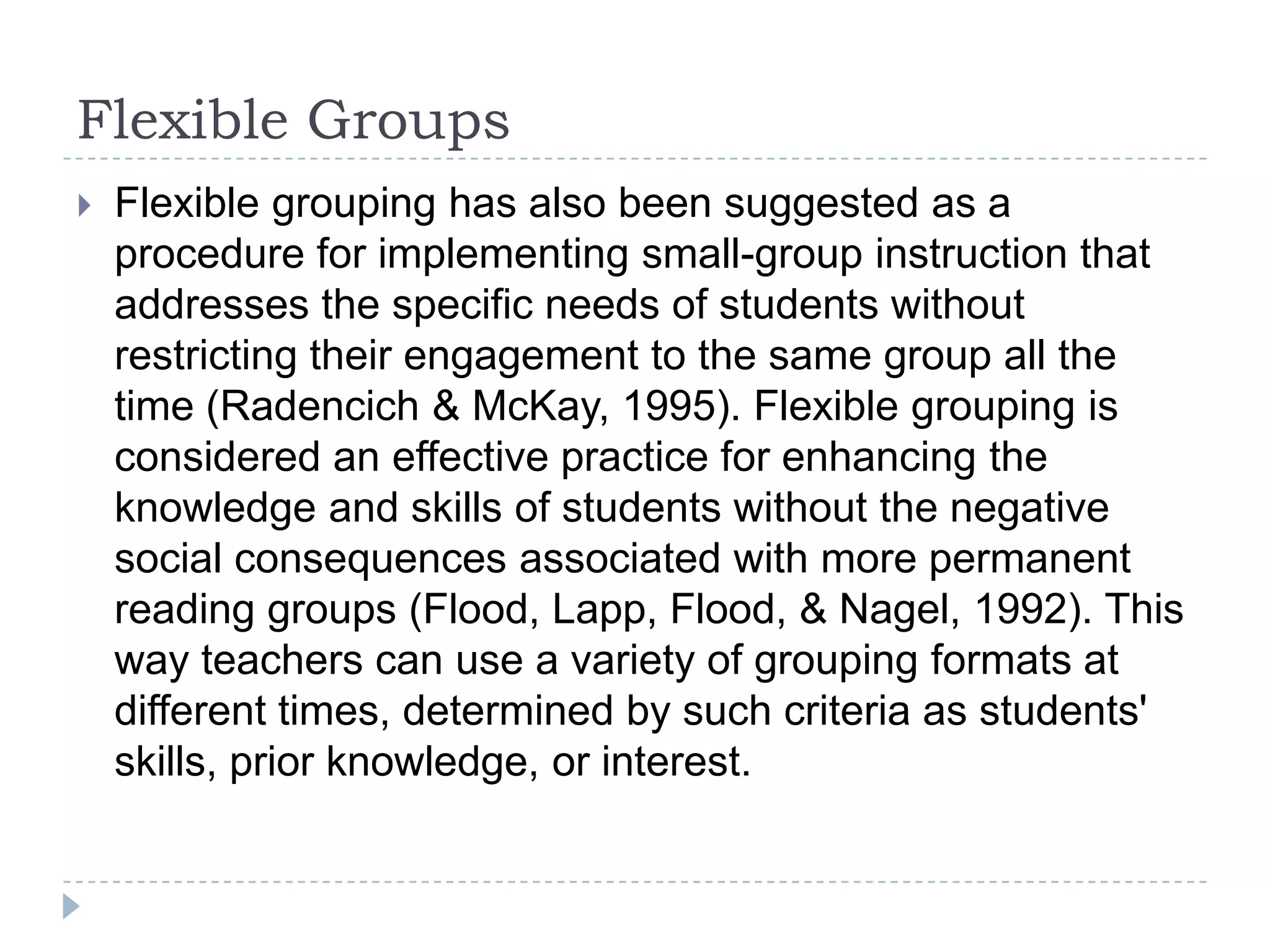
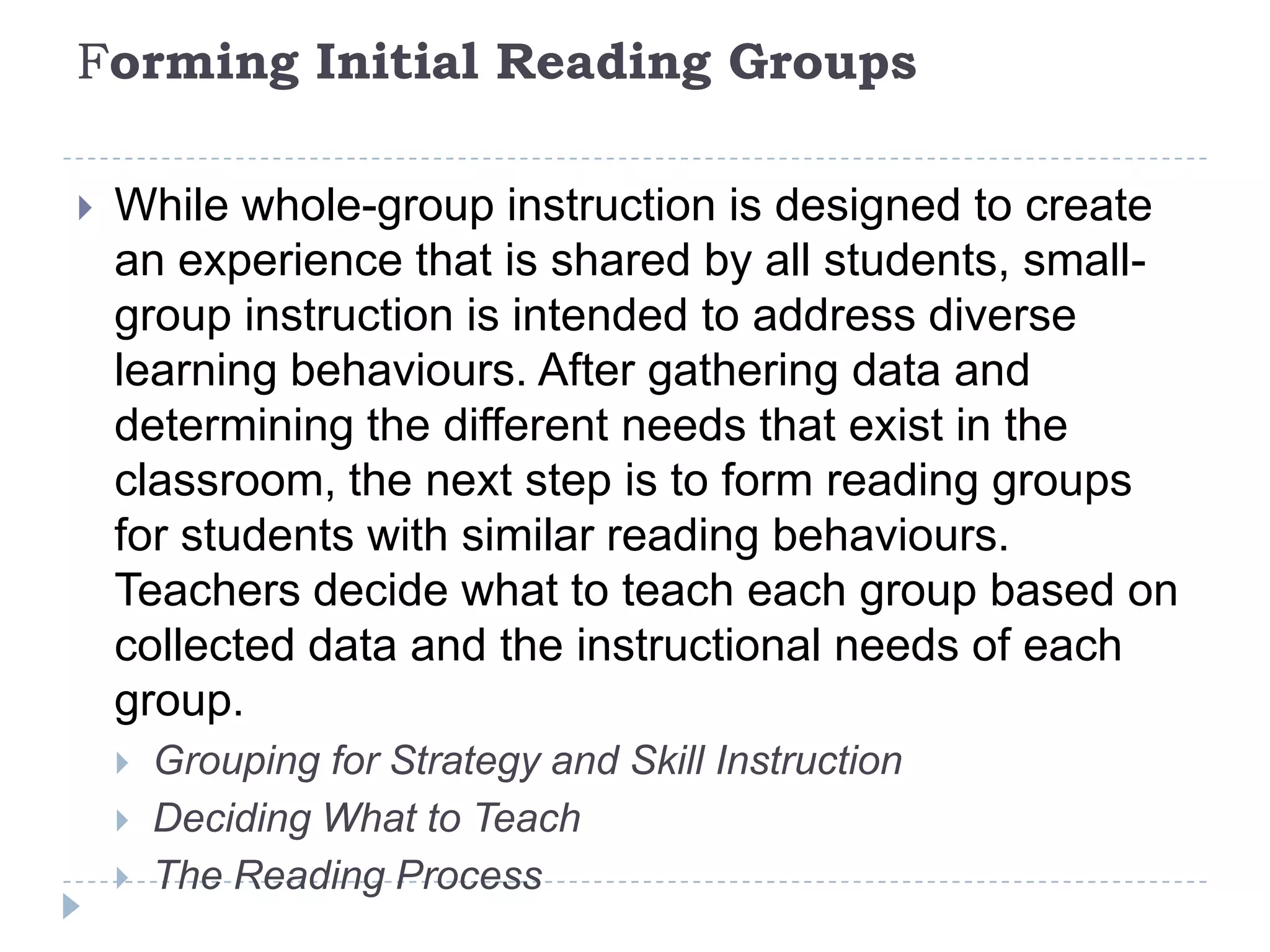
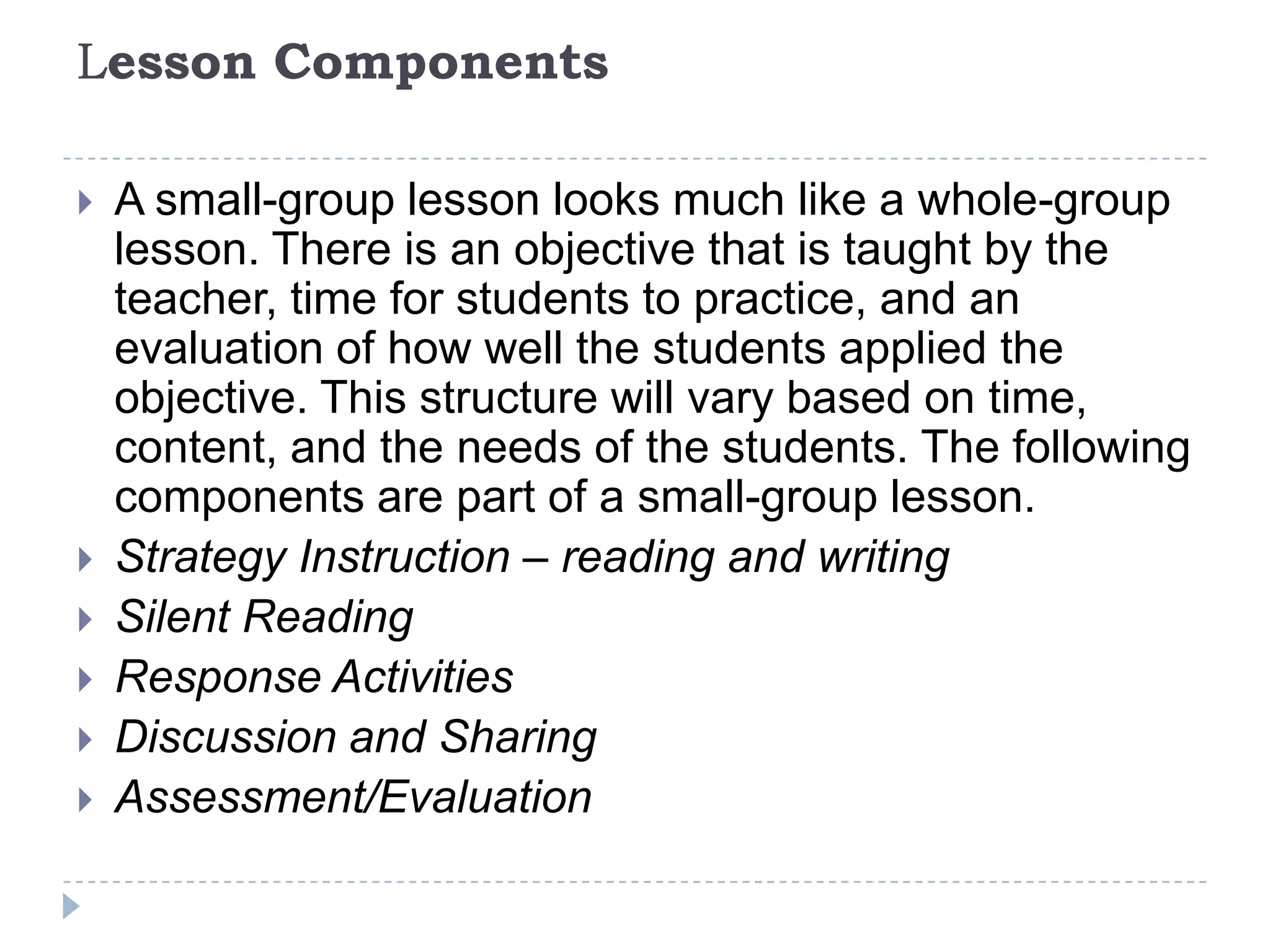
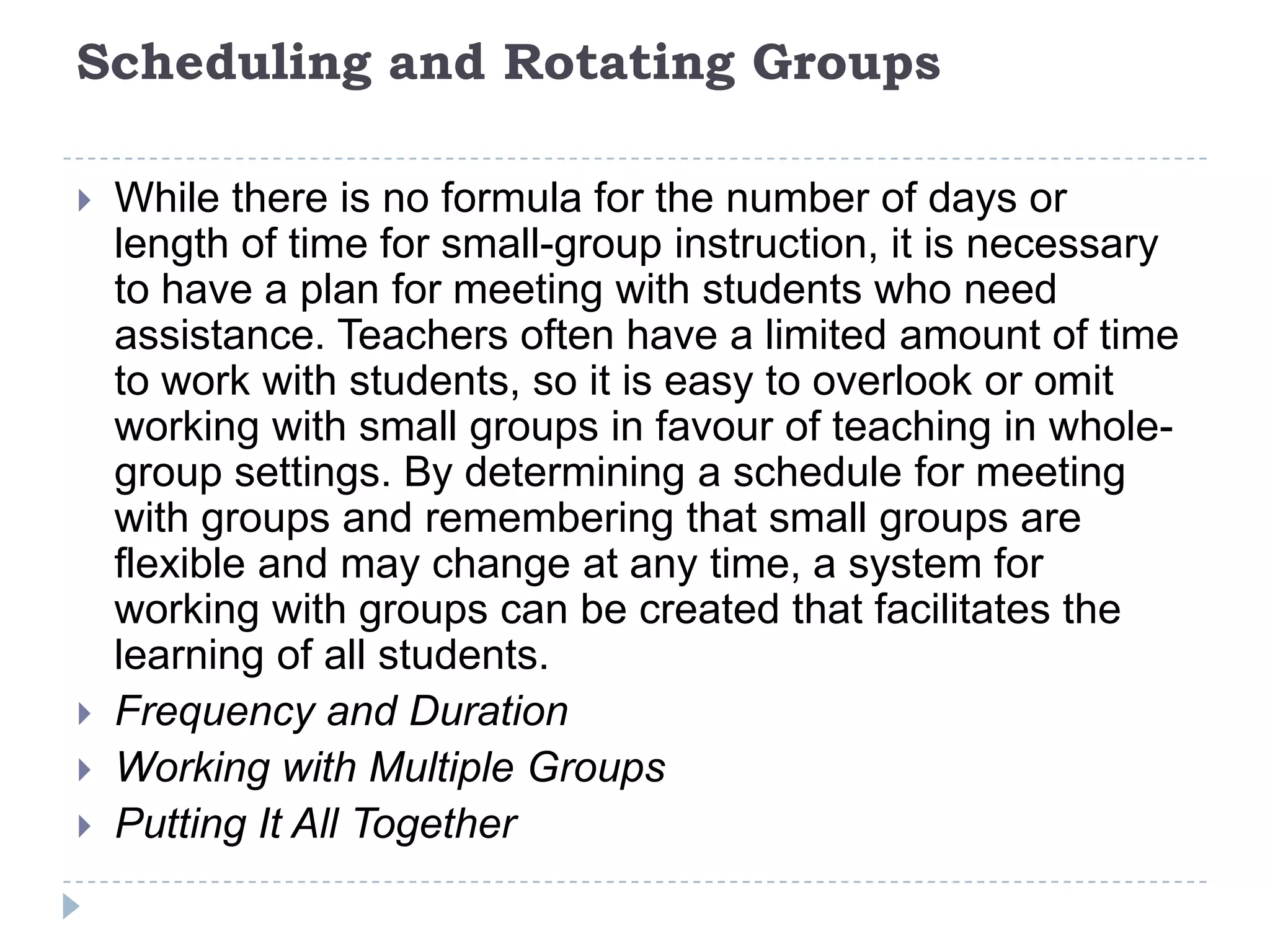


Small group instruction has several benefits according to research. It allows teachers to better meet the individual needs of students and provides more opportunities for feedback and scaffolding of lessons. Effective small group instruction involves flexibly grouping students based on formative assessment data into homogeneous groups focused on specific skills. Lessons incorporate direct instruction, practice, and assessment of reading strategies and processes. Scheduling regular meetings with rotating groups is important for addressing diverse student needs through small group instruction.


![Edu 5701 7 Dunn & Dunn Learning Styles Model[1]](https://cdn.slidesharecdn.com/ss_thumbnails/edu-5701-7-dunn-dunn-learning-styles-model1-1224259891896036-9-thumbnail.jpg?width=640&height=640&fit=bounds)


