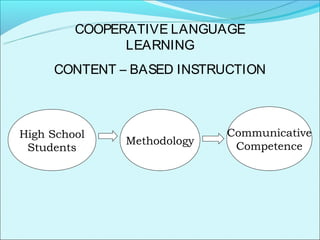
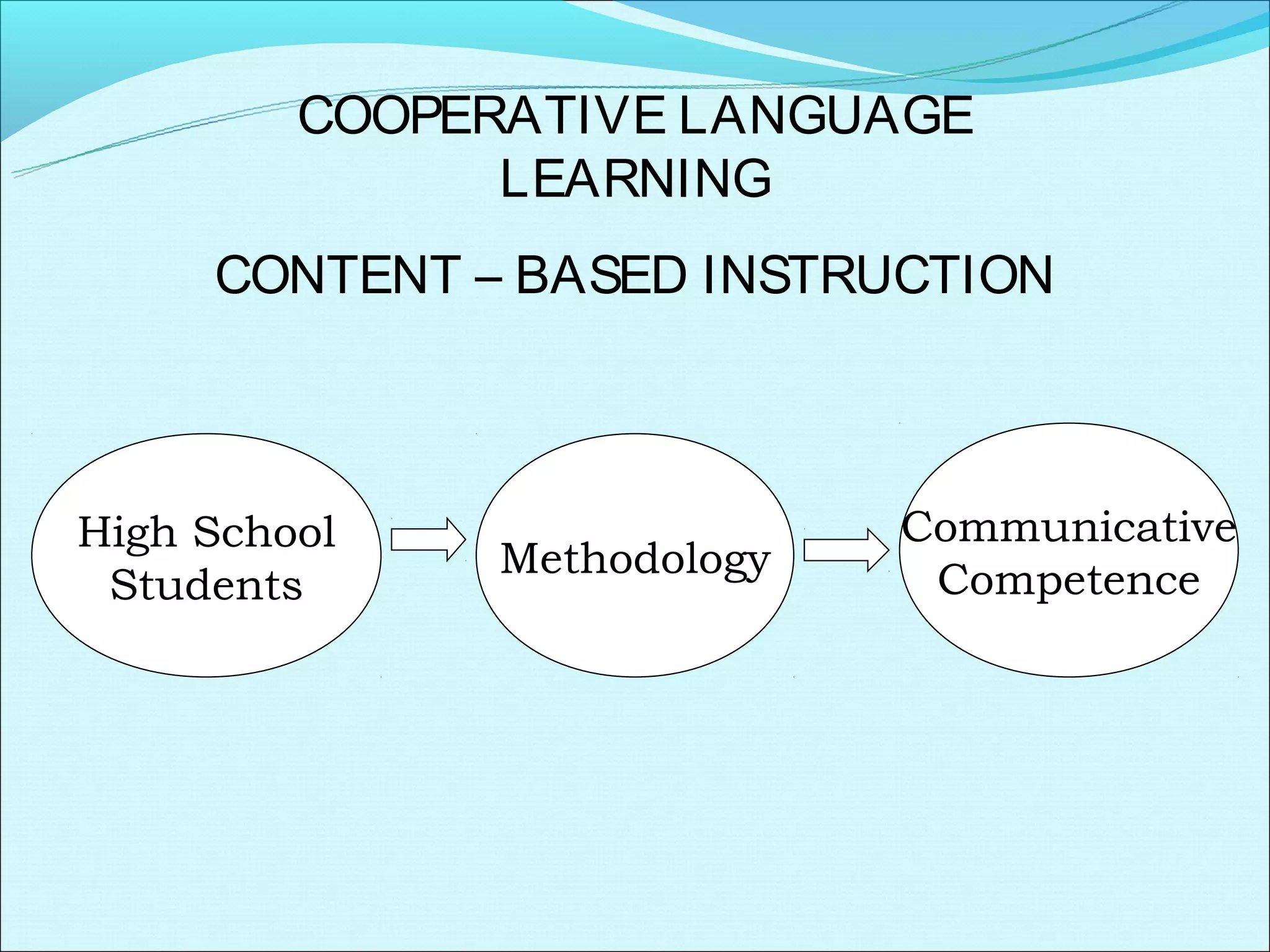
COOPERATIVE LANGUAGE
               LEARNING
     CONTENT – BASED INSTRUCTION


High School                 Communicative
              Methodology    Competence
 Students
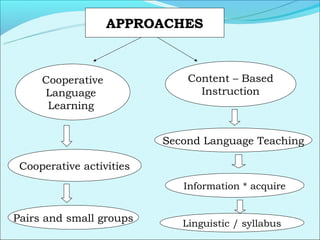
APPROACHES


     Cooperative              Content – Based
     Language                   Instruction
      Learning


                          Second Language Teaching

 Cooperative activities
                             Information * acquire


Pairs and small groups       Linguistic / syllabus
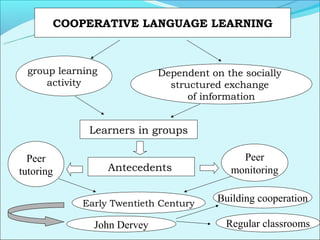
COOPERATIVE LANGUAGE LEARNING


 group learning             Dependent on the socially
     activity                 structured exchange
                                  of information


             Learners in groups

  Peer                                      Peer
tutoring          Antecedents             monitoring


            Early Twentieth Century
                                        Building cooperation

              John Dervey                Regular classrooms
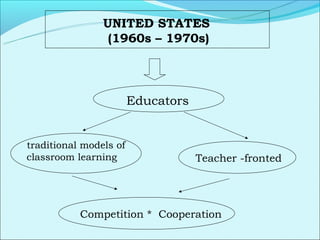
UNITED STATES
                 (1960s – 1970s)


                        Educators


traditional models of
classroom learning                  Teacher -fronted


           Competition * Cooperation
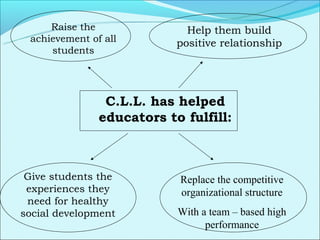
Raise the               Help them build
 achievement of all        positive relationship
     students


                C.L.L. has helped
               educators to fulfill:


 Give students the         Replace the competitive
 experiences they          organizational structure
 need for healthy
social development         With a team – based high
                                 performance
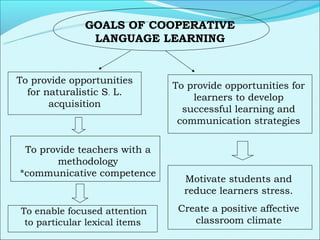
GOALS OF COOPERATIVE
               LANGUAGE LEARNING


To provide opportunities
                               To provide opportunities for
  for naturalistic S. L.
                                   learners to develop
       acquisition
                                 successful learning and
                                communication strategies

 To provide teachers with a
       methodology
*communicative competence
                                 Motivate students and
                                 reduce learners stress.

To enable focused attention     Create a positive affective
 to particular lexical items       classroom climate
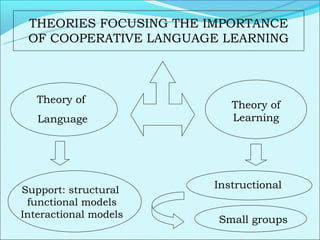
THEORIES FOCUSING THE IMPORTANCE
 OF COOPERATIVE LANGUAGE LEARNING


   Theory of              Theory of
   Language               Learning


Support: structural    Instructional
 functional models
Interactional models
                        Small groups
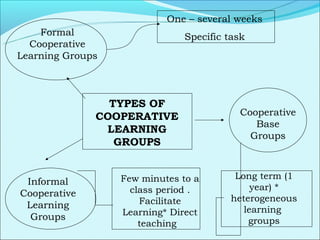
One – several weeks
    Formal                    Specific task
  Cooperative
Learning Groups


                TYPES OF
              COOPERATIVE                Cooperative
                                            Base
               LEARNING
                                           Groups
                 GROUPS


                  Few minutes to a      Long term (1
 Informal
                    class period .          year) *
Cooperative
                      Facilitate       heterogeneous
 Learning                                 learning
                  Learning* Direct
  Groups                                   groups
                      teaching
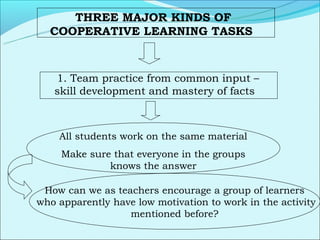
THREE MAJOR KINDS OF
  COOPERATIVE LEARNING TASKS


   1. Team practice from common input –
   skill development and mastery of facts


    All students work on the same material
     Make sure that everyone in the groups
              knows the answer

 How can we as teachers encourage a group of learners
who apparently have low motivation to work in the activity
                  mentioned before?
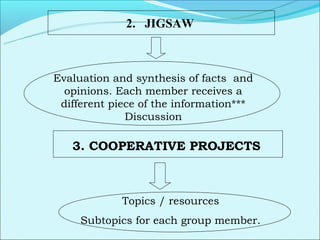
2. JIGSAW


Evaluation and synthesis of facts and
  opinions. Each member receives a
 different piece of the information***
              Discussion

   3. COOPERATIVE PROJECTS


             Topics / resources
     Subtopics for each group member.
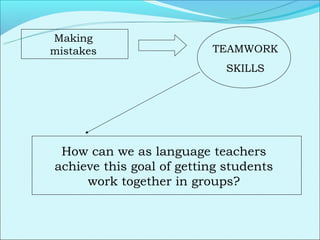
Making
mistakes                  TEAMWORK
                             SKILLS


 How can we as language teachers
achieve this goal of getting students
     work together in groups?
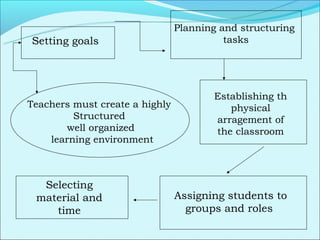
Planning and structuring
Setting goals                             tasks


                                        Establishing th
Teachers must create a highly              physical
         Structured                     arragement of
        well organized                  the classroom
    learning environment


  Selecting
 material and                   Assigning students to
    time                          groups and roles
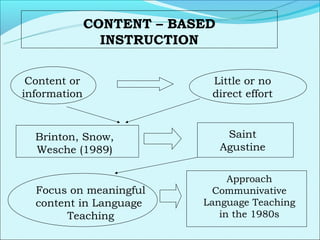
CONTENT – BASED
                INSTRUCTION


 Content or                 Little or no
information                 direct effort


  Brinton, Snow,                 Saint
  Wesche (1989)                 Agustine

                                Approach
  Focus on meaningful        Communivative
  content in Language      Language Teaching
       Teaching               in the 1980s
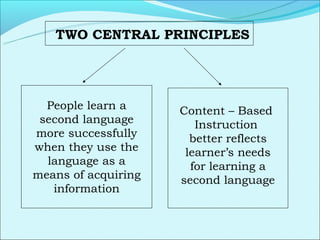
TWO CENTRAL PRINCIPLES


  People learn a     Content – Based
 second language        Instruction
more successfully      better reflects
when they use the     learner’s needs
  language as a        for learning a
means of acquiring   second language
   information
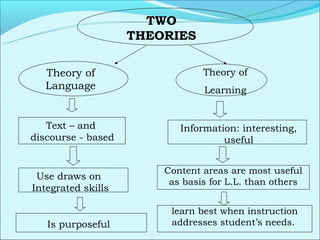
TWO
                    THEORIES

   Theory of                    Theory of
   Language                     Learning


   Text – and              Information: interesting,
discourse - based                   useful


                        Content areas are most useful
 Use draws on
                         as basis for L.L. than others
Integrated skills

                         learn best when instruction
   Is purposeful         addresses student’s needs.
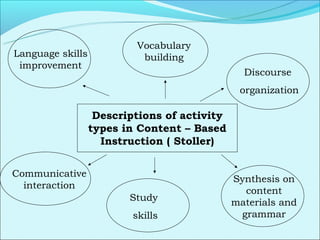
Vocabulary
Language skills             building
 improvement
                                                Discourse
                                               organization

                   Descriptions of activity
                  types in Content – Based
                    Instruction ( Stoller)


Communicative
                                              Synthesis on
  interaction
                                                content
                         Study                materials and
                          skills               grammar
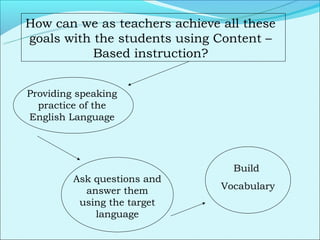
How can we as teachers achieve all these
goals with the students using Content –
           Based instruction?


Providing speaking
  practice of the
English Language


                                 Build
         Ask questions and
           answer them         Vocabulary
          using the target
             language
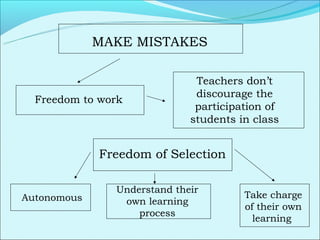
MAKE MISTAKES

                              Teachers don’t
                              discourage the
  Freedom to work
                              participation of
                             students in class


             Freedom of Selection

               Understand their
Autonomous                             Take charge
                own learning
                                       of their own
                   process
                                         learning
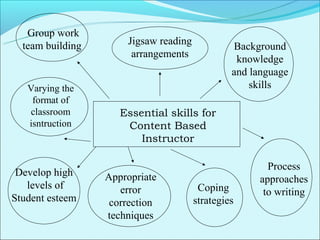
Group work
  team building       Jigsaw reading            Background
                       arrangements              knowledge
                                                and language
   Varying the                                      skills
    format of
   classroom         Essential skills for
   isntruction        Content Based
                         Instructor

                                                       Process
 Develop high     Appropriate                        approaches
   levels of         error              Coping        to writing
Student esteem     correction          strategies
                  techniques
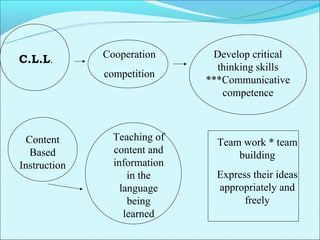
C.L.L.        Cooperation      Develop critical
                                thinking skills
              competition
                              ***Communicative
                                 competence


  Content       Teaching of     Team work * team
   Based        content and         building
Instruction     information
                    in the      Express their ideas
                  language      appropriately and
                    being             freely
                   learned

E. s. l. methods

  • 1.
    COOPERATIVE LANGUAGE LEARNING CONTENT – BASED INSTRUCTION High School Communicative Methodology Competence Students
  • 2.
    APPROACHES Cooperative Content – Based Language Instruction Learning Second Language Teaching Cooperative activities Information * acquire Pairs and small groups Linguistic / syllabus
  • 3.
    COOPERATIVE LANGUAGE LEARNING group learning Dependent on the socially activity structured exchange of information Learners in groups Peer Peer tutoring Antecedents monitoring Early Twentieth Century Building cooperation John Dervey Regular classrooms
  • 4.
    UNITED STATES (1960s – 1970s) Educators traditional models of classroom learning Teacher -fronted Competition * Cooperation
  • 5.
    Raise the Help them build achievement of all positive relationship students C.L.L. has helped educators to fulfill: Give students the Replace the competitive experiences they organizational structure need for healthy social development With a team – based high performance
  • 6.
    GOALS OF COOPERATIVE LANGUAGE LEARNING To provide opportunities To provide opportunities for for naturalistic S. L. learners to develop acquisition successful learning and communication strategies To provide teachers with a methodology *communicative competence Motivate students and reduce learners stress. To enable focused attention Create a positive affective to particular lexical items classroom climate
  • 7.
    THEORIES FOCUSING THEIMPORTANCE OF COOPERATIVE LANGUAGE LEARNING Theory of Theory of Language Learning Support: structural Instructional functional models Interactional models Small groups
  • 8.
    One – severalweeks Formal Specific task Cooperative Learning Groups TYPES OF COOPERATIVE Cooperative Base LEARNING Groups GROUPS Few minutes to a Long term (1 Informal class period . year) * Cooperative Facilitate heterogeneous Learning learning Learning* Direct Groups groups teaching
  • 9.
    THREE MAJOR KINDSOF COOPERATIVE LEARNING TASKS 1. Team practice from common input – skill development and mastery of facts All students work on the same material Make sure that everyone in the groups knows the answer How can we as teachers encourage a group of learners who apparently have low motivation to work in the activity mentioned before?
  • 10.
    2. JIGSAW Evaluation andsynthesis of facts and opinions. Each member receives a different piece of the information*** Discussion 3. COOPERATIVE PROJECTS Topics / resources Subtopics for each group member.
  • 11.
    Making mistakes TEAMWORK SKILLS How can we as language teachers achieve this goal of getting students work together in groups?
  • 12.
    Planning and structuring Settinggoals tasks Establishing th Teachers must create a highly physical Structured arragement of well organized the classroom learning environment Selecting material and Assigning students to time groups and roles
  • 13.
    CONTENT – BASED INSTRUCTION Content or Little or no information direct effort Brinton, Snow, Saint Wesche (1989) Agustine Approach Focus on meaningful Communivative content in Language Language Teaching Teaching in the 1980s
  • 14.
    TWO CENTRAL PRINCIPLES People learn a Content – Based second language Instruction more successfully better reflects when they use the learner’s needs language as a for learning a means of acquiring second language information
  • 15.
    TWO THEORIES Theory of Theory of Language Learning Text – and Information: interesting, discourse - based useful Content areas are most useful Use draws on as basis for L.L. than others Integrated skills learn best when instruction Is purposeful addresses student’s needs.
  • 16.
    Vocabulary Language skills building improvement Discourse organization Descriptions of activity types in Content – Based Instruction ( Stoller) Communicative Synthesis on interaction content Study materials and skills grammar
  • 17.
    How can weas teachers achieve all these goals with the students using Content – Based instruction? Providing speaking practice of the English Language Build Ask questions and answer them Vocabulary using the target language
  • 18.
    MAKE MISTAKES Teachers don’t discourage the Freedom to work participation of students in class Freedom of Selection Understand their Autonomous Take charge own learning of their own process learning
  • 19.
    Group work team building Jigsaw reading Background arrangements knowledge and language Varying the skills format of classroom Essential skills for isntruction Content Based Instructor Process Develop high Appropriate approaches levels of error Coping to writing Student esteem correction strategies techniques
  • 20.
    C.L.L. Cooperation Develop critical thinking skills competition ***Communicative competence Content Teaching of Team work * team Based content and building Instruction information in the Express their ideas language appropriately and being freely learned