
Shoe Technology
Presented By
Kanhaya lal kumawat
19TXT205
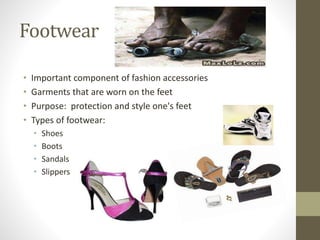
Footwear
• Important component of fashion accessories
• Garments that are worn on the feet
• Purpose: protection and style one's feet
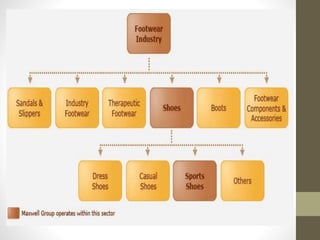
• Types of footwear:
• Shoes
• Boots
• Sandals
• Slippers
Shoes
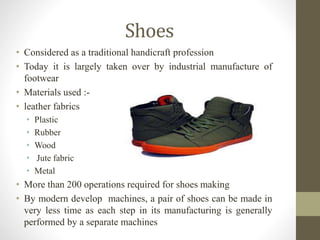
• Considered as a traditional handicraft profession
• Today it is largely taken over by industrial manufacture of
footwear
• Materials used :-
• leather fabrics
• Plastic
• Rubber
• Wood
• Jute fabric
• Metal
• More than 200 operations required for shoes making
• By modern develop machines, a pair of shoes can be made in
very less time as each step in its manufacturing is generally
performed by a separate machines
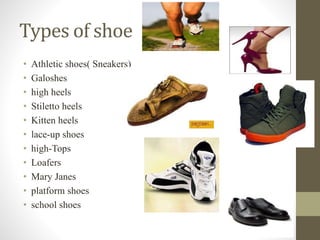
Types of shoe
• Athletic shoes( Sneakers)
• Galoshes
• high heels
• Stiletto heels
• Kitten heels
• lace-up shoes
• high-Tops
• Loafers
• Mary Janes
• platform shoes
• school shoes
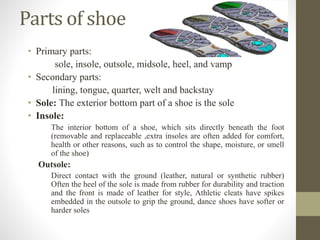
Parts of shoe
• Primary parts:
sole, insole, outsole, midsole, heel, and vamp
• Secondary parts:
lining, tongue, quarter, welt and backstay
• Sole: The exterior bottom part of a shoe is the sole
• Insole:
The interior bottom of a shoe, which sits directly beneath the foot
(removable and replaceable ,extra insoles are often added for comfort,
health or other reasons, such as to control the shape, moisture, or smell
of the shoe)
Outsole:
Direct contact with the ground (leather, natural or synthetic rubber)
Often the heel of the sole is made from rubber for durability and traction
and the front is made of leather for style, Athletic cleats have spikes
embedded in the outsole to grip the ground, dance shoes have softer or
harder soles
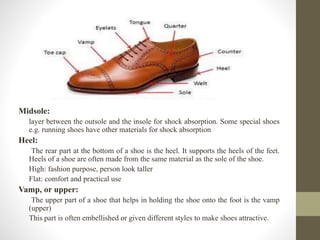
Midsole:
layer between the outsole and the insole for shock absorption. Some special shoes
e.g. running shoes have other materials for shock absorption
Heel:
The rear part at the bottom of a shoe is the heel. It supports the heels of the feet.
Heels of a shoe are often made from the same material as the sole of the shoe.
High: fashion purpose, person look taller
Flat: comfort and practical use
Vamp, or upper:
The upper part of a shoe that helps in holding the shoe onto the foot is the vamp
(upper)
This part is often embellished or given different styles to make shoes attractive.
Shoe making Process
Clicking or Cutting Department
Closing or Machining Department
Lasting & Making Department
Finishing Department
The Shoe Room
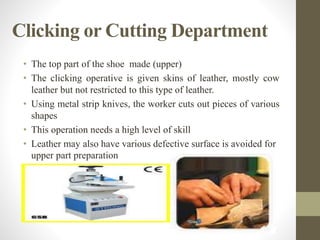
Clicking or Cutting Department
• The top part of the shoe made (upper)
• The clicking operative is given skins of leather, mostly cow
leather but not restricted to this type of leather.
• Using metal strip knives, the worker cuts out pieces of various
shapes
• This operation needs a high level of skill
• Leather may also have various defective surface is avoided for
upper part preparation
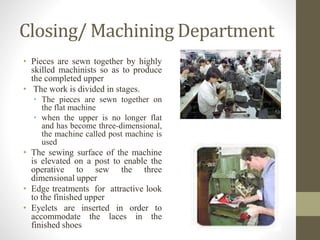
Closing/ Machining Department
• Pieces are sewn together by highly
skilled machinists so as to produce
the completed upper
• The work is divided in stages.
• The pieces are sewn together on
the flat machine
• when the upper is no longer flat
and has become three-dimensional,
the machine called post machine is
used
• The sewing surface of the machine
is elevated on a post to enable the
operative to sew the three
dimensional upper
• Edge treatments for attractive look
to the finished upper
• Eyelets are inserted in order to
accommodate the laces in the
finished shoes
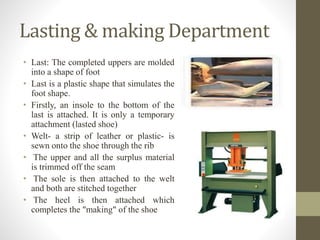
Lasting & making Department
• Last: The completed uppers are molded
into a shape of foot
• Last is a plastic shape that simulates the
foot shape.
• Firstly, an insole to the bottom of the
last is attached. It is only a temporary
attachment (lasted shoe)
• Welt- a strip of leather or plastic- is
sewn onto the shoe through the rib
• The upper and all the surplus material
is trimmed off the seam
• The sole is then attached to the welt
and both are stitched together
• The heel is then attached which
completes the "making" of the shoe
• Flat shoe making fewer operations required
• The insoles in this case is flat and when the uppers are
'lasted', they are glued down to the surface of the inner
side of the insole.
• The part of the upper, that is glued down, is then roughed
with a wire brush to take off the smooth finish of the
leather (This is because for stronger bond)
• The soles are usually cut, finished and prepared as a
separate component
• Soles can also be pre-molded as a separate component out
of various synthetic materials and again glued to the lasted
upper to complete the shoe.
Finishing Department & shoe
Room
• The finishing of a shoe depends on the material used for making
• If leather then the sole edge and heel are trimmed and buffed to give a
smooth finish.
• To give them an attractive finish and to ensure that the edge is waterproof,
they are stained, polished and waxed.
• The bottom of the sole is often lightly buffed, stained and polished and
different types of patterns are marked on the surface to give it a craft
finished look
• A "finished shoe" has now been made.
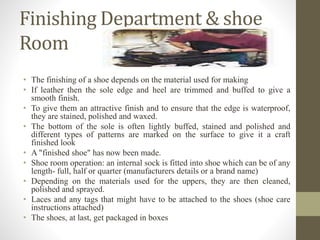
• Shoe room operation: an internal sock is fitted into shoe which can be of any
length- full, half or quarter (manufacturers details or a brand name)
• Depending on the materials used for the uppers, they are then cleaned,
polished and sprayed.
• Laces and any tags that might have to be attached to the shoes (shoe care
instructions attached)
• The shoes, at last, get packaged in boxes
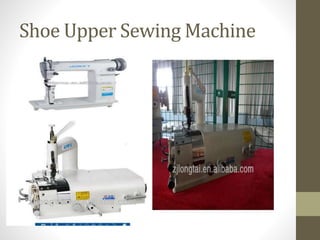
Shoe Upper Sewing Machine
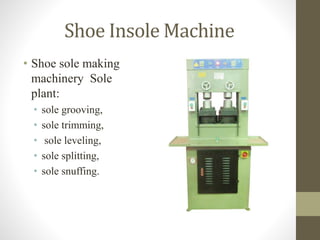
Shoe Insole Machine
• Shoe sole making
machinery Sole
plant:
• sole grooving,
• sole trimming,
• sole leveling,
• sole splitting,
• sole snuffing.
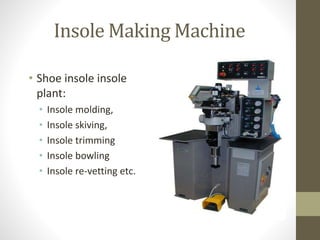
Insole Making Machine
• Shoe insole insole
plant:
• Insole molding,
• Insole skiving,
• Insole trimming
• Insole bowling
• Insole re-vetting etc.
Thank You….

Shoe Technology

  • 1.
  • 2.
    Footwear • Important componentof fashion accessories • Garments that are worn on the feet • Purpose: protection and style one's feet • Types of footwear: • Shoes • Boots • Sandals • Slippers
  • 4.
    Shoes • Considered asa traditional handicraft profession • Today it is largely taken over by industrial manufacture of footwear • Materials used :- • leather fabrics • Plastic • Rubber • Wood • Jute fabric • Metal • More than 200 operations required for shoes making • By modern develop machines, a pair of shoes can be made in very less time as each step in its manufacturing is generally performed by a separate machines
  • 5.
    Types of shoe •Athletic shoes( Sneakers) • Galoshes • high heels • Stiletto heels • Kitten heels • lace-up shoes • high-Tops • Loafers • Mary Janes • platform shoes • school shoes
  • 6.
    Parts of shoe •Primary parts: sole, insole, outsole, midsole, heel, and vamp • Secondary parts: lining, tongue, quarter, welt and backstay • Sole: The exterior bottom part of a shoe is the sole • Insole: The interior bottom of a shoe, which sits directly beneath the foot (removable and replaceable ,extra insoles are often added for comfort, health or other reasons, such as to control the shape, moisture, or smell of the shoe) Outsole: Direct contact with the ground (leather, natural or synthetic rubber) Often the heel of the sole is made from rubber for durability and traction and the front is made of leather for style, Athletic cleats have spikes embedded in the outsole to grip the ground, dance shoes have softer or harder soles
  • 7.
    Midsole: layer between theoutsole and the insole for shock absorption. Some special shoes e.g. running shoes have other materials for shock absorption Heel: The rear part at the bottom of a shoe is the heel. It supports the heels of the feet. Heels of a shoe are often made from the same material as the sole of the shoe. High: fashion purpose, person look taller Flat: comfort and practical use Vamp, or upper: The upper part of a shoe that helps in holding the shoe onto the foot is the vamp (upper) This part is often embellished or given different styles to make shoes attractive.
  • 8.
    Shoe making Process Clickingor Cutting Department Closing or Machining Department Lasting & Making Department Finishing Department The Shoe Room
  • 9.
    Clicking or CuttingDepartment • The top part of the shoe made (upper) • The clicking operative is given skins of leather, mostly cow leather but not restricted to this type of leather. • Using metal strip knives, the worker cuts out pieces of various shapes • This operation needs a high level of skill • Leather may also have various defective surface is avoided for upper part preparation
  • 10.
    Closing/ Machining Department •Pieces are sewn together by highly skilled machinists so as to produce the completed upper • The work is divided in stages. • The pieces are sewn together on the flat machine • when the upper is no longer flat and has become three-dimensional, the machine called post machine is used • The sewing surface of the machine is elevated on a post to enable the operative to sew the three dimensional upper • Edge treatments for attractive look to the finished upper • Eyelets are inserted in order to accommodate the laces in the finished shoes
  • 11.
    Lasting & makingDepartment • Last: The completed uppers are molded into a shape of foot • Last is a plastic shape that simulates the foot shape. • Firstly, an insole to the bottom of the last is attached. It is only a temporary attachment (lasted shoe) • Welt- a strip of leather or plastic- is sewn onto the shoe through the rib • The upper and all the surplus material is trimmed off the seam • The sole is then attached to the welt and both are stitched together • The heel is then attached which completes the "making" of the shoe
  • 12.
    • Flat shoemaking fewer operations required • The insoles in this case is flat and when the uppers are 'lasted', they are glued down to the surface of the inner side of the insole. • The part of the upper, that is glued down, is then roughed with a wire brush to take off the smooth finish of the leather (This is because for stronger bond) • The soles are usually cut, finished and prepared as a separate component • Soles can also be pre-molded as a separate component out of various synthetic materials and again glued to the lasted upper to complete the shoe.
  • 13.
    Finishing Department &shoe Room • The finishing of a shoe depends on the material used for making • If leather then the sole edge and heel are trimmed and buffed to give a smooth finish. • To give them an attractive finish and to ensure that the edge is waterproof, they are stained, polished and waxed. • The bottom of the sole is often lightly buffed, stained and polished and different types of patterns are marked on the surface to give it a craft finished look • A "finished shoe" has now been made. • Shoe room operation: an internal sock is fitted into shoe which can be of any length- full, half or quarter (manufacturers details or a brand name) • Depending on the materials used for the uppers, they are then cleaned, polished and sprayed. • Laces and any tags that might have to be attached to the shoes (shoe care instructions attached) • The shoes, at last, get packaged in boxes
  • 14.
  • 15.
    Shoe Insole Machine •Shoe sole making machinery Sole plant: • sole grooving, • sole trimming, • sole leveling, • sole splitting, • sole snuffing.
  • 16.
    Insole Making Machine •Shoe insole insole plant: • Insole molding, • Insole skiving, • Insole trimming • Insole bowling • Insole re-vetting etc.
  • 17.