Presentation on
Garments Quality Control in Sewing
Submitted To
Md. Ali Azam Rokon
Lecturer
Dept. of Textile Engineering
Submitted By
NAME ID NO
Anuvab Sen 103-433-041
Mahabubullah Sabuj 121-170-041
Khan Ahosanul Hoque 121-140-041
Md. Rahat Afsary 121-257-041
Md. Rafiul Islam 121-074-041
Md. Foysal 121-160-041
Quality is defined as the level of acceptance
of a good or service. It is a very essential
requirement for any kind of product. Every
product should maintain the standard quality
level.
21st century of globalization market are
becoming more and more complex, that’s why
every industry are facing a high level of
competition for their business. So the product
must fulfill the customer requirement. For this
reason every product should maintain the
quality level.
Sewing is the craft of fasting or attaching
objects using stitches made with needle &
Objectives
 Knowing the customer need
 Designing to meet them.
 Faultless construction To
maximize the production of goods
within the specified tolerances
correctly the first time.
 Certified performance and safety.
 suitable packaging .
Satisfaction Quality can be ensured
from the customer’s point of view by
providing
Right product.
Right quality.
Right time.
Undamaged condition.
Quality level of a garment we need to
observe some specific sector
 Fault free fabric.
 Shade matching of the garments.
 Making the pattern as per buyer
requirement.
 All the different parts of the garment
should have the perfect size.
 Good stitching, seam formation should be
perfect.
 Additional accessories such as button,
zipper, tag, level is in right position.
Sewing Department Quality
Stuff
Q.C General
Manager
Q.C Manager
Q.C Officer
Q.C. In Charge
Quality Controller
Line Q.C.
Quality Control in Sewing
Section
 Input material checking
 Accessories checking
 Machine is in well condition
 Thread count check
 Needle size checking
 Stitching fault should be checked
 Garments measurement check
 Seam fault check
 Size mistake check
Some Defects occur in sewing
section and remedies
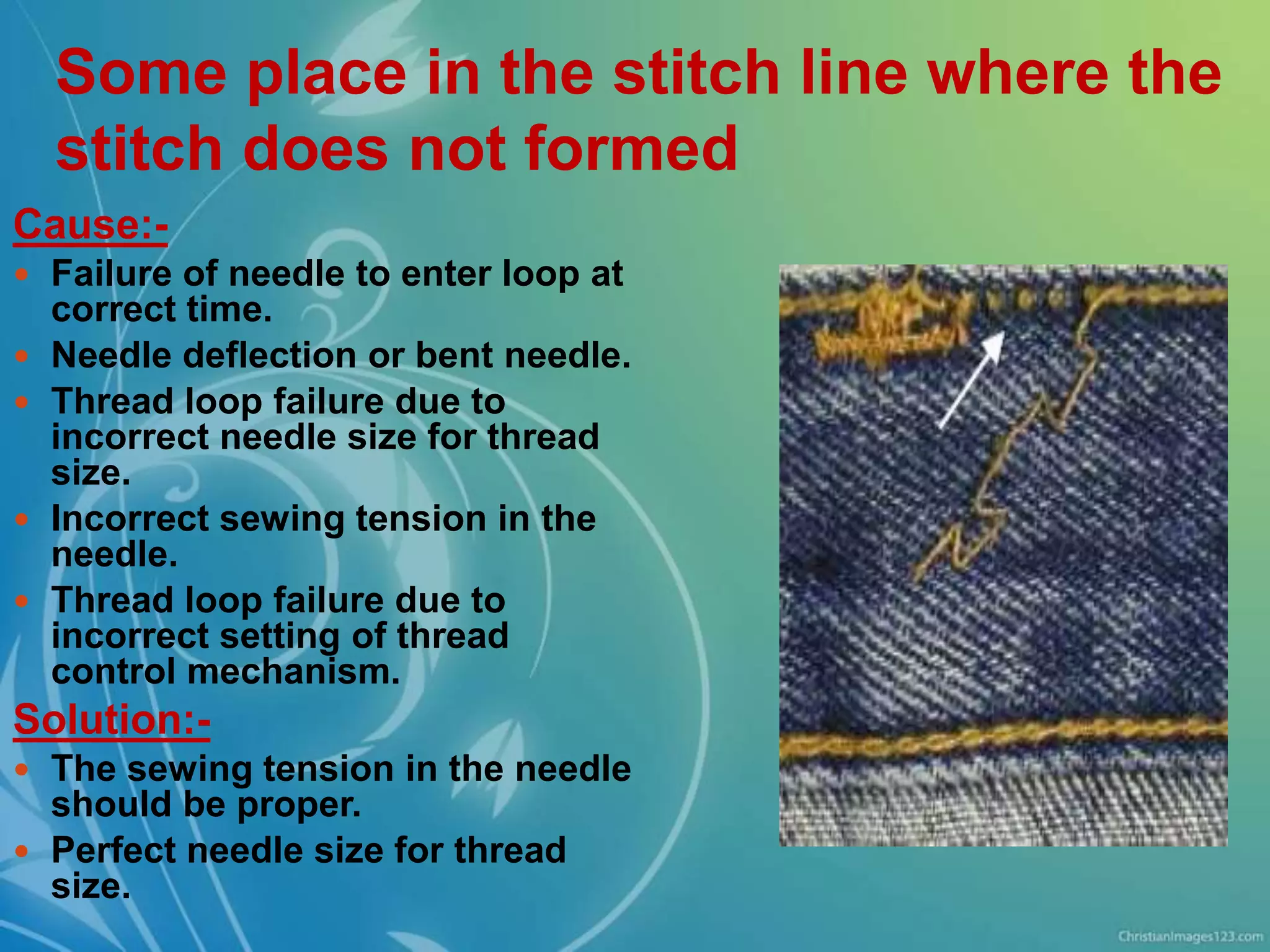
Some place in the stitch line where the
stitch does not formed
Cause:-
 Failure of needle to enter loop at
correct time.
 Needle deflection or bent needle.
 Thread loop failure due to
incorrect needle size for thread
size.
 Incorrect sewing tension in the
needle.
 Thread loop failure due to
incorrect setting of thread
control mechanism.
Solution:-
 The sewing tension in the needle
should be proper.
 Perfect needle size for thread
size.
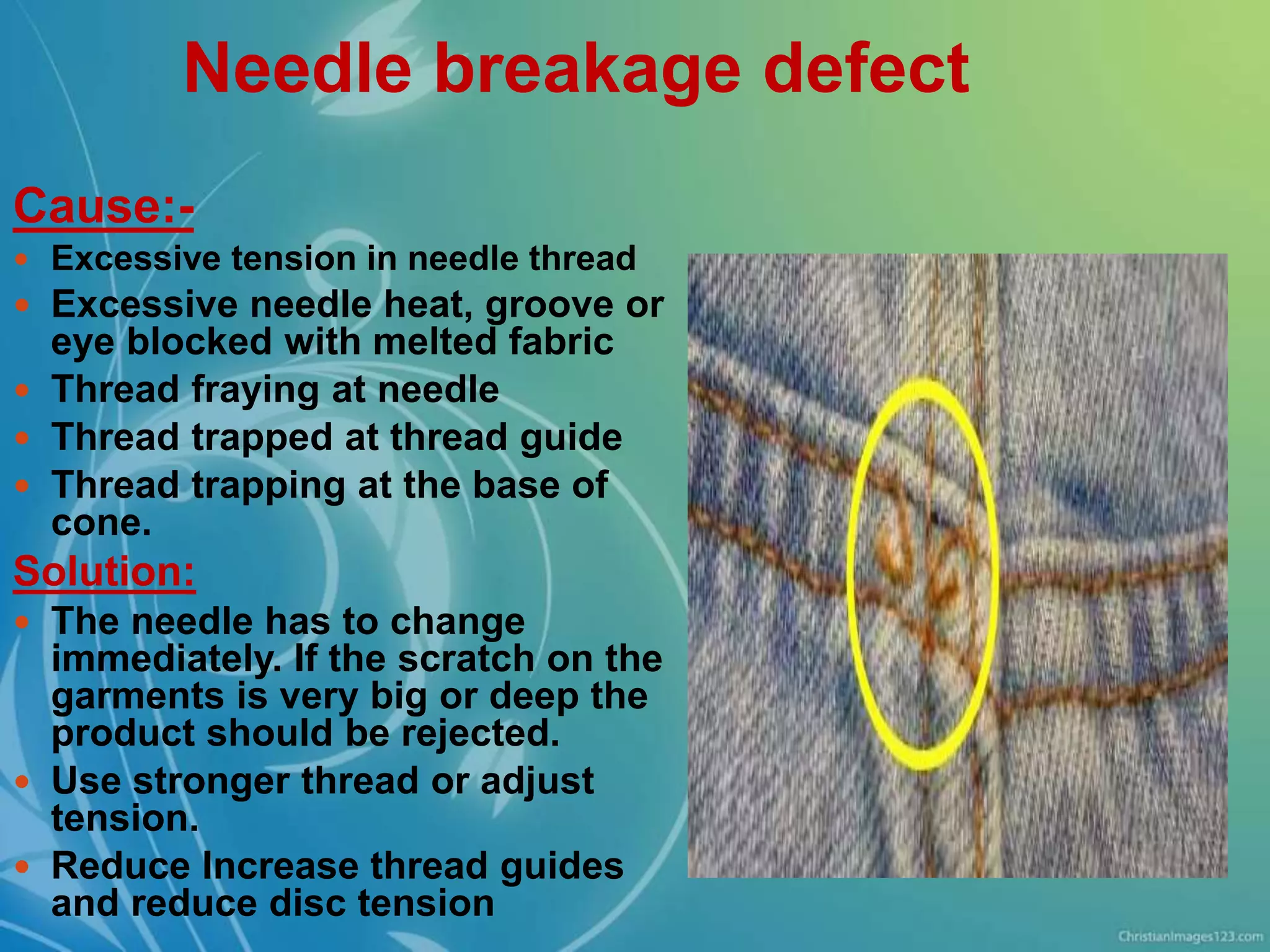
Needle breakage defect
Cause:-
 Excessive tension in needle thread
 Excessive needle heat, groove or
eye blocked with melted fabric
 Thread fraying at needle
 Thread trapped at thread guide
 Thread trapping at the base of
cone.
Solution:
 The needle has to change
immediately. If the scratch on the
garments is very big or deep the
product should be rejected.
 Use stronger thread or adjust
tension.
 Reduce Increase thread guides
and reduce disc tension
Oil mark in garments
Cause:-
• During the sewing operation
oil can accidentally slick out
from the machine and drop on
the fabric and spotted.
Solution:-
 Spot lifter chemical use to
remove the oil the mark of the
garments. At first the spot
lifting chemical spray on the
garments spot then air blown
by the machine. The spot
remove.
Seam Pucker
Cause:-
 Fabric and / or thread instability.
 Poorly controlled fabric feed.
 Extension in sewing thread.
 Incorrect tension setting.
 Structural jamming or inherent
pucker.
Solution:-
 Adjust feed timing and fabric
control for maximum pulling of the
fabric.
 Check tension level in the thread,
Sew with minimum tension
possible.
 Always adjust bobbin thread
tension first then needle thread
tension.
Shade problem
Causes:
 It is also may be a problem in
cutting section where this
parts made numbering
mistake.
For the lack of experience or
concentration of worker and
if different parts are mixed by
worker.
Solution:
 Shade problem parts are
separate and actual parts are
attached.
Kacha problem
If unexpected parts are
shown by the garments
from sewing area then this
problem is occurred.
Causes:
 For lack of experience or
concentration of worker.
Solution:
 The unexpected part is cut
out precisely.
Stitch line uneven
Cause:
 This fault is occurred by
operator.
Solution:
 The stitch has to open and
again sewing. Non
matching thread: Some
times when sewing is done,
the garments and the
sewing thread looked shade
variation.
There are certain quality related
problems in garment
 Color effects - Color defects that could occur are
difference of the color of final produced garment to the
sample shown, accessories used are of wrong color
combination and mismatching of dye amongst the
pieces.
 Sizing defects - Wrong gradation of sizes, difference in
measurement of a garment part from other, for
example- sleeves of XL size but body of L size. Such
defects do not occur has to be seen too.
 Garment defects - During manufacturing process
defects could occur like faulty zippers, irregular
hemming, loose buttons, raw edges, improper button
holes, uneven parts, inappropriate trimming, and
Non sewing defect
 Defects due to fault materials, like fabric,
buttons, zipper etc.
 Defects due to wrong pattern, wrong
marking.
 Defects due to wrong spreading ,wrong
cutting.
 Defects due to wrong bundling.
 Defects due to staining, oil marks.
 Defects due to wrong ironing, wrong folding.
 Defects due to wrong packing etc.
Stitch defect
 Skipped stitch: Missing in loop formation & speed
variation in feed dog is the main cause of these defect.
 Staggered stitch: This type of defect occurs for thin
needle if needle size and thread count are not
matched and needle displaced then this defect also
appear.
 Unbalanced stitch: This type of defect appears to un-
uniform thread tension.
 Variable stitch: If feed dog is not in right track then this
type of defect occurs.
 Open stitch: This type of defect occurs due to blunt
needle and poor strength of sewing thread.
 Needle mark: Needle is the main element of sewing
Various defects in garments
 Broken buttons
 Broken snaps
 Broken stitching
 Defective snaps
 Different shades within
the same garment
 Dropped stitches
 Exposed notches
 Exposed raw edges
 Fabric defects
 Holes
 Inoperative zipper
 Missing buttons
 Needle cuts / chews
 Open seams
 Pulled / loose yarn
 Stain
 Unfinished
buttonhole
 Zipper too short.
Broken buttons
Broken snaps
Broken stitch
Defective snaps
Dropped stitch
Holes
Missing buttons
Unfinished button hole
FIVE COMMON SEWING
MACHINE MISTAKES & HOW
TO FIX THEM
(1) The needle unthreads itself
when worker start
sewing only just threaded the
needle and as soon as they
put their foot down on the
pedal the thread decides to
come out of the needle. It is
Simple to solve though , firstly,
make sure they have a few
inches of thread pulled
through the needle and out
towards the back of the
machine before begin.
Secondly – and this is
something it took a little while
to discover when worker first
began sewing – check the
(2)The fabric is
jiggling around like
crazy Lower the
presser foot, The
presser foot holds
the fabric in place
stitch neatly, not
free style. The
stitching is really
uneven.
(3)If the stitching looks loopy
on one side and tight on the
other, first reaction might be
to blame the thread tension
setting on the machine.
Some times be right – in
which case, try adjusting the
tension dial and test sewing
on a scrap of fabric until the
stitching looks even on both
sides of the fabric. Yet often
it’s not the tension dial that
needs changing – it’s the
way threaded the bobbin,
which also affects the
tension.
(4) Stitching is crazy tight
on the top side Again, this
could need to adjust the
tension dial, but before
go doing that, just check
that spool thread isn’t
caught on the little silver
tension discs on top of
the machine.
(5) The threads are
knotting up together,
This is another really
common issue – that
threads knot up either
on the fabric, or worse,
they get jammed in the
machine and have to
yank them out or even
unscrew the needle
plate to get them out.
Before start sewing,
check that both spool
and bobbin threads are
sticking out towards the
back of the machine –
otherwise they can get
twisted up in the
Conclusion
Quality control plays an important role in
readymade garments production. Nowadays
buyer requires specific quality in all major
parts of the finished products. What special in
this report is that the information data and
description very much objective & practical.
We have tried to complete this project work as
much we can. It will help us to maintain the
quality of the garments in garments
production. Finally after completing this
assignment we will get some idea about
quality control of garments sewing which will
help us in the future as well as in rich our
knowledge.
Garments Quality Control in Sewing

Garments Quality Control in Sewing

  • 2.
  • 3.
    Submitted To Md. AliAzam Rokon Lecturer Dept. of Textile Engineering
  • 4.
    Submitted By NAME IDNO Anuvab Sen 103-433-041 Mahabubullah Sabuj 121-170-041 Khan Ahosanul Hoque 121-140-041 Md. Rahat Afsary 121-257-041 Md. Rafiul Islam 121-074-041 Md. Foysal 121-160-041
  • 5.
    Quality is definedas the level of acceptance of a good or service. It is a very essential requirement for any kind of product. Every product should maintain the standard quality level. 21st century of globalization market are becoming more and more complex, that’s why every industry are facing a high level of competition for their business. So the product must fulfill the customer requirement. For this reason every product should maintain the quality level. Sewing is the craft of fasting or attaching objects using stitches made with needle &
  • 6.
    Objectives  Knowing thecustomer need  Designing to meet them.  Faultless construction To maximize the production of goods within the specified tolerances correctly the first time.  Certified performance and safety.  suitable packaging .
  • 7.
    Satisfaction Quality canbe ensured from the customer’s point of view by providing Right product. Right quality. Right time. Undamaged condition.
  • 8.
    Quality level ofa garment we need to observe some specific sector  Fault free fabric.  Shade matching of the garments.  Making the pattern as per buyer requirement.  All the different parts of the garment should have the perfect size.  Good stitching, seam formation should be perfect.  Additional accessories such as button, zipper, tag, level is in right position.
  • 9.
    Sewing Department Quality Stuff Q.CGeneral Manager Q.C Manager Q.C Officer Q.C. In Charge Quality Controller Line Q.C.
  • 10.
    Quality Control inSewing Section  Input material checking  Accessories checking  Machine is in well condition  Thread count check  Needle size checking  Stitching fault should be checked  Garments measurement check  Seam fault check  Size mistake check
  • 11.
    Some Defects occurin sewing section and remedies
  • 12.
    Some place inthe stitch line where the stitch does not formed Cause:-  Failure of needle to enter loop at correct time.  Needle deflection or bent needle.  Thread loop failure due to incorrect needle size for thread size.  Incorrect sewing tension in the needle.  Thread loop failure due to incorrect setting of thread control mechanism. Solution:-  The sewing tension in the needle should be proper.  Perfect needle size for thread size.
  • 13.
    Needle breakage defect Cause:- Excessive tension in needle thread  Excessive needle heat, groove or eye blocked with melted fabric  Thread fraying at needle  Thread trapped at thread guide  Thread trapping at the base of cone. Solution:  The needle has to change immediately. If the scratch on the garments is very big or deep the product should be rejected.  Use stronger thread or adjust tension.  Reduce Increase thread guides and reduce disc tension
  • 14.
    Oil mark ingarments Cause:- • During the sewing operation oil can accidentally slick out from the machine and drop on the fabric and spotted. Solution:-  Spot lifter chemical use to remove the oil the mark of the garments. At first the spot lifting chemical spray on the garments spot then air blown by the machine. The spot remove.
  • 15.
    Seam Pucker Cause:-  Fabricand / or thread instability.  Poorly controlled fabric feed.  Extension in sewing thread.  Incorrect tension setting.  Structural jamming or inherent pucker. Solution:-  Adjust feed timing and fabric control for maximum pulling of the fabric.  Check tension level in the thread, Sew with minimum tension possible.  Always adjust bobbin thread tension first then needle thread tension.
  • 16.
    Shade problem Causes:  Itis also may be a problem in cutting section where this parts made numbering mistake. For the lack of experience or concentration of worker and if different parts are mixed by worker. Solution:  Shade problem parts are separate and actual parts are attached.
  • 17.
    Kacha problem If unexpectedparts are shown by the garments from sewing area then this problem is occurred. Causes:  For lack of experience or concentration of worker. Solution:  The unexpected part is cut out precisely.
  • 18.
    Stitch line uneven Cause: This fault is occurred by operator. Solution:  The stitch has to open and again sewing. Non matching thread: Some times when sewing is done, the garments and the sewing thread looked shade variation.
  • 19.
    There are certainquality related problems in garment  Color effects - Color defects that could occur are difference of the color of final produced garment to the sample shown, accessories used are of wrong color combination and mismatching of dye amongst the pieces.  Sizing defects - Wrong gradation of sizes, difference in measurement of a garment part from other, for example- sleeves of XL size but body of L size. Such defects do not occur has to be seen too.  Garment defects - During manufacturing process defects could occur like faulty zippers, irregular hemming, loose buttons, raw edges, improper button holes, uneven parts, inappropriate trimming, and
  • 20.
    Non sewing defect Defects due to fault materials, like fabric, buttons, zipper etc.  Defects due to wrong pattern, wrong marking.  Defects due to wrong spreading ,wrong cutting.  Defects due to wrong bundling.  Defects due to staining, oil marks.  Defects due to wrong ironing, wrong folding.  Defects due to wrong packing etc.
  • 21.
    Stitch defect  Skippedstitch: Missing in loop formation & speed variation in feed dog is the main cause of these defect.  Staggered stitch: This type of defect occurs for thin needle if needle size and thread count are not matched and needle displaced then this defect also appear.  Unbalanced stitch: This type of defect appears to un- uniform thread tension.  Variable stitch: If feed dog is not in right track then this type of defect occurs.  Open stitch: This type of defect occurs due to blunt needle and poor strength of sewing thread.  Needle mark: Needle is the main element of sewing
  • 22.
    Various defects ingarments  Broken buttons  Broken snaps  Broken stitching  Defective snaps  Different shades within the same garment  Dropped stitches  Exposed notches  Exposed raw edges  Fabric defects  Holes  Inoperative zipper  Missing buttons  Needle cuts / chews  Open seams  Pulled / loose yarn  Stain  Unfinished buttonhole  Zipper too short.
  • 23.
  • 24.
  • 25.
  • 26.
  • 27.
  • 28.
  • 29.
  • 30.
  • 31.
    FIVE COMMON SEWING MACHINEMISTAKES & HOW TO FIX THEM
  • 32.
    (1) The needleunthreads itself when worker start sewing only just threaded the needle and as soon as they put their foot down on the pedal the thread decides to come out of the needle. It is Simple to solve though , firstly, make sure they have a few inches of thread pulled through the needle and out towards the back of the machine before begin. Secondly – and this is something it took a little while to discover when worker first began sewing – check the
  • 33.
    (2)The fabric is jigglingaround like crazy Lower the presser foot, The presser foot holds the fabric in place stitch neatly, not free style. The stitching is really uneven.
  • 34.
    (3)If the stitchinglooks loopy on one side and tight on the other, first reaction might be to blame the thread tension setting on the machine. Some times be right – in which case, try adjusting the tension dial and test sewing on a scrap of fabric until the stitching looks even on both sides of the fabric. Yet often it’s not the tension dial that needs changing – it’s the way threaded the bobbin, which also affects the tension.
  • 35.
    (4) Stitching iscrazy tight on the top side Again, this could need to adjust the tension dial, but before go doing that, just check that spool thread isn’t caught on the little silver tension discs on top of the machine.
  • 36.
    (5) The threadsare knotting up together, This is another really common issue – that threads knot up either on the fabric, or worse, they get jammed in the machine and have to yank them out or even unscrew the needle plate to get them out. Before start sewing, check that both spool and bobbin threads are sticking out towards the back of the machine – otherwise they can get twisted up in the
  • 37.
    Conclusion Quality control playsan important role in readymade garments production. Nowadays buyer requires specific quality in all major parts of the finished products. What special in this report is that the information data and description very much objective & practical. We have tried to complete this project work as much we can. It will help us to maintain the quality of the garments in garments production. Finally after completing this assignment we will get some idea about quality control of garments sewing which will help us in the future as well as in rich our knowledge.