SHAPE  OF  ORBITALSAccording  to  modern  concept,  electron  has  properties  both  of  particles  and  wave.Electron  is  actually  not  a  dot  (as  usually  represented)  but  seems  like  a  cloud.The  shape  of  electron  cloud  is  the  shape  of  the  orbital  in  which  it  is  present.Electron  cloud  is  not  uniform  but  is  dense  where  the  probability  of  finding  the  electron  is  maximum.
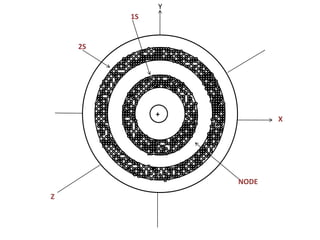
The  s  orbitals  are  spherically  symmetrical  about  the  nucleus.Their  size  increases  with  the  increase  in  the  value  of  n.Thus  2s (n=2) orbital  is  larger  than  the  1s  orbital (n=1)  but  smaller  than  the  3s  orbital (n=3).There  is  a  region  between  every  two  adjacent  s  orbitals where  the  probability  of  finding  an  electron  is  zero  (node).Being  spherical,  s  orbitals  are  non-directional.
Y1S2S+XNODEZ
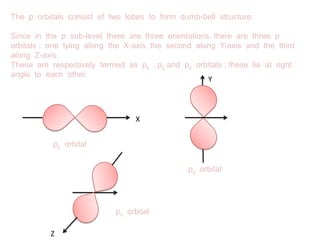
The  p  orbitals  consist  of  two  lobes  to  form  dumb-bell  structure.Since  in  the  p  sub-level  there  are  three  orientations, there  are  three  p  orbitals:  one  lying  along  the  X-axis, the  second  along  Y-axis  and  the  third  along  Z-axis.These  are  respectively  termed  as  px , py and  pzorbitals; these  lie  at  right  angle  to  each  other.  YXpyorbital pyorbitalpz  orbitalZ
Thus  while  s  orbitals  are  non-directional,  p  orbitals  have  a  directional  character.All  the  p  orbitals  of  a  particular  shell  have  same  energy  (degenerate  orbitals).The  p  orbitals  of  higher  energy  levels  (n=3, 4, 5,,…..)  have  similar  shapes  although  their  sizes  are  bigger.The  two  lobes  of  a  p  orbital  are  separated  by  a  nodal  plane, i.e.  plane  of  zero  electron  density.
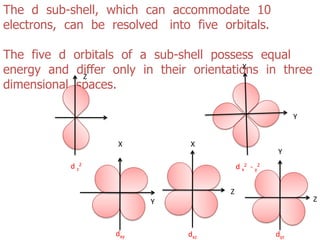
The  d  sub-shell,  which  can  accommodate  10  electrons,  can  be  resolved   into  five  orbitals.The  five  d  orbitals  of  a  sub-shell  possess  equal  energy  and  differ  only  in  their  orientations  in  three  dimensional  spaces.       XZYXXYd z2d x2  - y2  ZZYdxydxzdyz
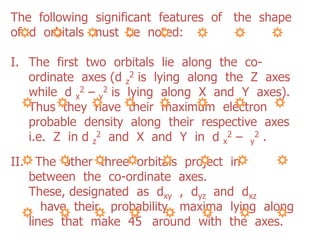
The  following  significant  features  of   the  shape  of  d  orbitals  must  be  noted:The  first  two  orbitals  lie  along  the  co-ordinate  axes (d z2 is  lying  along  the  Z  axes  while  d x2 – y2 is  lying  along  X  and  Y  axes).  Thus  they  have  their  maximum  electron  probable  density  along  their  respective  axes i.e.  Z  in d z2  and  X  and  Y  in  d x2 –  y2 . The  other  three  orbitals  project  in  between  the  co-ordinate  axes. These, designated  as  dxy  ,  dyz  and  dxz,  have  their   probability   maxima  lying  along  lines  that  make  45° around  with  the  axes.The  dx2 - y2  orbital  is  exactly  like  dxy  orbital  except  that  a  rotation  of  45° around  the  z-axis  gives  it  lobes  which  are  directed  along  the  axis.

Shape Of Orbitals

  • 1.
    SHAPE OF ORBITALSAccording to modern concept, electron has properties both of particles and wave.Electron is actually not a dot (as usually represented) but seems like a cloud.The shape of electron cloud is the shape of the orbital in which it is present.Electron cloud is not uniform but is dense where the probability of finding the electron is maximum.
  • 2.
    The s orbitals are spherically symmetrical about the nucleus.Their size increases with the increase in the value of n.Thus 2s (n=2) orbital is larger than the 1s orbital (n=1) but smaller than the 3s orbital (n=3).There is a region between every two adjacent s orbitals where the probability of finding an electron is zero (node).Being spherical, s orbitals are non-directional.
  • 3.
  • 4.
    The p orbitals consist of two lobes to form dumb-bell structure.Since in the p sub-level there are three orientations, there are three p orbitals: one lying along the X-axis, the second along Y-axis and the third along Z-axis.These are respectively termed as px , py and pzorbitals; these lie at right angle to each other. YXpyorbital pyorbitalpz orbitalZ
  • 5.
    Thus while s orbitals are non-directional, p orbitals have a directional character.All the p orbitals of a particular shell have same energy (degenerate orbitals).The p orbitals of higher energy levels (n=3, 4, 5,,…..) have similar shapes although their sizes are bigger.The two lobes of a p orbital are separated by a nodal plane, i.e. plane of zero electron density.
  • 6.
    The d sub-shell, which can accommodate 10 electrons, can be resolved into five orbitals.The five d orbitals of a sub-shell possess equal energy and differ only in their orientations in three dimensional spaces. XZYXXYd z2d x2 - y2 ZZYdxydxzdyz
  • 7.
    The following significant features of the shape of d orbitals must be noted:The first two orbitals lie along the co-ordinate axes (d z2 is lying along the Z axes while d x2 – y2 is lying along X and Y axes). Thus they have their maximum electron probable density along their respective axes i.e. Z in d z2 and X and Y in d x2 – y2 . The other three orbitals project in between the co-ordinate axes. These, designated as dxy , dyz and dxz, have their probability maxima lying along lines that make 45° around with the axes.The dx2 - y2 orbital is exactly like dxy orbital except that a rotation of 45° around the z-axis gives it lobes which are directed along the axis.