TYPES OF SENTENCES:
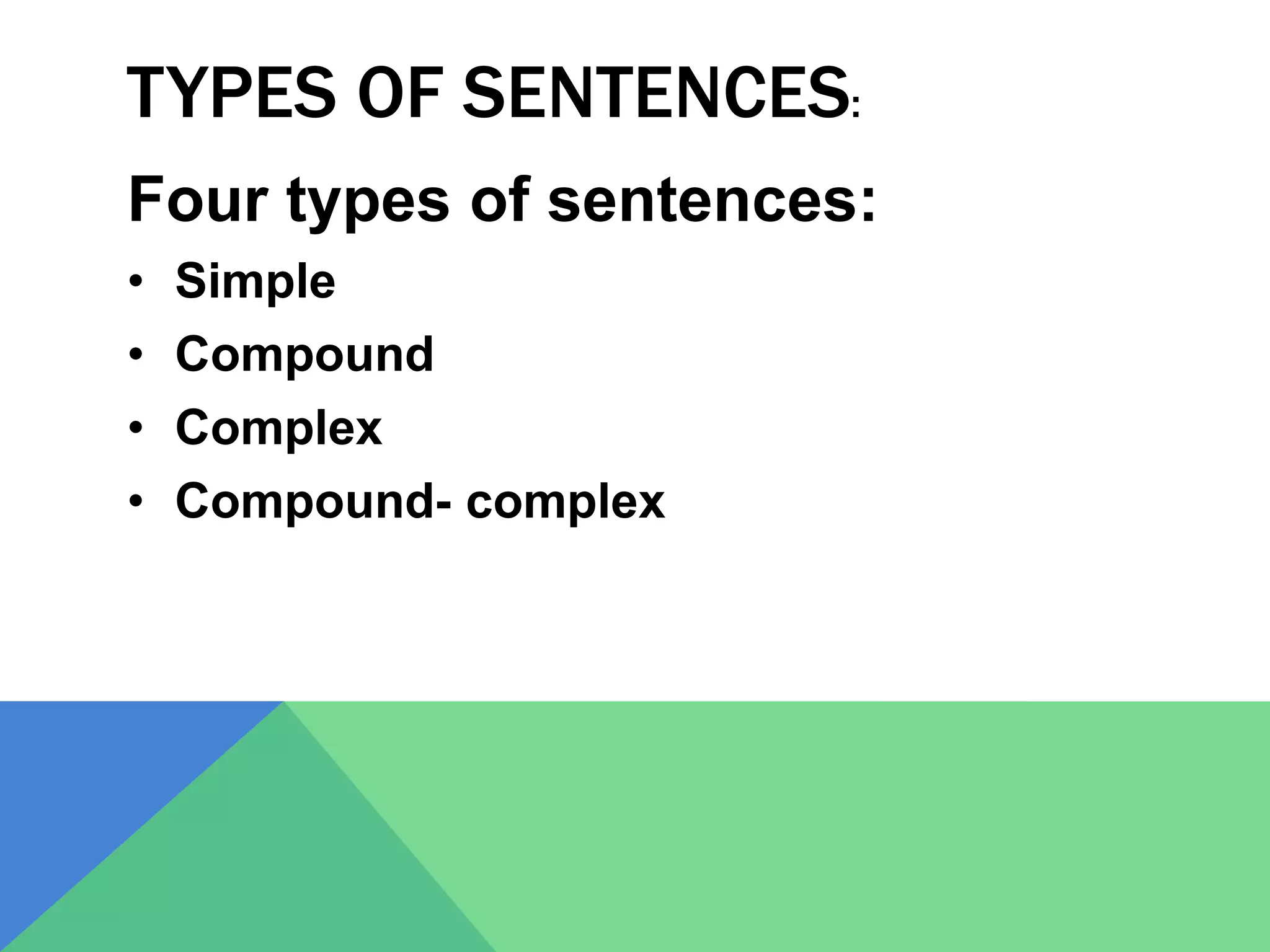
Four types of sentences:
• Simple
• Compound
• Complex
• Compound- complex
SIMPLE SENTENCES:
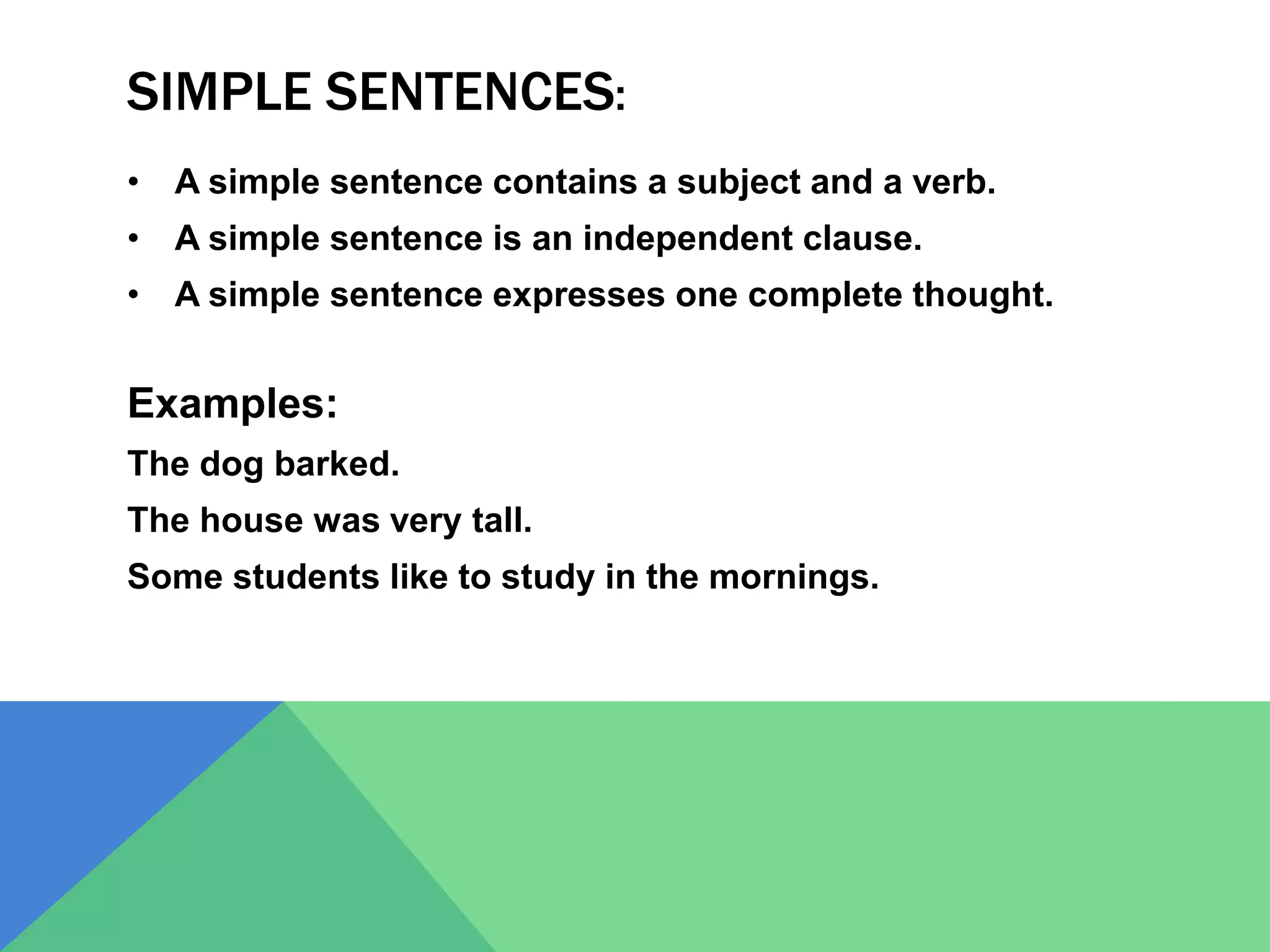
• A simple sentence contains a subject and a verb.
• A simple sentence is an independent clause.
• A simple sentence expresses one complete thought.
Examples:
The dog barked.
The house was very tall.
Some students like to study in the mornings.
COMPOUND SENTENCES:
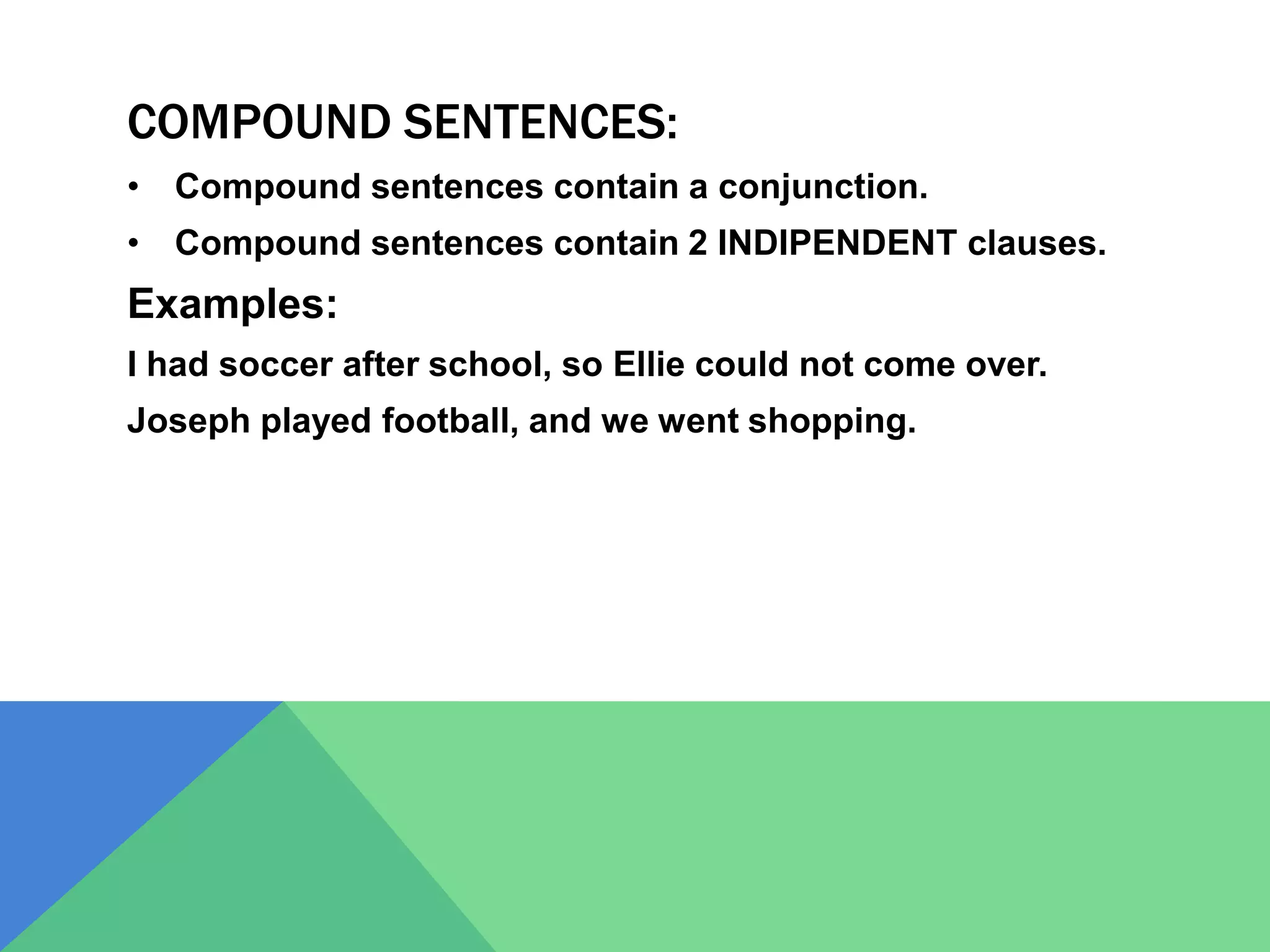
• Compound sentences contain a conjunction.
• Compound sentences contain 2 INDIPENDENT clauses.
Examples:
I had soccer after school, so Ellie could not come over.
Joseph played football, and we went shopping.
COMPLEX SENTENCES:
• A complex sentence is a sentence with an INDIPENDENT
clause combined with a DEPENDENT clause.
• The two clauses are joined by a subordinating
conjunction at the beginning of the DEPENDENT clause.
Examples:
The students are studying, because they have a test
tomorrow.
The students stopped studying, because they had to go to
class.
COMPOUND-COMPLEX SENTENCES
• Compound-complex sentences are sentences with at least
two INDIPENDENT clauses and at least one DEPENDENT
clause.
• The same coordinating conjunction joins the INDIPENDENT
clauses.
• The same subordinating conjunctions are used before the
DEPENDENT clause.
Examples:
After the team won their game, they shook hands with the other
team, and they went for ice-cream.
Although I like to go camping, I haven’t had the time to go
lately, and I haven’t found anyone to go with.
CLAUSES
Independent clauses:
• An independent clause is a clause that can stand by itself.
• Ex:
• The dog ran away
• I liked the paint color we chose.
Dependent clauses:
• An dependent clause is a clause that cannot stand by itself.
• Ex:
• Because the cat ran by.
• Which was blue.
Put the two clauses together and you get a complex sentence:
 The dog ran away, because the cat ran by.
 I liked the paint color we chose, which was blue.
CONJUNCTIONS
Subordinating conjunction:
• A subordinating conjunction
begins the dependent clause in a
complex sentence.
• Subordinating conjunctions:
• After
• Although
• As
• In order that
• At least
• Now what
• Wherever
• While
• Before
• Even though
• How
• If
• In as much
• When
• Whenever
• Whereas
• As thought because
• Even if
• Though
• Until
• Unless
• As if
• As long as
• As much as
• Soon
• Since
• So that
• that
CONJUNCTIONS CONT.
coordinating conjunctions:
• Coordinating conjunctions join independent clauses in a
compound-complex sentence.
• Coordinating conjunctions join the two independent clauses in a
compound sentence.
• Coordinating conjunctions (fanboys)
• For
• And
• Nor
• But
• Or
• Yet
• so

Sentence project jensen_and_ellie[1]

  • 2.
    TYPES OF SENTENCES: Fourtypes of sentences: • Simple • Compound • Complex • Compound- complex
  • 3.
    SIMPLE SENTENCES: • Asimple sentence contains a subject and a verb. • A simple sentence is an independent clause. • A simple sentence expresses one complete thought. Examples: The dog barked. The house was very tall. Some students like to study in the mornings.
  • 4.
    COMPOUND SENTENCES: • Compoundsentences contain a conjunction. • Compound sentences contain 2 INDIPENDENT clauses. Examples: I had soccer after school, so Ellie could not come over. Joseph played football, and we went shopping.
  • 5.
    COMPLEX SENTENCES: • Acomplex sentence is a sentence with an INDIPENDENT clause combined with a DEPENDENT clause. • The two clauses are joined by a subordinating conjunction at the beginning of the DEPENDENT clause. Examples: The students are studying, because they have a test tomorrow. The students stopped studying, because they had to go to class.
  • 6.
    COMPOUND-COMPLEX SENTENCES • Compound-complexsentences are sentences with at least two INDIPENDENT clauses and at least one DEPENDENT clause. • The same coordinating conjunction joins the INDIPENDENT clauses. • The same subordinating conjunctions are used before the DEPENDENT clause. Examples: After the team won their game, they shook hands with the other team, and they went for ice-cream. Although I like to go camping, I haven’t had the time to go lately, and I haven’t found anyone to go with.
  • 7.
    CLAUSES Independent clauses: • Anindependent clause is a clause that can stand by itself. • Ex: • The dog ran away • I liked the paint color we chose. Dependent clauses: • An dependent clause is a clause that cannot stand by itself. • Ex: • Because the cat ran by. • Which was blue. Put the two clauses together and you get a complex sentence:  The dog ran away, because the cat ran by.  I liked the paint color we chose, which was blue.
  • 8.
    CONJUNCTIONS Subordinating conjunction: • Asubordinating conjunction begins the dependent clause in a complex sentence. • Subordinating conjunctions: • After • Although • As • In order that • At least • Now what • Wherever • While • Before • Even though • How • If • In as much • When • Whenever • Whereas • As thought because • Even if • Though • Until • Unless • As if • As long as • As much as • Soon • Since • So that • that
  • 9.
    CONJUNCTIONS CONT. coordinating conjunctions: •Coordinating conjunctions join independent clauses in a compound-complex sentence. • Coordinating conjunctions join the two independent clauses in a compound sentence. • Coordinating conjunctions (fanboys) • For • And • Nor • But • Or • Yet • so