ENGLISH
ASSIGNMENT…
 Phrase and its types
 Clause and its types
 Sentence and its types
PHRASE :
Phrase is a group of words that work together to make
meaning, but it is not a complete sentence.
Example :
• My English teacher.
• The brown jacket.
Types of Phrase
• Noun Phrase
• Verb Phrase
• Prepositional Phrase
• Participial Phrase
• Gerund Phrase
• Infinitive Phrase
• Absolute Phrase
Noun Phrase :
A noun phrase consists of a noun and other
related words (usually modifiers and determiners) which modify
the noun. It functions like a noun in a sentence.
Example :
• He is wearing a nice red shirt.
• She brought a glass full of water.
Verb Phrase :
A verb phrase is a combination of main verb
and its auxiliaries (helping verbs) in a sentence.
Example :
• He is eating an apple.
• She has finished her work.
Prepositional Phrase :
A prepositional phrase always starts
with a preposition and ends with a noun or pronoun (and its
modifiers) that is called the object of the preposition.
Example :
• A boy on the roof is singing a song.
• The man in the room is our teacher.
Participial Phrase :
A participle phrase consists of a present
participle (verb + ing), a past participle (verb ending in -ed or other
form in case of irregular verbs) and modifiers or other associate
words.
Example :
• The kids, making a noise, need food.
• I received a letter, mentioning about my exam.
Gerund Phrase :
A gerund phrase consists of a gerund
(verb + ing) and modifiers or other words associated with the
gerund. A gerund phrase acts as a noun in a sentence.
Example :
• I like writing good essays.
• She started thinking about the problem.
Infinitive Phrase :
An infinitive phrase consist of an infinitive(to +
simple form of verb) and modifiers or other words associated to the
infinitive. An infinitive phrase always functions as an adjective, adverb or
a noun in a sentence.
Example :
• He likes to read books.
• To earn money is a desire of everyone.
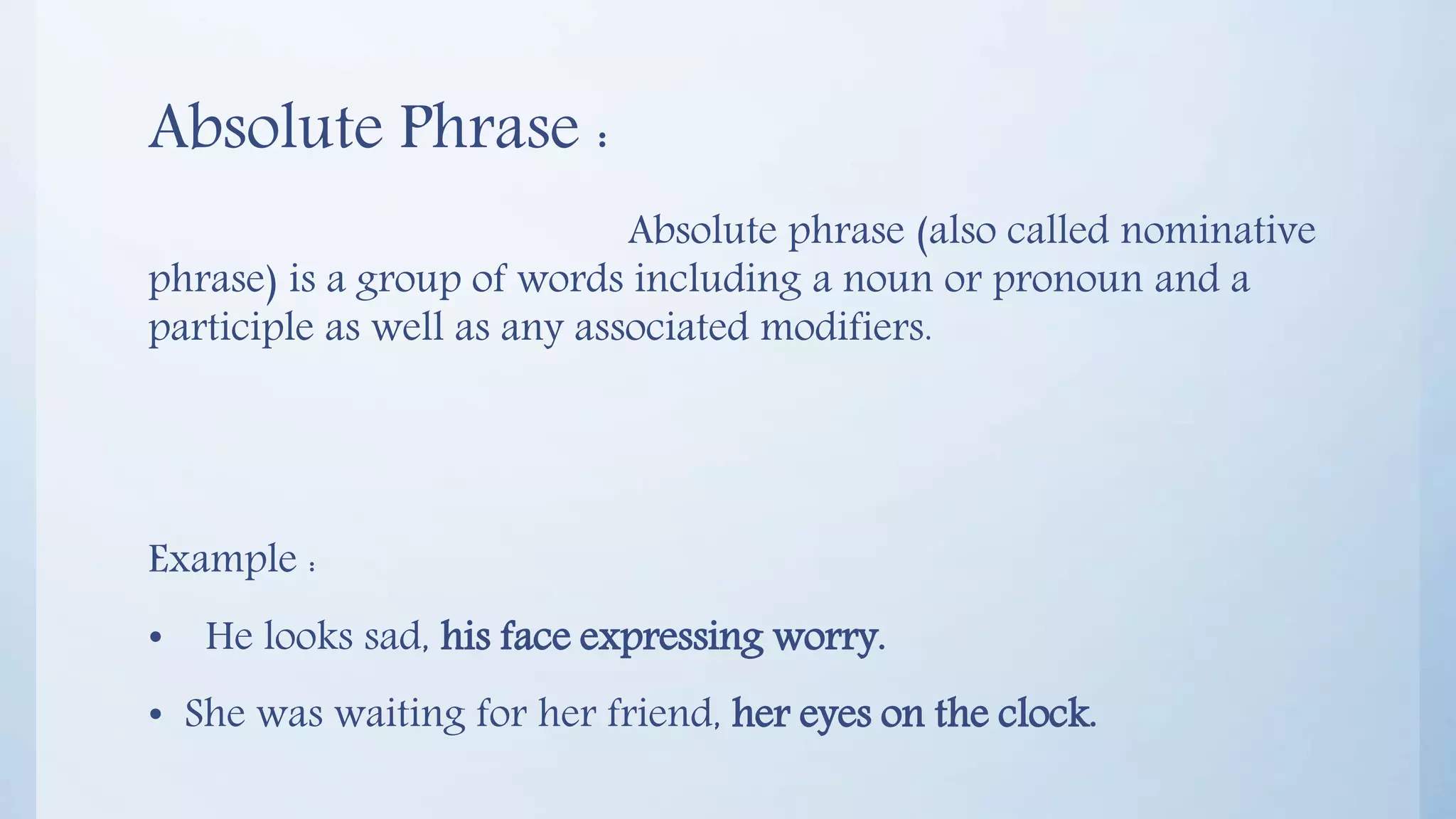
Absolute Phrase :
Absolute phrase (also called nominative
phrase) is a group of words including a noun or pronoun and a
participle as well as any associated modifiers.
Example :
• He looks sad, his face expressing worry.
• She was waiting for her friend, her eyes on the clock.
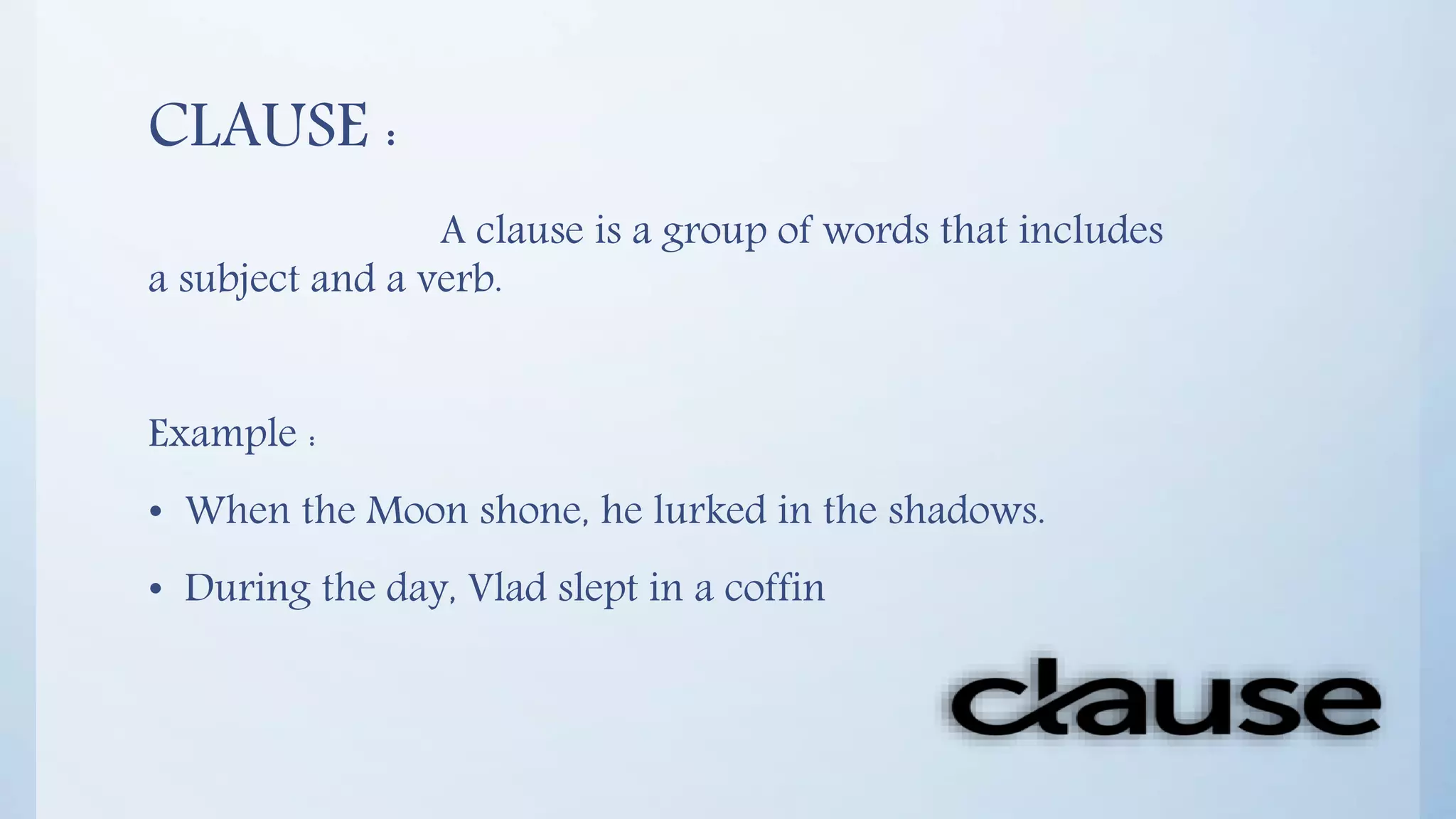
CLAUSE :
A clause is a group of words that includes
a subject and a verb.
Example :
• When the Moon shone, he lurked in the shadows.
• During the day, Vlad slept in a coffin
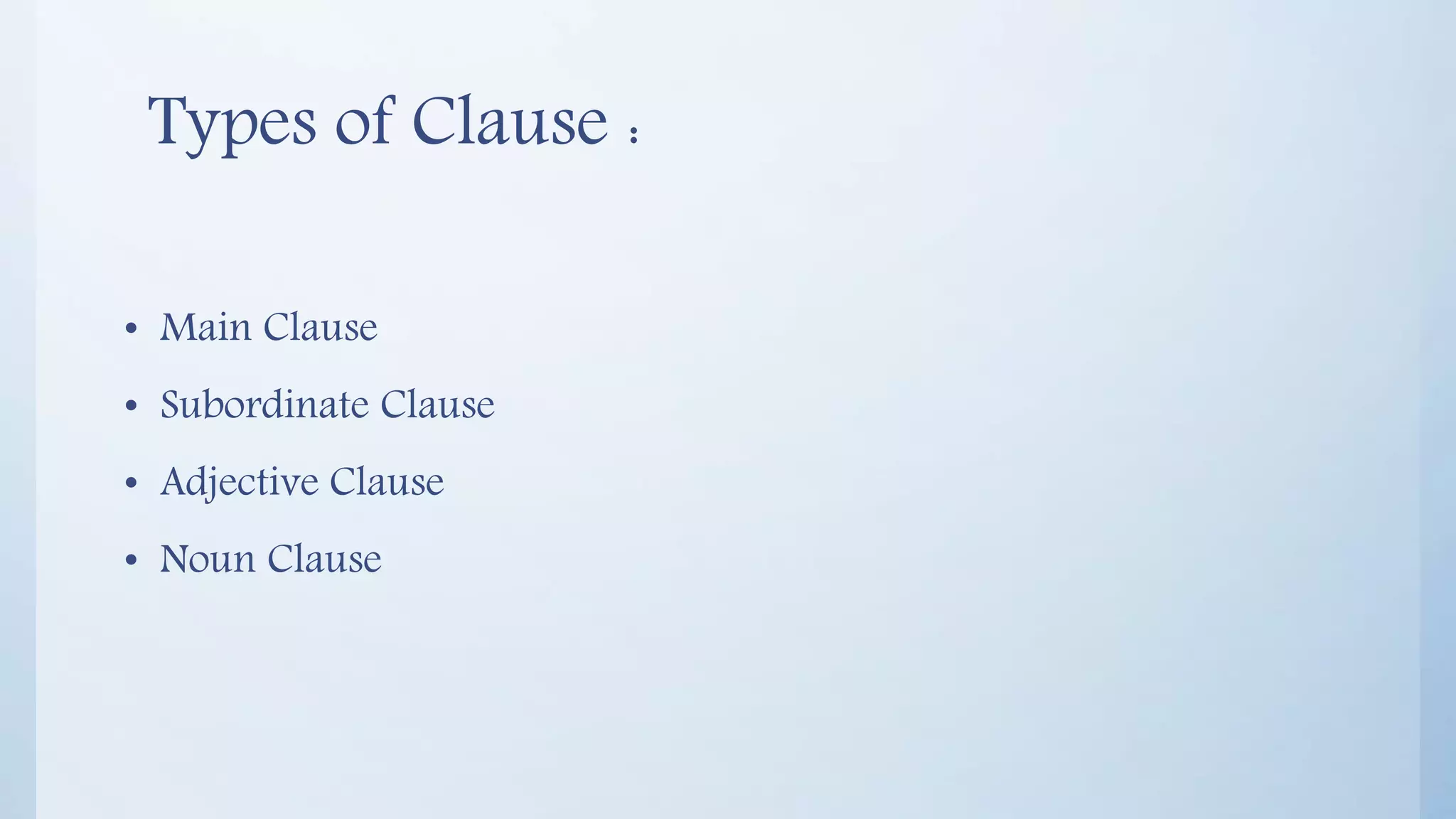
Types of Clause :
• Main Clause
• Subordinate Clause
• Adjective Clause
• Noun Clause
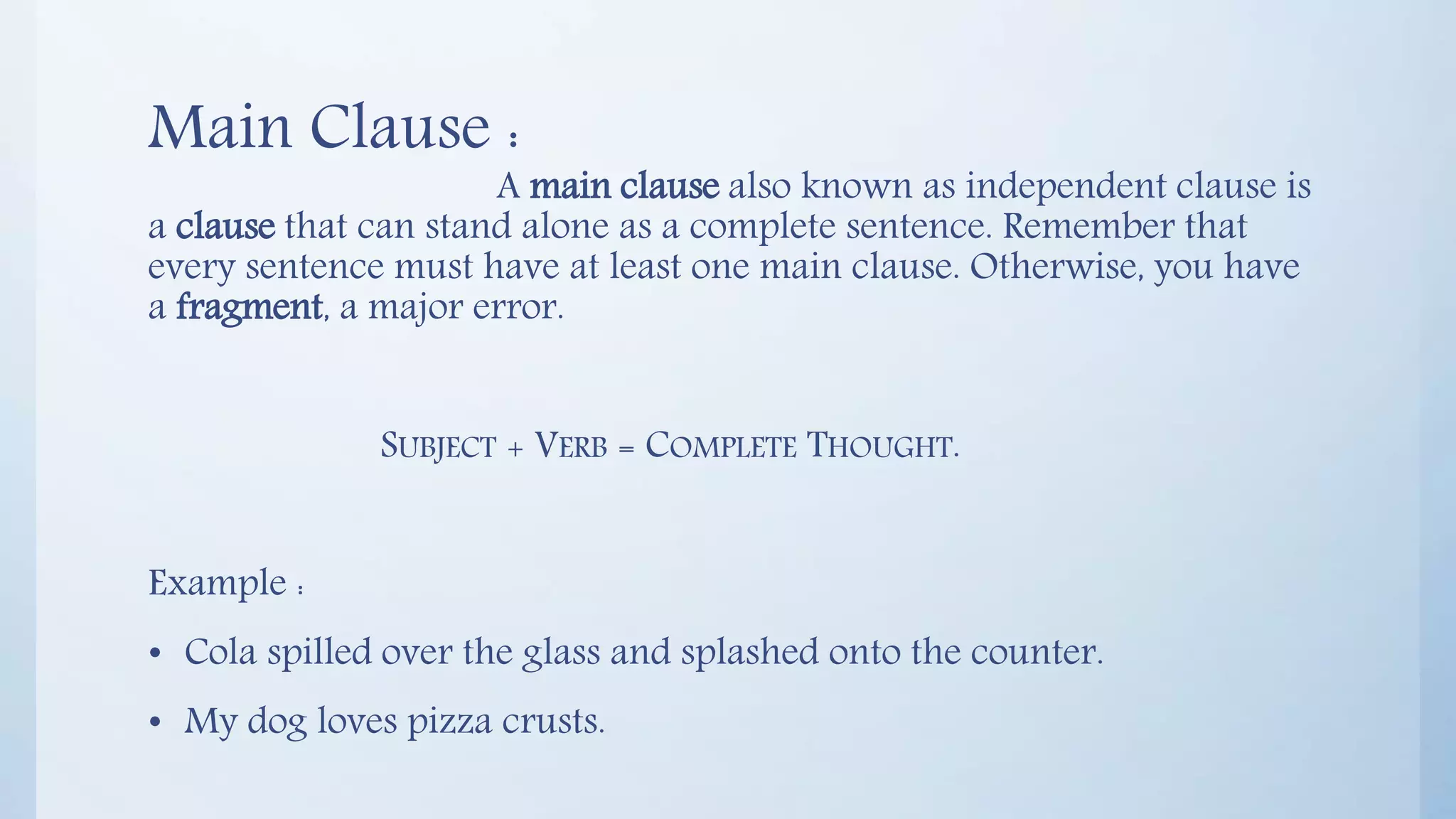
Main Clause :
A main clause also known as independent clause is
a clause that can stand alone as a complete sentence. Remember that
every sentence must have at least one main clause. Otherwise, you have
a fragment, a major error.
SUBJECT + VERB = COMPLETE THOUGHT.
Example :
• Cola spilled over the glass and splashed onto the counter.
• My dog loves pizza crusts.
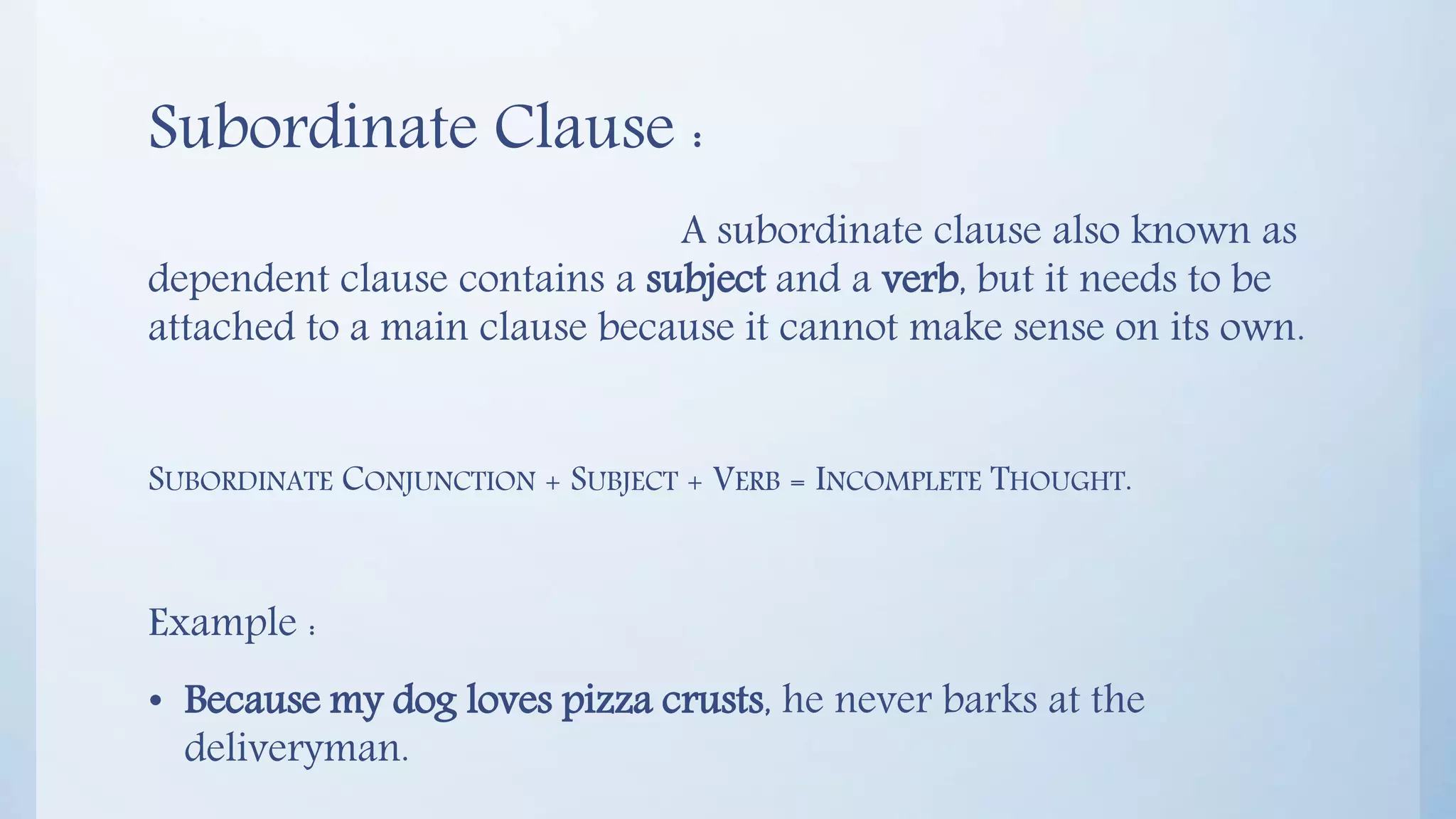
Subordinate Clause :
A subordinate clause also known as
dependent clause contains a subject and a verb, but it needs to be
attached to a main clause because it cannot make sense on its own.
SUBORDINATE CONJUNCTION + SUBJECT + VERB = INCOMPLETE THOUGHT.
Example :
• Because my dog loves pizza crusts, he never barks at the
deliveryman.
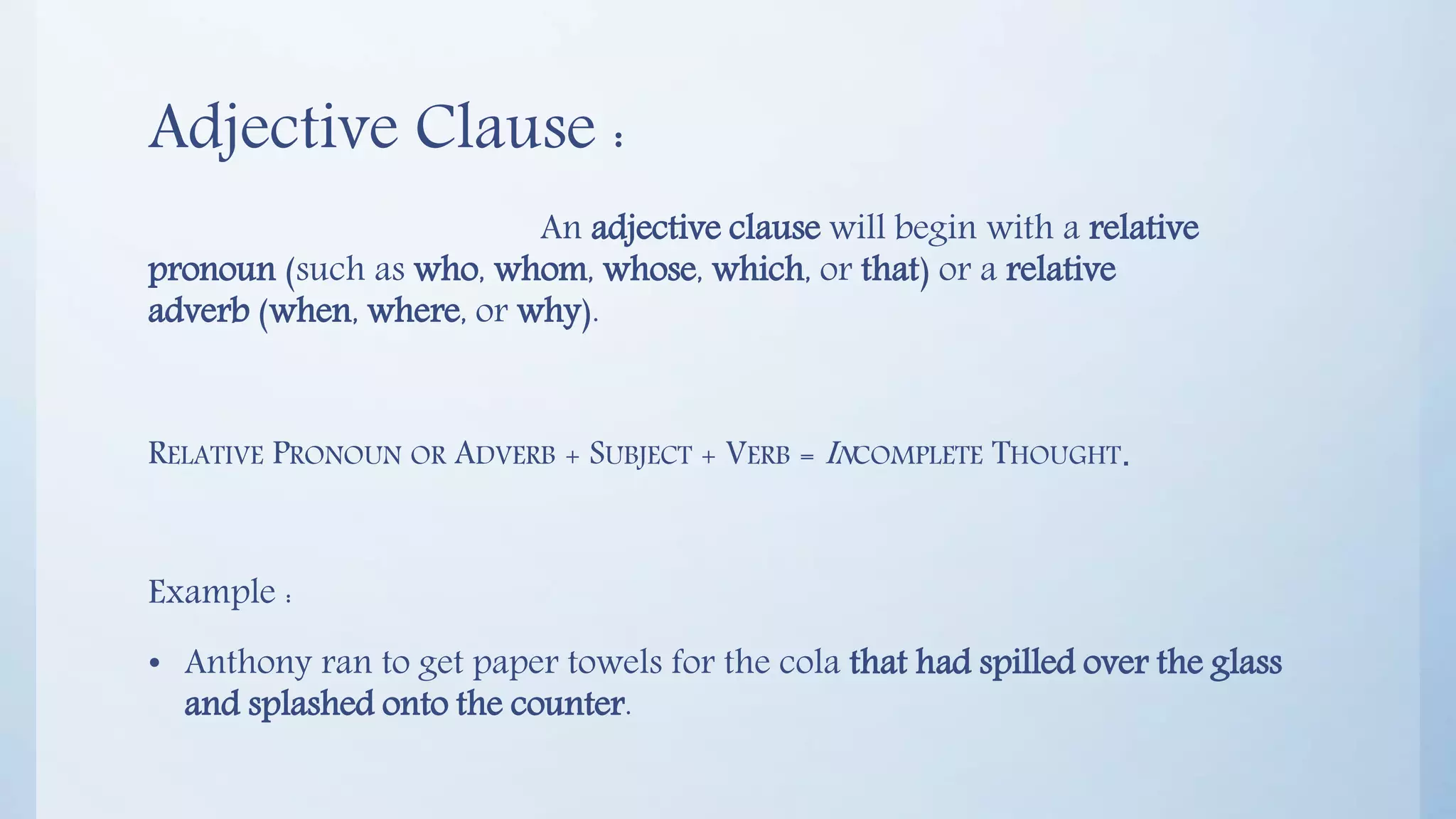
Adjective Clause :
An adjective clause will begin with a relative
pronoun (such as who, whom, whose, which, or that) or a relative
adverb (when, where, or why).
RELATIVE PRONOUN OR ADVERB + SUBJECT + VERB = INCOMPLETE THOUGHT.
Example :
• Anthony ran to get paper towels for the cola that had spilled over the glass
and splashed onto the counter.
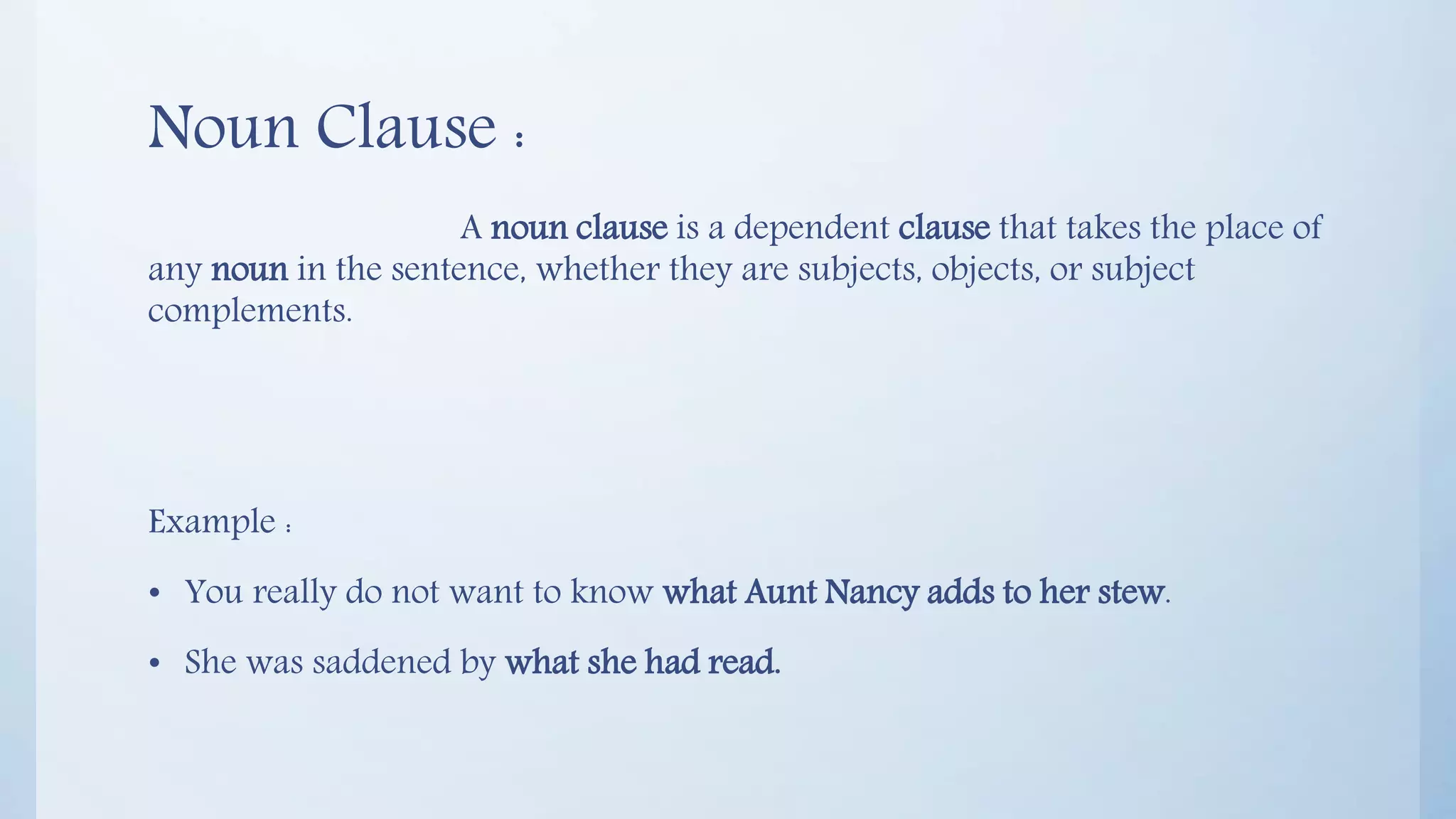
Noun Clause :
A noun clause is a dependent clause that takes the place of
any noun in the sentence, whether they are subjects, objects, or subject
complements.
Example :
• You really do not want to know what Aunt Nancy adds to her stew.
• She was saddened by what she had read.
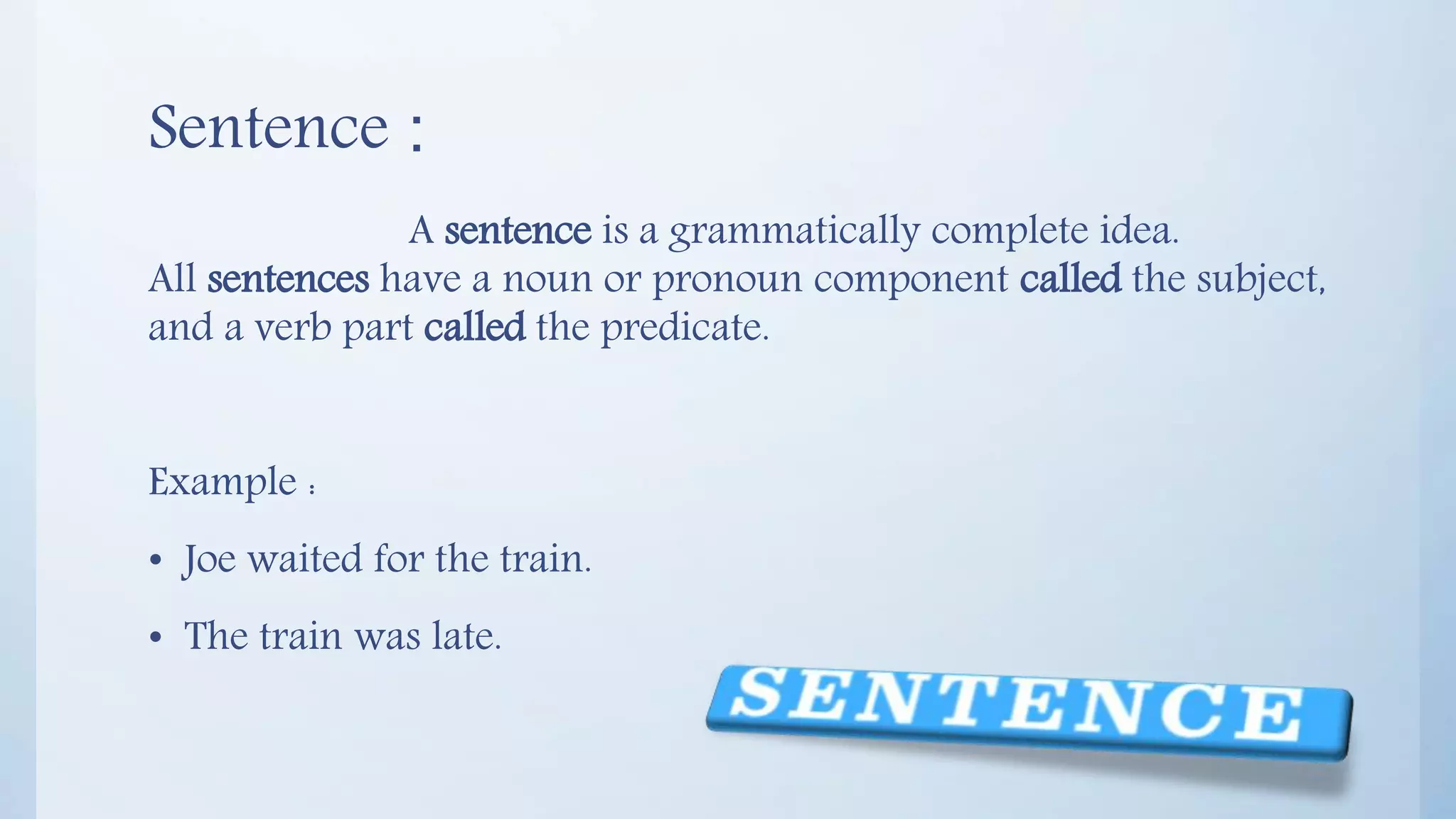
Sentence :
A sentence is a grammatically complete idea.
All sentences have a noun or pronoun component called the subject,
and a verb part called the predicate.
Example :
• Joe waited for the train.
• The train was late.
Types of Sentence :
• Declarative Sentence
• Imperative Sentence
• Interrogative Sentence
• Exclamatory Sentence
Declarative Sentence :
A declarative sentence is a sentence that
makes a statement, provides a fact, offers an explanation, or conveys
information. These types of sentences are also known
as declarative statements.
Example :
• London is the capital of England.
• We live in continent of Asia
Imperative Sentence :
An imperative sentence is a
command or a polite request. It ends with a period (full stop).
Example :
• Please bring my umbrella.
• Let window be open or while.
Interrogative Sentence :
An interrogative sentence asks a
question. It ends with a question mark (?).
Example :
• Can you find my umbrella?
• Will you come over tonight ?
Exclamatory Sentence :
An exclamatory sentence expresses
excitement or emotion. It ends with an exclamation mark (!).
Example :
• You've broken my umbrella!
• Hurray! We won the challenge.
The End…

Phrase , Clause , sentence and their types

  • 1.
    ENGLISH ASSIGNMENT…  Phrase andits types  Clause and its types  Sentence and its types
  • 2.
    PHRASE : Phrase isa group of words that work together to make meaning, but it is not a complete sentence. Example : • My English teacher. • The brown jacket.
  • 3.
    Types of Phrase •Noun Phrase • Verb Phrase • Prepositional Phrase • Participial Phrase • Gerund Phrase • Infinitive Phrase • Absolute Phrase
  • 4.
    Noun Phrase : Anoun phrase consists of a noun and other related words (usually modifiers and determiners) which modify the noun. It functions like a noun in a sentence. Example : • He is wearing a nice red shirt. • She brought a glass full of water.
  • 5.
    Verb Phrase : Averb phrase is a combination of main verb and its auxiliaries (helping verbs) in a sentence. Example : • He is eating an apple. • She has finished her work.
  • 6.
    Prepositional Phrase : Aprepositional phrase always starts with a preposition and ends with a noun or pronoun (and its modifiers) that is called the object of the preposition. Example : • A boy on the roof is singing a song. • The man in the room is our teacher.
  • 7.
    Participial Phrase : Aparticiple phrase consists of a present participle (verb + ing), a past participle (verb ending in -ed or other form in case of irregular verbs) and modifiers or other associate words. Example : • The kids, making a noise, need food. • I received a letter, mentioning about my exam.
  • 8.
    Gerund Phrase : Agerund phrase consists of a gerund (verb + ing) and modifiers or other words associated with the gerund. A gerund phrase acts as a noun in a sentence. Example : • I like writing good essays. • She started thinking about the problem.
  • 9.
    Infinitive Phrase : Aninfinitive phrase consist of an infinitive(to + simple form of verb) and modifiers or other words associated to the infinitive. An infinitive phrase always functions as an adjective, adverb or a noun in a sentence. Example : • He likes to read books. • To earn money is a desire of everyone.
  • 10.
    Absolute Phrase : Absolutephrase (also called nominative phrase) is a group of words including a noun or pronoun and a participle as well as any associated modifiers. Example : • He looks sad, his face expressing worry. • She was waiting for her friend, her eyes on the clock.
  • 11.
    CLAUSE : A clauseis a group of words that includes a subject and a verb. Example : • When the Moon shone, he lurked in the shadows. • During the day, Vlad slept in a coffin
  • 12.
    Types of Clause: • Main Clause • Subordinate Clause • Adjective Clause • Noun Clause
  • 13.
    Main Clause : Amain clause also known as independent clause is a clause that can stand alone as a complete sentence. Remember that every sentence must have at least one main clause. Otherwise, you have a fragment, a major error. SUBJECT + VERB = COMPLETE THOUGHT. Example : • Cola spilled over the glass and splashed onto the counter. • My dog loves pizza crusts.
  • 14.
    Subordinate Clause : Asubordinate clause also known as dependent clause contains a subject and a verb, but it needs to be attached to a main clause because it cannot make sense on its own. SUBORDINATE CONJUNCTION + SUBJECT + VERB = INCOMPLETE THOUGHT. Example : • Because my dog loves pizza crusts, he never barks at the deliveryman.
  • 15.
    Adjective Clause : Anadjective clause will begin with a relative pronoun (such as who, whom, whose, which, or that) or a relative adverb (when, where, or why). RELATIVE PRONOUN OR ADVERB + SUBJECT + VERB = INCOMPLETE THOUGHT. Example : • Anthony ran to get paper towels for the cola that had spilled over the glass and splashed onto the counter.
  • 16.
    Noun Clause : Anoun clause is a dependent clause that takes the place of any noun in the sentence, whether they are subjects, objects, or subject complements. Example : • You really do not want to know what Aunt Nancy adds to her stew. • She was saddened by what she had read.
  • 17.
    Sentence : A sentenceis a grammatically complete idea. All sentences have a noun or pronoun component called the subject, and a verb part called the predicate. Example : • Joe waited for the train. • The train was late.
  • 18.
    Types of Sentence: • Declarative Sentence • Imperative Sentence • Interrogative Sentence • Exclamatory Sentence
  • 19.
    Declarative Sentence : Adeclarative sentence is a sentence that makes a statement, provides a fact, offers an explanation, or conveys information. These types of sentences are also known as declarative statements. Example : • London is the capital of England. • We live in continent of Asia
  • 20.
    Imperative Sentence : Animperative sentence is a command or a polite request. It ends with a period (full stop). Example : • Please bring my umbrella. • Let window be open or while.
  • 21.
    Interrogative Sentence : Aninterrogative sentence asks a question. It ends with a question mark (?). Example : • Can you find my umbrella? • Will you come over tonight ?
  • 22.
    Exclamatory Sentence : Anexclamatory sentence expresses excitement or emotion. It ends with an exclamation mark (!). Example : • You've broken my umbrella! • Hurray! We won the challenge.
  • 23.