Downloaded 64 times

The document provides an overview of various sensors used in smartphones, including accelerometers, gyroscopes, and proximity sensors, along with their functionalities and common applications. It highlights how these sensors measure motion, orientation, and environmental conditions, contributing to the device's capabilities and appeal to consumers. Additionally, it mentions other sensors like ambient light sensors and fingerprint sensors, which enhance user experience and security.
Presentation by Kamal Jeet to Mr. K Srinivasa Rao about smartphone sensors.
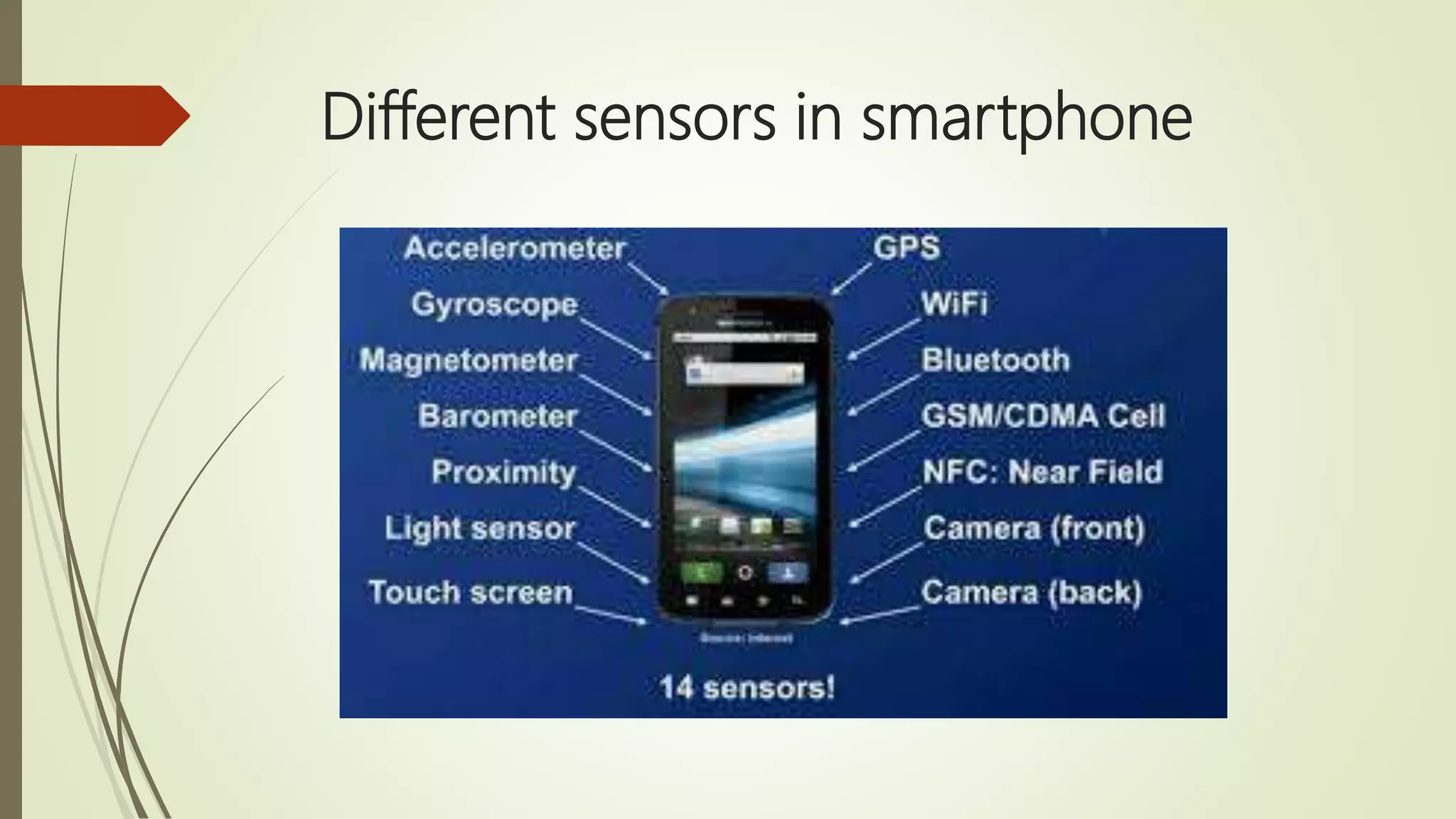
Overview of different smartphone sensors: Accelerometer, Gyroscope, Proximity sensor, and common uses.
Smartphone sensors measure motion and environmental conditions, attracting buyers and increasing competition.
Focus on various sensors included in smartphones.
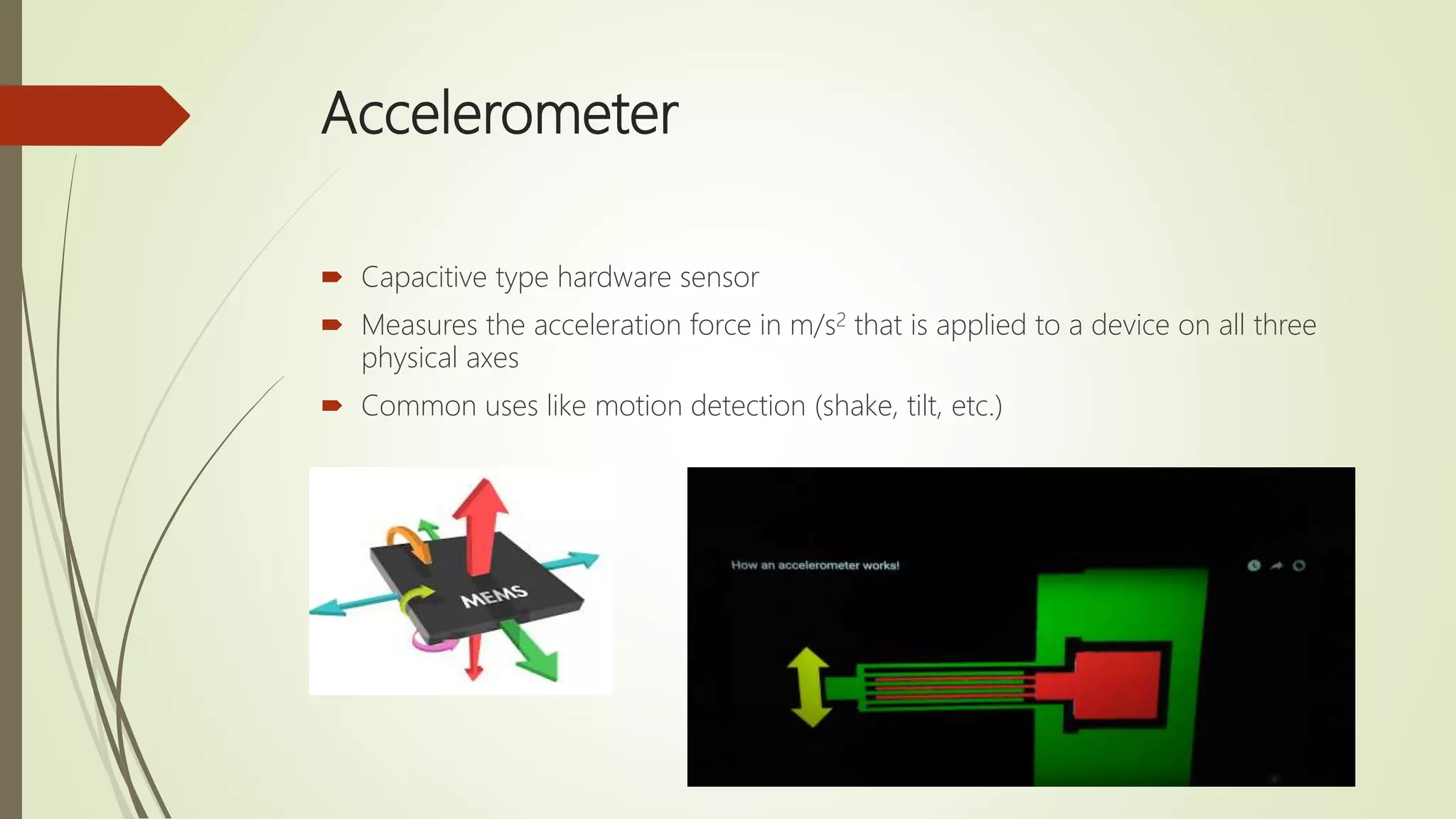
Capacitive sensor measuring acceleration on all axes (m/s²), used for motion detection like shaking.
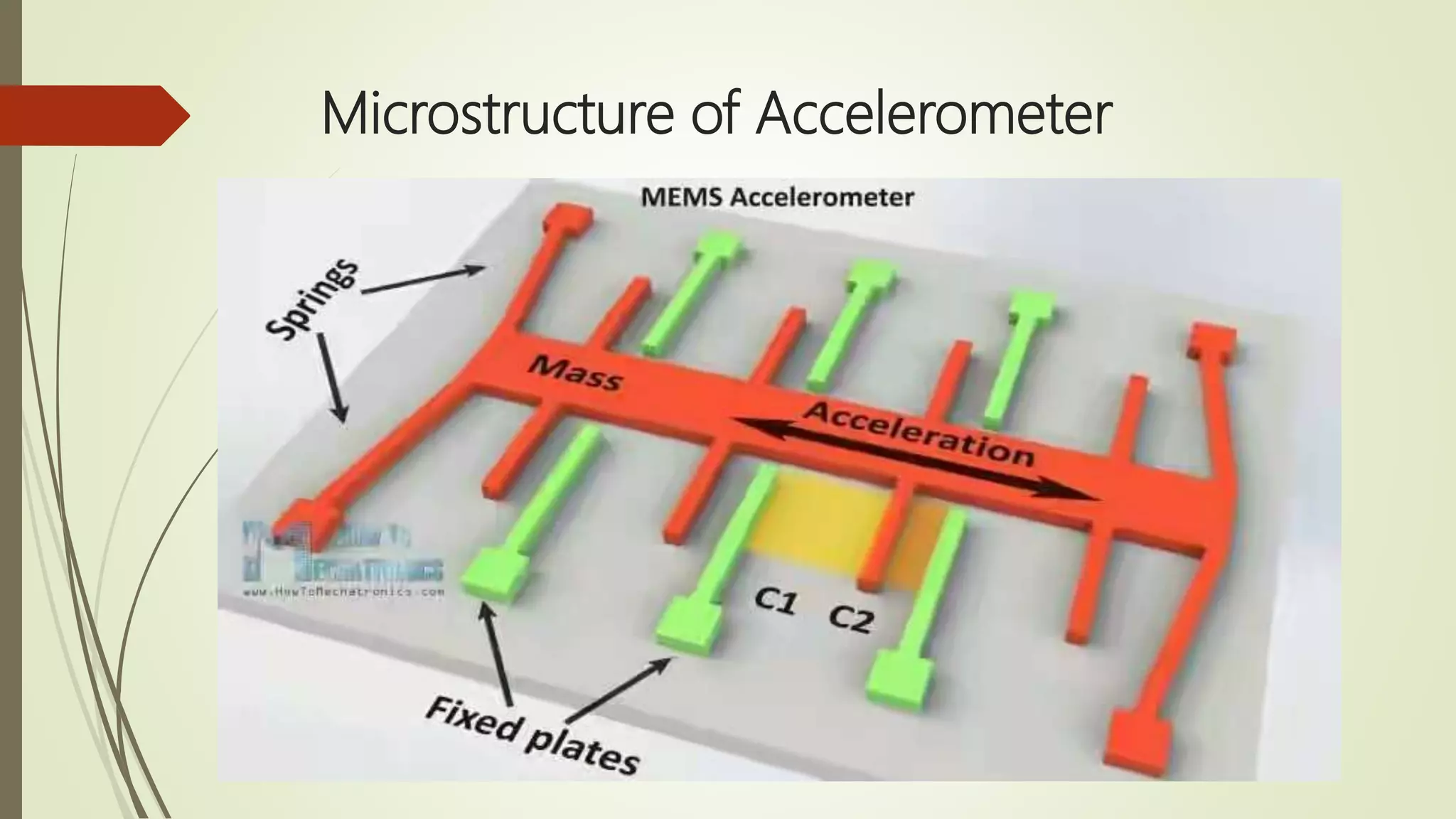
Detailed look at the microstructure of accelerometers.
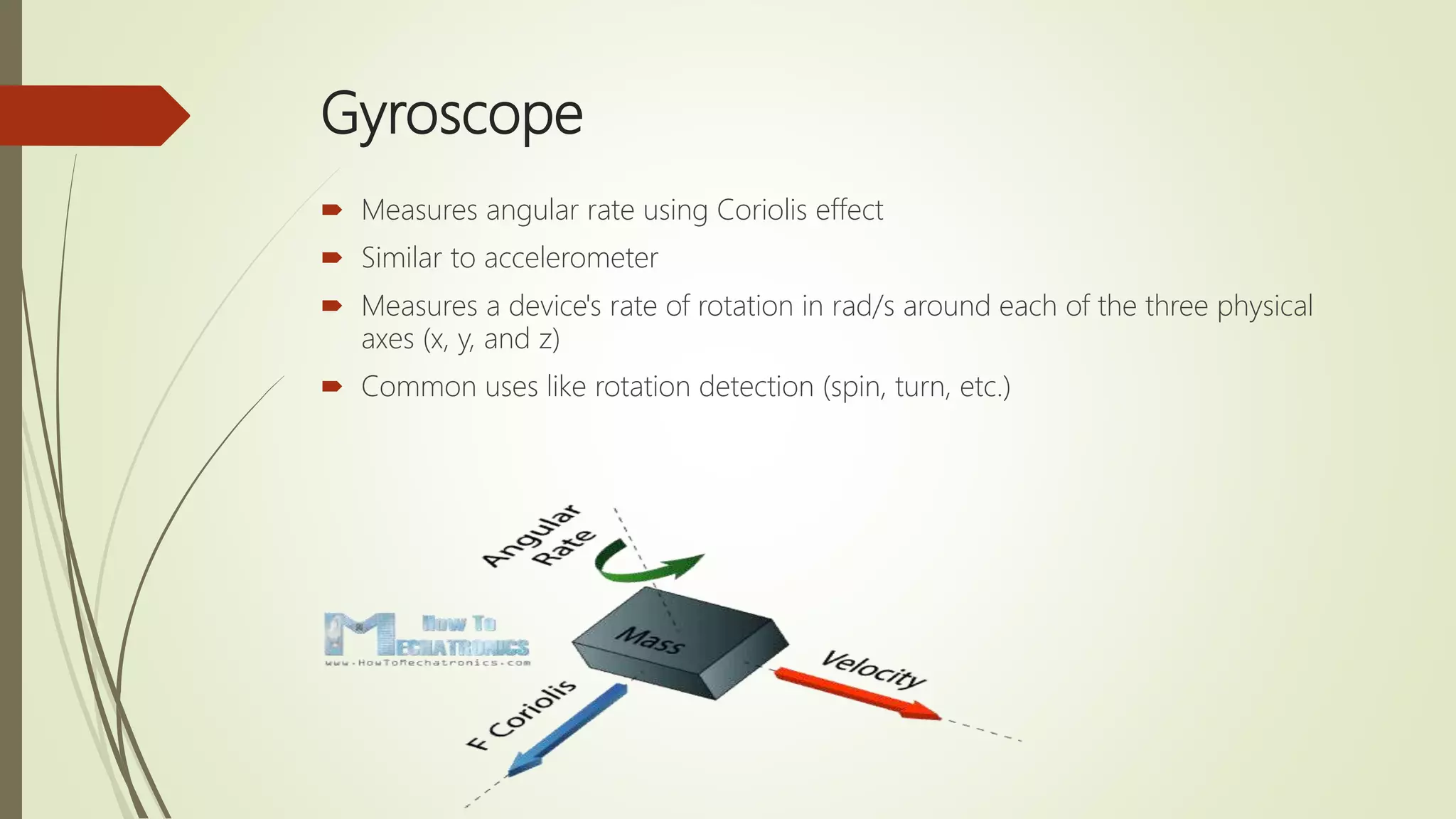
Measures angular rate (rad/s) using Coriolis effect; detects rotation like spin and turn.
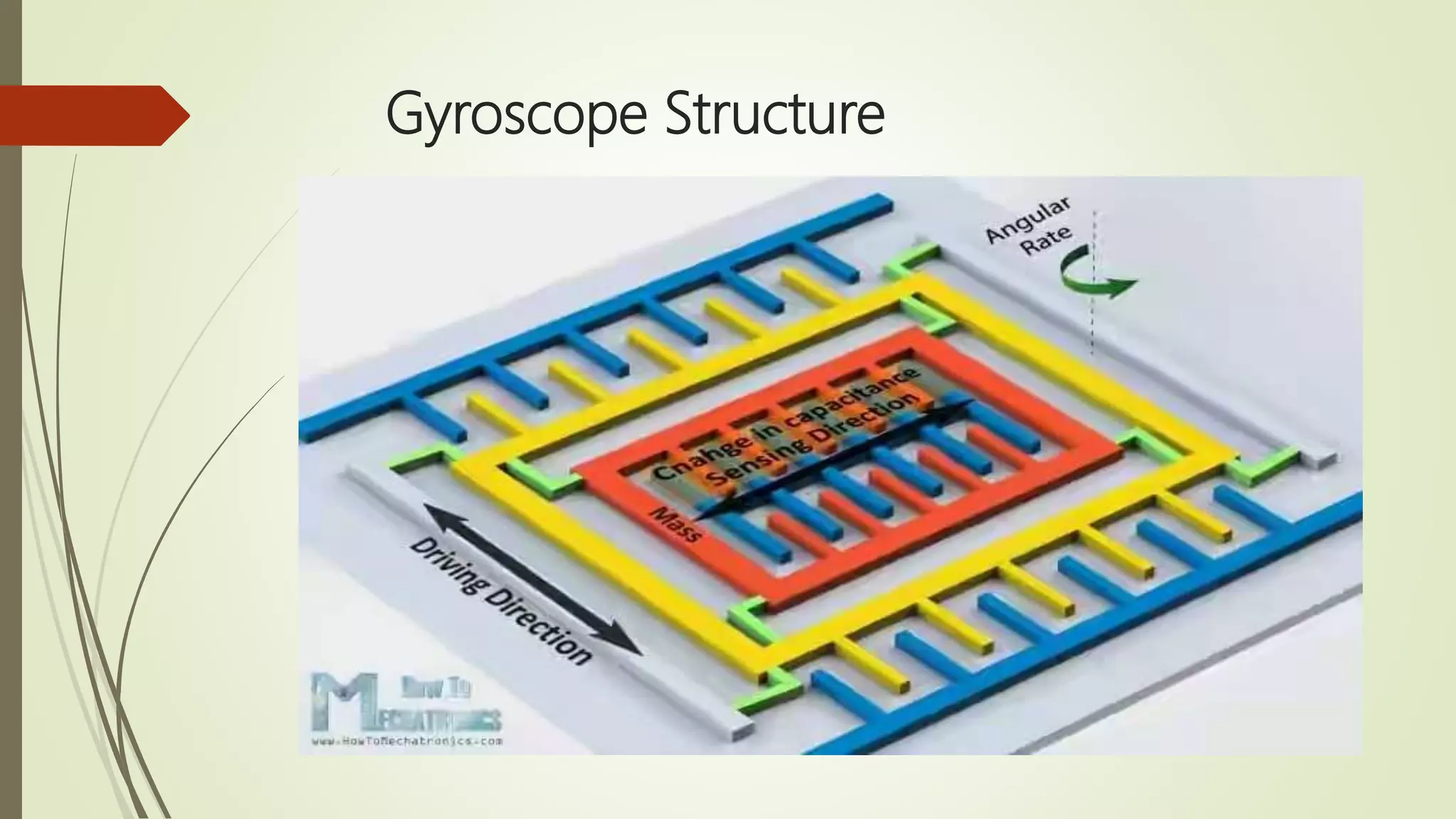
Detailed look at the structure of gyroscopes.
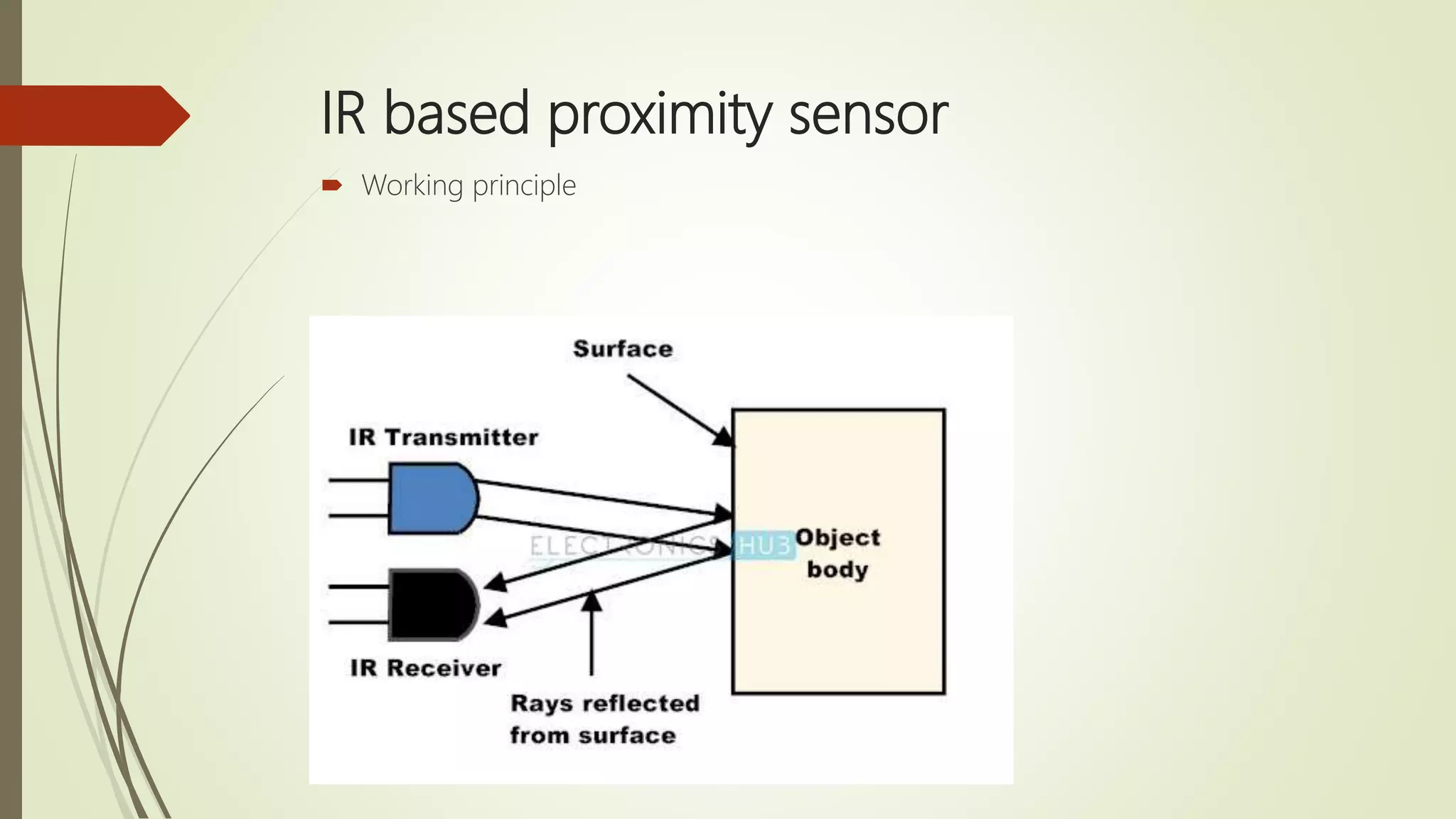
Overview of IR-based proximity sensor working principles.
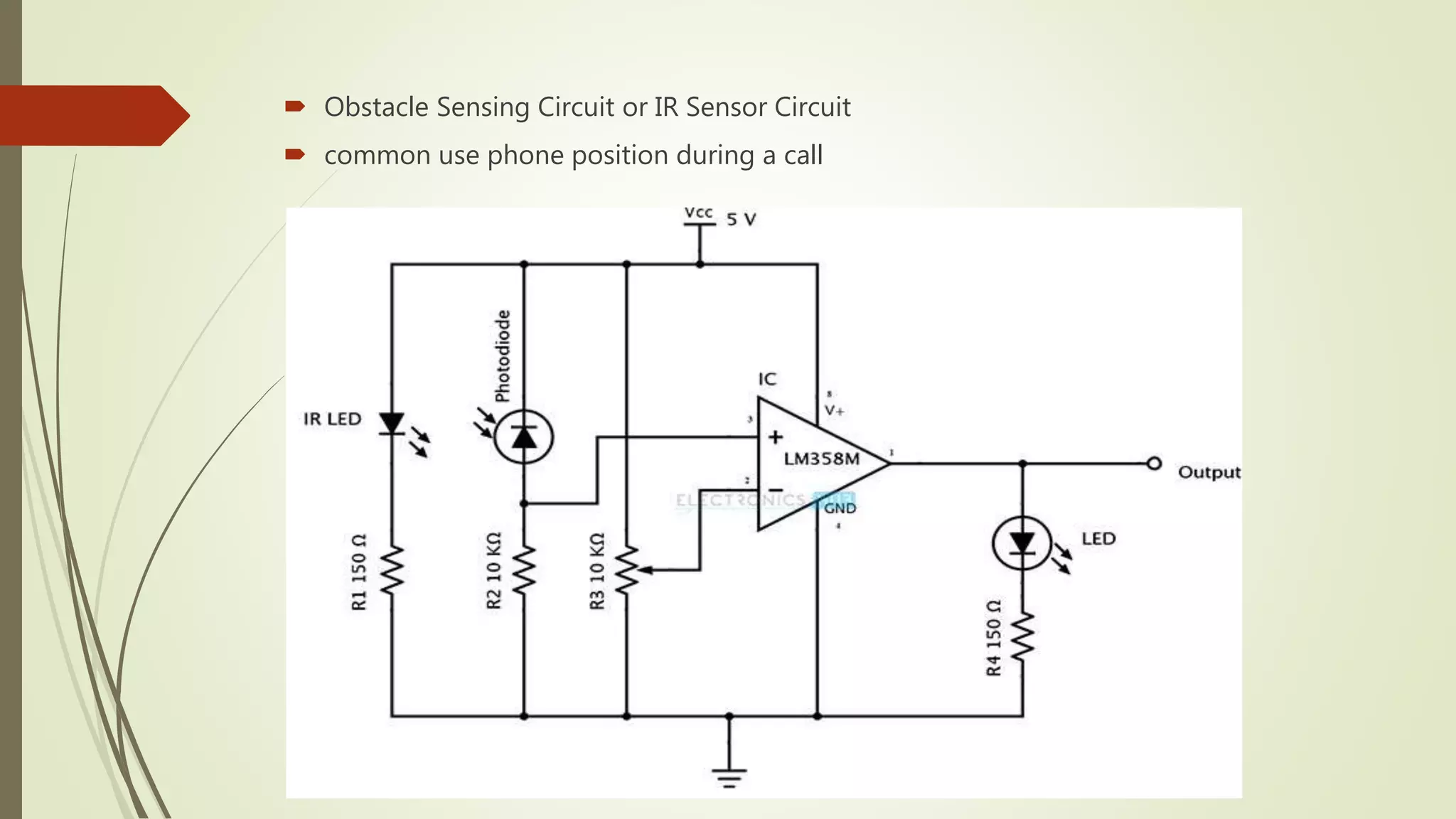
Obstacle Sensing Circuit usage; commonly used for phone position during calls.
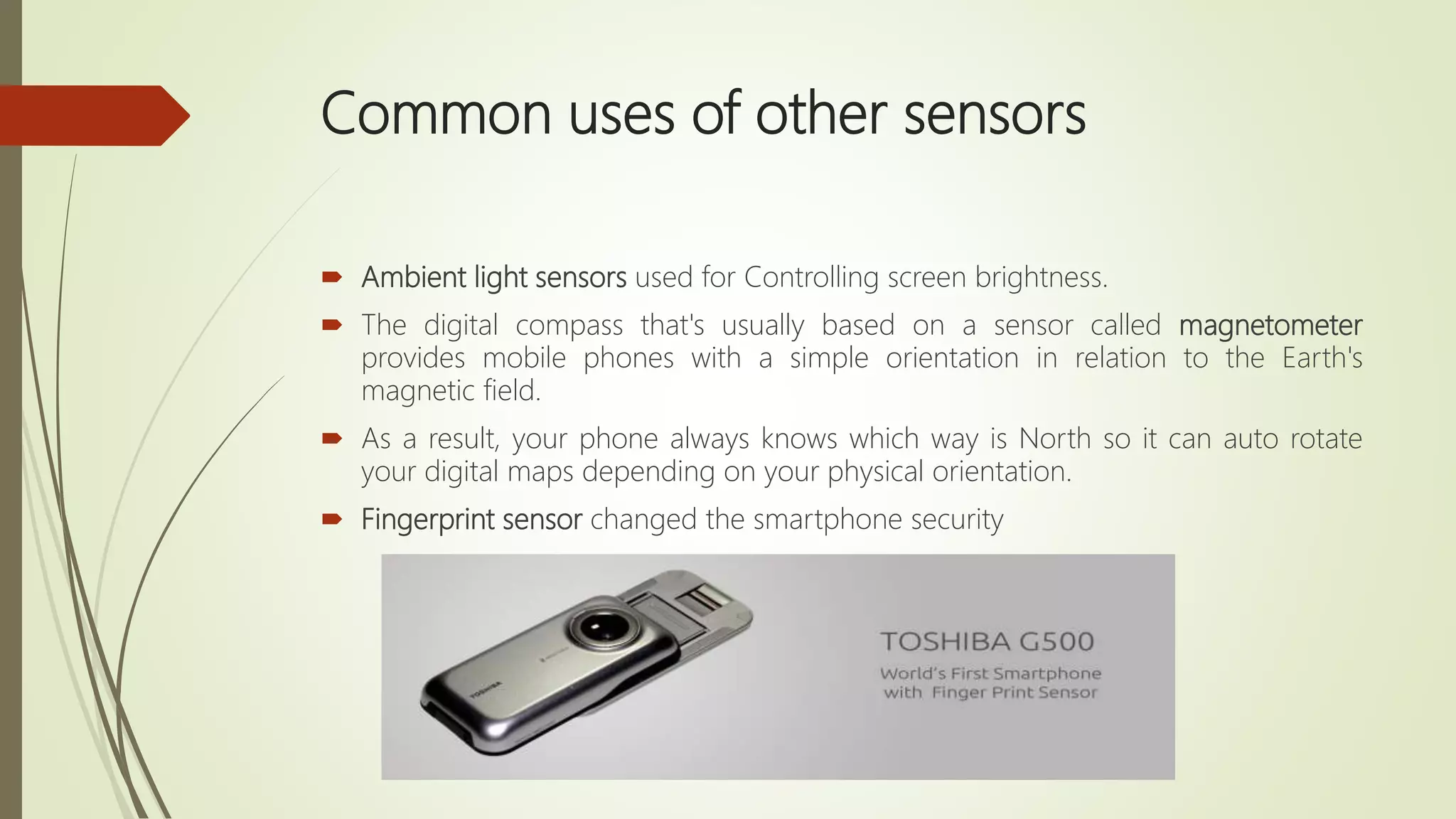
Common applications of additional sensors like ambient light, compass, and fingerprint for security.
List of sources and references for the information presented on smartphone sensors.


