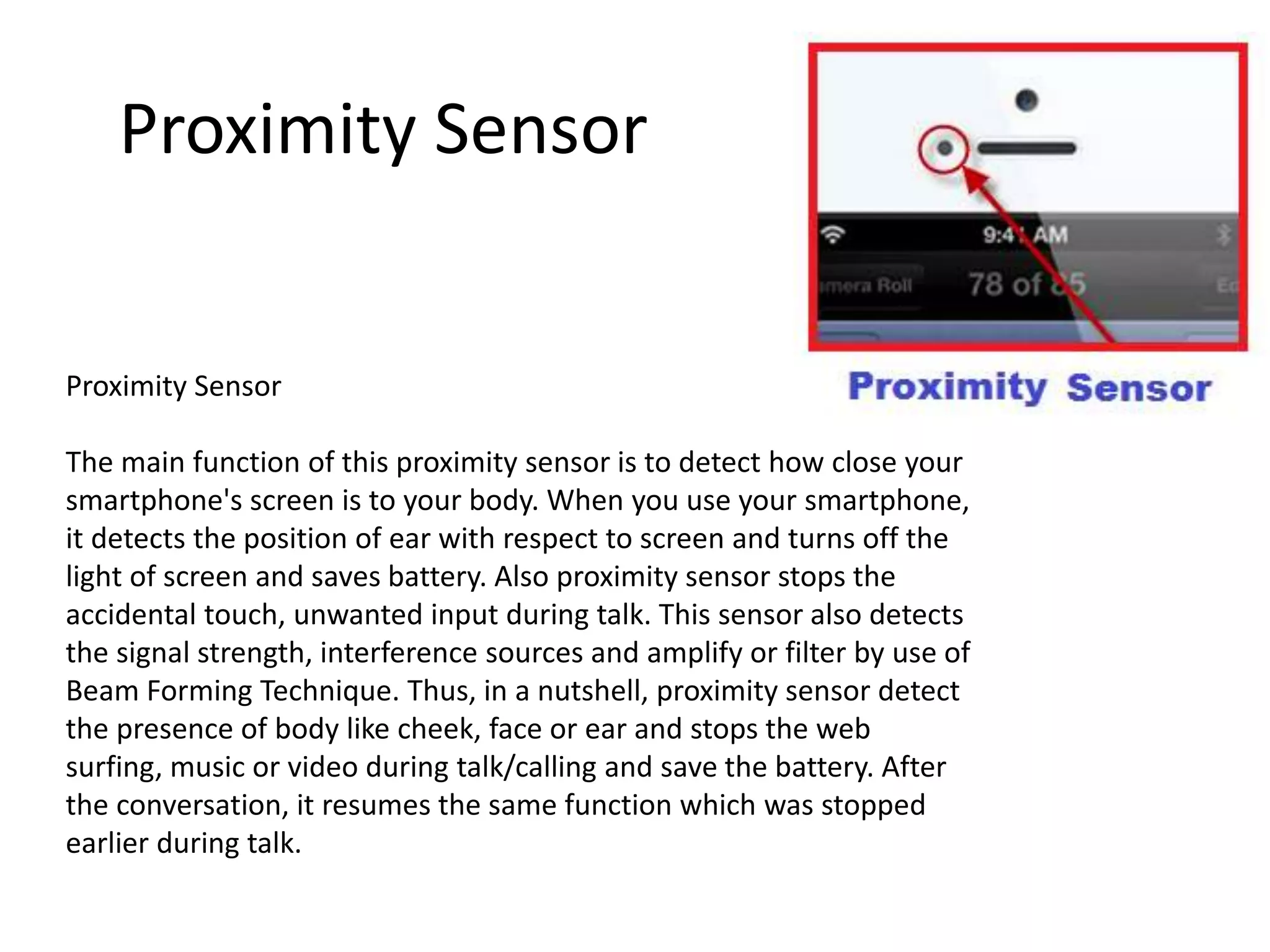
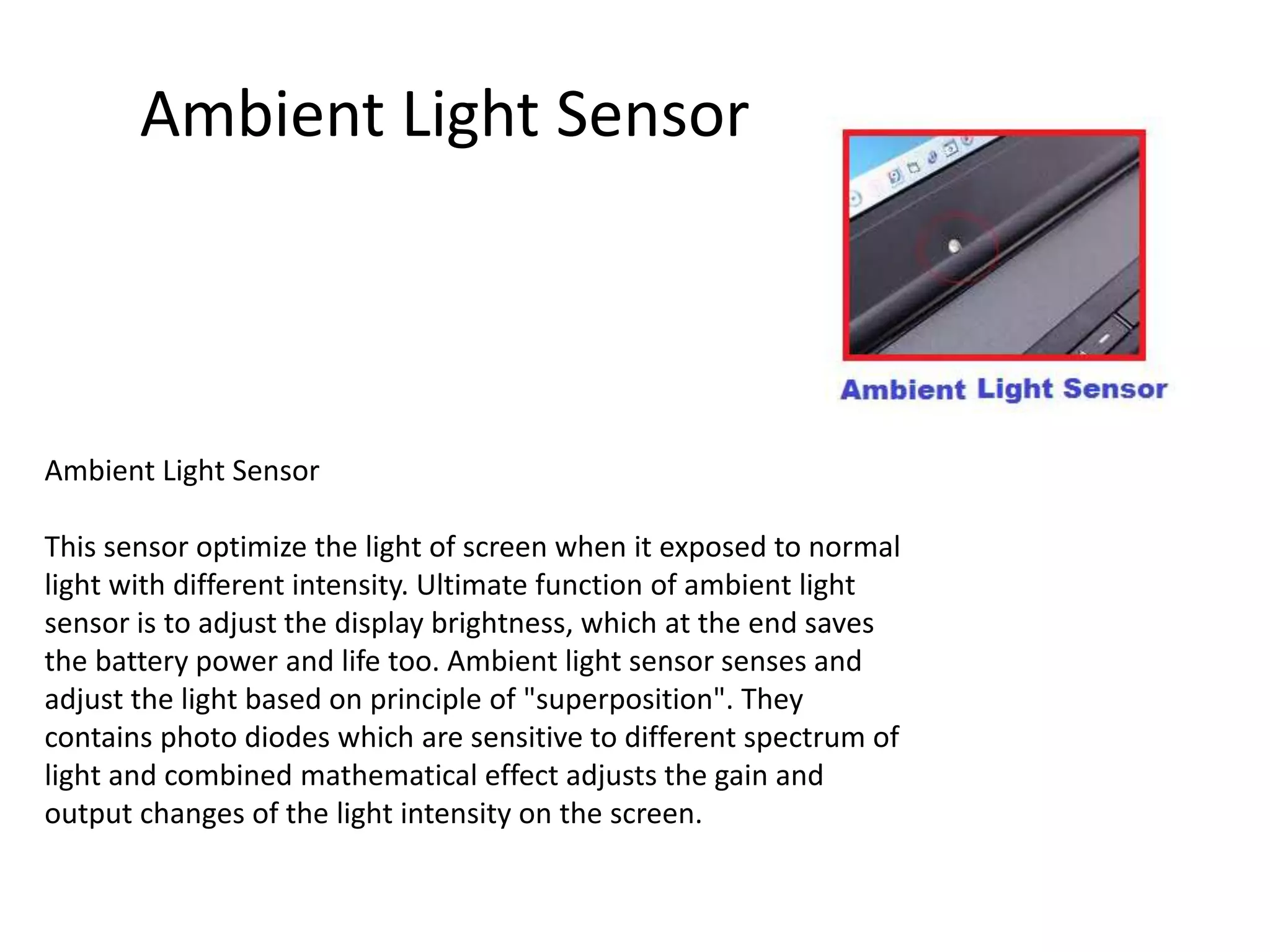
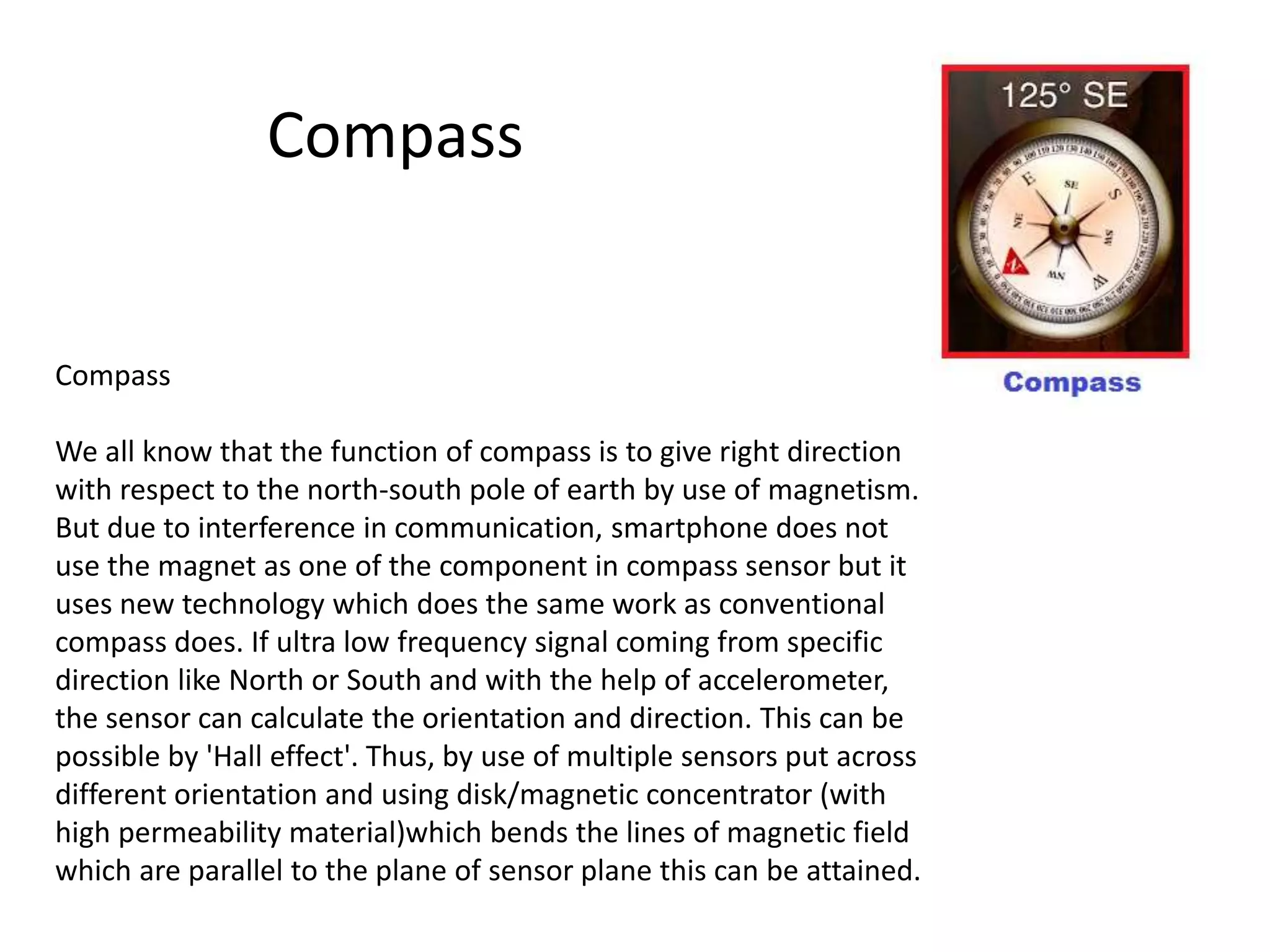
The proximity sensor detects how close an object is to a smartphone's screen. It detects the position of a user's ear during calls to turn off the screen and save battery. This prevents accidental touches. It also detects signal strength and filters interference using beam forming. The ambient light sensor adjusts screen brightness based on light intensity to save battery life. The accelerometer senses orientation changes to adjust the screen from portrait to landscape. The compass uses signals from sensors rather than a magnet to determine direction. Gyroscopes maintain orientation and detect motion in six axes like roll and pitch using MEMS technology. The back-illuminated sensor captures more light for photos. Higher-end phones have barometers for improved GPS accuracy and pedometers count