G PROTEIN COUPLED RECEPTORS
MANJU K M
MSC PLANT SCIENCE
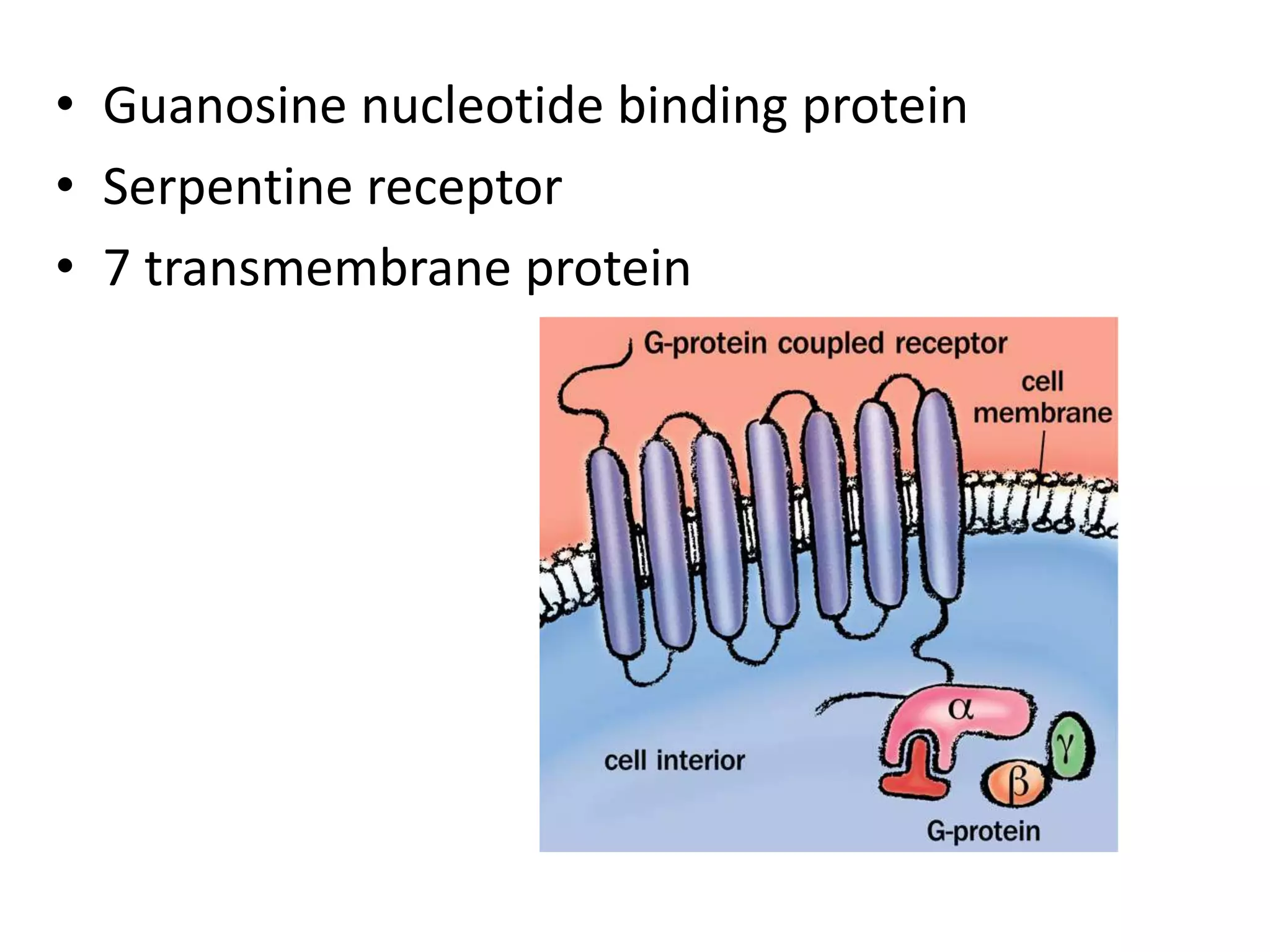
• Guanosine nucleotide binding protein
• Serpentine receptor
• 7 transmembrane protein
• Ligand binding causes a change in receptor
conformation that activate a particular
G Protein
• A portion of activated G protein binds to a
target protein there by altering targets activity
• Eg: Olfactory receptors
Norepinephrine receptors
Hormone receptors
G-protein-coupled receptors (7-TM receptors)
Structure - Single protein with 7 transmembrane regions
Transmembrane
helix
C -Terminal chain
G-Protein
binding region
Variable
intracellular loop
Extracellular
loops
Intracellular loops
N -Terminal chain
HO2C
NH2
VII VI V IV III II IMembrane
Structure of G protein
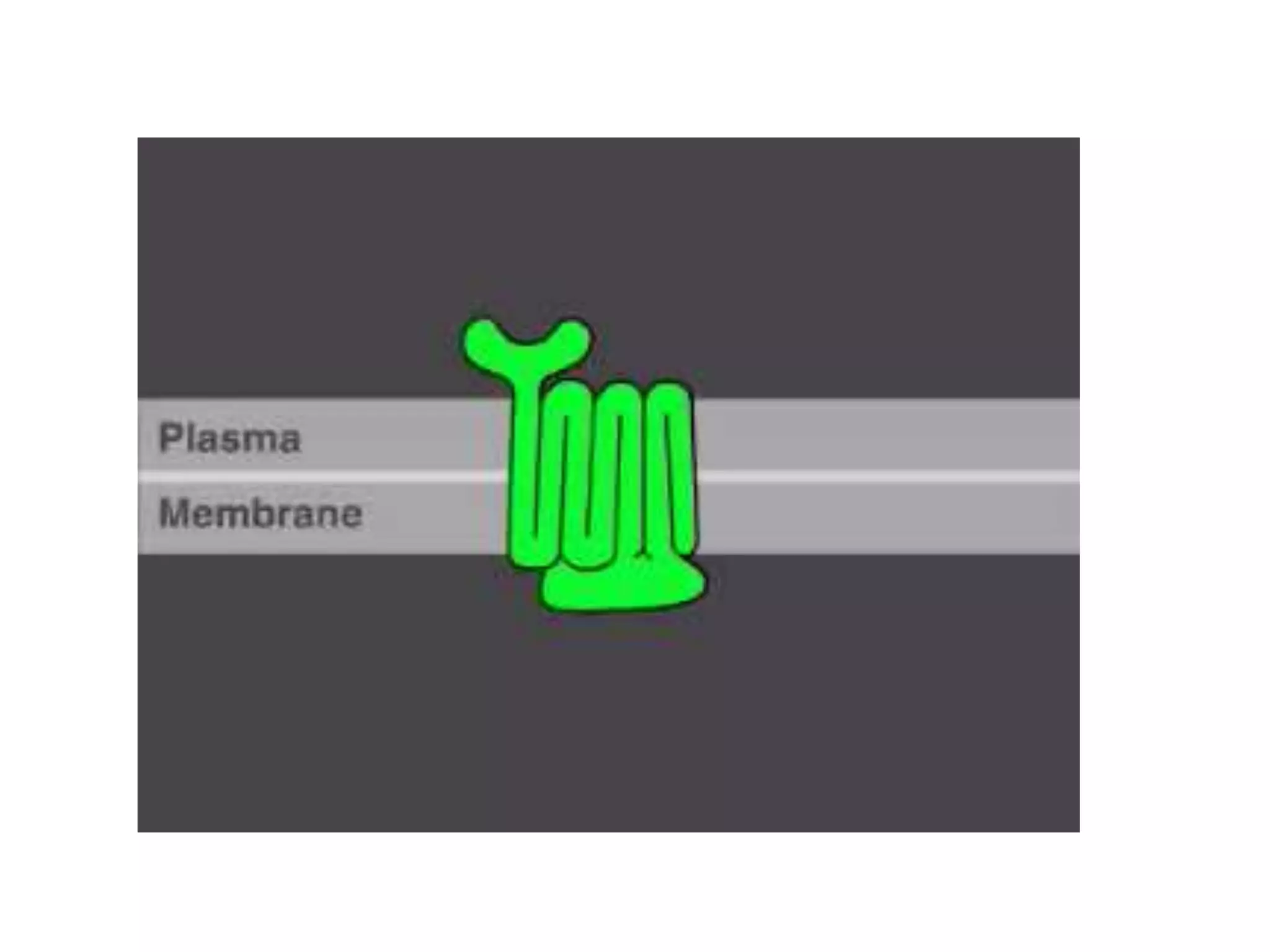
7 transmembrane helices connected by
alternating cytosolic and extra cellular loop
C terminal: inside the cell
N terminal : extra cellular region
Extra cellular portion has unique messenger
binding site
Cytosolic loop allow receptor to interact with G
protein
G protein contain 3different subunits
G Alpha
G Beta
G Gamma
G alpha – largest , binds to GTP or GDP
G beta & G gamma permanently bound together
Act like MOLECULAR SWITCHES
ON – when bind to GTP
OFF – when bind to GDP
When G alpha bind to GTP it detaches from beta and
gamma complex
• When a messenger bind to GPCR the receptor
change its conformation
• G alpha releases its bound GDP and acquires a
new molecule of GTP
• G alpha detaches from G beta & G gamma
complex
• Either the GTP-G alpha subunit or G beta
gamma can initiate signal transduction
Activity of G Protein persists as long as
• GTP is bound to G alpha subunit
• G alpha and g beta –g gamma complex remain
separated
This feature allows the signal transduction
pathway to shutdown when the messenger is
utilized
• RGS –Regulators of G Protein signaling Protein
Cyclic AMP production is regulated by G protein
CALCIUM ION RELEASING & GPCR
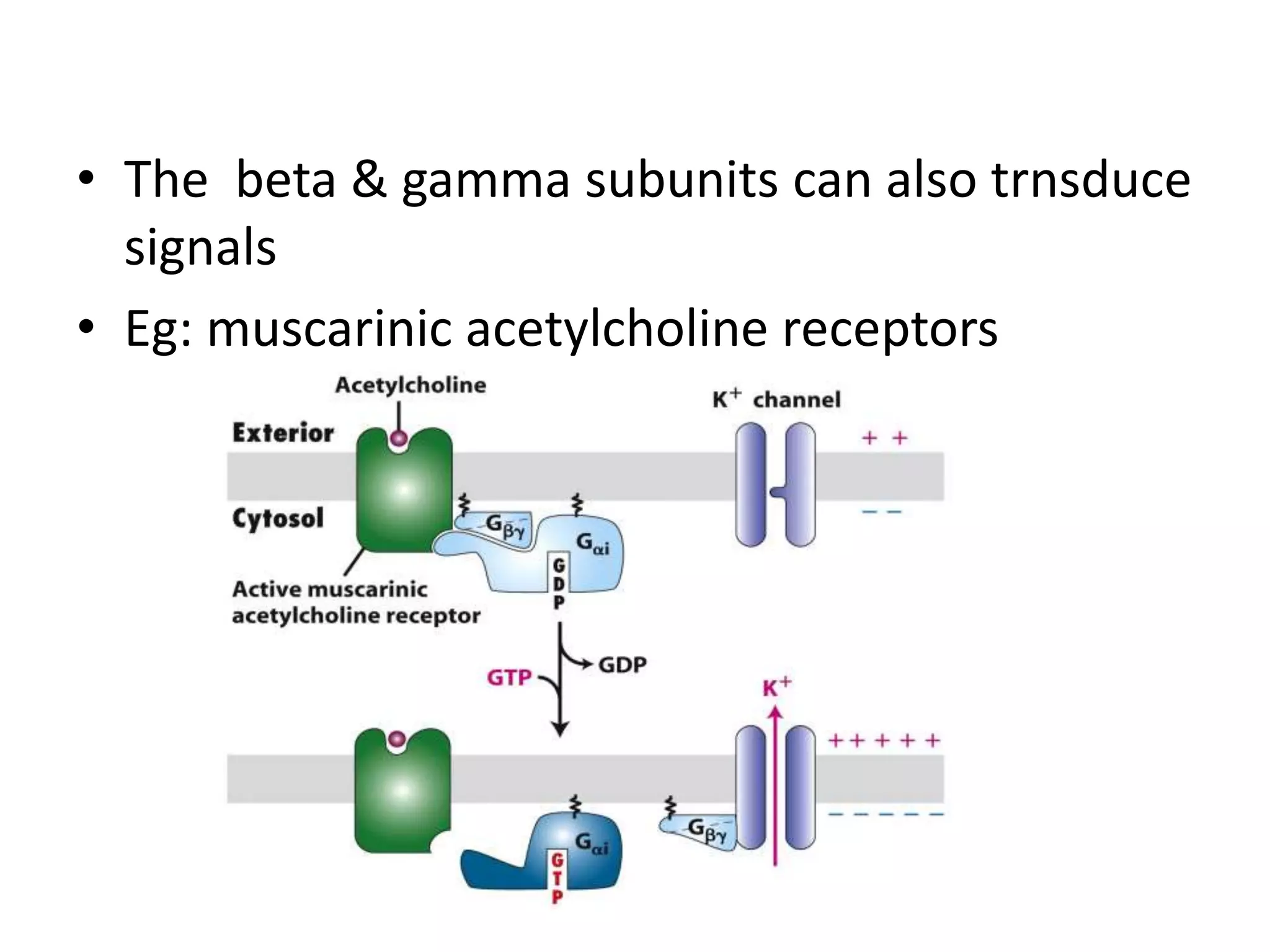
• The beta & gamma subunits can also trnsduce
signals
• Eg: muscarinic acetylcholine receptors
Nobel prize for chemistry 2012 for
studies of GPCR
ROBERT J. LEFKOWITZ BRIAN K . KOBILKA
Seminar gpcr ppt

Seminar gpcr ppt

  • 1.
    G PROTEIN COUPLEDRECEPTORS MANJU K M MSC PLANT SCIENCE
  • 2.
    • Guanosine nucleotidebinding protein • Serpentine receptor • 7 transmembrane protein
  • 3.
    • Ligand bindingcauses a change in receptor conformation that activate a particular G Protein • A portion of activated G protein binds to a target protein there by altering targets activity • Eg: Olfactory receptors Norepinephrine receptors Hormone receptors
  • 4.
    G-protein-coupled receptors (7-TMreceptors) Structure - Single protein with 7 transmembrane regions Transmembrane helix C -Terminal chain G-Protein binding region Variable intracellular loop Extracellular loops Intracellular loops N -Terminal chain HO2C NH2 VII VI V IV III II IMembrane
  • 5.
  • 6.
    7 transmembrane helicesconnected by alternating cytosolic and extra cellular loop C terminal: inside the cell N terminal : extra cellular region Extra cellular portion has unique messenger binding site Cytosolic loop allow receptor to interact with G protein
  • 7.
    G protein contain3different subunits G Alpha G Beta G Gamma G alpha – largest , binds to GTP or GDP G beta & G gamma permanently bound together
  • 8.
    Act like MOLECULARSWITCHES ON – when bind to GTP OFF – when bind to GDP When G alpha bind to GTP it detaches from beta and gamma complex
  • 9.
    • When amessenger bind to GPCR the receptor change its conformation • G alpha releases its bound GDP and acquires a new molecule of GTP • G alpha detaches from G beta & G gamma complex • Either the GTP-G alpha subunit or G beta gamma can initiate signal transduction
  • 11.
    Activity of GProtein persists as long as • GTP is bound to G alpha subunit • G alpha and g beta –g gamma complex remain separated This feature allows the signal transduction pathway to shutdown when the messenger is utilized • RGS –Regulators of G Protein signaling Protein
  • 13.
    Cyclic AMP productionis regulated by G protein
  • 15.
  • 16.
    • The beta& gamma subunits can also trnsduce signals • Eg: muscarinic acetylcholine receptors
  • 17.
    Nobel prize forchemistry 2012 for studies of GPCR ROBERT J. LEFKOWITZ BRIAN K . KOBILKA