
ADENYLYL CYCLASE SIGNALING
PREPARED BY :- ARUNDHATI MEHTA
SEMESTER :- M.Sc. BIOTECH I
© ArundhatiMehta 2016
INTRODUCTION
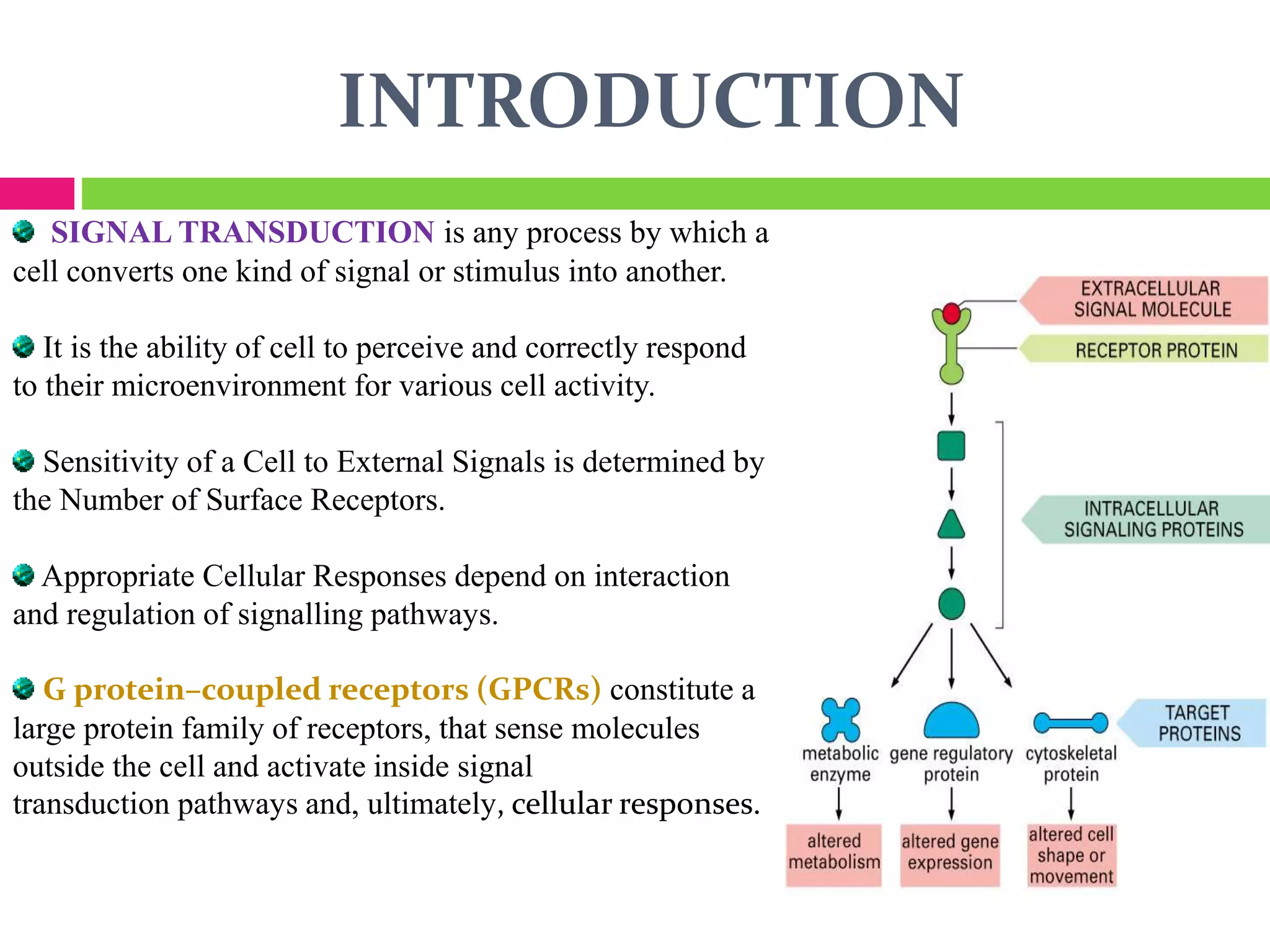
SIGNAL TRANSDUCTION is any process by which a
cell converts one kind of signal or stimulus into another.
It is the ability of cell to perceive and correctly respond
to their microenvironment for various cell activity.
Sensitivity of a Cell to External Signals is determined by
the Number of Surface Receptors.
Appropriate Cellular Responses depend on interaction
and regulation of signalling pathways.
G protein–coupled receptors (GPCRs) constitute a
large protein family of receptors, that sense molecules
outside the cell and activate inside signal
transduction pathways and, ultimately, cellular responses.
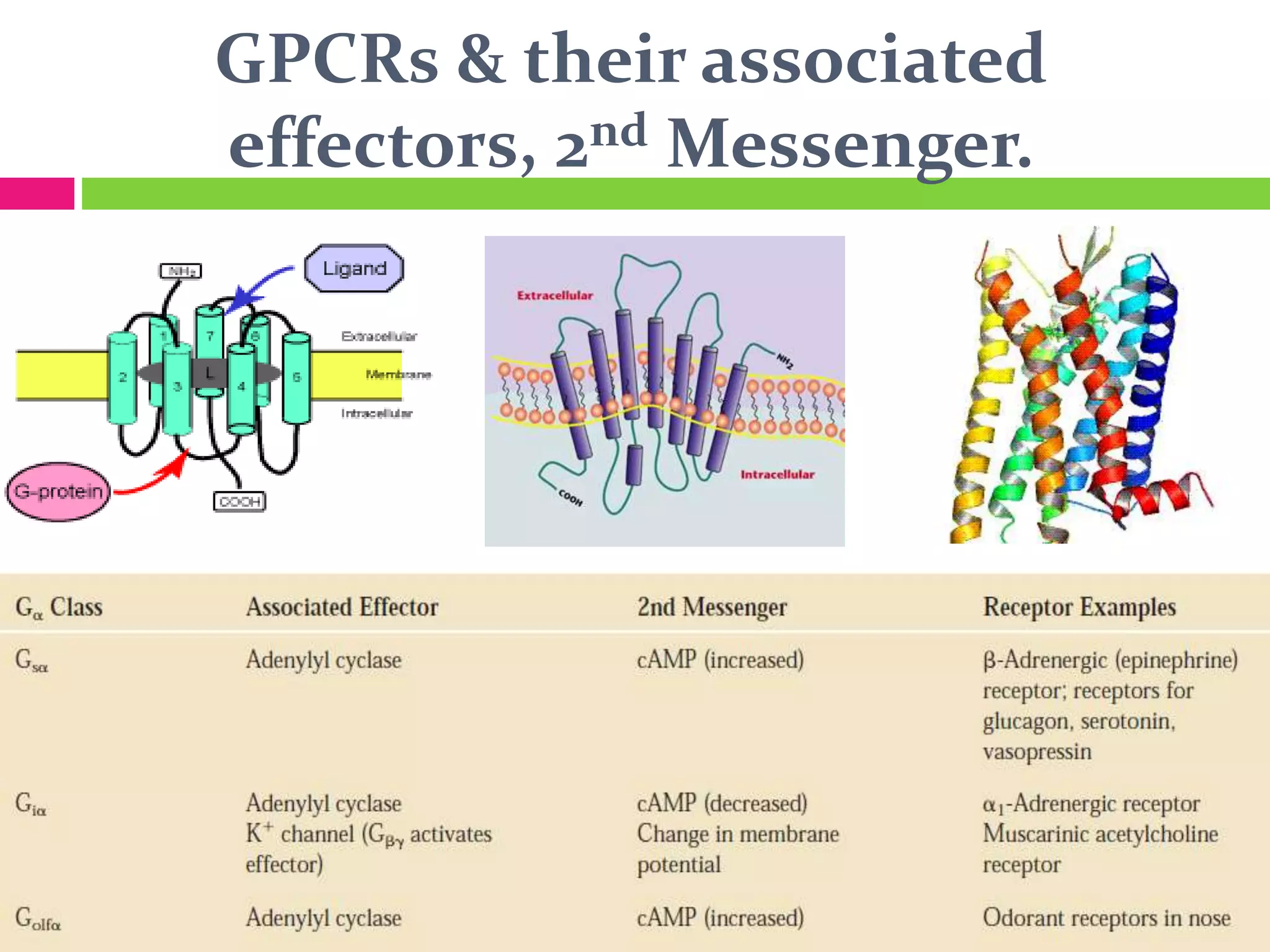
GPCRs & their associated
effectors, 2nd Messenger.
ADENYLYL CYCLASE
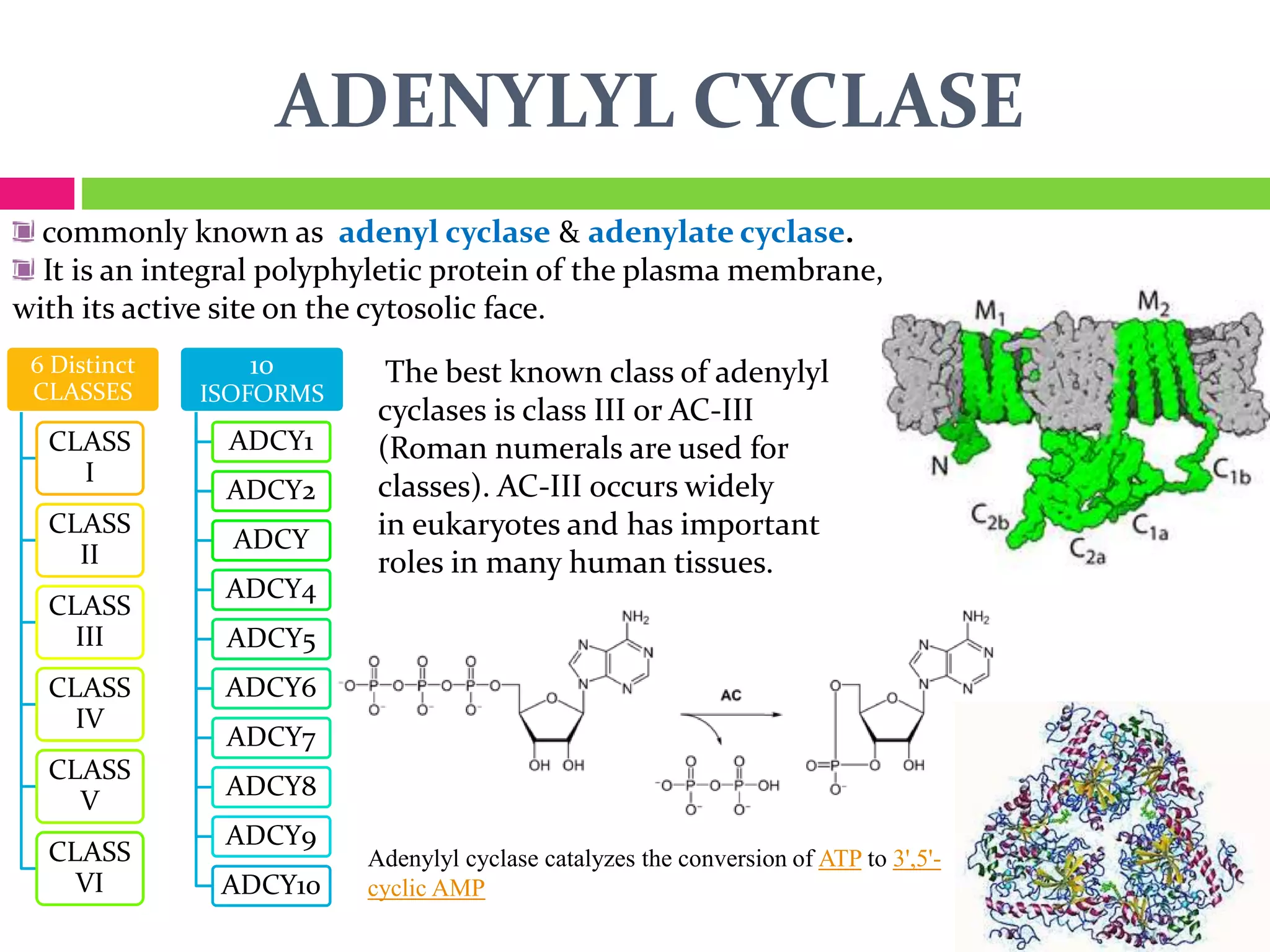
commonly known as adenyl cyclase & adenylate cyclase.
It is an integral polyphyletic protein of the plasma membrane,
with its active site on the cytosolic face.
6 Distinct
CLASSES
CLASS
I
CLASS
II
CLASS
III
CLASS
IV
CLASS
V
CLASS
VI
10
ISOFORMS
ADCY1
ADCY2
ADCY
ADCY4
ADCY5
ADCY6
ADCY7
ADCY8
ADCY9
ADCY10
The best known class of adenylyl
cyclases is class III or AC-III
(Roman numerals are used for
classes). AC-III occurs widely
in eukaryotes and has important
roles in many human tissues.
Adenylyl cyclase catalyzes the conversion of ATP to 3',5'-
cyclic AMP
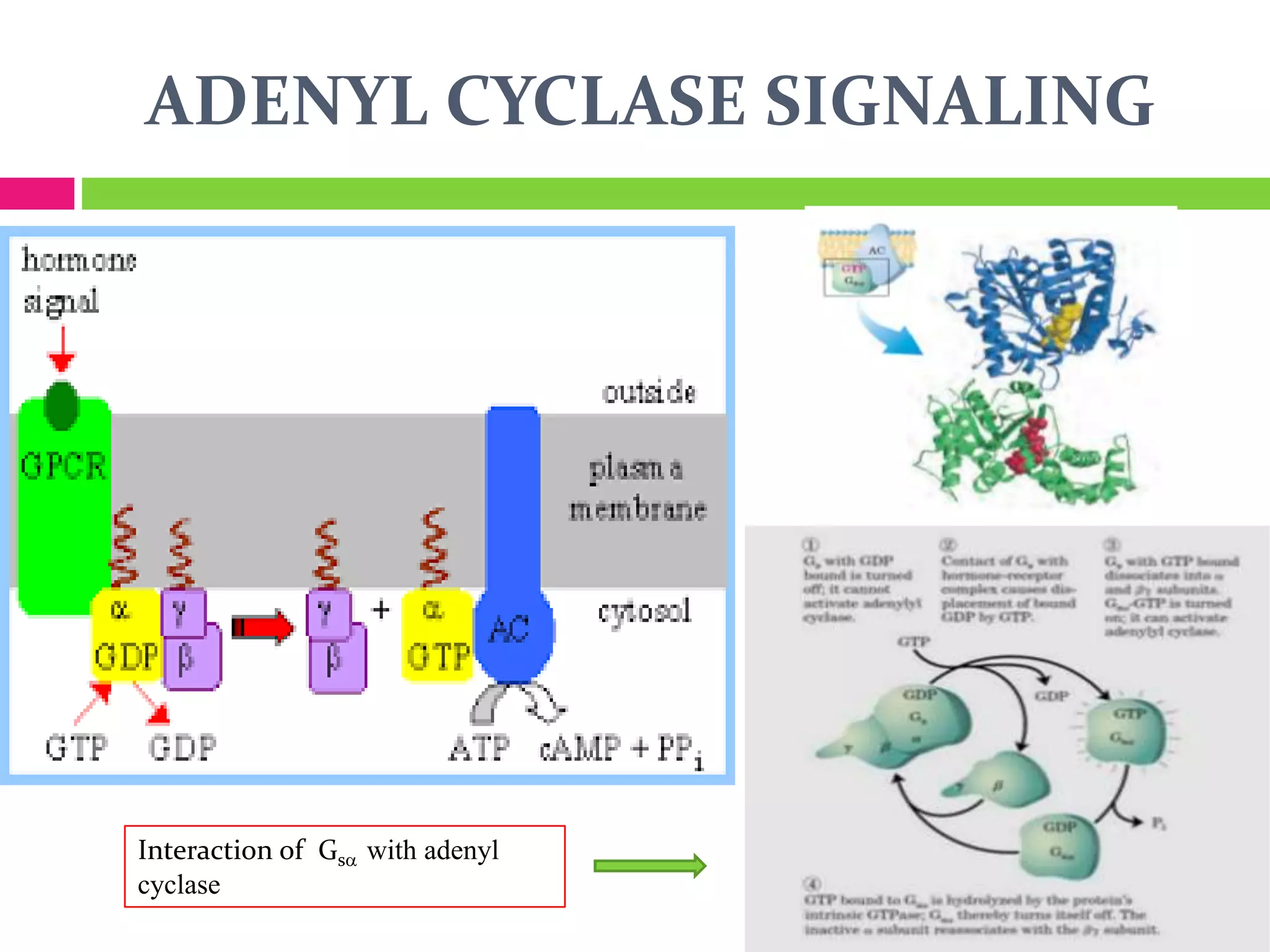
ADENYL CYCLASE SIGNALING
Interaction of Gsa with adenyl
cyclase
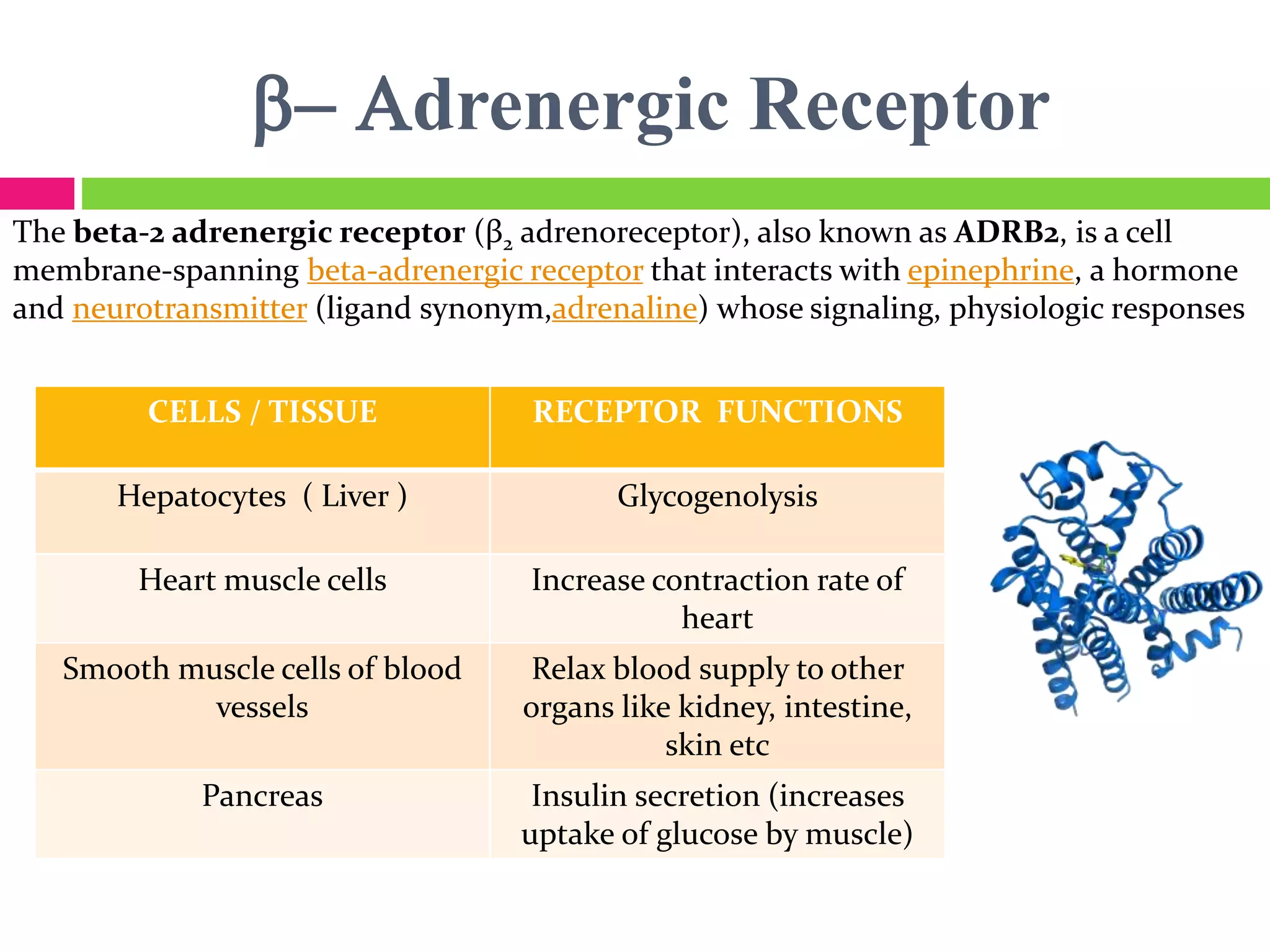
b- Adrenergic Receptor
The beta-2 adrenergic receptor (β2 adrenoreceptor), also known as ADRB2, is a cell
membrane-spanning beta-adrenergic receptor that interacts with epinephrine, a hormone
and neurotransmitter (ligand synonym,adrenaline) whose signaling, physiologic responses
CELLS / TISSUE RECEPTOR FUNCTIONS
Hepatocytes ( Liver ) Glycogenolysis
Heart muscle cells Increase contraction rate of
heart
Smooth muscle cells of blood
vessels
Relax blood supply to other
organs like kidney, intestine,
skin etc
Pancreas Insulin secretion (increases
uptake of glucose by muscle)
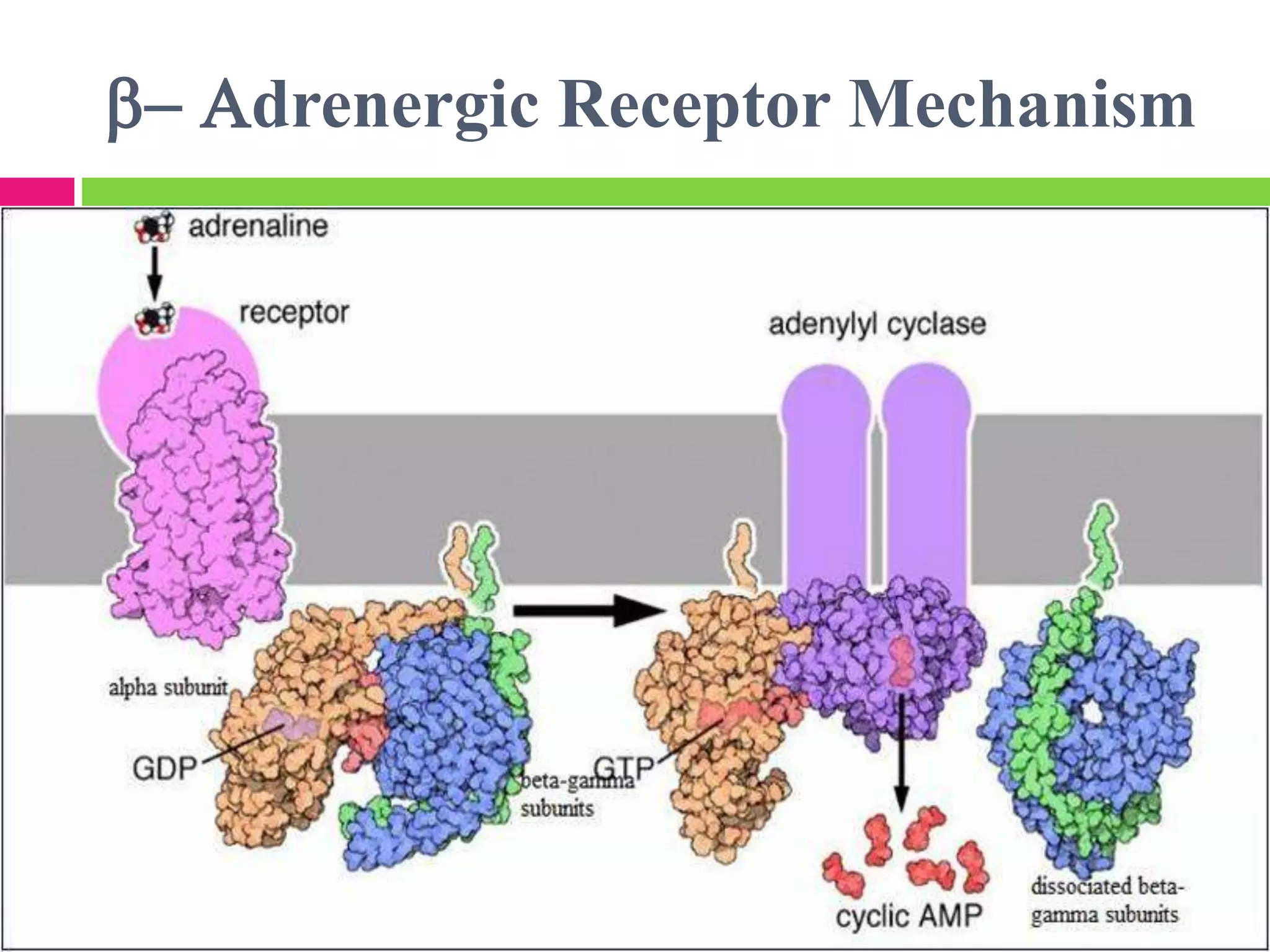
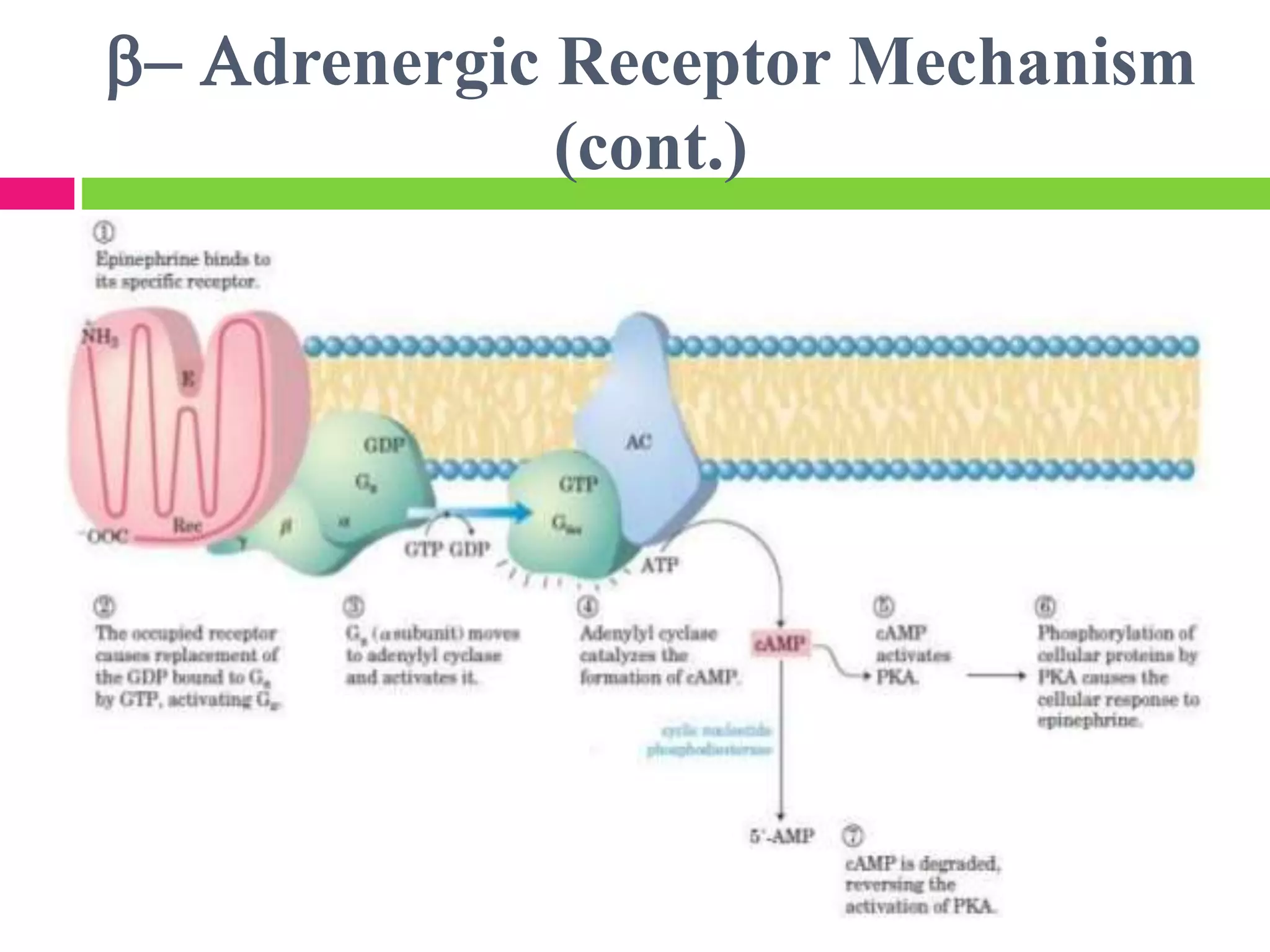
b- Adrenergic Receptor Mechanism
(cont.)
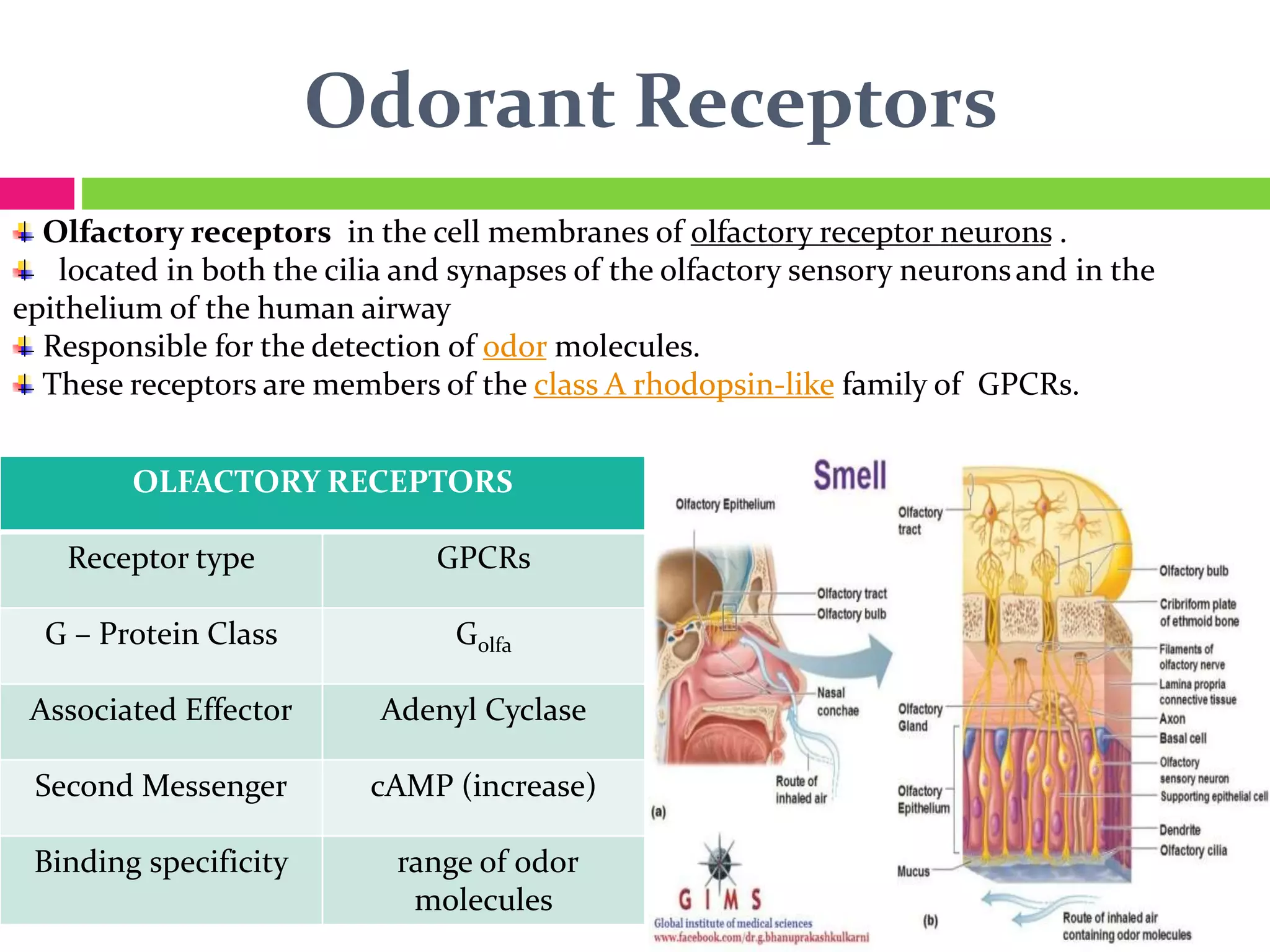
Odorant Receptors
Olfactory receptors in the cell membranes of olfactory receptor neurons .
located in both the cilia and synapses of the olfactory sensory neuronsand in the
epithelium of the human airway
Responsible for the detection of odor molecules.
These receptors are members of the class A rhodopsin-like family of GPCRs.
OLFACTORY RECEPTORS
Receptor type GPCRs
G – Protein Class Golfa
Associated Effector Adenyl Cyclase
Second Messenger cAMP (increase)
Binding specificity range of odor
molecules
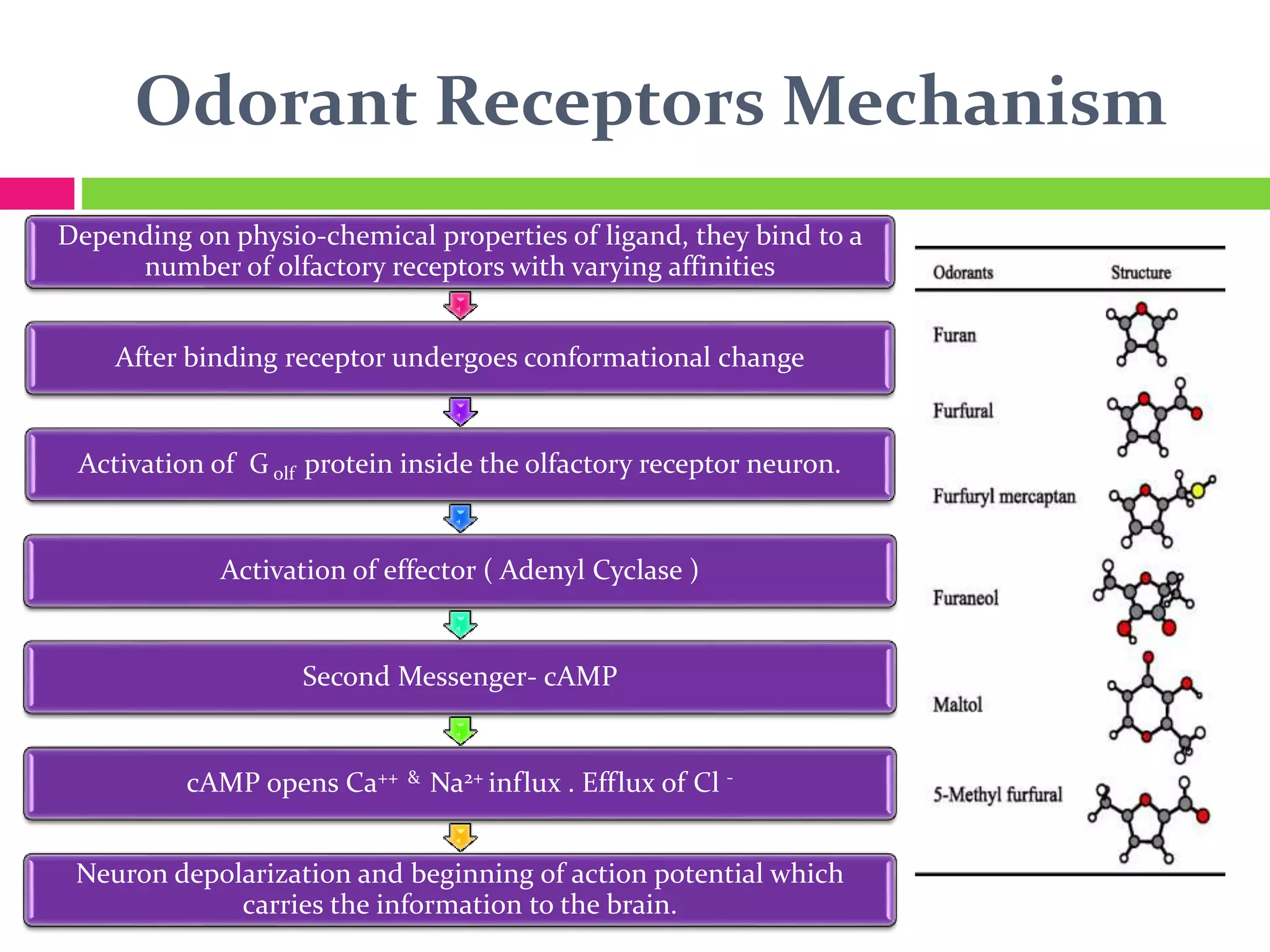
Odorant Receptors Mechanism
Depending on physio-chemical properties of ligand, they bind to a
number of olfactory receptors with varying affinities
After binding receptor undergoes conformational change
Activation of G olf protein inside the olfactory receptor neuron.
Activation of effector ( Adenyl Cyclase )
Second Messenger- cAMP
cAMP opens Ca++ & Na2+ influx . Efflux of Cl -
Neuron depolarization and beginning of action potential which
carries the information to the brain.
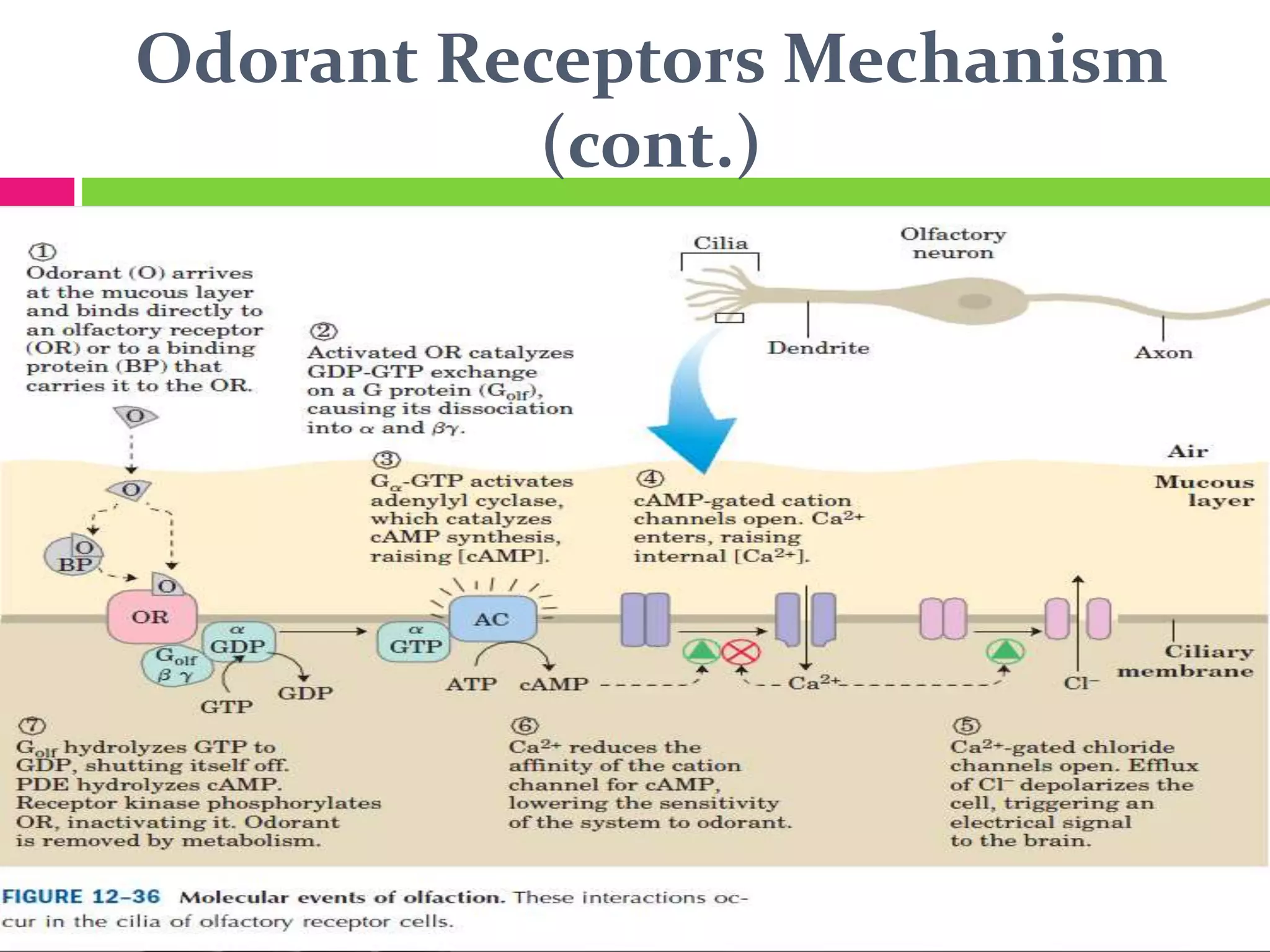
Odorant Receptors Mechanism
(cont.)
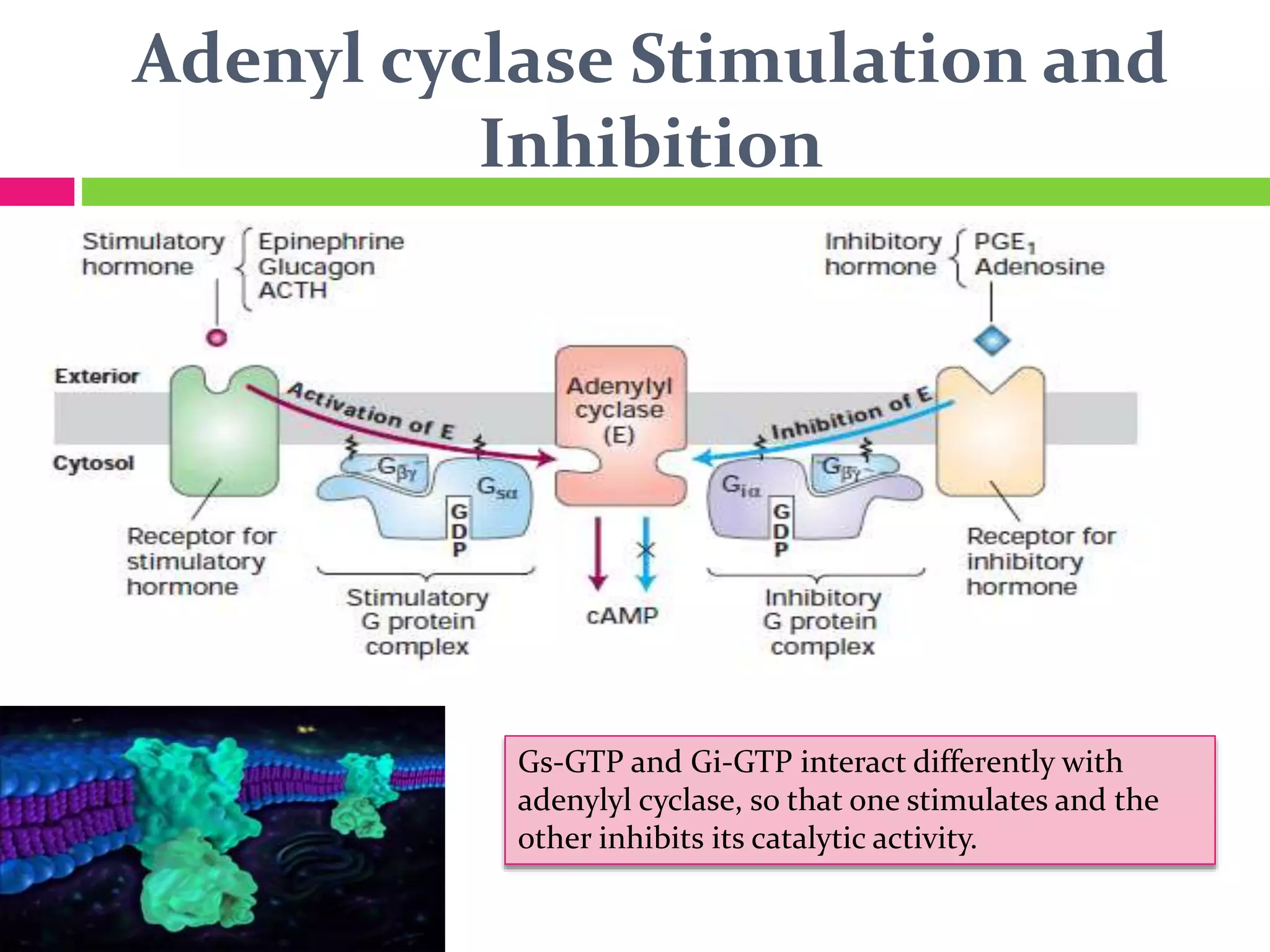
Adenyl cyclase Stimulation and
Inhibition
Gs-GTP and Gi-GTP interact differently with
adenylyl cyclase, so that one stimulates and the
other inhibits its catalytic activity.
Adenyl cyclase signaling   slideshare

Adenyl cyclase signaling slideshare

  • 1.
    ADENYLYL CYCLASE SIGNALING PREPAREDBY :- ARUNDHATI MEHTA SEMESTER :- M.Sc. BIOTECH I © ArundhatiMehta 2016
  • 2.
    INTRODUCTION SIGNAL TRANSDUCTION isany process by which a cell converts one kind of signal or stimulus into another. It is the ability of cell to perceive and correctly respond to their microenvironment for various cell activity. Sensitivity of a Cell to External Signals is determined by the Number of Surface Receptors. Appropriate Cellular Responses depend on interaction and regulation of signalling pathways. G protein–coupled receptors (GPCRs) constitute a large protein family of receptors, that sense molecules outside the cell and activate inside signal transduction pathways and, ultimately, cellular responses.
  • 3.
    GPCRs & theirassociated effectors, 2nd Messenger.
  • 4.
    ADENYLYL CYCLASE commonly knownas adenyl cyclase & adenylate cyclase. It is an integral polyphyletic protein of the plasma membrane, with its active site on the cytosolic face. 6 Distinct CLASSES CLASS I CLASS II CLASS III CLASS IV CLASS V CLASS VI 10 ISOFORMS ADCY1 ADCY2 ADCY ADCY4 ADCY5 ADCY6 ADCY7 ADCY8 ADCY9 ADCY10 The best known class of adenylyl cyclases is class III or AC-III (Roman numerals are used for classes). AC-III occurs widely in eukaryotes and has important roles in many human tissues. Adenylyl cyclase catalyzes the conversion of ATP to 3',5'- cyclic AMP
  • 5.
    ADENYL CYCLASE SIGNALING Interactionof Gsa with adenyl cyclase
  • 6.
    b- Adrenergic Receptor Thebeta-2 adrenergic receptor (β2 adrenoreceptor), also known as ADRB2, is a cell membrane-spanning beta-adrenergic receptor that interacts with epinephrine, a hormone and neurotransmitter (ligand synonym,adrenaline) whose signaling, physiologic responses CELLS / TISSUE RECEPTOR FUNCTIONS Hepatocytes ( Liver ) Glycogenolysis Heart muscle cells Increase contraction rate of heart Smooth muscle cells of blood vessels Relax blood supply to other organs like kidney, intestine, skin etc Pancreas Insulin secretion (increases uptake of glucose by muscle)
  • 7.
  • 8.
    b- Adrenergic ReceptorMechanism (cont.)
  • 9.
    Odorant Receptors Olfactory receptorsin the cell membranes of olfactory receptor neurons . located in both the cilia and synapses of the olfactory sensory neuronsand in the epithelium of the human airway Responsible for the detection of odor molecules. These receptors are members of the class A rhodopsin-like family of GPCRs. OLFACTORY RECEPTORS Receptor type GPCRs G – Protein Class Golfa Associated Effector Adenyl Cyclase Second Messenger cAMP (increase) Binding specificity range of odor molecules
  • 10.
    Odorant Receptors Mechanism Dependingon physio-chemical properties of ligand, they bind to a number of olfactory receptors with varying affinities After binding receptor undergoes conformational change Activation of G olf protein inside the olfactory receptor neuron. Activation of effector ( Adenyl Cyclase ) Second Messenger- cAMP cAMP opens Ca++ & Na2+ influx . Efflux of Cl - Neuron depolarization and beginning of action potential which carries the information to the brain.
  • 11.
  • 12.
    Adenyl cyclase Stimulationand Inhibition Gs-GTP and Gi-GTP interact differently with adenylyl cyclase, so that one stimulates and the other inhibits its catalytic activity.