By
SHAIKH SANIYA
 Steroids has a wide distribution in nature and are formed by
similar biochemical pathways.
 Steroids have broad functions in physiology, they act as
1. Male sex hormone .Eg: testosterone.
2. Female sex hormone. Eg: estradiol, progesterone.
3. Anti inflammatory agent Eg: cortisone.
4. Cardiac steroids Eg: digitoxigenin.
5. Diuretics Eg: spironolactone.
6. Digestants .Eg:dihydrocholic
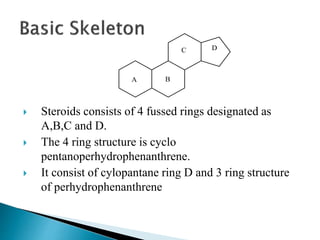
 Steroids consists of 4 fussed rings designated as
A,B,C and D.
 The 4 ring structure is cyclo
pentanoperhydrophenanthrene.
 It consist of cylopantane ring D and 3 ring structure
of perhydrophenanthrene
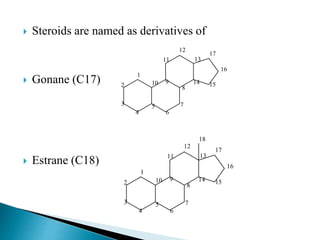
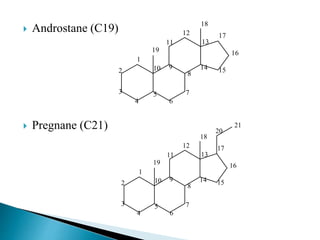
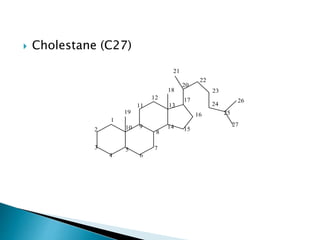
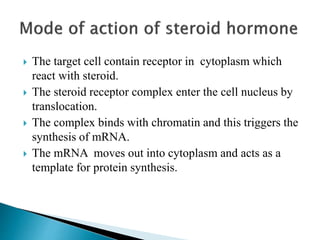
 Steroids are named as derivatives of
 Gonane (C17)
 Estrane (C18)
 Androstane (C19)
 Pregnane (C21)
 Cholestane (C27)
 The target cell contain receptor in cytoplasm which
react with steroid.
 The steroid receptor complex enter the cell nucleus by
translocation.
 The complex binds with chromatin and this triggers the
synthesis of mRNA.
 The mRNA moves out into cytoplasm and acts as a
template for protein synthesis.
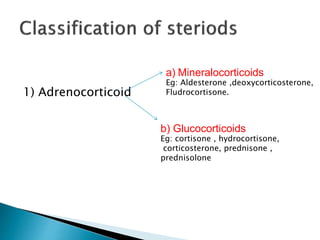
1) Adrenocorticoid
a) Mineralocorticoids
Eg: Aldesterone ,deoxycorticosterone,
Fludrocortisone.
b) Glucocorticoids
Eg: cortisone , hydrocortisone,
corticosterone, prednisone ,
prednisolone
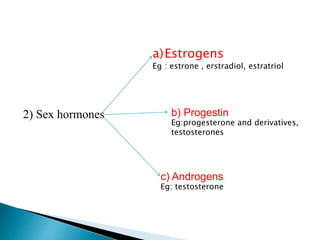
2) Sex hormones
a)Estrogens
Eg : estrone , erstradiol, estratriol
b) Progestin
Eg:progesterone and derivatives,
testosterones
c) Androgens
Eg: testosterone
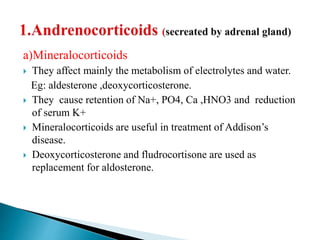
a)Mineralocorticoids
 They affect mainly the metabolism of electrolytes and water.
Eg: aldesterone ,deoxycorticosterone.
 They cause retention of Na+, PO4, Ca ,HNO3 and reduction
of serum K+
 Mineralocorticoids are useful in treatment of Addison’s
disease.
 Deoxycorticosterone and fludrocortisone are used as
replacement for aldosterone.
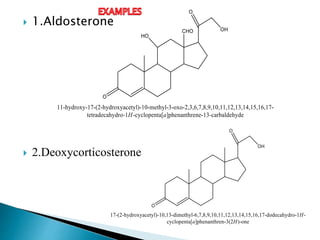
 1.Aldosterone
 2.Deoxycorticosterone
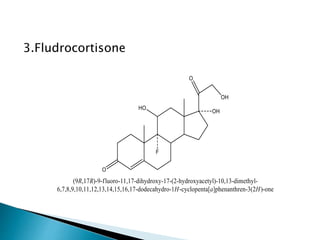
3.Fludrocortisone
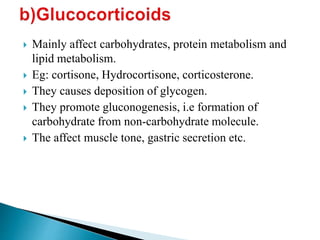
 Mainly affect carbohydrates, protein metabolism and
lipid metabolism.
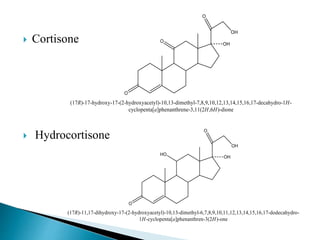
 Eg: cortisone, Hydrocortisone, corticosterone.
 They causes deposition of glycogen.
 They promote gluconogenesis, i.e formation of
carbohydrate from non-carbohydrate molecule.
 The affect muscle tone, gastric secretion etc.
 Cortisone
 Hydrocortisone
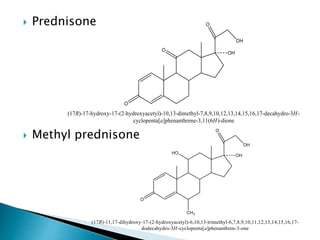
 Prednisone
 Methyl prednisone
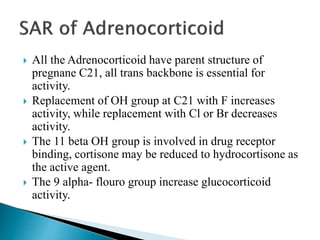
 All the Adrenocorticoid have parent structure of
pregnane C21, all trans backbone is essential for
activity.
 Replacement of OH group at C21 with F increases
activity, while replacement with Cl or Br decreases
activity.
 The 11 beta OH group is involved in drug receptor
binding, cortisone may be reduced to hydrocortisone as
the active agent.
 The 9 alpha- flouro group increase glucocorticoid
activity.
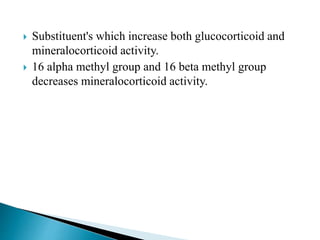
 Substituent's which increase both glucocorticoid and
mineralocorticoid activity.
 16 alpha methyl group and 16 beta methyl group
decreases mineralocorticoid activity.
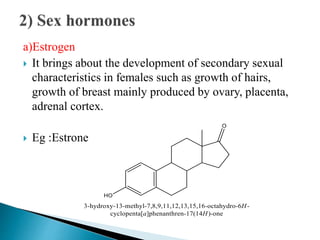
a)Estrogen
 It brings about the development of secondary sexual
characteristics in females such as growth of hairs,
growth of breast mainly produced by ovary, placenta,
adrenal cortex.
 Eg :Estrone
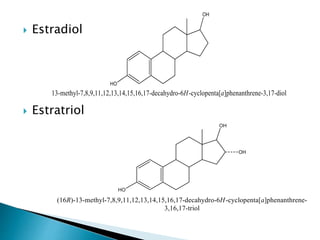
 Estradiol
 Estratriol
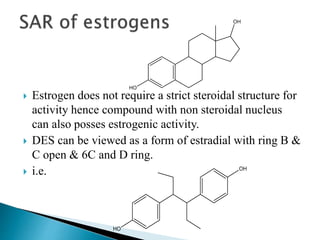
 Estrogen does not require a strict steroidal structure for
activity hence compound with non steroidal nucleus
can also posses estrogenic activity.
 DES can be viewed as a form of estradial with ring B &
C open & 6C and D ring.
 i.e.
 Reduction of double bonds of DES results in two
diasteromers of hexesterol.
 USES OF ESTROGENS
 Prevention and treatment of post menopausal
osteoporosis and other deficiency diseases.
 In abnormal uterine bleeding.
 In failure of ovarian development.
 As oral contraceptive with progestins.
b. Progestogens
 After ovulation takes place, corpus luteum is formed.
 It produces the hormone progesterone which maintains
pregnancy and prevents ovulation during pregnancy.
 Progestin are compound that have biologic activities
similar to progesterone.
 They include 2 structural classes
a)progesterone and derivatives
b)testosterones
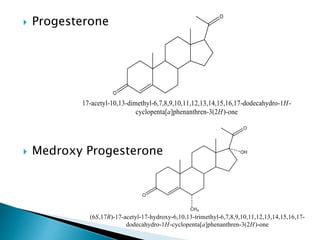
 Progesterone
 Medroxy Progesterone
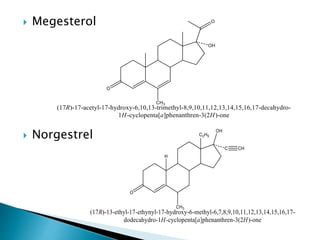
 Megesterol
 Norgestrel
 Steroidal nucleus is important for progestational
activity.
 The synthetic progestin's are of different types:
a. prognane derivatives
b. androthane derivatives
c. estrane derivatives
 Ethisterone has a progestational as well as androgenic
activity.
 Removal of 19 CH3 group decreases androgenic
activity.
 In male , FHS &LH are released under the regulation of
hypothalamus.
 FSH promotes sperm development or spermatogenesis
& LH stimulates the interstitial leying cells to secrete
androgens.
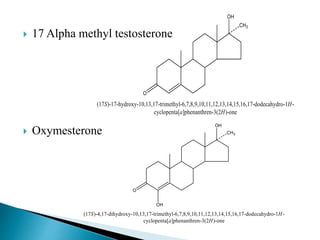
 The important androgen is testosterone.
 Testosterone
 Testosterone has 2 main activities
1. Androgenic or male sex characteristic promoting
activity.
2. Anabolic or muscle building activity.
 It increase rate of protein synthesis & decrease rate of
protein breakdown.
 17 Alpha methyl testosterone
 Oxymesterone
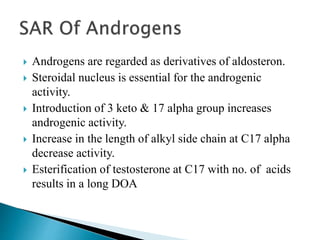
 Androgens are regarded as derivatives of aldosteron.
 Steroidal nucleus is essential for the androgenic
activity.
 Introduction of 3 keto & 17 alpha group increases
androgenic activity.
 Increase in the length of alkyl side chain at C17 alpha
decrease activity.
 Esterification of testosterone at C17 with no. of acids
results in a long DOA
Steroids

Steroids

  • 1.
  • 2.
     Steroids hasa wide distribution in nature and are formed by similar biochemical pathways.  Steroids have broad functions in physiology, they act as 1. Male sex hormone .Eg: testosterone. 2. Female sex hormone. Eg: estradiol, progesterone. 3. Anti inflammatory agent Eg: cortisone. 4. Cardiac steroids Eg: digitoxigenin. 5. Diuretics Eg: spironolactone. 6. Digestants .Eg:dihydrocholic
  • 3.
     Steroids consistsof 4 fussed rings designated as A,B,C and D.  The 4 ring structure is cyclo pentanoperhydrophenanthrene.  It consist of cylopantane ring D and 3 ring structure of perhydrophenanthrene
  • 4.
     Steroids arenamed as derivatives of  Gonane (C17)  Estrane (C18)
  • 5.
  • 6.
  • 7.
     The targetcell contain receptor in cytoplasm which react with steroid.  The steroid receptor complex enter the cell nucleus by translocation.  The complex binds with chromatin and this triggers the synthesis of mRNA.  The mRNA moves out into cytoplasm and acts as a template for protein synthesis.
  • 8.
    1) Adrenocorticoid a) Mineralocorticoids Eg:Aldesterone ,deoxycorticosterone, Fludrocortisone. b) Glucocorticoids Eg: cortisone , hydrocortisone, corticosterone, prednisone , prednisolone
  • 9.
    2) Sex hormones a)Estrogens Eg: estrone , erstradiol, estratriol b) Progestin Eg:progesterone and derivatives, testosterones c) Androgens Eg: testosterone
  • 10.
    a)Mineralocorticoids  They affectmainly the metabolism of electrolytes and water. Eg: aldesterone ,deoxycorticosterone.  They cause retention of Na+, PO4, Ca ,HNO3 and reduction of serum K+  Mineralocorticoids are useful in treatment of Addison’s disease.  Deoxycorticosterone and fludrocortisone are used as replacement for aldosterone.
  • 11.
  • 12.
  • 13.
     Mainly affectcarbohydrates, protein metabolism and lipid metabolism.  Eg: cortisone, Hydrocortisone, corticosterone.  They causes deposition of glycogen.  They promote gluconogenesis, i.e formation of carbohydrate from non-carbohydrate molecule.  The affect muscle tone, gastric secretion etc.
  • 14.
  • 15.
  • 16.
     All theAdrenocorticoid have parent structure of pregnane C21, all trans backbone is essential for activity.  Replacement of OH group at C21 with F increases activity, while replacement with Cl or Br decreases activity.  The 11 beta OH group is involved in drug receptor binding, cortisone may be reduced to hydrocortisone as the active agent.  The 9 alpha- flouro group increase glucocorticoid activity.
  • 17.
     Substituent's whichincrease both glucocorticoid and mineralocorticoid activity.  16 alpha methyl group and 16 beta methyl group decreases mineralocorticoid activity.
  • 18.
    a)Estrogen  It bringsabout the development of secondary sexual characteristics in females such as growth of hairs, growth of breast mainly produced by ovary, placenta, adrenal cortex.  Eg :Estrone
  • 19.
  • 20.
     Estrogen doesnot require a strict steroidal structure for activity hence compound with non steroidal nucleus can also posses estrogenic activity.  DES can be viewed as a form of estradial with ring B & C open & 6C and D ring.  i.e.
  • 21.
     Reduction ofdouble bonds of DES results in two diasteromers of hexesterol.  USES OF ESTROGENS  Prevention and treatment of post menopausal osteoporosis and other deficiency diseases.  In abnormal uterine bleeding.  In failure of ovarian development.  As oral contraceptive with progestins.
  • 22.
    b. Progestogens  Afterovulation takes place, corpus luteum is formed.  It produces the hormone progesterone which maintains pregnancy and prevents ovulation during pregnancy.  Progestin are compound that have biologic activities similar to progesterone.  They include 2 structural classes a)progesterone and derivatives b)testosterones
  • 23.
  • 24.
  • 25.
     Steroidal nucleusis important for progestational activity.  The synthetic progestin's are of different types: a. prognane derivatives b. androthane derivatives c. estrane derivatives  Ethisterone has a progestational as well as androgenic activity.  Removal of 19 CH3 group decreases androgenic activity.
  • 26.
     In male, FHS &LH are released under the regulation of hypothalamus.  FSH promotes sperm development or spermatogenesis & LH stimulates the interstitial leying cells to secrete androgens.  The important androgen is testosterone.  Testosterone
  • 27.
     Testosterone has2 main activities 1. Androgenic or male sex characteristic promoting activity. 2. Anabolic or muscle building activity.  It increase rate of protein synthesis & decrease rate of protein breakdown.
  • 28.
     17 Alphamethyl testosterone  Oxymesterone
  • 29.
     Androgens areregarded as derivatives of aldosteron.  Steroidal nucleus is essential for the androgenic activity.  Introduction of 3 keto & 17 alpha group increases androgenic activity.  Increase in the length of alkyl side chain at C17 alpha decrease activity.  Esterification of testosterone at C17 with no. of acids results in a long DOA