I. Objective
Identify the parts of the blood.
II. Subject Matter
Topic: Blood
Materials: pictures/flashcards
Reference:Exploring and Protecting Our
world.
Pp. 9 – 11
Process skills:
Observing; describing; enumerating
Science Idea:
Blood also called red river of life. The
components of blood are:plasma, red blood
cells, white blood cells and platelets
III. Procedure
A. Engagement
1.Question
 Why do you think blood is
important to our body?
2.Motivation
(The teacher will play a song about blood.)
 What is the song all about?
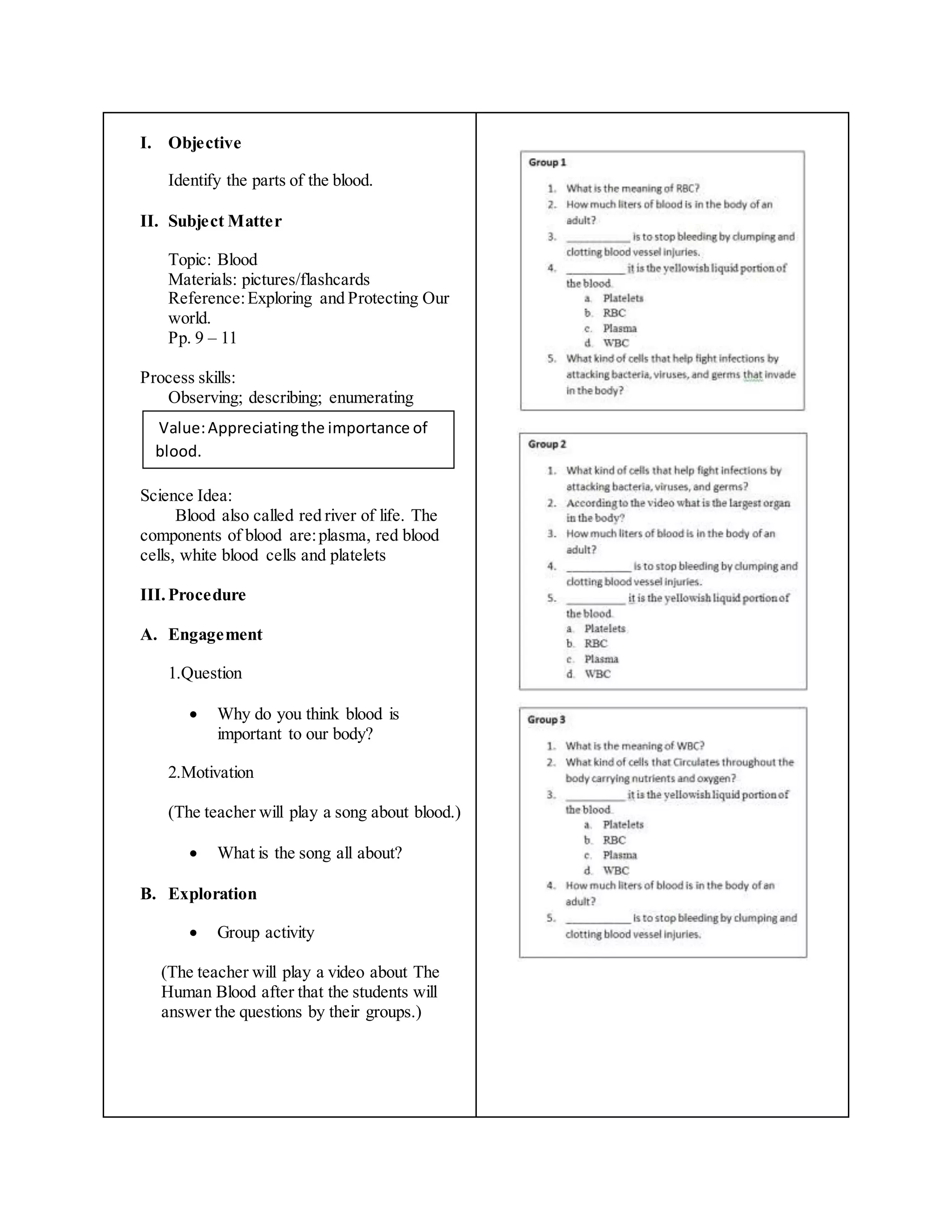
B. Exploration
 Group activity
(The teacher will play a video about The
Human Blood after that the students will
answer the questions by their groups.)
Value:Appreciatingthe importance of
blood.
C. Explanation
1. Discussion
 What is blood?
 What are the components of the
blood and its functions?
D. Elaboration
1. Generalization
What is blood?
Blood
• Also called red river of life.
• It Makes 7 – 9% of your body weight.
• The liquid components of the
cardiovascular system.
• Circulates throughout the body
carrying nutrients and oxygen.
What are the components of the blood
and its functions?
1. Plasma
• It is the yellowish liquid portion of the
blood.
• It is composed of 90% water and 10%
dissolved nutrients, proteins, minerals,
salts and waste products, antibodies.
2. Red blood cells –
• Also called red corpuscles or
erythrocytes.
• These are constantly produced by the
bone marrow.
• These contain hemoglobin, the iron &
oxygen carrier of the blood.
that invade the body.
• These are bigger than RBC.
• Fewer in number.
6. White blood cells –
• Also called white corpuscles or
leukocytes.
• These cells help fight infections by
attacking bacteria, viruses, and germs
that invade the body.
• These are bigger than RBC.
• Fewer in number.
7. Platelets –
• Isto stop bleedingbyclumpingand
clottingbloodvesselinjuries.
• Minute Disc(smallerthanRBC.)
• Colorlessandirregularinshape.
2. Application
What will happen to our body if we
don’t have any blood?
E. Evaluation
1. What is blood? (2pts)
2. What are the components of the
blood and its functions? (2pts.
Each)
For other sections:
1. What kind of cells thathelp fight infections
by attackingbacteria,viruses,and germs?
a. White blood cells
b. Red blood cells
c. Plasma
d. Blue blood cells
2. What kind of cells thatCirculates
throughout the body carryingnutrients
and oxygen?
a. Plasma
b. White blood cells
c. Red blood cells
d. Platelets
3. How much liters of blood is in the body of an
adult?
a. 5 liters
b. 0 liters
c. 1 liters
d. 3 liters
4. ____________ also called Red river of life.
a. Plasma
b. Water
c. White blood cells
d. Blood
5. __________ is to stop bleeding by clumping
and clottingblood vessel injuries.
a. Red blood cells
b. Plasma
c. White blood cells
d. platelets

Semi Lesson plan for Grade 6 Topic: The Human Blood

  • 1.
    I. Objective Identify theparts of the blood. II. Subject Matter Topic: Blood Materials: pictures/flashcards Reference:Exploring and Protecting Our world. Pp. 9 – 11 Process skills: Observing; describing; enumerating Science Idea: Blood also called red river of life. The components of blood are:plasma, red blood cells, white blood cells and platelets III. Procedure A. Engagement 1.Question  Why do you think blood is important to our body? 2.Motivation (The teacher will play a song about blood.)  What is the song all about? B. Exploration  Group activity (The teacher will play a video about The Human Blood after that the students will answer the questions by their groups.) Value:Appreciatingthe importance of blood.
  • 2.
    C. Explanation 1. Discussion What is blood?  What are the components of the blood and its functions? D. Elaboration 1. Generalization What is blood? Blood • Also called red river of life. • It Makes 7 – 9% of your body weight. • The liquid components of the cardiovascular system. • Circulates throughout the body carrying nutrients and oxygen. What are the components of the blood and its functions? 1. Plasma • It is the yellowish liquid portion of the blood. • It is composed of 90% water and 10% dissolved nutrients, proteins, minerals, salts and waste products, antibodies. 2. Red blood cells – • Also called red corpuscles or erythrocytes. • These are constantly produced by the bone marrow. • These contain hemoglobin, the iron & oxygen carrier of the blood. that invade the body. • These are bigger than RBC. • Fewer in number. 6. White blood cells – • Also called white corpuscles or leukocytes. • These cells help fight infections by attacking bacteria, viruses, and germs that invade the body. • These are bigger than RBC. • Fewer in number. 7. Platelets – • Isto stop bleedingbyclumpingand clottingbloodvesselinjuries. • Minute Disc(smallerthanRBC.) • Colorlessandirregularinshape. 2. Application What will happen to our body if we don’t have any blood? E. Evaluation 1. What is blood? (2pts) 2. What are the components of the blood and its functions? (2pts. Each) For other sections: 1. What kind of cells thathelp fight infections by attackingbacteria,viruses,and germs? a. White blood cells b. Red blood cells c. Plasma d. Blue blood cells 2. What kind of cells thatCirculates throughout the body carryingnutrients and oxygen? a. Plasma b. White blood cells c. Red blood cells d. Platelets
  • 3.
    3. How muchliters of blood is in the body of an adult? a. 5 liters b. 0 liters c. 1 liters d. 3 liters 4. ____________ also called Red river of life. a. Plasma b. Water c. White blood cells d. Blood 5. __________ is to stop bleeding by clumping and clottingblood vessel injuries. a. Red blood cells b. Plasma c. White blood cells d. platelets