DISTINGUISHING BETWEEN
USEFUL AND HARMFUL
MATERIALS
- A material’s
properties can help
you determine if the
object is useful or
harmful.
USEFUL MATERIALS
Among the materials that are very useful to people are
Metals
Plastics
Wood
textiles
1. METAL
They are strong, hard and shiny materials that can be formed into different shapes
and an excellent conductor of heat and electricity.
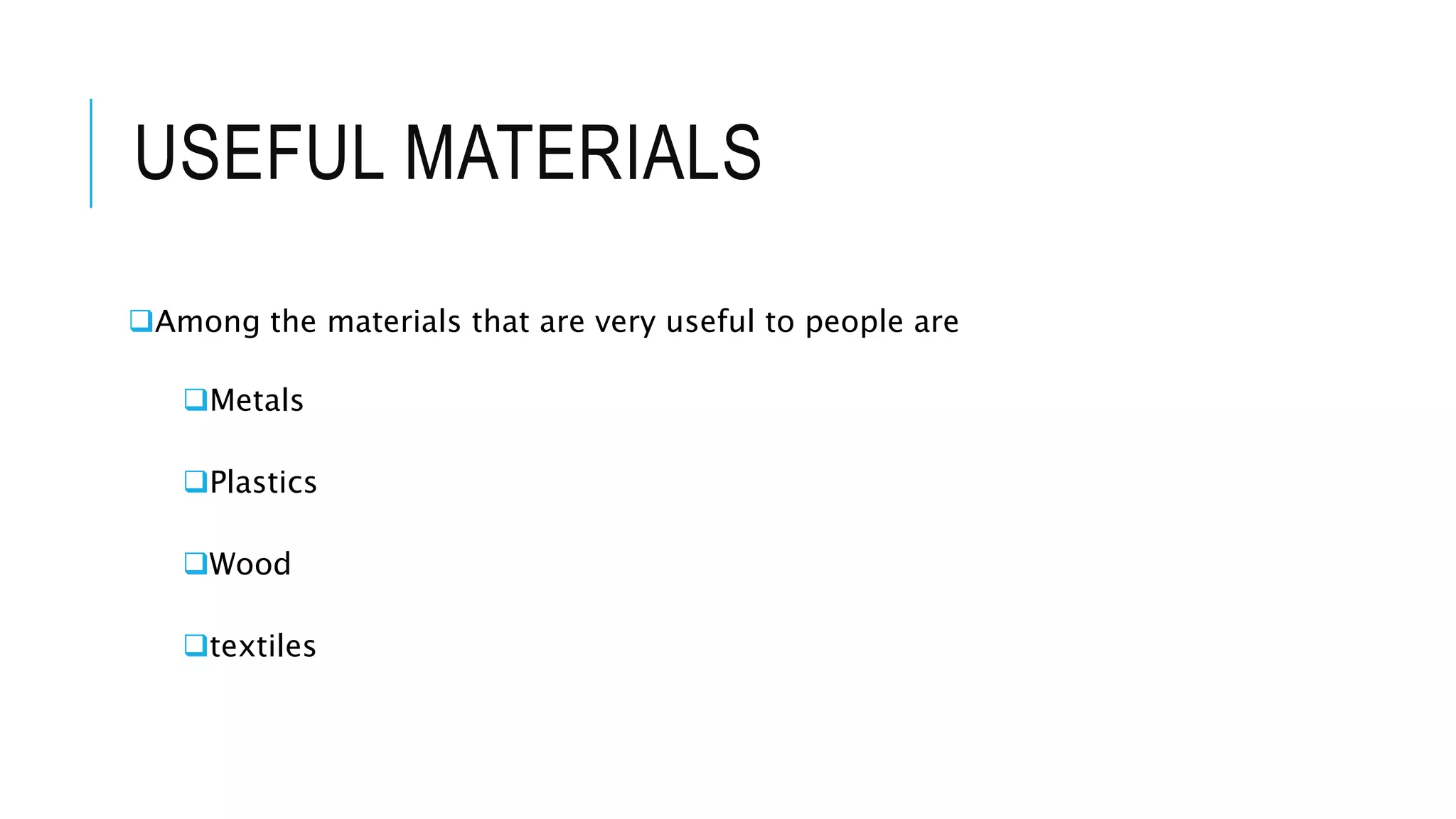
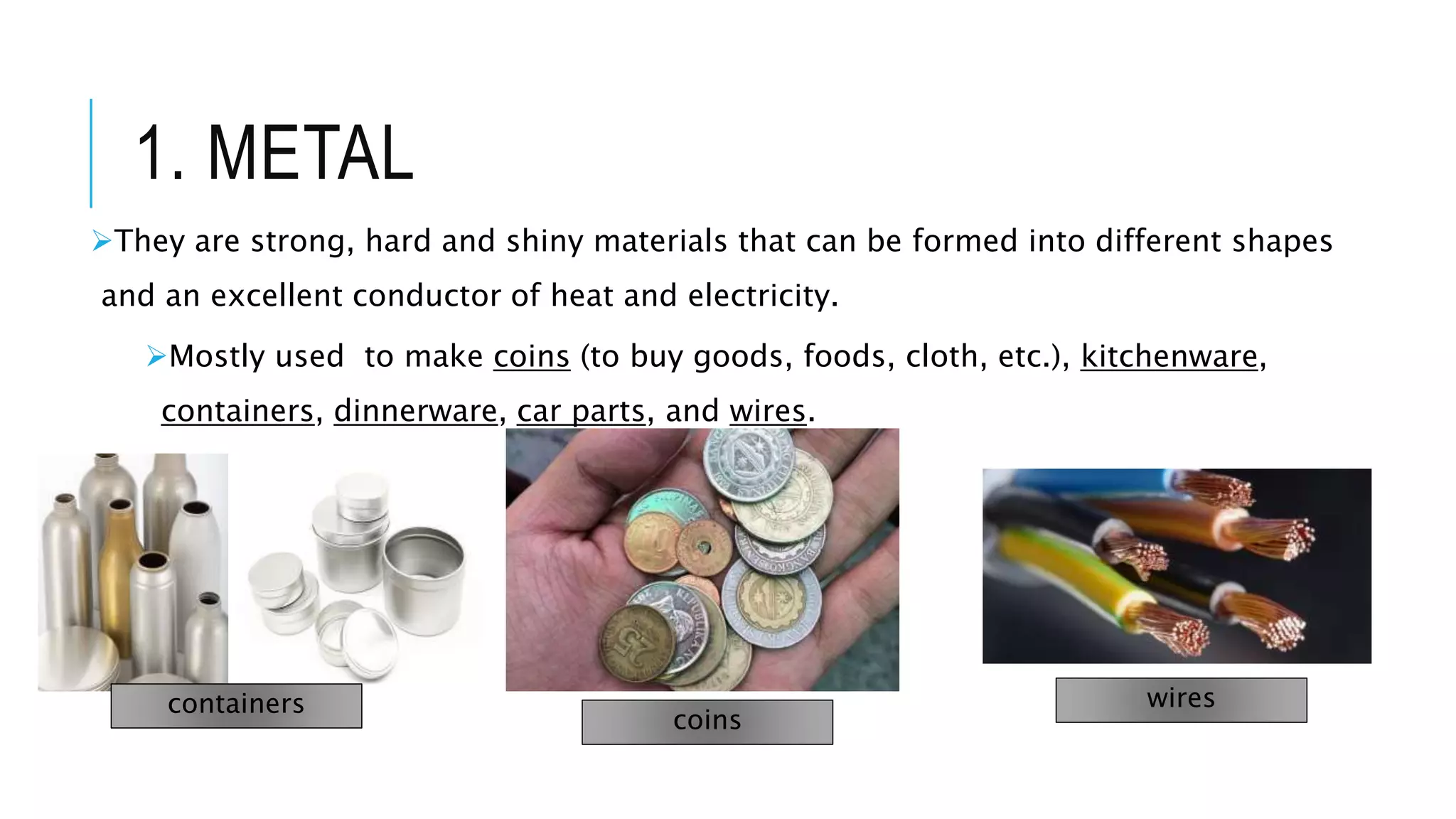
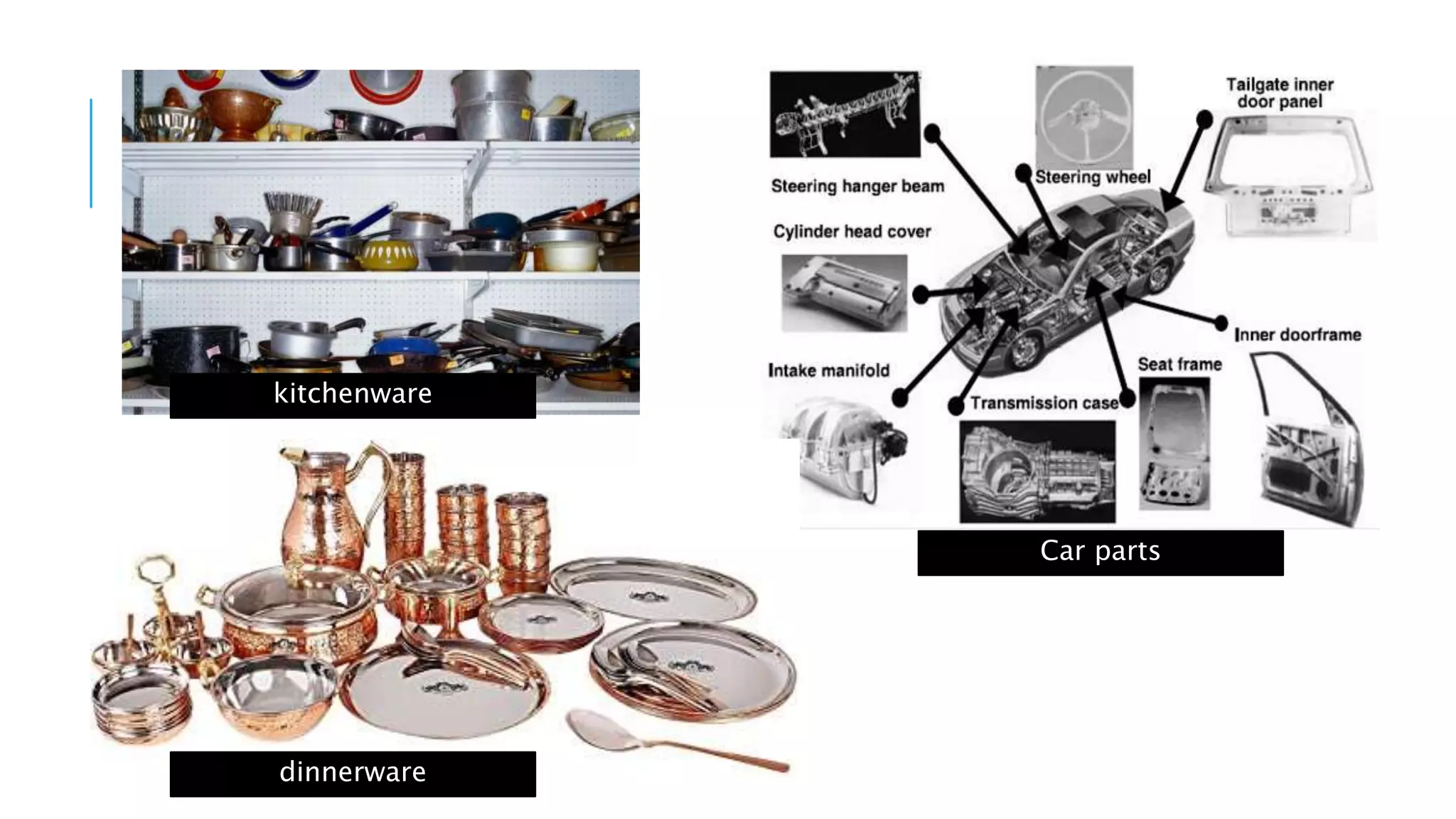
Mostly used to make coins (to buy goods, foods, cloth, etc.), kitchenware,
containers, dinnerware, car parts, and wires.
containers
coins
wires
kitchenware
dinnerware
Car parts
2. PLASTICS
It is made of various chemicals. When heated, it can mold into different
shapes.
It has a properties of strength and impermeability and this qualities make
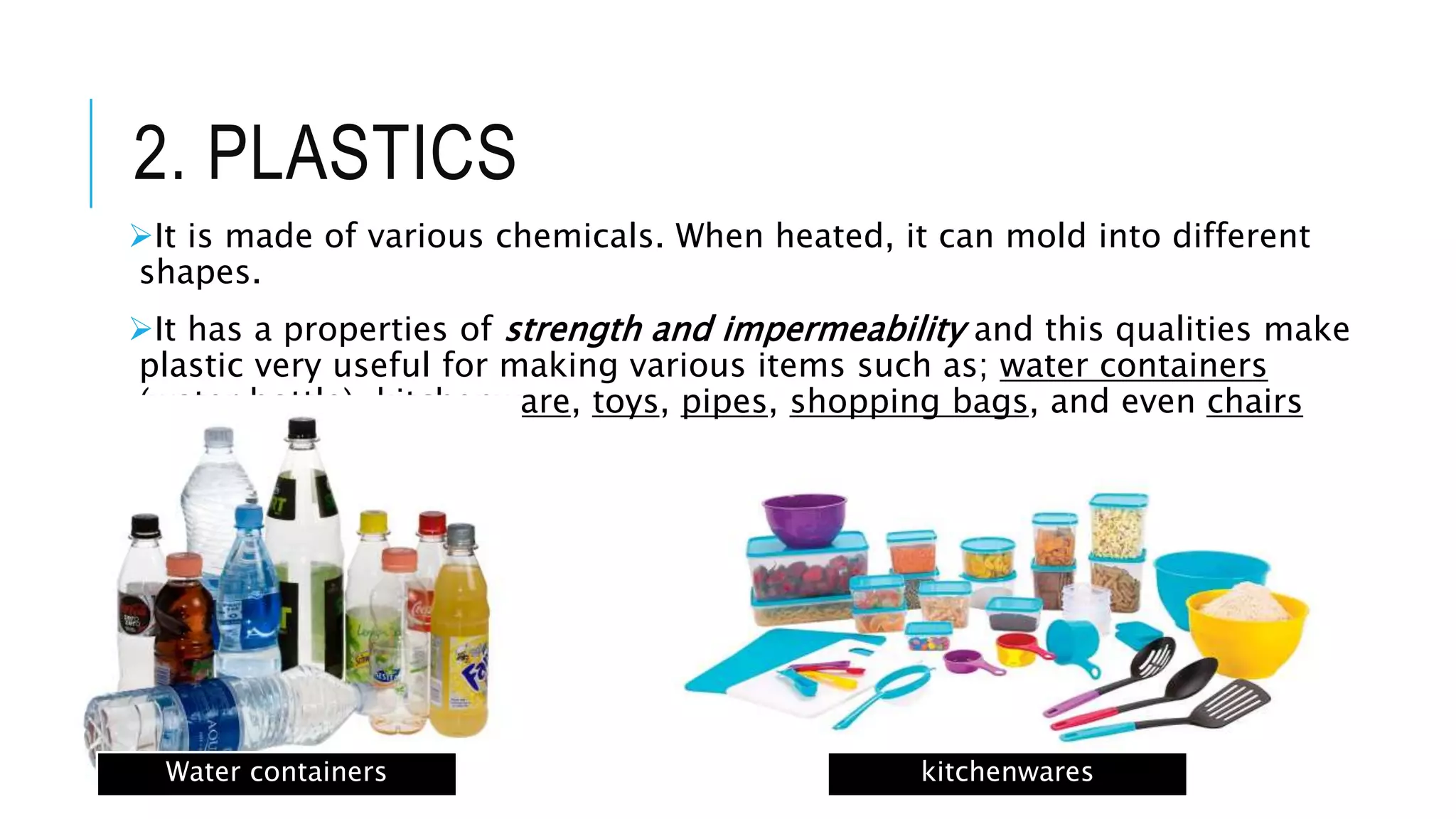
plastic very useful for making various items such as; water containers
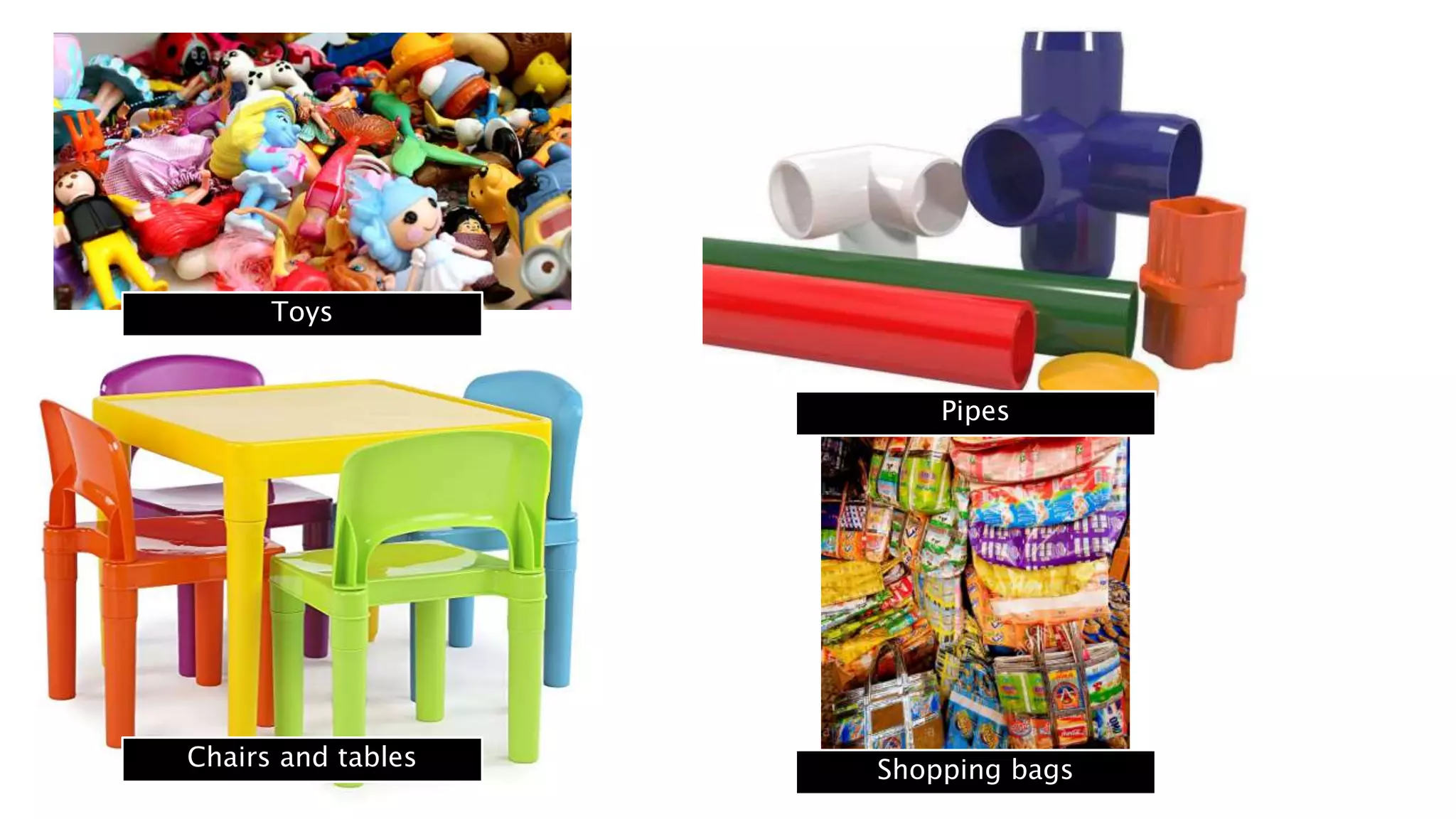
(water bottle), kitchenware, toys, pipes, shopping bags, and even chairs
and tables.
Water containers kitchenwares
Toys
Shopping bags
Pipes
Chairs and tables
3. WOOD
It is produced from the roots and trunks of trees.
It is hard, flexible, and long-lasting and these qualities make wood
an all around material.
It is used to make furniture, construction materials(most houses are
made of wood), as well as musical instruments.
house Furniture (cabinet, chairs,
drawers
Musical instruments (guitar, flute
and drum)
4. TEXTILES
Made from either natural or human-made fibers that have been
woven together and are used to make variety of items; clothes, bags,
carpets, rugs, curtains, other pieces of furniture, flags, towels, sails
and kites.
Other country used it as insulation from cold weather.
Textiles like silk and cottons are naturally produced from our natural
resources.
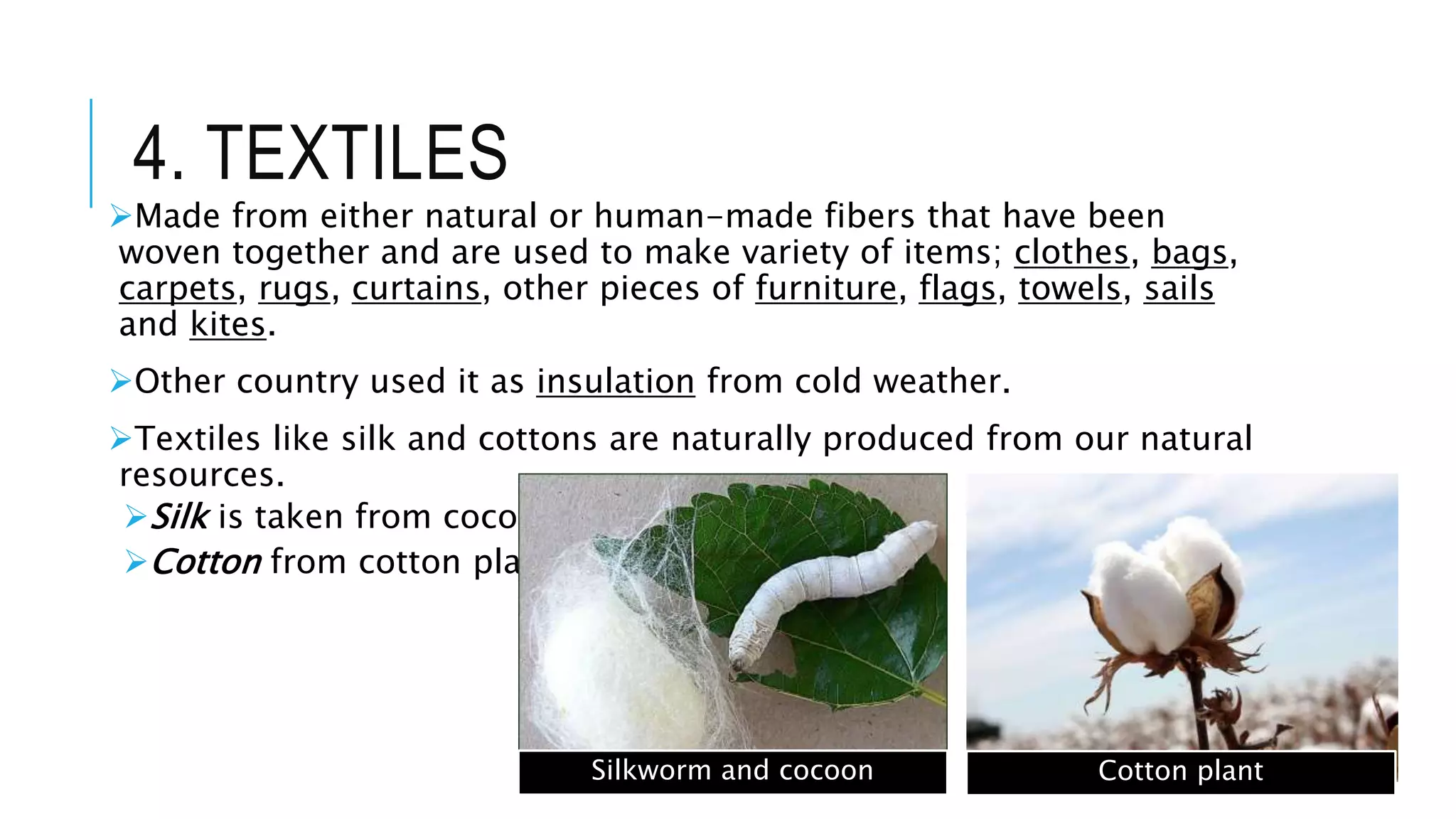
Silk is taken from cocoons that silkworm spin
Cotton from cotton plant
Silkworm and cocoon Cotton plant
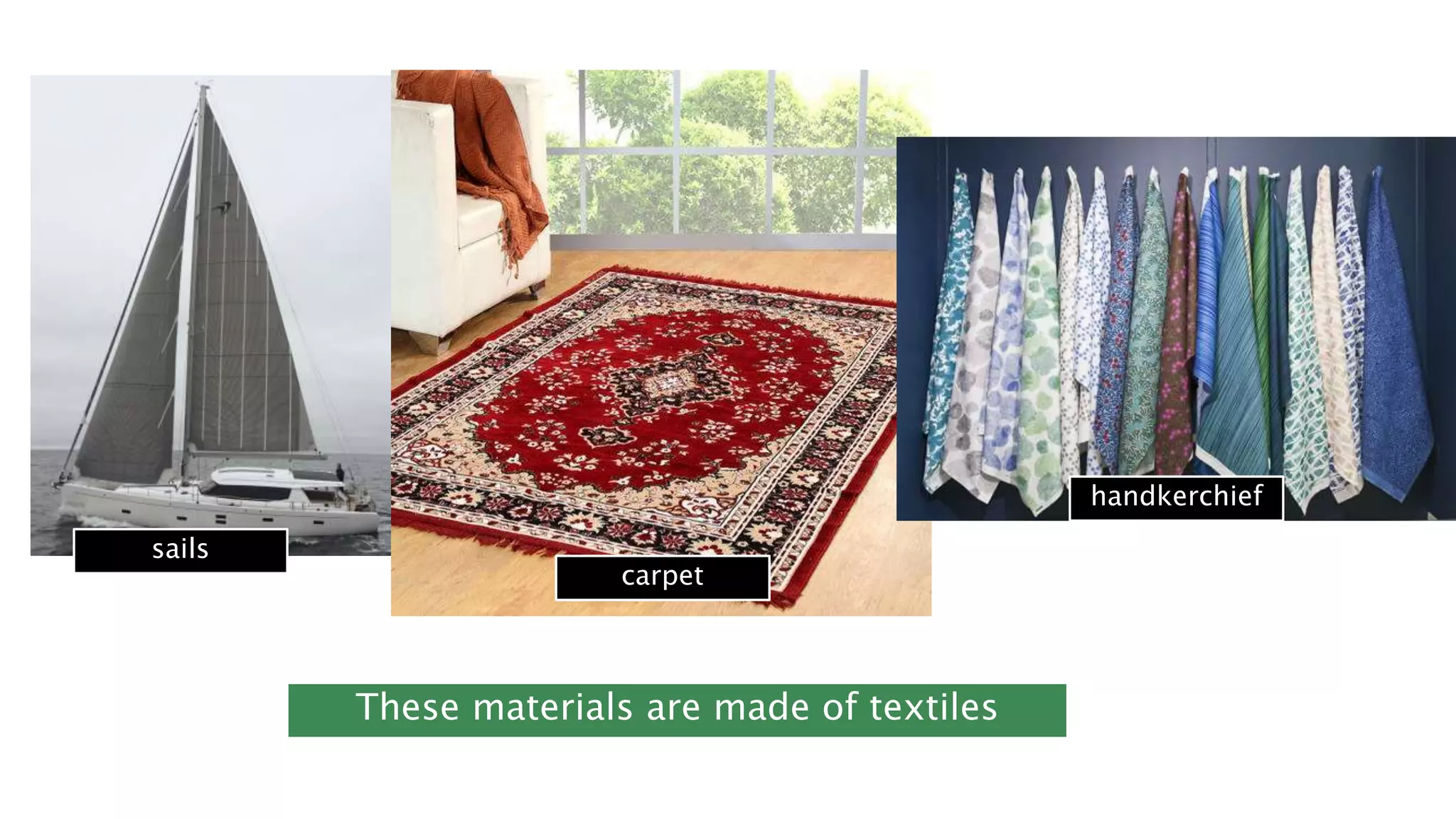
sails
carpet
handkerchief
These materials are made of textiles
HARMFUL MATERIALS
Materials that we used everyday might also harm us. Some can cause
injuries, others can be corrosive, flammable or explosive, poisonous,
or reactive.
Materials can cause injury because of their shape.
Example; plastics, glasses, and metals can be formed into sharp
and pointed shapes, such objects are scissors, knives, etc.
1. CORROSIVE MATERIALS
Can damage and destroy the outer layer of the materials.
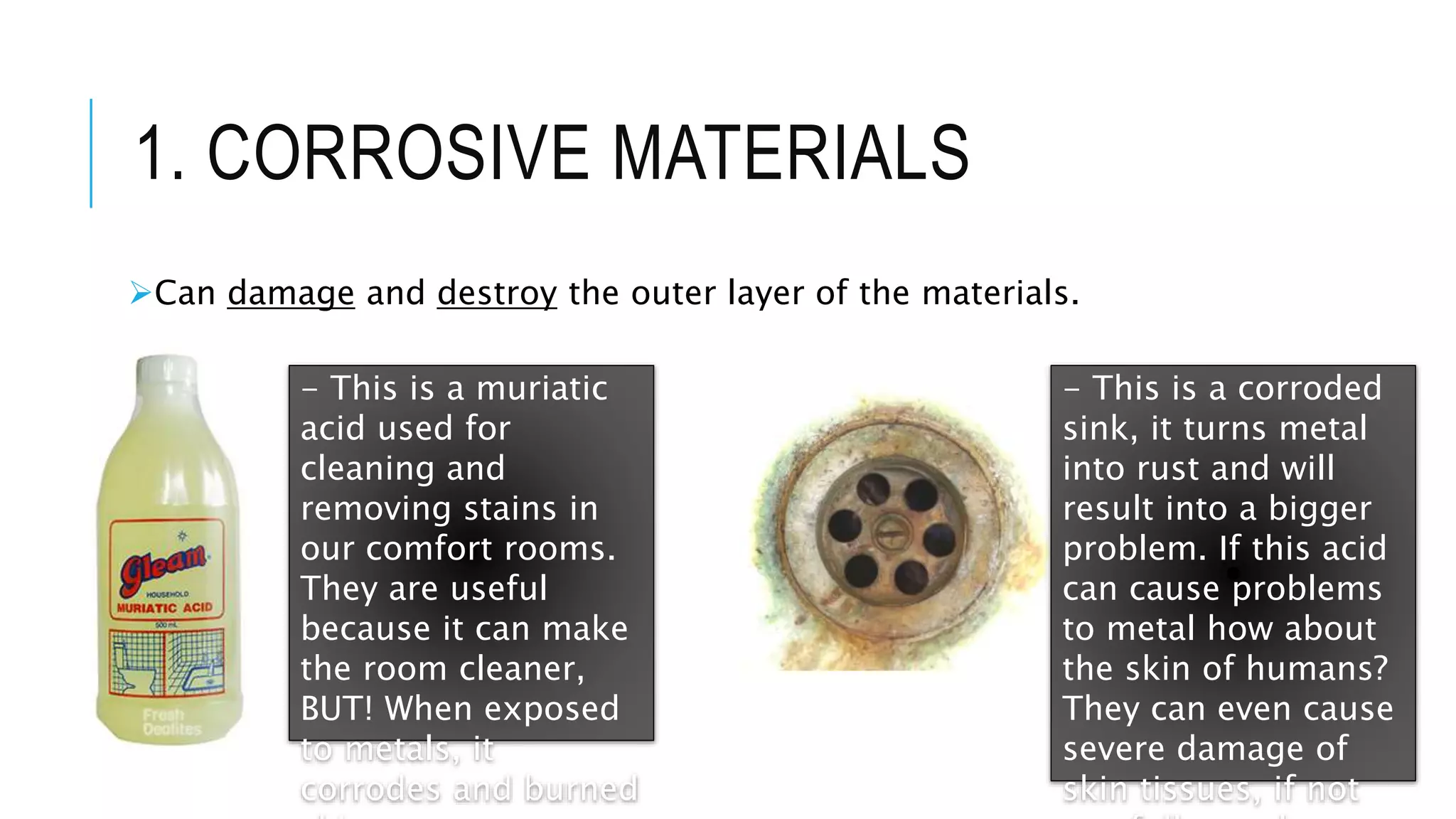
- This is a muriatic
acid used for
cleaning and
removing stains in
our comfort rooms.
They are useful
because it can make
the room cleaner,
BUT! When exposed
to metals, it
corrodes and burned
- This is a corroded
sink, it turns metal
into rust and will
result into a bigger
problem. If this acid
can cause problems
to metal how about
the skin of humans?
They can even cause
severe damage of
skin tissues, if not
2. FLAMMABLE MATERIALS
Easily catch fire when exposed to heat, and easily burnt.
Examples of liquid that are flammable; gasoline, kerosene, lamp
alcohol.
Some materials that are flammable; paper products, dried leaves,
and cloth.
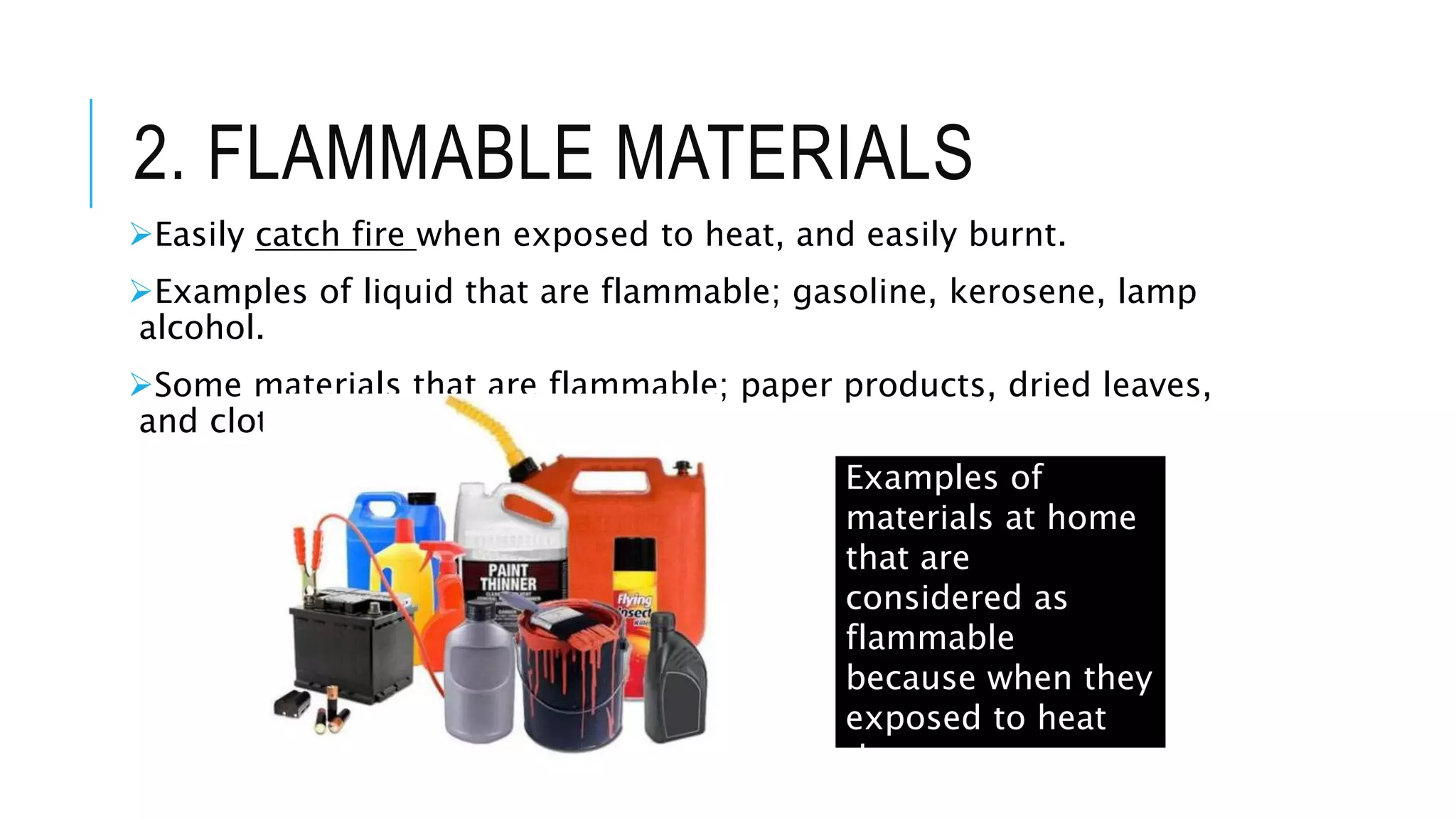
Examples of
materials at home
that are
considered as
flammable
because when they
exposed to heat
they can cause
fire, and burnt.
3. EXPLOSIVE MATERIALS
Substances that contain a lot of energy.
When exposed to heat or pressure, they release so much energy in
the form of light, heat and sound.
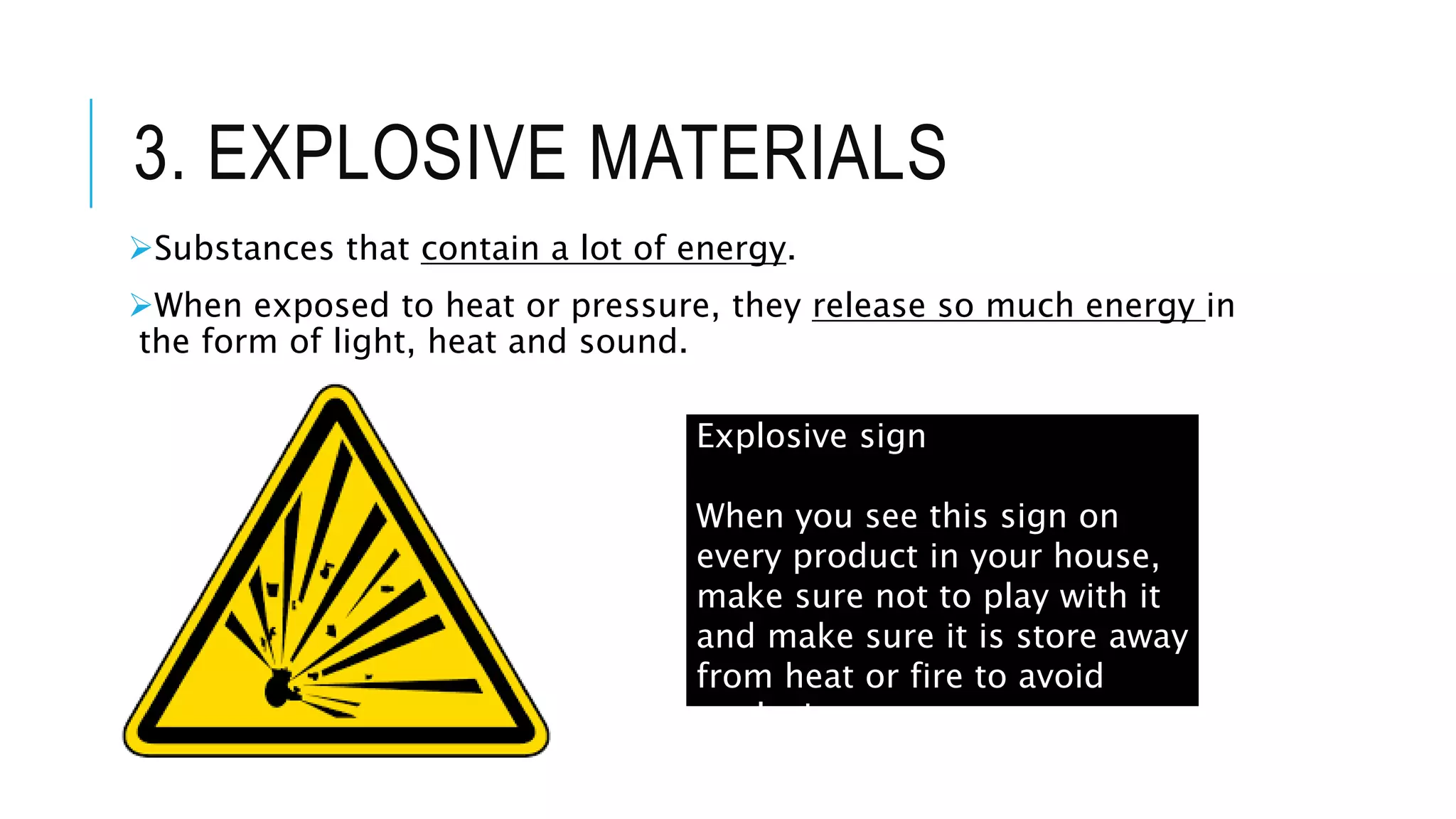
Explosive sign
When you see this sign on
every product in your house,
make sure not to play with it
and make sure it is store away
from heat or fire to avoid
explosion.
4. POISONOUS OR TOXIC
MATERIALS
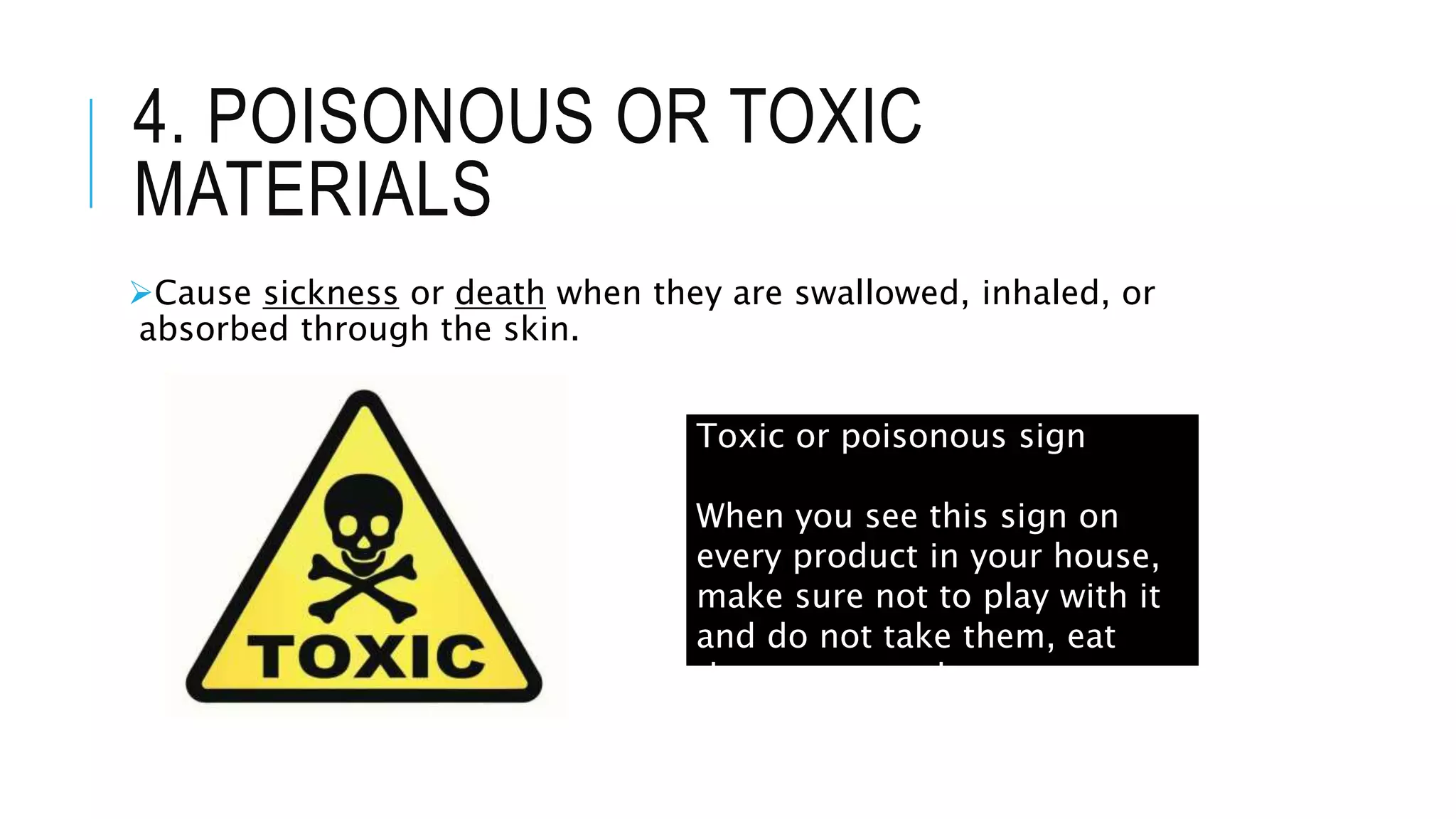
Cause sickness or death when they are swallowed, inhaled, or
absorbed through the skin.
Toxic or poisonous sign
When you see this sign on
every product in your house,
make sure not to play with it
and do not take them, eat
them or taste them.
5. REACTIVE MATERIALS
Cause chemical reactions when they are mixed with other
substances.
Chemical reactions produces heat, which in turn causes burns.
Example: mixing vinegar with baking soda will produce a bubbling
and fizzing, and it is an indicator that there is chemical reaction
occurred. So when they are forcefully ejected and get into your eyes
and cause irritation.
Reaction of vinegar and baking
soda
Vinegar is an acid, and baking soda is
a base, when you mixed them they
will react with each other, and some
instances if you add acid into base
they sometimes explode, corrode and
cause irritations.

Distinguishing between useful and harmful materials

  • 1.
    DISTINGUISHING BETWEEN USEFUL ANDHARMFUL MATERIALS - A material’s properties can help you determine if the object is useful or harmful.
  • 2.
    USEFUL MATERIALS Among thematerials that are very useful to people are Metals Plastics Wood textiles
  • 3.
    1. METAL They arestrong, hard and shiny materials that can be formed into different shapes and an excellent conductor of heat and electricity. Mostly used to make coins (to buy goods, foods, cloth, etc.), kitchenware, containers, dinnerware, car parts, and wires. containers coins wires
  • 4.
  • 5.
    2. PLASTICS It ismade of various chemicals. When heated, it can mold into different shapes. It has a properties of strength and impermeability and this qualities make plastic very useful for making various items such as; water containers (water bottle), kitchenware, toys, pipes, shopping bags, and even chairs and tables. Water containers kitchenwares
  • 6.
  • 7.
    3. WOOD It isproduced from the roots and trunks of trees. It is hard, flexible, and long-lasting and these qualities make wood an all around material. It is used to make furniture, construction materials(most houses are made of wood), as well as musical instruments. house Furniture (cabinet, chairs, drawers
  • 8.
  • 9.
    4. TEXTILES Made fromeither natural or human-made fibers that have been woven together and are used to make variety of items; clothes, bags, carpets, rugs, curtains, other pieces of furniture, flags, towels, sails and kites. Other country used it as insulation from cold weather. Textiles like silk and cottons are naturally produced from our natural resources. Silk is taken from cocoons that silkworm spin Cotton from cotton plant Silkworm and cocoon Cotton plant
  • 10.
  • 11.
    HARMFUL MATERIALS Materials thatwe used everyday might also harm us. Some can cause injuries, others can be corrosive, flammable or explosive, poisonous, or reactive. Materials can cause injury because of their shape. Example; plastics, glasses, and metals can be formed into sharp and pointed shapes, such objects are scissors, knives, etc.
  • 12.
    1. CORROSIVE MATERIALS Candamage and destroy the outer layer of the materials. - This is a muriatic acid used for cleaning and removing stains in our comfort rooms. They are useful because it can make the room cleaner, BUT! When exposed to metals, it corrodes and burned - This is a corroded sink, it turns metal into rust and will result into a bigger problem. If this acid can cause problems to metal how about the skin of humans? They can even cause severe damage of skin tissues, if not
  • 13.
    2. FLAMMABLE MATERIALS Easilycatch fire when exposed to heat, and easily burnt. Examples of liquid that are flammable; gasoline, kerosene, lamp alcohol. Some materials that are flammable; paper products, dried leaves, and cloth. Examples of materials at home that are considered as flammable because when they exposed to heat they can cause fire, and burnt.
  • 14.
    3. EXPLOSIVE MATERIALS Substancesthat contain a lot of energy. When exposed to heat or pressure, they release so much energy in the form of light, heat and sound. Explosive sign When you see this sign on every product in your house, make sure not to play with it and make sure it is store away from heat or fire to avoid explosion.
  • 15.
    4. POISONOUS ORTOXIC MATERIALS Cause sickness or death when they are swallowed, inhaled, or absorbed through the skin. Toxic or poisonous sign When you see this sign on every product in your house, make sure not to play with it and do not take them, eat them or taste them.
  • 16.
    5. REACTIVE MATERIALS Causechemical reactions when they are mixed with other substances. Chemical reactions produces heat, which in turn causes burns. Example: mixing vinegar with baking soda will produce a bubbling and fizzing, and it is an indicator that there is chemical reaction occurred. So when they are forcefully ejected and get into your eyes and cause irritation. Reaction of vinegar and baking soda Vinegar is an acid, and baking soda is a base, when you mixed them they will react with each other, and some instances if you add acid into base they sometimes explode, corrode and cause irritations.