Securitization
Definition:
 Securitization is the process of pooling and
 repackaging of homogeneous illiquid
 financial assets into marketable securities
 that can be sold to investors.
Process of Securitization:
 Assets are originated through receivables, leases,
 housing loans or any other form of debt by a
 company and funded on its balance sheet.
 Once suitably large portfolio of assets is
 originated, the assets are analysed and as a
 portfolio and then sold to a third party.
 The administration of assets is subcontracted to
 the originator by the SPV.
 The SPV issues tradable securities to fund the
 purchase of assets.
Contd….
 The SPV agrees to pay any surpluses which, may
 arise during its funding of assets, back to the
 originator.
 As cash flow arise on the assets, these are used by
 the SPV to repay funds to the investors in the
 securities.
Credit Enhancement:
 Credit Enhancement refers to the various
 means that attempt to buffer the investors
 against losses on the assets collateralising
 their investment.

 Often required to secure high credit rating
 and for low cost of funding.
Types of Credit Enhancement:
 External Credit Enhancement:
   Insurance
   Third Party Guarantee
   Letter of Credit
Contd..
 Internal Credit Enhancement:
   Credit Trenching
   Over- Collaterisation
   Cash Collateral
   Spread Account
Parties to Securitisation:
 Originator
 SPV(Special Purpose Vehicle)
 Investors
 Obligor
 Rating Agency
 Administrator or Servicer
 Agent & Trustee
 Structurer
Asset Characteristics:
 Series of Cash Flow
 Security
 Distributed Risk
 Homogeneity
 No Executory Clauses
 Independence from the Originator
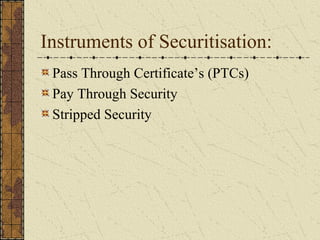
Instruments of Securitisation:
 Pass Through Certificate’s (PTCs)
 Pay Through Security
 Stripped Security
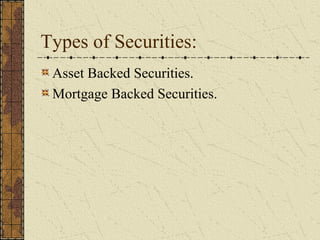
Types of Securities:
 Asset Backed Securities.
 Mortgage Backed Securities.
Thank You...

Securitisatio

  • 1.
  • 2.
    Definition: Securitization isthe process of pooling and repackaging of homogeneous illiquid financial assets into marketable securities that can be sold to investors.
  • 3.
    Process of Securitization: Assets are originated through receivables, leases, housing loans or any other form of debt by a company and funded on its balance sheet. Once suitably large portfolio of assets is originated, the assets are analysed and as a portfolio and then sold to a third party. The administration of assets is subcontracted to the originator by the SPV. The SPV issues tradable securities to fund the purchase of assets.
  • 4.
    Contd…. The SPVagrees to pay any surpluses which, may arise during its funding of assets, back to the originator. As cash flow arise on the assets, these are used by the SPV to repay funds to the investors in the securities.
  • 5.
    Credit Enhancement: CreditEnhancement refers to the various means that attempt to buffer the investors against losses on the assets collateralising their investment. Often required to secure high credit rating and for low cost of funding.
  • 6.
    Types of CreditEnhancement: External Credit Enhancement: Insurance Third Party Guarantee Letter of Credit
  • 7.
    Contd.. Internal CreditEnhancement: Credit Trenching Over- Collaterisation Cash Collateral Spread Account
  • 8.
    Parties to Securitisation: Originator SPV(Special Purpose Vehicle) Investors Obligor Rating Agency Administrator or Servicer Agent & Trustee Structurer
  • 9.
    Asset Characteristics: Seriesof Cash Flow Security Distributed Risk Homogeneity No Executory Clauses Independence from the Originator
  • 10.
    Instruments of Securitisation: Pass Through Certificate’s (PTCs) Pay Through Security Stripped Security
  • 11.
    Types of Securities: Asset Backed Securities. Mortgage Backed Securities.
  • 12.