Organizational Culture
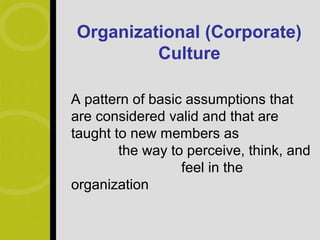
Organizational (Corporate)
         Culture

A pattern of basic assumptions that
are considered valid and that are
taught to new members as
        the way to perceive, think, and
                  feel in the
organization
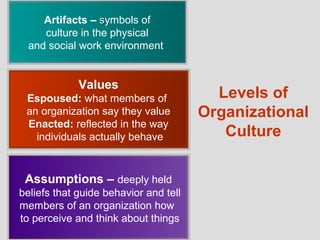
Artifacts – symbols of
                  s
     culture in the physical
  and social work environment


             Values
 Espoused: what members of               Levels of
 an organization say they value        Organizational
 Enacted: reflected in the way
   individuals actually behave            Culture

 Assumptions – deeply held
beliefs that guide behavior and tell
members of an organization how
to perceive and think about things
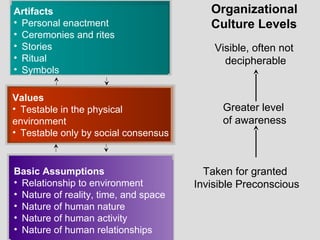
Artifacts                                 Organizational
• Personal enactment                      Culture Levels
• Ceremonies and rites
• Stories                                  Visible, often not
• Ritual                                     decipherable
• Symbols

Values
• Testable in the physical                   Greater level
environment                                  of awareness
• Testable only by social consensus


Basic Assumptions                        Taken for granted
• Relationship to environment          Invisible Preconscious
• Nature of reality, time, and space
• Nature of human nature
• Nature of human activity
• Nature of human relationships
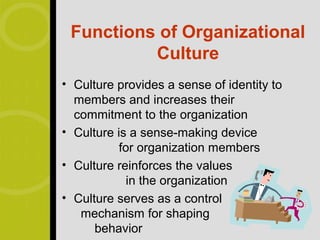
Functions of Organizational
          Culture
• Culture provides a sense of identity to
  members and increases their
  commitment to the organization
• Culture is a sense-making device
           for organization members
• Culture reinforces the values
             in the organization
• Culture serves as a control
   mechanism for shaping
      behavior
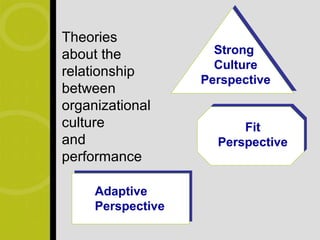
Theories
about the            Strong
                     Culture
relationship
                   Perspective
between
organizational
culture                  Fit
and                  Perspective
performance

     Adaptive
     Perspective
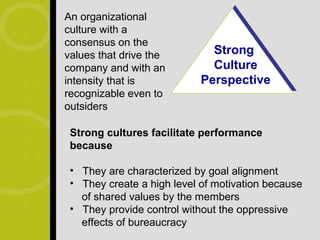
An organizational
culture with a
consensus on the
values that drive the         Strong
company and with an           Culture
intensity that is           Perspective
recognizable even to
outsiders

 Strong cultures facilitate performance
 because

 • They are characterized by goal alignment
 • They create a high level of motivation because
   of shared values by the members
 • They provide control without the oppressive
   effects of bureaucracy
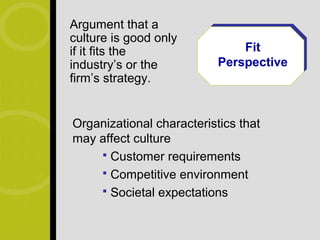
Argument that a
culture is good only
if it fits the                 Fit
industry’s or the          Perspective
firm’s strategy.


Organizational characteristics that
may affect culture
     Customer requirements
     Competitive environment
     Societal expectations
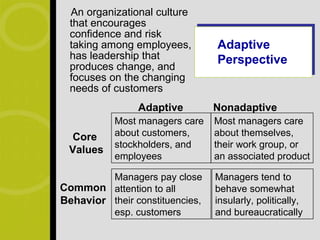
An organizational culture
  that encourages
  confidence and risk
  taking among employees,        Adaptive
  has leadership that            Perspective
  produces change, and
  focuses on the changing
  needs of customers
                Adaptive         Nonadaptive
           Most managers care    Most managers care
  Core     about customers,      about themselves,
           stockholders, and     their work group, or
 Values
           employees             an associated product

         Managers pay close      Managers tend to
Common attention to all          behave somewhat
Behavior their constituencies,   insularly, politically,
         esp. customers          and bureaucratically
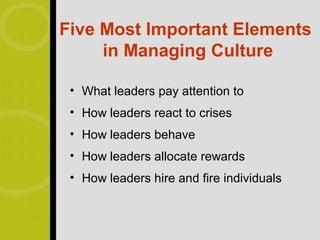
Five Most Important Elements
     in Managing Culture

 • What leaders pay attention to
 • How leaders react to crises
 • How leaders behave
 • How leaders allocate rewards
 • How leaders hire and fire individuals
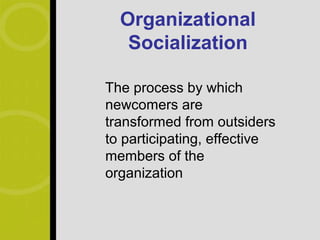
Organizational
   Socialization

The process by which
newcomers are
transformed from outsiders
to participating, effective
members of the
organization
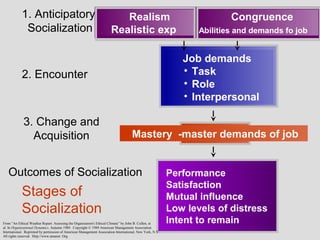
1. Anticipatory                                               Realism                                        Congruence
             Socialization                                             Realistic exp                             Abilities and demands fo job


                                                                                                             Job demands
            2. Encounter                                                                                     • Task
                                                                                                             • Role
                                                                                                             • Interpersonal

             3. Change and
               Acquisition                                                          Mastery -master demands of job


   Outcomes of Socialization                                                                              Performance
                                                                                                          Satisfaction
            Stages of                                                                                     Mutual influence
            Socialization                                                                                 Low levels of distress
From “An Ethical Weather Repart: Assessing the Organization's Ethical Climate” by John B. Cullen, et      Intent to remain
al. In Organizational Dynamics, Autumn 1989. Copyright © 1989 American Management Association
International. Reprinted by permission of American Management Association International, New York, N.Y.
All rights reserved. Http://www.amanet. Org.
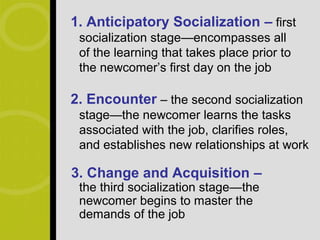
1. Anticipatory Socialization – first
 socialization stage—encompasses all
 of the learning that takes place prior to
 the newcomer’s first day on the job

2. Encounter – the second socialization
 stage—the newcomer learns the tasks
 associated with the job, clarifies roles,
 and establishes new relationships at work

3. Change and Acquisition –
 the third socialization stage—the
 newcomer begins to master the
 demands of the job
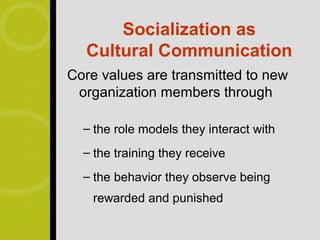
Socialization as
  Cultural Communication
Core values are transmitted to new
 organization members through

  – the role models they interact with
  – the training they receive
  – the behavior they observe being
    rewarded and punished
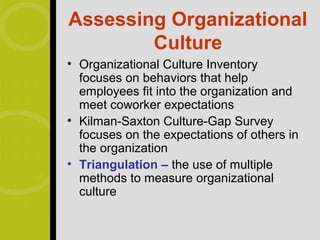
Assessing Organizational
        Culture
• Organizational Culture Inventory
  focuses on behaviors that help
  employees fit into the organization and
  meet coworker expectations
• Kilman-Saxton Culture-Gap Survey
  focuses on the expectations of others in
  the organization
• Triangulation – the use of multiple
  methods to measure organizational
  culture
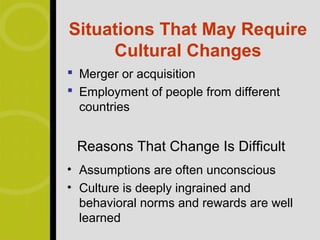
Situations That May Require
     Cultural Changes
 Merger or acquisition
 Employment of people from different
  countries


 Reasons That Change Is Difficult
• Assumptions are often unconscious
• Culture is deeply ingrained and
  behavioral norms and rewards are well
  learned
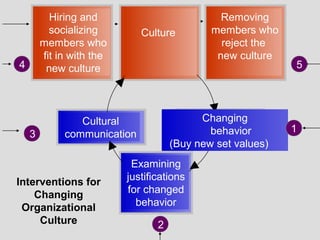
Hiring and                           Removing
          socializing        Culture         members who
        members who                            reject the
        fit in with the                       new culture
4        new culture                                        5


                Cultural                   Changing
             communication                   behavior       1
    3
                                     (Buy new set values)
                           Examining
Interventions for         justifications
    Changing              for changed
 Organizational             behavior
     Culture                     2
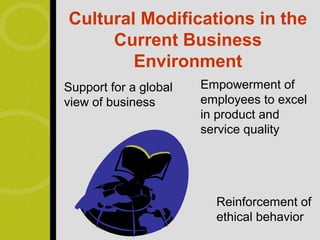
Cultural Modifications in the
     Current Business
        Environment
Support for a global   Empowerment of
view of business       employees to excel
                       in product and
                       service quality


                         Reinforcement of
                         ethical behavior
Support for a global
 view of business
• Create a clear and simple mission
  statement
• Create systems that ensure effective
  information flow
• Develop global career paths
• Use cultural differences as major assets
• Implement worldwide management
  education and team development
  programs
Reinforcement of
   ethical behavior
• Clear communication of the boundaries
  of ethical conduct
• Selection of employees who support the
  ethical culture
• Reward of ethical behavior
• Conspicuous punishment of members
  who engage in unethical behavior
Empowerment of
employees to excel in
product and service
quality
• Empowerment unleashes employees’
  creativity
• Empowerment requires eliminating
  traditional hierarchical notions of power
   – Involve employees in decision making
   – Remove obstacles to their performance
   – Communicate the value of product and
     service quality

New org culture

  • 1.
  • 2.
    Organizational (Corporate) Culture A pattern of basic assumptions that are considered valid and that are taught to new members as the way to perceive, think, and feel in the organization
  • 3.
    Artifacts – symbolsof s culture in the physical and social work environment Values Espoused: what members of Levels of an organization say they value Organizational Enacted: reflected in the way individuals actually behave Culture Assumptions – deeply held beliefs that guide behavior and tell members of an organization how to perceive and think about things
  • 4.
    Artifacts Organizational • Personal enactment Culture Levels • Ceremonies and rites • Stories Visible, often not • Ritual decipherable • Symbols Values • Testable in the physical Greater level environment of awareness • Testable only by social consensus Basic Assumptions Taken for granted • Relationship to environment Invisible Preconscious • Nature of reality, time, and space • Nature of human nature • Nature of human activity • Nature of human relationships
  • 5.
    Functions of Organizational Culture • Culture provides a sense of identity to members and increases their commitment to the organization • Culture is a sense-making device for organization members • Culture reinforces the values in the organization • Culture serves as a control mechanism for shaping behavior
  • 6.
    Theories about the Strong Culture relationship Perspective between organizational culture Fit and Perspective performance Adaptive Perspective
  • 7.
    An organizational culture witha consensus on the values that drive the Strong company and with an Culture intensity that is Perspective recognizable even to outsiders Strong cultures facilitate performance because • They are characterized by goal alignment • They create a high level of motivation because of shared values by the members • They provide control without the oppressive effects of bureaucracy
  • 8.
    Argument that a cultureis good only if it fits the Fit industry’s or the Perspective firm’s strategy. Organizational characteristics that may affect culture  Customer requirements  Competitive environment  Societal expectations
  • 9.
    An organizational culture that encourages confidence and risk taking among employees, Adaptive has leadership that Perspective produces change, and focuses on the changing needs of customers Adaptive Nonadaptive Most managers care Most managers care Core about customers, about themselves, stockholders, and their work group, or Values employees an associated product Managers pay close Managers tend to Common attention to all behave somewhat Behavior their constituencies, insularly, politically, esp. customers and bureaucratically
  • 10.
    Five Most ImportantElements in Managing Culture • What leaders pay attention to • How leaders react to crises • How leaders behave • How leaders allocate rewards • How leaders hire and fire individuals
  • 11.
    Organizational Socialization The process by which newcomers are transformed from outsiders to participating, effective members of the organization
  • 12.
    1. Anticipatory Realism Congruence Socialization Realistic exp Abilities and demands fo job Job demands 2. Encounter • Task • Role • Interpersonal 3. Change and Acquisition Mastery -master demands of job Outcomes of Socialization Performance Satisfaction Stages of Mutual influence Socialization Low levels of distress From “An Ethical Weather Repart: Assessing the Organization's Ethical Climate” by John B. Cullen, et Intent to remain al. In Organizational Dynamics, Autumn 1989. Copyright © 1989 American Management Association International. Reprinted by permission of American Management Association International, New York, N.Y. All rights reserved. Http://www.amanet. Org.
  • 13.
    1. Anticipatory Socialization– first socialization stage—encompasses all of the learning that takes place prior to the newcomer’s first day on the job 2. Encounter – the second socialization stage—the newcomer learns the tasks associated with the job, clarifies roles, and establishes new relationships at work 3. Change and Acquisition – the third socialization stage—the newcomer begins to master the demands of the job
  • 14.
    Socialization as Cultural Communication Core values are transmitted to new organization members through – the role models they interact with – the training they receive – the behavior they observe being rewarded and punished
  • 15.
    Assessing Organizational Culture • Organizational Culture Inventory focuses on behaviors that help employees fit into the organization and meet coworker expectations • Kilman-Saxton Culture-Gap Survey focuses on the expectations of others in the organization • Triangulation – the use of multiple methods to measure organizational culture
  • 16.
    Situations That MayRequire Cultural Changes  Merger or acquisition  Employment of people from different countries Reasons That Change Is Difficult • Assumptions are often unconscious • Culture is deeply ingrained and behavioral norms and rewards are well learned
  • 17.
    Hiring and Removing socializing Culture members who members who reject the fit in with the new culture 4 new culture 5 Cultural Changing communication behavior 1 3 (Buy new set values) Examining Interventions for justifications Changing for changed Organizational behavior Culture 2
  • 18.
    Cultural Modifications inthe Current Business Environment Support for a global Empowerment of view of business employees to excel in product and service quality Reinforcement of ethical behavior
  • 19.
    Support for aglobal view of business • Create a clear and simple mission statement • Create systems that ensure effective information flow • Develop global career paths • Use cultural differences as major assets • Implement worldwide management education and team development programs
  • 20.
    Reinforcement of ethical behavior • Clear communication of the boundaries of ethical conduct • Selection of employees who support the ethical culture • Reward of ethical behavior • Conspicuous punishment of members who engage in unethical behavior
  • 21.
    Empowerment of employees toexcel in product and service quality • Empowerment unleashes employees’ creativity • Empowerment requires eliminating traditional hierarchical notions of power – Involve employees in decision making – Remove obstacles to their performance – Communicate the value of product and service quality

Editor's Notes