
Secondary metabolites and
its detail information
Pooja H. Khanpara
Asst. professor
Pharmacognosy
Aksharpreet College of Pharmacy, Lakhabaval,
Jamnagar
Steroids, Cardiac Glycosides &
Triterpenoids
3
4
5
.’;’;;’
6
7
8
9
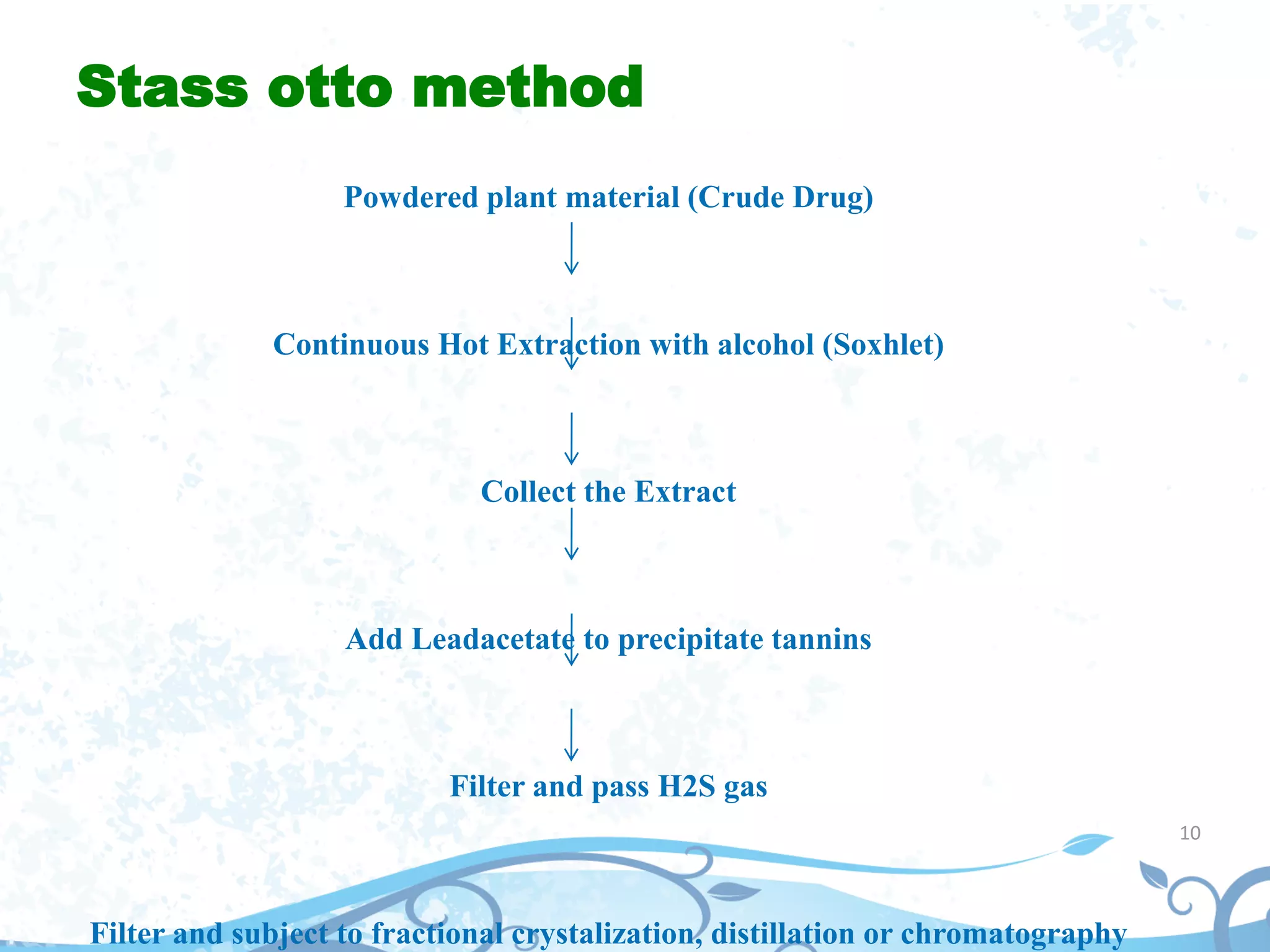
Stass otto method
Powdered plant material (Crude Drug)
Continuous Hot Extraction with alcohol (Soxhlet)
Collect the Extract
Add Leadacetate to precipitate tannins
Filter and pass H2S gas
Filter and subject to fractional crystalization, distillation or chromatography
10
Cardiac Glycosides
or
Sterols
11
12
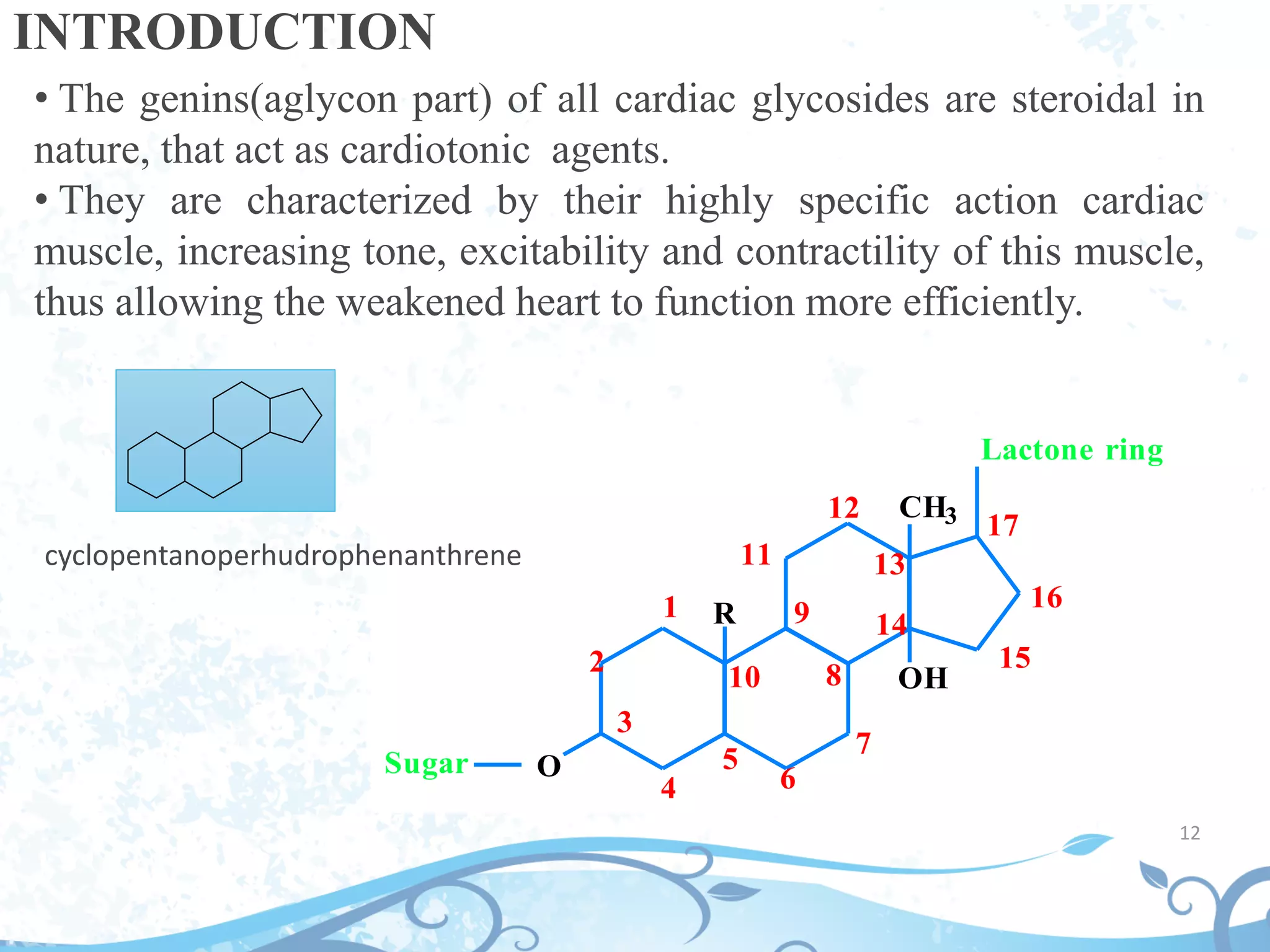
INTRODUCTION
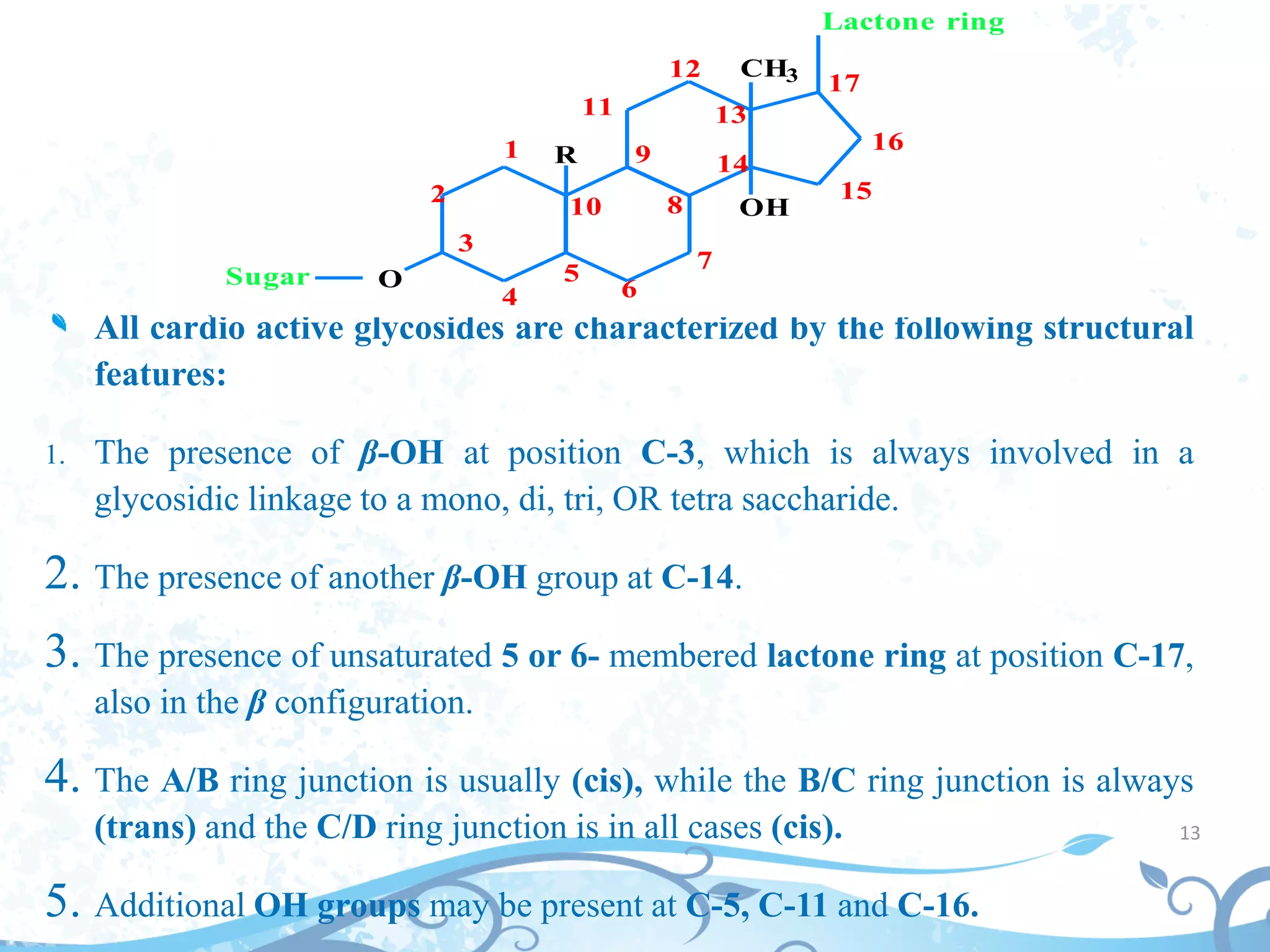
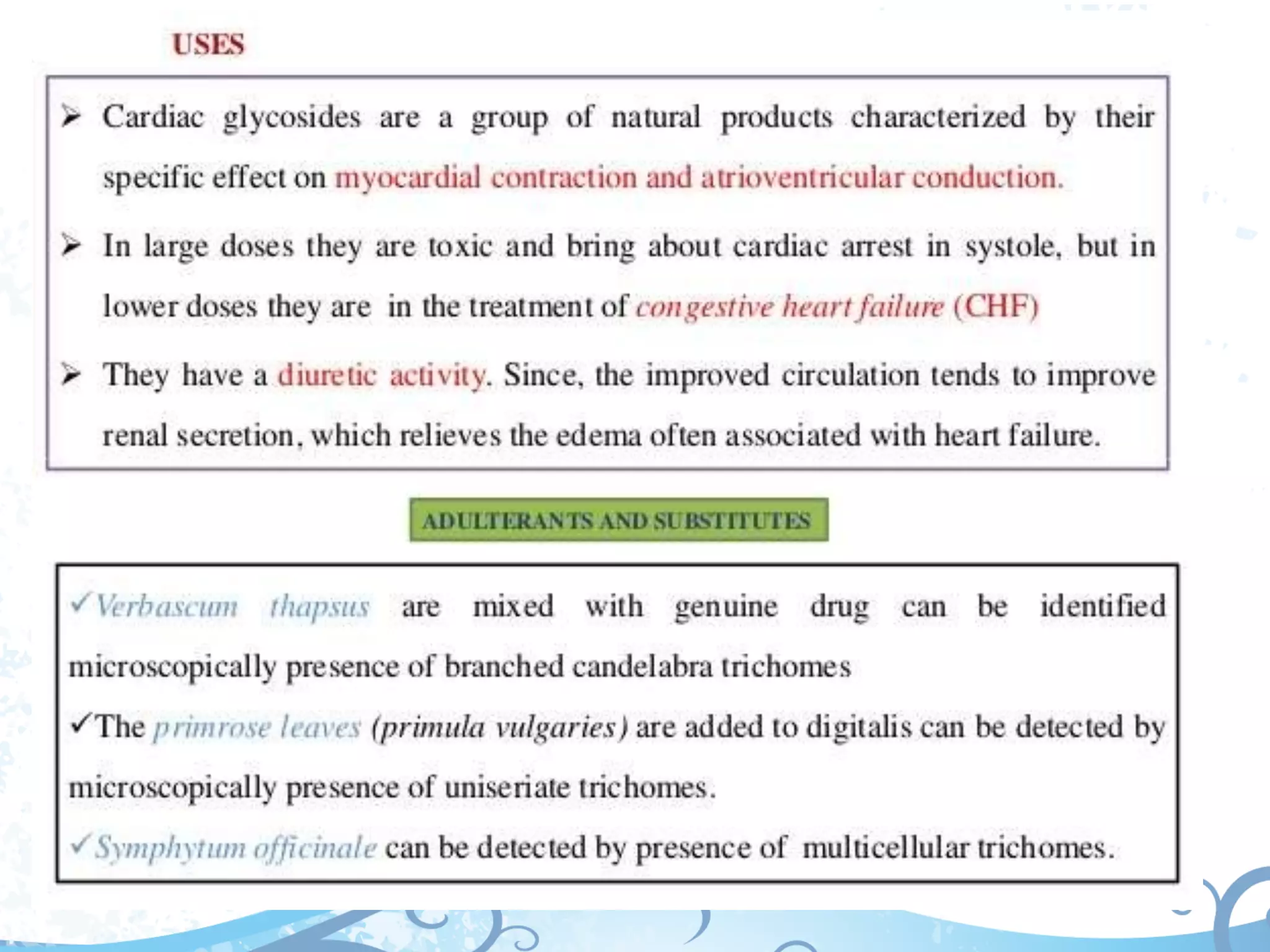
• The genins(aglycon part) of all cardiac glycosides are steroidal in
nature, that act as cardiotonic agents.
• They are characterized by their highly specific action cardiac
muscle, increasing tone, excitability and contractility of this muscle,
thus allowing the weakened heart to function more efficiently.
O
R
OH
CH3
Sugar
Lactone ring
1
2
3
4
5
10
6
7
8
9
11
12
13
14
15
16
17
cyclopentanoperhudrophenanthrene
13
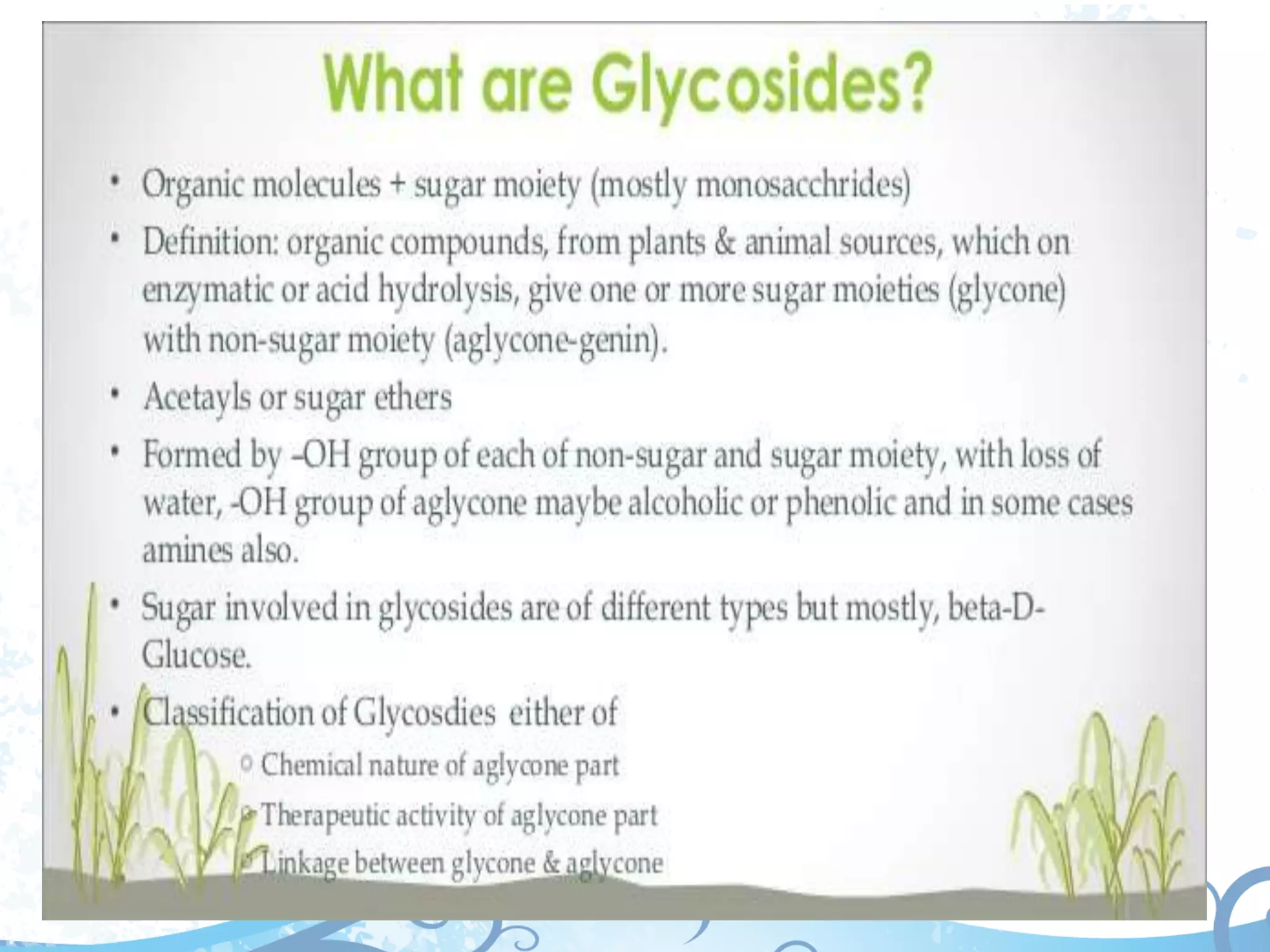
All cardio active glycosides are characterized by the following structural
features:
1. The presence of β-OH at position C-3, which is always involved in a
glycosidic linkage to a mono, di, tri, OR tetra saccharide.
2. The presence of another β-OH group at C-14.
3. The presence of unsaturated 5 or 6- membered lactone ring at position C-17,
also in the β configuration.
4. The A/B ring junction is usually (cis), while the B/C ring junction is always
(trans) and the C/D ring junction is in all cases (cis).
5. Additional OH groups may be present at C-5, C-11 and C-16.
O
R
OH
CH3
Sugar
Lactone ring
1
2
3
4
5
10
6
7
8
9
11
12
13
14
15
16
17
14
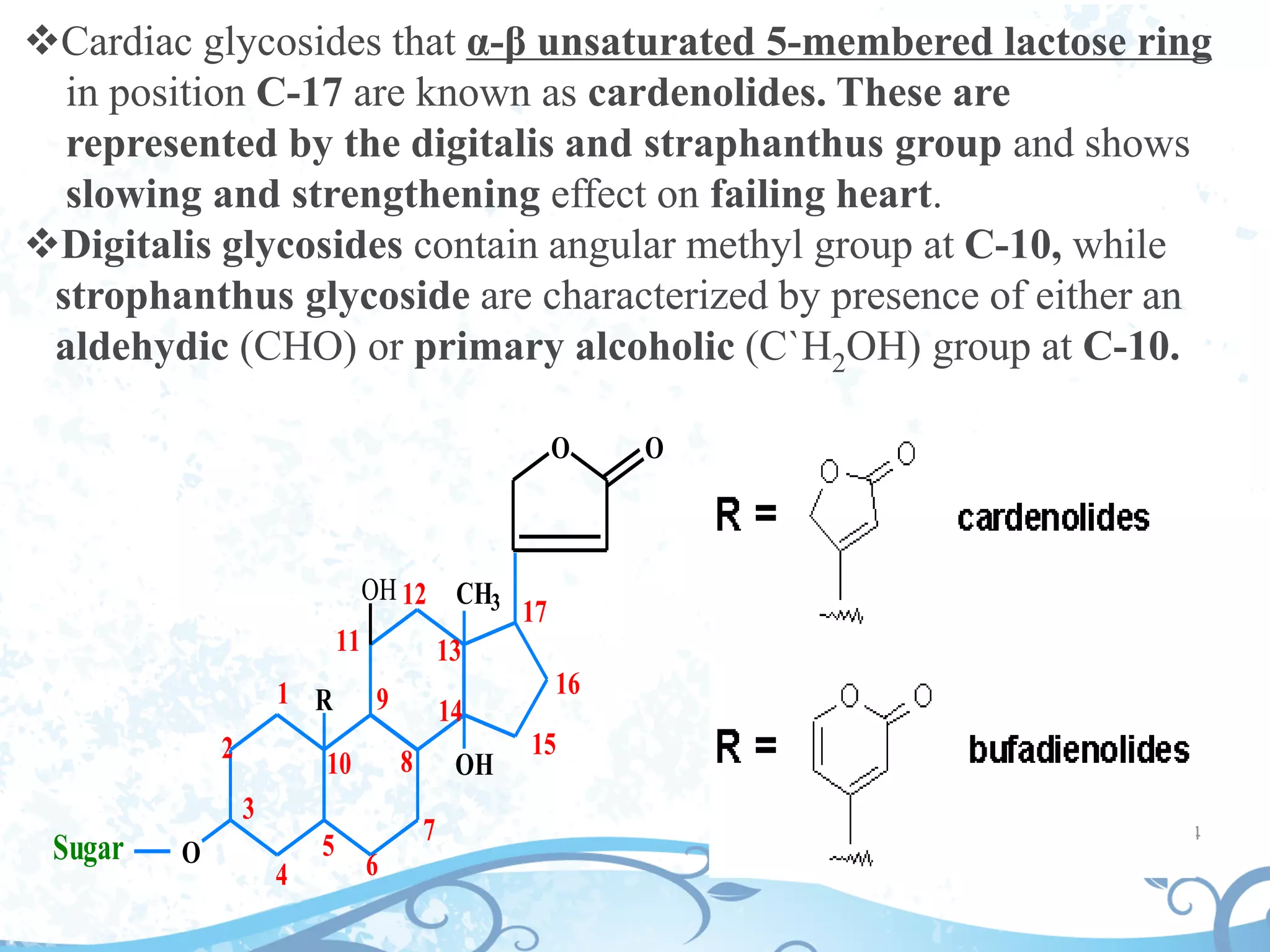
Cardiac glycosides that α-β unsaturated 5-membered lactose ring
in position C-17 are known as cardenolides. These are
represented by the digitalis and straphanthus group and shows
slowing and strengthening effect on failing heart.
Digitalis glycosides contain angular methyl group at C-10, while
strophanthus glycoside are characterized by presence of either an
aldehydic (CHO) or primary alcoholic (C`H2OH) group at C-10.
O
R
OH
CH3OH
Sugar
1
2
3
4
5
10
6
7
8
9
11
12
13
14
15
16
17
O O
15
O
R
OH
CH3OH
Sugar
1
2
3
4
5
10
6
7
8
9
11
12
13
14
15
16
17
O O
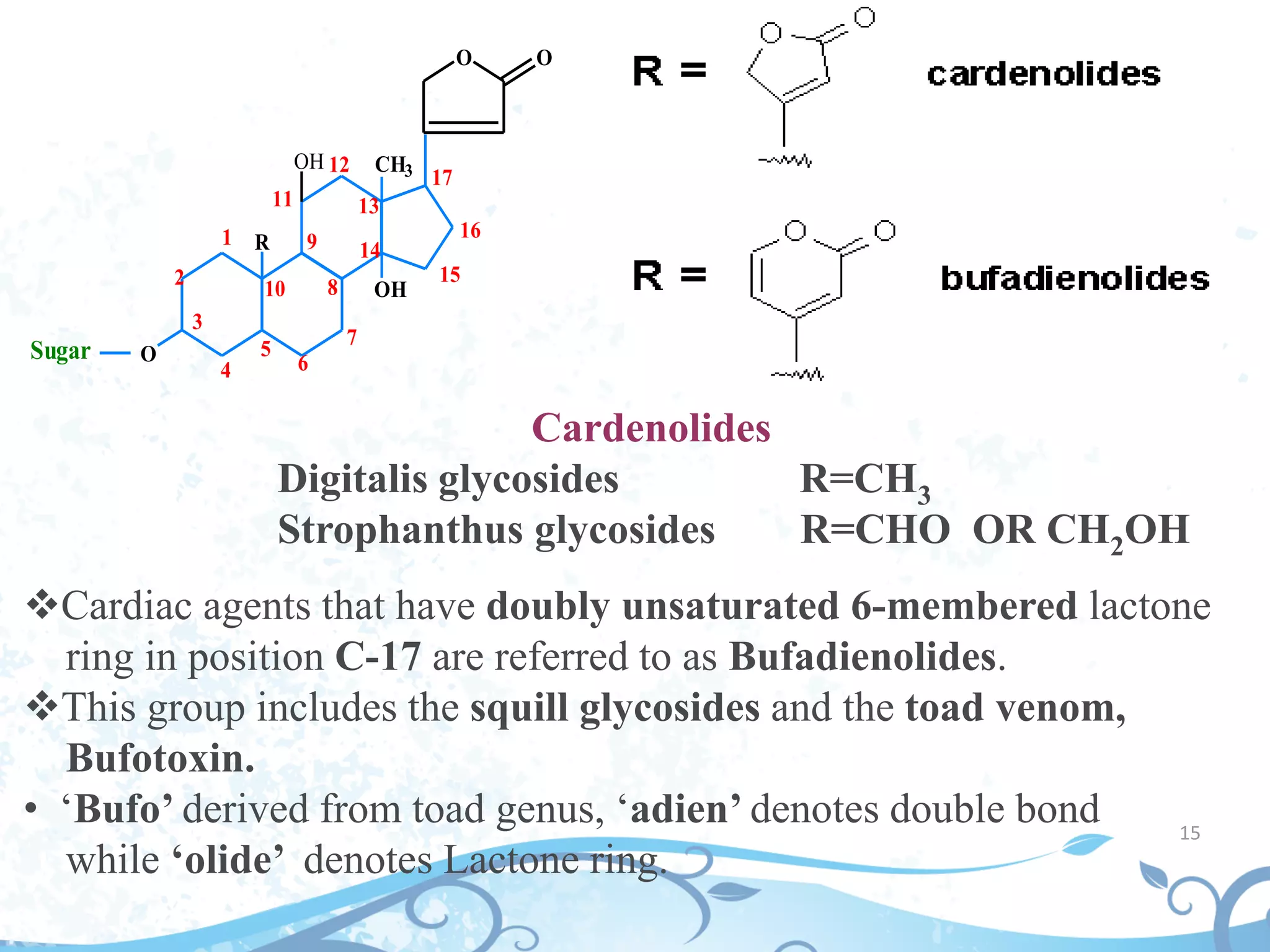
Cardenolides
Digitalis glycosides R=CH3
Strophanthus glycosides R=CHO OR CH2OH
Cardiac agents that have doubly unsaturated 6-membered lactone
ring in position C-17 are referred to as Bufadienolides.
This group includes the squill glycosides and the toad venom,
Bufotoxin.
• ‘Bufo’ derived from toad genus, ‘adien’ denotes double bond
while ‘olide’ denotes Lactone ring.
They are found in higher plants.
They are abundant in family apocyanaceae, asclepedaceae, Ranunculaceae,
sterculiaceae, leguminosae etc.
They are also found in monocots like liliaceae family. E.g. squill.
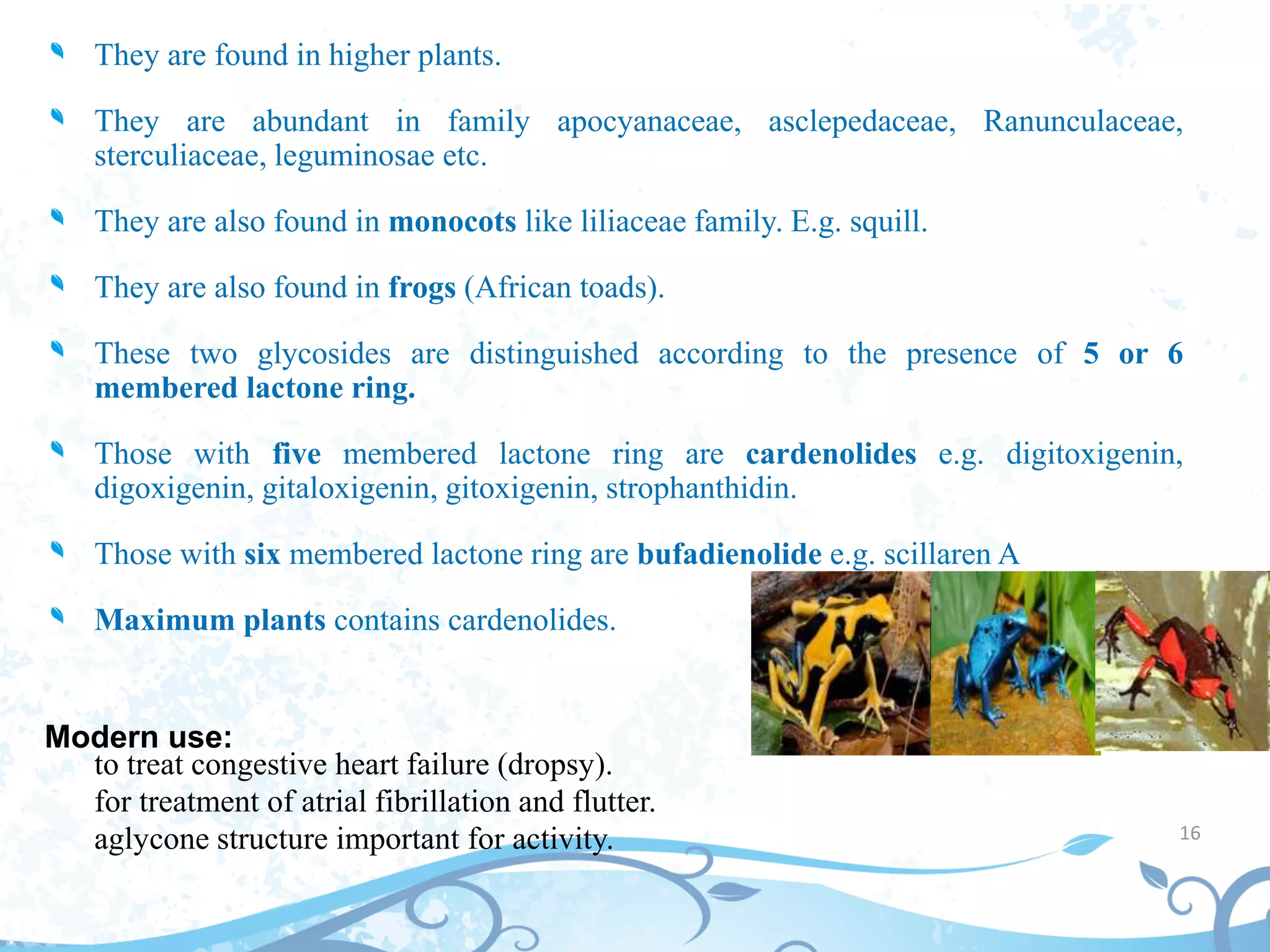
They are also found in frogs (African toads).
These two glycosides are distinguished according to the presence of 5 or 6
membered lactone ring.
Those with five membered lactone ring are cardenolides e.g. digitoxigenin,
digoxigenin, gitaloxigenin, gitoxigenin, strophanthidin.
Those with six membered lactone ring are bufadienolide e.g. scillaren A
Maximum plants contains cardenolides.
Modern use:
to treat congestive heart failure (dropsy).
for treatment of atrial fibrillation and flutter.
aglycone structure important for activity. 16
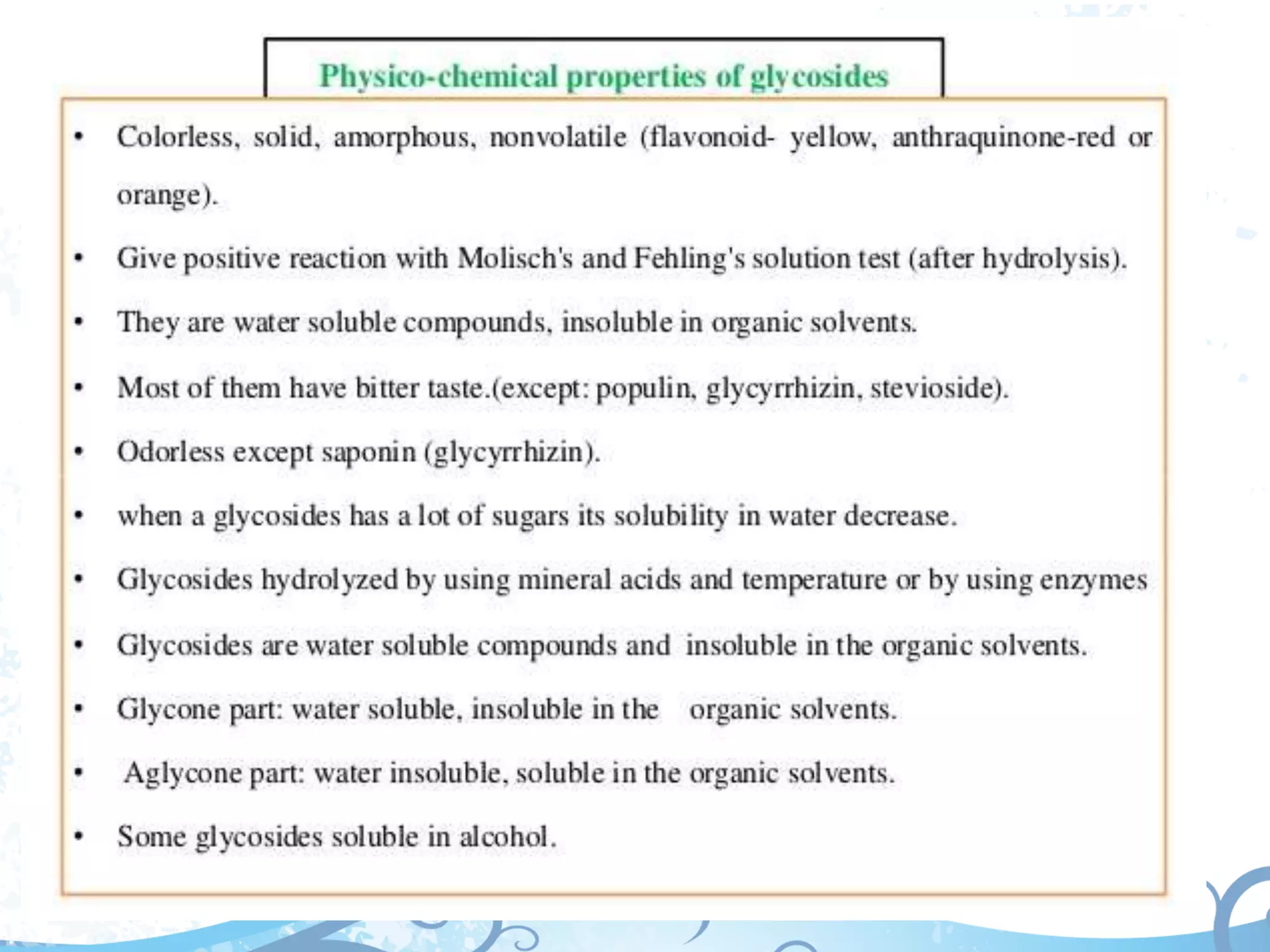
General properties of Cardiac Glycosides :
 Amorphous powder
 Bitter taste
 Solubility in H2O
 Insolubility in Organic solvents
 Very toxic compounds
 Odorless
17
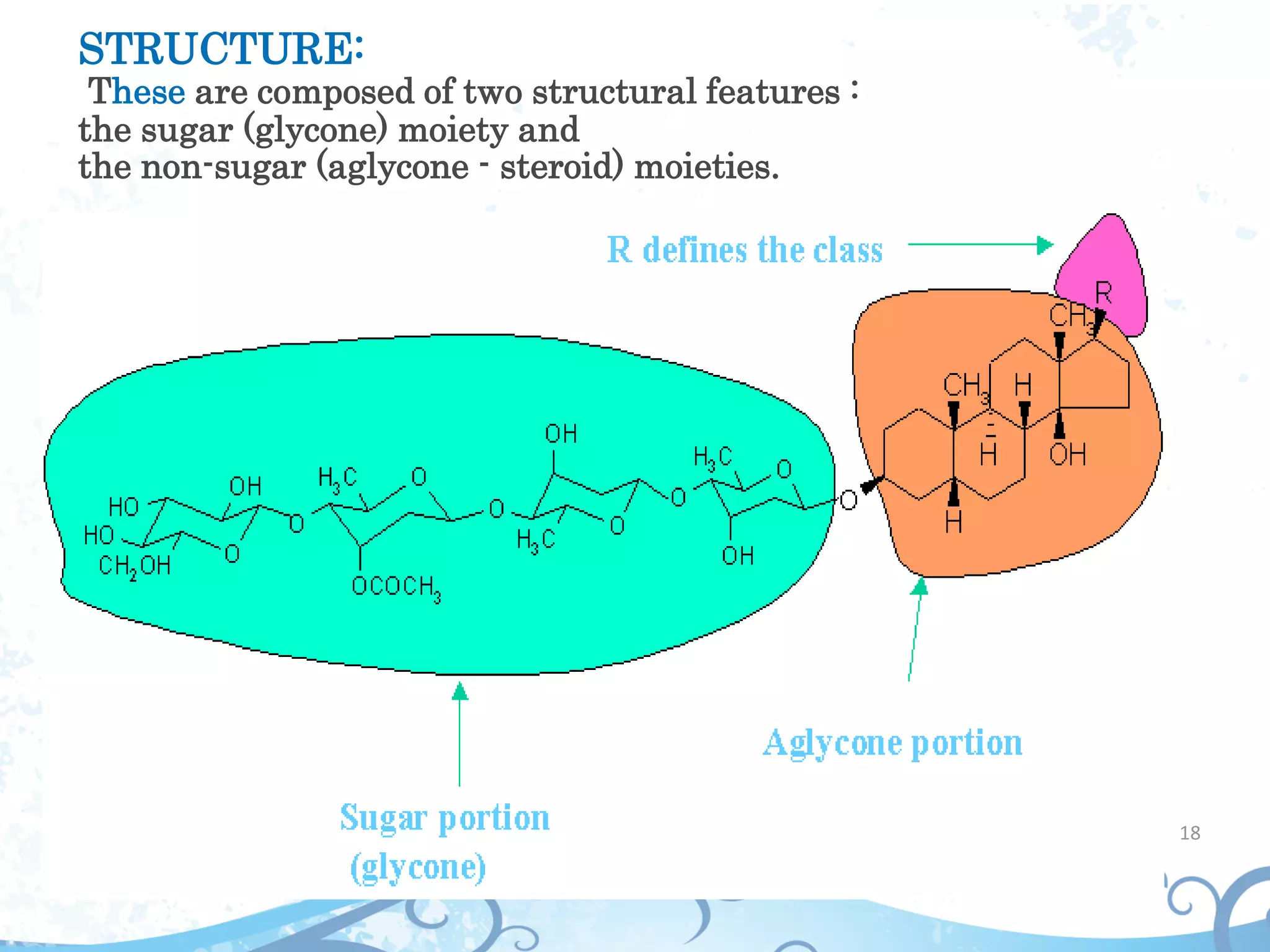
STRUCTURE:
These are composed of two structural features :
the sugar (glycone) moiety and
the non-sugar (aglycone - steroid) moieties.
18
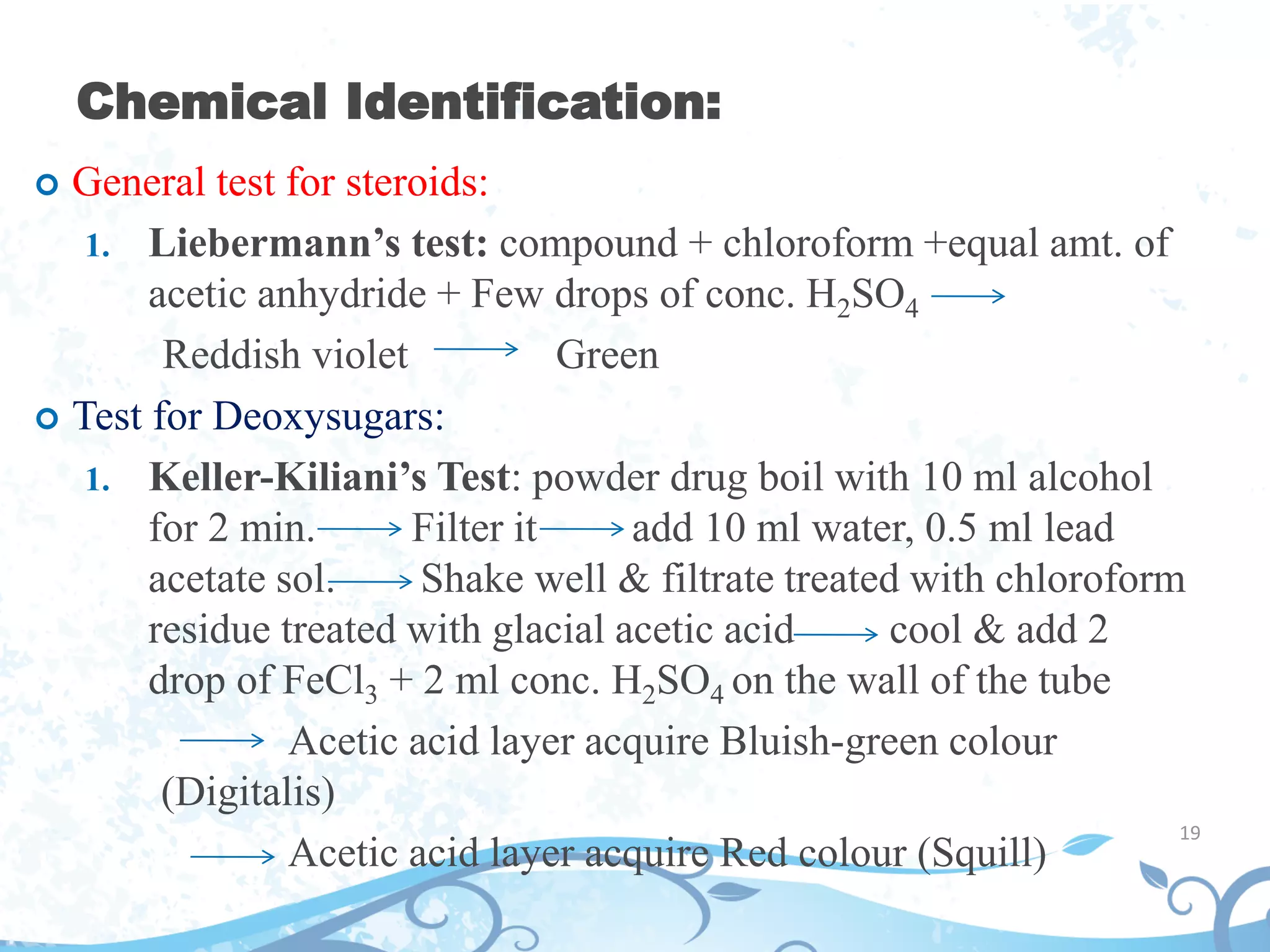
Chemical Identification:
19
 General test for steroids:
1. Liebermann’s test: compound + chloroform +equal amt. of
acetic anhydride + Few drops of conc. H2SO4
Reddish violet Green
 Test for Deoxysugars:
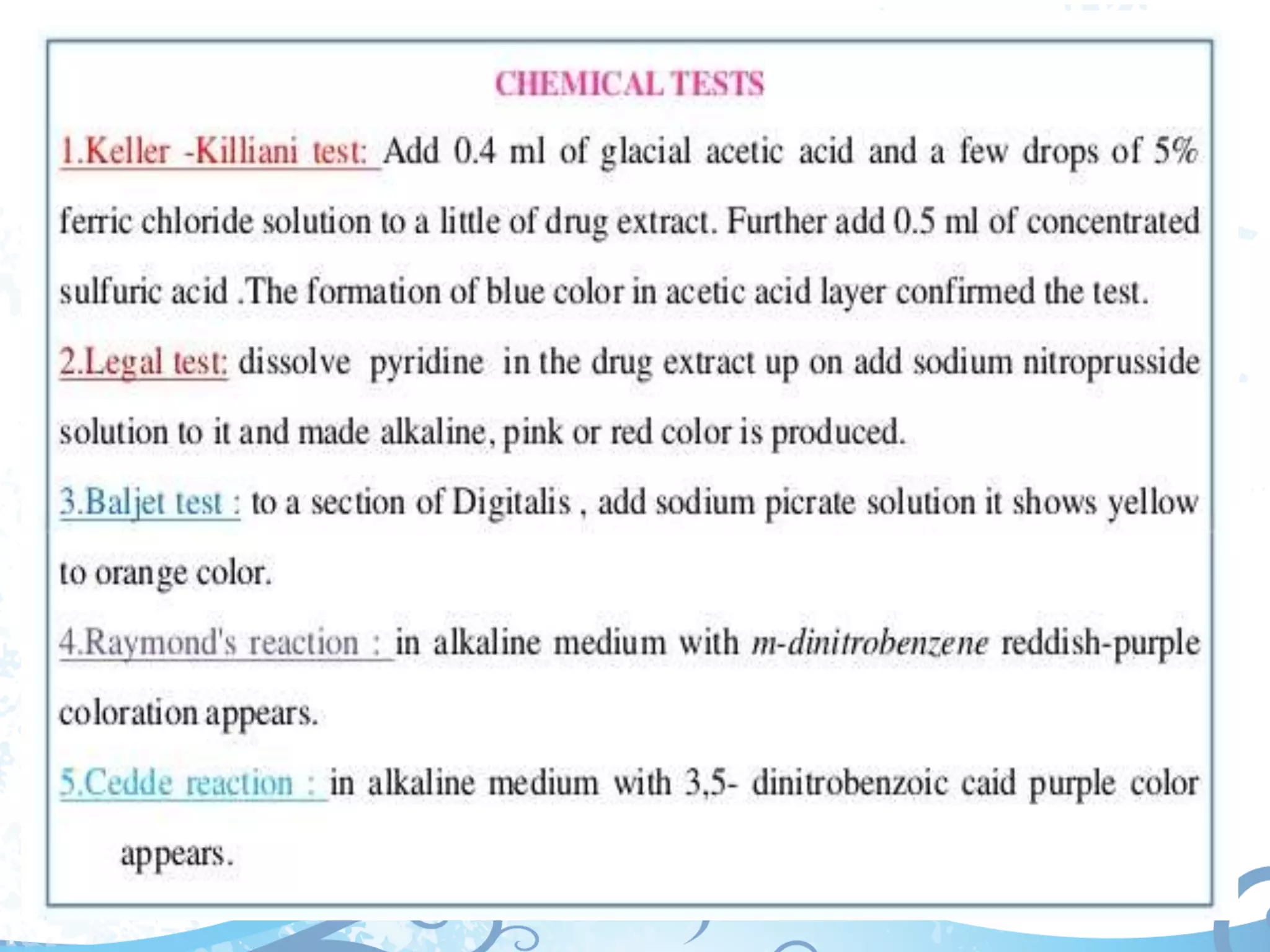
1. Keller-Kiliani’s Test: powder drug boil with 10 ml alcohol
for 2 min. Filter it add 10 ml water, 0.5 ml lead
acetate sol. Shake well & filtrate treated with chloroform
residue treated with glacial acetic acid cool & add 2
drop of FeCl3 + 2 ml conc. H2SO4 on the wall of the tube
Acetic acid layer acquire Bluish-green colour
(Digitalis)
Acetic acid layer acquire Red colour (Squill)
20
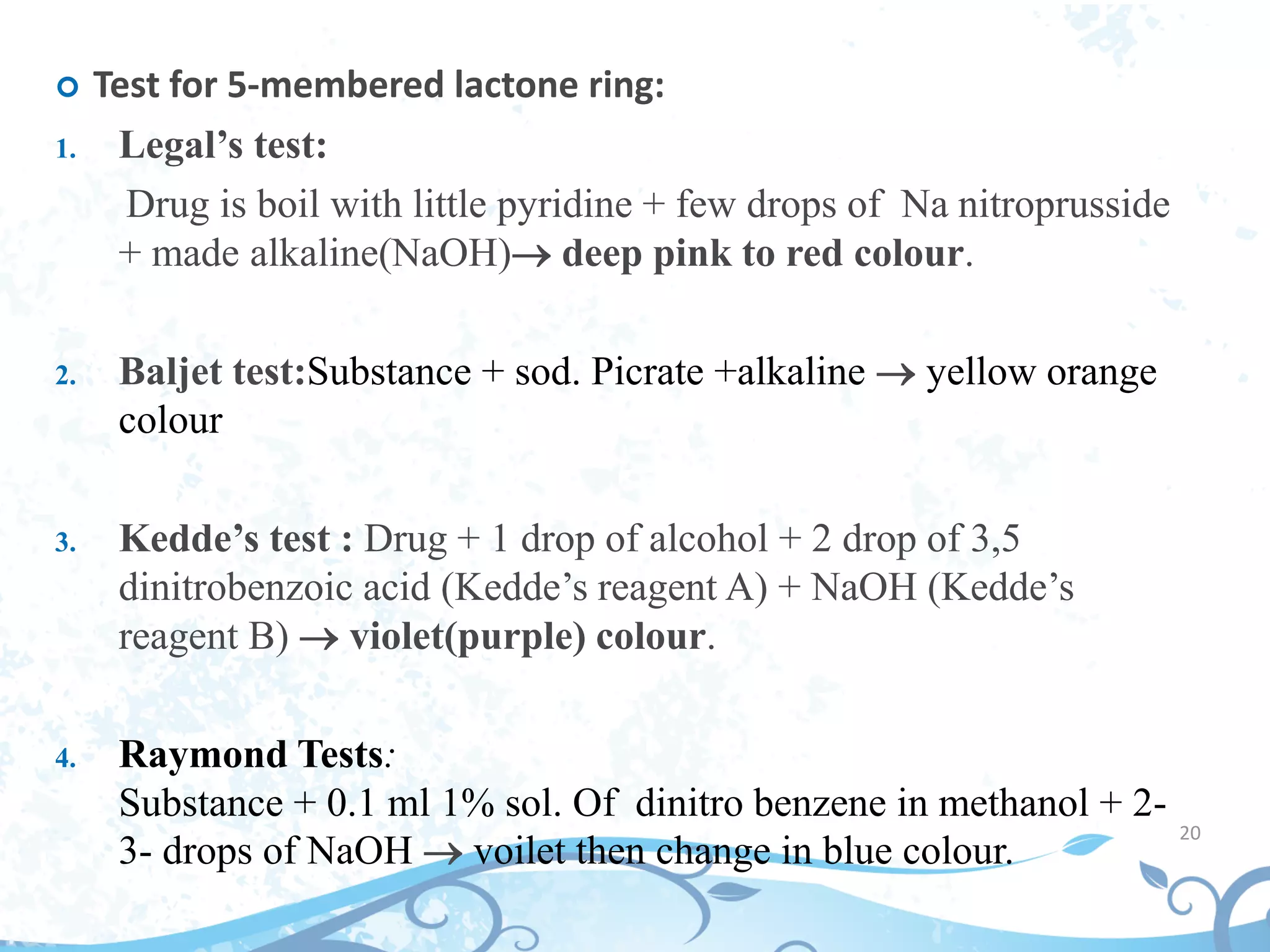
 Test for 5-membered lactone ring:
1. Legal’s test:
Drug is boil with little pyridine + few drops of Na nitroprusside
+ made alkaline(NaOH) deep pink to red colour.
2. Baljet test:Substance + sod. Picrate +alkaline  yellow orange
colour
3. Kedde’s test : Drug + 1 drop of alcohol + 2 drop of 3,5
dinitrobenzoic acid (Kedde’s reagent A) + NaOH (Kedde’s
reagent B)  violet(purple) colour.
4. Raymond Tests:
Substance + 0.1 ml 1% sol. Of dinitro benzene in methanol + 2-
3- drops of NaOH  voilet then change in blue colour.
21
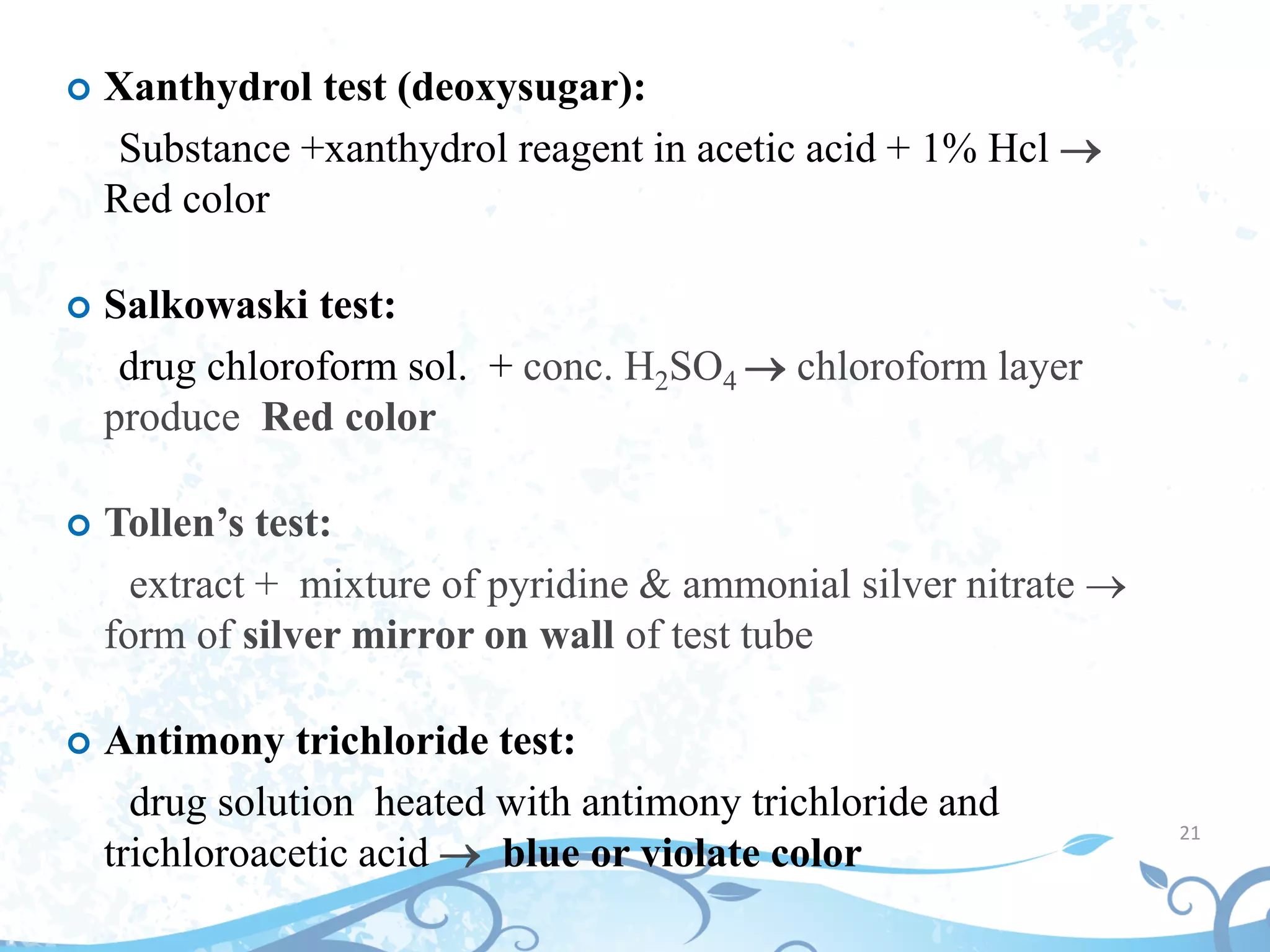
 Xanthydrol test (deoxysugar):
Substance +xanthydrol reagent in acetic acid + 1% Hcl 
Red color
 Salkowaski test:
drug chloroform sol. + conc. H2SO4  chloroform layer
produce Red color
 Tollen’s test:
extract + mixture of pyridine & ammonial silver nitrate 
form of silver mirror on wall of test tube
 Antimony trichloride test:
drug solution heated with antimony trichloride and
trichloroacetic acid  blue or violate color
22
23
24
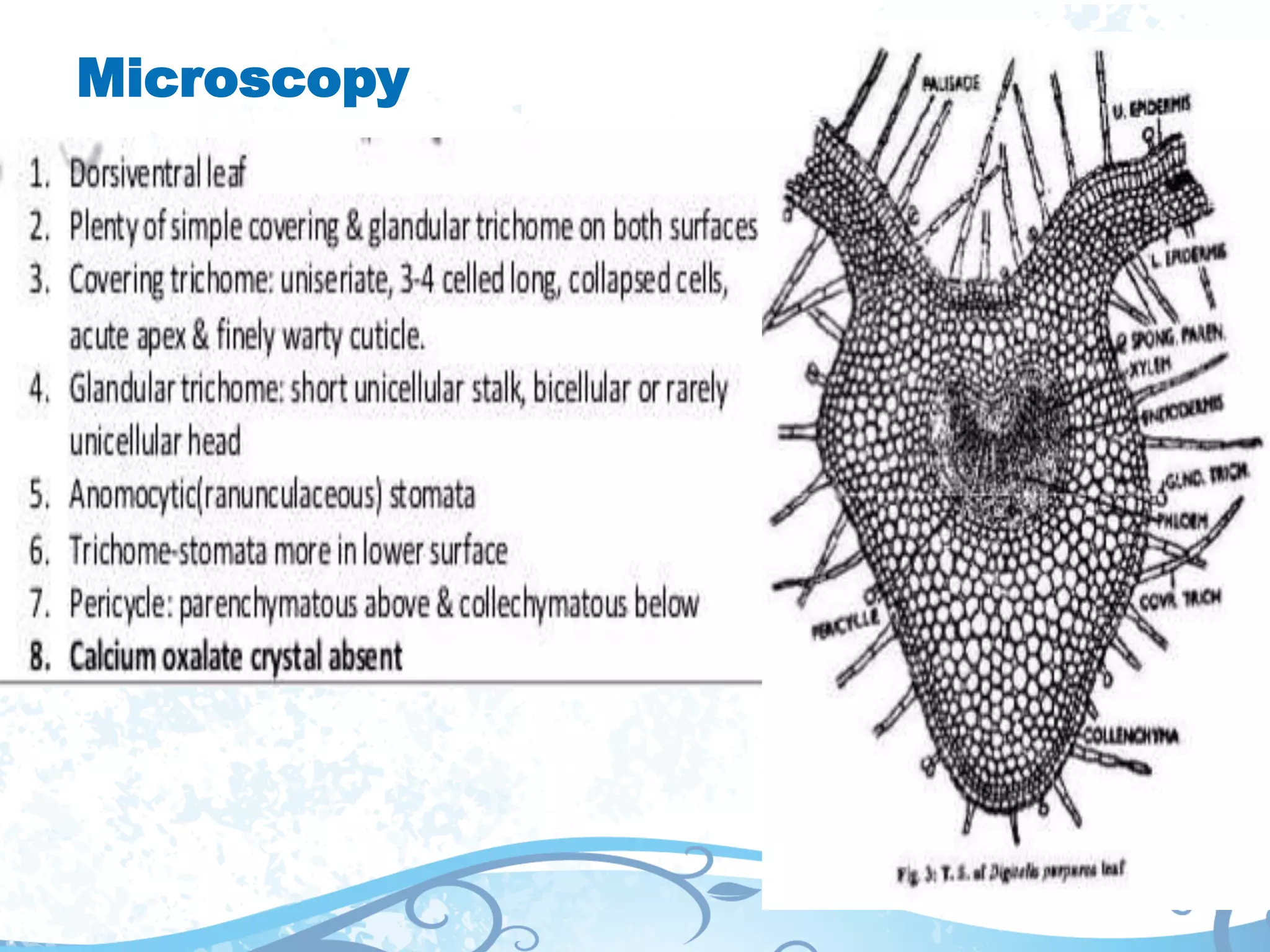
Microscopy
25
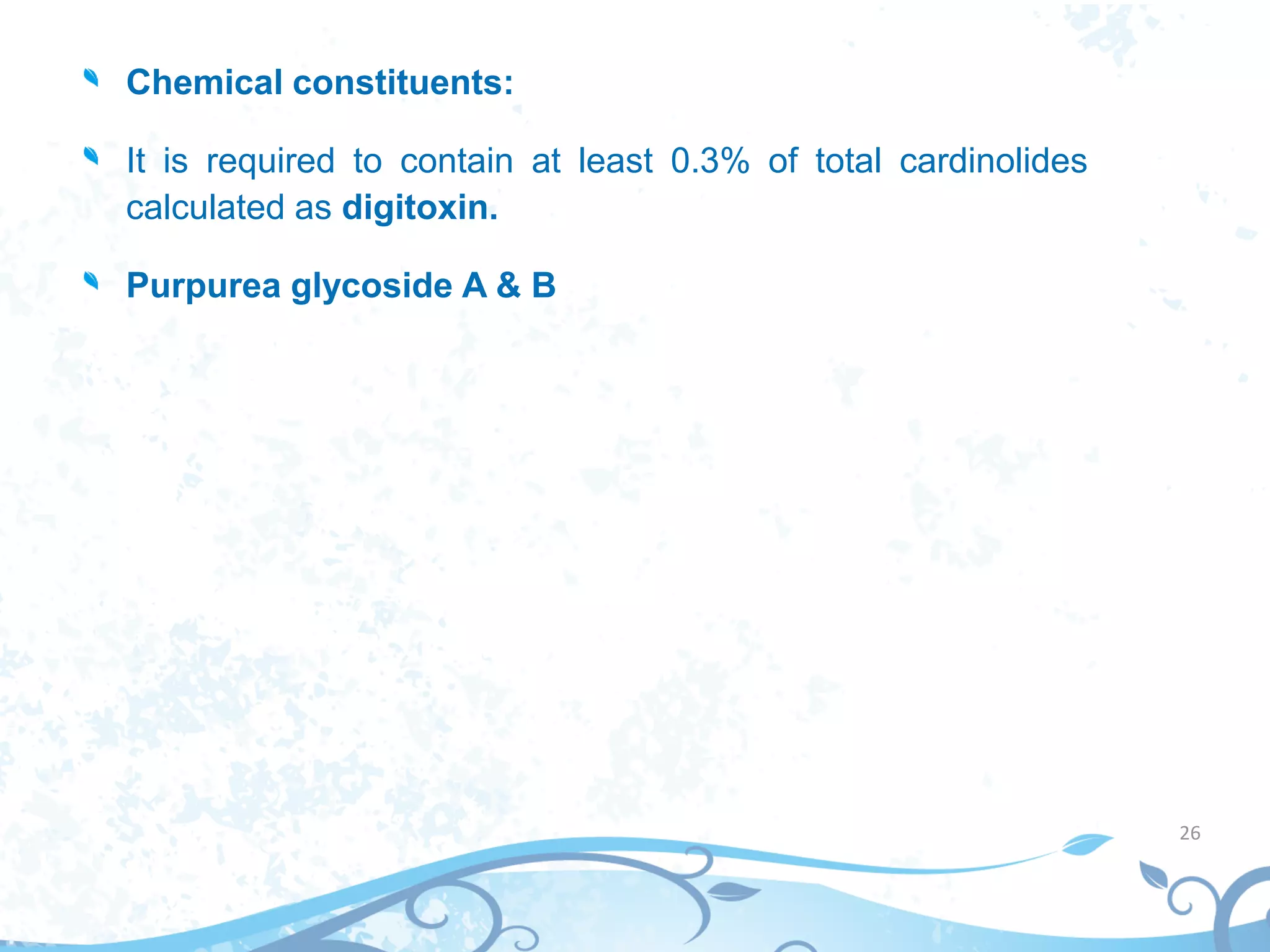
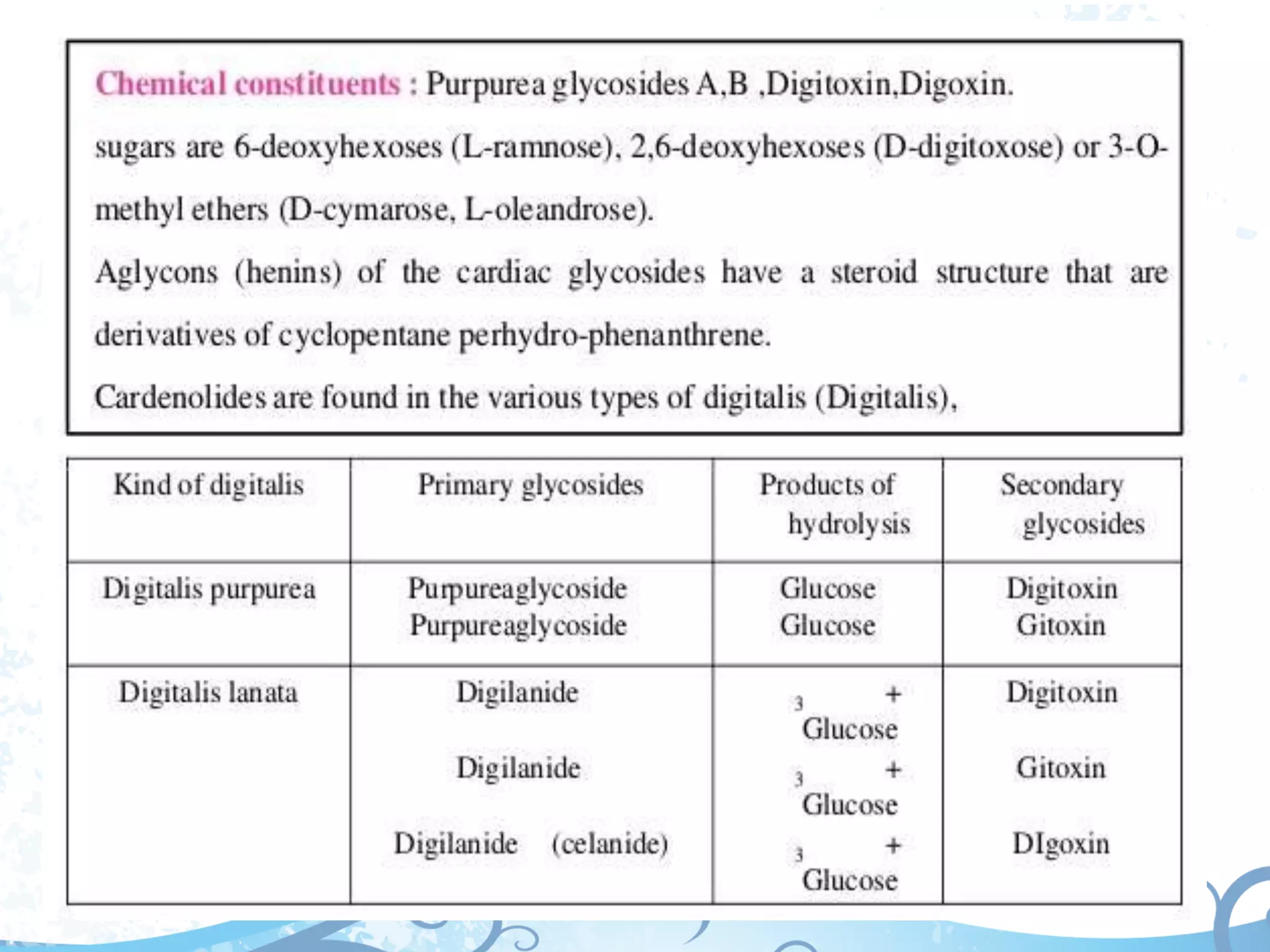
Chemical constituents:
It is required to contain at least 0.3% of total cardinolides
calculated as digitoxin.
Purpurea glycoside A & B
26
27
28
29
30
31
32
33
34
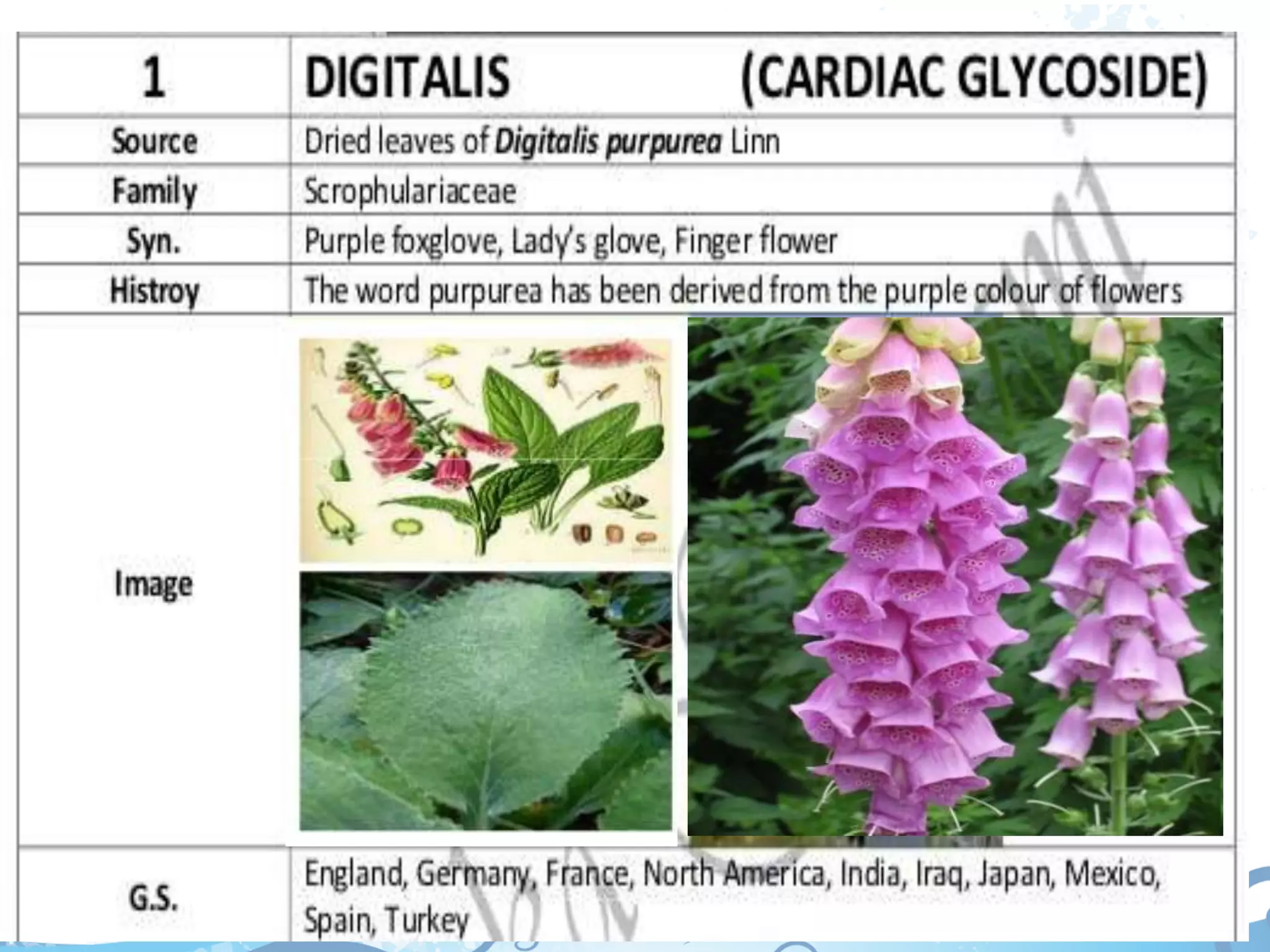
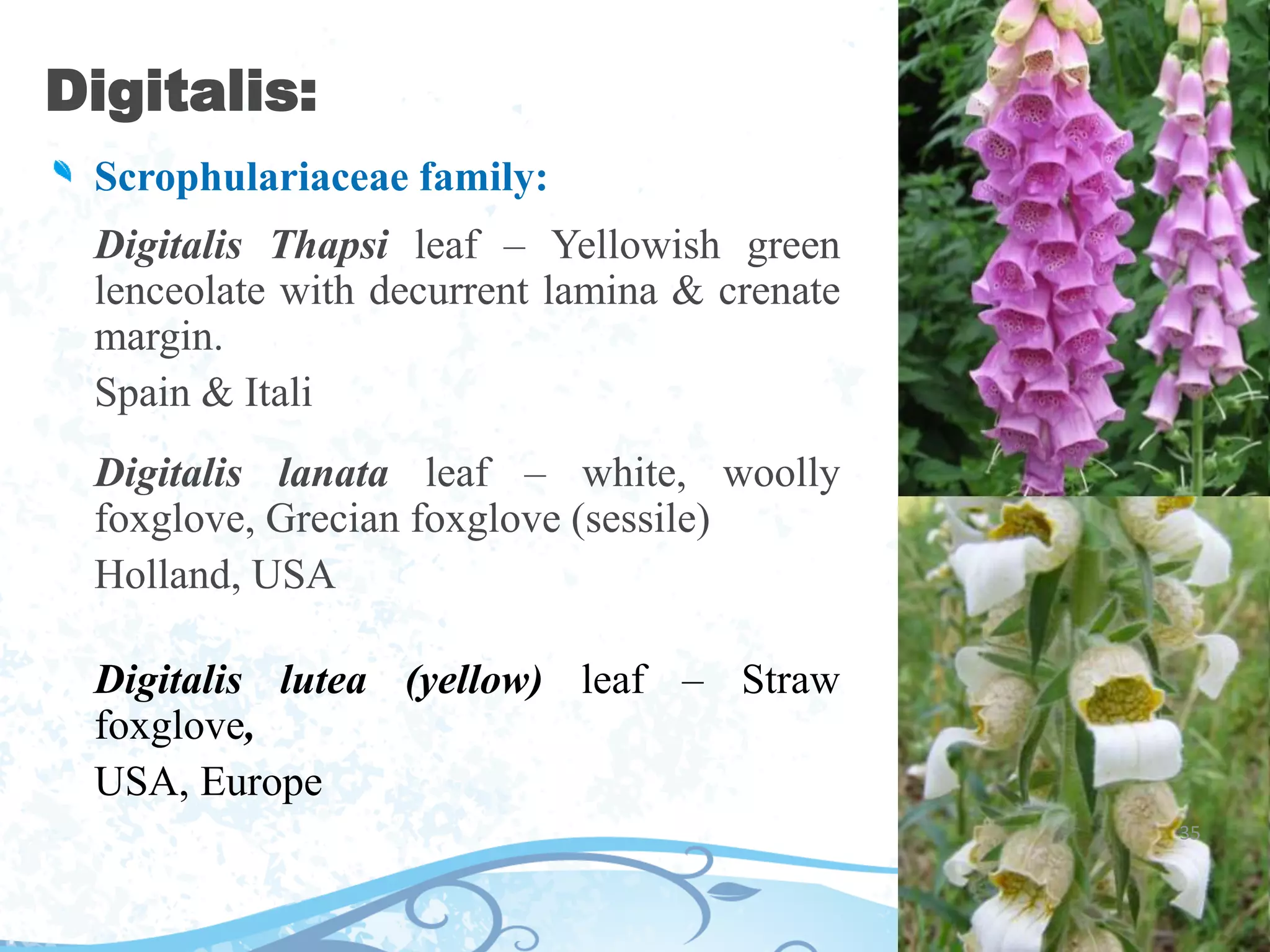
Digitalis:
Scrophulariaceae family:
Digitalis Thapsi leaf – Yellowish green
lenceolate with decurrent lamina & crenate
margin.
Spain & Itali
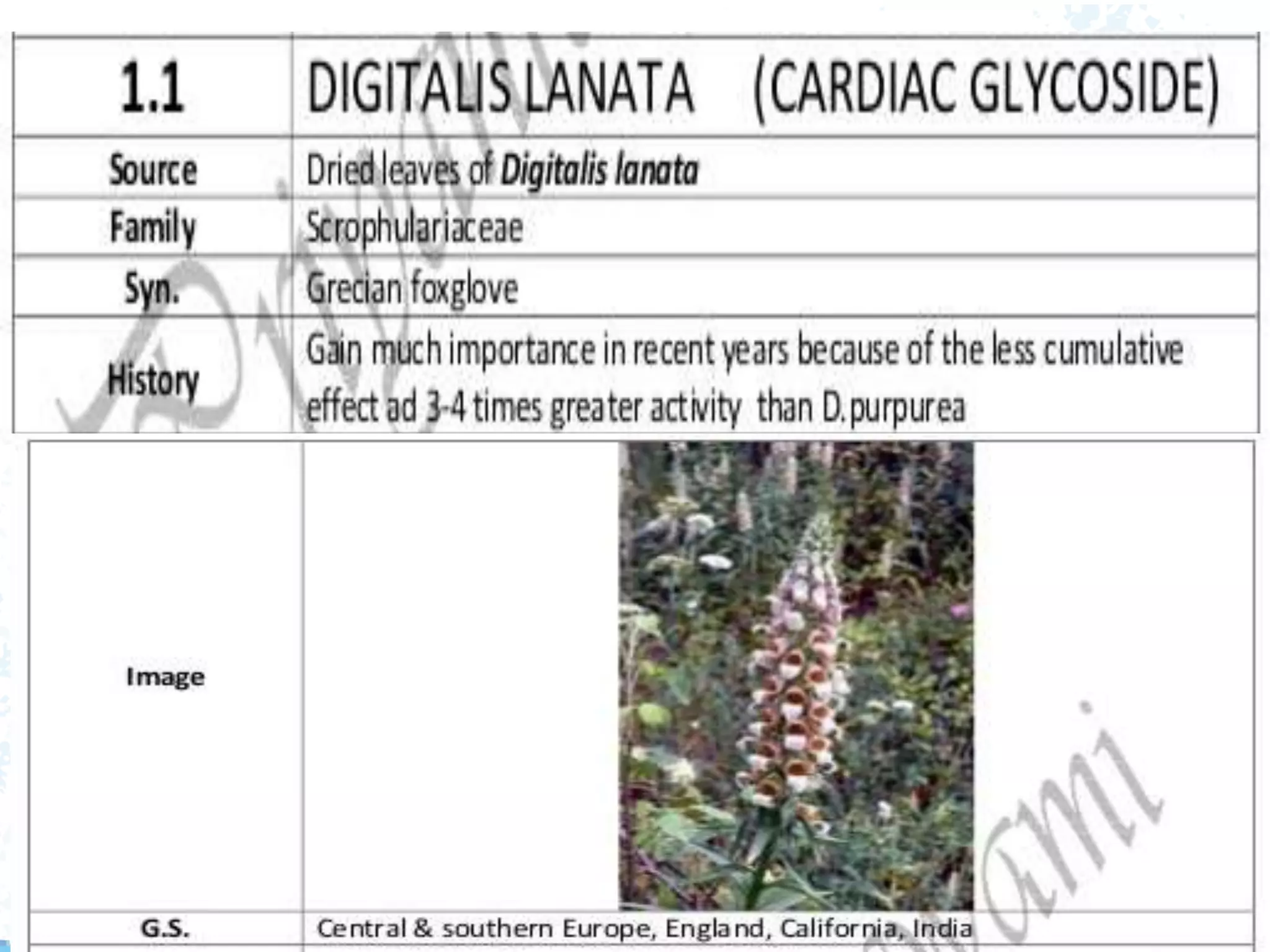
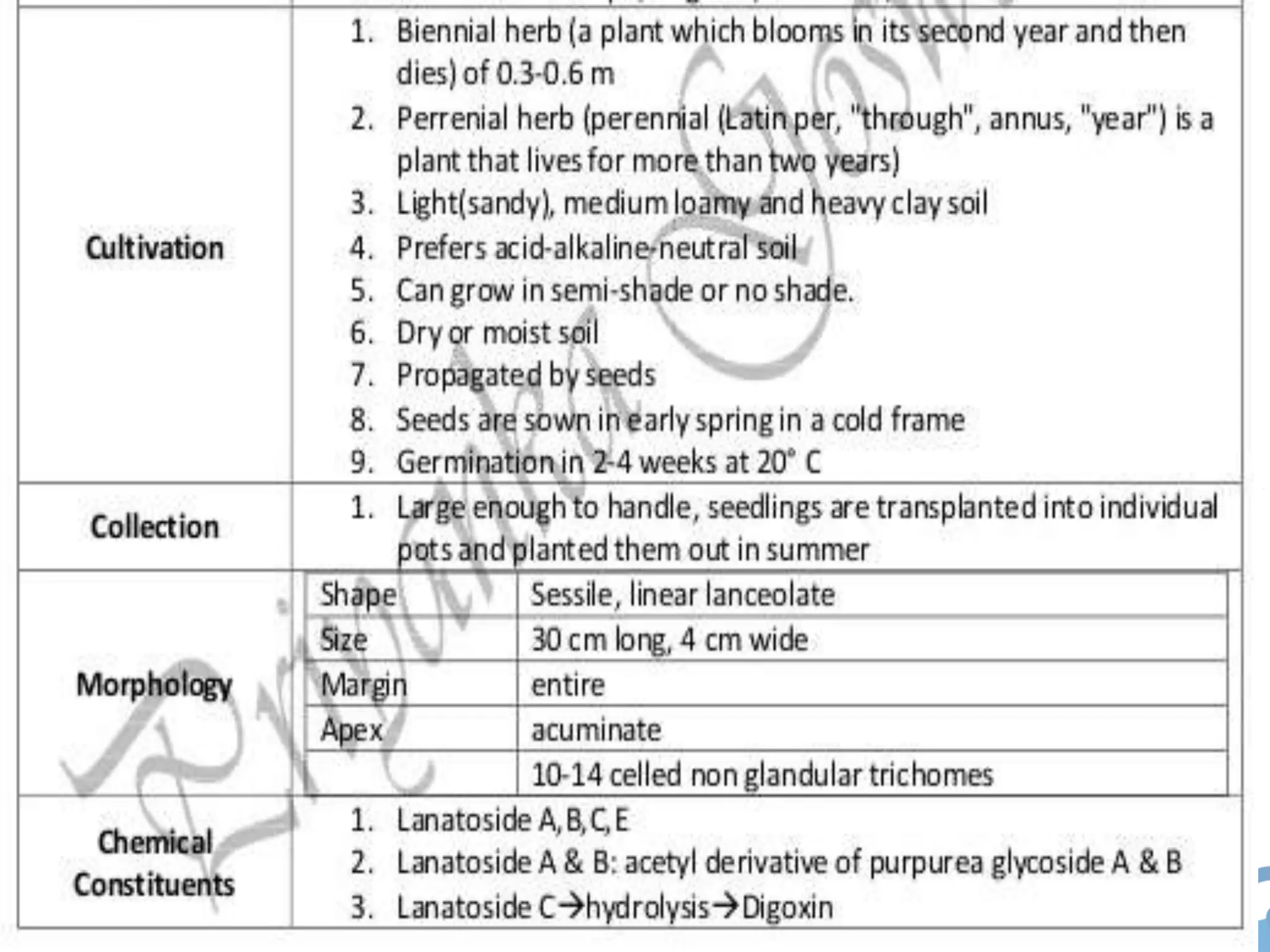
Digitalis lanata leaf – white, woolly
foxglove, Grecian foxglove (sessile)
Holland, USA
Digitalis lutea (yellow) leaf – Straw
foxglove,
USA, Europe
35
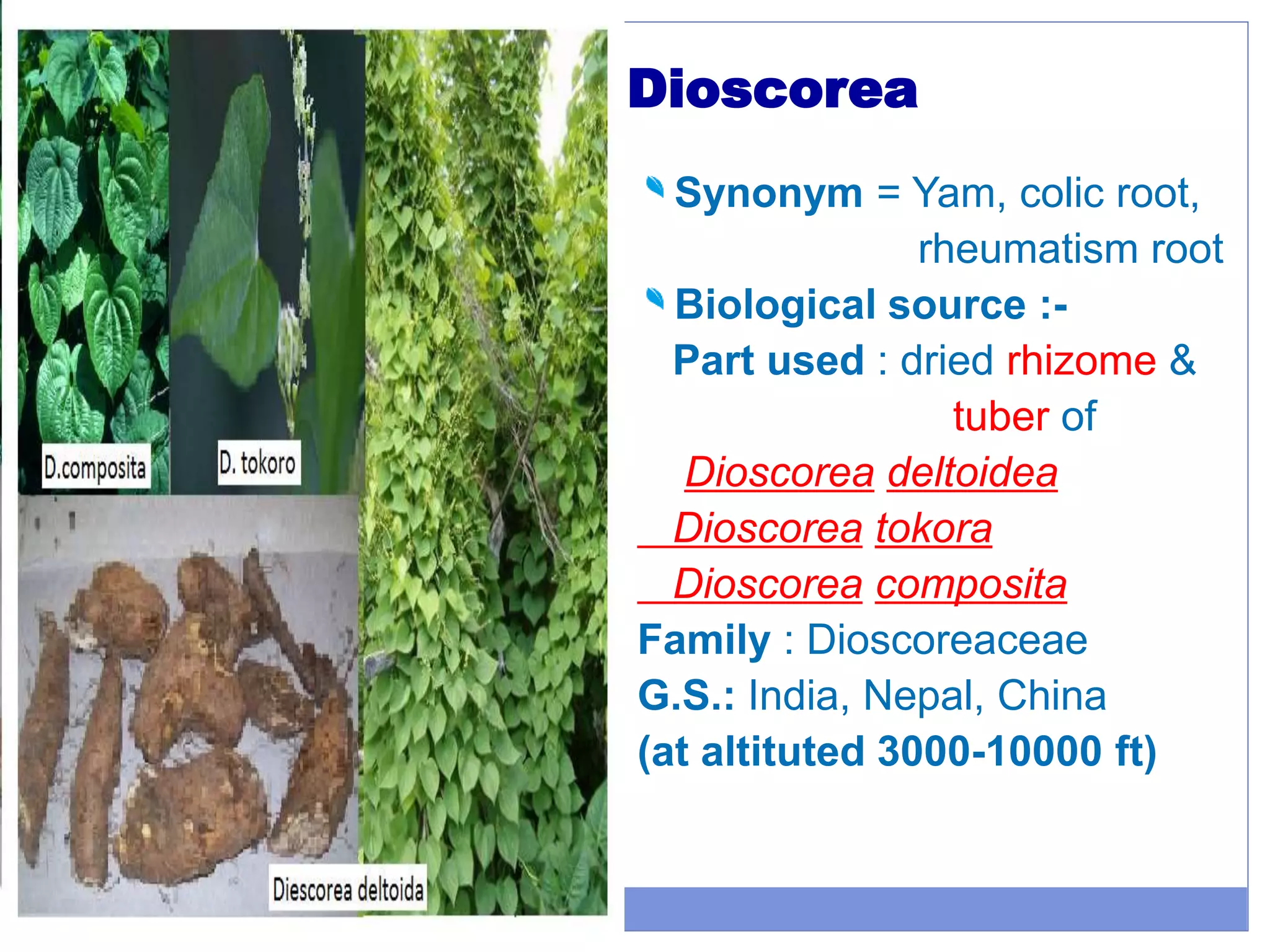
Dioscorea
Synonym = Yam, colic root,
rheumatism root
Biological source :-
Part used : dried rhizome &
tuber of
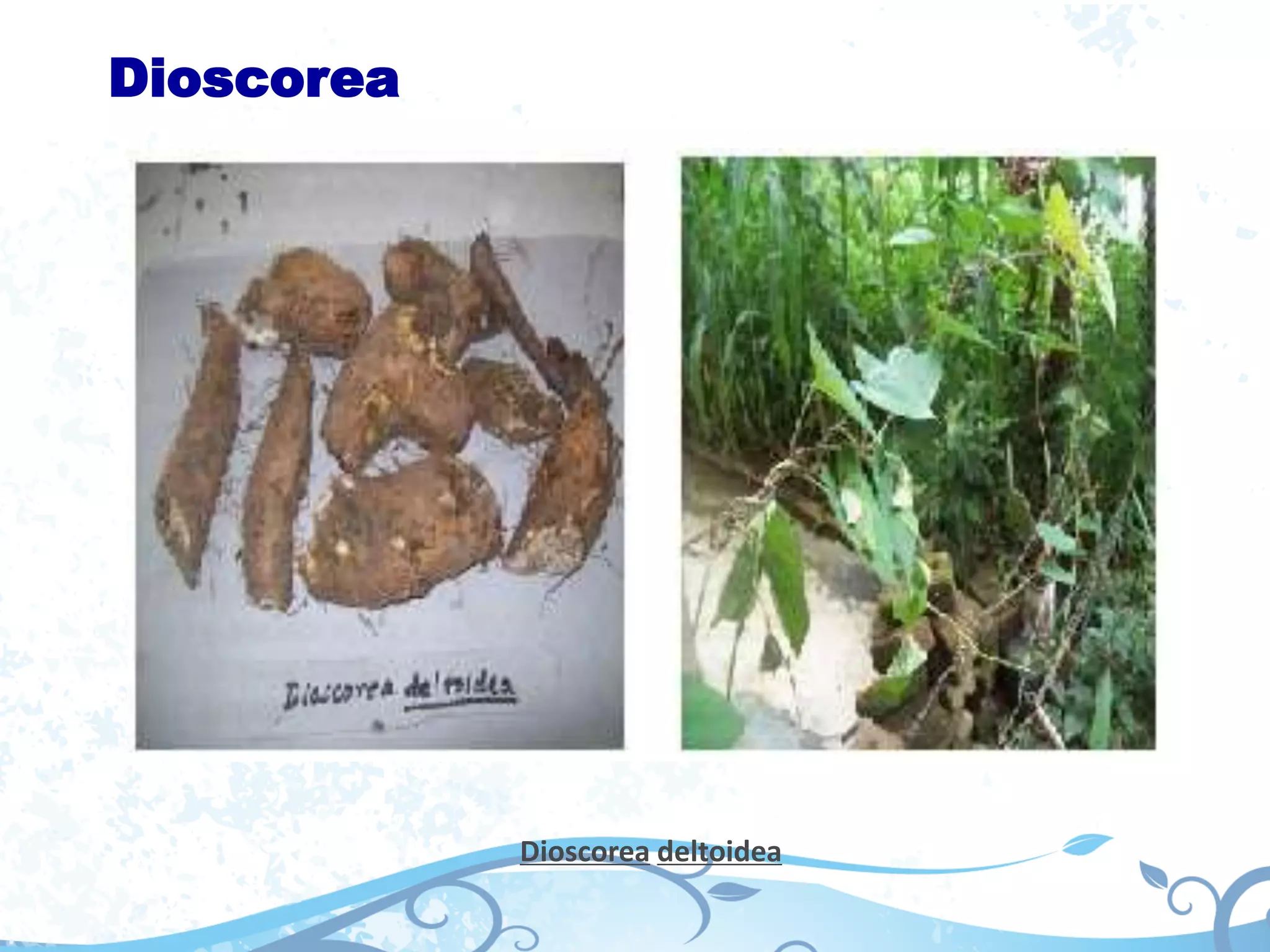
Dioscorea deltoidea
Dioscorea tokora
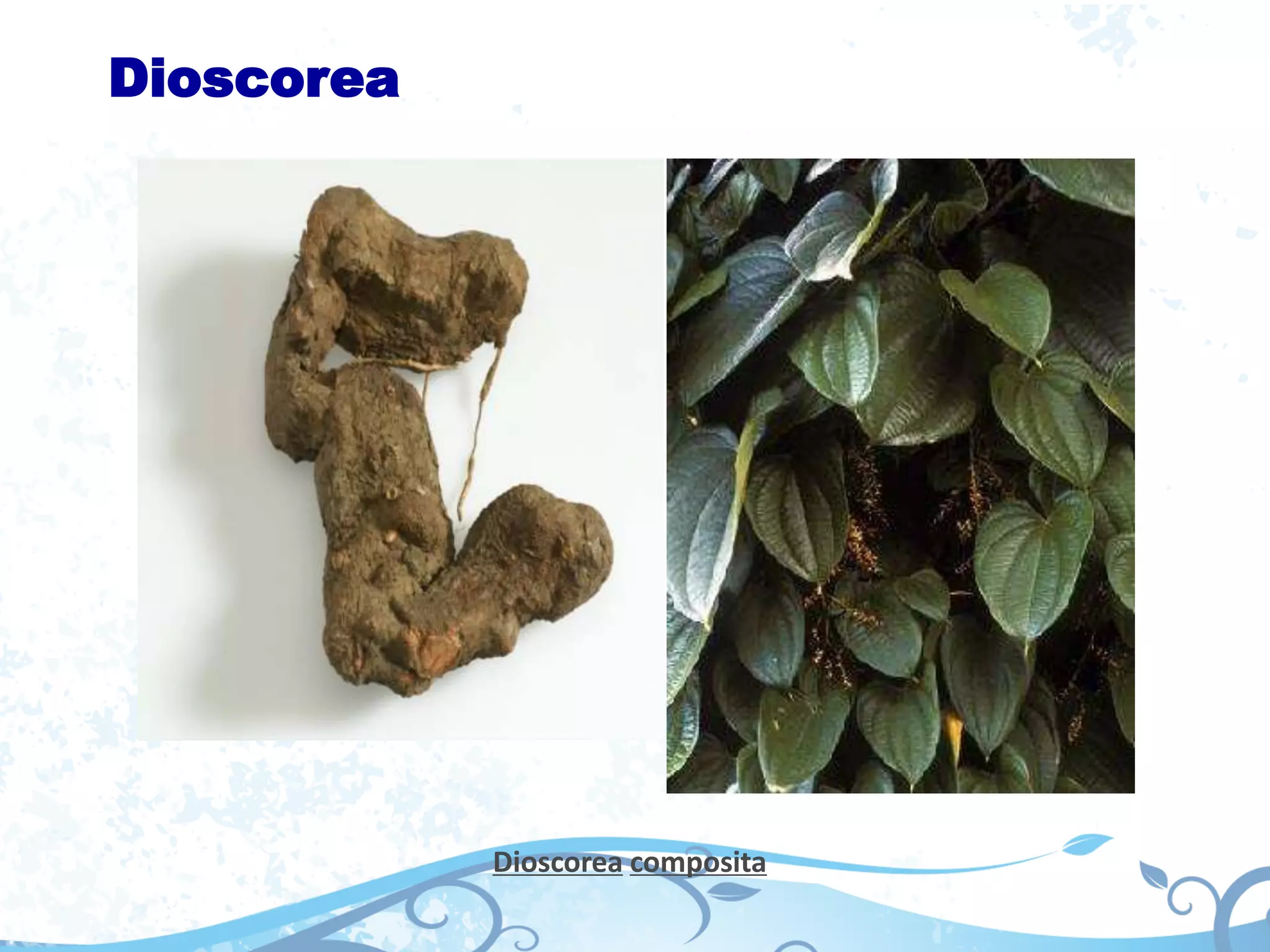
Dioscorea composita
Family : Dioscoreaceae
G.S.: India, Nepal, China
(at altituted 3000-10000 ft)
Cultivation & Collection
Dioceous, perannial climber plant at 3 mtr. Height.
Cultiveted as gardon croap with ginger, turmeric, brinjal,
sweet potato or maize.
Grown in sandy, loamy & clay soil.
First sawn in nursary (30-40 days)
Transplant in open field at distance 60 cm.
Bearing start after 5-8 months.
Tubers reach maturity 3-5 yrs.
Stored in cool sheds under dry earth or sand for 6 months
Dioscorea
Morphology
Colour = Slightly brown
Odour = Odourless
Taste = Bitter and acrid
Size = Varies
depending on the age of the rhizomes (tubers)
Dioscorea
Dioscorea deltoidea
Dioscorea
Dioscorea composita
Dioscorea
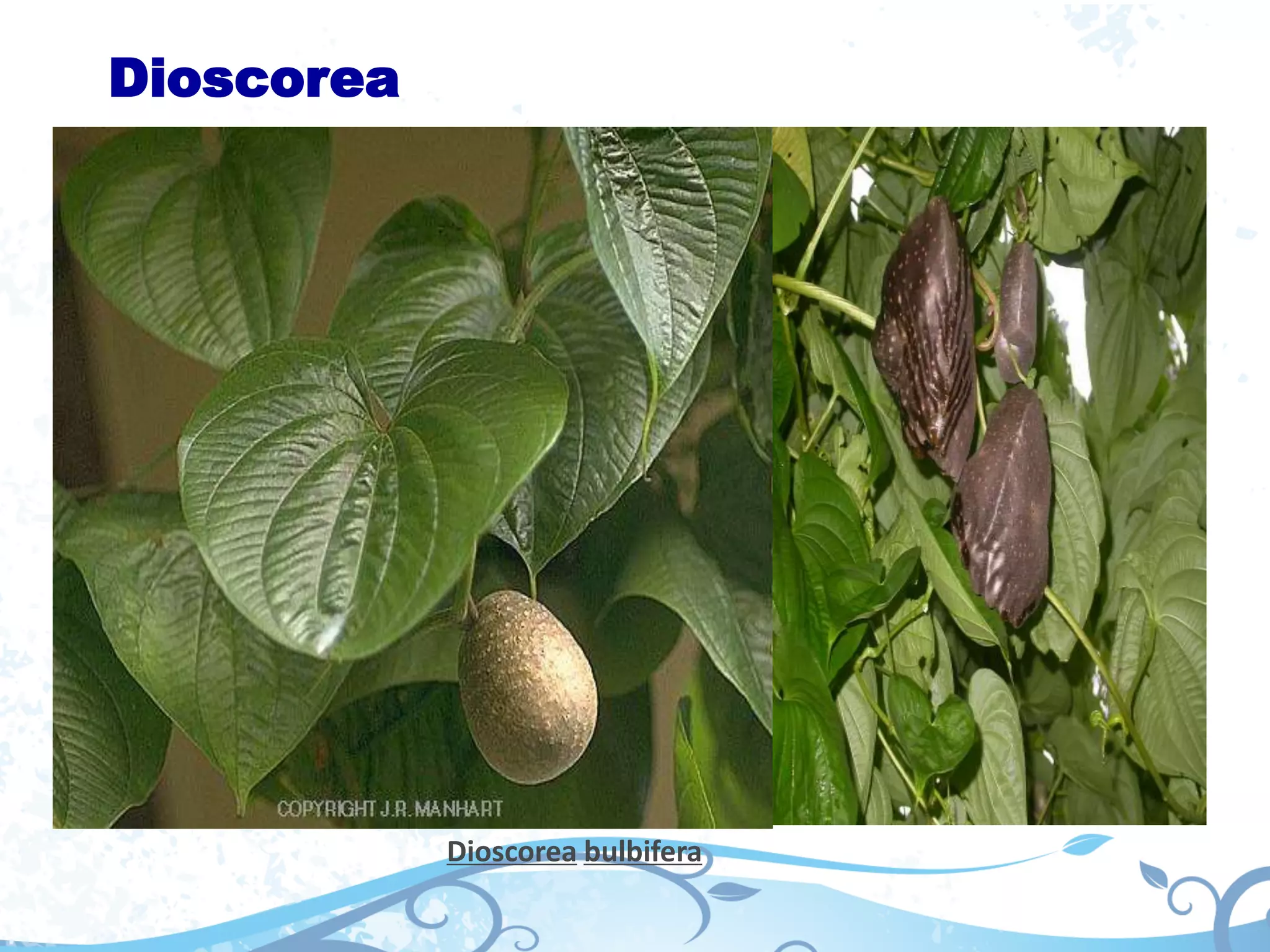
Dioscorea bulbifera
Dioscorea
Dioscorea species are true yams.
Not to be confused with
a) Sweet potato or ratalu, shakarkand (Hindi)
b) Jimikand or suran (Hindi)
According to Ayurvedic Pharmacopoeia, "ratalu“ (Bengali) is
Dioscorea bulbifera.
Dioscorea
Chemical Constituents :-
Dioscin (major glycoside)
Diosgenin (aglycone)
Smilagenin
Epi smilagenin
β – Yammogenin
Starch
sapogenase
Dioscorea
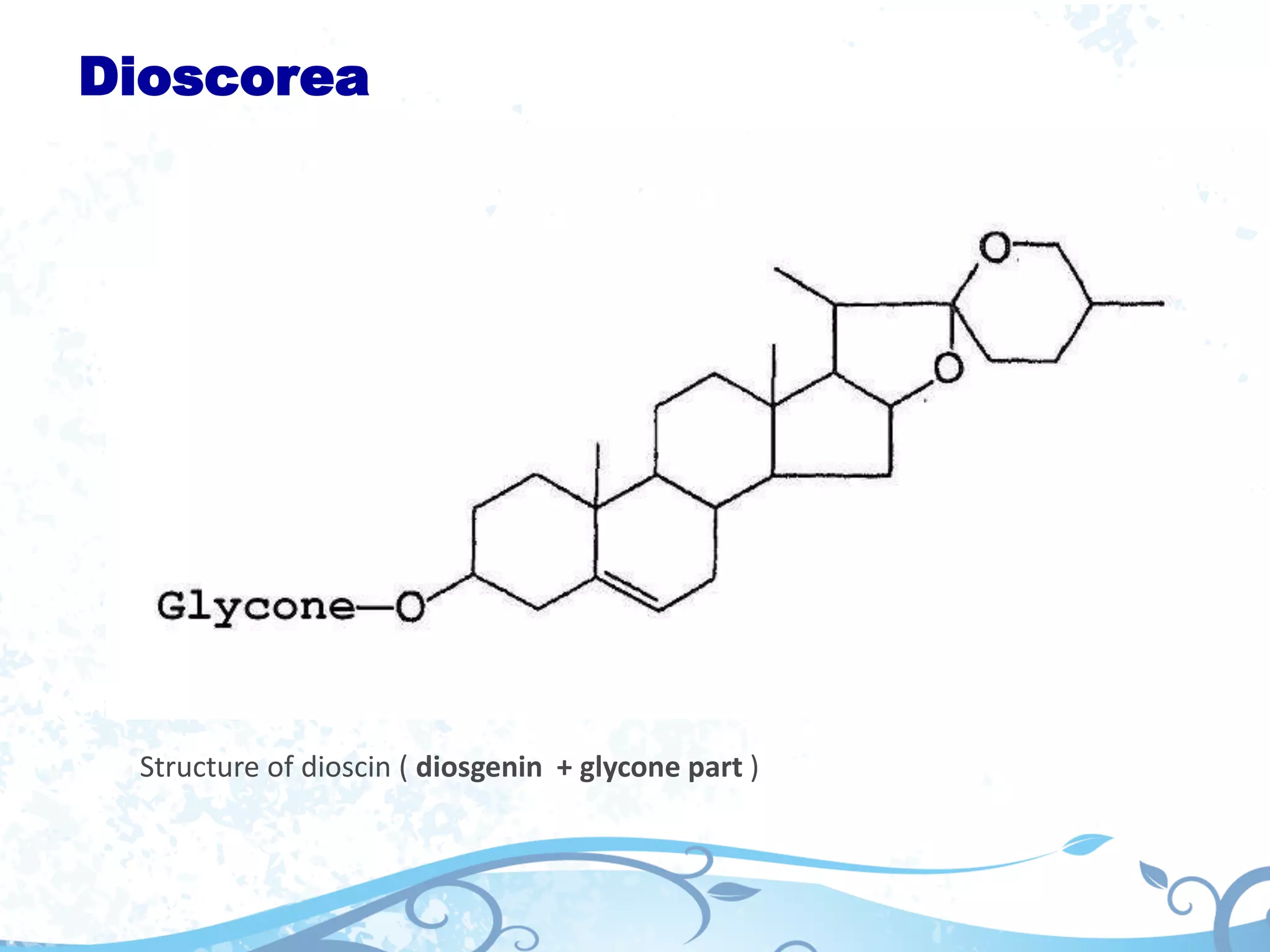
Structure of dioscin ( diosgenin + glycone part )
Dioscorea
Uses :-
 Rheumatic arthritis treatment
 Manufacturing of progestrone, other steroids, contraceptives
 Asthma treatment
 Allied species:
 D. fluribunda
 D. villosa
 D. prazeri
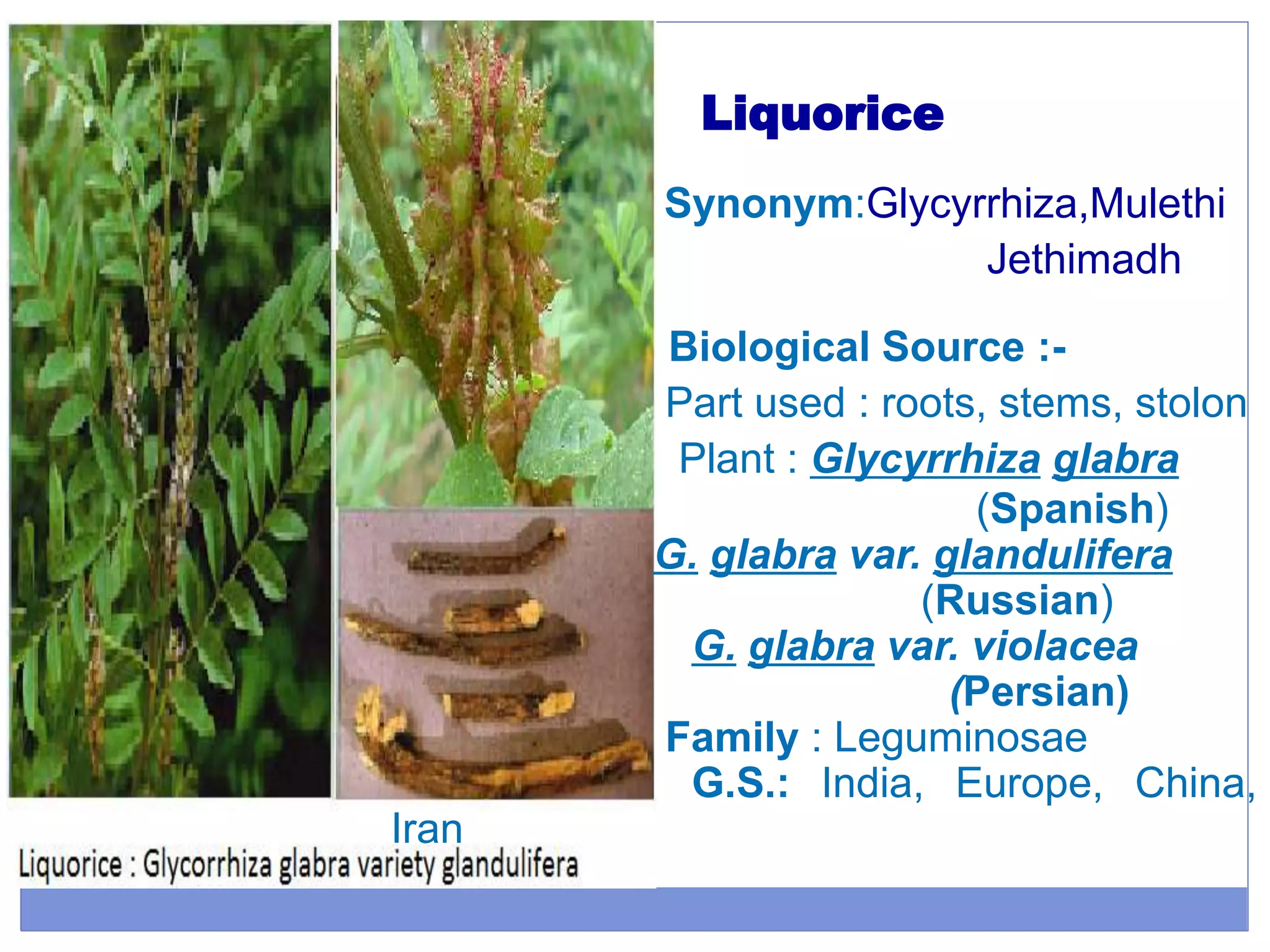
Liquorice
Synonym:Glycyrrhiza,Mulethi
Jethimadh
Biological Source :-
Part used : roots, stems, stolon
Plant : Glycyrrhiza glabra
(Spanish)
G. glabra var. glandulifera
(Russian)
G. glabra var. violacea
(Persian)
Family : Leguminosae
G.S.: India, Europe, China,
Iran
Liquorice or Glycyrrhiza
MORPHOLOGY:
Colour = Externally- Yellowish brown / dark brown
Internally- Yellowish
Odour = Faint & characteristic
Taste = Sweet
Size = 20 to 50 cm (Length)
2 cm (Diameter)
Shape = Straight , cylindrical (Unpeeled drug)
Angular (Peeled drug )
Liquorice or Glycyrrhiza
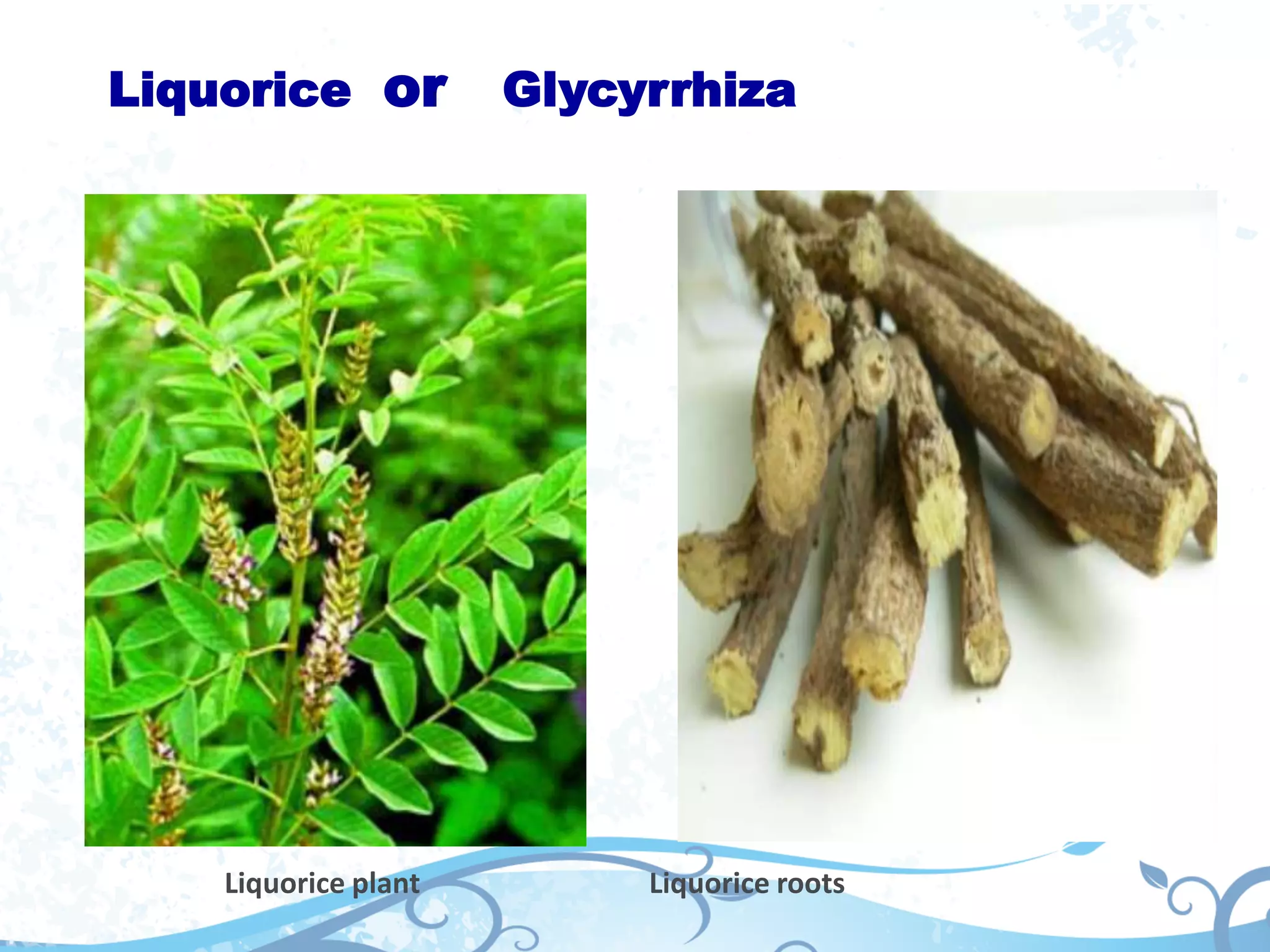
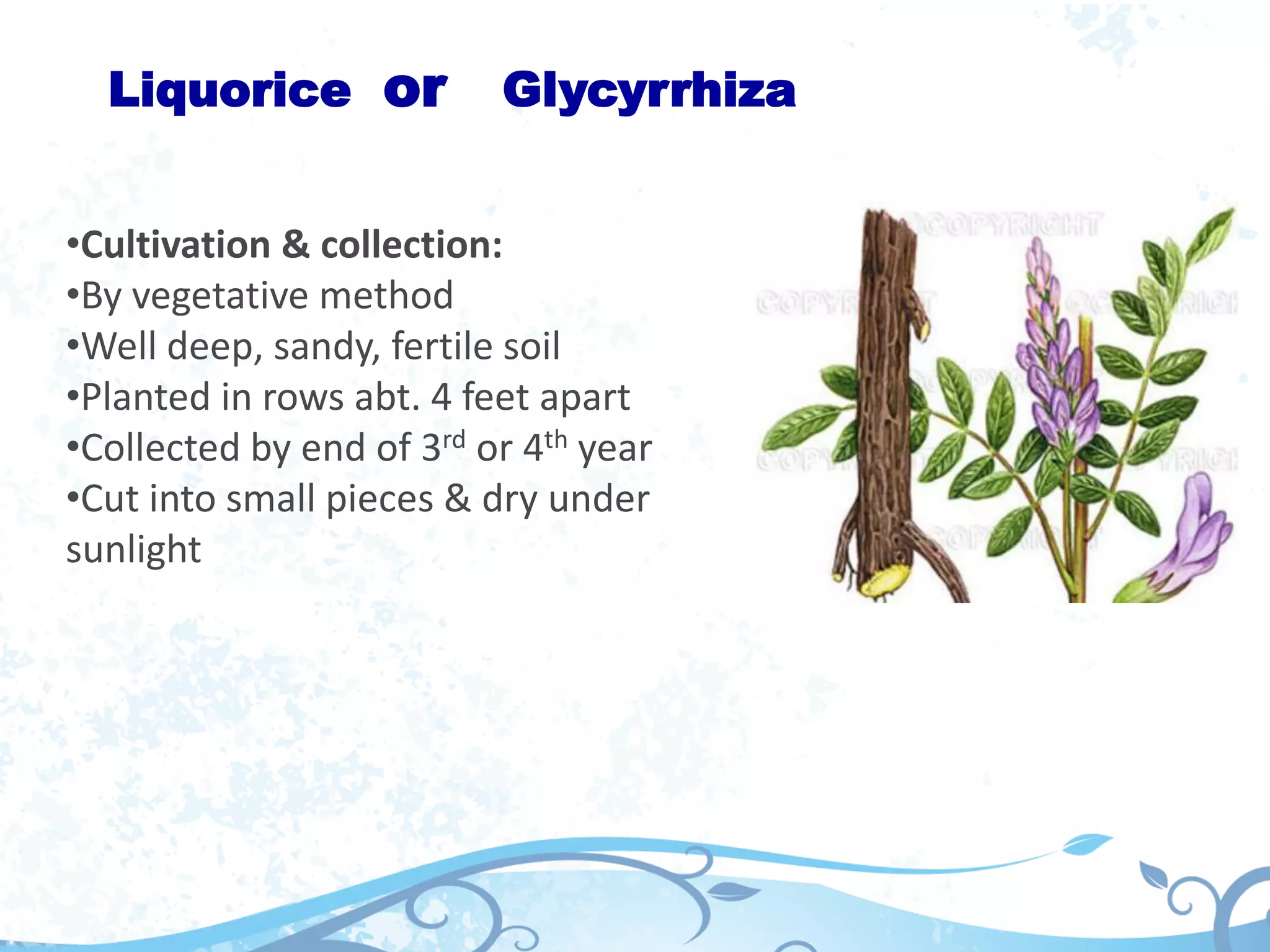
Liquorice plant Liquorice roots
Liquorice or Glycyrrhiza
•Cultivation & collection:
•By vegetative method
•Well deep, sandy, fertile soil
•Planted in rows abt. 4 feet apart
•Collected by end of 3rd or 4th year
•Cut into small pieces & dry under
sunlight
Liquorice or Glycyrrhiza
Chemical Constituents :-
Glycyrrhizin / glycyrrhizic acid (major glycoside)
Glycyrrhitic acid (aglycone)
Glucoronic acid
Liquiritoside; iso liquiritoside, liquiritin; iso
liquiritin (Flavonoid / Chalcone glycosides)
Sugars – Glucose, mannitol
Resin , Volatile oil
Liquorice or Glycyrrhiza
Uses :-
Demulcent (softening or soothing effect onto a mucous
membrane surface )
Expectorant (helps bring up mucus and other material from
the lungs, bronchi, and trachea)
Masking agent for bitter drugs, Sweetener
Treatment of inflamations, rhematoid arthritis
Facilitate absorption of poorly absorbed
drugs
Liquorice or Glycyrrhiza
Glycyrrhzin = sodium and fluid retention
Glycyrrhzin = potassium depletion
Hence, Not prescribed to
a) Pregnant women
b) patients with cardiac problems
c) patients with hypertension (high BP)
Adultrants:
54

Secondary metabolite part 2 by pooja khanpara

  • 1.
    Secondary metabolites and itsdetail information Pooja H. Khanpara Asst. professor Pharmacognosy Aksharpreet College of Pharmacy, Lakhabaval, Jamnagar
  • 2.
  • 3.
  • 4.
  • 5.
  • 6.
  • 7.
  • 8.
  • 9.
  • 10.
    Stass otto method Powderedplant material (Crude Drug) Continuous Hot Extraction with alcohol (Soxhlet) Collect the Extract Add Leadacetate to precipitate tannins Filter and pass H2S gas Filter and subject to fractional crystalization, distillation or chromatography 10
  • 11.
  • 12.
    12 INTRODUCTION • The genins(aglyconpart) of all cardiac glycosides are steroidal in nature, that act as cardiotonic agents. • They are characterized by their highly specific action cardiac muscle, increasing tone, excitability and contractility of this muscle, thus allowing the weakened heart to function more efficiently. O R OH CH3 Sugar Lactone ring 1 2 3 4 5 10 6 7 8 9 11 12 13 14 15 16 17 cyclopentanoperhudrophenanthrene
  • 13.
    13 All cardio activeglycosides are characterized by the following structural features: 1. The presence of β-OH at position C-3, which is always involved in a glycosidic linkage to a mono, di, tri, OR tetra saccharide. 2. The presence of another β-OH group at C-14. 3. The presence of unsaturated 5 or 6- membered lactone ring at position C-17, also in the β configuration. 4. The A/B ring junction is usually (cis), while the B/C ring junction is always (trans) and the C/D ring junction is in all cases (cis). 5. Additional OH groups may be present at C-5, C-11 and C-16. O R OH CH3 Sugar Lactone ring 1 2 3 4 5 10 6 7 8 9 11 12 13 14 15 16 17
  • 14.
    14 Cardiac glycosides thatα-β unsaturated 5-membered lactose ring in position C-17 are known as cardenolides. These are represented by the digitalis and straphanthus group and shows slowing and strengthening effect on failing heart. Digitalis glycosides contain angular methyl group at C-10, while strophanthus glycoside are characterized by presence of either an aldehydic (CHO) or primary alcoholic (C`H2OH) group at C-10. O R OH CH3OH Sugar 1 2 3 4 5 10 6 7 8 9 11 12 13 14 15 16 17 O O
  • 15.
    15 O R OH CH3OH Sugar 1 2 3 4 5 10 6 7 8 9 11 12 13 14 15 16 17 O O Cardenolides Digitalis glycosidesR=CH3 Strophanthus glycosides R=CHO OR CH2OH Cardiac agents that have doubly unsaturated 6-membered lactone ring in position C-17 are referred to as Bufadienolides. This group includes the squill glycosides and the toad venom, Bufotoxin. • ‘Bufo’ derived from toad genus, ‘adien’ denotes double bond while ‘olide’ denotes Lactone ring.
  • 16.
    They are foundin higher plants. They are abundant in family apocyanaceae, asclepedaceae, Ranunculaceae, sterculiaceae, leguminosae etc. They are also found in monocots like liliaceae family. E.g. squill. They are also found in frogs (African toads). These two glycosides are distinguished according to the presence of 5 or 6 membered lactone ring. Those with five membered lactone ring are cardenolides e.g. digitoxigenin, digoxigenin, gitaloxigenin, gitoxigenin, strophanthidin. Those with six membered lactone ring are bufadienolide e.g. scillaren A Maximum plants contains cardenolides. Modern use: to treat congestive heart failure (dropsy). for treatment of atrial fibrillation and flutter. aglycone structure important for activity. 16
  • 17.
    General properties ofCardiac Glycosides :  Amorphous powder  Bitter taste  Solubility in H2O  Insolubility in Organic solvents  Very toxic compounds  Odorless 17
  • 18.
    STRUCTURE: These are composedof two structural features : the sugar (glycone) moiety and the non-sugar (aglycone - steroid) moieties. 18
  • 19.
    Chemical Identification: 19  Generaltest for steroids: 1. Liebermann’s test: compound + chloroform +equal amt. of acetic anhydride + Few drops of conc. H2SO4 Reddish violet Green  Test for Deoxysugars: 1. Keller-Kiliani’s Test: powder drug boil with 10 ml alcohol for 2 min. Filter it add 10 ml water, 0.5 ml lead acetate sol. Shake well & filtrate treated with chloroform residue treated with glacial acetic acid cool & add 2 drop of FeCl3 + 2 ml conc. H2SO4 on the wall of the tube Acetic acid layer acquire Bluish-green colour (Digitalis) Acetic acid layer acquire Red colour (Squill)
  • 20.
    20  Test for5-membered lactone ring: 1. Legal’s test: Drug is boil with little pyridine + few drops of Na nitroprusside + made alkaline(NaOH) deep pink to red colour. 2. Baljet test:Substance + sod. Picrate +alkaline  yellow orange colour 3. Kedde’s test : Drug + 1 drop of alcohol + 2 drop of 3,5 dinitrobenzoic acid (Kedde’s reagent A) + NaOH (Kedde’s reagent B)  violet(purple) colour. 4. Raymond Tests: Substance + 0.1 ml 1% sol. Of dinitro benzene in methanol + 2- 3- drops of NaOH  voilet then change in blue colour.
  • 21.
    21  Xanthydrol test(deoxysugar): Substance +xanthydrol reagent in acetic acid + 1% Hcl  Red color  Salkowaski test: drug chloroform sol. + conc. H2SO4  chloroform layer produce Red color  Tollen’s test: extract + mixture of pyridine & ammonial silver nitrate  form of silver mirror on wall of test tube  Antimony trichloride test: drug solution heated with antimony trichloride and trichloroacetic acid  blue or violate color
  • 22.
  • 23.
  • 24.
  • 25.
  • 26.
    Chemical constituents: It isrequired to contain at least 0.3% of total cardinolides calculated as digitoxin. Purpurea glycoside A & B 26
  • 27.
  • 28.
  • 29.
  • 30.
  • 31.
  • 32.
  • 33.
  • 34.
  • 35.
    Digitalis: Scrophulariaceae family: Digitalis Thapsileaf – Yellowish green lenceolate with decurrent lamina & crenate margin. Spain & Itali Digitalis lanata leaf – white, woolly foxglove, Grecian foxglove (sessile) Holland, USA Digitalis lutea (yellow) leaf – Straw foxglove, USA, Europe 35
  • 36.
    Dioscorea Synonym = Yam,colic root, rheumatism root Biological source :- Part used : dried rhizome & tuber of Dioscorea deltoidea Dioscorea tokora Dioscorea composita Family : Dioscoreaceae G.S.: India, Nepal, China (at altituted 3000-10000 ft)
  • 37.
    Cultivation & Collection Dioceous,perannial climber plant at 3 mtr. Height. Cultiveted as gardon croap with ginger, turmeric, brinjal, sweet potato or maize. Grown in sandy, loamy & clay soil. First sawn in nursary (30-40 days) Transplant in open field at distance 60 cm. Bearing start after 5-8 months. Tubers reach maturity 3-5 yrs. Stored in cool sheds under dry earth or sand for 6 months
  • 38.
    Dioscorea Morphology Colour = Slightlybrown Odour = Odourless Taste = Bitter and acrid Size = Varies depending on the age of the rhizomes (tubers)
  • 39.
  • 40.
  • 41.
  • 42.
    Dioscorea Dioscorea species aretrue yams. Not to be confused with a) Sweet potato or ratalu, shakarkand (Hindi) b) Jimikand or suran (Hindi) According to Ayurvedic Pharmacopoeia, "ratalu“ (Bengali) is Dioscorea bulbifera.
  • 43.
    Dioscorea Chemical Constituents :- Dioscin(major glycoside) Diosgenin (aglycone) Smilagenin Epi smilagenin β – Yammogenin Starch sapogenase
  • 44.
    Dioscorea Structure of dioscin( diosgenin + glycone part )
  • 45.
    Dioscorea Uses :-  Rheumaticarthritis treatment  Manufacturing of progestrone, other steroids, contraceptives  Asthma treatment  Allied species:  D. fluribunda  D. villosa  D. prazeri
  • 46.
    Liquorice Synonym:Glycyrrhiza,Mulethi Jethimadh Biological Source :- Partused : roots, stems, stolon Plant : Glycyrrhiza glabra (Spanish) G. glabra var. glandulifera (Russian) G. glabra var. violacea (Persian) Family : Leguminosae G.S.: India, Europe, China, Iran
  • 47.
    Liquorice or Glycyrrhiza MORPHOLOGY: Colour= Externally- Yellowish brown / dark brown Internally- Yellowish Odour = Faint & characteristic Taste = Sweet Size = 20 to 50 cm (Length) 2 cm (Diameter) Shape = Straight , cylindrical (Unpeeled drug) Angular (Peeled drug )
  • 48.
  • 49.
    Liquorice or Glycyrrhiza •Cultivation& collection: •By vegetative method •Well deep, sandy, fertile soil •Planted in rows abt. 4 feet apart •Collected by end of 3rd or 4th year •Cut into small pieces & dry under sunlight
  • 50.
    Liquorice or Glycyrrhiza ChemicalConstituents :- Glycyrrhizin / glycyrrhizic acid (major glycoside) Glycyrrhitic acid (aglycone) Glucoronic acid Liquiritoside; iso liquiritoside, liquiritin; iso liquiritin (Flavonoid / Chalcone glycosides) Sugars – Glucose, mannitol Resin , Volatile oil
  • 51.
    Liquorice or Glycyrrhiza Uses:- Demulcent (softening or soothing effect onto a mucous membrane surface ) Expectorant (helps bring up mucus and other material from the lungs, bronchi, and trachea) Masking agent for bitter drugs, Sweetener Treatment of inflamations, rhematoid arthritis Facilitate absorption of poorly absorbed drugs
  • 53.
    Liquorice or Glycyrrhiza Glycyrrhzin= sodium and fluid retention Glycyrrhzin = potassium depletion Hence, Not prescribed to a) Pregnant women b) patients with cardiac problems c) patients with hypertension (high BP) Adultrants:
  • 54.