SAP HUMAN CAPITAL
MANAGEMENT
SAP HCM Overview
• What’s HCM?
• Introduction and Advantages
• Different Modules of SAP HCM
What is HCM?
Human Capital Management is
The acquisition, deployment, development, retention, motivation,
and empowerment
of
The skills, abilities, experience, and knowledge of the enterprise’s
workforce
and includes
A strategy that measures the contribution of human capital to the
success of the enterprise
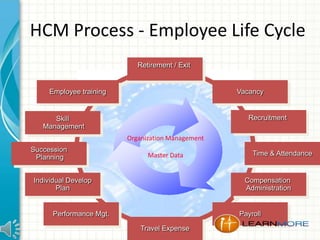
HCM Process - Employee Life Cycle
Retirement / Exit

Employee training

Vacancy

Recruitment

Skill
Management
Organization Management
Succession
Planning

Master Data

Individual Develop
Plan

Time & Attendance

Compensation
Administration

Performance Mgt.

Payroll
Travel Expense
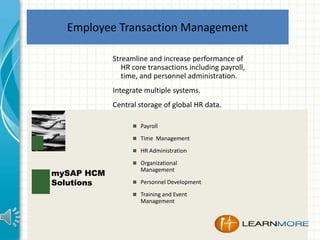
Employee Transaction Management
Streamline and increase performance of
HR core transactions including payroll,
time, and personnel administration.
Integrate multiple systems.
Central storage of global HR data.
 Payroll
 Time Management
 HR Administration
 Organizational

mySAP HCM
Solutions

Management
 Personnel Development
 Training and Event

Management
Curriculum
Enterprise Structure
Personnel Structure in HR
Organizational Management
Personnel Administration
Recruitment

Personnel Development
Training & Event Management
Time Management
Payroll Management
Benefits and Administration
Travel Management
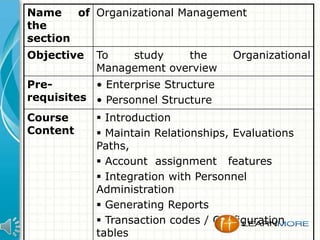
Name
of Organizational Management
the
section
Objective

To
study
the
Management overview

Organizational

Pre• Enterprise Structure
requisites • Personnel Structure
Course
Content

 Introduction
 Maintain Relationships, Evaluations
Paths,
 Account assignment features
 Integration with Personnel
Administration
 Generating Reports
 Transaction codes / Configuration
tables
Organization Management allows analyzing
and creating organizational plan for the
organization
Organization Management allows creating a
complete model of the organization and its
reporting structure for a valid period

Organization Management is an integral part
of R/3 and is integrated with other
components of SAP HR
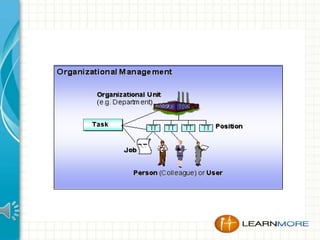
Organization plan provides structural and
personnel model of the organization

Organization
plan
is
created
organization units and positions

using

Organization plan helps in
•Describing
structural
relationships
between various organization units
•Describing
reporting
relationships
between the positions
Unlimited number of plan versions can be
created
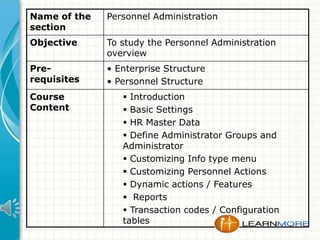
Name of the
section

Personnel Administration

Objective

To study the Personnel Administration
overview

Prerequisites

• Enterprise Structure
• Personnel Structure

Course
Content

 Introduction
 Basic Settings
 HR Master Data
 Define Administrator Groups and
Administrator
 Customizing Info type menu
 Customizing Personnel Actions
 Dynamic actions / Features
 Reports
 Transaction codes / Configuration
tables
Current Employee data should be maintained
Employees past, present and future data can be
maintained in Personnel Administration
Personnel Administration acts as a central and an
easily accessible administrative tool for employee
data
Helps in maintaining systematic and transparent data
which is required for making sound personnel
decision
All basic functions like hiring, transfer, promotion etc
can be maintained
Structure in Personnel
Administration
 The organizational structures of PA is
divided into:
 Enterprise structure
 Personnel structure
 Pay scale structure
 Wage types
 User authorizations
Name of
the
section

Time Management

Objectiv
e

To understand the process of Time management
and
Its applications in SAP HR

Course
Content

•Time Management Overview
•Work schedules
•Time recording
•Time evaluation
•Reports
•CATS Overview
• Transaction codes / Configuration tables
TIME MANAGEMENT – OVER VIEW
Personnel Time Management component offers support
in performing all HR process involving the planning,
recording and valuation of employee’s work performed
and absence times
Time Management encompasses :
Work Schedules
Time Recording and Administration
Attendance and Absence counting
Attendance and Absence Quotas
Time evaluation
Name of the
section

Payroll Process

Objective

To understand what is SAP Payroll Process and
its various applications.

Prerequisites

Integration with Time Management, Payroll
Management & FI/Co Module

Course
Contents

 Introduction of Payroll
 Create Remuneration Structure
 Create Wage Type Structure
 Time Data Processing in Payroll
 Payroll Organization
 Calculations and Payroll Run
 Subsequent Payroll Activities
 Introduction of Payroll Driver and Payroll
Schema
 Payroll Reports
 Transaction codes / Configuration tables
Payroll is used to calculate remuneration for work
performed by individual employees
Payroll is a series of accounting transactions dealing
with the process of paying employees for services
rendered,
after
processing
the
various
requirements for withholding of money from the
employees for
- payment of payroll taxes
- insurance premiums
- employee benefits
- garnishments and other deductions
Contact Us:
For more details, please log on to www.ITLearnMore.com
Most Trusted Website for all Learning Needs by Students, Graduates and
Working Professionals

You can also Find us on :
Thank You!

SAP HCM Consultant

  • 1.
  • 2.
    SAP HCM Overview •What’s HCM? • Introduction and Advantages • Different Modules of SAP HCM
  • 3.
    What is HCM? HumanCapital Management is The acquisition, deployment, development, retention, motivation, and empowerment of The skills, abilities, experience, and knowledge of the enterprise’s workforce and includes A strategy that measures the contribution of human capital to the success of the enterprise
  • 4.
    HCM Process -Employee Life Cycle Retirement / Exit Employee training Vacancy Recruitment Skill Management Organization Management Succession Planning Master Data Individual Develop Plan Time & Attendance Compensation Administration Performance Mgt. Payroll Travel Expense
  • 5.
    Employee Transaction Management Streamlineand increase performance of HR core transactions including payroll, time, and personnel administration. Integrate multiple systems. Central storage of global HR data.  Payroll  Time Management  HR Administration  Organizational mySAP HCM Solutions Management  Personnel Development  Training and Event Management
  • 6.
    Curriculum Enterprise Structure Personnel Structurein HR Organizational Management Personnel Administration Recruitment Personnel Development Training & Event Management Time Management Payroll Management Benefits and Administration Travel Management
  • 7.
    Name of Organizational Management the section Objective To study the Managementoverview Organizational Pre• Enterprise Structure requisites • Personnel Structure Course Content  Introduction  Maintain Relationships, Evaluations Paths,  Account assignment features  Integration with Personnel Administration  Generating Reports  Transaction codes / Configuration tables
  • 9.
    Organization Management allowsanalyzing and creating organizational plan for the organization Organization Management allows creating a complete model of the organization and its reporting structure for a valid period Organization Management is an integral part of R/3 and is integrated with other components of SAP HR
  • 10.
    Organization plan providesstructural and personnel model of the organization Organization plan is created organization units and positions using Organization plan helps in •Describing structural relationships between various organization units •Describing reporting relationships between the positions Unlimited number of plan versions can be created
  • 11.
    Name of the section PersonnelAdministration Objective To study the Personnel Administration overview Prerequisites • Enterprise Structure • Personnel Structure Course Content  Introduction  Basic Settings  HR Master Data  Define Administrator Groups and Administrator  Customizing Info type menu  Customizing Personnel Actions  Dynamic actions / Features  Reports  Transaction codes / Configuration tables
  • 12.
    Current Employee datashould be maintained Employees past, present and future data can be maintained in Personnel Administration Personnel Administration acts as a central and an easily accessible administrative tool for employee data Helps in maintaining systematic and transparent data which is required for making sound personnel decision All basic functions like hiring, transfer, promotion etc can be maintained
  • 13.
    Structure in Personnel Administration The organizational structures of PA is divided into:  Enterprise structure  Personnel structure  Pay scale structure  Wage types  User authorizations
  • 14.
    Name of the section Time Management Objectiv e Tounderstand the process of Time management and Its applications in SAP HR Course Content •Time Management Overview •Work schedules •Time recording •Time evaluation •Reports •CATS Overview • Transaction codes / Configuration tables
  • 15.
    TIME MANAGEMENT –OVER VIEW Personnel Time Management component offers support in performing all HR process involving the planning, recording and valuation of employee’s work performed and absence times Time Management encompasses : Work Schedules Time Recording and Administration Attendance and Absence counting Attendance and Absence Quotas Time evaluation
  • 16.
    Name of the section PayrollProcess Objective To understand what is SAP Payroll Process and its various applications. Prerequisites Integration with Time Management, Payroll Management & FI/Co Module Course Contents  Introduction of Payroll  Create Remuneration Structure  Create Wage Type Structure  Time Data Processing in Payroll  Payroll Organization  Calculations and Payroll Run  Subsequent Payroll Activities  Introduction of Payroll Driver and Payroll Schema  Payroll Reports  Transaction codes / Configuration tables
  • 17.
    Payroll is usedto calculate remuneration for work performed by individual employees Payroll is a series of accounting transactions dealing with the process of paying employees for services rendered, after processing the various requirements for withholding of money from the employees for - payment of payroll taxes - insurance premiums - employee benefits - garnishments and other deductions
  • 18.
    Contact Us: For moredetails, please log on to www.ITLearnMore.com Most Trusted Website for all Learning Needs by Students, Graduates and Working Professionals You can also Find us on :
  • 19.

Editor's Notes

  • #4 Give a brief overview of the presentation. Describe the major focus of the presentation and why it is important.Introduce each of the major topics.To provide a road map for the audience, you can repeat this Overview slide throughout the presentation, highlighting the particular topic you will discuss next.