SAP Overview
SAP SolutionsSAP Solutions
Agenda for the overview
2
Introduction to the SAP system
Scope of Implementation
Integration
3
What is SAP
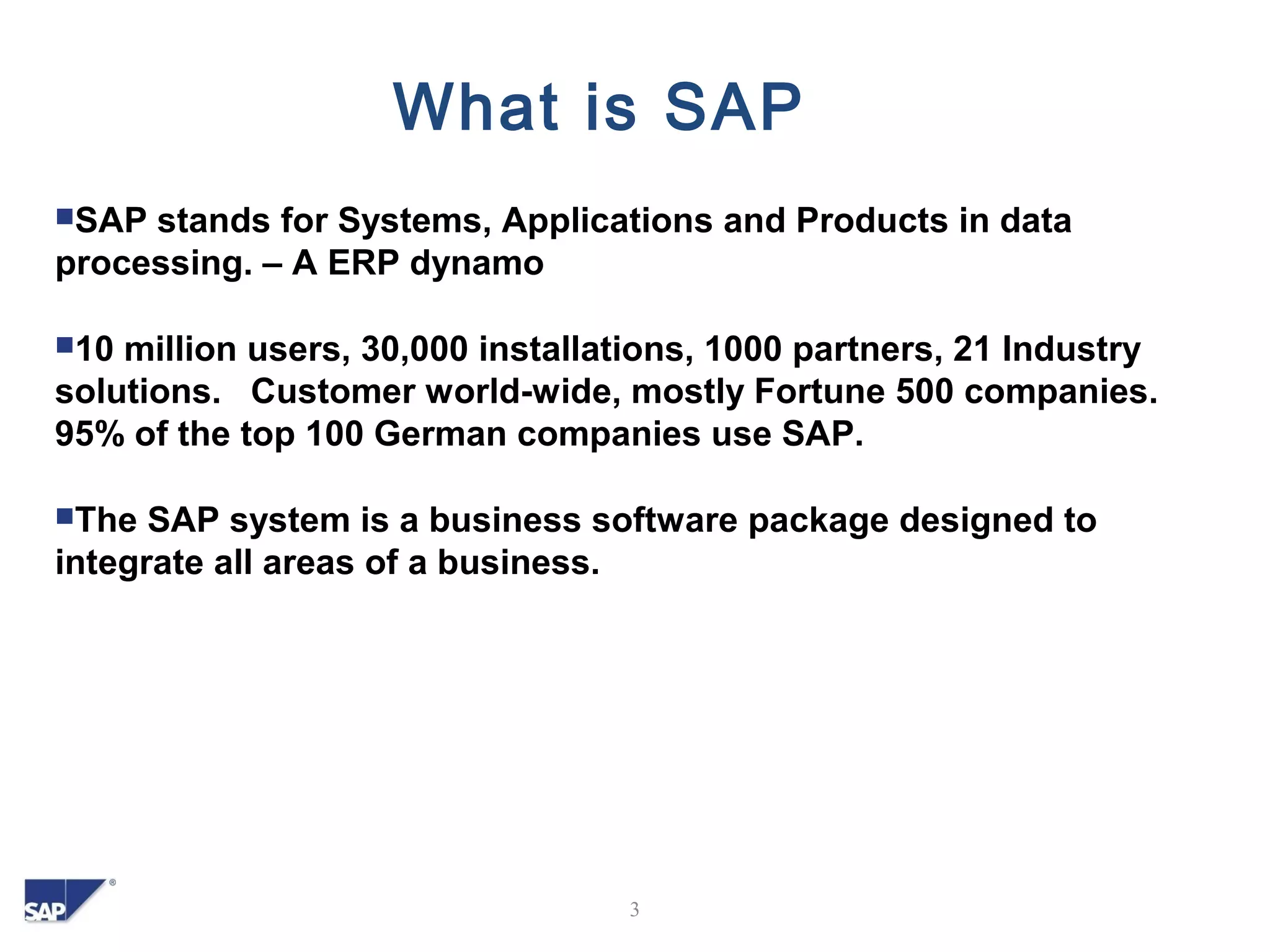
SAP stands for Systems, Applications and Products in data
processing. – A ERP dynamo
10 million users, 30,000 installations, 1000 partners, 21 Industry
solutions. Customer world-wide, mostly Fortune 500 companies.
95% of the top 100 German companies use SAP.
The SAP system is a business software package designed to
integrate all areas of a business.
4
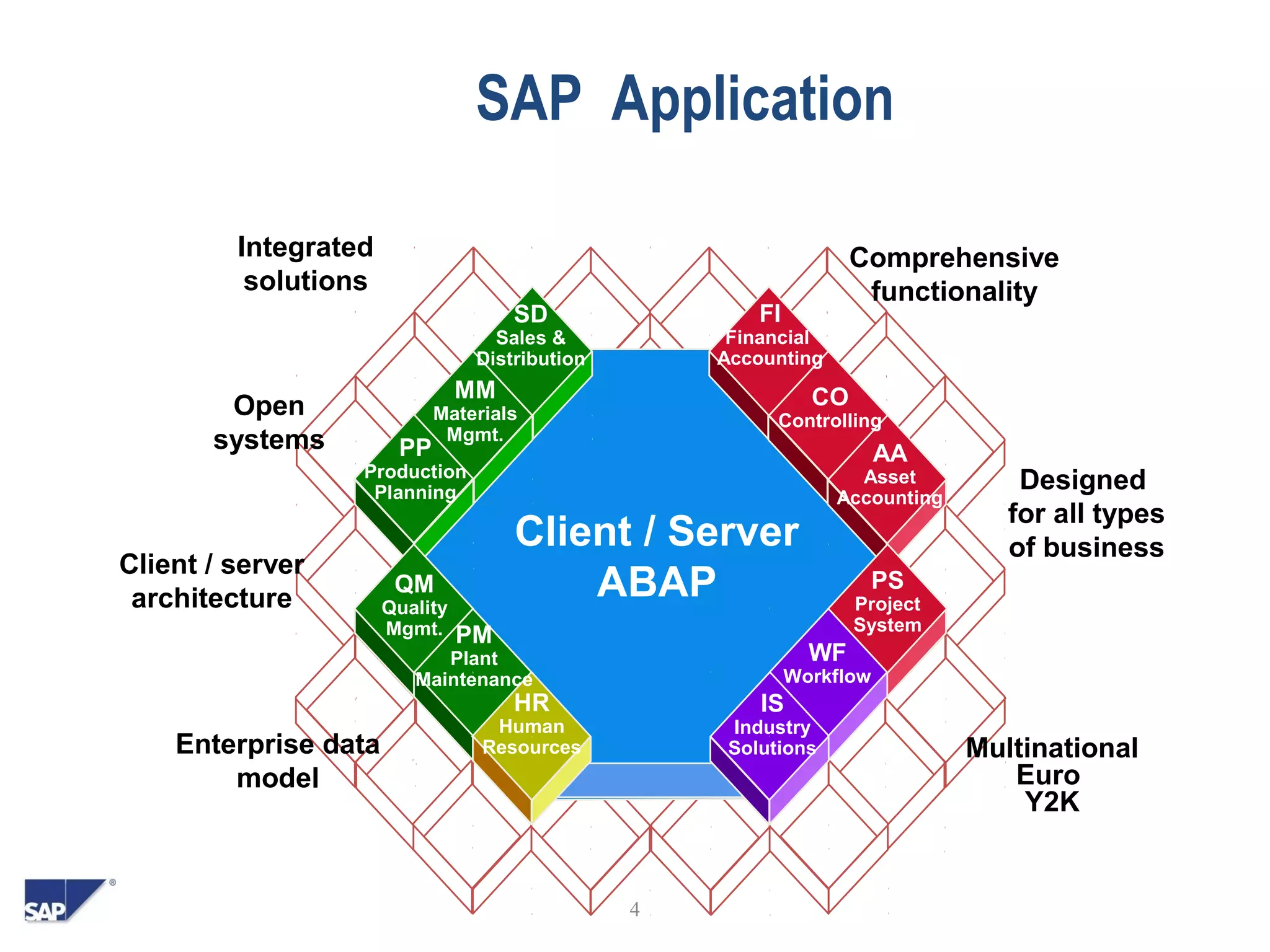
SAP Application
Client / Server
ABAP
CO
Controlling
AA
Asset
Accounting
PS
Project
System
WF
Workflow
IS
Industry
Solutions
MM
Materials
Mgmt.
HR
Human
Resources
SD
Sales &
Distribution
PP
Production
Planning
QM
Quality
Mgmt.
FI
Financial
Accounting
PM
Plant
Maintenance
Integrated
solutions
Open
systems
Client / server
architecture
Enterprise data
model
Designed
for all types
of business
Multinational
Euro
Y2K
Comprehensive
functionality
5
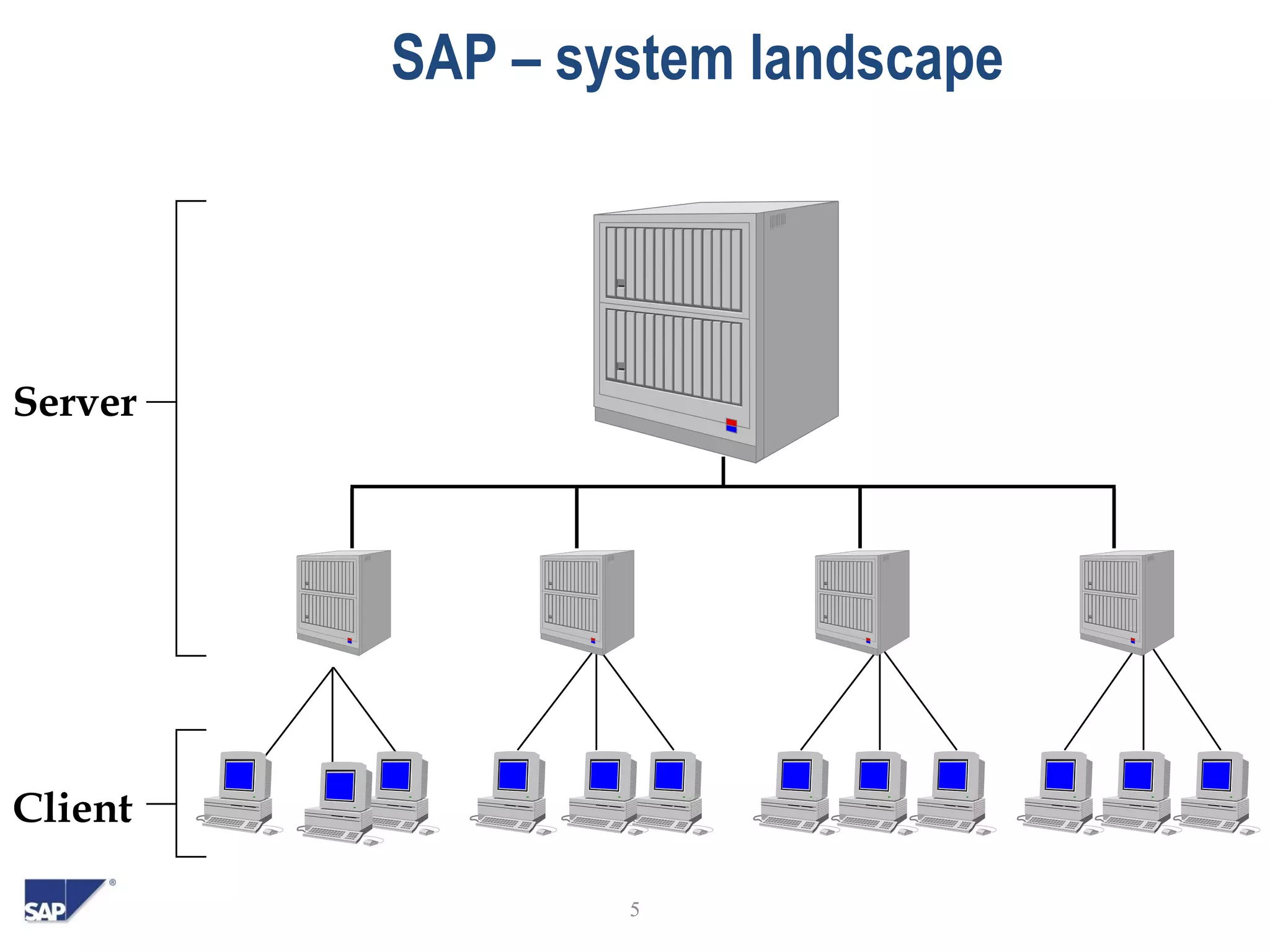
SAP – system landscape
Server
Client
6
SAP in the business modeSAP in the business mode
7
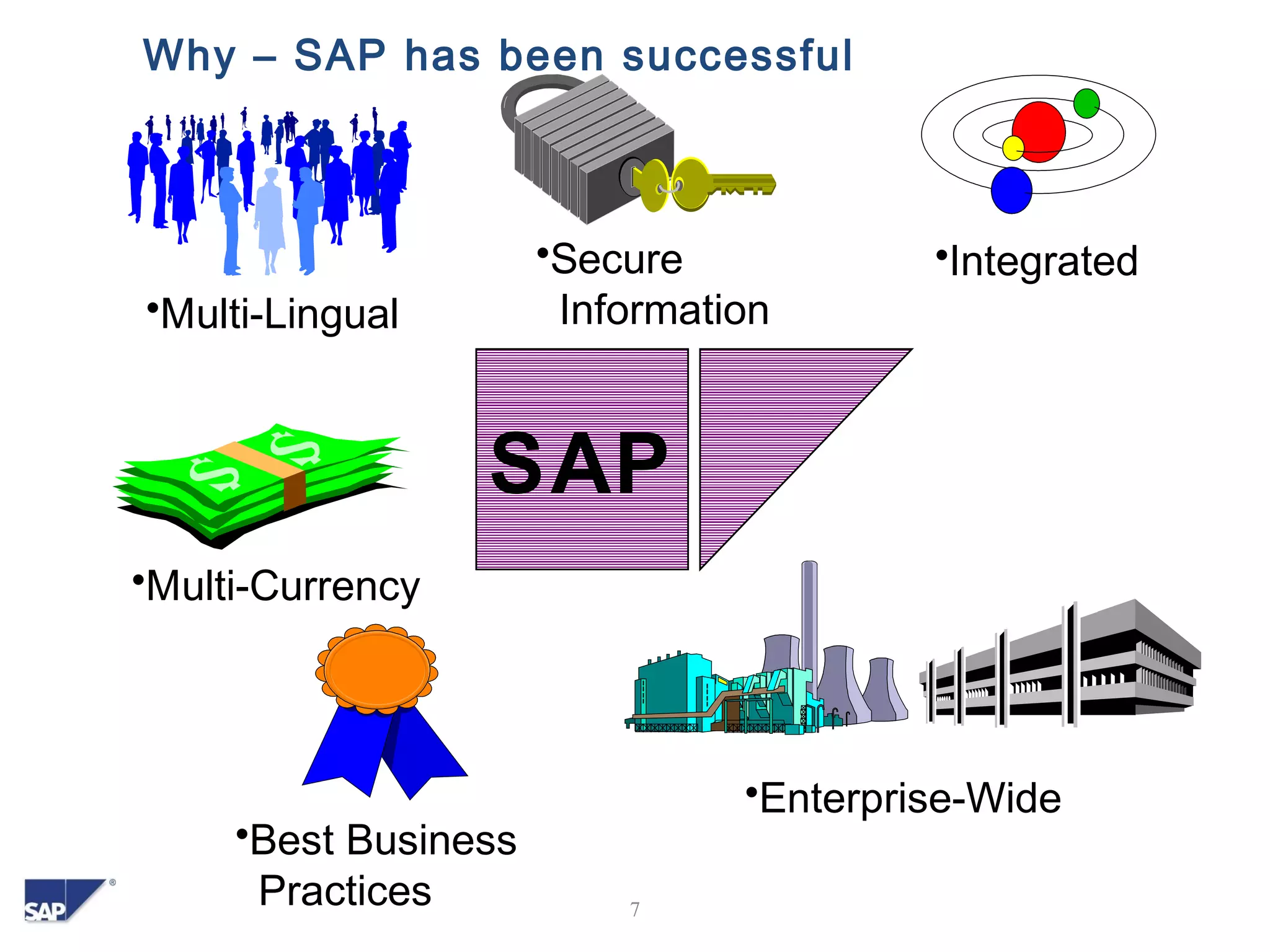
•Integrated
•Enterprise-Wide
•Best Business
Practices
SAP
•Multi-Currency
•Multi-Lingual
•Secure
Information
Why – SAP has been successful
8
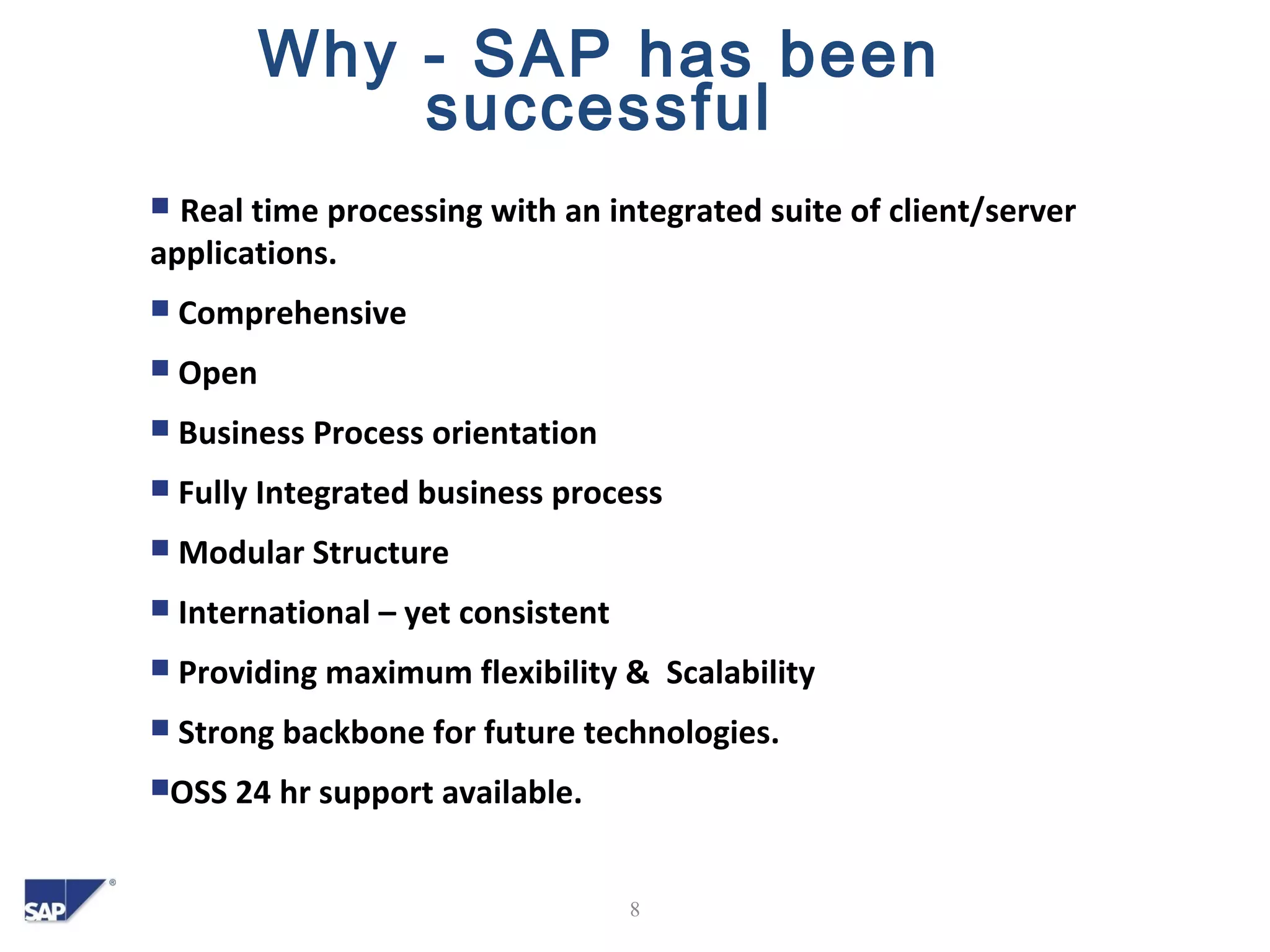
 Real time processing with an integrated suite of client/server
applications.
 Comprehensive
 Open
 Business Process orientation
 Fully Integrated business process
 Modular Structure
 International – yet consistent
 Providing maximum flexibility & Scalability
 Strong backbone for future technologies.
OSS 24 hr support available.
Why - SAP has been
successful
9
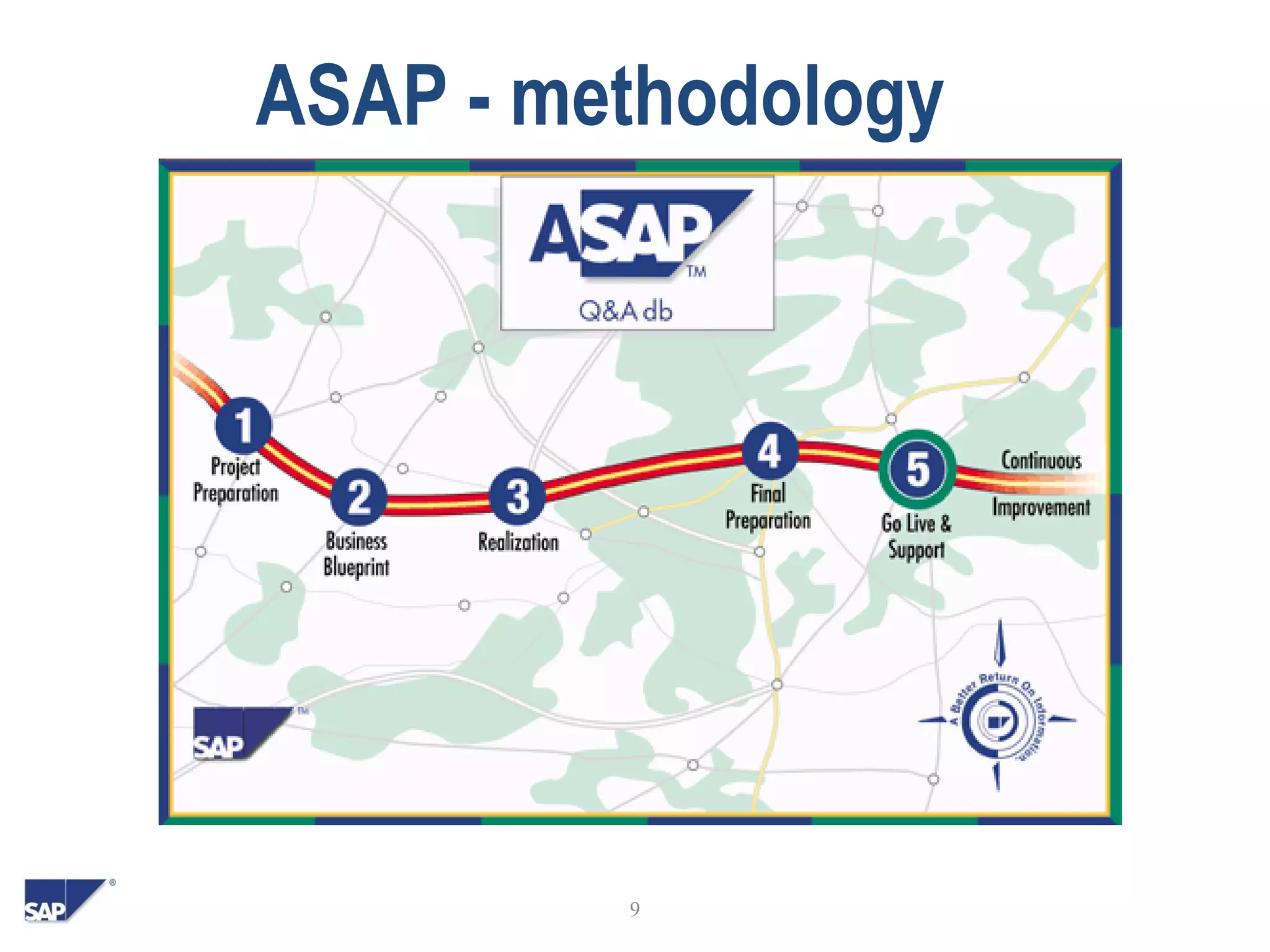
ASAP - methodology
10
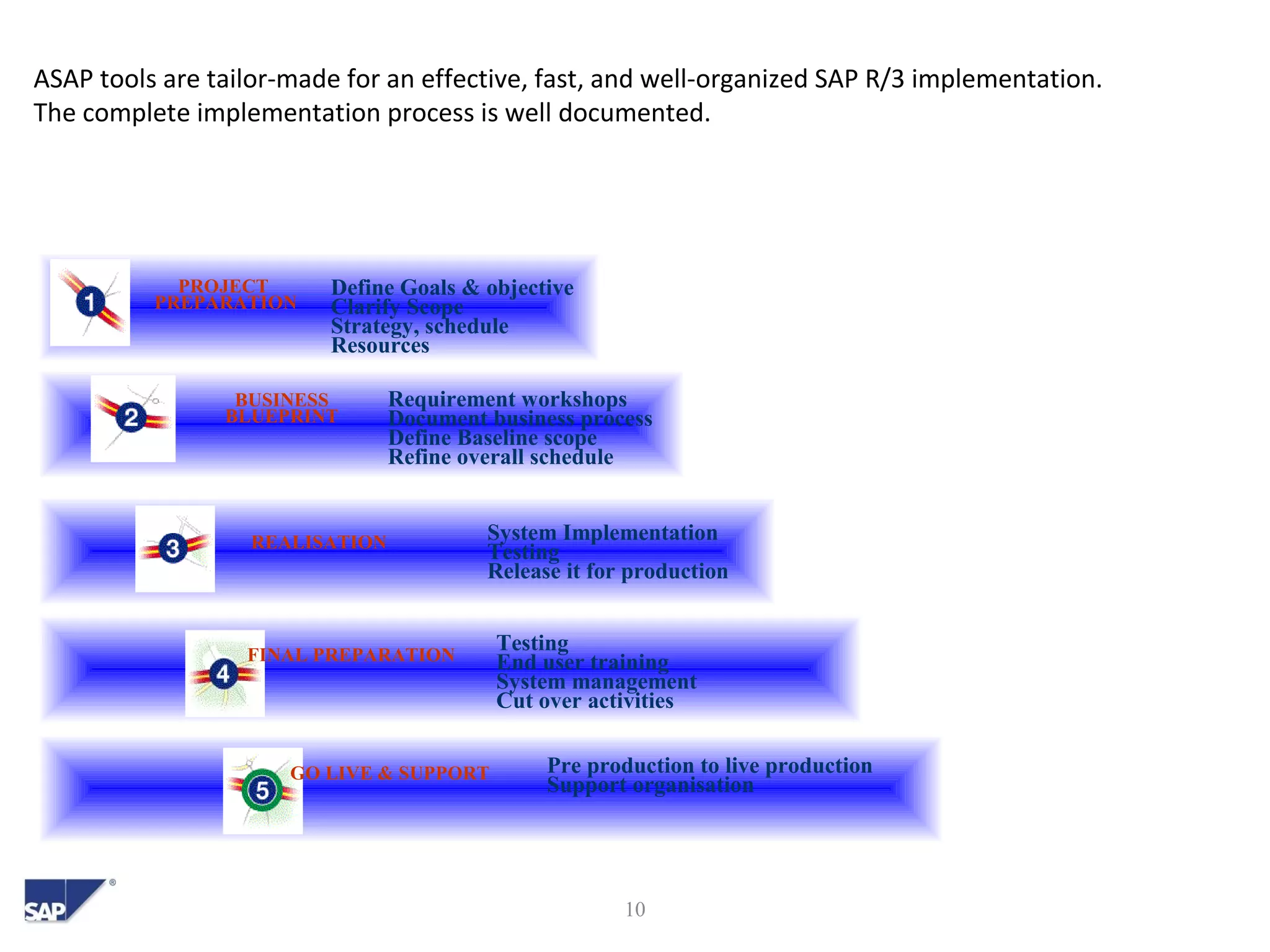
PROJECT
PREPARATION
Define Goals & objective
Clarify Scope
Strategy, schedule
Resources
BUSINESS
BLUEPRINT
Requirement workshops
Document business process
Define Baseline scope
Refine overall schedule
REALISATION System Implementation
Testing
Release it for production
FINAL PREPARATION
Testing
End user training
System management
Cut over activities
GO LIVE & SUPPORT Pre production to live production
Support organisation
ASAP tools are tailor-made for an effective, fast, and well-organized SAP R/3 implementation.
The complete implementation process is well documented.
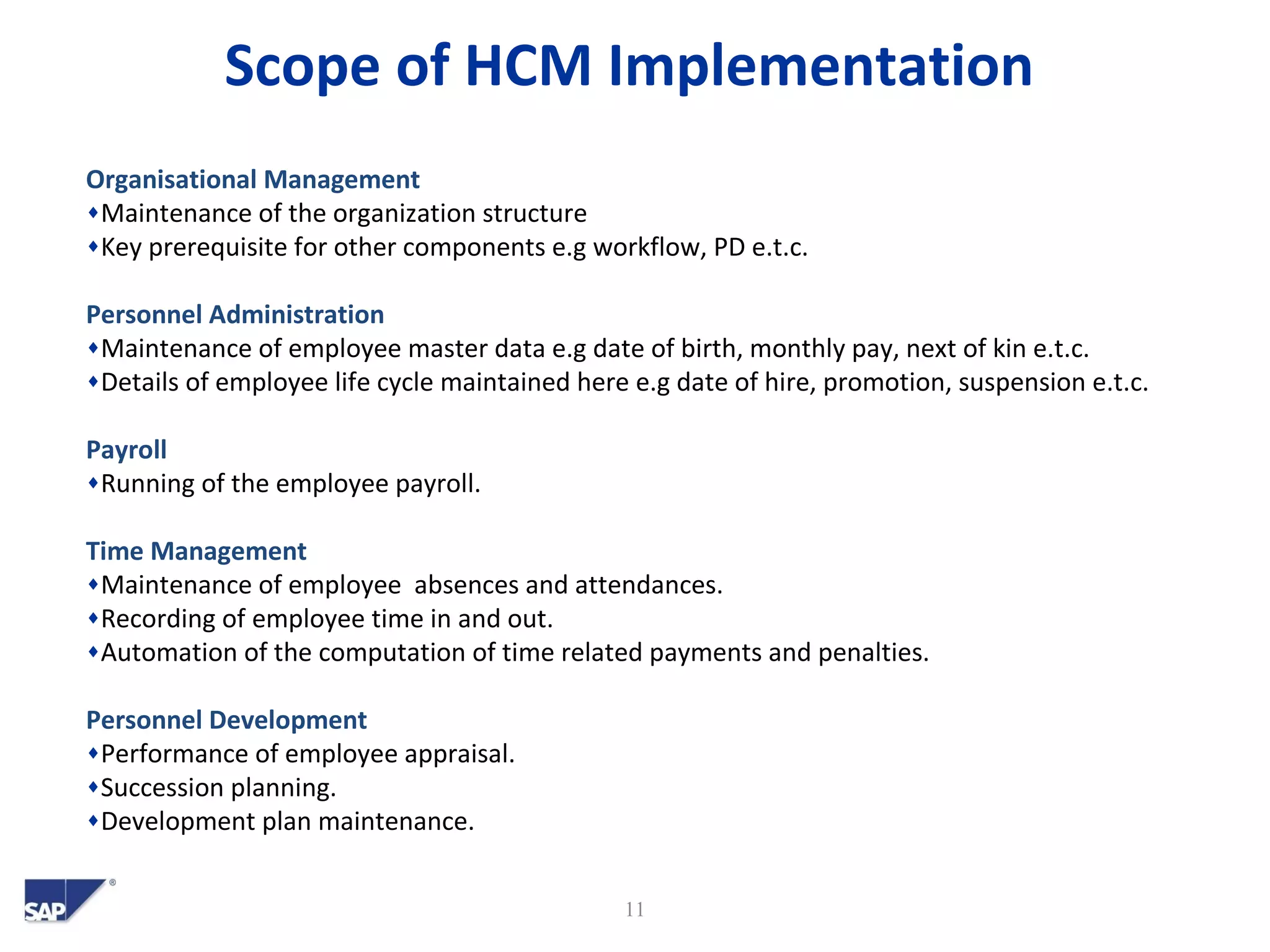
Scope of HCM Implementation
11
Organisational Management
♦Maintenance of the organization structure
♦Key prerequisite for other components e.g workflow, PD e.t.c.
Personnel Administration
♦Maintenance of employee master data e.g date of birth, monthly pay, next of kin e.t.c.
♦Details of employee life cycle maintained here e.g date of hire, promotion, suspension e.t.c.
Payroll
♦Running of the employee payroll.
Time Management
♦Maintenance of employee absences and attendances.
♦Recording of employee time in and out.
♦Automation of the computation of time related payments and penalties.
Personnel Development
♦Performance of employee appraisal.
♦Succession planning.
♦Development plan maintenance.
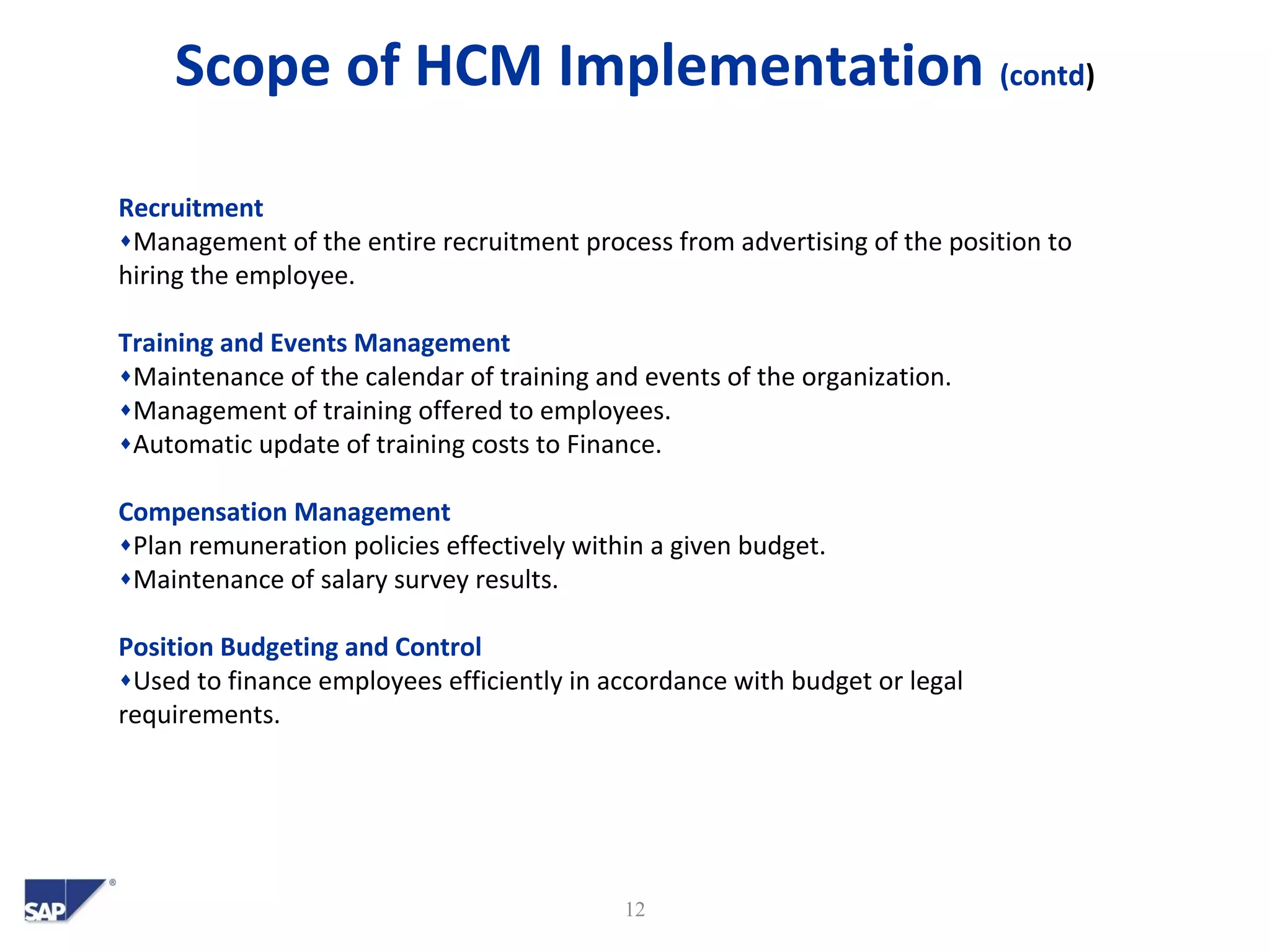
Scope of HCM Implementation (contd)
12
Recruitment
♦Management of the entire recruitment process from advertising of the position to
hiring the employee.
Training and Events Management
♦Maintenance of the calendar of training and events of the organization.
♦Management of training offered to employees.
♦Automatic update of training costs to Finance.
Compensation Management
♦Plan remuneration policies effectively within a given budget.
♦Maintenance of salary survey results.
Position Budgeting and Control
♦Used to finance employees efficiently in accordance with budget or legal
requirements.
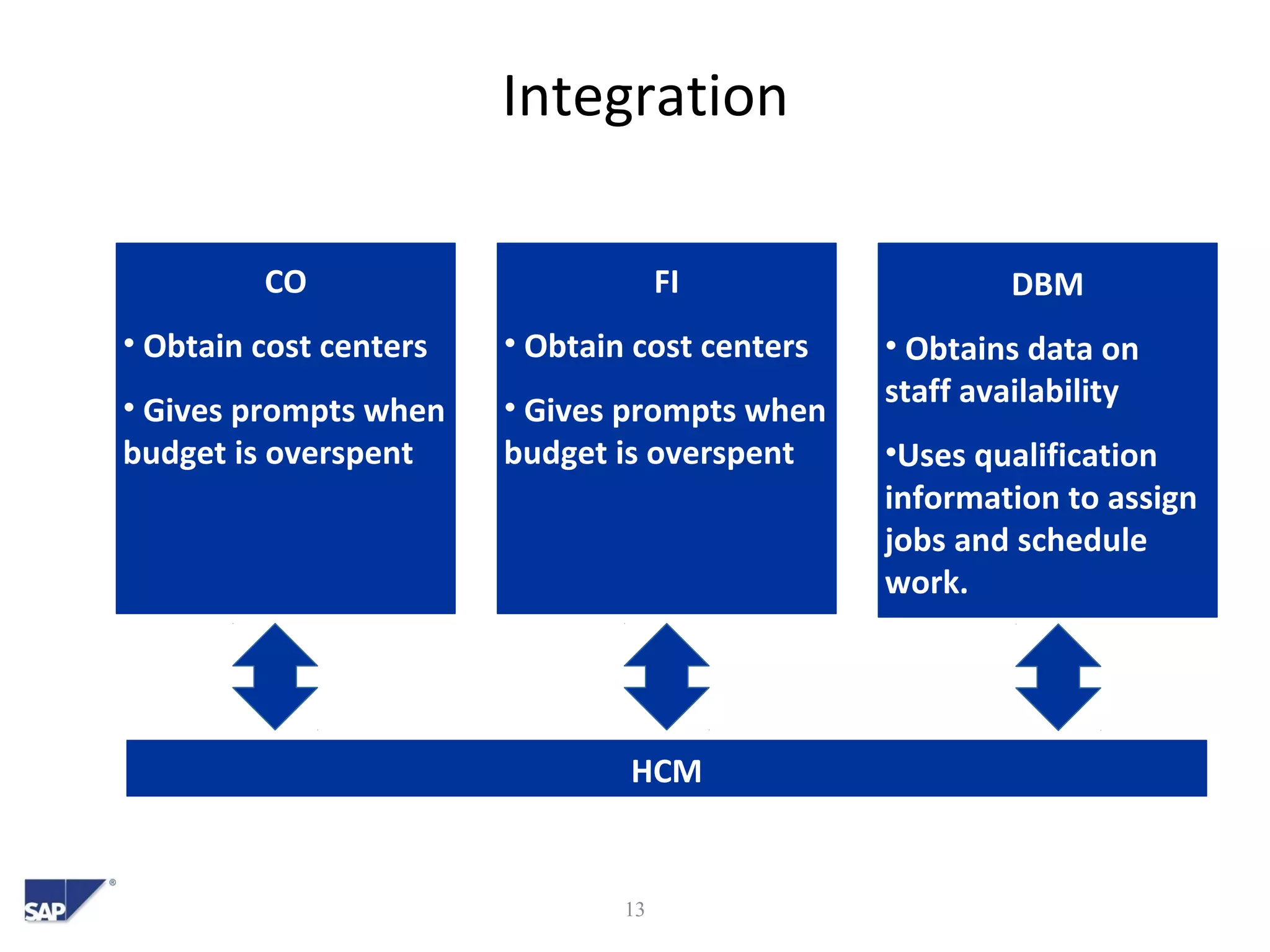
Integration
13
HCM
CO
• Obtain cost centers
• Gives prompts when
budget is overspent
FI
• Obtain cost centers
• Gives prompts when
budget is overspent
DBM
• Obtains data on
staff availability
•Uses qualification
information to assign
jobs and schedule
work.

Sap hcm overview

  • 1.
  • 2.
    Agenda for theoverview 2 Introduction to the SAP system Scope of Implementation Integration
  • 3.
    3 What is SAP SAPstands for Systems, Applications and Products in data processing. – A ERP dynamo 10 million users, 30,000 installations, 1000 partners, 21 Industry solutions. Customer world-wide, mostly Fortune 500 companies. 95% of the top 100 German companies use SAP. The SAP system is a business software package designed to integrate all areas of a business.
  • 4.
    4 SAP Application Client /Server ABAP CO Controlling AA Asset Accounting PS Project System WF Workflow IS Industry Solutions MM Materials Mgmt. HR Human Resources SD Sales & Distribution PP Production Planning QM Quality Mgmt. FI Financial Accounting PM Plant Maintenance Integrated solutions Open systems Client / server architecture Enterprise data model Designed for all types of business Multinational Euro Y2K Comprehensive functionality
  • 5.
    5 SAP – systemlandscape Server Client
  • 6.
    6 SAP in thebusiness modeSAP in the business mode
  • 7.
  • 8.
    8  Real timeprocessing with an integrated suite of client/server applications.  Comprehensive  Open  Business Process orientation  Fully Integrated business process  Modular Structure  International – yet consistent  Providing maximum flexibility & Scalability  Strong backbone for future technologies. OSS 24 hr support available. Why - SAP has been successful
  • 9.
  • 10.
    10 PROJECT PREPARATION Define Goals &objective Clarify Scope Strategy, schedule Resources BUSINESS BLUEPRINT Requirement workshops Document business process Define Baseline scope Refine overall schedule REALISATION System Implementation Testing Release it for production FINAL PREPARATION Testing End user training System management Cut over activities GO LIVE & SUPPORT Pre production to live production Support organisation ASAP tools are tailor-made for an effective, fast, and well-organized SAP R/3 implementation. The complete implementation process is well documented.
  • 11.
    Scope of HCMImplementation 11 Organisational Management ♦Maintenance of the organization structure ♦Key prerequisite for other components e.g workflow, PD e.t.c. Personnel Administration ♦Maintenance of employee master data e.g date of birth, monthly pay, next of kin e.t.c. ♦Details of employee life cycle maintained here e.g date of hire, promotion, suspension e.t.c. Payroll ♦Running of the employee payroll. Time Management ♦Maintenance of employee absences and attendances. ♦Recording of employee time in and out. ♦Automation of the computation of time related payments and penalties. Personnel Development ♦Performance of employee appraisal. ♦Succession planning. ♦Development plan maintenance.
  • 12.
    Scope of HCMImplementation (contd) 12 Recruitment ♦Management of the entire recruitment process from advertising of the position to hiring the employee. Training and Events Management ♦Maintenance of the calendar of training and events of the organization. ♦Management of training offered to employees. ♦Automatic update of training costs to Finance. Compensation Management ♦Plan remuneration policies effectively within a given budget. ♦Maintenance of salary survey results. Position Budgeting and Control ♦Used to finance employees efficiently in accordance with budget or legal requirements.
  • 13.
    Integration 13 HCM CO • Obtain costcenters • Gives prompts when budget is overspent FI • Obtain cost centers • Gives prompts when budget is overspent DBM • Obtains data on staff availability •Uses qualification information to assign jobs and schedule work.