SAMPLING
PRESENTATIONAL PLAN
 INTRODUCTION
 SAMPLING DESIGN PROCESS
 PROBABILITY SAMPLING
 NON-PROBABILITY SAMPLING
 SAMPLING ERRORS
INTRODUCTION
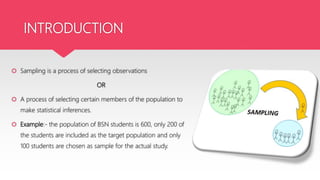
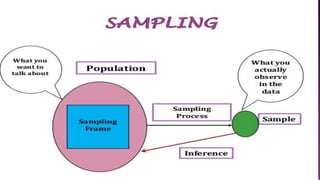
 Sampling is a process of selecting observations
OR
 A process of selecting certain members of the population to
make statistical inferences.
 Example:- the population of BSN students is 600, only 200 of
the students are included as the target population and only
100 students are chosen as sample for the actual study.
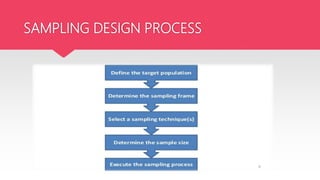
SAMPLING DESIGN PROCESS
PROBABILITY SAMPLING
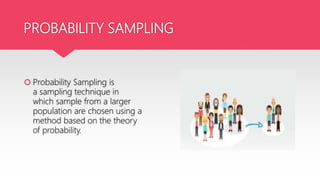
 Probability Sampling is
a sampling technique in
which sample from a larger
population are chosen using a
method based on the theory
of probability.
TYPES OF PROBABILITY SAMPLING
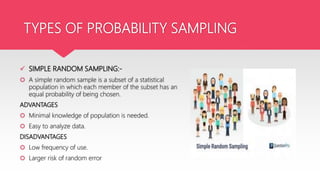
 SIMPLE RANDOM SAMPLING:-
 A simple random sample is a subset of a statistical
population in which each member of the subset has an
equal probability of being chosen.
ADVANTAGES
 Minimal knowledge of population is needed.
 Easy to analyze data.
DISADVANTAGES
 Low frequency of use.
 Larger risk of random error
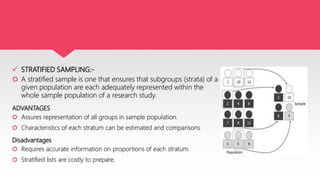
 STRATIFIED SAMPLING:-
 A stratified sample is one that ensures that subgroups (strata) of a
given population are each adequately represented within the
whole sample population of a research study.
ADVANTAGES
 Assures representation of all groups in sample population.
 Characteristics of each stratum can be estimated and comparisons
Disadvantages
 Requires accurate information on proportions of each stratum.
 Stratified lists are costly to prepare.
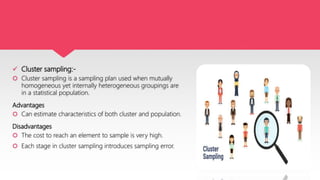
 Cluster sampling:-
 Cluster sampling is a sampling plan used when mutually
homogeneous yet internally heterogeneous groupings are
in a statistical population.
Advantages
 Can estimate characteristics of both cluster and population.
Disadvantages
 The cost to reach an element to sample is very high.
 Each stage in cluster sampling introduces sampling error.
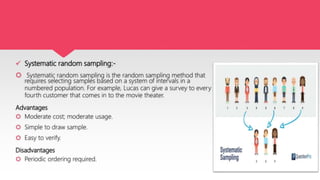
 Systematic random sampling:-
 Systematic random sampling is the random sampling method that
requires selecting samples based on a system of intervals in a
numbered population. For example, Lucas can give a survey to every
fourth customer that comes in to the movie theater.
Advantages
 Moderate cost; moderate usage.
 Simple to draw sample.
 Easy to verify.
Disadvantages
 Periodic ordering required.
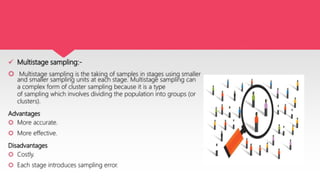
 Multistage sampling:-
 Multistage sampling is the taking of samples in stages using smaller
and smaller sampling units at each stage. Multistage sampling can
a complex form of cluster sampling because it is a type
of sampling which involves dividing the population into groups (or
clusters).
Advantages
 More accurate.
 More effective.
Disadvantages
 Costly.
 Each stage introduces sampling error.
NON-PROBABILITY SAMPLING
 Non-probability sampling is
a sampling technique where
the samples are gathered in a process
that does not give all the individuals in
the population equal chances of being
selected.
TYPES OF NON-PROBABILITY SAMPLING
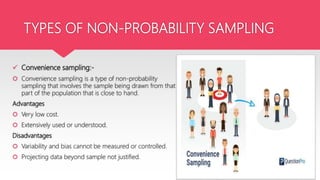
 Convenience sampling:-
 Convenience sampling is a type of non-probability
sampling that involves the sample being drawn from that
part of the population that is close to hand.
Advantages
 Very low cost.
 Extensively used or understood.
Disadvantages
 Variability and bias cannot be measured or controlled.
 Projecting data beyond sample not justified.
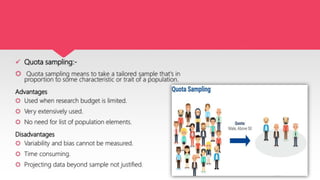
 Quota sampling:-
 Quota sampling means to take a tailored sample that's in
proportion to some characteristic or trait of a population.
Advantages
 Used when research budget is limited.
 Very extensively used.
 No need for list of population elements.
Disadvantages
 Variability and bias cannot be measured.
 Time consuming.
 Projecting data beyond sample not justified.
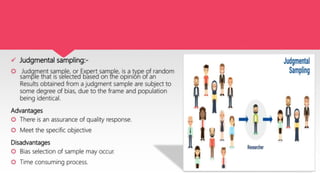
 Judgmental sampling:-
 Judgment sample, or Expert sample, is a type of random
sample that is selected based on the opinion of an
Results obtained from a judgment sample are subject to
some degree of bias, due to the frame and population
being identical.
Advantages
 There is an assurance of quality response.
 Meet the specific objective
Disadvantages
 Bias selection of sample may occur.
 Time consuming process.
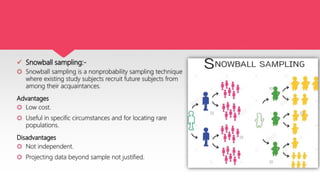
 Snowball sampling:-
 Snowball sampling is a nonprobability sampling technique
where existing study subjects recruit future subjects from
among their acquaintances.
Advantages
 Low cost.
 Useful in specific circumstances and for locating rare
populations.
Disadvantages
 Not independent.
 Projecting data beyond sample not justified.
SAMPLING ERRORS
 The errors which arise due to the use of sampling surveys are
known as the sampling errors.
TYPES OF ERRORS
 Biased errors which occurs due to selection of sampling
techniques; size of the sample.
 Unbiased errors which occurs due to the differences between
the members of the population included or not included.
METHODS OF REDUCING SAMPLING ERRORS
 Specific problem selection.
 Systematic documentation of related research.
 Effective pre testing.
 Controlling methodological bias.
 Selection of appropriate sampling techniques.
Thank you!

Sampling

  • 1.
  • 2.
    PRESENTATIONAL PLAN  INTRODUCTION SAMPLING DESIGN PROCESS  PROBABILITY SAMPLING  NON-PROBABILITY SAMPLING  SAMPLING ERRORS
  • 3.
    INTRODUCTION  Sampling isa process of selecting observations OR  A process of selecting certain members of the population to make statistical inferences.  Example:- the population of BSN students is 600, only 200 of the students are included as the target population and only 100 students are chosen as sample for the actual study.
  • 5.
  • 6.
    PROBABILITY SAMPLING  ProbabilitySampling is a sampling technique in which sample from a larger population are chosen using a method based on the theory of probability.
  • 7.
    TYPES OF PROBABILITYSAMPLING  SIMPLE RANDOM SAMPLING:-  A simple random sample is a subset of a statistical population in which each member of the subset has an equal probability of being chosen. ADVANTAGES  Minimal knowledge of population is needed.  Easy to analyze data. DISADVANTAGES  Low frequency of use.  Larger risk of random error
  • 8.
     STRATIFIED SAMPLING:- A stratified sample is one that ensures that subgroups (strata) of a given population are each adequately represented within the whole sample population of a research study. ADVANTAGES  Assures representation of all groups in sample population.  Characteristics of each stratum can be estimated and comparisons Disadvantages  Requires accurate information on proportions of each stratum.  Stratified lists are costly to prepare.
  • 9.
     Cluster sampling:- Cluster sampling is a sampling plan used when mutually homogeneous yet internally heterogeneous groupings are in a statistical population. Advantages  Can estimate characteristics of both cluster and population. Disadvantages  The cost to reach an element to sample is very high.  Each stage in cluster sampling introduces sampling error.
  • 10.
     Systematic randomsampling:-  Systematic random sampling is the random sampling method that requires selecting samples based on a system of intervals in a numbered population. For example, Lucas can give a survey to every fourth customer that comes in to the movie theater. Advantages  Moderate cost; moderate usage.  Simple to draw sample.  Easy to verify. Disadvantages  Periodic ordering required.
  • 11.
     Multistage sampling:- Multistage sampling is the taking of samples in stages using smaller and smaller sampling units at each stage. Multistage sampling can a complex form of cluster sampling because it is a type of sampling which involves dividing the population into groups (or clusters). Advantages  More accurate.  More effective. Disadvantages  Costly.  Each stage introduces sampling error.
  • 12.
    NON-PROBABILITY SAMPLING  Non-probabilitysampling is a sampling technique where the samples are gathered in a process that does not give all the individuals in the population equal chances of being selected.
  • 13.
    TYPES OF NON-PROBABILITYSAMPLING  Convenience sampling:-  Convenience sampling is a type of non-probability sampling that involves the sample being drawn from that part of the population that is close to hand. Advantages  Very low cost.  Extensively used or understood. Disadvantages  Variability and bias cannot be measured or controlled.  Projecting data beyond sample not justified.
  • 14.
     Quota sampling:- Quota sampling means to take a tailored sample that's in proportion to some characteristic or trait of a population. Advantages  Used when research budget is limited.  Very extensively used.  No need for list of population elements. Disadvantages  Variability and bias cannot be measured.  Time consuming.  Projecting data beyond sample not justified.
  • 15.
     Judgmental sampling:- Judgment sample, or Expert sample, is a type of random sample that is selected based on the opinion of an Results obtained from a judgment sample are subject to some degree of bias, due to the frame and population being identical. Advantages  There is an assurance of quality response.  Meet the specific objective Disadvantages  Bias selection of sample may occur.  Time consuming process.
  • 16.
     Snowball sampling:- Snowball sampling is a nonprobability sampling technique where existing study subjects recruit future subjects from among their acquaintances. Advantages  Low cost.  Useful in specific circumstances and for locating rare populations. Disadvantages  Not independent.  Projecting data beyond sample not justified.
  • 17.
    SAMPLING ERRORS  Theerrors which arise due to the use of sampling surveys are known as the sampling errors. TYPES OF ERRORS  Biased errors which occurs due to selection of sampling techniques; size of the sample.  Unbiased errors which occurs due to the differences between the members of the population included or not included.
  • 18.
    METHODS OF REDUCINGSAMPLING ERRORS  Specific problem selection.  Systematic documentation of related research.  Effective pre testing.  Controlling methodological bias.  Selection of appropriate sampling techniques.
  • 19.