By:Shilpi Jain
(037)
Tanvi Gaur
(046)
Shilpa Mittal (050)
Swati Luthra (054)
DISASTER
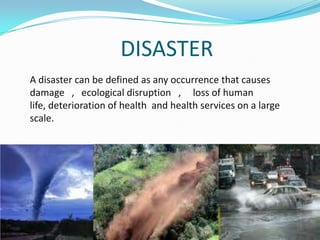
A disaster can be defined as any occurrence that causes
damage , ecological disruption , loss of human
life, deterioration of health and health services on a large
scale.
What is Disaster
Management?
•Also

known as emergency
management.
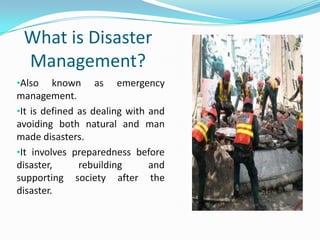
•It is defined as dealing with and
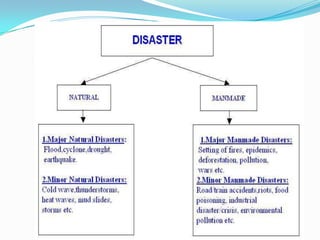
avoiding both natural and man
made disasters.
•It involves preparedness before
disaster,
rebuilding
and
supporting society after the
disaster.
Principles of Disaster Management
 Disaster management should use resources that exist for a





day-to-day purpose.
Disaster management planning should focus on large-scale
events.
Individuals are responsible for their own safety.
Disaster management planning must take account of the type
of physical environment and the structure of the population.
Disaster management arrangements must recognize the
potential role of non-government agencies.
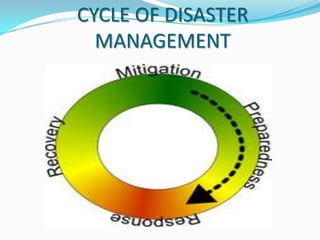
CYCLE OF DISASTER
MANAGEMENT
DISASTER MITIGATION
It involves the measures to eliminate or reduce the
incidence of severity of disasters.
 Focuses on long-term measures for reducing or

eliminating risk.
 Preventing habitation in risk zone.
 Disaster resistant buildings etc.
 Improving structural qualities of schools, houses and
other buildings.
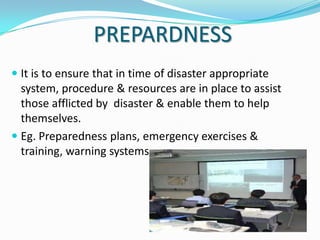
PREPARDNESS
 It is to ensure that in time of disaster appropriate
system, procedure & resources are in place to assist
those afflicted by disaster & enable them to help
themselves.

 Eg. Preparedness plans, emergency exercises &
training, warning systems.
WHAT COMES UNDER IT?
 Preparedness should be in the form of
money, manpower and materials.
 Keeping stock of food, drugs and essential commodities
 Development of public education programme.

 Ensuring coordination and response mechanisms.
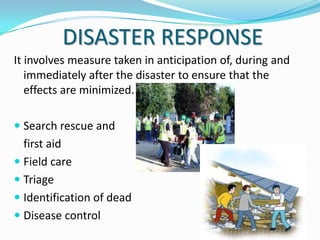
DISASTER RESPONSE
It involves measure taken in anticipation of, during and
immediately after the disaster to ensure that the
effects are minimized.
 Search rescue and

first aid
 Field care
 Triage
 Identification of dead
 Disease control
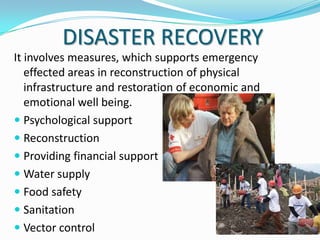
DISASTER RECOVERY
It involves measures, which supports emergency
effected areas in reconstruction of physical
infrastructure and restoration of economic and
emotional well being.
 Psychological support
 Reconstruction
 Providing financial support
 Water supply
 Food safety
 Sanitation
 Vector control
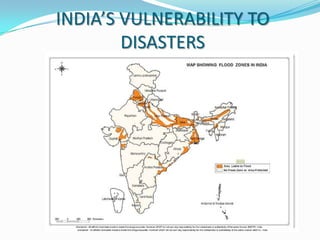
INDIA’S VULNERABILITY TO
DISASTERS
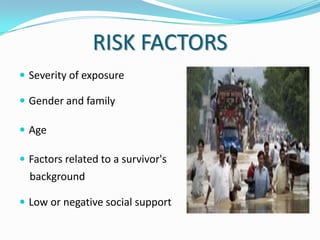
RISK FACTORS
 Severity of exposure
 Gender and family
 Age
 Factors related to a survivor's

background
 Low or negative social support
HOW WE CAN DEAL
 Make a Disaster PLAN…FOLLOW IT
 Be prepared for power outages
 Know your insurance policy
 Listen to the news and do what you are told to do
 Prevent electrical injuries
 Store food safely.
 Coping confidence
 Pace yourself and get support.
WHAT GOVT CAN DO
 Stimulating would-be victims to take precautions
against disasters.
 Discouraging manmade disasters
 Government itself taking precautionary measures

 Saving People, Fixing Public Property, and Restoring
Core Public Functions (Apart from Victim
Compensation)
 Stepping in when the private insurance market fails to
cover property losses from certain disasters
THANK YOU

disaster management

  • 1.
    By:Shilpi Jain (037) Tanvi Gaur (046) ShilpaMittal (050) Swati Luthra (054)
  • 2.
    DISASTER A disaster canbe defined as any occurrence that causes damage , ecological disruption , loss of human life, deterioration of health and health services on a large scale.
  • 4.
    What is Disaster Management? •Also knownas emergency management. •It is defined as dealing with and avoiding both natural and man made disasters. •It involves preparedness before disaster, rebuilding and supporting society after the disaster.
  • 5.
    Principles of DisasterManagement  Disaster management should use resources that exist for a     day-to-day purpose. Disaster management planning should focus on large-scale events. Individuals are responsible for their own safety. Disaster management planning must take account of the type of physical environment and the structure of the population. Disaster management arrangements must recognize the potential role of non-government agencies.
  • 6.
  • 7.
    DISASTER MITIGATION It involvesthe measures to eliminate or reduce the incidence of severity of disasters.  Focuses on long-term measures for reducing or eliminating risk.  Preventing habitation in risk zone.  Disaster resistant buildings etc.  Improving structural qualities of schools, houses and other buildings.
  • 8.
    PREPARDNESS  It isto ensure that in time of disaster appropriate system, procedure & resources are in place to assist those afflicted by disaster & enable them to help themselves.  Eg. Preparedness plans, emergency exercises & training, warning systems.
  • 9.
    WHAT COMES UNDERIT?  Preparedness should be in the form of money, manpower and materials.  Keeping stock of food, drugs and essential commodities  Development of public education programme.  Ensuring coordination and response mechanisms.
  • 10.
    DISASTER RESPONSE It involvesmeasure taken in anticipation of, during and immediately after the disaster to ensure that the effects are minimized.  Search rescue and first aid  Field care  Triage  Identification of dead  Disease control
  • 11.
    DISASTER RECOVERY It involvesmeasures, which supports emergency effected areas in reconstruction of physical infrastructure and restoration of economic and emotional well being.  Psychological support  Reconstruction  Providing financial support  Water supply  Food safety  Sanitation  Vector control
  • 12.
  • 13.
    RISK FACTORS  Severityof exposure  Gender and family  Age  Factors related to a survivor's background  Low or negative social support
  • 14.
    HOW WE CANDEAL  Make a Disaster PLAN…FOLLOW IT  Be prepared for power outages  Know your insurance policy  Listen to the news and do what you are told to do  Prevent electrical injuries  Store food safely.  Coping confidence  Pace yourself and get support.
  • 15.
    WHAT GOVT CANDO  Stimulating would-be victims to take precautions against disasters.  Discouraging manmade disasters  Government itself taking precautionary measures  Saving People, Fixing Public Property, and Restoring Core Public Functions (Apart from Victim Compensation)  Stepping in when the private insurance market fails to cover property losses from certain disasters
  • 16.