By Nursyamimi Binti Ishak
 A Very complex group 
 Contains more > 2,000 spp 
 Typed on the basis of Serotyping, and species 
typing 
 Divided into two groups 
1 Enteric fever (thypoid fever) 
2 Food poisoning
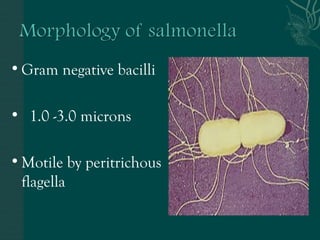
•Gram negative bacilli 
• 1.0 -3.0 microns 
•Motile by peritrichous 
flagella
 Caused by Salmonella typhi, and other Groups 
called as Paratyphi A, B, C 
 Salmonella typhi - Causes Typhoid fever 
 Salmonella Paratyphi A,B,C Causes 
Paratyphoid fevers.
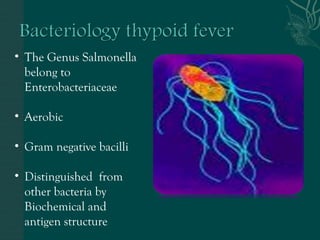
• The Genus Salmonella 
belong to 
Enterobacteriaceae 
• Aerobic 
• Gram negative bacilli 
• Distinguished from 
other bacteria by 
Biochemical and 
antigen structure
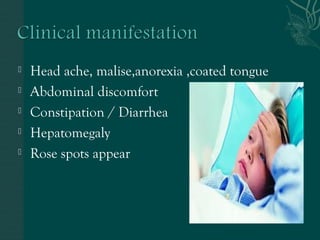
 Head ache, malise,anorexia ,coated tongue 
 Abdominal discomfort 
 Constipation / Diarrhea 
 Hepatomegaly 
 Rose spots appear
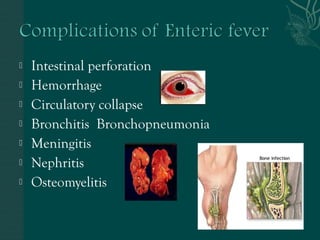
 Intestinal perforation 
 Hemorrhage 
 Circulatory collapse 
 Bronchitis Bronchopneumonia 
 Meningitis 
 Nephritis 
 Osteomyelitis
 Is a foodborne illness caused by the salmonella 
 Transmission occurs via contaminated food and 
water 
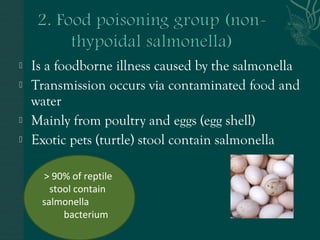
 Mainly from poultry and eggs (egg shell) 
 Exotic pets (turtle) stool contain salmonella 
> 90% of reptile 
stool contain 
salmonella 
bacterium
 Diarrhea with fever 
 Abdominal cramps 
 Nausea 
 Vomiting 
Symptoms of most salmonella 
infections usually occurs 6 - 72 
hours (usually 12-36 hours) 
after ingestion of salmonella, 
and illness lasts 2-7 days and go 
away without medical 
treatment
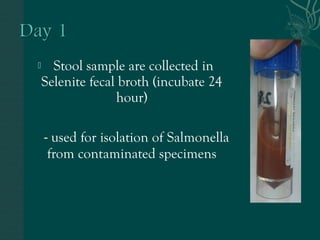
 Stool sample are collected in 
Selenite fecal broth (incubate 24 
hour) 
- used for isolation of Salmonella 
from contaminated specimens
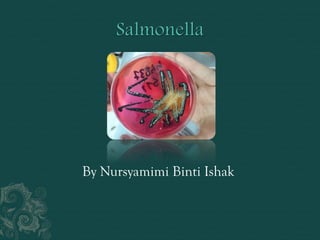
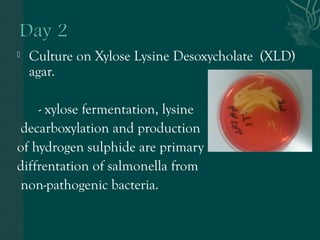
 Culture on Xylose Lysine Desoxycholate (XLD) 
agar. 
- xylose fermentation, lysine 
decarboxylation and production 
of hydrogen sulphide are primary 
diffrentation of salmonella from 
non-pathogenic bacteria.
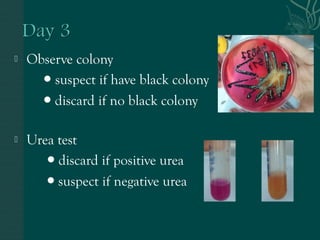
 Observe colony 
● suspect if have black colony 
● discard if no black colony 
 Urea test 
● discard if positive urea 
● suspect if negative urea
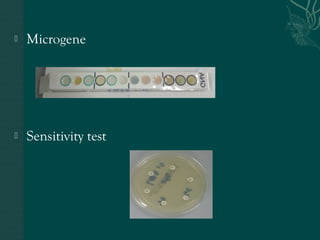
 Microgene 
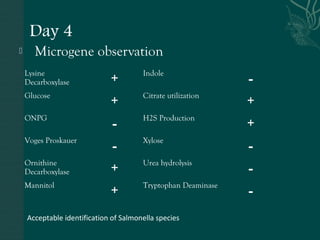
 Sensitivity test
Day 4 
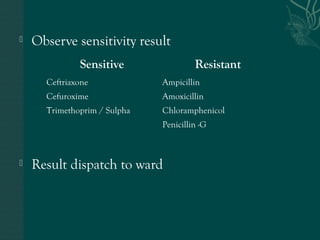
 Microgene observation 
Lysine 
Decarboxylase + Indole - 
Glucose + Citrate utilization + 
ONPG - H2S Production + 
Voges Proskauer - Xylose - 
Ornithine 
Decarboxylase + Urea hydrolysis - 
Mannitol + Tryptophan Deaminase - 
Acceptable identification of Salmonella species
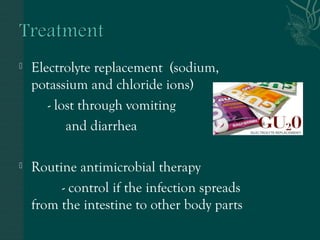
 Observe sensitivity result 
Sensitive Resistant 
Ceftriaxone Ampicillin 
Cefuroxime Amoxicillin 
Trimethoprim / Sulpha Chloramphenicol 
Penicillin -G 
 Result dispatch to ward
 Electrolyte replacement (sodium, 
potassium and chloride ions) 
- lost through vomiting 
and diarrhea 
 Routine antimicrobial therapy 
- control if the infection spreads 
from the intestine to other body parts
 Not keeping reptiles as pets (particularly if have 
young children ) 
 Proper hand washing 
 Not serving any raw meat or eggs. 
 Prevention from all stages of the food chain. 
(agricultural production, processing, 
manufacturing and preparation of foods)
Thank you

Salmonella

  • 1.
  • 2.
     A Verycomplex group  Contains more > 2,000 spp  Typed on the basis of Serotyping, and species typing  Divided into two groups 1 Enteric fever (thypoid fever) 2 Food poisoning
  • 3.
    •Gram negative bacilli • 1.0 -3.0 microns •Motile by peritrichous flagella
  • 4.
     Caused bySalmonella typhi, and other Groups called as Paratyphi A, B, C  Salmonella typhi - Causes Typhoid fever  Salmonella Paratyphi A,B,C Causes Paratyphoid fevers.
  • 5.
    • The GenusSalmonella belong to Enterobacteriaceae • Aerobic • Gram negative bacilli • Distinguished from other bacteria by Biochemical and antigen structure
  • 6.
     Head ache,malise,anorexia ,coated tongue  Abdominal discomfort  Constipation / Diarrhea  Hepatomegaly  Rose spots appear
  • 7.
     Intestinal perforation  Hemorrhage  Circulatory collapse  Bronchitis Bronchopneumonia  Meningitis  Nephritis  Osteomyelitis
  • 8.
     Is afoodborne illness caused by the salmonella  Transmission occurs via contaminated food and water  Mainly from poultry and eggs (egg shell)  Exotic pets (turtle) stool contain salmonella > 90% of reptile stool contain salmonella bacterium
  • 9.
     Diarrhea withfever  Abdominal cramps  Nausea  Vomiting Symptoms of most salmonella infections usually occurs 6 - 72 hours (usually 12-36 hours) after ingestion of salmonella, and illness lasts 2-7 days and go away without medical treatment
  • 10.
     Stool sampleare collected in Selenite fecal broth (incubate 24 hour) - used for isolation of Salmonella from contaminated specimens
  • 11.
     Culture onXylose Lysine Desoxycholate (XLD) agar. - xylose fermentation, lysine decarboxylation and production of hydrogen sulphide are primary diffrentation of salmonella from non-pathogenic bacteria.
  • 12.
     Observe colony ● suspect if have black colony ● discard if no black colony  Urea test ● discard if positive urea ● suspect if negative urea
  • 13.
     Microgene Sensitivity test
  • 14.
    Day 4 Microgene observation Lysine Decarboxylase + Indole - Glucose + Citrate utilization + ONPG - H2S Production + Voges Proskauer - Xylose - Ornithine Decarboxylase + Urea hydrolysis - Mannitol + Tryptophan Deaminase - Acceptable identification of Salmonella species
  • 15.
     Observe sensitivityresult Sensitive Resistant Ceftriaxone Ampicillin Cefuroxime Amoxicillin Trimethoprim / Sulpha Chloramphenicol Penicillin -G  Result dispatch to ward
  • 16.
     Electrolyte replacement(sodium, potassium and chloride ions) - lost through vomiting and diarrhea  Routine antimicrobial therapy - control if the infection spreads from the intestine to other body parts
  • 17.
     Not keepingreptiles as pets (particularly if have young children )  Proper hand washing  Not serving any raw meat or eggs.  Prevention from all stages of the food chain. (agricultural production, processing, manufacturing and preparation of foods)
  • 18.