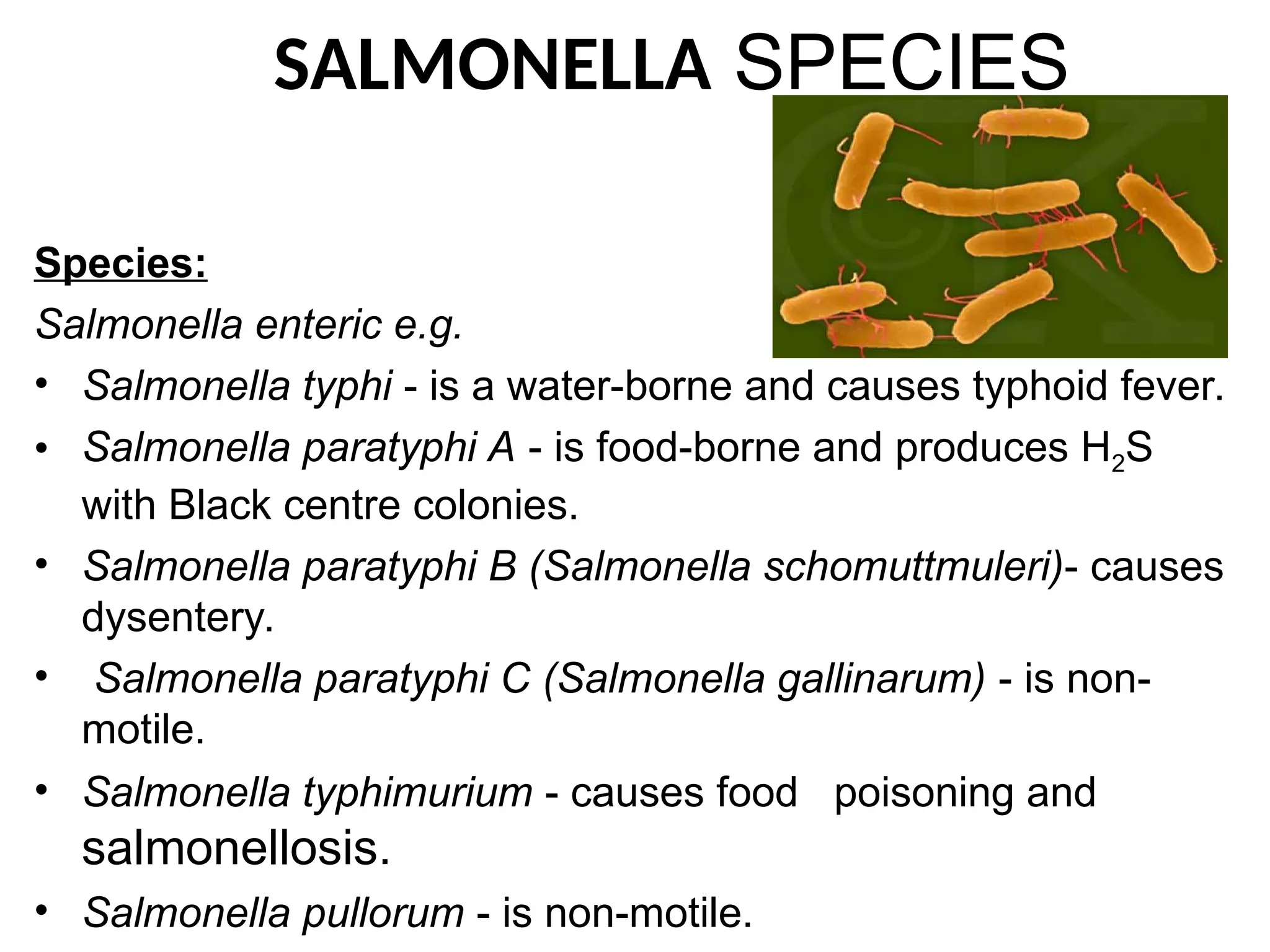
SALMONELLA SPECIES
Species:
Salmonella enteric e.g.
• Salmonella typhi - is a water-borne and causes typhoid fever.
• Salmonella paratyphi A - is food-borne and produces H2S
with Black centre colonies.
• Salmonella paratyphi B (Salmonella schomuttmuleri)- causes
dysentery.
• Salmonella paratyphi C (Salmonella gallinarum) - is non-
motile.
• Salmonella typhimurium - causes food poisoning and
salmonellosis.
• Salmonella pullorum - is non-motile.
Habitat.
• Exclusively parasites of human and animal
intestines causing bacillary dysentery in man.
• Dysentery is characterized with passage of
loose stool mixed with blood and mucus.
General characteristics of Salmonella species
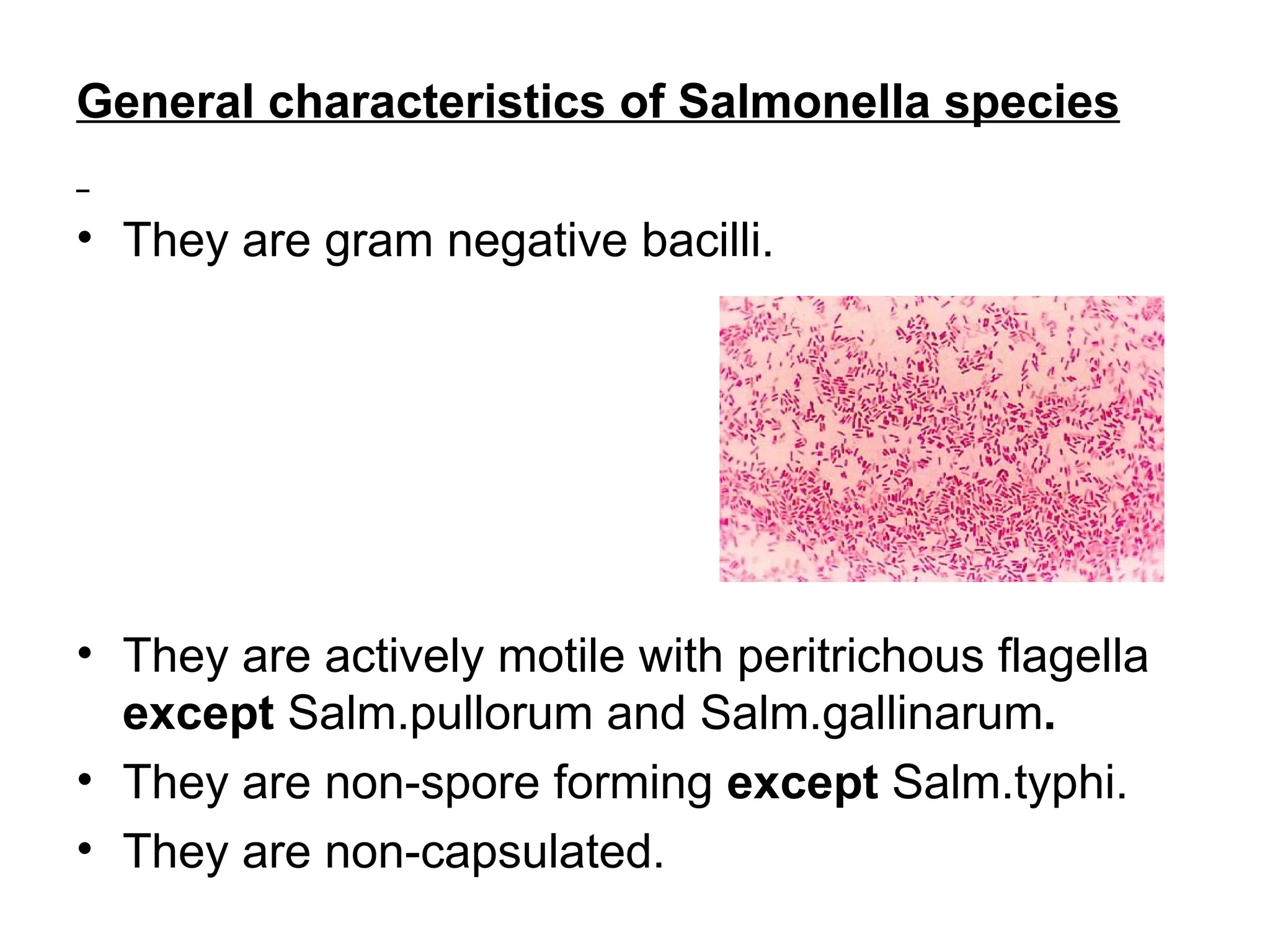
• They are gram negative bacilli.
• They are actively motile with peritrichous flagella
except Salm.pullorum and Salm.gallinarum.
• They are non-spore forming except Salm.typhi.
• They are non-capsulated.
Cultural characteristics.
• Aerobes and facultative anaerobes with an optimum of 36-
370
C.
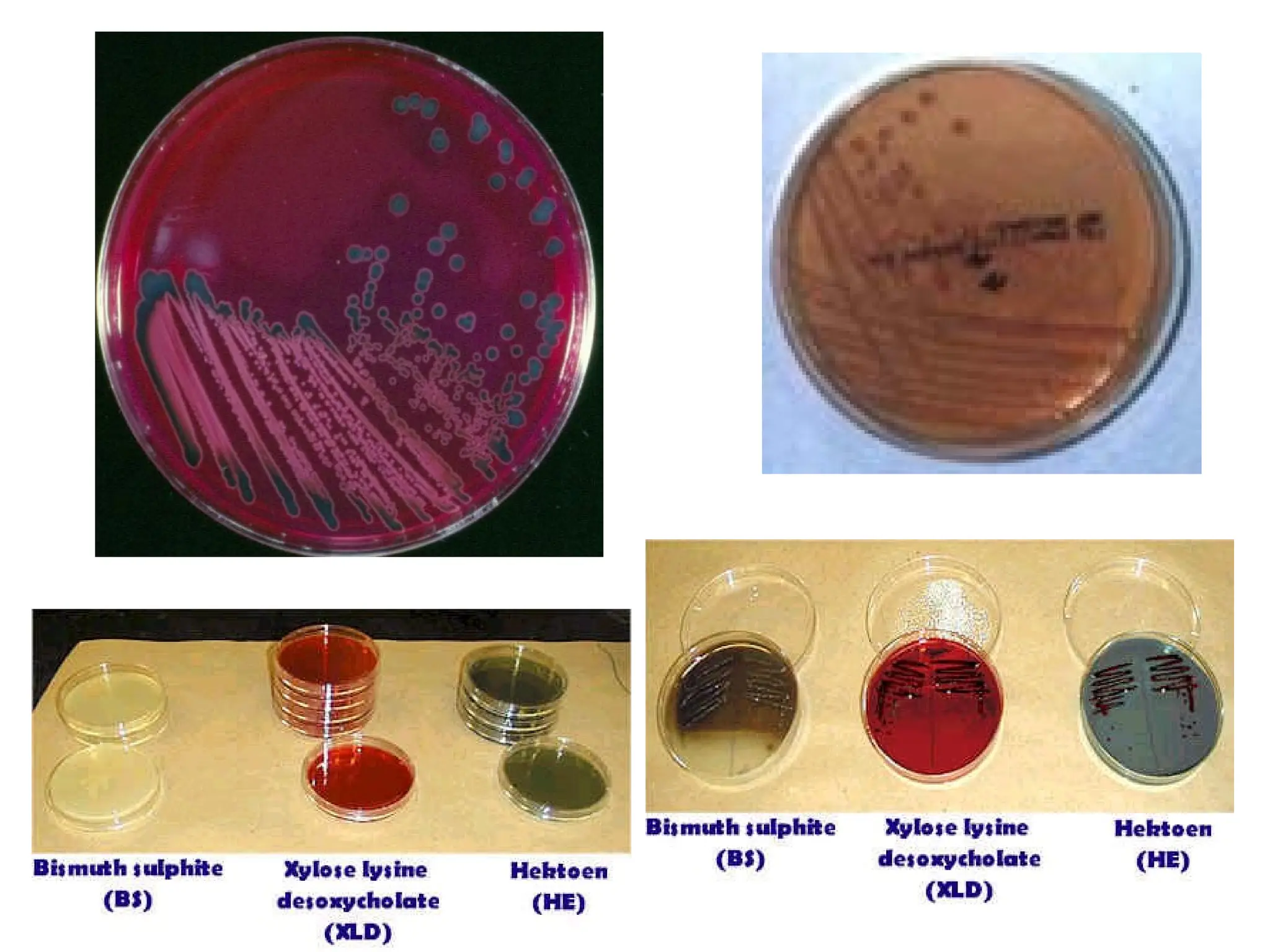
• Culture media: XLD agar medium, MacConkey agar and DCA
agar and SS medium
• Colonies after 18-48hrs incubation:
Colony morphology
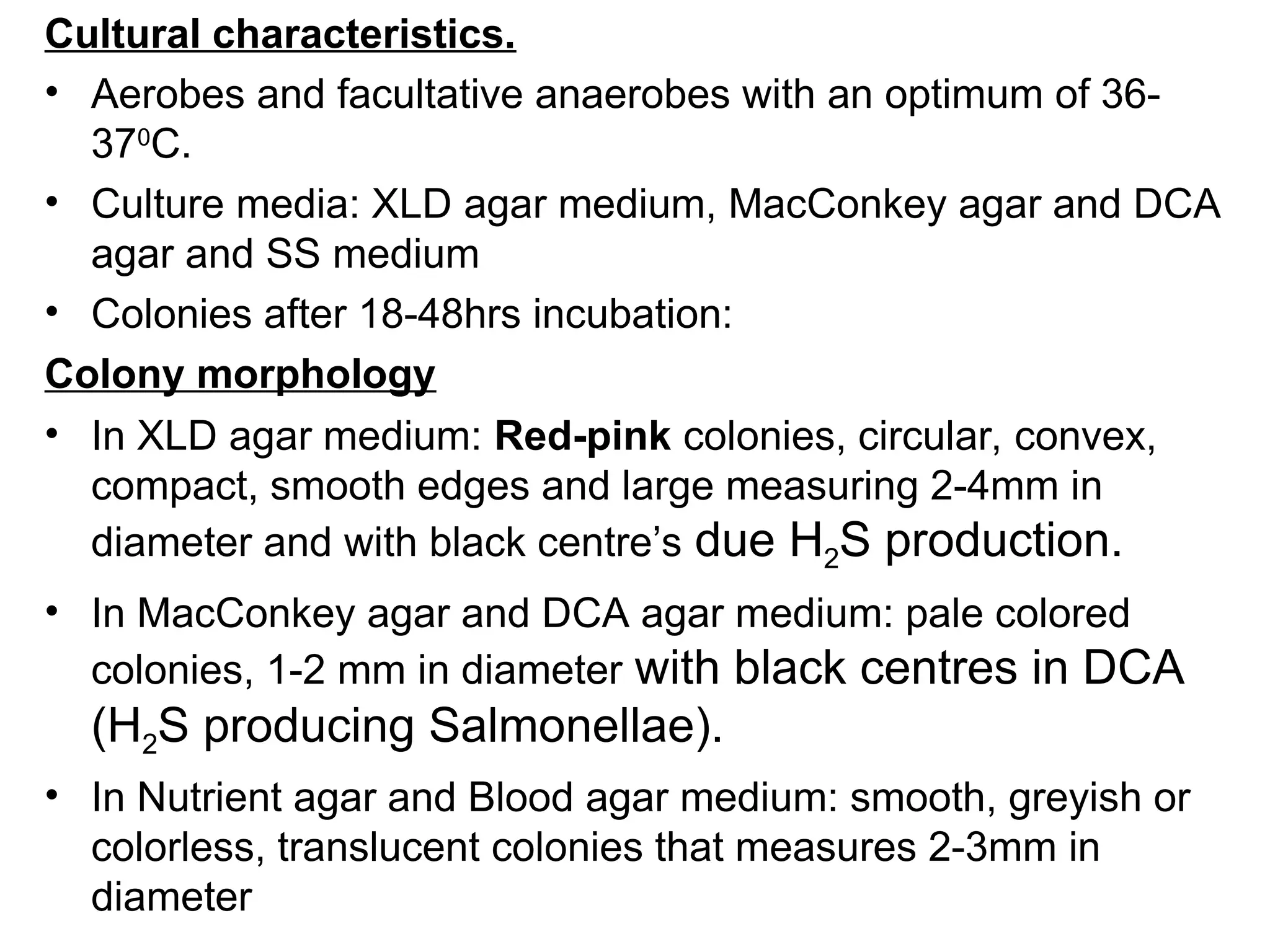
• In XLD agar medium: Red-pink colonies, circular, convex,
compact, smooth edges and large measuring 2-4mm in
diameter and with black centre’s due H2S production.
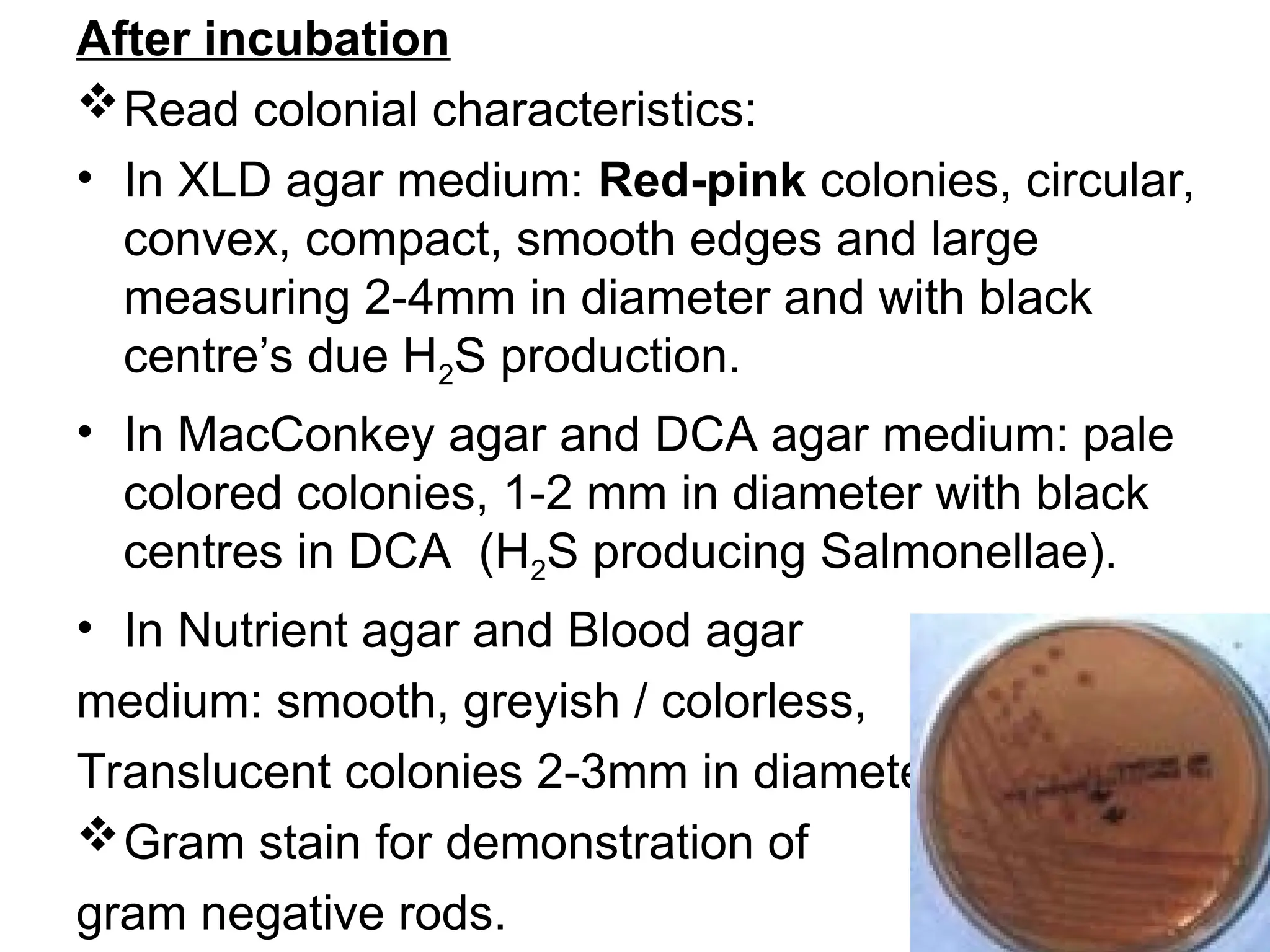
• In MacConkey agar and DCA agar medium: pale colored
colonies, 1-2 mm in diameter with black centres in DCA
(H2S producing Salmonellae).
• In Nutrient agar and Blood agar medium: smooth, greyish or
colorless, translucent colonies that measures 2-3mm in
diameter
Biochemical characteristics.
• Nitrate reduction test positive
• Ferments glucose with acid production, gas and
H2S production.
• Catalase test positive
• Citrate test positive Except Salm. Typhi
and Salm. paratyphi A.
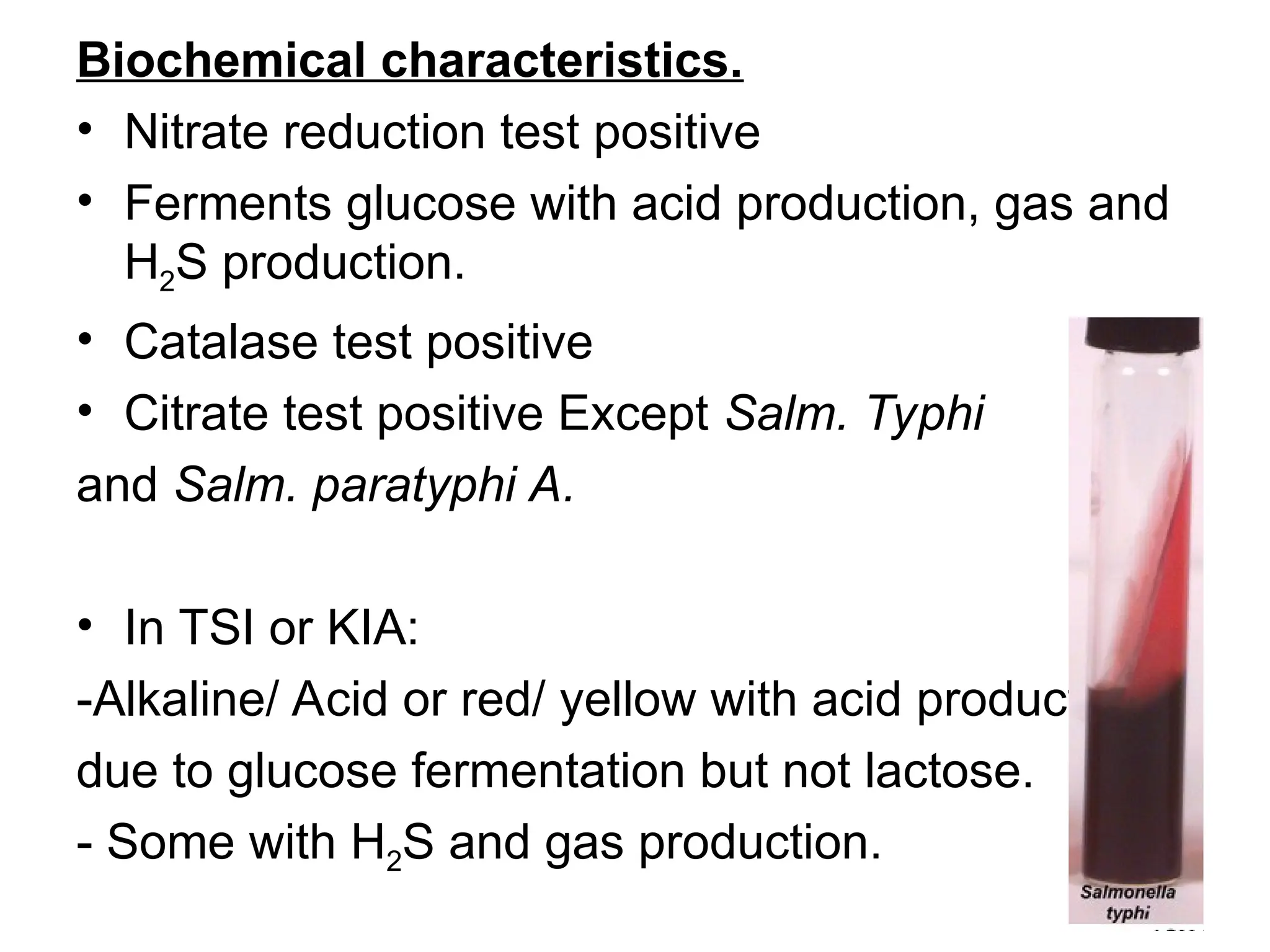
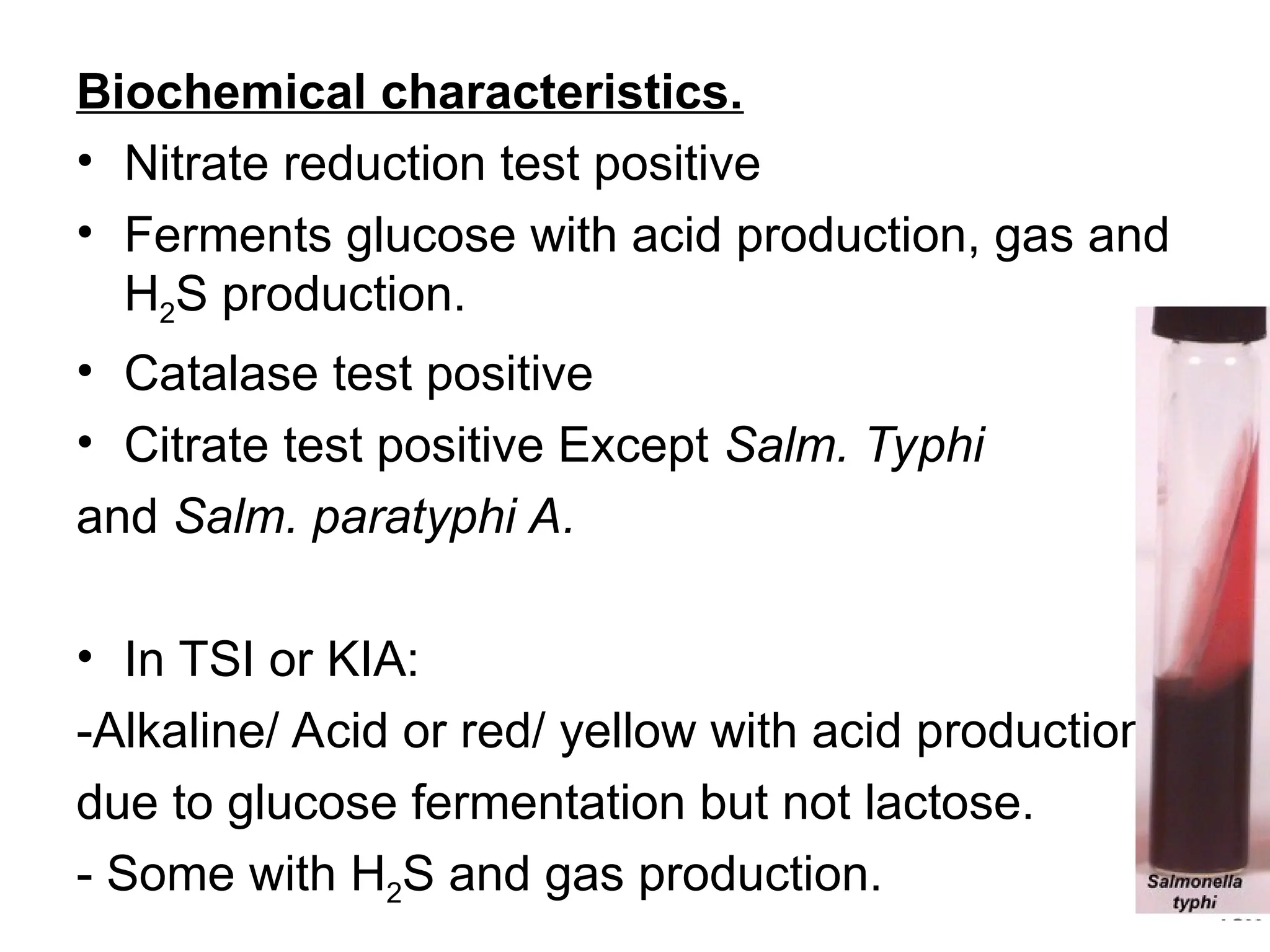
• In TSI or KIA:
-Alkaline/ Acid or red/ yellow with acid production
due to glucose fermentation but not lactose.
- Some with H2S and gas production.
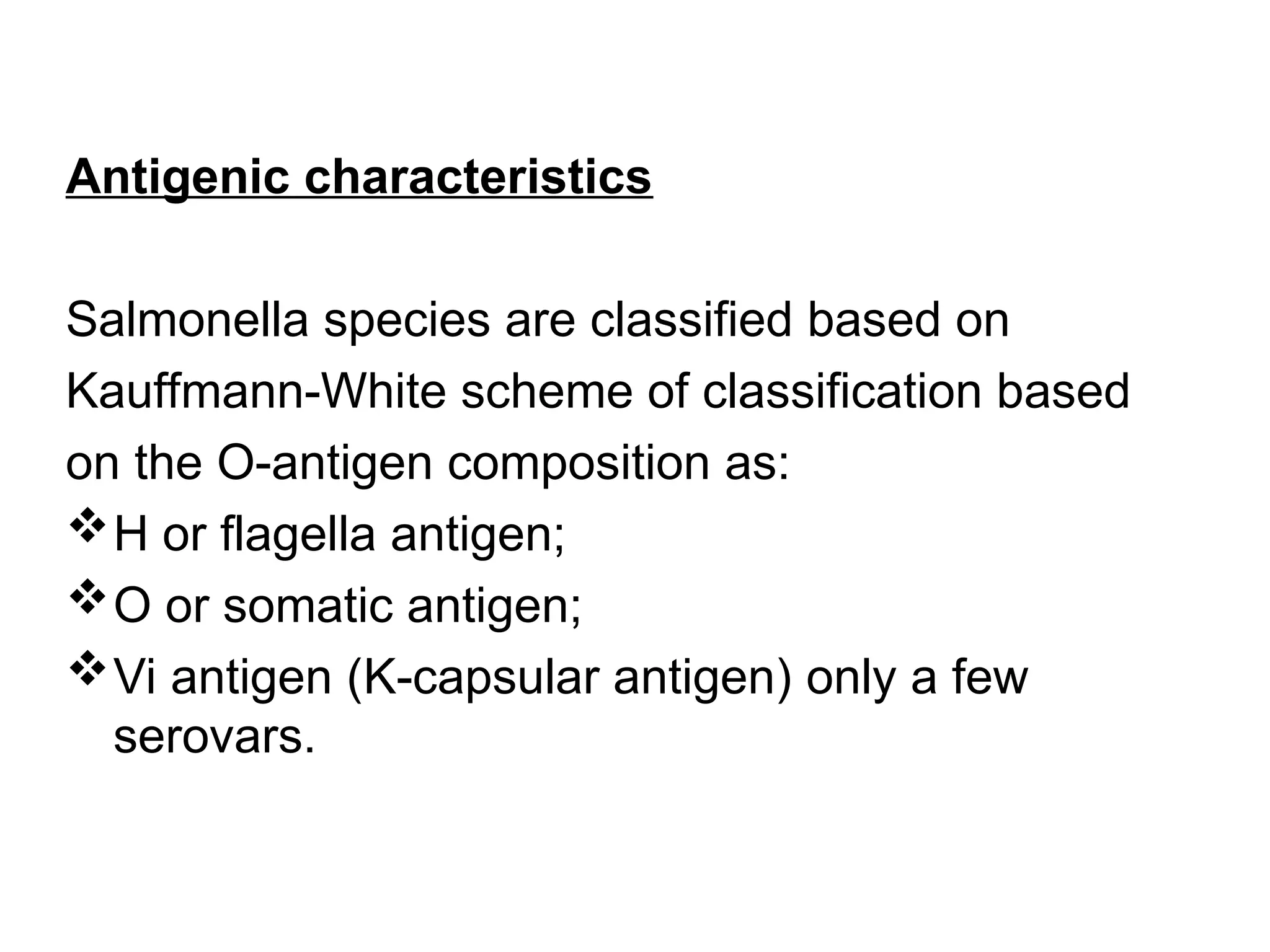
Antigenic characteristics
Salmonella species are classified based on
Kauffmann-White scheme of classification based
on the O-antigen composition as:
H or flagella antigen;
O or somatic antigen;
Vi antigen (K-capsular antigen) only a few
serovars.
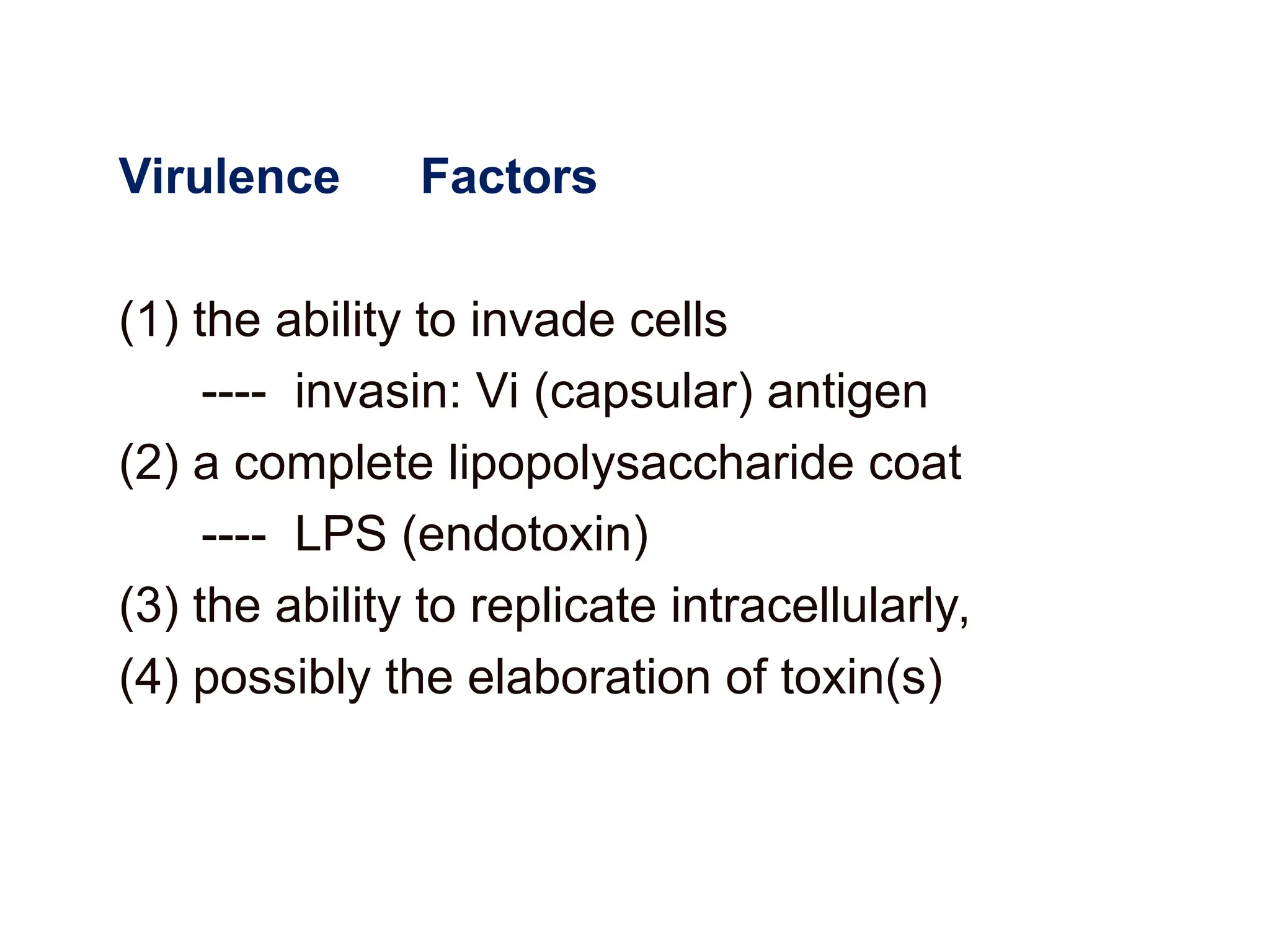
Virulence Factors
(1) the ability to invade cells
---- invasin: Vi (capsular) antigen
(2) a complete lipopolysaccharide coat
---- LPS (endotoxin)
(3) the ability to replicate intracellularly,
(4) possibly the elaboration of toxin(s)
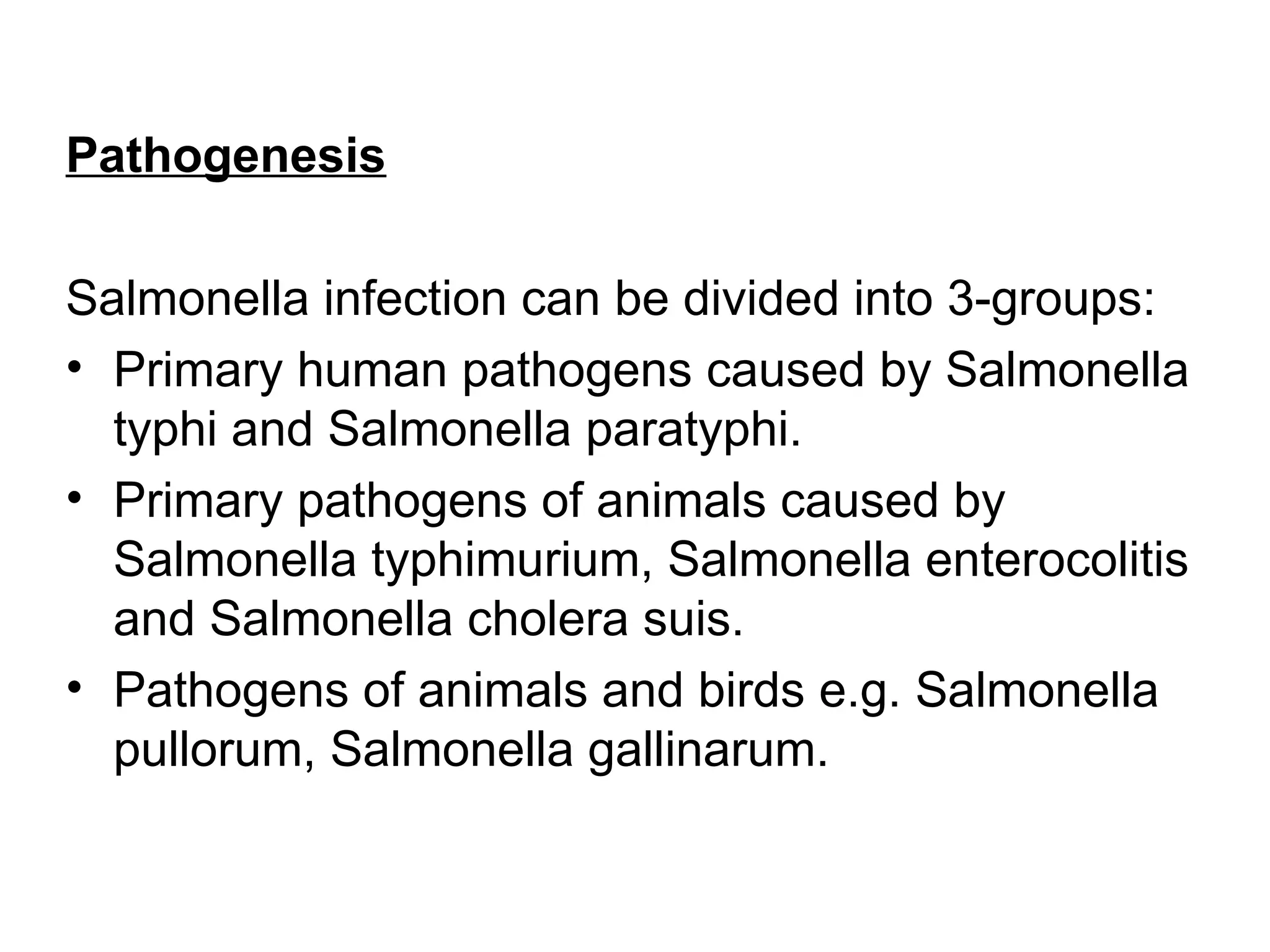
Pathogenesis
Salmonella infection can be divided into 3-groups:
• Primary human pathogens caused by Salmonella
typhi and Salmonella paratyphi.
• Primary pathogens of animals caused by
Salmonella typhimurium, Salmonella enterocolitis
and Salmonella cholera suis.
• Pathogens of animals and birds e.g. Salmonella
pullorum, Salmonella gallinarum.
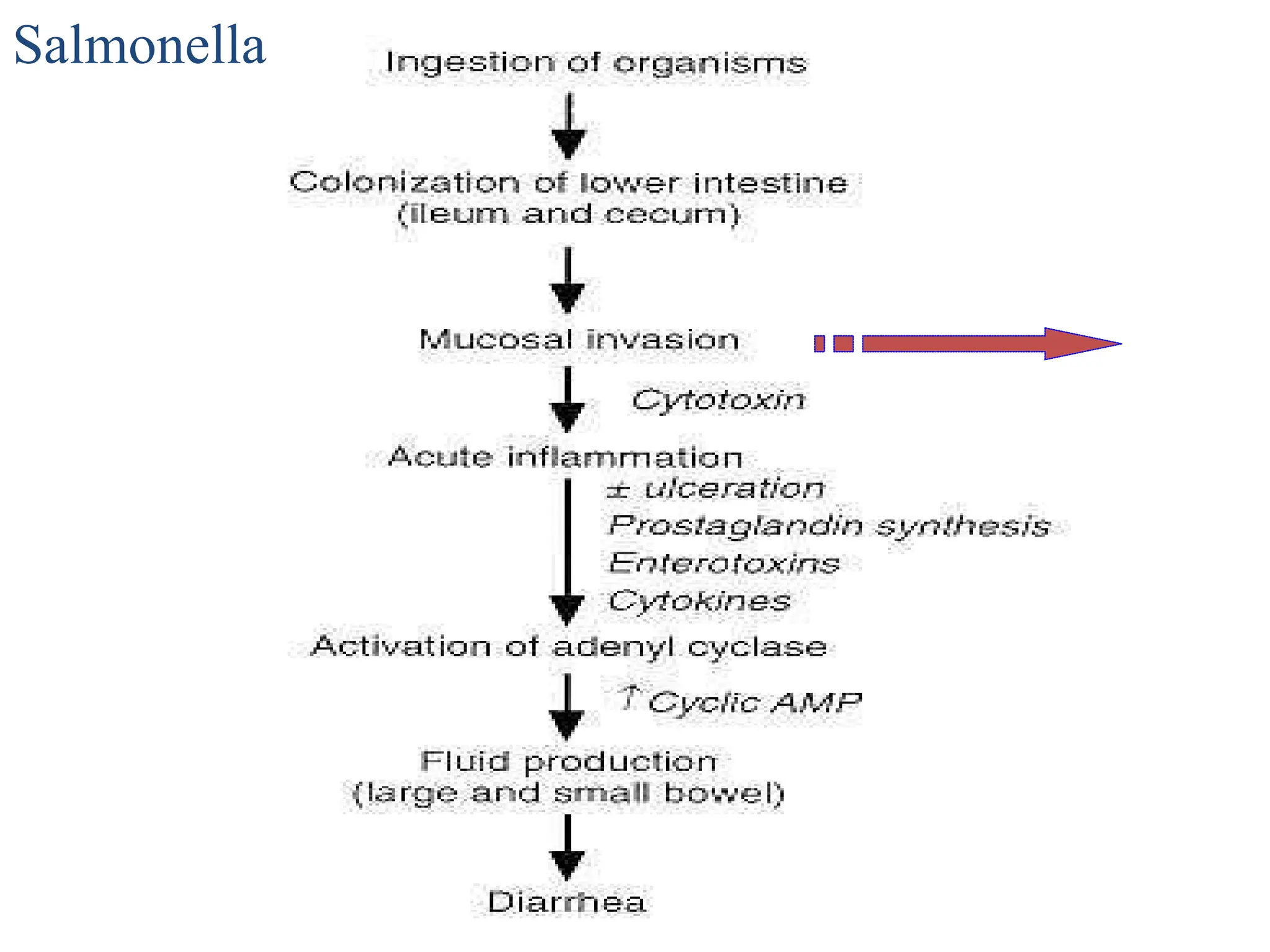
Salmonella
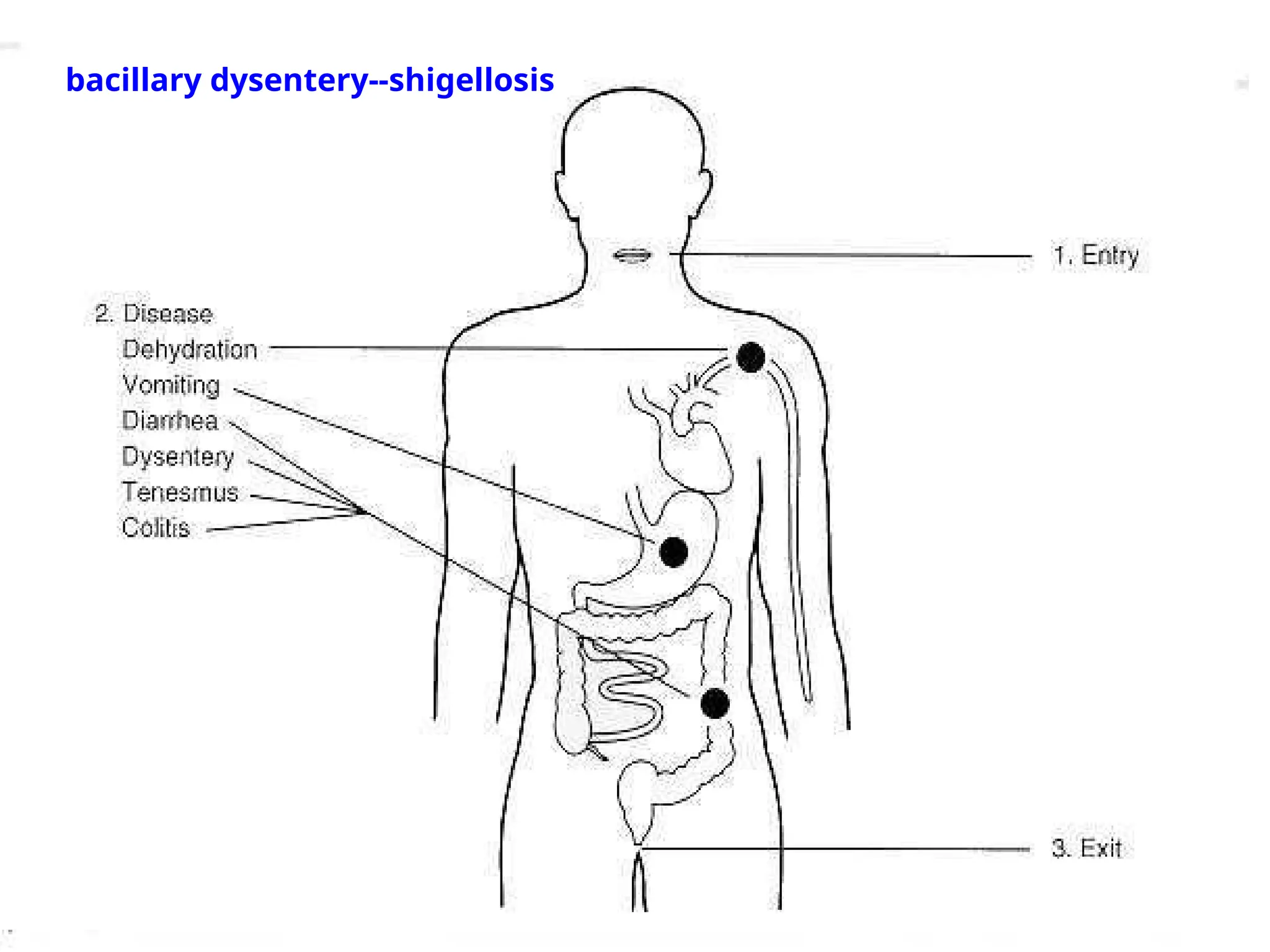
bacillary dysentery--shigellosis
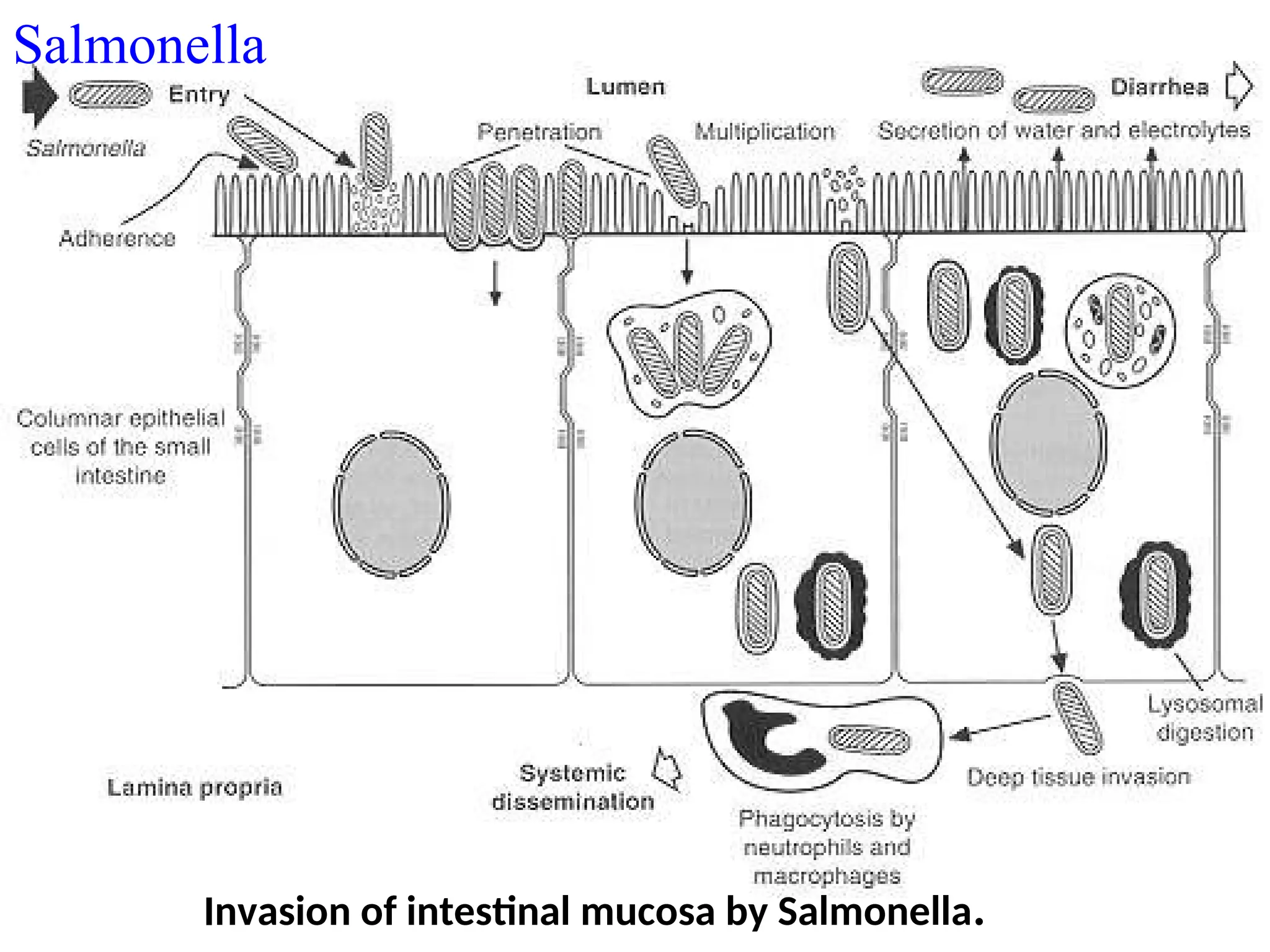
Salmonella
Invasion of intestinal mucosa by Salmonella.
Diseases
Salmonella spps causes:
»Enteric fever.
»Food poisoning (Gastroenteritis)
»Septicemia and Bacteriamia.
Salmonella -- Clinical Manifestations
1) Enteric fevers ---- typhoid
• Is a severe systemic form of fever which may be fatal.
• The best studied enteric fever is typhoid fever, mainly
caused by S. typhi
• Has an incubation period of 10 to 14 days with non-
specific symptoms such as :fever, anorexia, headache
etc.
• It has two bacteraemic phases:
primary bacteraemic phase:
secondary and heavier bacteraemic phase (2-wks)
primary bacteraemic phase:
(Has an incubation period 7- 10 days)
• The organism invades the epithelium
• Then spreads to mesenteric lymph nodes &
throughout the body
• They are taken up by the reticuloendothelial
cells and infects the liver, spleen, gallbladder,
bones, meninges
• The organism then invades bloodstream via
thoracic duct
secondary and heavier bacteraemic phase (2-
3 wks)
• The organism passes into the blood with the
onset of fever and other signs of clinical illness.
• It enters the gall bladder and further invades the
intestines resulting into:
inflammatory reaction of the gut lymphoid
tissues.
 followed by necrosis and formation of
characteristic typhoid ulcers
• Onset: 2 weeks with early symptoms
• Progression :
It progresses with temperature rise over the 1st
week of the illness and remains high for 7-10
days and then falls by lysis during the 3rd or 4th
week.
• physical signs include: fever, hepatomegaly,
splenomegaly and often a rash of rose spots.
• Relapse: shorter and of milder.
• Complications: severe intestinal haemorrhage
2) Gastroenteritis--food poisoning
 Symptoms usually begin 6 to 48 hours after
ingestion of contaminated food or water
 the cardinal manifestation is diarrhea.
 nausea, vomiting, abdominal cramps,
headache, fever (38o
C to 39o
C) and chills are
common
 The duration of fever and diarrhea is usually 2
to 7 days
3) Septicemia
• an intermediate stage of infection –
no intestinal symptoms and the bacteria cannot
be isolated from fecal specimens.
• it may remain localized in the intestine or
disseminate to the blood streams
4) The prolonged carrier state
• continue to excrete the salmonellae for a year or
more
• The bacilli are most commonly present in the
gallbladder
Laboratory diagnosis
Specimens:
Depends on the site of infection e.g.
Blood culture for diagnosis of enteric fever
commonly found during the first 7-10 days and
during relapses
Blood serological tests.
Stool and urine culture for diagnosis of typhoid
fever:
• stool cultures are usually positive from the 2nd
week.
• urine cultures are usually positive from the 3rd
week of the infection.
Day 1
Direct culture of the specimen onto:
• XLD agar, MacConkey agar, DCA agar and
SS medium, BA, Nutrient agar medium.
• Incubate at 370
C for 18-24hrs aerobically.
1st
. gram stain for gram negative rods or
bacilli. (Brief procedure of gram staining
technique).
After incubation
Read colonial characteristics:
• In XLD agar medium: Red-pink colonies, circular,
convex, compact, smooth edges and large
measuring 2-4mm in diameter and with black
centre’s due H2S production.
• In MacConkey agar and DCA agar medium: pale
colored colonies, 1-2 mm in diameter with black
centres in DCA (H2S producing Salmonellae).
• In Nutrient agar and Blood agar
medium: smooth, greyish / colorless,
Translucent colonies 2-3mm in diameter
Gram stain for demonstration of
gram negative rods.
Biochemical characteristics.
• Nitrate reduction test positive
• Ferments glucose with acid production, gas and
H2S production.
• Catalase test positive
• Citrate test positive Except Salm. Typhi
and Salm. paratyphi A.
• In TSI or KIA:
-Alkaline/ Acid or red/ yellow with acid production
due to glucose fermentation but not lactose.
- Some with H2S and gas production.
Set drug sensitivity (susceptibility) tests using gram
negative drug discs; incubate aerobically at 370
C for
18-24hrs.
After setting drug sensitivity test.
• Read both sensitive and resistant drugs from the drug
susceptibility test, record the results and dispatch
them to the clinician for further management of the
patient.
Treatment
• Vaccines are available for typhoid fever and are
partially effective.
• Typhoid fever and enteric fevers should be treated
with antibiotics e.g. Chloromphinical, Sulphanomides,
Tetracycline, Streptomycin, Neomycin
Serological tests
Serological tests confirms antigenic analysis of
O and H antigens using polyvalent and specific
antisera. It is done by use of Widal test.
Widal test
It is a tube test for determining the quantity of
agglutinating antibodies, or agglutinins, in the
serum of a patient with typhoid fever
procedure
• The procedure involves adding a suspension of
dead typhoid bacterial cells to a series of tubes
containing the patient’s serum, which has been
diluted out to various concentrations.
• After the tubes have been incubated for 30
minutes at 37 , they are centrifuged and
℃
examined to note the amount of agglutination
that has occurred.
Results
• The reciprocal of the highest dilution at which
agglutination is seen designated as the antibody
titer of patient’s serum.
• Naturally, the higher the titer, the greater is the
antibody response of the individual to the disease
Nb.
Generally, in typhoid cases, it is valuable that
the titre of specific O antibodies is ≥1:80 or the
titre of specific H antibodies is ≥1:160.
• In paratyphoid cases, if the titre of specific H
antibodies is ≥1:80, the result is positive.
Interpretation
Interpretation
• Previous inoculation with TAB (typhoid,
paratyphoid A, paratyphoid B) vaccine can give
relatively high titres of specific antibodies, as
can previous infection.
• Cross-reacting antibodies from previous
exposure to other salmonellae sometimes
confuse the results.
• As with other serological tests for acute
infections, the usefulness of the Widal test is
greatest when a four-fold or greater rise in
antibody levels.
Other causes of high titres of ‘O’ and ‘H’
antibodies.
• Chronic Salmonellosis associated with
schistosomal infections.
• Vaccines with Salm. paratyphi A and B vaccines.
• Chronic liver diseases.
• Immunological disorders e.g. multiple myeloma,
nephritic syndromes, arthritis and Rheumatoid
arthritis.
• Infection with other Salmonella species.
ENTEROBACTER
• Enterobacter is part of the commensal enteric flora, but it
is also found in water, sewage, soil, and plants.
• Organism posses a capsule and they are motile.
• Eleven species of Enterobacter have been described, but E.
aerogenes and E. cloacae cause most human infections.
• Enterobacter species cause opportunistic infections; most
often they cause urinary tract infections in debilitated or
catheterized patients.
• Occasionally they cause pneumonia, wound infections, and
sepsis in hospitalized patients.
SERRATIA
• Nine species of Serratia have been described, but
most human disease is due to a single species, S.
marcescens.
• Between 75-90 % of all Serratia infections are
nosocomial.
• Serratia causes pneumonia and sepsis particularly in
patients with cancer and are receiving chemotherapy.
• It also causes occasionally urinary tract infections and
wound infections in hospitalized patients.
PROTEUS
• Proteus species are part of the normal human gastrointestinal flora
and exist in water and soil as saprophytic organisms.
• Members of the genus Proteus are gram negative, motile bacilli.
• They exhibit strong urease activity.
• Although four species of Proteus have been identified, only two
cause human disease: P. mirabilis and P. vulgaris.
• P.mirabilis is the more common of the two pathogens.
• Many isolates of Proteus are extremely motile and exhibit “swarming
motility” on blood agar plates.
• Swarming Proteus isolates spread in waves across the agar surface
and sometimes makes isolation of other organisms on the plate
extremely difficult or impossible.
Pathogenicity
• The principal virulence determinants of Proteus
species are lipopolysaccharide, pili, urease activity,
and capsule.
• The lipopolysaccharide of Proteus, like that of
other enteric organisms, exhibits endotoxic
activity.
• The Proteus pili promote colonization of the
kidney, and the Proteus urease converts urea to
NH4 and CO2.
• These products of urea hydrolysis alkalinize the
urine, and this precipitates Mg2+ and Ca2+ and leads
to the formation of renal calculi (kidney stones).
• NH4 also protects Proteus in the kidney from classic
complement pathway by splitting C4.
• Studies have shown that the Proteus capsule not
only protects the organisms from phagocytosis, but
also precipitates MgNH4PO4 6H2O (stuvite).
• Struvite calculi are a frequent complication of P.
mirabilis urinary tract infection
Diseases
• Proteus is a common cause of nosocomial and
community-acquired urinary tract infections,
including pyelonephritis and cystitis.
• Pyelonephritis may lead to sepsis.
• Other infections include wound infections and
pneumonia
5. SALMONELLA PPT.ppt KMTC 2.1 MLS .....

  • 1.
    SALMONELLA SPECIES Species: Salmonella enterice.g. • Salmonella typhi - is a water-borne and causes typhoid fever. • Salmonella paratyphi A - is food-borne and produces H2S with Black centre colonies. • Salmonella paratyphi B (Salmonella schomuttmuleri)- causes dysentery. • Salmonella paratyphi C (Salmonella gallinarum) - is non- motile. • Salmonella typhimurium - causes food poisoning and salmonellosis. • Salmonella pullorum - is non-motile.
  • 2.
    Habitat. • Exclusively parasitesof human and animal intestines causing bacillary dysentery in man. • Dysentery is characterized with passage of loose stool mixed with blood and mucus.
  • 3.
    General characteristics ofSalmonella species • They are gram negative bacilli. • They are actively motile with peritrichous flagella except Salm.pullorum and Salm.gallinarum. • They are non-spore forming except Salm.typhi. • They are non-capsulated.
  • 4.
    Cultural characteristics. • Aerobesand facultative anaerobes with an optimum of 36- 370 C. • Culture media: XLD agar medium, MacConkey agar and DCA agar and SS medium • Colonies after 18-48hrs incubation: Colony morphology • In XLD agar medium: Red-pink colonies, circular, convex, compact, smooth edges and large measuring 2-4mm in diameter and with black centre’s due H2S production. • In MacConkey agar and DCA agar medium: pale colored colonies, 1-2 mm in diameter with black centres in DCA (H2S producing Salmonellae). • In Nutrient agar and Blood agar medium: smooth, greyish or colorless, translucent colonies that measures 2-3mm in diameter
  • 6.
    Biochemical characteristics. • Nitratereduction test positive • Ferments glucose with acid production, gas and H2S production. • Catalase test positive • Citrate test positive Except Salm. Typhi and Salm. paratyphi A. • In TSI or KIA: -Alkaline/ Acid or red/ yellow with acid production due to glucose fermentation but not lactose. - Some with H2S and gas production.
  • 7.
    Antigenic characteristics Salmonella speciesare classified based on Kauffmann-White scheme of classification based on the O-antigen composition as: H or flagella antigen; O or somatic antigen; Vi antigen (K-capsular antigen) only a few serovars.
  • 8.
    Virulence Factors (1) theability to invade cells ---- invasin: Vi (capsular) antigen (2) a complete lipopolysaccharide coat ---- LPS (endotoxin) (3) the ability to replicate intracellularly, (4) possibly the elaboration of toxin(s)
  • 9.
    Pathogenesis Salmonella infection canbe divided into 3-groups: • Primary human pathogens caused by Salmonella typhi and Salmonella paratyphi. • Primary pathogens of animals caused by Salmonella typhimurium, Salmonella enterocolitis and Salmonella cholera suis. • Pathogens of animals and birds e.g. Salmonella pullorum, Salmonella gallinarum.
  • 10.
  • 11.
  • 12.
    Salmonella Invasion of intestinalmucosa by Salmonella.
  • 13.
    Diseases Salmonella spps causes: »Entericfever. »Food poisoning (Gastroenteritis) »Septicemia and Bacteriamia.
  • 14.
    Salmonella -- ClinicalManifestations 1) Enteric fevers ---- typhoid • Is a severe systemic form of fever which may be fatal. • The best studied enteric fever is typhoid fever, mainly caused by S. typhi • Has an incubation period of 10 to 14 days with non- specific symptoms such as :fever, anorexia, headache etc. • It has two bacteraemic phases: primary bacteraemic phase: secondary and heavier bacteraemic phase (2-wks)
  • 15.
    primary bacteraemic phase: (Hasan incubation period 7- 10 days) • The organism invades the epithelium • Then spreads to mesenteric lymph nodes & throughout the body • They are taken up by the reticuloendothelial cells and infects the liver, spleen, gallbladder, bones, meninges • The organism then invades bloodstream via thoracic duct
  • 16.
    secondary and heavierbacteraemic phase (2- 3 wks) • The organism passes into the blood with the onset of fever and other signs of clinical illness. • It enters the gall bladder and further invades the intestines resulting into: inflammatory reaction of the gut lymphoid tissues.  followed by necrosis and formation of characteristic typhoid ulcers
  • 17.
    • Onset: 2weeks with early symptoms • Progression : It progresses with temperature rise over the 1st week of the illness and remains high for 7-10 days and then falls by lysis during the 3rd or 4th week. • physical signs include: fever, hepatomegaly, splenomegaly and often a rash of rose spots. • Relapse: shorter and of milder. • Complications: severe intestinal haemorrhage
  • 18.
    2) Gastroenteritis--food poisoning Symptoms usually begin 6 to 48 hours after ingestion of contaminated food or water  the cardinal manifestation is diarrhea.  nausea, vomiting, abdominal cramps, headache, fever (38o C to 39o C) and chills are common  The duration of fever and diarrhea is usually 2 to 7 days
  • 19.
    3) Septicemia • anintermediate stage of infection – no intestinal symptoms and the bacteria cannot be isolated from fecal specimens. • it may remain localized in the intestine or disseminate to the blood streams
  • 20.
    4) The prolongedcarrier state • continue to excrete the salmonellae for a year or more • The bacilli are most commonly present in the gallbladder
  • 21.
    Laboratory diagnosis Specimens: Depends onthe site of infection e.g. Blood culture for diagnosis of enteric fever commonly found during the first 7-10 days and during relapses Blood serological tests. Stool and urine culture for diagnosis of typhoid fever: • stool cultures are usually positive from the 2nd week. • urine cultures are usually positive from the 3rd week of the infection.
  • 22.
    Day 1 Direct cultureof the specimen onto: • XLD agar, MacConkey agar, DCA agar and SS medium, BA, Nutrient agar medium. • Incubate at 370 C for 18-24hrs aerobically. 1st . gram stain for gram negative rods or bacilli. (Brief procedure of gram staining technique).
  • 23.
    After incubation Read colonialcharacteristics: • In XLD agar medium: Red-pink colonies, circular, convex, compact, smooth edges and large measuring 2-4mm in diameter and with black centre’s due H2S production. • In MacConkey agar and DCA agar medium: pale colored colonies, 1-2 mm in diameter with black centres in DCA (H2S producing Salmonellae). • In Nutrient agar and Blood agar medium: smooth, greyish / colorless, Translucent colonies 2-3mm in diameter Gram stain for demonstration of gram negative rods.
  • 24.
    Biochemical characteristics. • Nitratereduction test positive • Ferments glucose with acid production, gas and H2S production. • Catalase test positive • Citrate test positive Except Salm. Typhi and Salm. paratyphi A. • In TSI or KIA: -Alkaline/ Acid or red/ yellow with acid production due to glucose fermentation but not lactose. - Some with H2S and gas production.
  • 25.
    Set drug sensitivity(susceptibility) tests using gram negative drug discs; incubate aerobically at 370 C for 18-24hrs. After setting drug sensitivity test. • Read both sensitive and resistant drugs from the drug susceptibility test, record the results and dispatch them to the clinician for further management of the patient. Treatment • Vaccines are available for typhoid fever and are partially effective. • Typhoid fever and enteric fevers should be treated with antibiotics e.g. Chloromphinical, Sulphanomides, Tetracycline, Streptomycin, Neomycin
  • 26.
    Serological tests Serological testsconfirms antigenic analysis of O and H antigens using polyvalent and specific antisera. It is done by use of Widal test. Widal test It is a tube test for determining the quantity of agglutinating antibodies, or agglutinins, in the serum of a patient with typhoid fever
  • 27.
    procedure • The procedureinvolves adding a suspension of dead typhoid bacterial cells to a series of tubes containing the patient’s serum, which has been diluted out to various concentrations. • After the tubes have been incubated for 30 minutes at 37 , they are centrifuged and ℃ examined to note the amount of agglutination that has occurred.
  • 28.
    Results • The reciprocalof the highest dilution at which agglutination is seen designated as the antibody titer of patient’s serum. • Naturally, the higher the titer, the greater is the antibody response of the individual to the disease Nb. Generally, in typhoid cases, it is valuable that the titre of specific O antibodies is ≥1:80 or the titre of specific H antibodies is ≥1:160. • In paratyphoid cases, if the titre of specific H antibodies is ≥1:80, the result is positive.
  • 29.
    Interpretation Interpretation • Previous inoculationwith TAB (typhoid, paratyphoid A, paratyphoid B) vaccine can give relatively high titres of specific antibodies, as can previous infection. • Cross-reacting antibodies from previous exposure to other salmonellae sometimes confuse the results. • As with other serological tests for acute infections, the usefulness of the Widal test is greatest when a four-fold or greater rise in antibody levels.
  • 30.
    Other causes ofhigh titres of ‘O’ and ‘H’ antibodies. • Chronic Salmonellosis associated with schistosomal infections. • Vaccines with Salm. paratyphi A and B vaccines. • Chronic liver diseases. • Immunological disorders e.g. multiple myeloma, nephritic syndromes, arthritis and Rheumatoid arthritis. • Infection with other Salmonella species.
  • 31.
    ENTEROBACTER • Enterobacter ispart of the commensal enteric flora, but it is also found in water, sewage, soil, and plants. • Organism posses a capsule and they are motile. • Eleven species of Enterobacter have been described, but E. aerogenes and E. cloacae cause most human infections. • Enterobacter species cause opportunistic infections; most often they cause urinary tract infections in debilitated or catheterized patients. • Occasionally they cause pneumonia, wound infections, and sepsis in hospitalized patients.
  • 32.
    SERRATIA • Nine speciesof Serratia have been described, but most human disease is due to a single species, S. marcescens. • Between 75-90 % of all Serratia infections are nosocomial. • Serratia causes pneumonia and sepsis particularly in patients with cancer and are receiving chemotherapy. • It also causes occasionally urinary tract infections and wound infections in hospitalized patients.
  • 33.
    PROTEUS • Proteus speciesare part of the normal human gastrointestinal flora and exist in water and soil as saprophytic organisms. • Members of the genus Proteus are gram negative, motile bacilli. • They exhibit strong urease activity. • Although four species of Proteus have been identified, only two cause human disease: P. mirabilis and P. vulgaris. • P.mirabilis is the more common of the two pathogens. • Many isolates of Proteus are extremely motile and exhibit “swarming motility” on blood agar plates. • Swarming Proteus isolates spread in waves across the agar surface and sometimes makes isolation of other organisms on the plate extremely difficult or impossible.
  • 34.
    Pathogenicity • The principalvirulence determinants of Proteus species are lipopolysaccharide, pili, urease activity, and capsule. • The lipopolysaccharide of Proteus, like that of other enteric organisms, exhibits endotoxic activity. • The Proteus pili promote colonization of the kidney, and the Proteus urease converts urea to NH4 and CO2.
  • 35.
    • These productsof urea hydrolysis alkalinize the urine, and this precipitates Mg2+ and Ca2+ and leads to the formation of renal calculi (kidney stones). • NH4 also protects Proteus in the kidney from classic complement pathway by splitting C4. • Studies have shown that the Proteus capsule not only protects the organisms from phagocytosis, but also precipitates MgNH4PO4 6H2O (stuvite). • Struvite calculi are a frequent complication of P. mirabilis urinary tract infection
  • 36.
    Diseases • Proteus isa common cause of nosocomial and community-acquired urinary tract infections, including pyelonephritis and cystitis. • Pyelonephritis may lead to sepsis. • Other infections include wound infections and pneumonia