
RUBELLALatin meaning-little red
DR. ANITA KUMARI
ANTERIOR SEGMENT FELLOW
SCEH, LAHAN
INTRODUCTION
• Also known as German measles/3 days fever
• Occurs worldwide
• Caused by Rubella virus
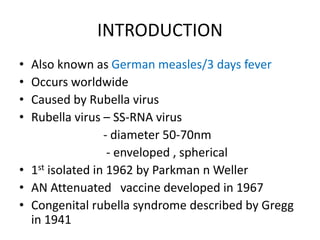
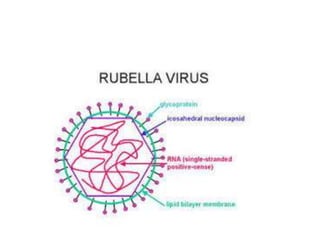
• Rubella virus – SS-RNA virus
- diameter 50-70nm
- enveloped , spherical
• 1st isolated in 1962 by Parkman n Weller
• AN Attenuated vaccine developed in 1967
• Congenital rubella syndrome described by Gregg
in 1941
PATHOGENESIS
• Respiratory transmission of virus
• Spread from person to person via droplets shed
from respiratory secretions of infected person
• Replicates in nasopharynx n regional lymph
node
• Viremia 5-7 days after exposure with spread
throughout body
• Transplacental infection of fetus during viremia
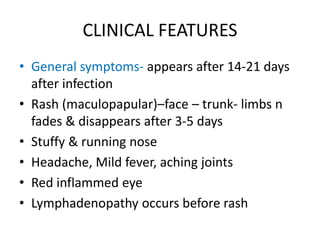
CLINICAL FEATURES
• General symptoms- appears after 14-21 days
after infection
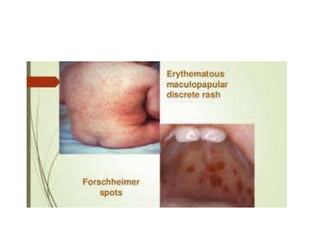
• Rash (maculopapular)–face – trunk- limbs n
fades & disappears after 3-5 days
• Stuffy & running nose
• Headache, Mild fever, aching joints
• Red inflammed eye
• Lymphadenopathy occurs before rash
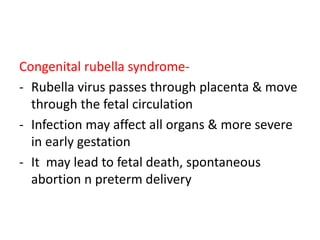
Congenital rubella syndrome-
- Rubella virus passes through placenta & move
through the fetal circulation
- Infection may affect all organs & more severe
in early gestation
- It may lead to fetal death, spontaneous
abortion n preterm delivery
• Deafness(sensorineural) –most common
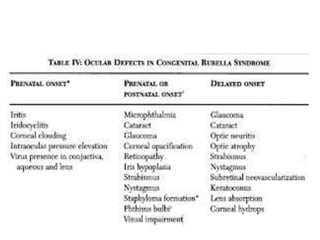
• Ocular- congenital cataract, corneal clouding
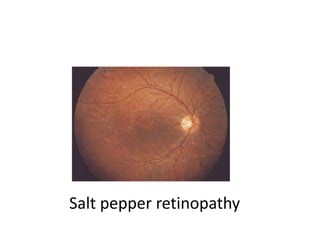
glaucoma, microphthalmia, salt pepper
retinopathy, strabismus
• Cardiac defects- patent ductus arteriosus,
ventricular septal defect, pulmonic stenosis
• Neurologic abnormalities- microcephaly,
mental retardation
• Others- bone lesions, splenomegaly, hepatitis
• Greater risk of developing diabetes mellitus
Salt pepper retinopathy
MANAGEMENT
• Investigation
- Diagnosis by typical rash & lymph node
enlargement clinically
- Presence of IgM antibodies indicates recent
rubella infection
- Isolation of rubella virus from clinical
specimen(nasopharynx, urine, blood,CSF)
- Viral culture
- Polymerase chain reaction(PCR)
Treatment
• Mild self limiting illness
• No specific or antiviral t/t needed
• Increased fluid intake n rest
• Good ventilation
PREVENTION
• Rubella vaccine is given to children at 15
months of age as a part of MMR n again
between 3-6 yrs of age
• Vaccine is live attenuated n confers lifelong
immunity
• Vaccine contains human albumin, neomycin,
sorbitol n gelatin
Contraindications of vaccine
- h/o anaphylactic reaction to neomycin
- h/o severe allergic reaction to any component of
the vaccine
- immunosuppression
- Woman known to be pregnant or attempting to
become pregnant.
- Pregnancy should be avoided for 4 weeks after
rubella or MMR vaccine
COMPLICATION
• Arthralgia or arthritis upto 70% (adult, rare in
children)
• Encephalitis
• Thrombocytopenic purpura
• Orchitis ,neuritis, progressive panencephalitis
• Ocular-conjunctivitis>epithelial
keratitis>retinitis
Thank you

Rubella

  • 1.
    RUBELLALatin meaning-little red DR.ANITA KUMARI ANTERIOR SEGMENT FELLOW SCEH, LAHAN
  • 2.
    INTRODUCTION • Also knownas German measles/3 days fever • Occurs worldwide • Caused by Rubella virus • Rubella virus – SS-RNA virus - diameter 50-70nm - enveloped , spherical • 1st isolated in 1962 by Parkman n Weller • AN Attenuated vaccine developed in 1967 • Congenital rubella syndrome described by Gregg in 1941
  • 4.
    PATHOGENESIS • Respiratory transmissionof virus • Spread from person to person via droplets shed from respiratory secretions of infected person • Replicates in nasopharynx n regional lymph node • Viremia 5-7 days after exposure with spread throughout body • Transplacental infection of fetus during viremia
  • 5.
    CLINICAL FEATURES • Generalsymptoms- appears after 14-21 days after infection • Rash (maculopapular)–face – trunk- limbs n fades & disappears after 3-5 days • Stuffy & running nose • Headache, Mild fever, aching joints • Red inflammed eye • Lymphadenopathy occurs before rash
  • 7.
    Congenital rubella syndrome- -Rubella virus passes through placenta & move through the fetal circulation - Infection may affect all organs & more severe in early gestation - It may lead to fetal death, spontaneous abortion n preterm delivery
  • 8.
    • Deafness(sensorineural) –mostcommon • Ocular- congenital cataract, corneal clouding glaucoma, microphthalmia, salt pepper retinopathy, strabismus • Cardiac defects- patent ductus arteriosus, ventricular septal defect, pulmonic stenosis • Neurologic abnormalities- microcephaly, mental retardation • Others- bone lesions, splenomegaly, hepatitis • Greater risk of developing diabetes mellitus
  • 10.
  • 11.
    MANAGEMENT • Investigation - Diagnosisby typical rash & lymph node enlargement clinically - Presence of IgM antibodies indicates recent rubella infection - Isolation of rubella virus from clinical specimen(nasopharynx, urine, blood,CSF) - Viral culture - Polymerase chain reaction(PCR)
  • 12.
    Treatment • Mild selflimiting illness • No specific or antiviral t/t needed • Increased fluid intake n rest • Good ventilation
  • 13.
    PREVENTION • Rubella vaccineis given to children at 15 months of age as a part of MMR n again between 3-6 yrs of age • Vaccine is live attenuated n confers lifelong immunity • Vaccine contains human albumin, neomycin, sorbitol n gelatin
  • 14.
    Contraindications of vaccine -h/o anaphylactic reaction to neomycin - h/o severe allergic reaction to any component of the vaccine - immunosuppression - Woman known to be pregnant or attempting to become pregnant. - Pregnancy should be avoided for 4 weeks after rubella or MMR vaccine
  • 15.
    COMPLICATION • Arthralgia orarthritis upto 70% (adult, rare in children) • Encephalitis • Thrombocytopenic purpura • Orchitis ,neuritis, progressive panencephalitis • Ocular-conjunctivitis>epithelial keratitis>retinitis
  • 16.