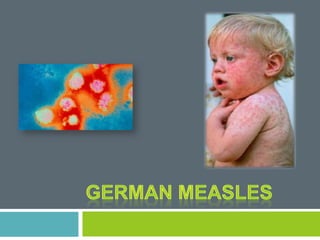
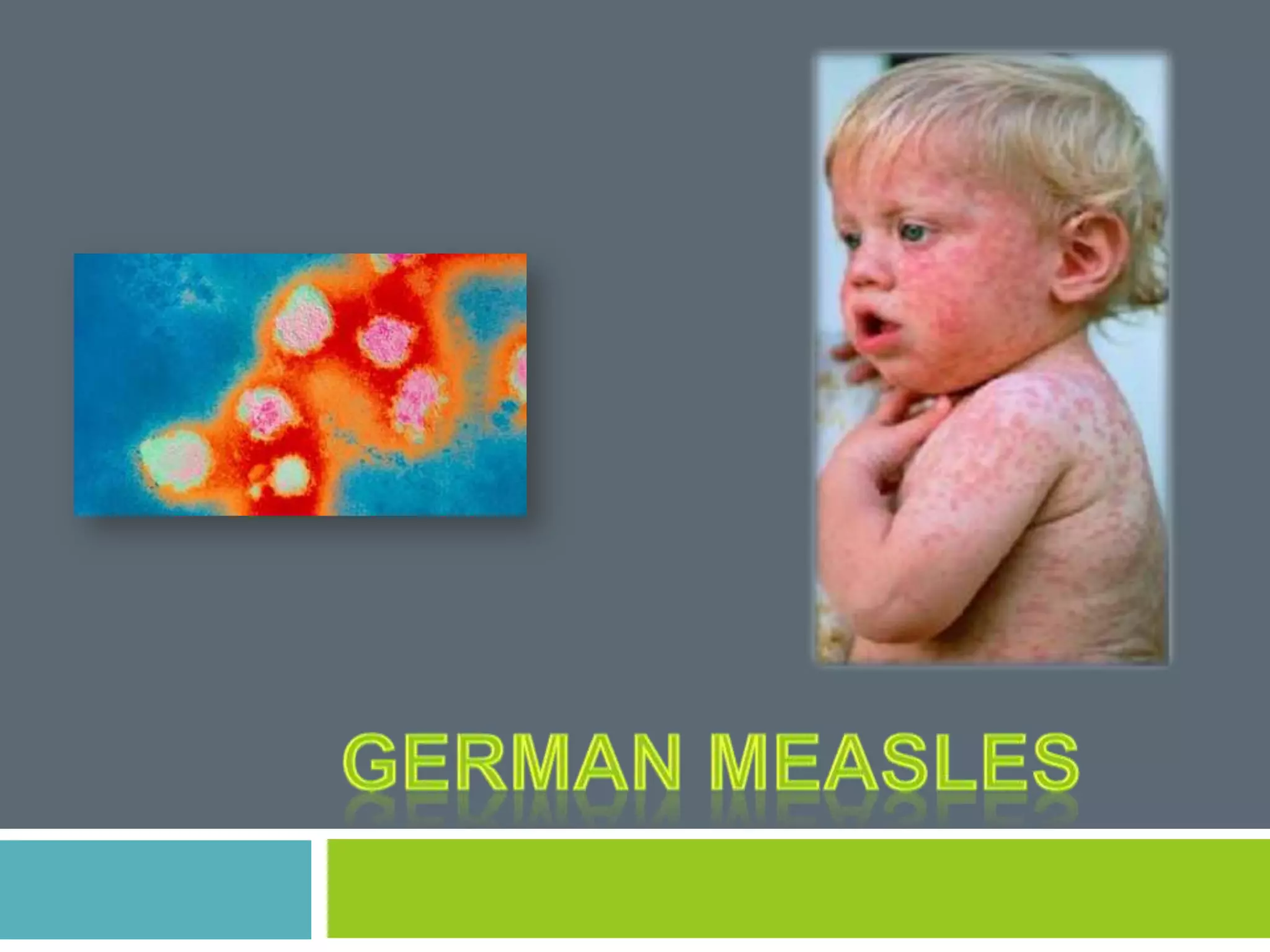
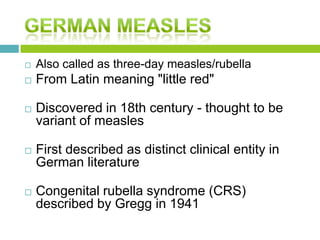
 Also called as three-day measles/rubella
 From Latin meaning "little red"
 Discovered in 18th century - thought to be
variant of measles
 First described as distinct clinical entity in
German literature
 Congenital rubella syndrome (CRS)
described by Gregg in 1941
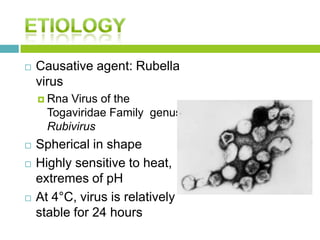
 Causative agent: Rubella
virus
 Rna Virus of the
Togaviridae Family genus
Rubivirus
 Spherical in shape
 Highly sensitive to heat,
extremes of pH
 At 4°C, virus is relatively
stable for 24 hours
 Occurs worldwide
 The virus tends to peak in countries with
temperate climates
 Common in children ages 5-10 years old
 Human are only known reservoir
 Airborne droplet emission
 Infected person coughs or sneezes
 Acquired during pregnancy (1st Trimester)
 Virus can enter via the Placenta (Congenital
Rubella Syndrome)
 between 14-21 days
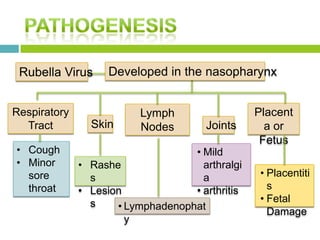
Rubella Virus Developed in the nasopharynx
Respiratory
Tract Skin
Lymph
Nodes Joints
Placent
a or
Fetus
• Cough
• Minor
sore
throat
• Rashe
s
• Lesion
s • Lymphadenophat
y
• Mild
arthralgi
a
• arthritis
• Placentiti
s
• Fetal
Damage
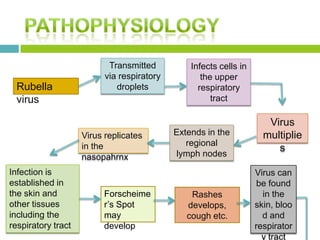
Rubella
virus
Transmitted
via respiratory
droplets
Infects cells in
the upper
respiratory
tract
Virus
multiplie
s
Extends in the
regional
lymph nodes
Virus replicates
in the
nasopahrnx
Infection is
established in
the skin and
other tissues
including the
respiratory tract
Forscheime
r’s Spot
may
develop
Rashes
develops,
cough etc.
Virus can
be found
in the
skin, bloo
d and
respirator
y tract
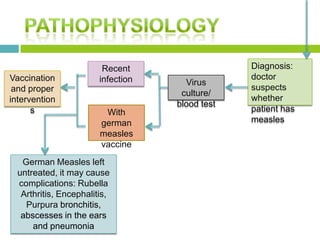
Diagnosis:
doctor
suspects
whether
patient has
measles
Virus
culture/
blood test
Recent
infection
With
german
measles
vaccine
Vaccination
and proper
intervention
s
German Measles left
untreated, it may cause
complications: Rubella
Arthritis, Encephalitis,
Purpura bronchitis,
abscesses in the ears
and pneumonia
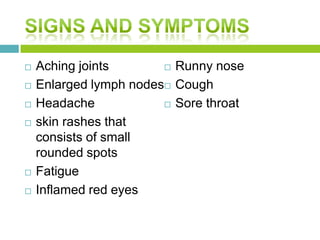
 Aching joints
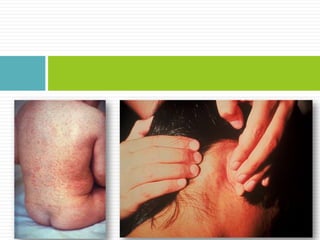
 Enlarged lymph nodes
 Headache
 skin rashes that
consists of small
rounded spots
 Fatigue
 Inflamed red eyes
 Runny nose
 Cough
 Sore throat
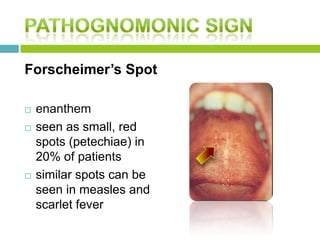
Forscheimer’s Spot
 enanthem
 seen as small, red
spots (petechiae) in
20% of patients
 similar spots can be
seen in measles and
scarlet fever
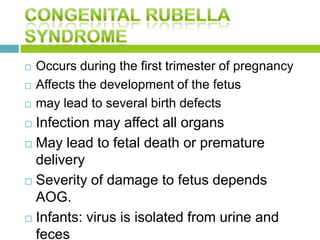
 Occurs during the first trimester of pregnancy
 Affects the development of the fetus
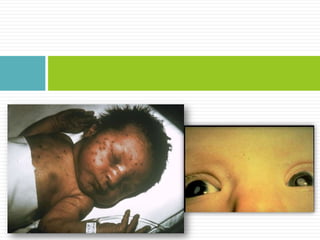
 may lead to several birth defects
 Infection may affect all organs
 May lead to fetal death or premature
delivery
 Severity of damage to fetus depends
AOG.
 Infants: virus is isolated from urine and
feces
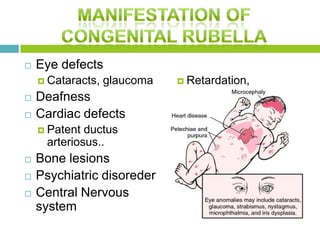
 Eye defects
 Cataracts, glaucoma
 Deafness
 Cardiac defects
 Patent ductus
arteriosus..
 Bone lesions
 Psychiatric disoreder
 Central Nervous
system
 Retardation,
microcephaly
 Isolation and quarantine
 Increase fluid intake
 Encourage the patient to rest
 Good ventilation
 Encourage the patient to drink either lemon or
orange juice
 Provide health teaching about Rubella (cause,
immunizations)
 There are no current treatments that can
shorten the course of German measles
infection.
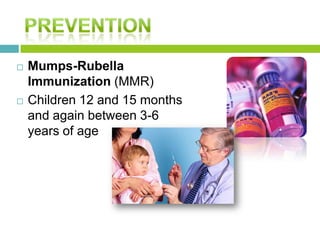
 Mumps-Rubella
Immunization (MMR)
 Children 12 and 15 months
and again between 3-6
years of age

German measles

  • 2.
     Also calledas three-day measles/rubella  From Latin meaning "little red"  Discovered in 18th century - thought to be variant of measles  First described as distinct clinical entity in German literature  Congenital rubella syndrome (CRS) described by Gregg in 1941
  • 3.
     Causative agent:Rubella virus  Rna Virus of the Togaviridae Family genus Rubivirus  Spherical in shape  Highly sensitive to heat, extremes of pH  At 4°C, virus is relatively stable for 24 hours
  • 4.
     Occurs worldwide The virus tends to peak in countries with temperate climates  Common in children ages 5-10 years old  Human are only known reservoir
  • 5.
     Airborne dropletemission  Infected person coughs or sneezes  Acquired during pregnancy (1st Trimester)  Virus can enter via the Placenta (Congenital Rubella Syndrome)
  • 6.
  • 7.
    Rubella Virus Developedin the nasopharynx Respiratory Tract Skin Lymph Nodes Joints Placent a or Fetus • Cough • Minor sore throat • Rashe s • Lesion s • Lymphadenophat y • Mild arthralgi a • arthritis • Placentiti s • Fetal Damage
  • 8.
    Rubella virus Transmitted via respiratory droplets Infects cellsin the upper respiratory tract Virus multiplie s Extends in the regional lymph nodes Virus replicates in the nasopahrnx Infection is established in the skin and other tissues including the respiratory tract Forscheime r’s Spot may develop Rashes develops, cough etc. Virus can be found in the skin, bloo d and respirator y tract
  • 9.
    Diagnosis: doctor suspects whether patient has measles Virus culture/ blood test Recent infection With german measles vaccine Vaccination andproper intervention s German Measles left untreated, it may cause complications: Rubella Arthritis, Encephalitis, Purpura bronchitis, abscesses in the ears and pneumonia
  • 10.
     Aching joints Enlarged lymph nodes  Headache  skin rashes that consists of small rounded spots  Fatigue  Inflamed red eyes  Runny nose  Cough  Sore throat
  • 12.
    Forscheimer’s Spot  enanthem seen as small, red spots (petechiae) in 20% of patients  similar spots can be seen in measles and scarlet fever
  • 13.
     Occurs duringthe first trimester of pregnancy  Affects the development of the fetus  may lead to several birth defects  Infection may affect all organs  May lead to fetal death or premature delivery  Severity of damage to fetus depends AOG.  Infants: virus is isolated from urine and feces
  • 14.
     Eye defects Cataracts, glaucoma  Deafness  Cardiac defects  Patent ductus arteriosus..  Bone lesions  Psychiatric disoreder  Central Nervous system  Retardation, microcephaly
  • 16.
     Isolation andquarantine  Increase fluid intake  Encourage the patient to rest  Good ventilation  Encourage the patient to drink either lemon or orange juice  Provide health teaching about Rubella (cause, immunizations)
  • 17.
     There areno current treatments that can shorten the course of German measles infection.
  • 18.
     Mumps-Rubella Immunization (MMR) Children 12 and 15 months and again between 3-6 years of age